
AI Translators for Healthcare Providers in Southeast Asia: 7 Critical Checks Before You Buy
November 24, 2026 · Team Star King
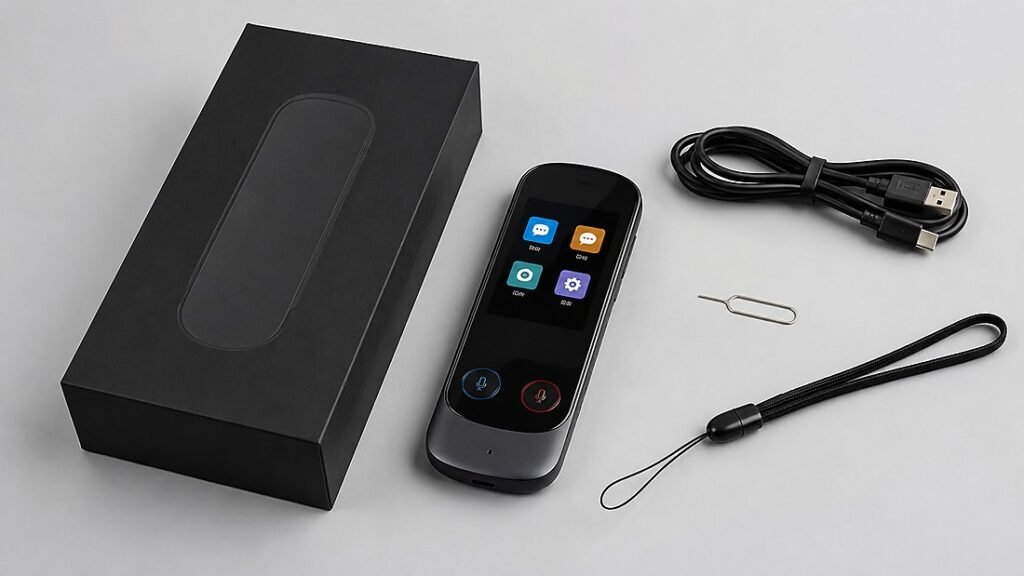
AI Translators for Healthcare Providers in Southeast Asia: 7 Critical Checks Before You Buy
AI translators for healthcare are handheld or wearable devices that convert spoken language between patients and clinicians in real time, typically using on-device speech recognition and cloud translation engines. For healthcare solution providers in Southeast Asia, the right device must do more than translate: it must support the right language pairs, protect patient conversation data, meet local import and battery rules, and come with a support plan your clients can rely on. This guide gives you seven practical checks to make before you order samples or place a bulk order.
Table of Contents
Table of Contents
AI translators for healthcare: Table of Contents
- Short Answer
- Key Takeaways
- Key Facts for Buyers
- 1. Why Language Gaps Are a Healthcare Delivery Problem in Southeast Asia
- 2. What an AI Translation Device Should Do in a Healthcare Setting
- 3. Seven Critical Checks Before You Buy
- 4. Comparing Deployment Models: Standalone Device vs. App-Only vs. Wearable
- 5. Common Mistakes Healthcare Solution Providers Make
- 6. Practical Buyer Checklist
- 7. FAQ
- Conclusion
Short Answer
To choose AI translators for healthcare in Southeast Asia, verify four things first: the device supports the Southeast Asian language pairs your clients actually use, translation latency is acceptable for live clinical conversation, privacy and data handling can be explained to hospital IT teams, and import compliance (including lithium battery rules) is documented per SKU. Then confirm OEM/ODM options, sample testing, MOQ, and after-sales support before committing to volume.
Key Takeaways
- Southeast Asia’s linguistic diversity makes multilingual communication a daily operational issue in clinics, hospitals, and remote health programs.
- Consumer translation apps are not designed for clinical workflows or for procurement by healthcare solution providers.
- Language pair coverage is the single most common gap between a consumer-grade device and a healthcare-ready one.
- Privacy, data storage location, and offline capability are legitimate procurement questions from hospital IT and compliance teams.
- Certification, battery shipping rules, and warranty terms typically depend on the specific SKU and target country.
- A sample test protocol with real clinical scripts will reveal translation quality faster than any spec sheet.

Key Facts for Buyers
| Buyer Consideration | Why It Matters | What to Verify |
|---|---|---|
| Language pair coverage | Clinical value depends on the actual languages spoken by patients | Test Southeast Asian language pairs with realistic scripts |
| Latency and accuracy | Slow or inaccurate translation breaks the clinical conversation | Measure response time and request sample test results |
| Data privacy | Hospital IT and compliance teams will ask where audio is processed and stored | Request a data flow diagram and privacy documentation |
| Offline capability | Rural and remote health settings may have limited connectivity | Confirm offline language support and failover behavior |
| Certification | Requirements vary by country and product configuration | Ask for documentation per SKU and destination |
| Battery shipping | Lithium batteries are regulated for air and sea freight | Confirm UN38.3 and MSDS availability where applicable |
| OEM/ODM options | Branding and workflow fit matter for healthcare deployments | Discuss logo, packaging, and app customization scope |
| Support and warranty | Device downtime affects patient-facing services | Clarify warranty terms and spare parts availability |

1. Why Language Gaps Are a Healthcare Delivery Problem in Southeast Asia
Southeast Asia is one of the most linguistically diverse regions in the world. Indonesia alone has hundreds of local languages alongside Bahasa Indonesia; the Philippines has Filipino and English alongside regional languages; Thailand, Vietnam, Malaysia, and Singapore each present different combinations of national, official, and community languages. For healthcare solution providers, this diversity is not an abstract cultural point. It directly affects triage speed, patient consent, medication instructions, and follow-up care.
In many markets, a clinic may serve patients who speak a language the attending nurse does not. Family members often act as informal interpreters, which raises privacy concerns and increases the risk of miscommunication. A dedicated AI translation device can support staff in these moments, but only if the device is chosen with the healthcare workflow in mind rather than as a generic consumer gadget.
Image suggestion: A clinician using a handheld translation device during a patient intake conversation in a Southeast Asian clinic.
2. What an AI Translation Device Should Do in a Healthcare Setting
AI translation hardware for healthcare typically combines a microphone array, a speaker, a display, a processor, and connectivity to translation services. Some devices are handheld, some are wearable, and some pair with a smartphone app. The functional goal is consistent: capture speech, translate it, and deliver the output quickly enough to keep a conversation flowing.
For procurement purposes, buyers should evaluate the device at three levels:
- Interaction level: Does the device support two-way conversation, push-to-talk, or continuous listening? Is the screen readable in bright clinic lighting?
- Language level: Which Southeast Asian language pairs are supported, and with what latency and accuracy?
- Operational level: How is the device charged, updated, cleaned, and supported in the field?
This layered view helps healthcare solution providers separate marketing claims from the specifications that affect daily use. You can explore the general product category on the AI Translators product page as a starting point for model comparison.
3. Seven Critical Checks Before You Buy
Check 1: Southeast Asian Language Pair Coverage
Ask the supplier to list the exact language pairs supported and to distinguish between online and offline modes. A device that supports English, Mandarin, and Japanese may still fall short for a clinic in Indonesia or the Philippines. Request a demonstration using real clinical phrases in the languages your clients actually encounter. Do not accept a general list of “100+ languages” without evidence of quality in the languages that matter to your deployment.
Check 2: Latency, Accuracy, and Clinical Phrasing
Translation quality in healthcare is not only about grammar. It is about context, numbers, medication names, and symptom descriptions. Ask the supplier how the device handles medical terminology and whether the translation engine can be configured for domain-specific vocabulary. Measure round-trip latency in a live demo: a delay of several seconds makes a back-and-forth conversation difficult. If the supplier cannot share test results, propose a sample test with your own scripts.
Check 3: Privacy and Data Handling
Hospital IT and compliance teams will ask where audio is processed, where it is stored, and whether it is retained. The answer may vary by product configuration and by the translation service provider used. Buyers should request a data flow explanation and confirm whether the device can operate in an offline mode that avoids sending audio to a third-party server. These questions are reasonable and should be expected in healthcare procurement; the supplier’s ability to answer them clearly is a useful signal.
Check 4: Certification and Import Compliance
Certification requirements differ by country and product configuration. A device that carries CE marking for the EU does not automatically satisfy every Southeast Asian market requirement. Buyers should verify what documentation the supplier can provide for the specific SKU and destination country, including radio equipment approvals where applicable and lithium battery transport documentation. For radio and electromagnetic compatibility references, the FCC equipment authorization page and the ITU standards provide useful background, though local regulators set their own rules. The exact certification status of any STAR KING model should be confirmed per order: [STAR KING TO CONFIRM].
Check 5: Battery, Shipping, and Logistics
AI translators typically contain lithium batteries, which are regulated for air and sea freight. Suppliers should be able to explain how the device is packaged for transport and whether UN38.3 and MSDS documents are available where required. Shipping rules may differ by carrier and destination, and buyers should confirm with their freight forwarder. For general battery transport principles, the IATA Dangerous Goods Regulations are the common reference for air freight.
Check 6: OEM/ODM and Branding Options
Healthcare solution providers often need branding, packaging, or software customization to match their service model. Ask what customization scope the manufacturer offers: logo placement, packaging design, app interface changes, and firmware configuration. Be clear about which changes require new tooling and which can be applied to existing models. For a broader view of customization models, see the Private Label OEM/ODM solutions page. MOQ and lead time for customized devices are typically higher than for standard models, so plan early.
Check 7: Support, Warranty, and Service Network
A healthcare deployment can involve dozens or hundreds of devices in the field. Ask how firmware updates are delivered, whether replacement parts are available, and what the warranty covers. For Southeast Asia, the practical question is whether the supplier can support your service timeline across the countries you serve. A clear support plan is often more important than a small price difference between two similar devices.
Soft CTA: If you are comparing models for a healthcare pilot, the fastest way to shorten the evaluation is to request a sample and test it with your own clinical scripts. STAR KING can support sample requests and specification discussions through its sample request page.
4. Comparing Deployment Models: Standalone Device vs. App-Only vs. Wearable
| Deployment Model | Best Fit | Procurement Notes |
|---|---|---|
| Standalone handheld device | Clinics, triage desks, pharmacy counters | Simpler to deploy where staff do not use a shared smartphone; check charging and cleaning routine |
| App-only on existing smartphones | Mobile outreach teams already equipped with phones | Lower hardware cost but depends on device management and app updates; privacy questions move to the phone |
| Wearable or clip-on translator | Hands-free scenarios and home care visits | Battery life and microphone performance in noisy rooms need testing |
For healthcare solution providers, the choice usually comes down to who operates the device and where. A standalone device can be easier to control and sanitize, while an app-only model reduces capital cost but shifts management burden to the customer’s IT team.
5. Common Mistakes Healthcare Solution Providers Make
- Buying on language count rather than on tested quality in the specific Southeast Asian languages used by patients.
- Assuming certification in one market transfers to another without checking local requirements.
- Skipping privacy and data handling questions until after a contract is signed.
- Testing with textbook sentences instead of realistic clinical dialogue, including numbers and medication names.
- Underestimating MOQ and lead time for customized branding.
- Failing to plan for spare parts and firmware updates across a multi-country deployment.
6. Practical Buyer Checklist
- List the languages your target facilities actually need, including local and community languages.
- Request a live demo or sample unit and test with clinical scripts.
- Ask for a data flow explanation and confirm offline capabilities.
- Verify certification documentation per SKU and destination country.
- Confirm lithium battery shipping documentation and packaging.
- Clarify OEM/ODM scope, MOQ, and lead time for customization.
- Review warranty terms, spare parts, and firmware update process.
- Agree on a pilot plan before committing to volume.
7. FAQ
Can AI translators replace human medical interpreters?
No. AI translators for healthcare are support tools for routine communication and triage. They do not replace qualified interpreters, particularly for consent, complex diagnoses, or mental health conversations.
Do AI translation devices work without internet access?
Some models support limited offline translation, while others rely on cloud services. Offline capability typically depends on the model and the language pair. Buyers should confirm this before deployment in low-connectivity areas.
What certifications should I ask for when importing into Southeast Asia?
Requirements vary by country and product configuration. Common documents include radio equipment approvals, safety documentation, and lithium battery transport documents. Buyers should verify the exact requirements with local authorities or a compliance consultant.
What is a typical MOQ for private label AI translators?
MOQ depends on the model and customization scope. Standard models generally have lower MOQs than fully customized units. STAR KING can confirm MOQ and lead time for specific configurations upon inquiry: [STAR KING TO CONFIRM].
How long does sample testing take?
Sample lead time depends on whether the model is in stock and whether customization is requested. A realistic pilot plan should include time for shipping, internal testing, and clinical staff feedback. Confirm the sample timeline with the supplier before planning a rollout.
Can the device be branded for our healthcare program?
Yes, many manufacturers offer logo, packaging, and app customization. The scope varies by supplier and model. Discuss requirements early, because branding changes can affect MOQ and production time.
Are AI translators considered medical devices?
Generally, a translation device is not a medical device unless it makes diagnostic or treatment claims. Buyers should avoid marketing language that implies clinical diagnosis and should check local regulatory definitions.
Conclusion
For healthcare solution providers in Southeast Asia, AI translators for healthcare are most useful when they are selected with the same discipline as any other clinical support tool. Focus on the language pairs that matter, test with real clinical scripts, ask privacy questions early, confirm compliance per SKU and destination, and plan support before volume deployment. Doing these seven checks will not eliminate every risk, but it will help you avoid the most expensive ones.
STAR KING CTA
If you are evaluating AI translators for a healthcare deployment in Southeast Asia, STAR KING can provide product specifications, sample units, and OEM/ODM discussion to match your program. Request samples and start your evaluation: Request Product Samples.
Discuss Your Smart Wearable OEM/ODM Project
Planning a smart ring, smart watch, smart band, AI glasses, AI translator, or AI voice mouse project? Contact STAR KING to discuss product positioning, sample testing, customization scope, certification requirements, lead time, and quotation details.

Team Star King

Scan WhatsApp QR code
Leave a Reply