AI translators for education: How to Source AI Translators for Education Technology in Southeast Asia: A 2026 B2B Procurement Guide
How to Source AI Translators for Education Technology in Southeast Asia: A 2026 B2B Procurement Guide
If you are an education technology company in Southeast Asia evaluating AI translators for education, the key is to find a manufacturer that provides OEM/ODM options, the right language support, and compliance for your target markets. This guide walks you through the procurement process, from defining specifications to negotiating MOQs and managing lead times. By the end, you will have a clear framework to source AI translators that meet both your technical and commercial needs.
Table of Contents
Table of Contents
AI translators for education: Table of Contents
- Short Answer: What Should EdTech Buyers Know First?
- Key Takeaways
- Key Facts for Buyers
- Product Specifications That Matter for Education
- OEM/ODM and Private Label Considerations
- MOQ, Pricing Factors, and Cost Analysis
- Quality Control and Compliance for Southeast Asia
- Lead Times and Production Scheduling
- Customization: Software, Apps, and Branding
- Common Mistakes and Buyer Red Flags
- Practical Buyer Checklist
- FAQ
- Conclusion
Short Answer: What Should EdTech Buyers Know First?
Sourcing AI translators for education in Southeast Asia requires selecting a manufacturer that offers flexible OEM/ODM services, supports the languages your students need, and meets local compliance requirements. Focus on real-time translation accuracy, device durability, and total cost of ownership. Engage suppliers early to discuss customization and MOQ, and always validate with samples and pilot programs before committing to mass production.
Key Takeaways
- Language support is critical: Prioritize devices with offline translation for key Southeast Asian languages and low-latency performance.
- OEM/ODM flexibility: Choose a manufacturer that can customize hardware, firmware, and apps to your brand and use case.
- MOQ and pricing: MOQs typically range from 500 to 2,000 units; pricing depends on features, order volume, and customization.
- Compliance: Ensure devices meet local certifications (e.g., CE, FCC) and battery safety standards (UN38.3).
- Pilot testing: Always test samples in real classroom or remote learning environments before mass production.
Key Facts for Buyers
| Consideration | Details |
|---|---|
| Typical MOQ | 500–2,000 units (varies by customization level) |
| Lead Time | 30–60 days for standard orders; longer for custom designs |
| Key Certifications | CE, FCC, RoHS, UN38.3 (depends on target country) |
| Language Support | Check for offline translation of Bahasa Indonesia, Thai, Vietnamese, etc. |
| Customization | Logo, packaging, firmware, apps |
| Battery Life | 8–12 hours of continuous use typical |
Product Specifications That Matter for Education
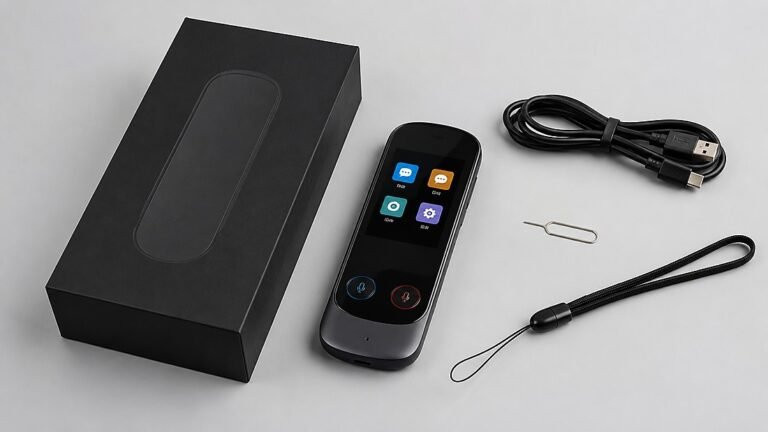
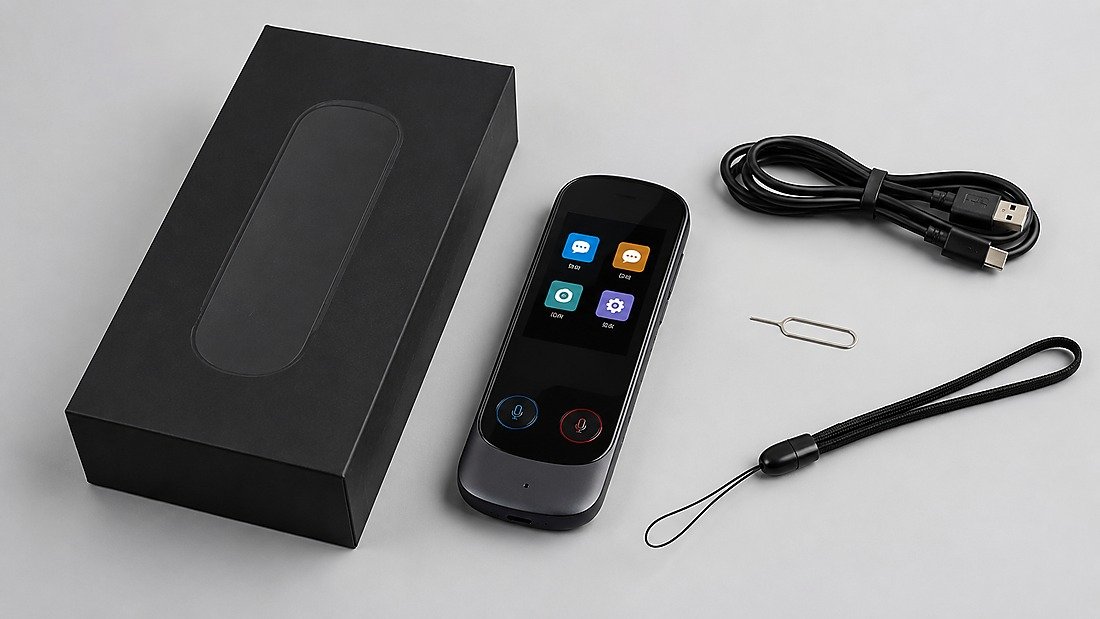
When evaluating AI translators for education, specifications determine classroom usability and longevity. Here are the critical specs to compare.
Translation Quality and Language Coverage
For Southeast Asia, devices must support major local languages: Bahasa Indonesia, Thai, Vietnamese, Filipino, and Malay, plus English and Mandarin. Offline translation is essential for areas with unstable internet. Look for neural machine translation (NMT) models and assess accuracy through sample testing. Latency should be under 1 second for conversational use.
Form Factor and Durability
Education environments demand ruggedness. Devices should be drop-resistant (e.g., 1.2m drop tested), have IP54 or higher water resistance, and offer clear audio. Handheld translators or earbud-style devices are common; choose based on student age and use case.
Connectivity and Battery
Wi-Fi and Bluetooth are standard; some models include 4G LTE. Battery life should last a full school day (8+ hours). Fast-charging and USB-C are preferred.
Software and Ecosystem
Consider if the device integrates with your existing learning management system (LMS) or requires a companion app. Custom firmware may be needed to restrict features or preload content.
Image suggestion: Close-up of AI translator device with Southeast Asian language interface, alt text: “AI translators for education with multilingual interface”
OEM/ODM and Private Label Considerations
Most EdTech companies in Southeast Asia opt for OEM or ODM to differentiate their brand. Here is how to approach it.
OEM vs. ODM vs. Private Label
- OEM: You provide the design and specifications; manufacturer builds to your requirements. Higher MOQs, longer lead times, but full control.
- ODM: Manufacturer offers a ready design that you can customize with your logo, packaging, and software. Lower MOQs, faster time-to-market.
- Private Label: A subset of ODM where you apply your brand to an existing product with minimal changes.
What Can Be Customized?
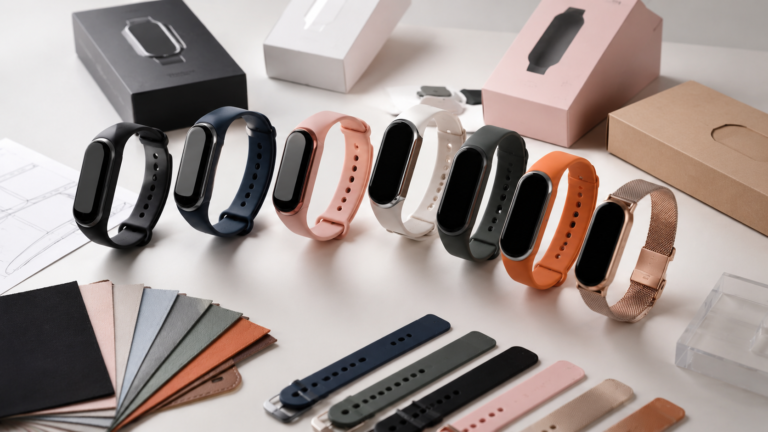
Typical customizations include logo printing, packaging design, firmware modifications (e.g., UI language, preloaded glossaries), app branding, and accessories. Some manufacturers allow tooling development for unique enclosures, but this requires significant investment and higher MOQs.
For more on private label options, see our Private Label OEM/ODM solutions.
MOQ, Pricing Factors, and Cost Analysis
Understanding MOQ and pricing structure is essential for budgeting and negotiation.
Typical MOQs
MOQs for AI translators from Chinese manufacturers often start at 500 units for ODM with minor customization, and 1,000–2,000 units for OEM or private label. MOQs may be negotiable for initial orders, but expect higher per-unit costs.
Factors Affecting Price
- Order volume
- Level of customization (hardware, software, packaging)
- Component costs (e.g., processor, memory, battery)
- Certification requirements
- Payment terms and shipping
Landed Cost Considerations
Don’t forget import duties, VAT, and logistics. Southeast Asian countries have varying tariffs on electronics. Work with your supplier or a customs broker to estimate landed cost accurately.
Image suggestion: Table comparing OEM/ODM/Private Label options, alt text: “Comparison of AI translators for education OEM options”
Quality Control and Compliance for Southeast Asia
Compliance is non-negotiable for market access. Here is what to verify.
Quality Control Processes
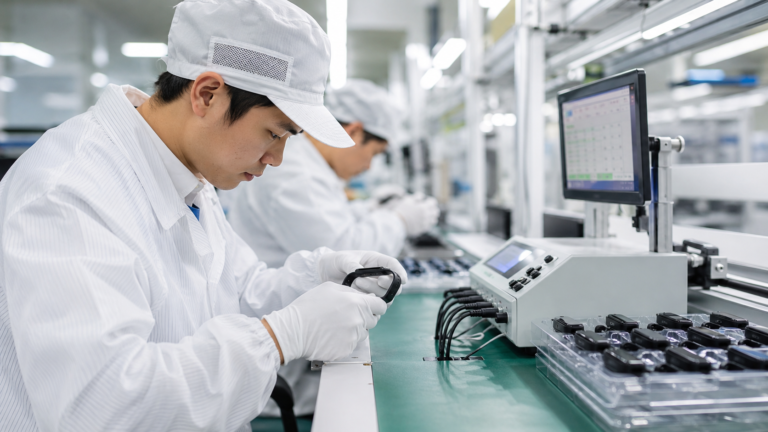
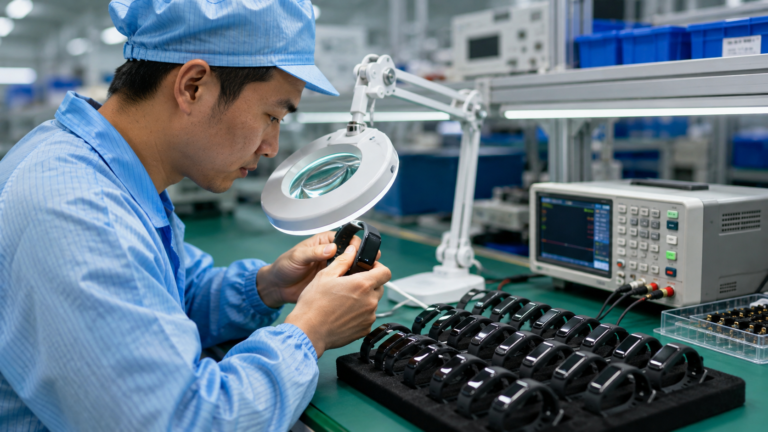
Ask about incoming material inspection, in-process checks, and pre-shipment inspection (PSI). Request test reports for drop, waterproof, and aging tests. A robust QC system reduces defect rates and returns.
Certifications
Required certifications depend on the target country:
- Indonesia: SDPPI for wireless, SNI for safety (may apply).
- Thailand: NBTC for wireless.
- Vietnam: MIC for wireless.
- Philippines: NTC for wireless.
- Singapore/Malaysia: CE or FCC accepted, plus local registration.
Battery-powered devices require UN38.3 test reports for air transport. RoHS compliance is also commonly requested.
Always verify that certifications cover the exact model and configuration you are importing. Certificates are not transferable between factories.
For more details on compliance, see our Private Label OEM/ODM page.
External References
Lead Times and Production Scheduling
Plan for 30–60 days from deposit to shipment for standard orders. Custom tooling can add 30–45 days. Factor in Chinese New Year and other holidays. Always request a production schedule and milestones.
Shipping to Southeast Asia typically takes 7–14 days by air and 20–30 days by sea. Include buffer time for customs clearance.
Customization: Software, Apps, and Branding
Software customization is often the biggest differentiator for education. You may want to preload subject-specific glossaries, restrict internet access, or integrate with your LMS via API. Discuss these requirements early; they impact development time and cost.
For app customization, ensure the manufacturer can provide source code or build a white-label app. Clarify IP ownership: you should own the custom software, while the manufacturer retains rights to the base firmware.
Image suggestion: Screenshot of translator app interface with education content, alt text: “AI translators for education app customization”
Common Mistakes and Buyer Red Flags
- Ignoring offline capabilities: Many regions have poor connectivity; offline translation is a must.
- Skipping sample testing: Always test samples in real scenarios before mass production.
- Assuming certifications are included: Certifications are often extra cost and time; clarify upfront.
- Overlooking battery safety: UN38.3 is mandatory for lithium batteries; non-compliant batteries can be confiscated.
- Not defining IP ownership: Ensure you own custom designs and software to avoid future disputes.
- Choosing on price alone: Cheap devices often fail in quality and support.
Red flags: Supplier cannot provide test reports, refuses factory audit, or demands full payment upfront.
Practical Buyer Checklist
- Define required languages and offline capability.
- Decide on OEM, ODM, or private label.
- Request samples and test for accuracy, durability, and battery life.
- Verify certifications for each target country.
- Clarify MOQ, pricing, and payment terms.
- Agree on lead times and shipping method.
- Confirm customization details (logo, packaging, software).
- Establish QC and inspection procedures.
- Address IP ownership and warranties.
Buyers can also review STAR KING AI Translators OEM/ODM options to compare product positioning, customization scope, and sample planning.
FAQ
What is the typical MOQ for AI translators for education?
MOQs usually start at 500 units for ODM with minor customization, and 1,000–2,000 units for OEM or private label. Some suppliers may negotiate for initial orders.
Can I customize the translator to support only specific languages?
Yes, many manufacturers offer firmware customization to include or exclude languages. This may affect cost and lead time.
What certifications are required for Southeast Asia?
It varies by country: Indonesia requires SDPPI, Thailand NBTC, Vietnam MIC, Philippines NTC. CE or FCC may be accepted in Singapore and Malaysia. Always verify with local authorities.
How long does production take?
Standard orders: 30–60 days after deposit. Custom tooling may add 30–45 days.
What about battery shipping regulations?
Lithium batteries must have UN38.3 test reports and may require MSDS. Shipping is typically by air or sea with proper documentation.
Can I integrate the translator with my existing learning platform?
Yes, if the manufacturer supports API integration. Discuss requirements early as it may require custom development.
Conclusion
Sourcing AI translators for education in Southeast Asia demands a strategic approach that balances technical specifications, compliance, and commercial terms. By following this guide, you can mitigate risks and ensure a successful procurement. Start by defining your needs, evaluate suppliers carefully, and always test before scaling.
Ready to Source AI Translators for Your EdTech Company?
Contact STAR KING to request samples, discuss OEM/ODM options, and get a quote tailored to your needs.
Discuss Your Smart Wearable OEM/ODM Project
Planning a smart ring, smart watch, smart band, AI glasses, AI translator, or AI voice mouse project? Contact STAR KING to discuss product positioning, sample testing, customization scope, certification requirements, lead time, and quotation details.

Team Star King
Scan WhatsApp QR code