
AI Translators for Corporate Procurement in Southeast Asia: A 7-Step Evaluation Guide for 2026
November 20, 2026 · Team Star King
AI Translators for Corporate Procurement in Southeast Asia: A 7-Step Evaluation Guide for 2026
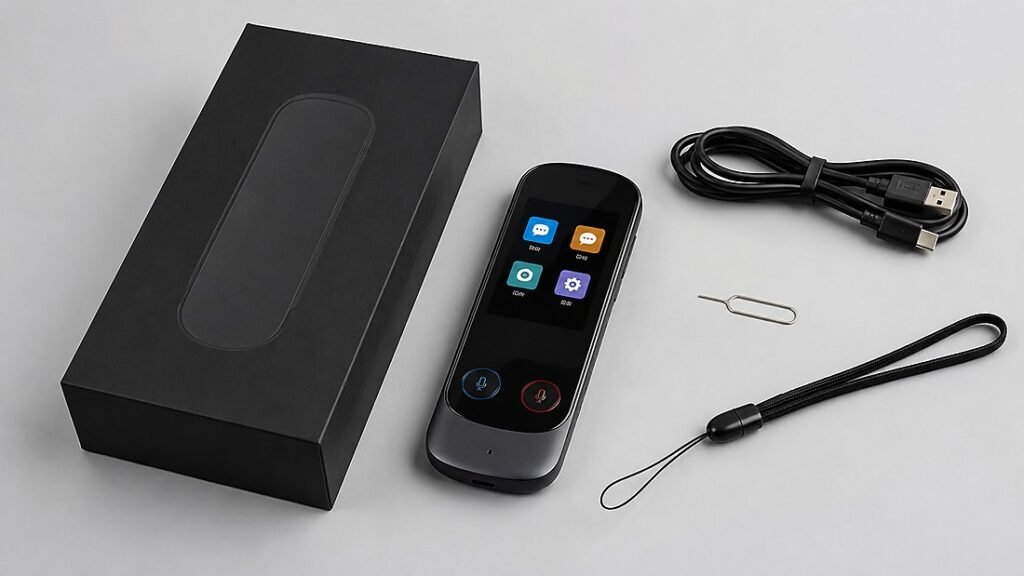
AI translators for corporate procurement are business hardware devices, not consumer gadgets. Buyers in Southeast Asia should evaluate offline accuracy, supported languages, device management, certification, and OEM flexibility before comparing price. A structured seven-step evaluation reduces deployment risk and helps procurement teams justify unit cost against measurable workplace outcomes.
Table of Contents
Table of Contents
AI translators for corporate procurement: Short Answer
For corporate procurement in Southeast Asia, the most reliable AI translator devices support offline translation for the languages you need, offer clear firmware and app management, and come with documentation that matches your destination countries. Compare suppliers on language coverage, test samples with real workplace conversations, verify certification files, and confirm MOQ, lead time, and warranty terms before committing to a bulk order.
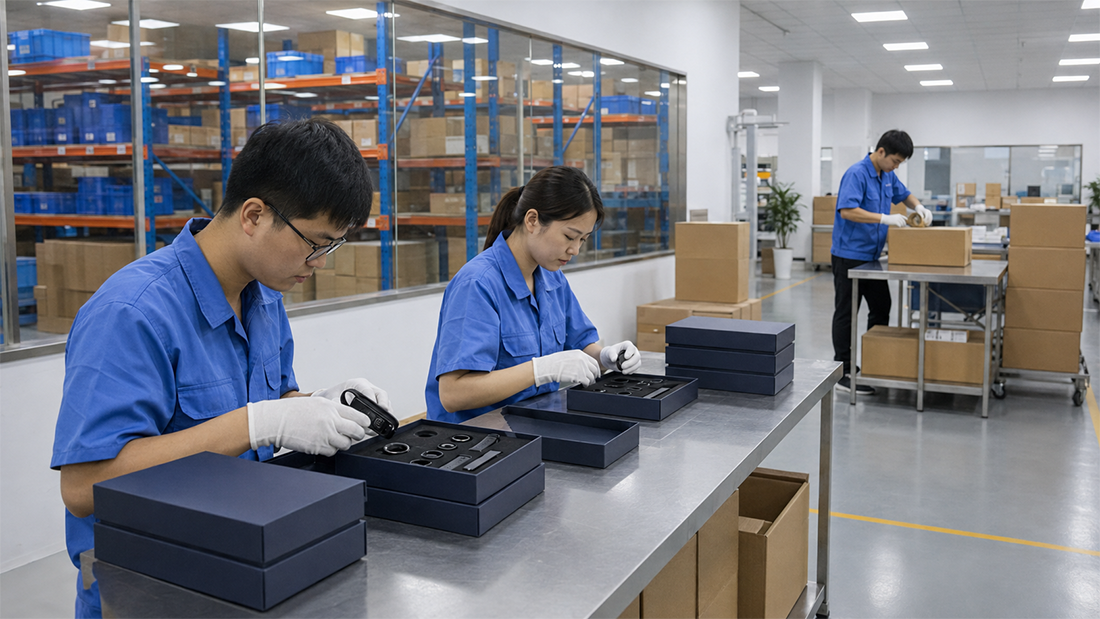
Table of Contents
- Market Context: Why AI Translators Matter in Southeast Asia
- Key Takeaways
- Key Facts for Buyers
- Step 1: Define the Use Case Before Choosing a Device
- Step 2: Evaluate Language Coverage and Offline Accuracy
- Step 3: Assess Hardware, Battery, and Usability
- Step 4: Review Firmware, App, and Device Management
- Step 5: Confirm Certification and Import Compliance
- Step 6: Compare OEM and Private-Label Options
- Step 7: Plan MOQ, Lead Time, and After-Sales Support
- Comparison Table: Evaluation Criteria by Weight
- Common Procurement Mistakes and Red Flags
- Practical Buyer Checklist
- FAQ
- Conclusion

Key Takeaways
- Corporate AI translator procurement should start with a documented use case, not a product brochure.
- Offline language coverage and accuracy matter more than the total number of advertised languages.
- Southeast Asia deployment usually requires certification review per destination country, not a single regional assumption.
- OEM and private-label options can add value, but only after the base hardware and firmware are validated.
- Sample testing with real workplace audio is the most reliable way to compare suppliers.
- MOQ, lead time, warranty, and spare-part terms should be written into the quotation before approval.

Key Facts for Buyers
| Evaluation Factor | Why It Matters for Corporate Procurement | What to Verify |
|---|---|---|
| Offline translation | Many sites have weak or restricted connectivity | Which languages work without internet and how updates are delivered |
| Language pairs | Coverage must match actual staff and visitor languages | Test two-way conversation in your top five language pairs |
| Certification | Import and workplace use depend on destination country | Request technical files and confirm required marks for each market |
| Device management | Enterprises need updates, policy control, and asset tracking | Firmware update process, admin tools, and data handling documentation |
| Battery and hardware | Field and frontline use requires all-day operation | Claimed battery life under realistic use and charging method |
| OEM flexibility | Branding may be required for internal or resale programs | Logo, packaging, app naming, and firmware customization scope |
| Commercial terms | Budget approval depends on total landed cost | MOQ tiers, lead time, warranty, shipping, and spare parts |

Market Context: Why AI Translators Matter in Southeast Asia
Southeast Asia is one of the most linguistically diverse regions in the world. A single manufacturing site in Vietnam, a customer service center in the Philippines, or a regional office in Singapore may operate in several languages during the same shift. For corporate procurement teams, the problem is not only translation quality in a quiet room. It is whether a device works on a noisy factory floor, in a hospital corridor, or at a trade show with limited Wi-Fi.
That context changes how buyers should read product specifications. A consumer review that praises translation speed may tell you little about enterprise durability, data handling, or import compliance. Procurement teams should treat AI translator devices as managed assets with a defined lifecycle, similar to laptops or two-way radios.
Language policy also varies by country. Some markets require local-language labeling or documentation. Others have specific radio or battery transport rules. Buyers should verify requirements with their customs broker or compliance team rather than rely on a supplier’s general statement that a product is “certified.”
Step 1: Define the Use Case Before Choosing a Device
Start with a written description of who will use the device, where, and for how long. A device selected for a hotel front desk may not suit a construction site. The same hardware can be configured differently, but the physical design and battery need to match the environment.
Common enterprise use cases
- Frontline customer service: Hotels, retail stores, and transport counters where staff speak with international visitors.
- Manufacturing and quality control: Supervisors communicating with multilingual production teams.
- Healthcare support: Administrative conversations with patients, with clear limits on medical interpretation.
- Field service and logistics: Drivers and technicians working across borders.
- Corporate meetings and training: Short, structured conversations where speaker turns are predictable.
Each use case implies different requirements for microphone performance, speaker output, privacy, and ruggedness. Procurement teams should document these requirements before requesting quotations. This prevents suppliers from offering a generic device that later fails in the field.
If your organization also deploys workplace productivity hardware, it may help to review a broader AI office productivity solution so that translator devices fit into a coherent device policy rather than becoming an isolated purchase.
Evaluating devices for a multilingual workforce? STAR KING can provide sample units and technical documentation so your team can test AI translators against real workplace scenarios before committing to a bulk order.
Step 2: Evaluate Language Coverage and Offline Accuracy
Language coverage is usually presented as a single number, such as “supports 100+ languages.” That number is useful for marketing but insufficient for procurement. What matters is the quality of translation for the specific language pairs your organization uses, and whether those pairs work offline.
Questions to ask suppliers
- Which language pairs are supported fully offline, and which require a network connection?
- How are offline models updated, and how large are the update files?
- What is the expected accuracy for domain-specific terms such as product names, safety instructions, or medical administrative phrases?
- Does the device support two-way conversation, and how does it handle interruptions or overlapping speech?
Procurement teams should not accept a language list at face value. Request a test unit and run recorded workplace conversations through the device. Include at least one noisy recording and one conversation with technical vocabulary. Compare results across two or three suppliers using the same test script.
For organizations that also manage health and fitness wearables, the same evidence-based approach applies: see how health and fitness wearable solutions are evaluated for accuracy and data handling, because the procurement discipline is similar.

Image suggestion: A procurement team testing AI translator devices with recorded multilingual conversations. ALT text includes the focus keyword.
Step 3: Assess Hardware, Battery, and Usability
Enterprise deployment exposes hardware weaknesses quickly. Devices are dropped, charged improperly, used in sunlight, and handled by staff who have not read the manual. Procurement teams should evaluate physical durability and battery behavior under realistic conditions.
Hardware factors to verify
- Battery life: Compare claimed talk time with continuous-use testing. Ask how battery capacity is measured and whether it degrades after repeated charging cycles.
- Charging method: USB-C, charging dock, or replaceable battery. A charging dock can simplify asset management in shared-device environments.
- Audio quality: Microphone array performance in noisy environments and speaker clarity for two-way conversation.
- Display and controls: Readability in bright light and ease of use for staff with minimal training.
- Physical protection: Whether the device has documented drop or water-resistance ratings, and what those ratings actually cover.
Battery safety is also a procurement issue. Devices with lithium batteries typically require transport documentation such as UN38.3 test summaries and, depending on the carrier and route, additional dangerous-goods paperwork. Buyers should ask for the relevant documents before shipping. The IATA Dangerous Goods Regulations provide a reference point for air transport requirements, but final responsibility rests with the shipper and carrier.
Step 4: Review Firmware, App, and Device Management
AI translator devices are software-dependent products. A strong hardware supplier without a clear firmware roadmap can become a liability after deployment. Procurement teams should ask how updates are delivered, what happens when a device is lost or reassigned, and whether usage data can be managed under corporate policy.
What to request from suppliers
- Firmware update mechanism and expected update frequency.
- Availability of an administrator app or web console for device registration and policy settings.
- Documentation of data collection, storage, and retention, including whether audio is processed on-device or in the cloud.
- Support for corporate network restrictions, such as proxy settings or limited Wi-Fi access.
- Clear policy on end-of-life support and spare parts.
If your organization integrates translation into broader collaboration tools, confirm whether the device supports APIs or exports. Do not assume integration exists; ask for a technical datasheet and a demonstration.
For buyers comparing multiple device categories, the AI translator product range can be reviewed alongside other AI smart glasses to understand where handheld translators fit within a wider hardware roadmap.
Step 5: Confirm Certification and Import Compliance
Certification requirements depend on the product configuration, the destination country, and how the device is marketed. A supplier statement that a product is “CE certified” does not automatically mean it meets every requirement in every Southeast Asian market. Buyers should verify documents for each destination and keep copies with the procurement file.
Documents to request
- CE documentation for EU-bound units, if applicable.
- FCC documentation for US-bound units, if applicable.
- RoHS compliance statements for restricted substances.
- UN38.3 test summary and MSDS for lithium battery transport.
- Local radio or telecom approvals where required by the destination country.
For markets such as Indonesia, Thailand, Malaysia, Vietnam, and the Philippines, import requirements may include specific registration or labeling. The ASEAN Secretariat publishes regional trade information, but buyers should confirm current rules with local customs authorities or a qualified import consultant. Certification is not a one-time purchase; it should be tracked as part of supplier qualification.

Image suggestion: Procurement staff reviewing certification and battery transport documents for AI translator devices.
Step 6: Compare OEM and Private-Label Options
Corporate buyers may need branded devices for internal programs, resale, or distribution. OEM and private-label options can include logo printing, custom packaging, app naming, and limited firmware configuration. The scope varies significantly between suppliers, so it should be defined in writing.
OEM and private-label questions
- What is the minimum order quantity for logo and packaging customization?
- Does customization affect certification or labeling requirements?
- Who owns the tooling, molds, and custom firmware?
- Can the supplier provide a sample with branding before mass production?
- What is the revision process if the first sample does not meet requirements?
Private-label programs are not only about appearance. A custom app name or firmware change can affect update delivery and support responsibilities. Buyers should confirm who handles warranty claims and software fixes after the devices are deployed.
STAR KING offers private-label OEM/ODM solutions for hardware buyers, but the specific customization scope for each AI translator model should be confirmed during the quotation stage.
Step 7: Plan MOQ, Lead Time, and After-Sales Support
Commercial terms determine whether a technically suitable device is actually deliverable. Procurement teams should compare quotations on total landed cost, not unit price alone. Shipping, duties, certification costs, and spare parts all affect the budget.
Terms to clarify
- MOQ tiers: Ask for pricing at several volumes, including sample and pilot quantities.
- Lead time: Confirm production time separately from shipping time, and ask how peak seasons affect schedules.
- Warranty: Define coverage period, what is excluded, and how replacements are handled.
- Spare parts: Confirm availability of chargers, cables, and replacement units.
- Payment terms: Understand deposit and balance requirements, and whether inspection is allowed before final payment.
For pilot programs, a small initial order followed by a larger rollout is often more practical than a single large commitment. This approach lets the procurement team validate device performance and user adoption before scaling.
Comparison Table: Evaluation Criteria by Weight
| Criterion | Weight for Corporate Procurement | Evidence to Request |
|---|---|---|
| Offline translation accuracy | High | Sample test results using your language pairs |
| Certification and import compliance | High | Technical files, test summaries, and battery transport documents |
| Firmware and device management | High | Update policy, admin tools, and data handling documentation |
| Battery and hardware durability | Medium | Test reports, warranty terms, and field trial feedback |
| OEM and private-label flexibility | Medium | Customization scope, tooling ownership, and sample process |
| Commercial terms | High | MOQ tiers, lead time, warranty, and spare-parts policy |
Common Procurement Mistakes and Red Flags
Mistakes buyers make
- Choosing on language count alone. A long language list does not guarantee quality for your priority pairs.
- Skipping real-world testing. Testing in a quiet meeting room may not reflect factory or frontline conditions.
- Assuming regional certification. Requirements differ by country; verify each destination.
- Ignoring firmware support. A device without a clear update path can become unsupported within its service life.
- Underestimating landed cost. Shipping and duties can change the business case.
Red flags in supplier responses
- Vague answers about offline language support.
- Unwillingness to provide sample units for testing.
- Certification claims without document references.
- No clear warranty or spare-parts policy.
- Pressure to commit to large volumes before a pilot.
Practical Buyer Checklist
- Document the use case and required language pairs.
- Request sample units and test with recorded workplace audio.
- Confirm offline support for priority languages.
- Review firmware update and device management options.
- Verify certification and battery transport documents for each destination country.
- Clarify data handling and privacy documentation.
- Compare total landed cost, not only unit price.
- Confirm MOQ, lead time, warranty, and spare-parts terms in writing.
- Define OEM scope and ownership of tooling and custom firmware.
- Plan a pilot before full rollout.
FAQ
What should corporate buyers look for first in an AI translator device?
Start with offline language coverage for your priority pairs and a clear firmware update process. These two factors determine whether the device remains useful after deployment.
Do AI translator devices need certification for every Southeast Asian country?
Requirements vary by country and product configuration. Some markets require local radio or telecom approval, and lithium battery transport documents are typically needed for air freight. Verify with your customs broker or compliance team.
Is a pilot order possible before a large purchase?
Many suppliers offer sample or pilot quantities, but MOQ policies differ. Ask for pricing at pilot volume and confirm whether branding is available at that stage.
How do we compare translation accuracy between suppliers?
Use the same recorded conversations and language pairs for each sample unit. Include noisy and technical audio to see how each device performs outside ideal conditions.
Can we customize the device with our logo and packaging?
OEM and private-label options often include logo and packaging customization, but scope and MOQ vary. Confirm ownership of tooling and custom firmware before production.
What battery documents are needed for shipping?
Lithium battery shipments typically require a UN38.3 test summary and MSDS. Additional dangerous-goods documentation may apply depending on the carrier and route.
What warranty terms are typical?
Warranty periods and exclusions vary by supplier and product. Ask for the warranty in writing, including how replacements and spare parts are handled.
Conclusion
Evaluating AI translators for corporate procurement in Southeast Asia requires more than a product comparison. Procurement teams should define the use case, test offline accuracy with real workplace audio, verify certification for each destination, and confirm commercial terms in writing. A structured seven-step process protects the organization from pilot failures and supports a defensible purchasing decision.
When suppliers are compared on evidence rather than marketing claims, the shortlist becomes clearer and the rollout plan becomes more predictable.
STAR KING CTA
Ready to evaluate AI translator devices for your corporate program? STAR KING can provide sample units, technical documentation, and OEM/private-label options for your team to review. Request product samples and discuss your procurement requirements to move from evaluation to a tested pilot order.
Discuss Your Smart Wearable OEM/ODM Project
Planning a smart ring, smart watch, smart band, AI glasses, AI translator, or AI voice mouse project? Contact STAR KING to discuss product positioning, sample testing, customization scope, certification requirements, lead time, and quotation details.

Team Star King

Scan WhatsApp QR code
Leave a Reply