
AI Translators for Amazon Sellers in Southeast Asia: 7 Critical Buying Decisions Before You Import
November 25, 2026 · Team Star King
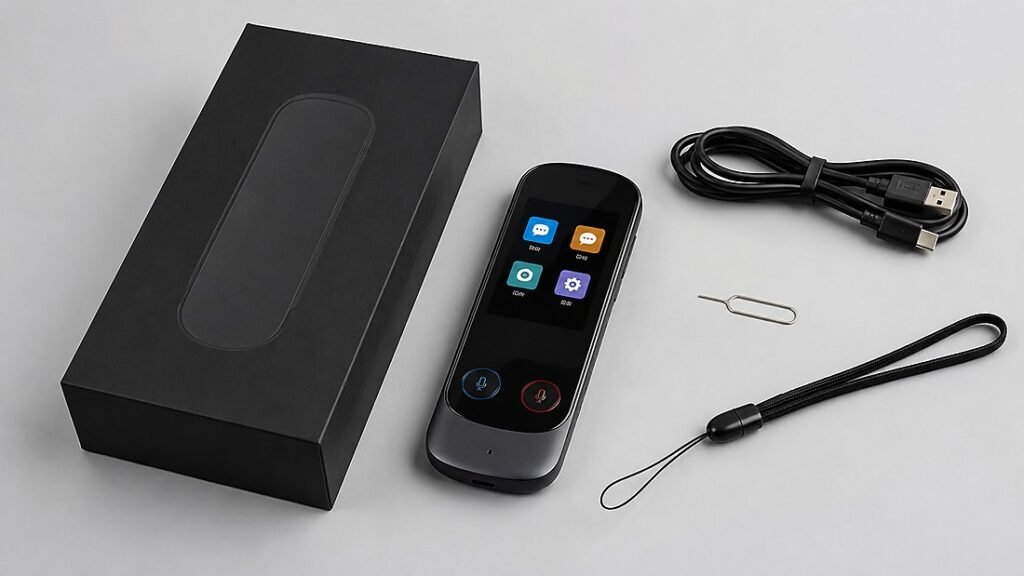
AI Translators for Amazon Sellers in Southeast Asia: 7 Critical Buying Decisions Before You Import
If you are an Amazon seller evaluating AI translators for Southeast Asia, the buying decision goes far beyond language coverage. You need to confirm offline translation performance, app integration, certification for each target country, MOQ and landed cost, and after-sales support. This guide breaks down seven practical decisions that separate a profitable launch from a costly learning experience.
Table of Contents
Table of Contents
AI translators for Amazon sellers: Table of Contents
- Short Answer
- Key Takeaways
- Key Facts for Buyers
- 1. Define Your Target Use Case and Language Pairs
- 2. Evaluate Offline vs. Online Translation Performance
- 3. Choose the Right OEM/ODM or Private Label Model
- 4. Understand MOQ, Pricing, and Landed Cost
- 5. Verify Product Specifications and App Integration
- 6. Plan Quality Control and Pre-Shipment Inspection
- 7. Confirm Certification and Import Compliance for Southeast Asia
- Comparison Table: OEM vs. ODM vs. Private Label
- Common Mistakes and Buyer Red Flags
- Practical Buyer Checklist
- FAQ
- Conclusion
Short Answer
The best AI translators for Amazon sellers in Southeast Asia are devices that support offline translation for key regional languages, come with a customizable app or firmware, hold the required certifications for each country, and are backed by a supplier that offers clear MOQ, lead time, and after-sales terms. Prioritize suppliers who can provide sample testing and pre-shipment inspection reports before you commit to volume.

Key Takeaways
- Offline translation capability is a major differentiator in Southeast Asia due to inconsistent network coverage.
- Certification requirements vary by country; you must verify CE, FCC, RoHS, and local telecom marks for each market.
- OEM/ODM models offer different levels of customization and control over branding, firmware, and packaging.
- MOQ and tooling costs directly affect your landed cost; negotiate sample and small-batch terms before mass production.
- App integration and firmware updates are critical for long-term product relevance and customer satisfaction.
- Quality control, including drop testing and aging testing, reduces return rates on Amazon.
- Plan for lithium battery shipping requirements and after-sales spare parts from the outset.
Key Facts for Buyers
| Factor | Typical Consideration |
|---|---|
| Offline language support | Confirm which Southeast Asian languages work without internet; test with local accents. |
| Certification | CE, FCC, RoHS, UN38.3 for battery; local marks may be required (e.g., Indonesia SDPPI, Thailand NBTC). |
| MOQ | Often ranges from 500 to 1,000 units for OEM; lower for private label with stock firmware. |
| Sample lead time | Typically 7–15 days for stock samples; custom samples may take 20–30 days. |
| Mass production lead time | Usually 30–45 days after sample approval and deposit, depending on order size and customization. |
| App customization | Full app customization may require additional development fees and timeline. |
| Battery shipping | UN38.3 test report and MSDS are required for air freight; sea freight may have different rules. |
1. Define Your Target Use Case and Language Pairs
Before you contact suppliers, clarify who will use the device and which languages are essential. In Southeast Asia, common language pairs include English–Vietnamese, English–Thai, English–Indonesian, English–Malay, and English–Filipino. Some devices also support Chinese, Japanese, and Korean, which may appeal to business travelers.
Consider the primary scenarios: business meetings, travel, education, or customer service. Each scenario has different requirements for microphone quality, speaker output, and translation speed. For example, a device used in noisy markets may need noise-canceling microphones, while a device for classroom use may prioritize clear speaker output and long battery life.
Document your must-have languages and use cases in a requirements brief. This will help you evaluate suppliers objectively and avoid overpaying for features you don’t need.
2. Evaluate Offline vs. Online Translation Performance
Network coverage in Southeast Asia can be inconsistent, especially in rural areas or during travel. Offline translation is therefore a key selling point. However, offline engines often support fewer languages and may have lower accuracy than cloud-based translation.
Ask suppliers for details on their offline language packs: which languages are supported, how updates are delivered, and what the accuracy benchmarks are. Request a sample to test offline translation with native speakers or accent variations. Pay attention to latency—real-time conversation requires fast processing.
Online translation may be acceptable for some use cases, but you should clearly state in your Amazon listing whether the device requires an internet connection for certain languages. This reduces returns and negative reviews.
3. Choose the Right OEM/ODM or Private Label Model
Your choice between OEM, ODM, and private label affects cost, customization, and time to market. Private label typically involves branding a stock product with your logo and packaging, with minimal changes to hardware or firmware. OEM allows you to customize hardware and firmware to some extent, while ODM means the supplier designs and manufactures a product according to your specifications.
For Amazon sellers new to AI translators, private label is often the fastest and least risky entry. If you have a clear differentiation strategy and volume commitment, OEM or ODM can provide competitive advantage. Discuss with suppliers what level of customization is possible for the app, firmware, and packaging, and whether there are additional fees or MOQ requirements.
If you need guidance on private label programs, review STAR KING’s private label OEM/ODM solutions for reference.
4. Understand MOQ, Pricing, and Landed Cost
MOQ and pricing are often the first questions buyers ask, but they are rarely straightforward. MOQ can depend on the level of customization, the supplier’s production schedule, and whether components are in stock. For AI translators, MOQ might range from 500 units for private label to 1,000 units or more for OEM.
When calculating landed cost, include the following: unit price, tooling or模具 fees (if applicable), packaging costs, certification testing fees, freight (especially for lithium batteries), import duties and taxes, and Amazon FBA fees. Request a detailed quotation that separates these items so you can compare suppliers fairly.
Consider negotiating a small trial order before committing to mass production. Some suppliers offer sample or small-batch production at a higher per-unit cost, which can be a good way to test market response.
5. Verify Product Specifications and App Integration
AI translators are hardware-software hybrids. The app experience can make or break the product. Ask suppliers about the app’s features: translation history, language pack updates, user account management, and compatibility with iOS and Android. If you plan to customize the app, clarify development cost and timeline.
Check hardware specifications carefully: microphone sensitivity, speaker output, battery life, charging time, display size and resolution, and connectivity options (Wi-Fi, Bluetooth, cellular). For Amazon sellers, battery life is a common customer complaint, so confirm real-world usage time.
Request documentation on firmware update policy. Will the supplier provide updates for bug fixes and new language packs? Is there an API for integration with your own systems? These factors affect long-term customer satisfaction.
6. Plan Quality Control and Pre-Shipment Inspection
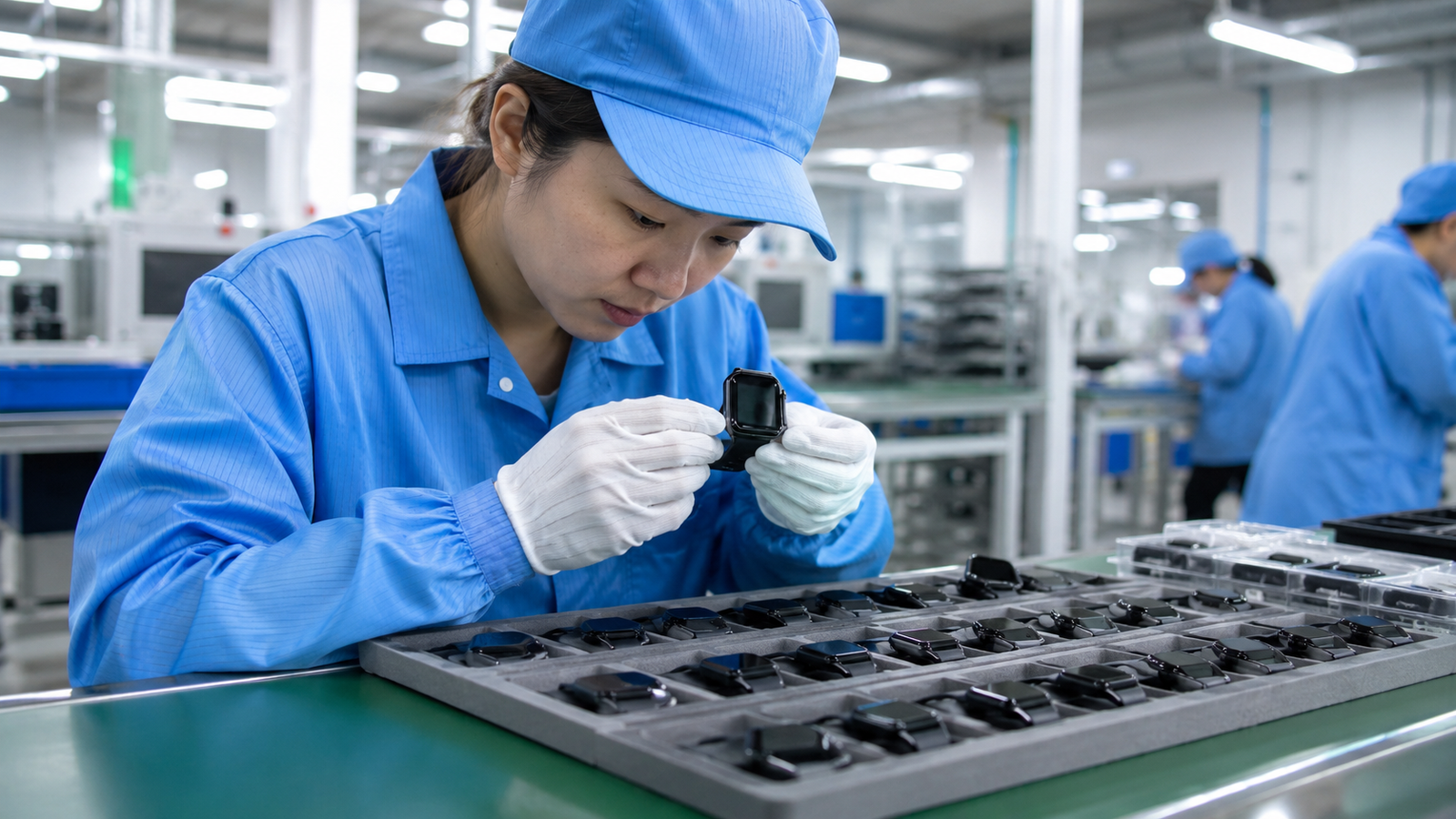
Quality issues lead to returns and negative reviews on Amazon. Establish a quality control plan with your supplier that includes incoming material inspection, in-process checks, and final pre-shipment inspection. For AI translators, key tests include microphone and speaker performance, translation accuracy spot checks, battery charging and discharging, drop testing, and aging testing.
Ask whether the supplier conducts waterproof testing if your product claims water resistance. For devices with screens, check for scratch resistance and display defects. Request samples from different production batches to assess consistency.
Consider using a third-party inspection service for pre-shipment inspection. The cost is small compared to the risk of a defective batch. For more on quality processes, see STAR KING’s private label solutions.
7. Confirm Certification and Import Compliance for Southeast Asia
Certification requirements vary by country and product configuration. Common certifications for AI translators include CE (Europe), FCC (US), RoHS (EU), and UN38.3 for lithium batteries. For Southeast Asia, you may also need local marks such as Indonesia’s SDPPI for wireless devices, Thailand’s NBTC, and Malaysia’s SIRIM. Singapore and the Philippines have their own requirements.
Ask your supplier which certifications the product already has and whether they can support testing for additional markets. Do not assume that a product certified for Europe or the US automatically meets Southeast Asian requirements. Buyers should verify with local authorities or a compliance consultant.
For battery-powered devices, UN38.3 test reports and MSDS are typically required for air freight. Sea freight may have different documentation requirements. Work with a freight forwarder experienced in shipping lithium batteries to avoid delays.
Refer to official sources such as the FCC and IEC for general guidance on certification and standards.
Comparison Table: OEM vs. ODM vs. Private Label
| Model | Customization Level | Typical MOQ | Time to Market | Best For |
|---|---|---|---|---|
| Private Label | Logo, packaging, basic app skin | Low (e.g., 500 units) | Short (4–8 weeks) | New Amazon sellers testing the market |
| OEM | Hardware and firmware modifications | Medium (e.g., 1,000 units) | Medium (8–12 weeks) | Sellers with specific feature requirements |
| ODM | Full custom design and development | High (e.g., 2,000+ units) | Long (12–20 weeks) | Brands with unique product vision and volume |
Common Mistakes and Buyer Red Flags
- Assuming offline translation works for all languages: Always test with the specific languages you need.
- Ignoring certification for each country: A CE mark does not guarantee compliance in Indonesia or Thailand.
- Underestimating battery shipping complexity: UN38.3 and MSDS are essential; without them, your shipment may be rejected.
- Choosing a supplier based solely on price: Low price often means compromises in quality or after-sales support.
- Not clarifying app ownership and update policy: You may be stuck with an outdated app if the supplier stops supporting it.
- Red flags: Suppliers who cannot provide sample testing, refuse pre-shipment inspection, or make unrealistic certification claims.
Practical Buyer Checklist
- Define target languages and use cases.
- Request samples and test offline translation with native speakers.
- Clarify OEM/ODM/private label options and associated costs.
- Get a detailed quotation including tooling, packaging, certification, and freight.
- Verify app features and firmware update policy.
- Agree on quality control plan and pre-shipment inspection.
- Confirm certification requirements for each Southeast Asian country.
- Arrange lithium battery shipping documentation (UN38.3, MSDS).
- Discuss after-sales support and spare parts availability.
- Plan a trial order before mass production.
Buyers can also review STAR KING AI Translators OEM/ODM options to compare product positioning, customization scope, and sample planning.
FAQ
What is the typical MOQ for AI translators?
MOQ varies by supplier and customization level. For private label with stock firmware, MOQ may be around 500 units. OEM with hardware modifications often requires 1,000 units or more. Always confirm with the supplier.
Do AI translators require certification for Southeast Asia?
Yes, most countries require certification for electronic devices, especially those with wireless connectivity. Common requirements include CE, FCC, RoHS, and local marks such as Indonesia’s SDPPI or Thailand’s NBTC. Verify specific requirements for your target market.
Can I customize the app for my brand?
Many suppliers offer app customization, but the level varies. Basic customization may include logo and color scheme, while full customization involves feature changes and may require development fees and longer lead times.
How long does shipping take for AI translators with lithium batteries?
Shipping time depends on the method. Air freight typically takes 5–10 days but requires UN38.3 and MSDS documentation. Sea freight takes longer (e.g., 20–30 days) and may have different requirements. Work with a freight forwarder experienced in battery shipping.
What quality tests should I require before shipment?
At minimum, require functional testing, battery charging and discharging tests, drop testing, and aging testing. For devices with screens, check for display defects. Pre-shipment inspection by a third party is recommended.
How do I ensure after-sales support?
Clarify warranty terms, spare parts availability, and repair procedures in your contract. Ask for references from other Amazon sellers if possible. A supplier with a clear after-sales policy reduces your risk.
Conclusion
Sourcing AI translators for Amazon sellers in Southeast Asia requires careful evaluation of specifications, certification, MOQ, quality control, and after-sales support. By following the seven decisions outlined in this guide, you can reduce risk and improve your chances of a successful product launch. Remember to test samples thoroughly, verify compliance for each target country, and negotiate clear terms with your supplier.
Next Step
Ready to evaluate AI translators for your Amazon business? Request product samples from STAR KING to test offline translation performance, app integration, and build quality. Our team can also discuss OEM/ODM customization options and certification support for Southeast Asian markets.
Discuss Your Smart Wearable OEM/ODM Project
Planning a smart ring, smart watch, smart band, AI glasses, AI translator, or AI voice mouse project? Contact STAR KING to discuss product positioning, sample testing, customization scope, certification requirements, lead time, and quotation details.

Team Star King

Scan WhatsApp QR code
Leave a Reply