
AI Translators for Corporate Procurement in Southeast Asia: 7 Critical Steps Before You Request Samples
November 9, 2026 · Team Star King
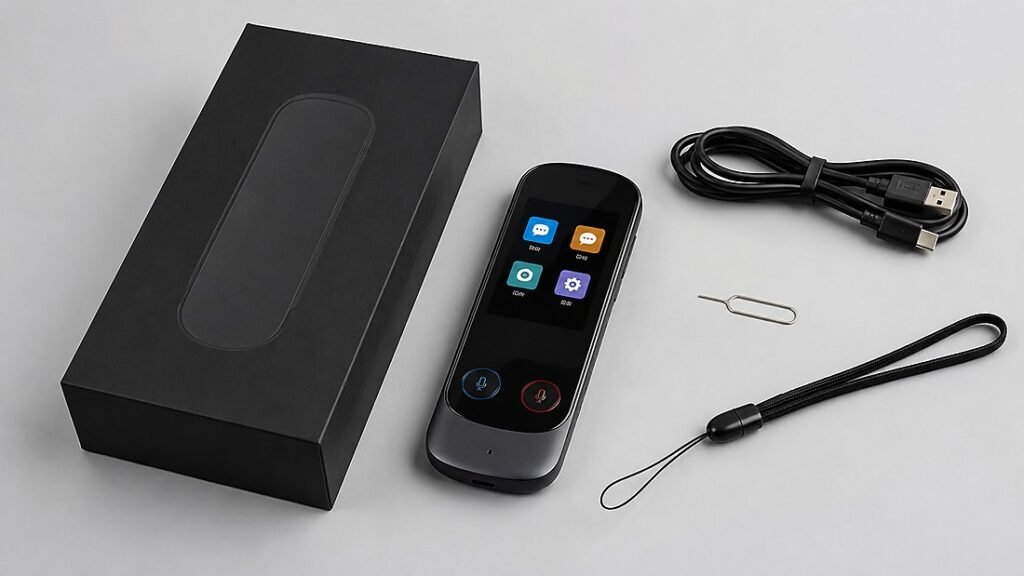
AI Translators for Corporate Procurement in Southeast Asia: 7 Critical Steps Before You Request Samples
AI translators are dedicated handheld or wearable devices that convert spoken language in near real time, and for corporate procurement teams in Southeast Asia they are usually evaluated as productivity hardware for meetings, field operations, customer service, and cross-border teams. The most reliable first step is to define your use case, language pairs, offline requirements, security constraints, and budget, then ask suppliers for a written specification and certification scope before you request samples. Southeast Asia’s language diversity makes specification discipline more important than brand prestige.
Table of Contents
Table of Contents
AI translators: Short Answer
AI translators for corporate procurement in Southeast Asia should be shortlisted by use case, language coverage, offline capability, data handling, and target-market compliance—not by demo alone. Request a written specification, certification scope, MOQ, lead time, and battery shipping documents from each supplier. Validate accuracy and latency with your own test phrases before committing to a pilot order.

Table of Contents
- Step 1: Define the Corporate Use Case and Language Pairs
- Step 2: Separate Marketing Claims from Measurable Specifications
- Step 3: Decide What Must Work Offline
- Step 4: Review Data Handling and Device Management
- Step 5: Qualify Certifications for Your Southeast Asia Market
- Step 6: Plan MOQ, Lead Time, and Landed Cost
- Step 7: Design a Structured Sample Validation
- Common Mistakes and Buyer Red Flags
- Practical Buyer Checklist
- FAQ

Key Takeaways
- Start with the procurement use case, not the product catalog. Meeting translation, field service, and front-desk interpretation have different latency, noise, and privacy requirements.
- Ask for accuracy benchmarks on your own test phrases in your target language pairs; generic demo videos are not evidence.
- Offline language packs, cloud dependency, and subscription costs change total cost of ownership significantly.
- Certification needs vary by country and by product configuration; confirm the exact scope of CE, FCC, RoHS, and battery transport documents.
- Lithium battery devices require transport documentation such as UN38.3 test summaries and MSDS for air freight.
- MOQ, tooling, packaging, and lead time should be confirmed in writing before samples are approved.
- A pilot order with a defined acceptance test protects both procurement and the supplier relationship.

Image suggestion 1: procurement team reviewing AI translators with a specification sheet and test phrases.
Step 1: Define the Corporate Use Case and Language Pairs
Procurement teams often begin with a product category rather than a workflow. For AI translators, the workflow determines almost every technical requirement. A device used for short front-desk conversations needs different microphone performance than one used in noisy factory tours or outdoor site visits.
Write a one-page use-case brief before contacting suppliers. Include:
- Primary scenario: meeting interpretation, customer service, field audits, training, or executive travel.
- Language pairs: list the exact pairs required, for example English–Thai, English–Vietnamese, English–Bahasa Indonesia, English–Mandarin, and any regional pairs.
- Environment: indoor quiet rooms, noisy sites, or outdoor conditions with wind and background traffic.
- Users: number of devices, number of concurrent users, and whether devices will be shared or assigned.
- Privacy level: whether translated content may leave the device or must remain local.
For a broader view of how translation devices fit into workplace productivity programs, see the AI Office Productivity solution. The use-case brief becomes the baseline for comparing suppliers and for rejecting devices that demo well but fail in your actual environment.

Step 2: Separate Marketing Claims from Measurable Specifications
AI translator marketing frequently emphasizes “support for 100+ languages” or “real-time translation.” Procurement teams should translate these claims into measurable specifications. Ask suppliers for the following in writing:
- Supported language pairs and whether translation is bidirectional.
- Offline language packs available and their storage requirements.
- Average latency in seconds for speech-to-speech translation.
- Microphone array configuration and noise handling.
- Display size, speaker output, and battery capacity.
- Connectivity: Wi-Fi, cellular, Bluetooth, or offline-only.
- Companion app availability for device management and firmware updates.
Specification sheets should also identify which translation engines or cloud services are used, because engine changes can affect accuracy and data routing. If a supplier cannot provide a written specification, treat that as a qualification risk rather than a minor inconvenience.
How Buyers Should Evaluate Translation Accuracy
Accuracy is not a single number. It depends on language pair, domain vocabulary, accent, background noise, and sentence length. A practical evaluation method is to prepare 30–50 test phrases that reflect your organization’s actual vocabulary—product names, job titles, safety instructions, and customer service scripts. Record results for each supplier under the same conditions and score them consistently.
Step 3: Decide What Must Work Offline
Offline capability is often the most consequential decision for Southeast Asian deployments. Corporate users may travel to sites with weak connectivity or operate in facilities where cloud services are restricted. Devices that rely entirely on cloud translation may become unusable in those conditions.
Ask each supplier which language packs are available offline, how much storage they require, and whether offline accuracy differs from online accuracy. Offline packs may be smaller and less accurate for domain-specific terms, so test them with the same phrases used for online evaluation.
There is also a cost dimension. Some AI translators require a subscription for cloud translation or advanced features. A lower device price with a mandatory subscription can cost more over a three-year deployment than a higher-priced device with robust offline support.
Step 4: Review Data Handling and Device Management
Corporate procurement teams should treat translation devices as IT assets. That means asking how data is stored, transmitted, and deleted. Key questions include:
- Is audio processed on-device, in the cloud, or both?
- Which cloud provider and region process the data?
- Can the device operate without an account, or is account registration mandatory?
- Is there a management console or companion app for firmware updates and usage policies?
- What is the process for returning or decommissioning devices and deleting data?
If your organization has internal data protection requirements, share them with the supplier early. For cross-border teams, integration with existing collaboration tools may matter more than raw translation speed. The AI translators product page summarizes the product categories available for corporate evaluation.
Step 5: Qualify Certifications for Your Southeast Asia Market
Certification requirements depend on the product configuration and the destination country. Procurement teams should ask for a certification matrix rather than a single certificate image. For each model, confirm:
- Radio equipment: whether the device includes Wi-Fi, Bluetooth, or cellular modules, and which approvals apply.
- Safety and EMC: CE marking where applicable, and local requirements in each target market.
- RoHS: whether the supplier can provide a RoHS compliance statement for the exact BOM.
- Battery transport: UN38.3 test summary and MSDS for lithium battery shipments.
- Bluetooth: whether the Bluetooth module is listed with the Bluetooth SIG if Bluetooth is used.
Southeast Asian markets each have their own import and telecommunications requirements, and these change over time. Buyers should verify current requirements with their local importer or regulatory advisor before shipment. The Private Label OEM/ODM solution page explains how customization can affect certification scope, because changing a radio module or battery can require new testing.
Certification Scope Table
| Document | What It Covers | Typical Use in Procurement |
|---|---|---|
| CE declaration (where applicable) | EU safety, EMC, and radio requirements | Reference for design and testing discipline; not a substitute for local market approval |
| FCC documentation (where applicable) | US radio frequency equipment | Useful evidence of RF testing for markets that reference FCC practice |
| RoHS statement | Restricted hazardous substances | Supplier declaration for the exact bill of materials |
| UN38.3 test summary | Lithium battery transport safety | Required by many air carriers for battery shipments |
| MSDS | Battery chemical and handling information | Customs and carrier documentation |
For official reference, see the FCC website for US equipment authorization information, the IEC for international electrotechnical standards, and the Bluetooth SIG for Bluetooth qualification information. Certification needs may also depend on national telecom regulators in each Southeast Asian market.

Image suggestion 2: compliance binder or digital folder showing certification matrix for AI translators.
Step 6: Plan MOQ, Lead Time, and Landed Cost
MOQ and lead time are negotiation variables, but they are also risk indicators. A supplier that can clearly explain tooling lead time, production capacity planning, and component lead time is easier to plan around. Ask for a written production schedule that separates sample lead time, mass production lead time, and shipping time.
Landed cost should include more than unit price. Build a simple model with these lines:
- Unit price at your MOQ tier.
- Tooling or customization setup cost, if any.
- Packaging and logo customization cost.
- Freight, insurance, and battery handling surcharges.
- Duties and taxes in the destination country.
- Optional subscription or cloud service fees.
- Spare units and warranty reserve.
For a startup or first pilot, a smaller trial order with a higher unit price may be more appropriate than a large order with uncertain field performance. For established distributors, MOQ planning should consider sell-through velocity and service stock.
Soft CTA: If you are comparing AI translator configurations for a corporate pilot, you can review the AI translator product range and share your language-pair requirements with the STAR KING team for a specification discussion.
Step 7: Design a Structured Sample Validation
A sample is not a purchase decision by itself. Define acceptance criteria before the sample arrives. A practical validation plan includes:
- Accuracy test: 30–50 phrases per language pair, scored on a simple 3-point scale.
- Latency test: average pause in seconds for speech-to-speech translation.
- Noise test: repeat phrases in a quiet room and in a noisy environment.
- Battery test: continuous use until shutdown, and standby drain over 24 hours.
- Offline test: repeat core phrases with connectivity disabled.
- Usability test: ask two or three intended users to complete a scripted task without training.
- Documentation test: confirm the user manual, quick-start guide, and warranty terms are complete.
Record results in a simple spreadsheet. This makes supplier comparison defensible and gives your team a baseline for pilot orders. For related hardware evaluation practices, the STAR KING resources blog covers sourcing and quality topics that apply across device categories.
Key Facts for Buyers
| Procurement Factor | What to Confirm | Why It Matters |
|---|---|---|
| Language pairs | Exact pairs, bidirectionality, domain vocabulary | Broad language counts can hide weak coverage in your target pairs |
| Offline capability | Available offline packs, storage, accuracy | Connectivity varies by site and country |
| Latency | Measured speech-to-speech delay | Affects meeting and service workflows |
| Data handling | On-device vs cloud, region, deletion process | Internal data policies may restrict cloud processing |
| Battery | Capacity, runtime, UN38.3, MSDS | Air transport and daily use both depend on battery documentation |
| Certification | Model-specific scope, local import requirements | Requirements vary by country and configuration |
| MOQ and lead time | Written tiers and production schedule | Plan pilot orders and replenishment realistically |
| Customization | Logo, packaging, app branding | Affects brand consistency and may affect certification scope |
Common Mistakes and Buyer Red Flags
- Buying from a demo video. Demo videos are edited and do not represent noisy environments or your language pairs.
- Ignoring subscription cost. A cloud-dependent device with mandatory subscription changes total cost of ownership.
- Accepting a single certificate image. Ask for a model-specific certification matrix and confirm the exact product configuration.
- Overlooking battery documents. Missing UN38.3 or MSDS documents can delay or block shipment.
- Skipping the pilot phase. A small pilot order with acceptance criteria protects budget and credibility.
- No written MOQ or lead time. Verbal commitments are difficult to enforce.
- Unclear support model. Ask who provides firmware updates, spare parts, and warranty service in your region.
Decision Comparison Table: Pilot vs. Bulk Order
| Consideration | Pilot Order | Bulk Order |
|---|---|---|
| Quantity | Small, below standard MOQ may require approval | At or above standard MOQ tiers |
| Customization | Limited; logo and packaging may not be available | Full logo, packaging, and app customization options |
| Unit cost | Higher | Lower at volume tiers |
| Risk | Limited exposure; useful for acceptance testing | Higher commitment; requires validated specifications |
| Best for | New deployments and first-time suppliers | Validated use cases and established distribution |

Image suggestion 3: printed buyer checklist next to an AI translator and test notes.
Practical Buyer Checklist
- Use-case brief with language pairs and environment documented.
- Written specification sheet for each candidate model.
- Offline language pack list and storage requirements confirmed.
- Latency and accuracy test phrases prepared in target languages.
- Data handling questions answered in writing.
- Certification matrix requested for the exact model and configuration.
- UN38.3 and MSDS documents available for battery transport.
- MOQ tiers, lead time, and production schedule in writing.
- Logo, packaging, and app customization scope defined.
- Warranty, spare parts, and support terms reviewed.
- Sample validation plan and acceptance criteria agreed.
- Pilot order budget and approval path confirmed internally.
For teams also evaluating wearable devices in the same procurement cycle, the smart rings product page and the Health & Fitness Wearables solution provide context on how supplier capability can span multiple device categories.
FAQ
What is the best way to compare AI translators for a corporate pilot in Southeast Asia?
Compare written specifications, test the same phrase list across devices in your target language pairs, and score latency, offline performance, and noise handling. Include certification scope, MOQ, lead time, and total cost of ownership in the comparison rather than relying on demo videos.
Do AI translators work without internet access?
Some models support offline language packs, but coverage and accuracy may differ from online translation. Ask the supplier which pairs are available offline and test offline performance with your own phrases before ordering.
Which certifications should procurement teams request for AI translators?
Requirements depend on the product configuration and destination country. A practical request includes a model-specific certification matrix, RoHS and EMC documentation where applicable, radio equipment approvals if the device has wireless modules, and battery transport documents such as UN38.3 and MSDS. Buyers should verify local import requirements with a local advisor.
Are AI translators suitable for noisy environments such as factory sites?
Performance varies by microphone array, noise processing, and model. Test devices in an environment similar to the deployment site and consider whether a handheld or wearable form factor with a directional microphone is more suitable for your use case.
What MOQ should a corporate buyer expect for AI translators?
MOQ depends on the model, customization scope, and supplier production planning. Logo and packaging customization often requires a higher MOQ than a standard configuration. Confirm tiers in writing and consider a pilot order before a bulk commitment. Exact MOQ: [STAR KING TO CONFIRM]
How should procurement teams handle lithium battery shipping for AI translators?
Request the UN38.3 test summary and MSDS for the battery, confirm the shipping mode with your freight forwarder, and allow additional time for battery documentation review. Air carriers may require specific documentation before accepting the shipment.
Can AI translators be customized with a company logo and packaging?
Many OEM/ODM suppliers offer logo, packaging, and app branding customization. Customization may affect certification scope if hardware or radio modules change, so confirm which changes require retesting before approving the design.
Conclusion
For corporate procurement teams in Southeast Asia, selecting AI translators is a specification and validation exercise, not a product-page comparison. Define the use case and language pairs, require written specifications and a certification matrix, test offline performance and latency with your own phrases, and confirm MOQ, lead time, and battery transport documentation before committing. A structured pilot with clear acceptance criteria reduces risk for both the procurement team and the supplier.
Next Step: Request AI Translator Samples
Share your language pairs, expected deployment scale, and customization requirements with STAR KING, and request samples for a structured evaluation. You can request AI translator samples or discuss your procurement timeline with the team. Samples can be tested against your own acceptance criteria before a pilot order.
Discuss Your Smart Wearable OEM/ODM Project
Planning a smart ring, smart watch, smart band, AI glasses, AI translator, or AI voice mouse project? Contact STAR KING to discuss product positioning, sample testing, customization scope, certification requirements, lead time, and quotation details.

Team Star King

Scan WhatsApp QR code
Leave a Reply