
AI translator suppliers: AI Translators for Southeast Asia E-commerce: 7 Sourcing Checks Before You Buy
November 23, 2026 · Team Star King
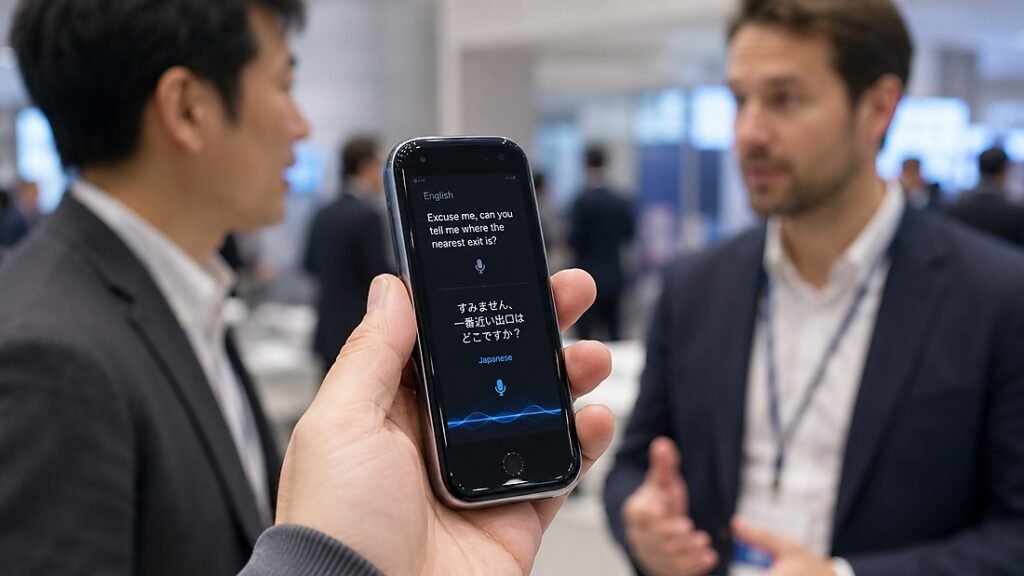
AI translator suppliers buyers need a supplier evaluation process that checks product fit, OEM/ODM capability, compliance documents, quality control, pricing, lead time, and after-sales support before placing a bulk order.
Table of Contents
Table of Contents
AI Translators for Southeast Asia E-commerce: 7 Sourcing Checks Before You Buy
If you are sourcing AI translators for Southeast Asia e-commerce, the fastest way to reduce risk is to verify seven points before placing a bulk order: offline language coverage, real-time performance, app and firmware support, battery and charger compliance, certification for each target market, MOQ and landed cost, and after-sales spare-parts planning. Southeast Asia is not a single market — Indonesia, Thailand, Vietnam, the Philippines, Malaysia and Singapore have different language priorities, import rules and buyer expectations. A translator that sells well in one country may fail in another if offline languages, charging standards or compliance documents do not match. This guide gives e-commerce sellers a practical purchase checklist for AI translation devices and shows how to compare suppliers such as STAR KING AI Translators without relying on marketing claims.
AI translator suppliers: Table of Contents
- Short Answer
- Key Takeaways
- Key Facts for Buyers
- Check 1: Offline Language Coverage
- Check 2: Real-Time Translation Performance
- Check 3: App, Firmware and Account Support
- Check 4: Battery, Charging and UN38.3
- Check 5: Certification by Target Market
- Check 6: MOQ, Landed Cost and Payment Terms
- Check 7: After-Sales, Warranty and Spare Parts
- Comparison Table: Entry vs Mid vs Premium AI Translators
- Common Mistakes and Buyer Red Flags
- Practical Buyer Checklist
- FAQ
- Conclusion
Short Answer
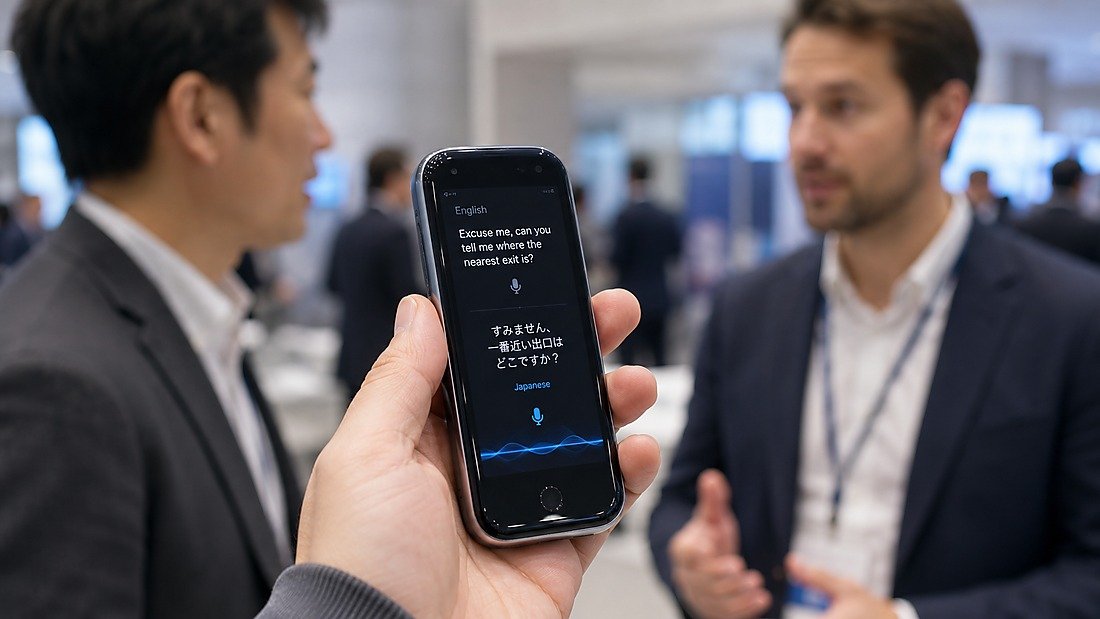
For Southeast Asia e-commerce, buy AI translators only after confirming offline support for the languages your customers actually speak, testing real-time accuracy in noisy environments, verifying app and firmware update commitments, and obtaining market-specific compliance documents. MOQ, landed cost and spare-parts terms should be agreed in writing before deposit.
Key Takeaways
- Southeast Asia is a multi-language region; offline coverage for Thai, Vietnamese, Indonesian, Malay, Filipino and Chinese matters more than total language count.
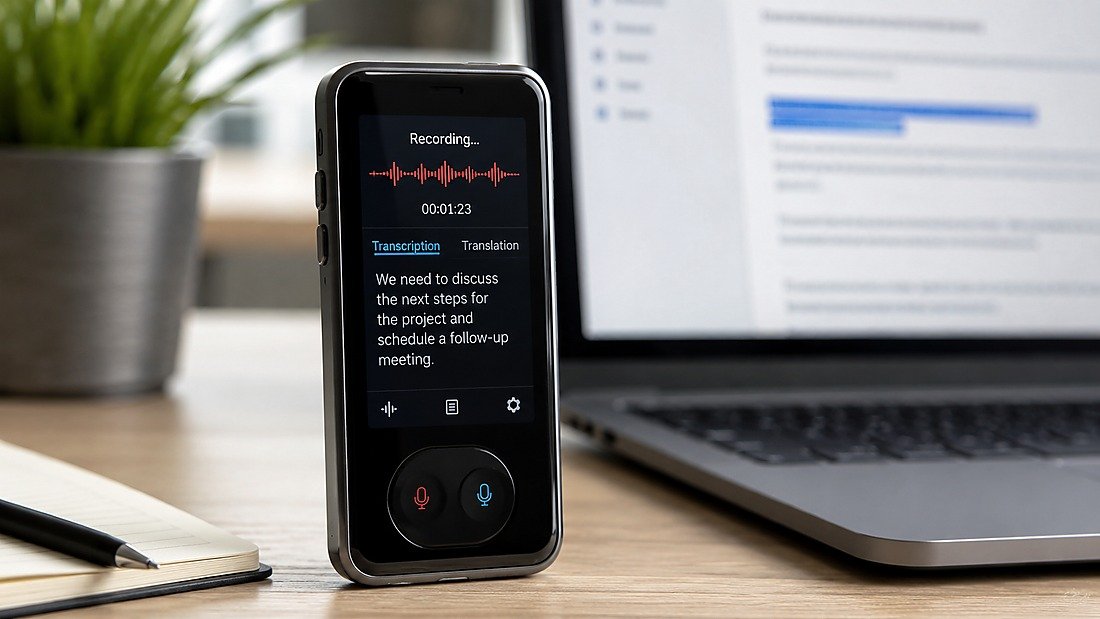
- Real-time translation quality depends on microphone arrays, noise handling and model updates — test with recorded samples, not just demos.
- Certification is product- and market-specific; ask for the exact certificate scope and test report for each SKU.
- Battery-powered translators may require UN38.3 and MSDS documentation for air freight; buyers should verify with their freight forwarder.
- MOQ, tooling ownership, packaging customization and lead time should be documented before sampling ends.
- After-sales planning — spare parts, warranty terms and firmware update policy — protects your marketplace ratings.
Key Facts for Buyers
| Buyer Question | What to Verify | Why It Matters in Southeast Asia |
|---|---|---|
| Which languages work offline? | Offline language list by SKU and firmware version | Data costs and connectivity vary by country; travelers and rural users need offline support |
| How accurate is real-time translation? | Test recordings in Thai, Vietnamese, Indonesian, Malay, Filipino | Marketplace reviews punish poor accuracy quickly |
| Is the app supported long term? | App update policy, account model, firmware release notes | App abandonment turns devices into returns |
| What battery documents exist? | UN38.3 test summary, MSDS, charger specifications | Air and sea freight require documentation; plug types differ |
| Which certifications apply? | Certificate scope, issuing lab, test report | Import rules differ across ASEAN markets |
| What is the MOQ and landed cost? | MOQ by model and customization, Incoterms, duty estimate | Thin margins on marketplaces require accurate cost planning |
| What after-sales support is included? | Warranty period, spare parts, RMA process | Cross-border returns are expensive; local repair options reduce losses |
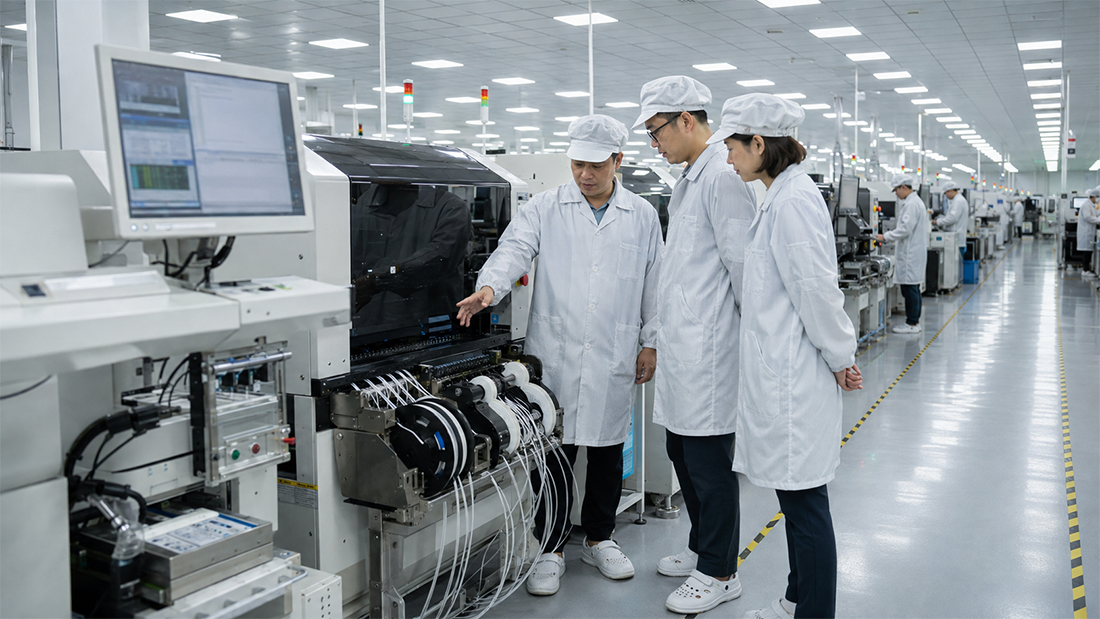
Check 1: Offline Language Coverage for Southeast Asia
Most AI translators advertise a large total language count. For Southeast Asia e-commerce, that number is less useful than the offline list. Buyers in Indonesia, Thailand, Vietnam, the Philippines and Malaysia often operate in places with unstable mobile data, and cross-border shoppers may avoid roaming charges. A device that requires a live connection for core languages is harder to sell.
Ask the supplier for a written offline language list by model and firmware version. Confirm whether offline translation supports bidirectional speech or only text, and whether regional dialects are included. For example, Malay and Indonesian are related but not identical; Filipino and English are both widely used in the Philippines. A supplier that can explain these distinctions is more likely to support your market correctly.

Procurement action: Request a language matrix and test five to ten phrases per priority language during sampling. Score each phrase for accuracy and response time.
How to evaluate language claims
- Separate online, offline and text-only languages.
- Confirm update method for adding languages — OTA, app or PC tool.
- Check whether the supplier charges per language pack or includes updates.
Check 2: Real-Time Translation Performance in Real Conditions
Demo videos usually show quiet rooms. Your customers will use translators in markets, airports, shops and vehicles. Real-time performance depends on microphone count, beamforming, noise suppression and the translation model. Ask for sample units and record test audio that mirrors your market: street noise, multiple speakers, different accents and fast speech.
Measure three things: time from speech end to translated audio, word error rate on a fixed script, and how often the device asks the user to repeat. A supplier that shares test recordings and firmware notes is more dependable than one that only sends polished marketing clips.
For sellers building a private-label line, this is also the point to discuss private label OEM/ODM customization — whether the wake word, UI language and default language pair can be changed for your brand.
What to test during sampling
- Ten sentences per priority language, read by two speakers with different accents.
- Background noise at 60–70 dB to simulate a busy shop or station.
- Battery level at 50% and 10% to check for performance drops.
- Airplane mode and offline mode to confirm fallback behavior.
Check 3: App, Firmware and Account Support
An AI translator is a hardware-plus-software product. The app manages language packs, firmware updates and sometimes translation history. If the app is abandoned, marketplace reviews drop and returns increase. Before ordering, ask for the app update cadence over the past 12 months, the firmware release process, and whether devices remain functional without an account.
Check the account model: does each device require a user account, and does the supplier control data storage? For e-commerce sellers, privacy statements and data handling matter because buyers in different markets may ask. Avoid suppliers who cannot explain what data leaves the device.
If you plan to sell under your own brand, ask whether the app name, icon and onboarding screens can be customized. STAR KING discusses app and firmware customization within its AI office productivity solutions; confirm the exact scope for AI translators with the supplier. [STAR KING TO CONFIRM]
Check 4: Battery, Charging and UN38.3 Documentation
AI translators are lithium-battery products. Air freight typically requires UN38.3 test documentation and an MSDS, and carriers may ask for additional packing details. Buyers should verify documents with their freight forwarder rather than assume a supplier’s general statement covers every SKU.
Charging standards also differ. Southeast Asian markets commonly use 220–240V with Type A, C, G or I plugs depending on country. Confirm charger input range, USB-C compatibility and whether the device supports power banks. Battery life claims should be tested at realistic volume and screen brightness.
For reference on battery transport requirements, see the IATA Dangerous Goods Regulations and the UN Manual of Tests and Criteria.
Check 5: Certification by Southeast Asian Target Market
Certification requirements depend on the product configuration, radio modules and destination country. Common documents buyers ask about include CE and RoHS for European-linked supply chains, FCC for the United States, and country-specific telecom or safety approvals in Southeast Asia. Do not accept “CE certified” as a blanket statement; request the certificate scope, issuing laboratory and test report for the exact SKU you will import.
In ASEAN, import rules vary. Sellers should verify requirements with their importer of record or local authority. For Bluetooth-enabled devices, the Bluetooth SIG qualification listing can be checked where applicable. For electrical safety references, the IEC standards are useful for technical discussions with suppliers.
Verification method: ask for a compliance matrix that maps each SKU to each target market, with document numbers and validity dates.
Check 6: MOQ, Landed Cost and Payment Terms
Price per unit is only one part of landed cost. For Southeast Asia e-commerce, include freight, insurance, import duty, taxes, marketplace fees and expected return rate. Ask for MOQ by model and by customization level. Logo and packaging changes often raise MOQ; firmware or app changes may add tooling or engineering fees.
Payment terms should protect both sides. Typical structures may include a deposit with balance before shipment, but terms vary by supplier and order size. Use a written specification sheet and approved golden sample to define acceptance criteria.
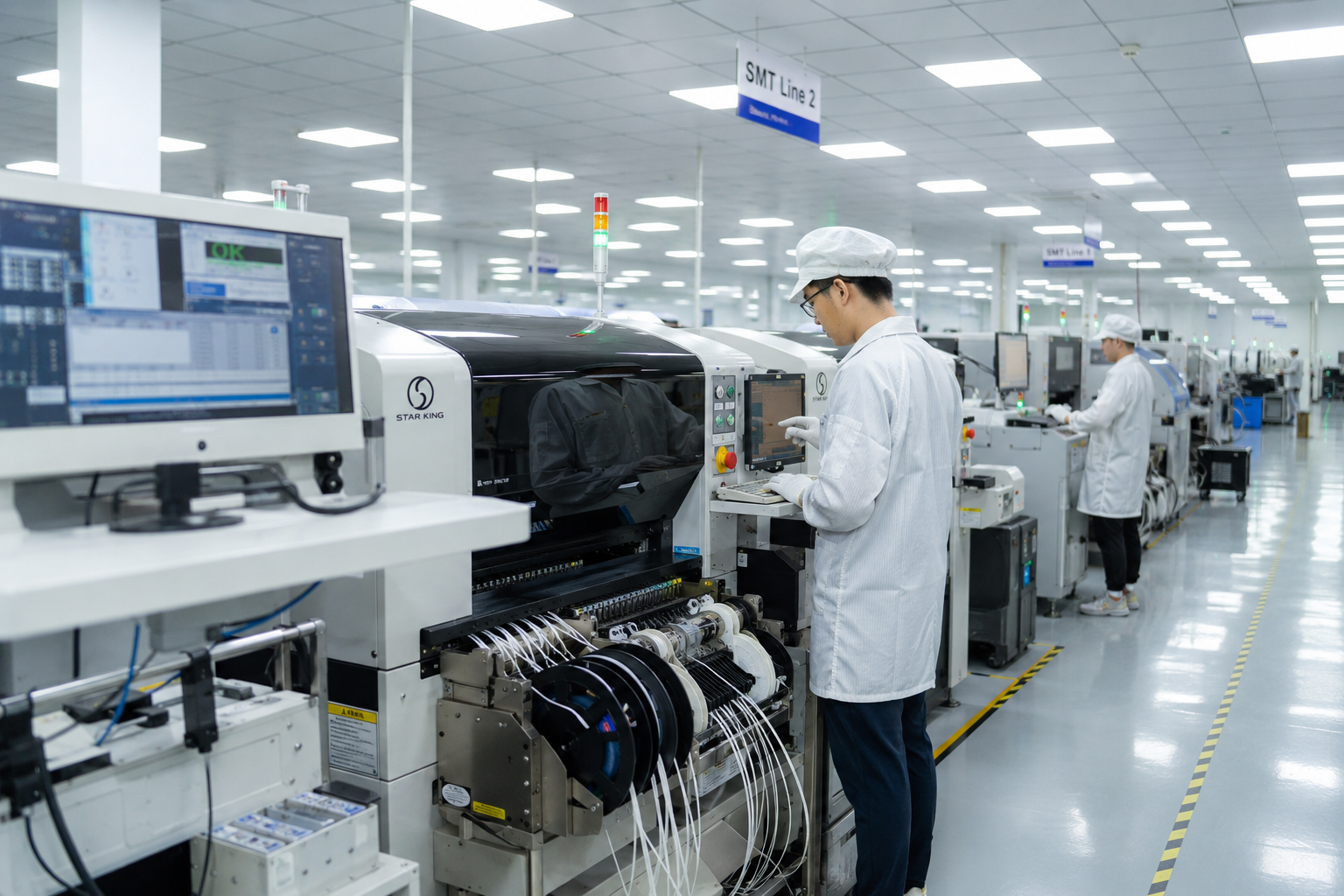
For broader sourcing context, see STAR KING’s sourcing and manufacturing resources.
Landed cost worksheet
| Cost Item | What to Confirm | Common Pitfall |
|---|---|---|
| Unit price | Ex-works or FOB, by quantity tier | Comparing EXW with FOB prices |
| Freight | Air vs sea, battery handling fees | Missing UN38.3-related surcharges |
| Duty and tax | HS code and local tax rate | Using the wrong HS code |
| Customization | Logo, packaging, app changes | Late MOQ increases |
| Returns provision | Expected defect and return rate | Underestimating marketplace returns |
Check 7: After-Sales, Warranty and Spare Parts
Cross-border returns are expensive. Before ordering, agree on warranty period, defect definition, RMA process and who pays return freight. Ask whether spare parts such as chargers, cables and batteries are available, and whether repair guides exist for local service partners.
For marketplace sellers, response time matters. A supplier that provides troubleshooting scripts, firmware recovery tools and spare-part kits can reduce negative reviews. Confirm the warranty start date — from shipment or from sale — and whether it covers battery degradation.
If you sell through retail chains or distributors in Southeast Asia, discuss spare-part stocking levels and packaging language requirements early.
Comparison Table: Entry vs Mid vs Premium AI Translators
The table below helps buyers compare product tiers during purchase. Specifications vary by supplier and should be confirmed with STAR KING for each model.
| Feature | Entry Tier | Mid Tier | Premium Tier |
|---|---|---|---|
| Offline languages | Limited, often major languages only | Broader regional coverage | Widest coverage, frequent updates |
| Microphone | Single or dual | Dual with noise handling | Array with beamforming |
| Display | Basic | Color touchscreen | High-resolution, dual-screen options |
| Connectivity | Wi-Fi, Bluetooth | Wi-Fi, Bluetooth, optional SIM | Wi-Fi, Bluetooth, eSIM or SIM |
| App support | Basic | Regular updates | Managed updates, customization options |
| Customization | Logo and packaging | UI and language pair | App, firmware, ODM options |
| Typical buyer | Test listings and small sellers | Growing e-commerce brands | Distributors and retail chains |
Common Mistakes and Buyer Red Flags
- Buying on total language count. A high number may hide weak offline support for Southeast Asian languages.
- Accepting verbal certification claims. Ask for certificate scope and test reports for the exact SKU.
- Skipping noise testing. Real-time accuracy in busy environments is a better predictor of reviews than a quiet demo.
- Ignoring app abandonment risk. Check update history and account model before committing.
- Underestimating freight documentation. Battery products are often delayed by missing UN38.3 or MSDS documents.
- Not agreeing on a golden sample. Without an approved sample, defect disputes become difficult.
- Forgetting spare parts. Cross-border returns can erase margins if repair options are limited.
Practical Buyer Checklist
| Area | Question to Ask | Document or Evidence |
|---|---|---|
| Languages | Which languages work offline for my markets? | Language matrix by SKU and firmware |
| Performance | Can I test recorded samples in noisy conditions? | Sample units and test protocol |
| Software | How often is the app and firmware updated? | Release notes and update policy |
| Battery | Are UN38.3 and MSDS documents available? | Test summary and MSDS |
| Compliance | Which certificates cover my target markets? | Certificate scope and test reports |
| Commercial | What is the MOQ by model and customization? | Quotation and Incoterms |
| After-sales | What warranty and spare parts are included? | Warranty policy and RMA process |
Mid-article note: If you are comparing suppliers for a Southeast Asia launch, it helps to review customization and compliance questions early. STAR KING can discuss AI translator specifications and sample requests against your target markets. [STAR KING TO CONFIRM]
FAQ
How many languages should an AI translator support for Southeast Asia e-commerce?
Focus on the languages your customers speak, not the total count. Confirm offline support for Thai, Vietnamese, Indonesian, Malay, Filipino and Chinese, plus English. Ask for a written offline language matrix per SKU.
What is a typical MOQ for private label AI translators?
MOQ depends on model and customization. Logo and packaging changes may require a higher minimum than stock models. Request a written quotation that states MOQ by model and customization level, and confirm whether tooling or engineering fees apply.
Does an AI translator need UN38.3 for shipping to Southeast Asia?
Lithium-battery products often require UN38.3 documentation and an MSDS for air freight. Requirements can depend on carrier and route. Buyers should verify with their freight forwarder and request the documents for the exact SKU before booking shipment.
Can I customize the app and firmware for my brand?
Customization scope varies by supplier and model. Ask whether the app name, icon, onboarding screens and default language pairs can be changed, and confirm update responsibilities. STAR KING can discuss available options during quotation. [STAR KING TO CONFIRM]
How do I test real-time translation before placing a bulk order?
Order samples and test a fixed script in your priority languages with two speakers, in quiet and noisy conditions. Measure response time, repeat requests and accuracy. Record results and compare against the supplier’s specifications.
What after-sales terms should I agree before ordering?
Agree on warranty period, defect definition, RMA process, return freight responsibility and spare-part availability. Confirm whether the warranty starts at shipment or at sale, and whether battery degradation is covered.
Which certifications are required for Southeast Asia?
Requirements depend on product configuration, radio modules and destination country. Request certificate scope and test reports for each market, and verify import rules with a local importer or authority. Do not assume a general certificate covers every SKU.
Conclusion
Buying AI translators for Southeast Asia e-commerce is a procurement decision, not a spec-sheet comparison. The seven checks in this guide — offline language coverage, real-time performance, app and firmware support, battery documentation, market-specific compliance, MOQ and landed cost, and after-sales planning — reduce the risk of returns and marketplace penalties. Use samples and written documents to verify each point before placing a bulk order.

Next Step
Ready to compare models or discuss a private-label AI translator program for your Southeast Asia storefront? Request a quotation from STAR KING with your target markets, language priorities and expected order quantity. You can also ask for product samples to run the seven checks in this guide.
Discuss Your Smart Wearable OEM/ODM Project
Planning a smart ring, smart watch, smart band, AI glasses, AI translator, or AI voice mouse project? Contact STAR KING to discuss product positioning, sample testing, customization scope, certification requirements, lead time, and quotation details.

Team Star King

Scan WhatsApp QR code
Leave a Reply