
AI smart glasses supplier: How to Choose an AI Smart Glasses Supplier for UK Distribution: 9 Critical Vetting Steps for Distributors in 2026
November 12, 2026 · Team Star King

How to Choose an AI Smart Glasses Supplier for UK Distribution: 9 Critical Vetting Steps for Distributors in 2026
To choose an AI smart glasses supplier for UK distribution, distributors should verify five things before any purchase order: documented OEM/ODM capability (firmware, app, logo and packaging customization), certification status for the UK market (UKCA/CE, RoHS, battery and wireless compliance), tested production samples, transparent MOQ and lead-time terms, and a written warranty and spare-parts policy. An AI smart glasses supplier that cannot answer these five points with documents rather than verbal assurances should not progress to quoting. This guide gives UK distributors a structured, nine-step vetting process for 2026.
Table of Contents
Table of Contents
Table of Contents
- Short Answer: What Should UK Distributors Check First?
- Key Takeaways
- Key Facts for Buyers
- What Is an AI Smart Glasses Supplier — and How Is It Different From a Trader?
- Step 1: Define Your UK Use Case Before You Contact Suppliers
- Step 2: Verify the Supplier Type — Manufacturer, ODM or Trading Company
- Step 3: Audit AI and Firmware Capability, Not Just Hardware
- Step 4: Confirm UK Certification and Import Compliance
- Step 5: Test Samples Against a Written Protocol
- Step 6: Understand MOQ, Pricing Drivers and Landed Cost
- Step 7: Agree Lead Times, Production Planning and Lithium Battery Shipping
- Step 8: Lock Down Branding, IP and Tooling Ownership
- Step 9: Evaluate After-Sales, Warranty and Spare Parts
- Supplier Comparison Table: What Good Looks Like
- Common Mistakes and Buyer Red Flags
- Practical Buyer Checklist
- FAQ
- Conclusion
Short Answer: What Should UK Distributors Check First?
Start with documentation, not price. Ask each AI smart glasses supplier for its business licence and factory audit summary, certification test reports relevant to the exact configuration you intend to import, a firmware and app customization roadmap, and a sample testing protocol. A supplier that answers these requests quickly and precisely is signalling process maturity. A supplier that deflects them with sample-only enthusiasm is signalling risk you will carry into the UK market.

Key Takeaways
- UK distributors carry regulatory and reputational risk for the products they place on the market, so supplier vetting is a commercial safeguard, not a formality.
- AI smart glasses combine consumer electronics, wireless radios and lithium batteries — three separate compliance areas that each need evidence.
- Firmware and app capability separates a genuine OEM/ODM partner from a box-mover; ask how updates, translations and companion apps are handled.
- MOQ should be modelled against realistic sell-through, not aspiration; 2026 UK demand for AI glasses is growing but still category-formation stage.
- A written sample test protocol — fit, audio, battery, translation accuracy, app pairing, drop and splash resistance — prevents subjective approvals.
- Confirm lithium battery shipping documentation (UN38.3, MSDS) and Incoterms before signing, not after.

Key Facts for Buyers
| Decision Area | What to Verify | Evidence to Request | Why It Matters for UK Distribution |
|---|---|---|---|
| Supplier type | Manufacturer vs ODM vs trader | Business licence, factory audit, production video call | Determines customization depth and accountability |
| AI capability | Firmware, app, translation engines | Firmware change log, app SDK/API notes, demo unit | Differentiates your range and supports updates |
| Certification | UKCA/CE, RoHS, wireless, battery | Test reports for the exact SKU/configuration | Import and retail compliance depends on it |
| Sample quality | Fit, audio, battery, translation | Signed test protocol with pass/fail criteria | Reduces returns and channel conflict |
| MOQ and pricing | Tier structure and cost drivers | Written quotation with Incoterms | Cash flow and landed-cost planning |
| Lead time | Sample, production, shipping windows | Production schedule template | Retail launch and replenishment timing |
| Branding/IP | Logo, packaging, app branding, tooling | Customization scope document, IP clauses | Protects your private-label investment |
| After-sales | Warranty, DOA rate, spare parts | Warranty policy and RMA process | Retailer confidence and margin protection |

What Is an AI Smart Glasses Supplier — and How Is It Different From a Trader?
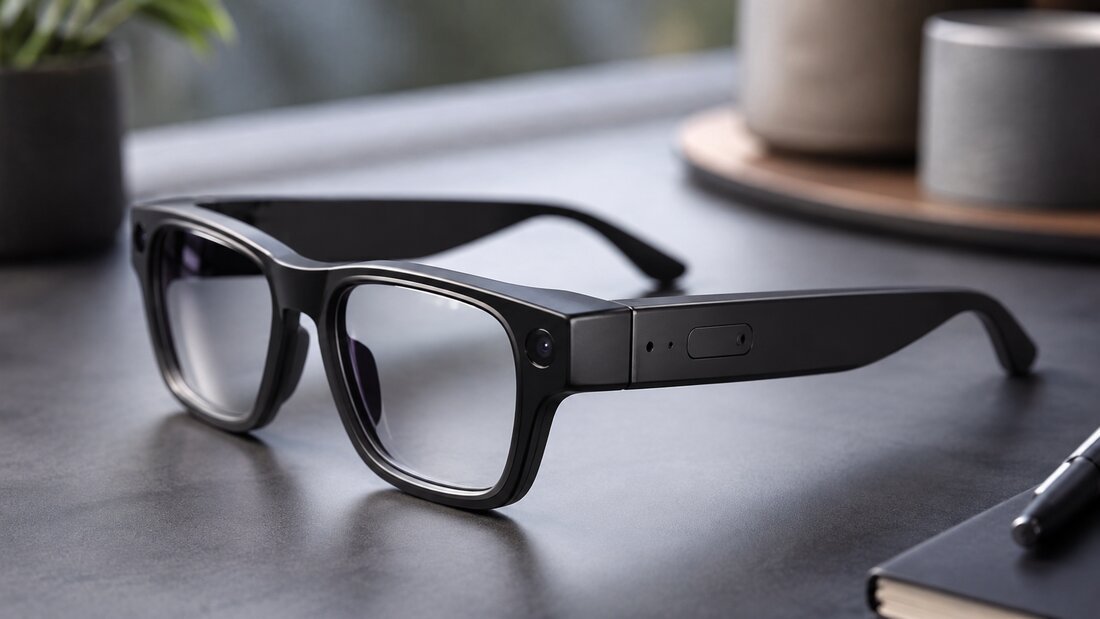
An AI smart glasses supplier is a company that sources, configures and delivers AI-enabled eyewear — typically combining audio, camera, voice assistant, real-time translation or heads-up information features — to brand owners, importers and distributors. The important distinction for UK buyers is capability depth. A trading company resells finished goods. An ODM partner can modify firmware, adjust the companion app, apply your logo and packaging, and support the product across its lifecycle. A full manufacturer controls tooling, assembly and quality control in-house.
This distinction matters because AI glasses are software-defined hardware. The physical frame is only part of the product; the perceived quality depends on app stability, translation responsiveness, firmware update cadence and Bluetooth pairing reliability. When a distributor selects an AI smart glasses supplier, it is effectively selecting a software maintenance partner for the next two to three years. Evaluate accordingly.
STAR KING positions AI smart glasses within a broader AI hardware and wearable range, which is useful context when a distributor wants a multi-category supplier relationship. You can review the AI smart glasses product range to see the current form factors before drafting your supplier questionnaire.
Step 1: Define Your UK Use Case Before You Contact Suppliers
Supplier evaluation becomes far more efficient once you know what the product must do. UK distributors typically pursue AI glasses through several channels: B2B corporate gifting, travel and tourism retail, education technology, field-service and logistics trials, and consumer electronics e-commerce. Each channel implies different priorities.
Channel-to-specification mapping
- Corporate gifting and B2B procurement: prioritize packaging quality, logo customization, stable firmware and predictable MOQ.
- Travel and tourism retail: prioritize real-time translation performance and battery life across a full day of intermittent use.
- Education and training: prioritize app management, device provisioning and volume pricing tiers.
- Field service and logistics pilots: prioritize durability, audio clarity in noisy environments and integration options.
- Consumer e-commerce: prioritize unboxing experience, review-friendly feature set and a clean returns process.
Write a one-page requirement brief before first contact. Distributors who arrive with a written brief receive faster, more accurate quotations, and they signal to the supplier that the conversation is serious. The relevant solution pages, such as business and education displays and devices, can help you frame the channel context in your brief.
Step 2: Verify the Supplier Type — Manufacturer, ODM or Trading Company
Before discussing product, establish who you are talking to. Ask three questions: Do you own or control the assembly process? Can you modify firmware and the companion app? Who handles quality control before shipment? The answers reveal supplier type quickly.
Verification methods that work
- Request a live video call walking through the production or assembly floor, not a pre-recorded tour.
- Ask for the business licence and registered address, then match them to the quotation entity.
- Request the name and title of the quality manager who will sign your pre-shipment inspection report.
- Ask which components are made in-house versus sourced, and which are single-sourced.
UK distributors should also check the supplier’s export experience with the UK specifically — Incoterms familiarity, prior UK retail packaging requirements, and awareness of UK product marking expectations. A supplier with no UK history is not automatically unsuitable, but it needs stronger documentary evidence in other areas.
Step 3: Audit AI and Firmware Capability, Not Just Hardware
AI smart glasses succeed or fail on software behaviour. Distributors should ask how the supplier handles firmware updates after purchase, whether the companion app is supplier-owned or licensed, and how frequently translation language packs are refreshed. These are the questions that separate a durable partnership from a one-off shipment.
What to request
- A firmware version history showing releases in the past twelve months.
- A list of supported languages and how updates are distributed.
- Clarity on whether API or SDK access is available for your retail or enterprise partners.
- App compatibility statements for iOS and Android versions used by your target customers.
- Confirmation of how user data is handled, and whether an account is required.
Where the supplier offers adjacent AI devices, comparing app architecture across the range tells you how mature the software stack is. Reviewing the AI translator product line alongside AI glasses helps you judge whether translation capability is a core competence or a bolt-on feature.
Soft CTA: If you are building a multi-category AI range for UK retail, it is worth asking a potential partner how firmware and app updates are supported across their AI glasses and translator lines before you shortlist them.
Step 4: Confirm UK Certification and Import Compliance
Certification is the most common point where enthusiastic sourcing conversations collapse. AI smart glasses combine radio equipment, a lithium battery and consumer electronics, so the compliance perimeter is wider than for a simple accessory. Documentation requirements typically depend on the exact product configuration and on the target market’s current rules, and buyers should verify the applicable framework with a qualified adviser rather than relying on supplier statements alone.
Documentation to collect
- Test reports covering electrical safety and electromagnetic compatibility for the exact SKU.
- RoHS documentation for restricted substances.
- Wireless/radio conformity evidence for Bluetooth and any other radio used.
- UN38.3 test summary and MSDS for the lithium battery.
- Any UK-specific marking or registration evidence the configuration requires.
UK distributors can review the official guidance from the UK government on UKCA marking and the Office for Product Safety and Standards to understand their obligations. For Bluetooth-enabled features, the Bluetooth SIG is a useful reference on declaration requirements and qualification. Ask each AI smart glasses supplier to map its test reports to the exact configuration in your purchase order, because reports for a different variant may not transfer.
Step 5: Test Samples Against a Written Protocol
Sample evaluation is where many distributors default to subjective impressions. Replace that with a written protocol so that every supplier is judged on the same criteria. Include pass/fail thresholds, and record results in a shared scoring sheet.
A practical sample test protocol
| Test Area | Method | Pass Criteria (example) |
|---|---|---|
| Fit and comfort | Wear for 60 minutes with glasses on and off | No pressure points; stable during walking |
| Audio | Calls and media in quiet and noisy settings | Speech intelligible; no persistent distortion |
| Translation accuracy | Scripted 20-phrase test across target languages | Agreed minimum accuracy threshold |
| Battery life | Mixed-use cycle from full charge | Meets or exceeds quoted figure |
| App pairing | Pairing on two iOS and two Android devices | Pairs within agreed time; reconnects reliably |
| Firmware update | Perform an update on a production sample | Completes without data loss |
| Durability | Agreed drop and splash checks | Pass per written criteria |
If the supplier cannot provide a sample with production-equivalent firmware, note the difference and require a second sample before mass production approval. Sample-to-production consistency is one of the most reliable predictors of a low-returns distribution business.
Step 6: Understand MOQ, Pricing Drivers and Landed Cost
MOQ is a negotiation, not a fixed law — but it is anchored in real cost structure. For AI smart glasses, the main cost drivers are the optical or display module, the processor and memory configuration, battery capacity, frame materials, packaging complexity and language/firmware scope. A supplier that explains these drivers is easier to negotiate with than one that quotes a single number.
How to model landed cost
- Start from FOB or EXW price and record the Incoterm explicitly in the quotation.
- Add freight, insurance and UK import duty and VAT at the rates applicable to the classification.
- Add inspection, compliance testing and any local labelling costs.
- Add expected return and warranty allowance, based on your DOA assumption.
- Compare margin against realistic sell-through, not first-month optimism.
MOQ tiers should be tied to your channel plan. A distributor supplying forty independent retailers needs different tier logic from one supplying a single e-commerce channel. Ask for tier pricing at three volumes and clarify whether tooling or setup charges apply at the lowest tier. Current STAR KING MOQ tiers and price bands are [STAR KING TO CONFIRM] and should be requested in writing.
Step 7: Agree Lead Times, Production Planning and Lithium Battery Shipping
Lead time has three components: sample turnaround, mass production, and shipping and clearance. Distributors frequently plan for production but forget shipping, which is where lithium battery handling adds time. Request a schedule that separates all three and states assumptions.
Shipping questions to resolve early
- Which shipping documentation does the supplier provide for lithium battery shipments, and who prepares it?
- Which ports or air routes are used, and what transit times are realistic in peak season?
- Who is the consignee of record, and how will UK import formalities be handled?
- What is the supplier’s process if a batch is delayed — notification timing and re-planning options?
For battery-powered consumer electronics, the IATA Dangerous Goods Regulations provide a useful reference point for air freight documentation expectations. Ask for UN38.3 and MSDS files as standard, and treat reluctance to share them as a red flag.
Step 8: Lock Down Branding, IP and Tooling Ownership
Private label AI glasses involve more than a logo. Packaging, in-app branding, onboarding screens, warranty card language and even the default language set are all brand touchpoints. For distributors building a long-term own-brand range, IP and tooling ownership deserve explicit contract language.
Contract points to clarify
- Who owns any custom moulds or tooling, and under what conditions can they be transferred?
- Who owns the app skin and custom firmware if you commission it?
- Can the supplier sell the same hardware configuration to other UK distributors, and what exclusivity is available?
- What happens to your branding assets if the relationship ends?
If you are exploring private-label options, the private label OEM/ODM solution overview outlines the customization categories typically discussed at this stage. STAR KING’s specific tooling ownership and exclusivity terms are [STAR KING TO CONFIRM] and should be agreed in the contract, not in email.
Step 9: Evaluate After-Sales, Warranty and Spare Parts
The last step is often skimmed and later regretted. UK retailers expect clear warranty terms and a predictable returns process. Ask how dead-on-arrival units are handled, who pays return freight, and whether spare parts such as charging cables, nose pads or carry cases are stocked.
After-sales scorecard
- Warranty period and what it covers, in writing.
- DOA definition and replacement process.
- Spare-parts availability and minimum order for parts.
- Technical support channel and response-time expectation.
- Firmware support period after purchase.
STAR KING warranty terms, DOA policy and spare-parts programme details are [STAR KING TO CONFIRM]. Even before that data is finalised, ask every candidate supplier the same five questions so comparisons are like-for-like.
Supplier Comparison Table: What Good Looks Like
| Evaluation Criterion | Weak Signal | Strong Signal |
|---|---|---|
| Responsiveness | Slow, generic replies | Specific answers with documents attached |
| Customization | Logo only | Firmware, app, packaging and language scope mapped |
| Certification | Vague claims, no reports | Reports mapped to the exact SKU |
| Samples | Retail-ready sample only | Production-equivalent sample with test protocol |
| Pricing | Single price, no cost breakdown | Tiered pricing with stated cost drivers |
| Lead time | One number, no assumptions | Staged schedule with shipping and clearance |
| After-sales | Verbal promise | Written warranty, RMA and spare-parts policy |
Common Mistakes and Buyer Red Flags
- Selecting on price alone. The cheapest quotation usually narrows firmware support, packaging quality or after-sales responsiveness.
- Accepting a generic sample. A sample that does not match production firmware tells you little about the batch you will receive.
- Ignoring certification scope. Test reports for a different variant or market may not cover your configuration.
- Skipping the written brief. Suppliers cannot quote accurately against an undefined requirement, so comparisons become meaningless.
- No IP or tooling clause. Ambiguity here surfaces later, usually at the worst moment.
- No spare-parts plan. Missing accessories create disproportionate customer complaints relative to their cost.
- Unverified AI claims. Treat bold accuracy or capability claims as marketing until tested against your own protocol.
Red flags worth escalating immediately: refusal to provide a live factory walkthrough, inconsistent company names across quotation and licence, pressure to pay a deposit before any documentation, and reluctance to discuss lithium battery shipping.
Practical Buyer Checklist
| # | Check | Status |
|---|---|---|
| 1 | Written one-page requirement brief prepared | ☐ |
| 2 | Supplier type verified via live video call | ☐ |
| 3 | Business licence matches quotation entity | ☐ |
| 4 | Firmware and app customization scope documented | ☐ |
| 5 | Certification reports mapped to your exact SKU | ☐ |
| 6 | UN38.3 and MSDS files received | ☐ |
| 7 | Sample test protocol agreed and scored | ☐ |
| 8 | Three-tier pricing with Incoterms received | ☐ |
| 9 | Staged lead-time schedule received | ☐ |
| 10 | IP, tooling and exclusivity terms agreed in writing | ☐ |
| 11 | Warranty, RMA and spare-parts policy received | ☐ |
| 12 | Pre-shipment inspection criteria signed off | ☐ |
FAQ
What is a realistic MOQ for AI smart glasses from a Chinese supplier?
MOQ varies widely with configuration and customization depth. Standard configurations sit at lower tiers than fully customized firmware or packaging. Ask for tier pricing at three volumes and clarify whether setup charges apply at the lowest tier; STAR KING’s current tiers are [STAR KING TO CONFIRM].
Which certifications should a UK distributor request for AI smart glasses?
Ask for documentation covering electrical safety, EMC, RoHS, radio conformity for Bluetooth and other wireless features, plus UN38.3 and MSDS for the battery. The applicable framework depends on the configuration and should be verified with a qualified adviser.
Can distributors get private-label AI glasses with their own app branding?
Many ODM suppliers offer app skinning, onboarding screens and packaging customization alongside logo marking. Scope varies, so request a written customization matrix and confirm who owns any custom app assets.
How long should sample evaluation take before committing to a purchase order?
Allow two to four weeks for a structured evaluation covering fit, audio, translation accuracy, battery life, pairing and durability. Reserve extra time if you need a second sample with final production firmware.
How do lithium batteries affect shipping AI glasses to the UK?
Battery-powered devices require specific documentation for air and sea freight, including UN38.3 and MSDS. Confirm who prepares shipping documents and which routes are used, and budget for longer transit than for non-battery goods.
What is the difference between an ODM and a trading company for AI glasses?
An ODM partner can modify firmware, the companion app, branding and packaging, and supports the product after launch. A trading company typically resells finished goods with limited customization and less post-sale technical support.
How should distributors compare quotations from multiple AI smart glasses suppliers?
Normalise every quotation to the same Incoterm, configuration, packaging scope and warranty terms, then compare landed cost. A cheaper FOB price with narrower support often costs more over a two-year product cycle.
Conclusion
Selecting an AI smart glasses supplier for UK distribution is a documentation exercise before it is a pricing exercise. Distributors who define their channel requirements, verify supplier type, audit firmware capability, map certification to the exact SKU, test samples against a written protocol, model landed cost and lock down IP and after-sales terms will avoid the most expensive mistakes in this category. The nine steps above are designed to be completed in sequence, with each step producing a document you can file and compare across suppliers.
As AI glasses move from early-adopter curiosity toward mainstream retail shelves in the UK, the distributors who win will be those with reliable supply partners rather than the lowest one-off quotation. For broader context on category trends and procurement planning, the STAR KING resources blog covers sourcing and product development topics in more depth.
Next Step: Discuss Your AI Smart Glasses Project
If you are shortlisting suppliers for a UK distribution programme, the most efficient next step is a structured requirements conversation. Share your target channels, expected volumes and customization scope, and request a written response covering samples, certification documentation, MOQ tiers and lead times. Contact the STAR KING sales team to request product samples and discuss an OEM/ODM project for AI smart glasses.
Discuss Your Smart Wearable OEM/ODM Project
Planning a smart ring, smart watch, smart band, AI glasses, AI translator, or AI voice mouse project? Contact STAR KING to discuss product positioning, sample testing, customization scope, certification requirements, lead time, and quotation details.

Team Star King

Scan WhatsApp QR code
Leave a Reply