
AI smart glasses RFQ: AI Smart Glasses for UK System Integrators: 7 Critical Checks Before You Issue an RFQ
November 13, 2026 · Team Star King

AI smart glasses RFQ buyers need a supplier evaluation process that checks product fit, OEM/ODM capability, compliance documents, quality control, pricing, lead time, and after-sales support before placing a bulk order.
Table of Contents
Table of Contents
AI Smart Glasses for UK System Integrators: 7 Critical Checks Before You Issue an RFQ
When you issue an RFQ for AI smart glasses, you need to confirm that the supplier can meet your technical, compliance, and commercial requirements. For UK system integrators, this means verifying product specifications, certifications (CE, UKCA, RoHS, WEEE, UN38.3), MOQ and pricing, sample testing, quality control, software integration, and after-sales support. This guide provides 7 critical checks to help you avoid costly mistakes and select a reliable partner for AI smart glasses.
AI smart glasses RFQ: Short Answer
To issue a successful RFQ for AI smart glasses, UK system integrators should focus on seven areas: 1) clear technical specifications, 2) UK regulatory compliance (CE/UKCA, RoHS, WEEE, UN38.3), 3) MOQ and pricing structure, 4) sample evaluation and testing, 5) quality control and pre-shipment inspection, 6) software/firmware integration and support, and 7) after-sales service and warranty. Verifying these upfront reduces risks and ensures a smoother procurement process.

Table of Contents
- Key Takeaways
- Key Facts for Buyers
- 1. Define Your Technical Requirements
- 2. Confirm UK Regulatory Compliance
- 3. Understand MOQ, Pricing, and Total Cost
- 4. Evaluate Samples and Pilot Testing
- 5. Assess Quality Control and Inspection
- 6. Verify Software, Firmware, and Integration Support
- 7. Review After-Sales, Warranty, and Spare Parts
- Comparison Table: Key RFQ Considerations
- Common Mistakes and Buyer Red Flags
- Practical Buyer Checklist
- FAQ
- Conclusion

Key Takeaways
- UK system integrators must ensure AI smart glasses meet UK-specific compliance, including UKCA marking and WEEE registration.
- MOQ and lead times vary by supplier; confirm them early to align with project timelines.
- Request samples to test real-world performance, battery life, and compatibility with your systems.
- Quality control and pre-shipment inspection are critical to avoid batch defects.
- Clarify software integration options, API availability, and firmware update policies.
- After-sales support and warranty terms should be agreed before issuing the PO.
Key Facts for Buyers
| Factor | Typical Range / Requirement | What to Verify |
|---|---|---|
| Certifications | CE, UKCA, RoHS, WEEE, UN38.3, MSDS | Valid test reports; UKCA for UK market |
| MOQ | 500–1,000 units (varies) | Negotiable for pilot orders? |
| Lead Time | 30–60 days after PO | Production schedule and shipping method |
| Sample Policy | Paid samples, refundable on bulk order | Sample cost and delivery time |
| Warranty | 12 months standard | Extendable? Spare parts availability |
| Software Support | SDK/API for integration | Firmware update frequency and security patches |
1. Define Your Technical Requirements
Before approaching suppliers, clearly outline the technical specifications your project requires. For system integrators, AI smart glasses often need to interface with existing IT infrastructure, so consider:
- Display type and resolution: Monocular vs. binocular, resolution needed for your use case.
- Processor and memory: Ensure sufficient performance for AI workloads.
- Connectivity: Wi-Fi, Bluetooth, and cellular options; compatibility with your network.
- Battery life: Minimum operational time per charge.
- Camera specs: Resolution, field of view, low-light performance.
- Audio: Speakers, microphones, noise cancellation.
- Operating system: Android or custom OS; support for your applications.
- Durability: IP rating, drop resistance for industrial environments.
Document these requirements in your RFQ to ensure suppliers can meet them or propose alternatives.
2. Confirm UK Regulatory Compliance
For the UK market, AI smart glasses must comply with UK regulations. Key certifications include:
- UKCA marking: Required for most electronic products placed on the UK market (England, Scotland, Wales).
- CE marking: Still recognized in some cases, but UKCA is the UK-specific mark.
- RoHS: Restriction of hazardous substances.
- WEEE: Waste electrical and electronic equipment directive; registration required.
- Battery safety: UN38.3 for lithium batteries, MSDS for shipping.
Ask suppliers for valid test reports and certificates. Note that certification requirements may vary based on product configuration and target market. Verify with a UK conformity assessment body if unsure.
3. Understand MOQ, Pricing, and Total Cost
MOQ and pricing are critical for project budgeting. AI smart glasses typically have higher MOQs due to complex components. Clarify:
- MOQ per model/configuration: Can you mix colors or specs to reach MOQ?
- Price breaks: How does unit price decrease with volume?
- Tooling costs: Any NRE or tooling fees for customization?
- Payment terms: Deposit percentage, balance before shipment.
- Incoterms: EXW, FOB, or CIF? Understand landed cost.
Request a detailed quotation that includes all costs to avoid surprises.
4. Evaluate Samples and Pilot Testing
Always request samples before placing a bulk order. Test them thoroughly:
- Functionality: All features work as specified.
- Performance: Battery life, processing speed, connectivity stability.
- Compatibility: Integration with your software and network.
- Ergonomics: Comfort during extended use.
- Durability: Basic drop and water resistance tests.
Consider a small pilot deployment with end-users to gather feedback before full-scale rollout.
5. Assess Quality Control and Inspection
Quality control is vital for AI smart glasses, where defects can be costly. Ask about:
- In-house QC processes: What tests are performed on each unit?
- Pre-shipment inspection: Will you allow third-party inspection?
- Defect rate: What is the typical AQL?
- Packaging and labeling: Compliance with UK labeling requirements.
Consider including a pre-shipment inspection clause in your contract.
6. Verify Software, Firmware, and Integration Support
For system integrators, software integration is key. Confirm:
- SDK/API availability: Can you access necessary APIs for custom applications?
- Firmware updates: How often are updates released? Are security patches provided?
- Customization: Can the OS be customized for your needs?
- Support: Is technical support available during integration?
Clarify the level of customization possible and any associated costs.
7. Review After-Sales, Warranty, and Spare Parts
After-sales support ensures long-term satisfaction. Discuss:
- Warranty period: Standard 12 months; can it be extended?
- RMA process: How are defective units handled?
- Spare parts: Availability of components for repairs.
- Technical support: Response time and channels.
Include these terms in your RFQ to compare supplier responses.
Comparison Table: Key RFQ Considerations
| Check | What to Ask | Why It Matters |
|---|---|---|
| Technical Specs | Detailed datasheet, customization options | Ensures product meets project needs |
| Compliance | UKCA, CE, RoHS, WEEE, UN38.3 certificates | Legal requirement for UK market |
| MOQ & Pricing | MOQ, price breaks, Incoterms | Budget planning and cost control |
| Samples | Sample cost, delivery time, refund policy | Evaluate quality before commitment |
| Quality Control | QC process, AQL, inspection allowed | Minimize defects and returns |
| Software | SDK/API, firmware updates, custom OS | Integration with existing systems |
| After-Sales | Warranty, RMA, spare parts | Long-term support and reliability |
Common Mistakes and Buyer Red Flags
- Ignoring UK-specific certifications: Assuming CE is sufficient; UKCA may be required.
- Not verifying supplier claims: Always ask for proof of certifications and test reports.
- Underestimating MOQ: Ensure MOQ aligns with your sales forecast.
- Skipping sample testing: Leads to unexpected issues in bulk.
- Overlooking software integration: Incompatibility can derail deployment.
- Red flag: Supplier hesitant to provide references or certificates.
- Red flag: Unrealistically low price compared to market.
Practical Buyer Checklist
- ☐ Technical requirements documented
- ☐ UK compliance certificates requested
- ☐ MOQ and pricing clarified
- ☐ Samples ordered and tested
- ☐ QC process and inspection terms agreed
- ☐ Software integration and support confirmed
- ☐ Warranty and after-sales terms reviewed
- ☐ Payment terms and Incoterms negotiated
- ☐ Lead time and shipping method confirmed
- ☐ Contract includes all agreements
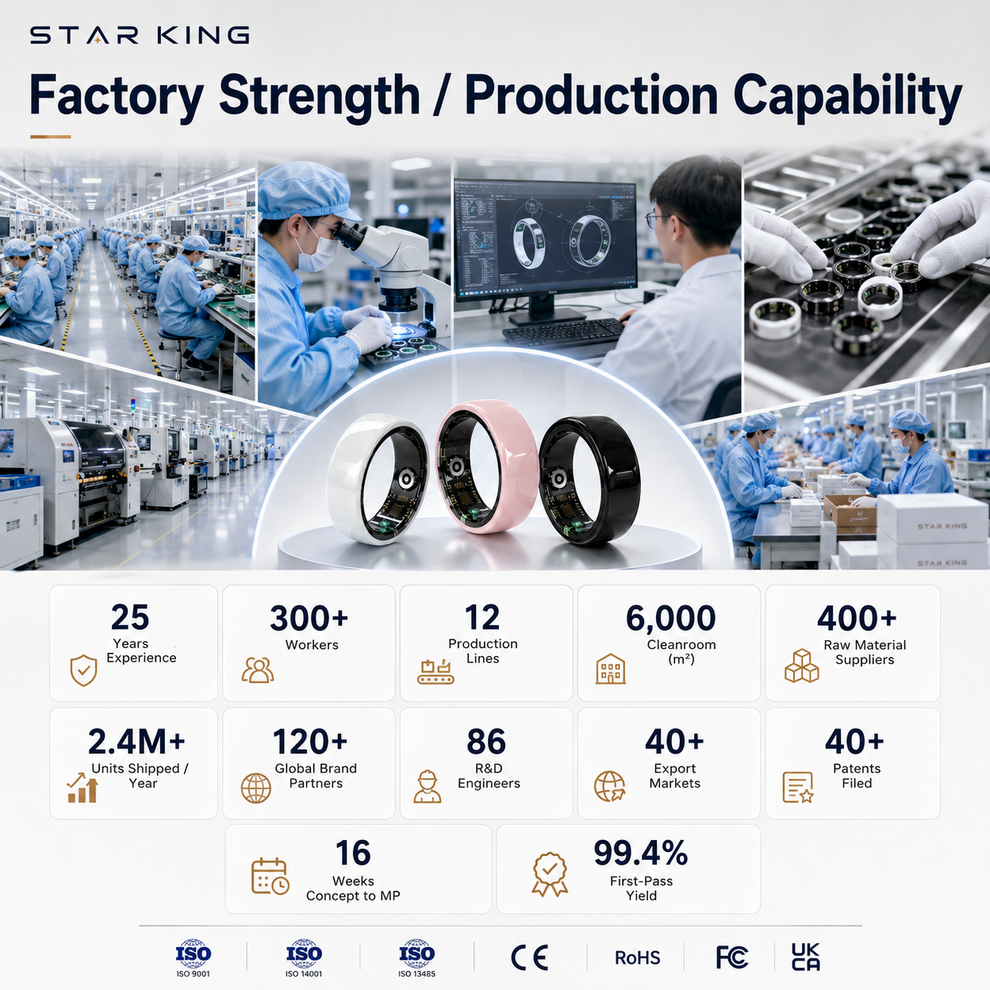
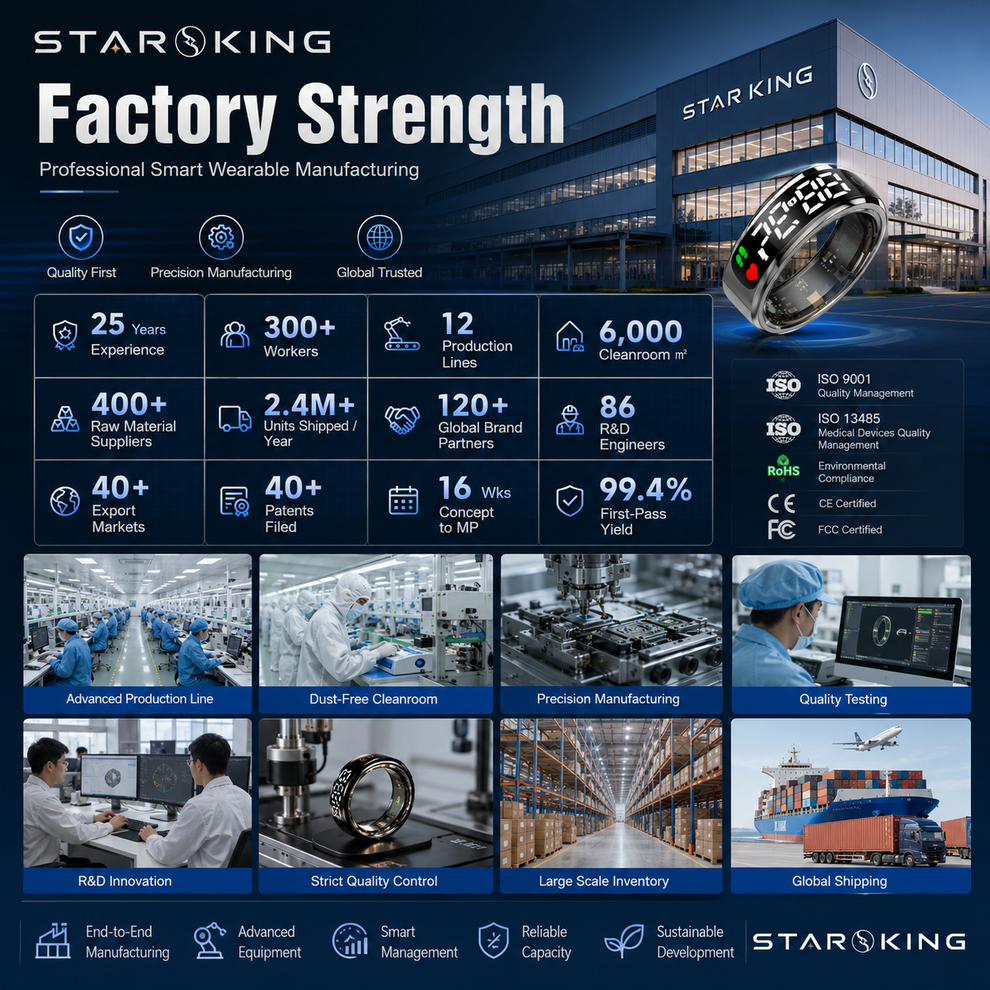
Buyers can also review STAR KING AI Smart Glasses OEM/ODM options to compare product positioning, customization scope, and sample planning.
FAQ
What certifications are required for AI smart glasses in the UK?
AI smart glasses typically require UKCA marking, RoHS compliance, WEEE registration, and UN38.3 for batteries. CE marking may still be accepted in some cases, but UKCA is the UK-specific requirement. Always verify with a conformity assessment body.
What is a typical MOQ for AI smart glasses?
MOQs vary by supplier and customization level, often ranging from 500 to 1,000 units. Some suppliers may offer lower MOQs for standard models. Discuss your volume needs early.
How long does it take to receive samples?
Sample lead time is usually 1-2 weeks, depending on availability and customization. Express shipping can reduce transit time.
Can I customize the software on AI smart glasses?
Many suppliers offer SDKs or APIs for custom development. Confirm the level of customization and support available.
What is the typical warranty period?
Standard warranty is 12 months, but extended warranties may be available. Clarify RMA procedures and spare parts availability.
How do I verify a supplier’s quality control?
Ask for their QC process documentation, AQL standards, and whether they permit third-party pre-shipment inspection. Request references if possible.
Conclusion
Issuing an RFQ for AI smart glasses requires careful preparation. By following these seven checks, UK system integrators can ensure they select a supplier that meets technical, compliance, and commercial requirements. From defining specifications to confirming after-sales support, each step reduces risk and sets the foundation for a successful deployment.
Ready to issue your RFQ? Contact STAR KING to discuss your AI smart glasses project, request samples, or get a detailed quotation. Our team can provide the specifications and compliance documentation you need to move forward with confidence.
Useful Official References for Buyers
- FCC equipment authorization guidance
- European Commission CE marking information
- Bluetooth SIG specifications
Discuss Your Smart Wearable OEM/ODM Project
Planning a smart ring, smart watch, smart band, AI glasses, AI translator, or AI voice mouse project? Contact STAR KING to discuss product positioning, sample testing, customization scope, certification requirements, lead time, and quotation details.

Team Star King

Scan WhatsApp QR code
Leave a Reply