
Smart Rings for Amazon Sellers: 7 Proven Steps to a Profitable Private Label Launch in 2026
November 21, 2026 · Team Star King
Smart Rings for Amazon Sellers: 7 Proven Steps to a Profitable Private Label Launch in 2026
Smart rings for Amazon sellers are a private-label opportunity only when the launch is built on supplier verification, sample testing, qualified certifications, and a landed-cost model that survives FBA fees. This guide gives a 7-step procurement sequence — from supplier vetting to reorder planning — that helps Amazon sellers avoid the most common margin and compliance traps in the smart ring category. Each step includes what to verify, why it matters to Amazon, and how to document it before you commit to a purchase order.
Table of Contents
Table of Contents
smart rings for Amazon sellers: Short Answer
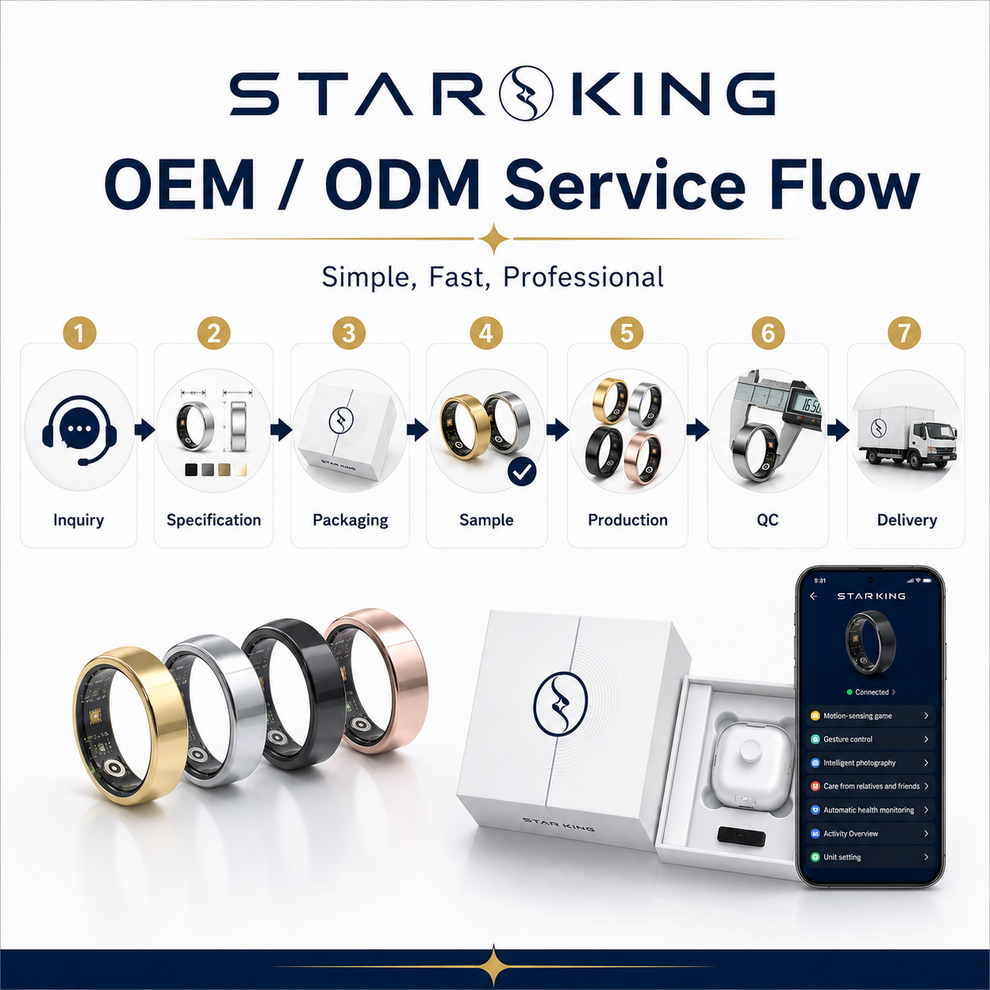
To launch smart rings for Amazon sellers should follow a fixed sequence: verify the supplier and factory, test samples against written acceptance criteria, confirm certifications for each target marketplace, lock MOQ and lead times, model landed cost including FBA fees and returns, finalize packaging and app branding, then plan the reorder before the first shipment sells through. Skipping any step usually shows up later as listing suppression, high return rates, or margin loss.
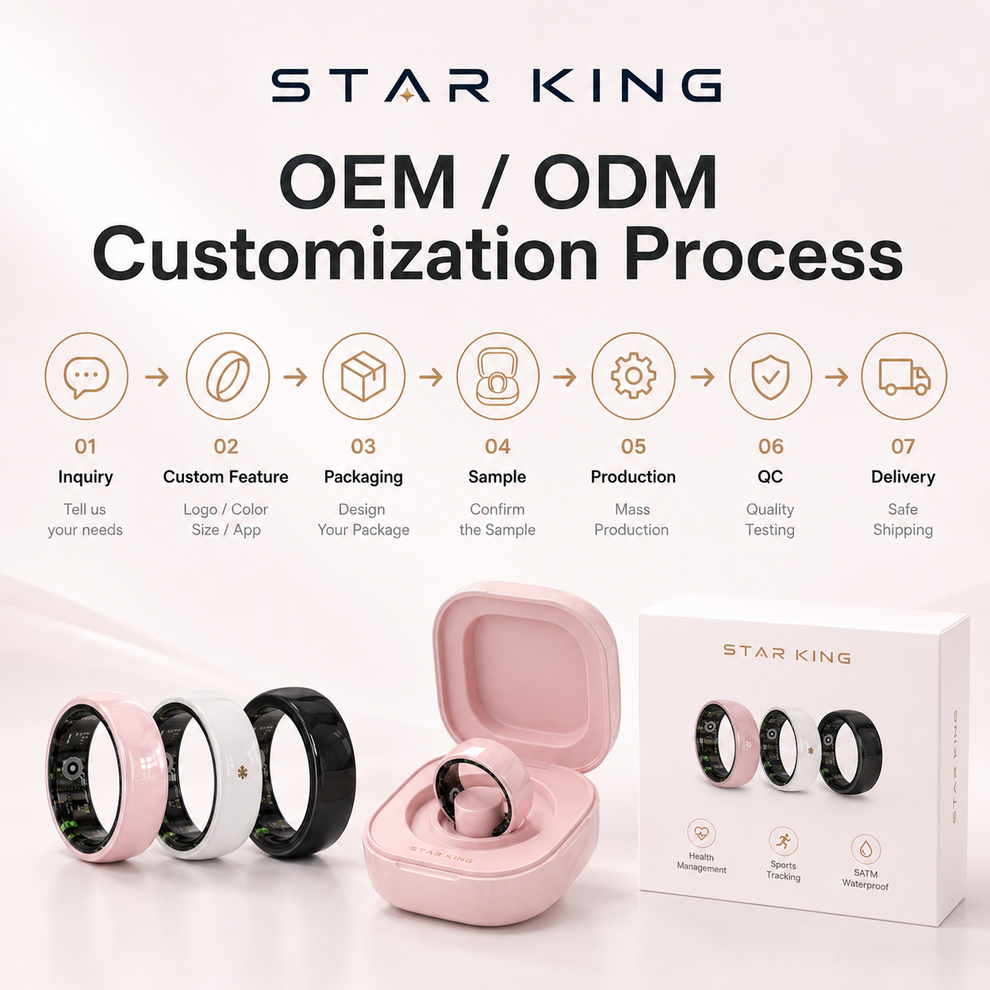
Table of Contents
- Step 1: Define the Smart Ring Positioning Before You Contact Suppliers
- Step 2: Vet Smart Ring Suppliers and Factories Like a Procurement Team
- Step 3: Test Samples Against Written Acceptance Criteria
- Step 4: Confirm Certifications and Marketplace Compliance
- Step 5: Model MOQ, Lead Time, and Landed Cost for FBA
- Step 6: Customize Packaging, App, and Firmware for Your Brand
- Step 7: Plan Reorders, Warranty, and Spare Parts Before Launch
- Key Facts for Buyers
- Smart Ring Sourcing Options Compared
- Common Mistakes and Buyer Red Flags
- Practical Buyer Checklist
- FAQ
Key Takeaways
- Smart rings for Amazon sellers succeed on procurement discipline, not on product hype; supplier verification and sample testing protect margin.
- Certification requirements for smart rings typically depend on the target marketplace, product configuration, and battery capacity; buyers should verify with the supplier and, where required, a testing lab.
- MOQ, tooling, and customization choices directly change unit cost and lead time, so model landed cost before negotiating price.
- Amazon-specific risks include listing compliance, battery shipping documentation, return rates, and counterfeit or IP complaints.
- A written buyer checklist and sample acceptance report reduce the chance of a failed first production run.
Step 1: Define the Smart Ring Positioning Before You Contact Suppliers
Amazon sellers who start with a supplier catalog usually end up with a generic product and a weak listing. Start with the listing instead: define the use case, price band, target customer, and the three specification trade-offs you are willing to accept. Smart rings typically compete on sleep tracking, activity tracking, heart rate and blood oxygen monitoring, battery life, and app experience.
Write a one-page product brief that states:
- Primary use case (sleep and recovery, fitness tracking, corporate wellness, or general wellness).
- Target retail price and target landed cost ceiling.
- Required sensors and whether the app must integrate with Apple Health or Google Fit.
- Battery life expectation and charging method.
- Water resistance level needed for the use case.
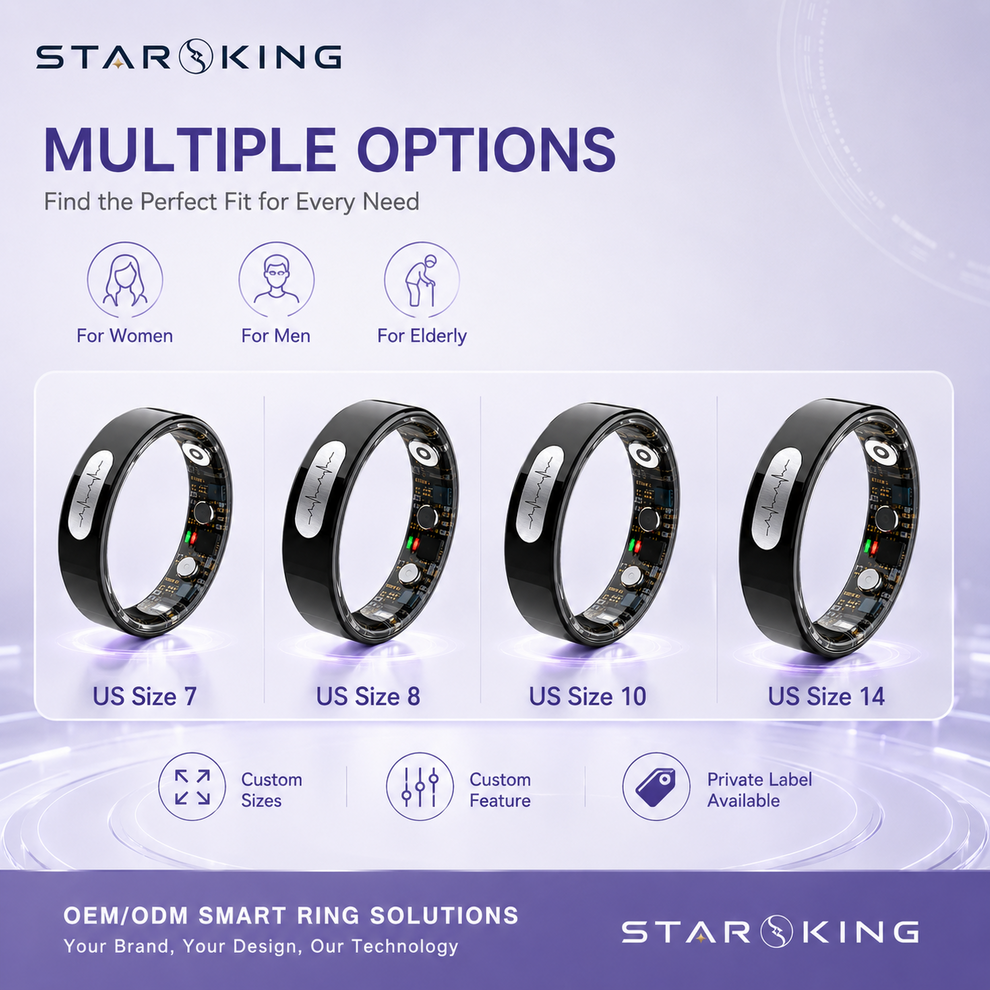
- Sizes and colorways for the first SKU set.
The brief becomes your comparison tool. When you request quotations from three to five suppliers, you can compare like for like instead of comparing marketing sheets. For a technical overview of the category, review the smart rings product range and the private label OEM/ODM solution to understand which configuration options are typically available.
Why positioning comes before price
Price negotiation without a specification baseline is a weak position. If you know which sensor package, battery capacity, and app features you need, you can ask suppliers to quote the same configuration and identify where cost differences come from. This also helps you estimate Amazon referral fees and FBA fulfillment costs with a realistic product weight and box size.
Step 2: Vet Smart Ring Suppliers and Factories Like a Procurement Team
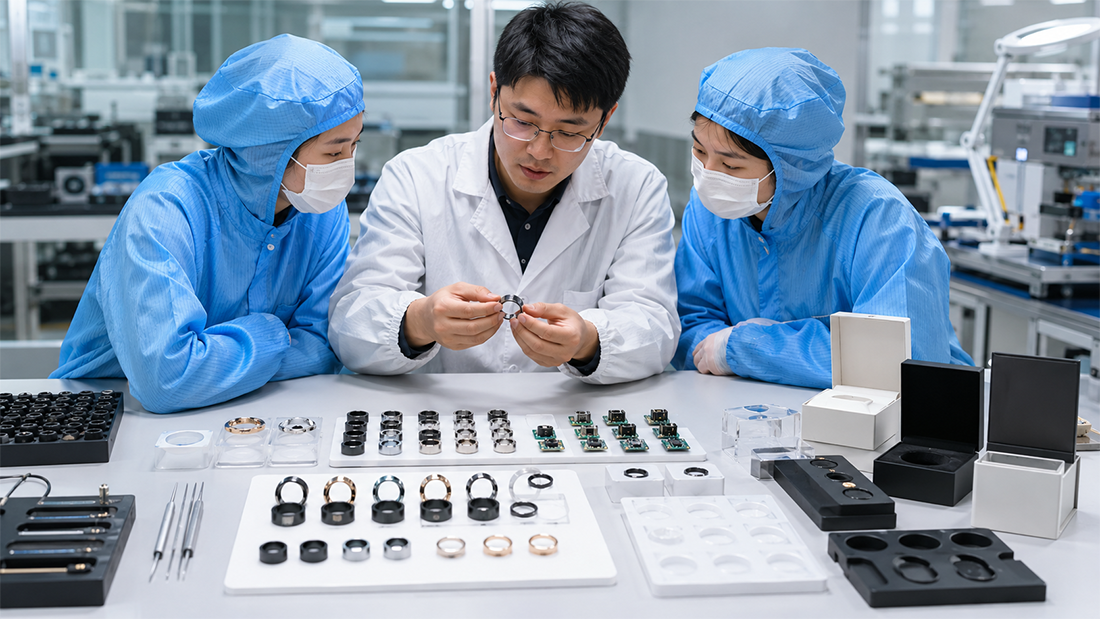
Supplier verification is the highest-leverage step for smart rings for Amazon sellers because the ring form factor is small, the battery is sealed, and after-sales service depends on firmware and app support. A supplier that cannot explain its testing process or app update roadmap is a risk to your listing.
Ask every candidate supplier for the following, and compare answers side by side:
- Company registration and factory address; request a short video call from the production floor.
- Which processes are in-house (SMT, assembly, aging test, packaging) and which are outsourced.
- Firmware and app ownership: who develops the app, who owns the code, and how updates are delivered.
- Test reports available for the exact SKU, not a similar model.
- References or export markets served, without disclosing confidential customer names.
- Warranty terms and spare-part policy for rings, chargers, and sizing kits.
For a broader framework, see our sourcing and manufacturing resources. Buyers evaluating China-based manufacturing can also review general guidance on supplier verification from the International Trade Administration.
Questions that reveal supplier maturity
Ask: “If our first production run has a 3% functional failure rate, what is your replacement process and timeline?” and “Can you provide the firmware version history and the last security update date?” Suppliers with a real process answer with specifics; trading companies usually answer with promises.
Step 3: Test Samples Against Written Acceptance Criteria
Sample testing should produce a document, not an opinion. Before ordering samples, write acceptance criteria for the functions that drive returns on Amazon: battery life, charging reliability, app pairing, sensor accuracy consistency, water resistance, and sizing comfort.
Recommended sample test protocol for smart rings:
- Order at least three units per size in the launch range, from the same production batch if possible.
- Run a 7-day battery and charging cycle test and record actual results against the claimed specification.
- Pair each sample with the app on both iOS and Android and record pairing failures.
- Compare heart rate and blood oxygen readings against a reference device under the same conditions; treat results as consistency checks, not medical validation.
- Perform a water exposure test appropriate to the claimed rating and document the result.
- Ask the supplier for aging test and drop test reports for the model.
If the supplier offers sleep and recovery tracking features, test the sleep report generation over several nights and confirm the data appears correctly in the app. Consumer wearable readings are wellness indicators and should not be marketed as medical diagnosis.
If you are comparing sample options, STAR KING can discuss which smart ring configurations and test documentation are available for your target marketplace before you commit to a sample order — request a quotation.
Step 4: Confirm Certifications and Marketplace Compliance
Certification is where many smart ring launches stall. Requirements typically depend on the product configuration, the radio modules used, battery capacity, and the destination market. Sellers should not assume that a supplier’s general statement covers every SKU.
For Amazon sellers, the compliance file usually includes:
- Radio equipment compliance for the target market (for example, FCC requirements in the United States and CE marking requirements in the European Union).
- RoHS compliance for restricted substances.
- Battery transport documentation, such as UN38.3 test summary and MSDS, when lithium batteries are shipped.
- Safety documentation requested by the marketplace or by the carrier.
- Labeling and packaging requirements for the destination country.
Official references include the FCC for U.S. radio equipment, the European Commission CE marking guidance, and the IATA Dangerous Goods Regulations for lithium battery shipping. Requirements may change; buyers should verify current rules with the supplier and a qualified testing provider.
How to verify certification documents
Check that the certificate or test report names the exact model and manufacturer, the standard version is current, and the issuing lab is recognized for the test scope. Ask the supplier whether the certification covers the private-label version with your logo, because a change in model designation can require updated documentation. [STAR KING TO CONFIRM] which certifications and test reports are available for specific smart ring SKUs.
Step 5: Model MOQ, Lead Time, and Landed Cost for FBA
Smart rings for Amazon sellers usually have a higher unit cost than accessories, so the landed-cost model matters more than the quoted FOB price. Build the model before you negotiate.
Landed cost components for a smart ring SKU:
- Unit price at the agreed MOQ.
- Tooling or customization fees, amortized over the first order.
- Packaging and printing costs.
- Freight, insurance, and duties.
- Amazon referral fee, FBA fulfillment fee, and storage fees.
- Advertising cost per unit and expected return allowance.
MOQ typically depends on whether you choose a standard model, a customized model, or a new tooling project. Lower MOQs are usually available for standard configurations, while custom colors, logo printing, and packaging changes may raise the MOQ. Lead time typically includes sample approval, component procurement, production, testing, and shipping; plan for buffer time around Chinese New Year and peak shipping seasons.
Key Facts for Buyers
| Decision Area | What to Verify | Why It Matters on Amazon |
|---|---|---|
| Supplier | Factory address, in-house processes, app ownership | Reduces risk of listing suspension and after-sales failure |
| Samples | Written acceptance criteria and test records | Lowers return rate and negative reviews |
| Certifications | Exact model coverage for target market | Supports marketplace compliance requests |
| MOQ and lead time | Standard vs. customized configuration | Controls cash flow and stockout risk |
| Landed cost | Freight, duties, FBA fees, advertising | Protects margin after Amazon fees |
| Customization | Packaging, logo, app branding | Builds brand differentiation |
| Warranty | Replacement policy and spare parts | Reduces refund leakage |
Smart Ring Sourcing Options Compared
| Option | Typical MOQ | Customization Level | Best For | Main Risk |
|---|---|---|---|---|
| Standard model with logo | Lowest | Logo and packaging only | First launch and market test | Less differentiation |
| Private label ODM | Moderate | Housing color, packaging, app name | Established Amazon sellers | Longer lead time |
| Custom tooling | Highest | Industrial design and firmware changes | Brands with proven demand | Higher upfront investment |
Step 6: Customize Packaging, App, and Firmware for Your Brand
Customization is where private-label smart rings for Amazon sellers move from commodity to brand. The practical options usually include logo printing, retail box design, quick-start guide, app display name, and in some cases firmware feature configuration.
Confirm the following before production:
- Retail packaging dimensions and weight, because they affect FBA fees.
- Barcode and labeling requirements for Amazon and the destination market.
- App branding: app name, icon, and onboarding screens — and who hosts the app.
- User manual language and warranty statement.
- Whether the factory can support firmware updates after launch and how they are delivered.
If you plan to sell multiple products, review how a broader health and fitness wearables solution can share app infrastructure and reduce long-term development cost.
Step 7: Plan Reorders, Warranty, and Spare Parts Before Launch
The first shipment is a test, not the finish line. Before launch, agree on the reorder lead time, the warranty replacement process, and the spare-parts plan for chargers and sizing kits. Amazon reviews often mention charging problems and app pairing issues; a supplier that can ship replacement chargers quickly protects your rating.
Set a reorder trigger based on weekly sales velocity and the supplier’s production lead time. If your lead time is 45 days, reorder when remaining stock covers 60 days of forecast sales. Document the process so a stockout does not force you into expensive air freight.
Common Mistakes and Buyer Red Flags
- Buying from a trading company without a factory visit or video audit. The price may look better, but technical support and certification coverage may be weaker.
- Accepting a general certification statement. Ask for the document that names your exact model.
- Testing one sample only. Batch variation is real; test several units.
- Ignoring FBA fees in the landed-cost model. A product that looks profitable at FOB can lose money after fulfillment and advertising.
- Marketing health features as medical claims. Consumer smart rings are wellness devices; avoid diagnostic language.
- No written warranty policy. Return leakage erodes margin quickly.
- No plan for app updates. A discontinued app can make the product unsellable.
Practical Buyer Checklist
- Product brief with target price and specification trade-offs written.
- Three to five suppliers compared on factory processes and app ownership.
- Samples tested against written acceptance criteria.
- Certification documents checked for exact model coverage.
- Battery shipping documents confirmed (UN38.3 test summary, MSDS).
- MOQ, tooling fees, and lead time confirmed in writing.
- Landed cost model includes FBA fees, advertising, and returns.
- Packaging dimensions and barcode requirements confirmed.
- App branding and firmware update process documented.
- Warranty and spare-parts policy agreed.
- Reorder trigger and lead time planned.
FAQ
What MOQ should an Amazon seller expect for private-label smart rings?
MOQ typically depends on the configuration. Standard models with logo printing usually have the lowest MOQ, while custom colors, packaging, or tooling raise it. Ask for a written MOQ table for each configuration before comparing prices.
Which certifications do smart rings need for Amazon?
Requirements typically depend on the target marketplace, the radio module, and battery capacity. Common documents include FCC or CE radio compliance, RoHS, and UN38.3 plus MSDS for battery shipping. Buyers should verify current requirements for each marketplace.
How long does production take after sample approval?
Lead time usually includes component procurement, production, testing, and packaging. Standard models are typically faster than customized orders. Confirm the schedule in writing and add buffer for peak seasons.
Can the app be branded for my Amazon brand?
Many ODM suppliers can brand the app name and icon, but hosting and update responsibility vary. Confirm who owns the app, who pushes updates, and what happens if the relationship ends.
Are smart ring health readings medical-grade?
Consumer smart rings are wellness devices. Heart rate and blood oxygen readings are indicators, not diagnoses. Avoid medical claims in listings and consult regulatory guidance for the target market.
How do I reduce return rates on Amazon?
Clear sizing information, accurate battery claims, a tested app pairing process, and a responsive warranty policy usually reduce returns. Test multiple samples before the first production run.
Conclusion
Smart rings for Amazon sellers can be a durable private-label category when procurement is treated as a process: define the product, verify the supplier, test samples, confirm certifications, model landed cost, customize deliberately, and plan reorders. The sellers who succeed are not the ones with the lowest FOB quote; they are the ones with documented specifications, compliant files, and a supply chain that supports after-sales service.
Before you place a purchase order, complete the buyer checklist and confirm the certification coverage for your exact SKU. If you are evaluating options for a 2026 launch, compare configurations and request documentation from the supplier early.
Next Step
Ready to evaluate smart rings for your Amazon private-label launch? STAR KING can discuss sample requirements, customization options, MOQ, and the certification documents available for your target market. Request a quotation or discuss an OEM/ODM project.
Discuss Your Smart Wearable OEM/ODM Project
Planning a smart ring, smart watch, smart band, AI glasses, AI translator, or AI voice mouse project? Contact STAR KING to discuss product positioning, sample testing, customization scope, certification requirements, lead time, and quotation details.

Team Star King

Scan WhatsApp QR code
Leave a Reply