
AI translators for Southeast Asia: 7 Critical Factors for Sourcing AI Translators for Southeast Asia: A 2026 Importer’s Guide
November 19, 2026 · Team Star King
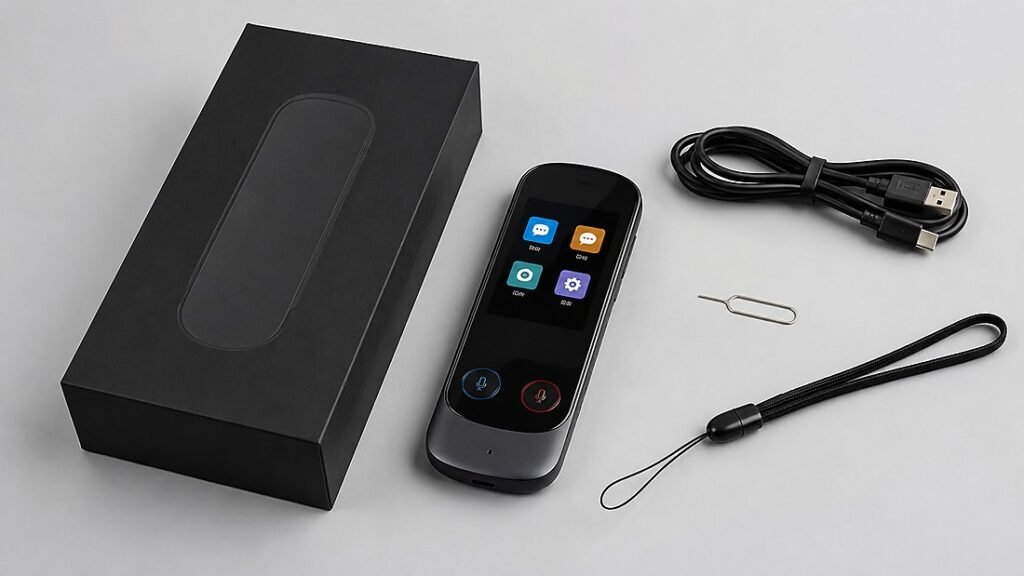
7 Critical Factors for Sourcing AI Translators for Southeast Asia: A 2026 Importer’s Guide
When sourcing AI translators for Southeast Asia, importers must prioritize regional language support, offline functionality, and compliance with local regulations. This guide outlines seven critical factors—from language accuracy to after-sales support—that will help you evaluate suppliers and make informed purchasing decisions for the diverse Southeast Asian market.
Table of Contents
Table of Contents
AI translators for Southeast Asia: Table of Contents
- Short Answer
- Key Takeaways
- Key Facts for Buyers
- Introduction
- 1. Language Coverage and Accuracy
- 2. Offline vs. Online Translation
- 3. Hardware and Build Quality
- 4. Software and App Integration
- 5. Compliance and Certification
- 6. MOQ, Pricing, and Lead Times
- 7. After-Sales Support and Warranty
- Comparison Table: Key Specifications
- Common Mistakes and Buyer Red Flags
- Practical Buyer Checklist
- FAQ
- Conclusion
Short Answer
To successfully source AI translators for Southeast Asia, importers should focus on devices that support key regional languages (e.g., Indonesian, Thai, Vietnamese, Filipino) with high accuracy, offer offline translation for areas with poor connectivity, and comply with local certification requirements. Evaluating suppliers on these factors, along with MOQ flexibility and after-sales support, will mitigate risks and ensure product-market fit.
Key Takeaways
- Prioritize AI translators with extensive Southeast Asian language support and offline capabilities.
- Verify supplier credentials, product certifications, and quality control processes.
- Understand MOQs, lead times, and total landed cost to plan your budget and inventory.
- Consider customization options (logo, packaging, app) to differentiate your brand.
- Ensure robust after-sales support and warranty terms to protect your investment.

Key Facts for Buyers
| Factor | Consideration | Typical Range/Notes |
|---|---|---|
| Language Support | Number of languages, regional dialects | At least 10 Southeast Asian languages; verify accuracy |
| Offline Translation | Availability and language coverage | Essential for rural areas; check offline language packs |
| Connectivity | Wi-Fi, cellular, Bluetooth | 4G/5G optional; Bluetooth for pairing |
| Battery Life | Usage time per charge | 8-12 hours typical; consider replaceable batteries |
| Certifications | CE, FCC, RoHS, local marks | Depends on country; verify with supplier |
| MOQ | Minimum order quantity | 500-1000 units for OEM; lower for stock models |
| Lead Time | Production and shipping | 30-60 days; plan for customs clearance |
Introduction
Southeast Asia’s linguistic diversity—with over 1,000 languages spoken across 11 countries—presents a unique challenge for importers of AI translators. As the region’s tourism, business travel, and cross-border trade rebound, demand for reliable translation devices is surging. However, not all AI translators are created equal. Sourcing the right product requires careful evaluation of language accuracy, offline functionality, hardware durability, and compliance with local regulations. This guide distills seven critical factors that importers must consider when sourcing AI translators for Southeast Asia in 2026. By addressing these factors, you can avoid costly mistakes, ensure product-market fit, and build a competitive edge in this dynamic market. Whether you are an experienced distributor or a startup brand, these insights will help you navigate the sourcing process with confidence.
1. Language Coverage and Accuracy
The primary function of an AI translator is to bridge language gaps, so the breadth and accuracy of language support are paramount. For Southeast Asia, your device must handle major languages such as Indonesian, Thai, Vietnamese, Filipino, Malay, and Khmer, among others. But coverage alone is not enough; accuracy in real-world scenarios—including accents, dialects, and noisy environments—is critical. Poor translation can lead to miscommunication, eroding user trust and damaging your brand reputation.
When evaluating suppliers, request demo units and test translations across various contexts: business meetings, casual conversations, and technical discussions. Pay attention to latency—the delay between speech and translation—as users expect near-instant responses. Also, consider whether the device supports regional dialects, such as Javanese or Sundanese in Indonesia, which can be a differentiator in local markets.
Why it matters: In Southeast Asia’s diverse markets, a translator that excels in major languages but fails in local dialects may limit your addressable market. Accurate, low-latency translation enhances user experience and reduces returns.
2. Offline vs. Online Translation
While online translation leverages cloud-based AI for superior accuracy, it relies on stable internet connectivity—which can be unreliable in rural or remote areas of Southeast Asia. Offline translation, powered by on-device neural networks, ensures functionality without connectivity but may have limited language packs or lower accuracy.
For importers targeting markets like Indonesia, the Philippines, or Thailand, where internet penetration varies, a hybrid approach is ideal: devices that support both online and offline modes, with automatic switching. When evaluating suppliers, ask about offline language availability, the size of offline models, and how updates are delivered. Some devices allow users to download additional offline packs via Wi-Fi, adding flexibility.
Validation method: Test offline translation in a simulated low-connectivity environment. Check the list of offline-supported languages and ensure it aligns with your target markets.
3. Hardware and Build Quality
AI translators are often used on the go—in bustling markets, crowded transit, or outdoor meetings—so durability is essential. Look for devices with robust casing, water resistance (at least IPX4 for splash resistance), and comfortable ergonomics. Battery life is another critical factor: a device that dies mid-conversation is frustrating. Aim for at least 8-10 hours of continuous use, and consider whether batteries are replaceable or rechargeable via USB-C.
Screen quality matters if the device includes a display; ensure it is readable under bright sunlight. Also, evaluate the microphone array and speaker quality, as clear audio capture and playback directly impact translation accuracy.
Supplier check: Request drop test reports and waterproof testing documentation. Ask about the warranty period and whether replacement parts (e.g., batteries, chargers) are available.
4. Software and App Integration
Many AI translators pair with a smartphone app for extended functionality, such as translation history, custom phrasebooks, or firmware updates. A well-designed app can enhance user experience and provide opportunities for your brand to engage customers post-purchase. When evaluating suppliers, consider:
- App availability: Is there a companion app for iOS and Android? Is it customizable with your branding?
- Firmware updates: How are updates delivered? Are they mandatory or optional? Can they be managed remotely?
- Data privacy: Does the app collect user data? If so, ensure compliance with local data protection laws (e.g., Thailand’s PDPA, Indonesia’s PDP Law).
For OEM/ODM projects, discuss the level of app customization available—from logo changes to full white-labeling. If you lack in-house app development resources, choose a supplier that offers turnkey solutions.
5. Compliance and Certification
Each Southeast Asian country has its own regulatory requirements for electronic devices. Common certifications include CE (for EU, but often accepted elsewhere), FCC (for US, sometimes referenced), and local marks such as Indonesia’s SDPPI, Thailand’s TISI, and Vietnam’s MIC. Additionally, if the device contains a lithium-ion battery, UN38.3 certification is required for air transport, along with MSDS documentation.
Importers must verify that the supplier can provide the necessary certifications for their target markets. Not all suppliers have pre-certified products for every country; in some cases, you may need to fund local testing. Always request copies of certificates and confirm their validity. Be wary of suppliers who claim “all certifications available” without evidence.
Caution: Certification requirements typically depend on the specific product configuration (e.g., cellular vs. Wi-Fi only) and destination country. Buyers should verify with local authorities or a compliance consultant.
6. MOQ, Pricing, and Lead Times
Minimum order quantities (MOQs) for AI translators vary widely. Stock models may have MOQs as low as 100 units, while custom OEM/ODM projects often require 500-1,000 units or more. Pricing is influenced by factors such as hardware specifications, language pack licensing, customization, and order volume. Always request a detailed quotation that breaks down costs, including tooling (if applicable), packaging, and shipping.
Lead times also vary: stock products may ship within 7-15 days, while custom orders can take 30-60 days or more, depending on complexity. Factor in shipping time (typically 7-30 days by air or sea) and customs clearance. For initial orders, consider air freight to reduce lead time, even though it costs more.
Negotiation tip: For long-term partnerships, discuss volume discounts and forecast sharing to secure better pricing and priority production slots.
7. After-Sales Support and Warranty
Reliable after-sales support is crucial for maintaining customer satisfaction and protecting your brand. Clarify the warranty period (typically 12 months), what it covers (manufacturing defects vs. accidental damage), and the process for repairs or replacements. Ask about the availability of spare parts, such as batteries, chargers, and earphones.
For importers, consider whether the supplier offers a local service center or partner in your region. If not, you may need to handle warranty claims yourself, which requires stocking spare units or parts. Also, inquire about technical support for software issues—can your team get timely assistance?
Risk mitigation: Negotiate a warranty that includes advance replacement for defective units to minimize downtime and customer dissatisfaction.
Comparison Table: Key Specifications
| Feature | Basic Model | Advanced Model | Premium Model |
|---|---|---|---|
| Language Support | 10 languages (major SEA) | 30 languages (incl. dialects) | 50+ languages, custom packs |
| Offline Translation | Limited (2-3 languages) | 5-10 languages | 15+ languages |
| Connectivity | Wi-Fi only | Wi-Fi + Bluetooth | Wi-Fi + 4G |
| Battery Life | 6 hours | 10 hours | 12+ hours, replaceable |
| Display | Basic LCD | Color touchscreen | HD touchscreen |
| MOQ (OEM) | 500 units | 1000 units | 2000 units |
| Certifications | CE, RoHS | CE, FCC, RoHS | Full local certifications |
Common Mistakes and Buyer Red Flags
- Underestimating language complexity: Assuming a device that works well in English will perform equally in Thai or Vietnamese. Always test with native speakers.
- Ignoring connectivity realities: Overlooking offline capabilities for areas with poor internet, leading to user frustration.
- Skipping certification verification: Taking supplier claims at face value; always request certificates and verify with authorities.
- Choosing on price alone: Opting for the cheapest option without considering quality, support, and hidden costs (e.g., low-quality batteries that fail early).
- Overlooking after-sales: Failing to clarify warranty terms and spare parts availability, resulting in high return rates and customer complaints.
Practical Buyer Checklist
- ☐ Test demo units for language accuracy in target languages.
- ☐ Confirm offline translation capabilities and language packs.
- ☐ Review hardware durability (drop test, waterproof rating).
- ☐ Assess app functionality and customization options.
- ☐ Verify certifications for each target country.
- ☐ Negotiate MOQ, pricing, and lead times.
- ☐ Clarify warranty, after-sales support, and spare parts.
- ☐ Check supplier credentials and references.
Buyers can also review STAR KING AI Translators OEM/ODM options to compare product positioning, customization scope, and sample planning.
FAQ
1. What are the most important languages to support for Southeast Asia?
Prioritize Indonesian, Thai, Vietnamese, Filipino, and Malay, as these are the most widely spoken in the region. Adding Khmer and Burmese can expand your reach.
2. How can I verify the accuracy of an AI translator?
Request sample units and conduct real-world tests with native speakers in various settings (e.g., noisy environments, different accents). Compare translations against human interpretations.
3. Do I need local certifications for each Southeast Asian country?
Yes, most countries require specific certifications for electronic devices. For example, Indonesia requires SDPPI for wireless devices, Thailand requires TISI, and Vietnam requires MIC. Work with your supplier to ensure compliance.
4. What is a typical MOQ for AI translators?
MOQs range from 100 units for stock models to 1,000 units or more for custom OEM/ODM orders. Negotiate based on your volume and long-term potential.
5. How long does shipping to Southeast Asia take?
Air freight typically takes 7-14 days, while sea freight can take 20-30 days, depending on the destination port and customs clearance. Plan for additional time during peak seasons.
6. Can I customize the AI translator with my brand logo?
Yes, most suppliers offer logo customization, packaging design, and even app branding for OEM/ODM projects. Discuss your requirements and request samples.
7. What after-sales support should I expect?
Look for at least a 12-month warranty, access to spare parts, and technical support for software issues. Some suppliers offer advanced replacement for defective units.
Conclusion
Sourcing AI translators for Southeast Asia demands a strategic approach that balances language accuracy, hardware reliability, and compliance. By focusing on the seven factors outlined in this guide, importers can select products that meet local needs and stand out in a competitive market. Remember to test thoroughly, verify certifications, and negotiate favorable terms with suppliers. As the region’s demand for translation solutions grows, making informed sourcing decisions will position your brand for success.
Ready to Source AI Translators?
STAR KING specializes in AI translators and smart hardware with flexible OEM/ODM options. Whether you need stock models or fully customized solutions for Southeast Asia, our team can guide you through specification, certification, and sampling. Request product samples to evaluate quality and performance firsthand. Let’s discuss how we can support your market entry.
Useful Official References for Buyers
- FCC equipment authorization guidance
- European Commission CE marking information
- Bluetooth SIG specifications
Discuss Your Smart Wearable OEM/ODM Project
Planning a smart ring, smart watch, smart band, AI glasses, AI translator, or AI voice mouse project? Contact STAR KING to discuss product positioning, sample testing, customization scope, certification requirements, lead time, and quotation details.

Team Star King

Scan WhatsApp QR code
Leave a Reply