
AI voice mouse suppliers: AI Voice Mouse for Middle East System Integrators: 5 Procurement Checks Before You Commit
November 10, 2026 · Team Star King
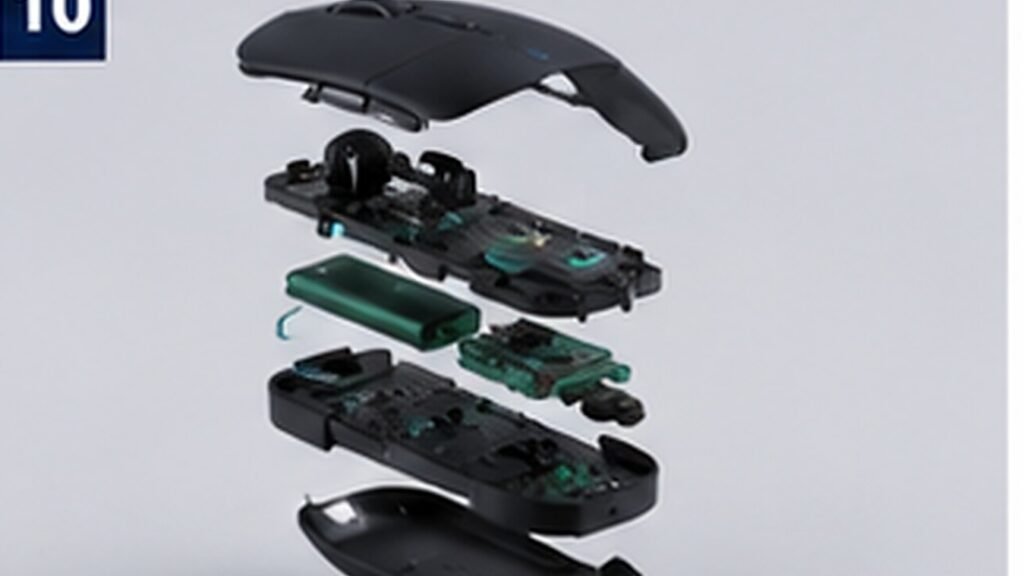
AI voice mouse suppliers buyers need a supplier evaluation process that checks product fit, OEM/ODM capability, compliance documents, quality control, pricing, lead time, and after-sales support before placing a bulk order.
Table of Contents
Table of Contents
AI Voice Mouse for Middle East System Integrators: 5 Procurement Checks Before You Commit
If you are evaluating an AI voice mouse for system integrators, the practical answer is this: do not select a supplier on demo videos alone. Evaluate five areas — multilingual voice accuracy for Arabic and English, integration methods (API, SDK, firmware), certification and import compliance for your target countries, MOQ and landed cost, and lead time with after-sales support. For Middle East projects, Arabic dialect handling and on-device versus cloud processing are usually the most decisive technical checks before you commit to a pilot order.
Table of Contents
- Short Answer
- Key Takeaways
- Key Facts for Buyers
- What Is an AI Voice Mouse?
- Why Middle East System Integrators Are Evaluating AI Voice Mouse Hardware
- Check 1: Multilingual Accuracy and Arabic Language Support
- Check 2: Integration Methods — API, SDK, and Firmware
- Check 3: Compliance, Certifications, and Import Requirements
- Check 4: MOQ, Landed Cost, and Customization Scope
- Check 5: Lead Time, Sample Validation, and After-Sales Support
- Comparison Table: Evaluation Criteria for AI Voice Mouse Suppliers
- Common Mistakes and Buyer Red Flags
- Practical Buyer Checklist
- FAQ
- Conclusion

Short Answer
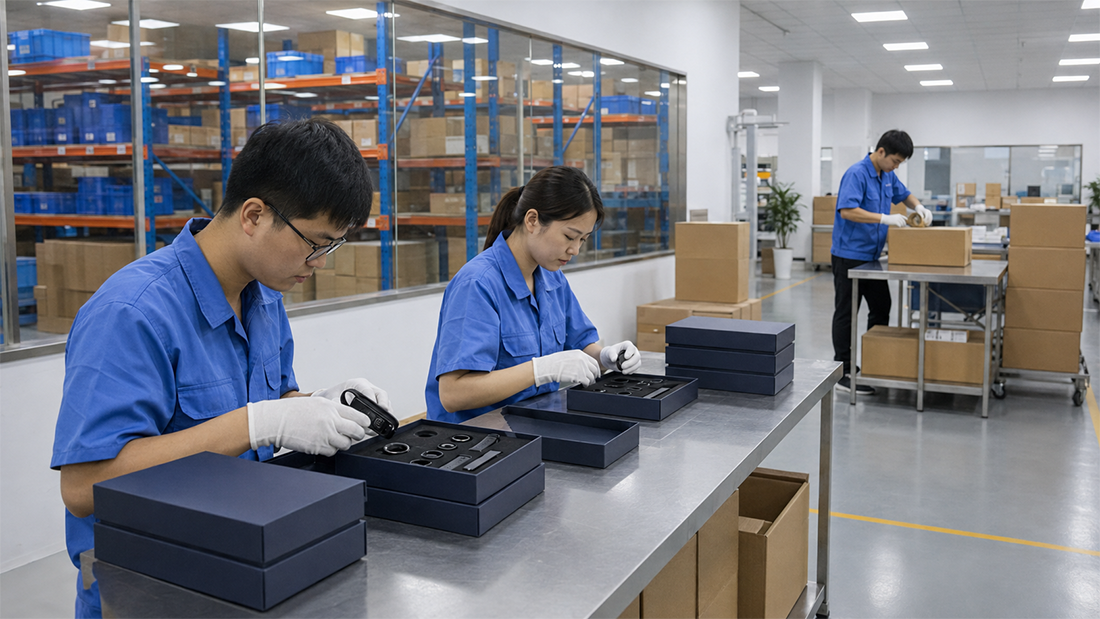
For a Middle East system integrator, an AI voice mouse is worth a pilot order only when the supplier can demonstrate Arabic plus English voice accuracy in your actual workflow, provide documented API or SDK integration, and confirm which certifications apply to your destination countries. MOQ, lead time, and warranty should be agreed in writing before tooling or logo customization begins. Treat the first shipment as a validation batch, not a final rollout.
Key Takeaways
- Arabic dialect coverage and on-device vs. cloud processing are the highest-risk technical checks for Middle East deployments.
- Integration depth — API, SDK, or firmware — determines whether the device fits your software ecosystem.
- Certification requirements vary by country and product configuration; always verify with the supplier and your importer.
- MOQ and lead time depend heavily on customization scope; baseline SKUs move faster than logo and packaging projects.
- Sample validation should include real language tests, edge-case accents, and integration testing in your own environment.

Key Facts for Buyers
| Evaluation Area | What to Confirm | Typical Risk if Skipped |
|---|---|---|
| Language support | Arabic (MSA and dialect variants), English, others as needed | Poor voice accuracy in end-user deployments |
| Processing model | On-device, cloud, or hybrid | Latency, privacy, or data-residency issues |
| Integration | API, SDK, firmware customization, OS compatibility | Rework or project delay during integration |
| Compliance | CE, FCC, RoHS, UN38.3, MSDS, plus local import rules | Customs hold or market access block |
| MOQ & cost | Per-SKU MOQ, customization MOQ, landed cost | Budget overrun or excess inventory |
| Lead time | Sample, pilot, and mass production timelines | Missed deployment deadlines |
| Support | Warranty, spare parts, firmware updates | Higher field failure cost |
Image suggestion: AI voice mouse procurement dashboard for Middle East system integrators — add a photo of the AI voice mouse next to a laptop with an Arabic interface, with ALT text referencing the focus keyword.

What Is an AI Voice Mouse and Why It Matters for Integrators
An AI voice mouse is a computer mouse that combines standard cursor control with voice capture, speech-to-text, translation, or voice-command functions. For system integrators, the device is less about consumer novelty and more about embedding voice input into workplace, education, healthcare, or public-sector workflows. The AI voice mouse category typically includes hardware (microphone array, buttons, wireless connectivity), firmware (voice trigger logic, device drivers), and software (voice engine, app integration, cloud or on-device processing). Each layer has different procurement implications.
When you evaluate an AI voice mouse as a system integrator, you are not just buying a peripheral. You are deciding whether the supplier can support an integration project: driver stability across Windows, macOS, and potentially Linux or Android environments; availability of an SDK or API; firmware behavior under custom voice triggers; and clarity on how voice data is processed and stored.
Hardware, firmware, and software layers
A practical way to structure the evaluation is to separate the three layers. Hardware questions cover microphone sensitivity, acoustic echo cancellation, battery life if wireless, and ergonomics. Firmware questions cover voice activation logic, language switching, and firmware update methods. Software questions cover the voice engine, accuracy for Arabic and English, and whether the device can call your own application APIs. For a deeper view of how these layers come together in custom AI hardware, see the AI office productivity solution page.
Why Middle East System Integrators Are Evaluating AI Voice Mouse Hardware
Middle East buyers often operate in multilingual environments where Arabic and English are both used daily. Government digitization programs, education technology rollouts, and corporate workplace productivity projects frequently require hardware that can handle Arabic input without sacrificing English accuracy. That creates demand for AI voice mouse devices that support language switching, handle right-to-left text correctly, and work with regional keyboard layouts.
At the same time, system integrators face procurement constraints that differ from pure retail buyers. You may need an OEM or private-label version with your own branding, a specific firmware configuration, or packaging in Arabic and English. You may also need to confirm import documentation for each destination country. According to the Bluetooth SIG, wireless products using Bluetooth technology must meet qualification and declaration requirements, which is one reason to request the supplier’s Bluetooth declaration details early.
Check 1: Multilingual Accuracy and Arabic Language Support
The first check is language performance, not product appearance. For Middle East deployments, ask the supplier to demonstrate Arabic (Modern Standard Arabic and relevant dialect variants) and English in the same session, including switching between them. Test real project vocabulary — names, addresses, technical terms, and mixed Arabic-English sentences — rather than demo phrases.
What to test in a sample
- Accuracy for Arabic dictation, including punctuation and right-to-left rendering.
- Accuracy for English dictation in the same device session.
- Latency between speech and text output, especially if processing is cloud-based.
- Behavior with background noise typical of offices, classrooms, and public service counters.
- Whether voice data is processed on-device, in the cloud, or in a hybrid model, and where data is stored.
If the voice engine is cloud-based, confirm data residency and privacy terms with your end customer before rollout. If it is on-device, confirm which languages are supported locally and how firmware updates add or improve language models. For related AI hardware integration patterns, the AI translators product line is a useful reference for multilingual device behavior.
Image suggestion: Close-up of a user dictating Arabic text with an AI voice mouse, captioned to reinforce the focus keyword and the Middle East buyer context.
Check 2: Integration Methods — API, SDK, and Firmware
The second check is integration depth. A system integrator needs to know whether the AI voice mouse can be integrated into your software stack or only used as a standalone peripheral. Ask for documented API or SDK access, supported operating systems, driver update policy, and whether firmware can be customized for your voice commands or workflow triggers.
Questions to ask the supplier
- Is there a documented SDK or API, and what is the access process?
- Which operating systems and versions are officially supported?
- Can firmware be customized for custom voice triggers, language defaults, or device behavior?
- How are firmware and driver updates delivered and validated?
- Does the device require a companion app, and can that app be white-labeled?
If customization is needed, clarify whether the supplier offers firmware customization and app customization as separate services. For a broader view of customization options across AI hardware, review the private label OEM/ODM solution page. [STAR KING TO CONFIRM: available SDK/API documentation and firmware customization scope for the AI voice mouse.]
Check 3: Compliance, Certifications, and Import Requirements
The third check is compliance. Certification requirements depend on the product configuration and the destination market. A wireless AI voice mouse may require radio equipment approvals, and if it contains a battery, battery transport documentation may apply. In the EU, radio equipment is generally covered by the Radio Equipment Directive, and buyers should verify current requirements on the European Commission RED page. For the United States, the FCC publishes equipment authorization guidance. Middle East countries may have their own telecommunications and customs requirements, so confirm with your local importer or regulatory consultant.
Documents to request
- CE and FCC documentation if applicable to the SKU and market.
- RoHS compliance statements and material declarations.
- UN38.3 test summary and MSDS if the device contains a lithium battery.
- Bluetooth or wireless declaration details if applicable.
- Packaging and labeling review for Arabic and English requirements.
Do not assume that every SKU carries every certification. Ask for certificate scope per model and confirm that the certificate matches the exact configuration you plan to import. For related compliance considerations in wearables and AI hardware, see the STAR KING resources blog.
Check 4: MOQ, Landed Cost, and Customization Scope
The fourth check is commercial. MOQ and cost are driven by customization scope: baseline SKUs typically have lower MOQs than logo, packaging, or firmware-customized versions. For system integrator projects, calculate landed cost rather than unit price alone. Include freight, insurance, duties, customs clearance, and any certification or testing costs allocated to the project.
Cost factors to compare
| Cost Factor | What It Covers | Buyer Action |
|---|---|---|
| Unit price | Base hardware cost per SKU | Compare same configuration only |
| Customization | Logo, packaging, firmware, app | Request separate quotation per item |
| Tooling | New molds or fixtures if required | Clarify ownership and amortization |
| Freight & insurance | Shipping to destination | Confirm Incoterms |
| Duties & clearance | Import taxes and broker fees | Verify with local importer |
| Certification/testing | Market-specific approvals | Confirm who pays and who owns reports |
Ask for a written MOQ breakdown by SKU and by customization level. If the supplier cannot provide a clear breakdown, that is a warning sign for project planning. [STAR KING TO CONFIRM: MOQ per SKU and per customization level for the AI voice mouse.]
Soft CTA
If you are comparing configurations for a Middle East deployment, you can request product samples to test Arabic and English voice performance in your own environment before committing to a pilot order.
Check 5: Lead Time, Sample Validation, and After-Sales Support
The fifth check is delivery and support. Lead time has three parts: sample lead time, pilot production lead time, and mass production lead time. Customization adds time, particularly for packaging and firmware changes. Ask for a written timeline with milestones and agree on what happens if a milestone slips.
Sample validation plan
- Test Arabic and English voice accuracy with your project vocabulary.
- Test integration with your software stack and target operating systems.
- Test device behavior under typical office, classroom, or public-sector noise conditions.
- Review packaging and labeling drafts before mass production.
- Confirm warranty terms, spare parts availability, and firmware update policy.
After-sales support matters for integrators because field failures affect your service reputation. Clarify warranty duration, replacement process, and who handles technical support in your region. [STAR KING TO CONFIRM: sample lead time, mass production lead time, warranty terms, and spare parts policy for the AI voice mouse.]
Comparison Table: Evaluation Criteria for AI Voice Mouse Suppliers
| Criteria | Strong Supplier Signal | Weak Supplier Signal |
|---|---|---|
| Language support | Documented Arabic and English testing, dialect scope stated | Vague claims; demo only in English |
| Integration | SDK/API documentation available; OS support listed | No documentation; custom work “discussed later” |
| Compliance | Certificate scope per SKU; battery documents available | “All certifications available” without scope |
| MOQ | Clear breakdown by SKU and customization | One MOQ number with no detail |
| Lead time | Written milestones for sample, pilot, mass production | Verbal estimates only |
| Support | Warranty, spare parts, firmware update policy in writing | No after-sales terms |
Common Mistakes and Buyer Red Flags
Common mistakes
- Selecting a supplier based on a generic demo video without testing Arabic input.
- Assuming all SKUs carry the same certifications.
- Ignoring cloud versus on-device processing until after the pilot.
- Treating unit price as landed cost.
- Skipping integration testing with your own software stack.
Buyer red flags
- Supplier cannot state which languages are supported on-device versus in the cloud.
- No documented API, SDK, or firmware update process.
- Certification claims without certificate scope or model numbers.
- MOQ and lead time change after deposit.
- No written warranty or spare parts policy.
Practical Buyer Checklist
- Confirm Arabic and English voice accuracy with your project vocabulary.
- Request documented SDK/API and OS compatibility list.
- Verify certificate scope per SKU and destination country.
- Request UN38.3 and MSDS if the device contains a battery.
- Obtain written MOQ breakdown by SKU and customization level.
- Calculate landed cost including freight, duties, and testing.
- Agree sample, pilot, and mass production milestones in writing.
- Confirm warranty, spare parts, and firmware update policy.
- Clarify tooling ownership and IP terms if custom molds are involved.
FAQ
1. Does an AI voice mouse support Arabic dialects?
Support varies by supplier and voice engine. Ask for a documented list of supported languages and dialects, and test Modern Standard Arabic plus the dialect variants used in your target market before committing to a pilot order.
2. Can we integrate the AI voice mouse with our own software?
That depends on whether the supplier offers an API or SDK and which operating systems are supported. Request documentation and a technical call before evaluating commercial terms.
3. Which certifications do we need for Middle East import?
Requirements vary by country and product configuration. Radio equipment, battery, and labeling rules may apply. Confirm with your local importer or regulatory consultant and request certificate scope per SKU from the supplier.
4. What MOQ should we expect for a customized AI voice mouse?
MOQ typically depends on customization scope. Baseline SKUs usually have lower MOQs than logo, packaging, or firmware-customized versions. Ask for a written breakdown by SKU and customization level.
5. Is on-device or cloud processing better for our project?
It depends on your privacy, latency, and data-residency requirements. On-device processing can reduce data transfer concerns; cloud processing may offer broader language coverage. Confirm the processing model with the supplier and your end customer.
6. How long does sample and production lead time take?
Lead time varies by configuration and customization. Request written milestones for sample, pilot, and mass production, and agree on review points before placing a deposit.
7. What should we check in a sample before a pilot order?
Test Arabic and English accuracy, integration with your software, noise performance, packaging drafts, and after-sales terms. A sample validation report helps align internal stakeholders before the pilot.
Conclusion
For Middle East system integrators, the AI voice mouse decision comes down to five checks: multilingual accuracy, integration depth, compliance, commercial terms, and delivery with support. A structured evaluation reduces the risk of a pilot that fails in the field. Use the checklist above, request written documentation, and treat the first order as a validation batch. When the supplier can answer these questions clearly, the project is ready for the next stage.
STAR KING CTA
Ready to evaluate an AI voice mouse for your Middle East integration project? Request product samples and share your language, integration, and certification requirements so we can confirm the right configuration for your pilot.
Discuss Your Smart Wearable OEM/ODM Project
Planning a smart ring, smart watch, smart band, AI glasses, AI translator, or AI voice mouse project? Contact STAR KING to discuss product positioning, sample testing, customization scope, certification requirements, lead time, and quotation details.

Team Star King

Scan WhatsApp QR code
Leave a Reply