
private label smart watches: 7 Critical Checks Before You Private Label Smart Watches for the US Market
November 2, 2026 · Team Star King
7 Critical Checks Before You Private Label Smart Watches for the US Market
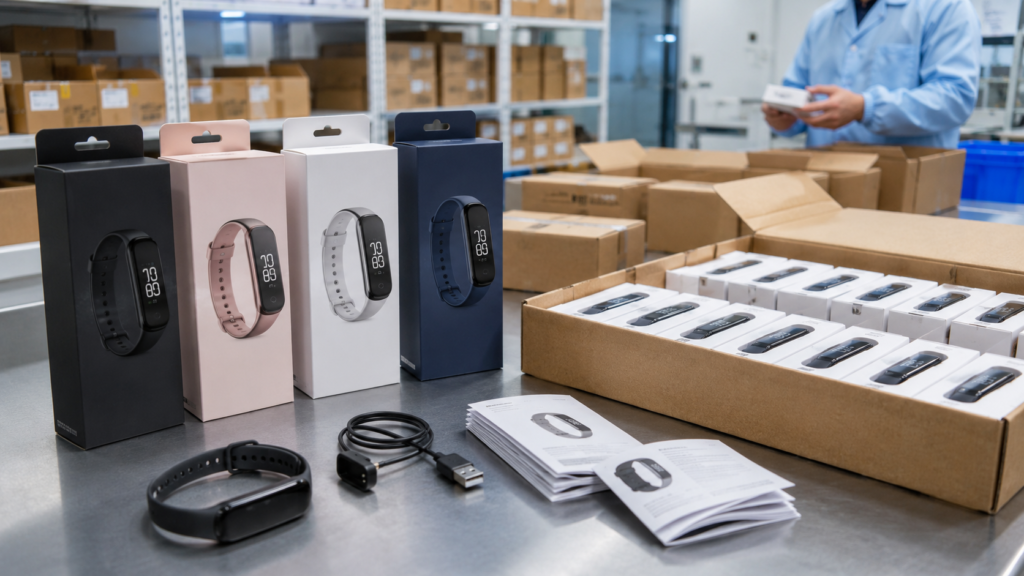
Private label smart watches are wrist-worn devices manufactured by a supplier and sold under your own brand, with customization spanning logo, packaging, firmware, and companion app. For US buyers, the decision hinges on seven verifiable checks: OEM/ODM capability, MOQ and pricing logic, sample validation, app and firmware control, FCC and battery compliance, quality systems, and landed cost. This guide walks private-label brands through each check so you can commit to a supplier with confidence rather than hope.
Table of Contents
Table of Contents
Short Answer: Before signing with a private label smart watches supplier for the US market, verify the factory’s OEM/ODM scope, confirm MOQ and unit economics at your target volume, test pre-production samples against your spec, map who controls the app and firmware, and obtain FCC and UN38.3 documentation tied to the exact model you will import. Buyers who skip these checks typically discover cost or compliance gaps after tooling and packaging are already committed.
private label smart watches: Table of Contents
- Check 1: OEM, ODM, or Private Label — Know Which Model You Need
- Check 2: MOQ and the Real Drivers of Unit Price
- Check 3: Sample Testing and Pre-Production Validation
- Check 4: App, Firmware, and Software Ownership
- Check 5: FCC, UN38.3, and Battery Compliance for the US
- Check 6: Quality Control and Pre-Shipment Inspection
- Check 7: Landed Cost, Lead Time, and After-Sales Planning
- Comparison Table: OEM vs. ODM vs. Private Label
- Common Mistakes and Buyer Red Flags
- Practical Buyer Checklist
- FAQ
- Conclusion
Key Takeaways
- Private label smart watches can be sourced through OEM, ODM, or full private-label models; each shifts design control, cost, and timeline differently.
- MOQ is rarely a fixed number — it moves with tooling, display specs, sensors, packaging, and app customization.
- FCC authorization and UN38.3 lithium battery testing are baseline expectations for US import; confirm documents match the exact SKU.
- App and firmware ownership determine whether you can control the customer experience and future updates.
- Landed cost includes freight, duties, compliance testing, and after-sales reserves — not just the FOB unit price.
Key Facts for Buyers
| Decision Area | What to Verify | Why It Matters |
|---|---|---|
| Supplier model | OEM vs. ODM vs. private label scope | Defines design control, tooling cost, and timeline |
| MOQ | Per-SKU and per-configuration thresholds | Shapes cash flow and inventory risk |
| Samples | Pre-production units matching final spec | Catches sensor, display, and fit issues early |
| App/firmware | Who owns code, updates, and data handling | Affects brand control and long-term support |
| Compliance | FCC, UN38.3, MSDS tied to exact model | Required for US import and marketplace listing |
| Quality | QC process and pre-shipment inspection | Reduces returns and chargebacks |
| Landed cost | Freight, duties, testing, after-sales reserve | Determines true margin |
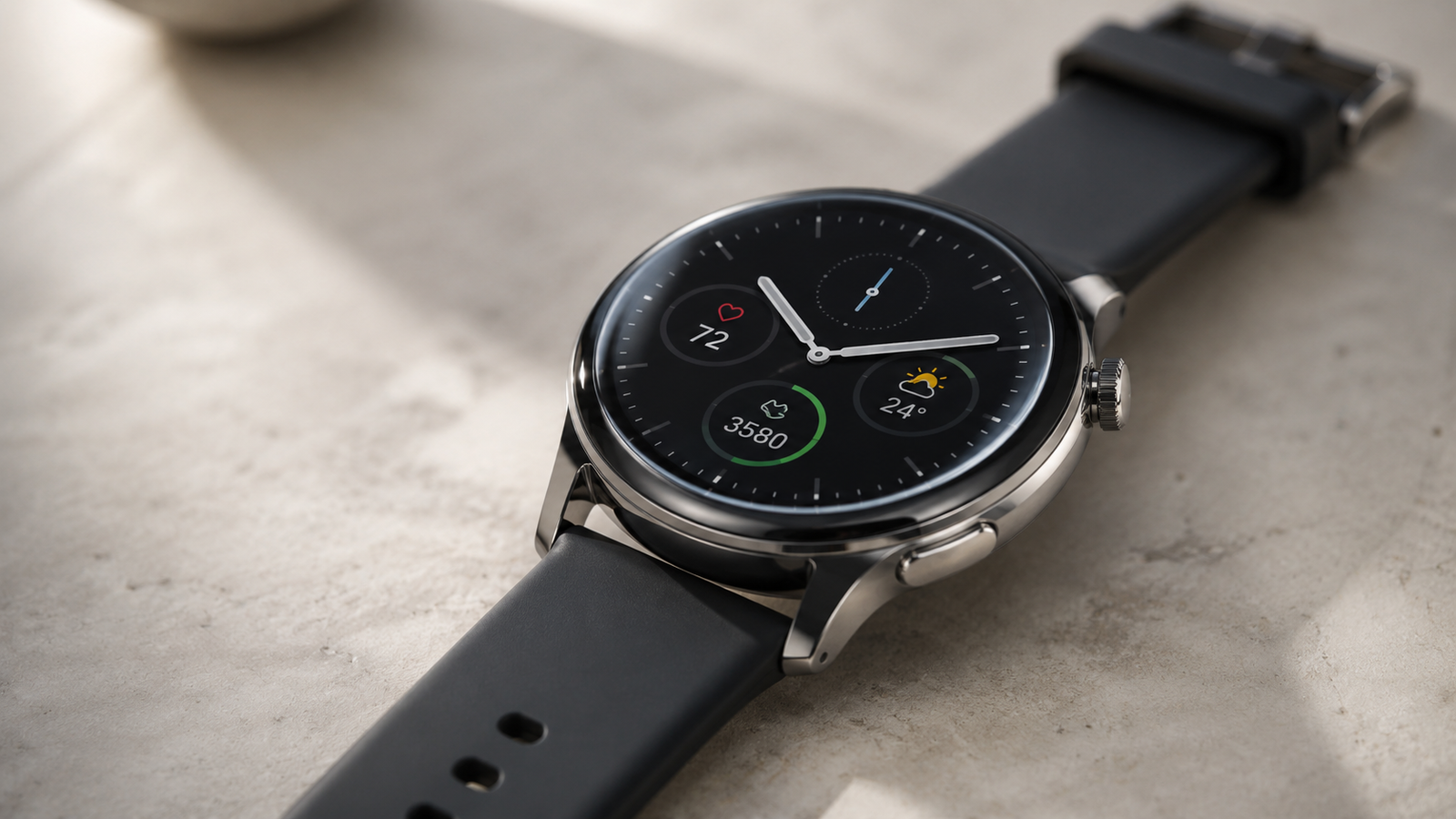
For brands building a wearable line, the smart watches product range is a practical starting point to compare form factors and feature sets before committing to a configuration.
Check 1: OEM, ODM, or Private Label — Know Which Model You Need
Buyers often use these terms interchangeably, but they describe different levels of design control. Choosing the wrong model is one of the most expensive early mistakes in private label smart watches.
OEM (Original Equipment Manufacturing)
You bring the design, specifications, or at least a detailed requirement document; the factory manufactures to your spec. OEM typically involves tooling investment, longer development cycles, and higher MOQ, but it gives you the strongest differentiation and IP position.
ODM (Original Design Manufacturing)
The factory offers an existing design that you customize — logo, colors, packaging, watch faces, and sometimes firmware and app branding. ODM lowers upfront cost and shortens time to market, but your product may share a hardware platform with other brands.
Private Label
Private label sits within the ODM family: you take a proven platform and apply your brand identity. For many US private-label brands entering wearables, this is the fastest route to a sellable SKU while keeping customization focused on branding and packaging.
If you are still mapping your options, the private label OEM/ODM solution overview explains how these models differ in practice.

Check 2: MOQ and the Real Drivers of Unit Price
MOQ is one of the first questions buyers ask, and one of the least standardized answers. A quoted MOQ of 500 units and a quoted MOQ of 3,000 units can both be legitimate — they usually reflect different configurations, not different factories.
What Moves the MOQ
- Tooling and enclosures: Custom housings or colors often require new tooling and higher minimums.
- Display and sensors: Specialty displays or sensor combinations may have component-level minimums.
- Packaging: Custom boxes, inserts, and manuals carry their own print minimums.
- App customization: Branded app builds and firmware changes may require a separate development commitment.
What Moves the Unit Price
Unit price is driven by bill-of-materials choices (display type, sensor set, battery capacity, casing material), customization depth, packaging, testing scope, and order volume. Two smart watches that look similar on a spec sheet can differ significantly in cost once sensor accuracy, battery life, and app integration are compared.
Ask suppliers to break down pricing by configuration so you can model scenarios. For a deeper cost breakdown, review the smart retail and e-commerce solutions page, which discusses channel and cost planning for wearable lines. [STAR KING TO CONFIRM] current MOQ thresholds and configuration-based pricing tiers.
Check 3: Sample Testing and Pre-Production Validation
Samples are where procurement decisions are won or lost. Request pre-production samples that match your final specification — not generic catalog units — and test them against the use cases your customers will actually experience.
What to Test
- Sensor performance: Heart rate, blood oxygen, and sleep tracking should be evaluated as consumer wellness features, not medical measurements.
- Battery life: Test under realistic usage, including continuous heart-rate monitoring and notifications.
- App pairing and stability: Confirm pairing, syncing, and notification behavior on both iOS and Android.
- Display and touch: Check brightness outdoors, touch responsiveness, and durability.
- Fit and finish: Evaluate strap comfort, water resistance claims, and build quality.
Document each test with photos and notes. If a supplier resists providing samples that match your spec, treat that as a procurement signal, not an inconvenience.
Soft CTA: If you are comparing configurations, STAR KING can provide sample units and spec sheets so your team can evaluate fit, sensors, and app behavior before committing to a production run. Request product samples to start the evaluation.
Check 4: App, Firmware, and Software Ownership
For private label smart watches, the companion app is part of your brand. Buyers should clarify who owns the app build, who controls firmware updates, and how user data is handled before signing.
Questions to Ask
- Is the app a white-label build shared across brands, or can it be customized with your brand identity?
- Who publishes the app under your developer account, and who maintains updates?
- What happens to app support if you change suppliers?
- How is user health data stored and transmitted, and does the supplier’s approach align with your privacy obligations?
Software ownership affects long-term cost and customer trust. A supplier that can explain firmware customization and app branding clearly is usually better prepared for OEM/ODM work. For buyers evaluating broader wearable platforms, the health and fitness wearables solution outlines how app, sensor, and data features fit together.
Check 5: FCC, UN38.3, and Battery Compliance for the US
US market entry for smart watches involves radio frequency and battery safety requirements. Buyers should verify documentation rather than assume it exists.
FCC Authorization
Smart watches with Bluetooth or other radio transmitters typically require FCC equipment authorization before US sale. The FCC provides official guidance on equipment authorization procedures. Ask for the FCC ID and confirm it matches the exact model you will import, not a similar model.
UN38.3 and Lithium Battery Documentation
Lithium-ion batteries in wearables are subject to UN38.3 testing for transport and often require an MSDS. These documents should be tied to the specific battery used in your product. The IATA Dangerous Goods Regulations are a useful reference for shipping requirements.
CE and RoHS for Other Markets
If you plan to sell in the EU as well, CE marking and RoHS compliance may be required. Requirements typically depend on product configuration and target market; buyers should verify with the supplier and, where needed, an accredited testing lab.
Compliance documentation should be treated as part of the purchase, not an afterthought. The quotation request process is a good time to ask which certifications are available per model. [STAR KING TO CONFIRM] certification status per smart watch configuration.
Check 6: Quality Control and Pre-Shipment Inspection
Quality control separates suppliers who can scale from those who cannot. Ask how the factory tests units before shipment and whether you can arrange pre-shipment inspection.
QC Areas to Confirm
- Incoming component checks: How are displays, batteries, and sensors verified on arrival?
- In-process testing: Are units tested during assembly, and what pass/fail criteria apply?
- Aging and stress testing: Are units run under load before packing?
- Water resistance testing: How are IP ratings validated, if claimed?
- Pre-shipment inspection: Can you or a third party inspect before shipment?
For private-label brands selling on Amazon or through retail chains, consistent QC reduces returns and chargebacks. Suppliers that document their QC process are easier to audit and easier to scale with.
Check 7: Landed Cost, Lead Time, and After-Sales Planning
The FOB unit price is only one part of the cost equation. Landed cost includes freight, duties, compliance testing, packaging, and an after-sales reserve for returns and warranty.
Building a Landed-Cost Model
- Freight: Air vs. sea, and lithium battery shipping requirements.
- Duties: Confirm applicable tariff treatment for your product and country of origin.
- Testing and certification: Budget for FCC, UN38.3, and any market-specific testing.
- After-sales reserve: Set aside a percentage of revenue for returns and warranty support.
Lead Time Planning
Lead time typically depends on sample approval, component availability, packaging production, and order volume. Build a buffer for Chinese New Year and peak shipping seasons. For brands planning launches, the smart retail and e-commerce solution discusses channel timing and inventory planning.
Comparison Table: OEM vs. ODM vs. Private Label
| Factor | OEM | ODM | Private Label |
|---|---|---|---|
| Design control | High — your design | Medium — existing platform | Low to medium — branding focus |
| Upfront investment | Higher (tooling, development) | Moderate | Lower |
| Time to market | Longer | Moderate | Shortest |
| MOQ | Typically higher | Moderate | Usually lowest |
| Differentiation | Strongest | Moderate | Branding-led |
| Best for | Brands with unique IP | Brands needing customization | Brands testing a new line |
Common Mistakes and Buyer Red Flags
- Accepting a generic spec sheet: If the supplier cannot provide model-specific documentation, compliance and quality become guesswork.
- Skipping pre-production samples: Catalog units may not match what you receive in mass production.
- Ignoring app ownership: A shared white-label app can limit your brand control and future flexibility.
- Assuming certification transfers: FCC IDs and battery reports must match your exact model.
- Underestimating landed cost: Freight and after-sales reserves can erode margin if not modeled early.
- No written quality agreement: Verbal QC promises are difficult to enforce.
Practical Buyer Checklist
- ☐ Confirm OEM, ODM, or private-label scope in writing.
- ☐ Request MOQ and pricing for your target configuration.
- ☐ Obtain pre-production samples matching final spec.
- ☐ Test app pairing, sensor performance, and battery life.
- ☐ Clarify app and firmware ownership and update responsibilities.
- ☐ Collect FCC ID and UN38.3/MSDS documents tied to the model.
- ☐ Review QC process and arrange pre-shipment inspection.
- ☐ Build a landed-cost model including freight, duties, and after-sales.
- ☐ Confirm lead time and plan for seasonal buffers.
- ☐ Sign a quality agreement and warranty terms.
For an official reference on radio frequency equipment authorization, see the FCC equipment authorization page.
FAQ
What is the typical MOQ for private label smart watches?
MOQ varies by configuration. Private-label models with existing tooling often start at lower volumes, while custom enclosures or advanced sensors may require higher minimums. Ask for MOQ per SKU and per customization level. [STAR KING TO CONFIRM] current MOQ thresholds.
Do I need FCC certification to sell smart watches in the US?
Smart watches with Bluetooth or other radio transmitters typically require FCC equipment authorization before US sale. Confirm the FCC ID matches your exact model, and keep documentation on file for marketplaces and customs.
Can the app be branded under my company name?
Many suppliers offer app branding and white-label builds. The extent of customization depends on the platform. Clarify whether the app can be published under your developer account and who handles updates.
How long does production take after sample approval?
Lead time typically depends on order volume, component availability, and packaging production. Build in buffer for Chinese New Year and peak shipping seasons, and confirm timelines in writing.
What documents should I receive with my shipment?
Expect at least FCC documentation where applicable, UN38.3 test summaries and MSDS for the battery, and a QC or inspection report. Packaging and labeling files should also be archived.
Can I customize packaging and logo?
Yes, private label typically includes logo, packaging, and manual customization. Print minimums and tooling costs may apply, so confirm requirements and timelines before finalizing your order.
How do I estimate landed cost?
Start with the FOB price, then add freight, duties, compliance testing, packaging, and an after-sales reserve. Model at least two volume scenarios to understand margin sensitivity.
Conclusion
Private label smart watches can be a strong addition to a US brand’s wearable lineup, but the purchase decision should rest on verifiable checks rather than catalog impressions. Confirm the supplier model, model your MOQ and landed cost, test pre-production samples, clarify app and firmware ownership, and secure FCC and battery documentation tied to your exact SKU. Buyers who treat these seven checks as part of procurement reduce the risk of costly surprises after tooling and packaging commitments.
Primary CTA: Ready to move from evaluation to quotation? Request a quotation for your private label smart watches project, or discuss customization options with the STAR KING team. Share your target configuration, volume, and market so the response can be specific to your requirements.
Discuss Your Smart Wearable OEM/ODM Project
Planning a smart ring, smart watch, smart band, AI glasses, AI translator, or AI voice mouse project? Contact STAR KING to discuss product positioning, sample testing, customization scope, certification requirements, lead time, and quotation details.

Team Star King

Scan WhatsApp QR code
Leave a Reply