
AI translators for private label: 7 Essential Checks Before Sourcing AI Translators for Private Label in Southeast Asia
October 27, 2026 · Team Star King
7 Essential Checks Before Sourcing AI Translators for Private Label in Southeast Asia
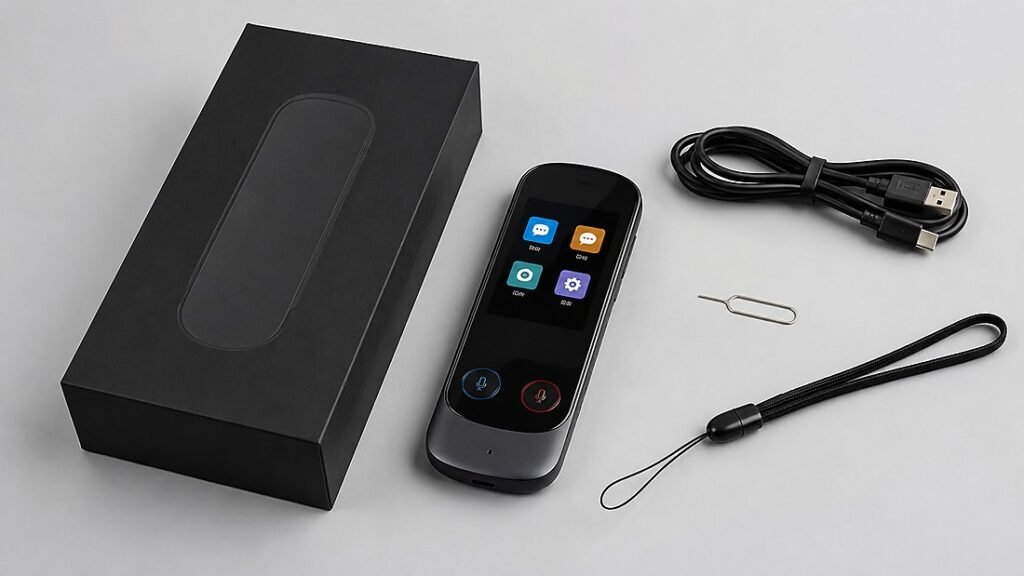
If you are evaluating AI translators for private label in Southeast Asia, focus your due diligence on seven areas: supported language pairs and offline capability, hardware and battery safety, software and app customization, certification for each target country, minimum order quantity (MOQ) and pricing structure, quality control and testing, and after-sales support and warranty. Each check directly affects your total landed cost, compliance risk, and brand reputation in markets such as Indonesia, Thailand, Vietnam, and the Philippines.
Table of Contents
Table of Contents
AI translators for private label: Short Answer
The most reliable way to source AI translators for private label in Southeast Asia is to verify supplier capabilities against your target languages, required certifications, and desired customization level. Prioritize suppliers that provide clear test reports, transparent MOQ tiers, and documented software update processes. Always validate samples against real-world translation accuracy before committing to mass production.
Table of Contents
- 1. Language Coverage and Real-Time Translation Accuracy
- 2. Hardware, Battery, and Connectivity Specifications
- 3. Software, App Integration, and Firmware Customization
- 4. Certification and Import Compliance for Southeast Asia
- 5. MOQ, Pricing, and Landed Cost Structure
- 6. Quality Control and Reliability Testing
- 7. After-Sales Support, Warranty, and Spare Parts
- Key Facts for Buyers
- Comparison Table: Evaluation Criteria
- Common Mistakes and Buyer Red Flags
- Practical Buyer Checklist
- FAQ
- Conclusion
Key Takeaways
- Language coverage must include major Southeast Asian languages with offline fallback for unreliable networks.
- Battery safety and certification (UN38.3, IEC 62133) are non-negotiable for air shipping.
- Private label customization extends beyond logo: firmware, app UI, and packaging all affect brand experience.
- MOQ and pricing tiers vary widely; request a detailed cost breakdown including tooling and certification fees.
- Always test samples for translation latency, accent recognition, and battery life under realistic conditions.
1. Language Coverage and Real-Time Translation Accuracy
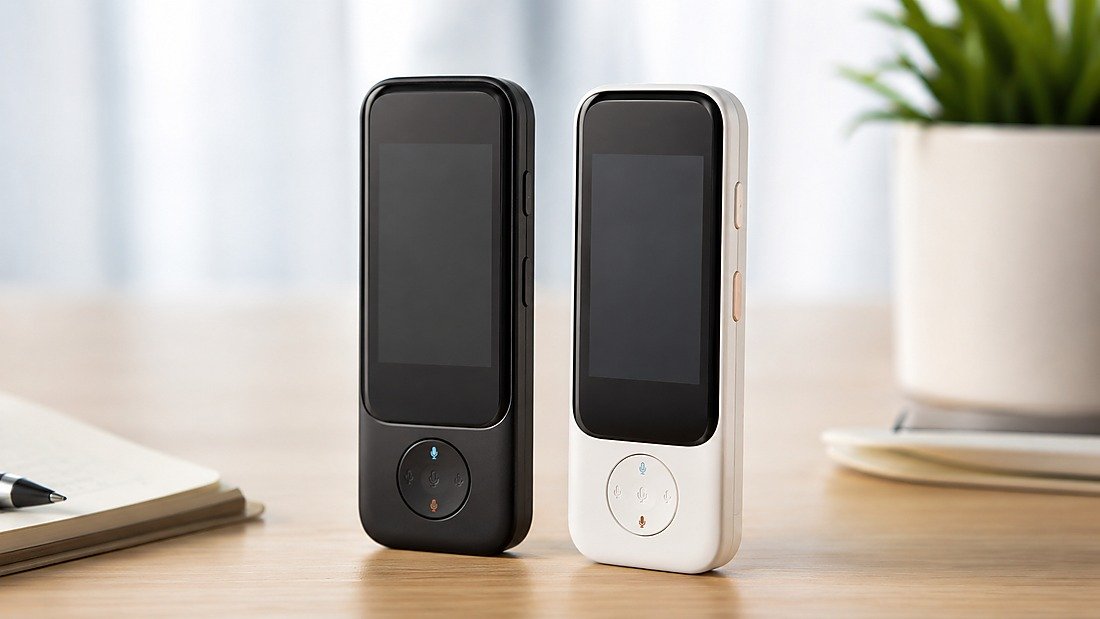
For Southeast Asia, your AI translator must handle languages such as Indonesian, Thai, Vietnamese, Filipino, and Malay, in addition to English and Mandarin. Ask suppliers for a complete list of supported language pairs, including dialects and accents. Real-time translation accuracy depends on the underlying speech recognition and machine translation engines; request sample videos or live demos using your target languages.
Offline vs. Online Translation
Many devices rely on cloud-based translation, which requires stable internet. In rural areas or during travel, offline translation (using embedded models) is a key differentiator. Clarify whether offline packs are available and how they are updated.
Latency and Conversation Flow
Measure the delay between speech and translated audio. For business or medical use, latency above 2 seconds disrupts conversation. Test with multiple speakers and background noise.
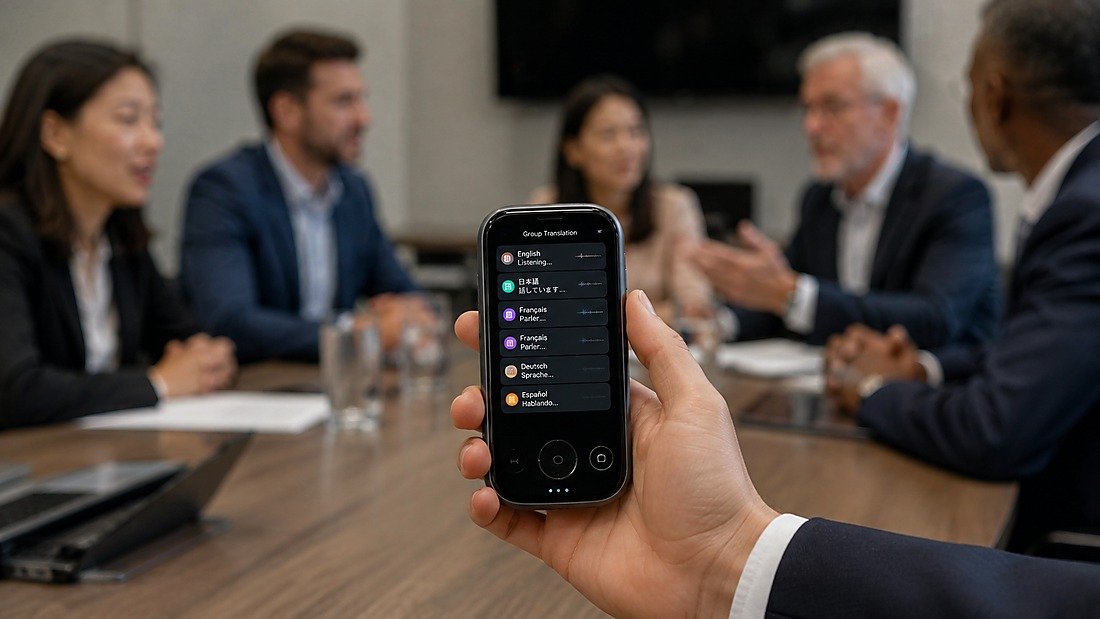
2. Hardware, Battery, and Connectivity Specifications
AI translators are portable devices, so battery life, charging method, and durability are critical. Look for batteries certified to UN38.3 for air transport. Check if the device uses USB-C, has a replaceable battery, and offers at least 8 hours of active translation. Connectivity options should include Wi-Fi and Bluetooth, and optionally cellular (4G/5G) for standalone use.
Consider the form factor: handheld, earbud-style, or wearable. Each has trade-offs in microphone quality and user comfort. Request MTBF (mean time between failures) data if available.
3. Software, App Integration, and Firmware Customization
Private label brands often want a custom mobile app to manage translation history, update languages, and offer subscription services. Ask if the supplier provides an SDK or API for app integration. Firmware customization allows you to preload specific language pairs, set default settings, and add your branding to the on-device UI.
Ensure the supplier has a clear process for firmware updates and bug fixes, and whether these are pushed automatically or require user action. Data privacy is also a concern: does the device store voice recordings locally or in the cloud?
4. Certification and Import Compliance for Southeast Asia
Each Southeast Asian country has its own requirements. For example, Indonesia requires SDPPI certification for wireless devices; Thailand requires NBTC; Vietnam requires MIC; and the Philippines requires NTC. Additionally, CE or FCC marks may be accepted for customs clearance, but local type approval is often mandatory. Ask suppliers about their experience with these certifications and whether they can provide test reports.
Battery-containing devices also need UN38.3 test reports and MSDS for shipping. Ensure the supplier includes these documents with your order.
5. MOQ, Pricing, and Landed Cost Structure
MOQ for AI translators typically ranges from 500 to 2,000 units for private label, but this varies by supplier and customization level. Request a detailed quotation that breaks down unit price, tooling costs (if custom enclosure), certification fees, packaging, and shipping. Be wary of quotes that omit certification or testing costs; these can add significant expense later.
Calculate landed cost including import duties (which vary by country and HS code) and VAT. For example, Indonesia imposes import duties and VAT on electronics; verify with your freight forwarder.
6. Quality Control and Reliability Testing
Ask about the supplier’s quality control process: incoming material inspection, in-process checks, and final pre-shipment inspection. Request test reports for drop testing (e.g., 1.5m onto concrete), waterproofing (IPX4 or higher), and aging tests (continuous operation for 24-48 hours). For translation accuracy, request a sample test plan that covers multiple languages and noise conditions.
7. After-Sales Support, Warranty, and Spare Parts
Clarify the warranty period (typically 12 months) and what it covers. Ask about the process for returns and repairs, and whether spare parts (batteries, chargers) are available for at least 2-3 years. For private label, you may need to handle after-sales locally, so ensure the supplier provides technical documentation and training.
Key Facts for Buyers
| Factor | Typical Requirement | Why It Matters |
|---|---|---|
| Supported languages | At least 10, including major SEA languages | Market coverage and user satisfaction |
| Battery certification | UN38.3, IEC 62133 | Air shipping and safety compliance |
| Local certification | SDPPI (Indonesia), NBTC (Thailand), MIC (Vietnam), NTC (Philippines) | Legal import and sale |
| MOQ | 500–2,000 units for private label | Inventory planning and cash flow |
| Warranty | 12 months standard | After-sales risk and brand trust |
Comparison Table: Evaluation Criteria
| Check | What to Verify | Supplier Evidence |
|---|---|---|
| Language coverage | List of languages, offline packs | Demo video, language list |
| Hardware | Battery life, connectivity, durability | Spec sheet, test reports |
| Software | App, SDK, firmware update process | API documentation, update policy |
| Certification | Local type approval | Certificates, test reports |
| MOQ & pricing | Volume tiers, tooling costs | Quotation with breakdown |
| Quality control | Inspection process, test reports | QC flow chart, sample reports |
| After-sales | Warranty, spare parts | Warranty terms, spare parts list |
Common Mistakes and Buyer Red Flags
- Ignoring local certification: Assuming CE/FCC is sufficient for Southeast Asia can lead to customs seizures.
- Underestimating language complexity: Not testing with local accents and dialects leads to poor user experience.
- Overlooking firmware update process: Devices that cannot be updated become obsolete quickly.
- Accepting vague MOQ terms: Ensure MOQ applies to total order, not per color or per SKU.
- Skipping sample testing: Relying on spec sheets without real-world testing risks mass production failures.
Practical Buyer Checklist
- Obtain a complete language list and test offline translation for key languages.
- Request UN38.3 and MSDS for the battery.
- Confirm local certification requirements with your freight forwarder or a local compliance consultant.
- Ask for a sample with your logo and packaging for evaluation.
- Review the supplier’s QC process and request sample test reports.
- Clarify warranty terms and spare parts availability.
- Calculate landed cost including duties, taxes, and certification fees.
Buyers can also review STAR KING AI Translators OEM/ODM options to compare product positioning, customization scope, and sample planning.
FAQ
What is the typical MOQ for private label AI translators?
MOQ usually ranges from 500 to 2,000 units, depending on customization level. Some suppliers offer lower MOQ for standard models with logo printing.
Do I need local certification to sell AI translators in Southeast Asia?
Yes, most countries require local type approval for wireless devices. For example, Indonesia requires SDPPI, Thailand NBTC, Vietnam MIC, and the Philippines NTC. CE or FCC alone may not suffice.
Can I customize the app and firmware?
Many OEM/ODM suppliers offer app customization and firmware modifications for branding and feature adjustments. Confirm the scope and associated costs.
How can I verify translation accuracy?
Request a sample device and test it with native speakers in realistic environments. Ask for a list of supported languages and offline capabilities.
What battery certifications are required for shipping?
UN38.3 test report and MSDS are mandatory for lithium batteries. Some airlines also require IEC 62133.
What is the typical lead time for mass production?
Lead time varies by order size and customization, typically 30–60 days after sample approval. Confirm with the supplier.
Conclusion
Sourcing AI translators for private label in Southeast Asia requires careful evaluation beyond price. By following these seven checks, you can select a supplier that meets your language, compliance, and quality requirements, reducing risks and ensuring a product that resonates with local users. Always validate samples and certifications before committing to mass production.
Next Step: Request Samples and Discuss Your OEM/ODM Project
Ready to evaluate AI translators for your private label? Request product samples or discuss your customization requirements with our team. We can provide detailed specifications, certification documentation, and MOQ quotes tailored to your market.
Useful Official References for Buyers
- FCC equipment authorization guidance
- European Commission CE marking information
- Bluetooth SIG specifications
Discuss Your Smart Wearable OEM/ODM Project
Planning a smart ring, smart watch, smart band, AI glasses, AI translator, or AI voice mouse project? Contact STAR KING to discuss product positioning, sample testing, customization scope, certification requirements, lead time, and quotation details.

Team Star King

Scan WhatsApp QR code
Leave a Reply