
AI voice mouse suppliers: AI Voice Mouse for Retail Chains in the Middle East: 7 Essential Checks for Bulk Buyers
October 24, 2026 · Team Star King
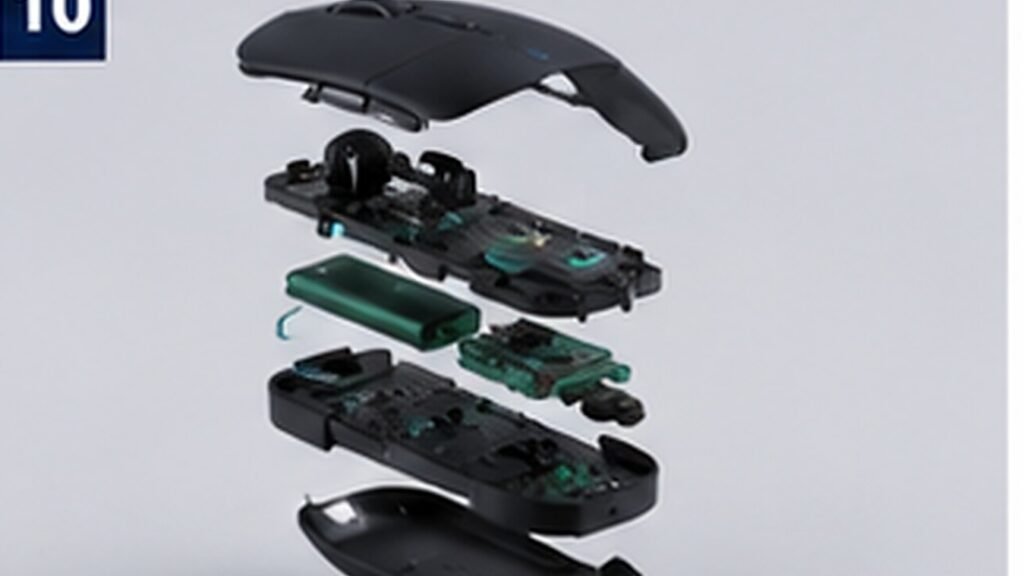
AI voice mouse suppliers buyers need a supplier evaluation process that checks product fit, OEM/ODM capability, compliance documents, quality control, pricing, lead time, and after-sales support before placing a bulk order.
Table of Contents
Table of Contents
AI Voice Mouse for Middle East Retail: 7 Essential Checks for Bulk Buyers
If you are a retail chain in the Middle East planning to stock an AI voice mouse, you need to lock down seven checks before placing a bulk order: Arabic language quality, Private Label readiness, MOQ and pricing structure, certification for GCC markets, sample verification, packaging customization, and landed cost. The AI voice mouse for Middle East retail is not a one-size-fits-all purchase—localization and compliance can make or break the product’s success on your shelves. This guide gives you a decision framework used by procurement teams to evaluate suppliers and avoid costly mistakes.
AI voice mouse suppliers: Table of Contents
- Short Answer
- Key Takeaways
- Key Facts for Buyers
- What Is an AI Voice Mouse and Why It Matters for Retail
- Check 1: Arabic Language and Voice Recognition Quality
- Check 2: Private Label and Customization Options
- Check 3: MOQ and Pricing Factors
- Check 4: Certifications and Compliance for the GCC
- Check 5: Sample Testing and Verification
- Check 6: Packaging and Retail Readiness
- Check 7: Landed Cost and Logistics
- Comparison Table: AI Voice Mouse Features for Retail
- Common Mistakes and Buyer Red Flags
- Practical Buyer Checklist
- FAQ
- Conclusion
- Next Step
Short Answer
To buy an AI voice mouse for Middle East retail successfully, prioritize suppliers that offer proven Arabic voice recognition, flexible Private Label options, and documented GCC compliance. Request samples to test accent accuracy, confirm MOQs aligned with your stock plan, and calculate landed cost before committing. The right partner will provide transparent certification support and customization services.

Key Takeaways
- Arabic language support and regional accent accuracy are non-negotiable for Middle East retail success.
- Private Label and packaging customization turn a commodity product into a store-brand differentiator.
- MOQs typically range from 500 to 1,000 units but vary by customization level; negotiate based on your rollout plan.
- GCC certification (e.g., G-Mark, CE) and Arabic labeling are often required; verify supplier documentation.
- Landed cost includes freight, duties, and certification fees—model these before setting retail price.

Key Facts for Buyers
| Factor | Typical Range / Consideration |
|---|---|
| MOQ | 500–1,000 units for standard models; higher for full customization [STAR KING TO CONFIRM] |
| Sample lead time | 7–15 days for stock samples; 20–30 days for customized samples |
| Production lead time | 30–45 days after sample approval and deposit |
| Certifications for GCC | CE, RoHS, and G-Mark (depending on country); Arabic labeling may be required |
| Private Label options | Logo printing, custom packaging, app skin, firmware language packs |
| Voice recognition languages | Arabic (Modern Standard and selected dialects), English, French; confirm with supplier |
| Battery and safety | UN38.3 and MSDS for lithium battery; check compliance |

What Is an AI Voice Mouse and Why It Matters for Retail
An AI voice mouse is a computer mouse with built-in voice recognition and AI processing that allows users to dictate text, control applications, and perform searches using speech. Unlike standard mice, it includes a microphone array and dedicated software that converts spoken language into commands or text in real time. For retail chains, this product targets productivity-focused consumers, multilingual households, and corporate buyers looking to improve office efficiency.
The Middle East market presents a unique opportunity: high smartphone penetration, a growing tech-savvy population, and a strong demand for multilingual input solutions. Retail chains that stock AI voice mice can differentiate their electronics assortment and appeal to both consumer and B2B segments. However, success depends on selecting a product that truly works for Arabic speakers and meets local regulations.
Check 1: Arabic Language and Voice Recognition Quality
Arabic is a complex language with diglossia (Modern Standard Arabic vs. regional dialects) and varying accents across the Gulf, Levant, and North Africa. A generic voice mouse may claim Arabic support but fail in real-world use. Buyers must test the following:
- Dialect coverage: Does the device support Gulf, Egyptian, or Levantine dialects? Some suppliers offer multiple Arabic language packs.
- Accuracy rate: Request a demo or sample to test with native speakers from your target market.
- Offline vs. cloud processing: Cloud-based recognition may offer better accuracy but requires internet; offline is more private but limited.
Ask the supplier for a list of supported languages and dialects. If they cannot provide specifics, consider it a red flag. A practical approach is to request a sample unit and conduct a blind test with 5–10 employees who are native Arabic speakers, measuring word error rate on common business phrases.
Check 2: Private Label and Customization Options
Retail chains often want to build their own brand. Private Label AI voice mice allow you to customize logo, packaging, and even the companion app. Evaluate the supplier’s flexibility in these areas:
- Logo and exterior: Silk-screen or laser engraving on the mouse and USB receiver.
- Packaging: Custom retail box with your brand, Arabic/English bilingual instructions.
- Software: Custom splash screen, app name, and language default settings.
- Firmware: Preloaded language packs and default settings tailored to your market.
Confirm whether the supplier has in-house design and engineering support. A partner like STAR KING offers Private Label OEM/ODM solutions that include these customizations. Request a customization checklist and lead time for each option.
Check 3: MOQ and Pricing Factors
MOQ and pricing are critical for retail chains planning rollouts across multiple stores. AI voice mice are still a niche category, so MOQs may be higher than standard peripherals. Typical MOQs range from 500 to 1,000 units for standard models, but can increase with custom packaging or firmware changes. Factors that affect pricing include:
- Order quantity (economies of scale).
- Customization level (logo, packaging, software).
- Component quality (microphone array, sensor, chipset).
- Certification requirements (G-Mark testing adds cost).
- Payment terms and Incoterms.
Negotiate a phased rollout: start with a smaller pilot order (e.g., 500 units) for select stores, then scale after sell-through data. This reduces risk and tests market acceptance. Be transparent about your volume forecasts to get better pricing. For more on MOQ planning, see our blog resources.
Check 4: Certifications and Compliance for the GCC
Middle East countries have specific certification requirements. For electronic devices, common requirements include:
- CE marking for European-origin products or as a baseline.
- G-Mark (GCC conformity mark) for low-voltage electrical equipment and toys; may apply to mice depending on voltage.
- RoHS for hazardous substances.
- UN38.3 and MSDS for lithium batteries (if the mouse is rechargeable).
- Arabic labeling and manuals may be required by some retailers or authorities.
Certification requirements typically depend on the specific product configuration and destination country. Buyers should verify with local authorities or a certified testing lab. Ask the supplier for copies of test reports and certificates. Do not accept claims without documentation. For official reference, consult the GCC Standardization Organization (GSO) and International Electrotechnical Commission (IEC) for standards.
Check 5: Sample Testing and Verification
Always test samples before committing to bulk. Request a sample that matches your intended configuration (including language pack). Evaluate:
- Voice recognition accuracy with local accents.
- Build quality and ergonomics.
- Battery life and charging.
- Software installation and user interface.
- Compatibility with common operating systems (Windows, macOS).
Conduct a pilot test with a small group of users in your target market. Collect feedback on ease of use and reliability. A supplier confident in their product will support sample testing and may offer a sample refund against bulk order. STAR KING provides sample development services; explore the AI voice mouse for specifications.
Check 6: Packaging and Retail Readiness
Retail packaging must comply with local regulations and appeal to consumers. Consider:
- Bilingual packaging (Arabic and English).
- Clear product features and system requirements.
- Arabic user manual or quick start guide.
- Warranty information and customer service contacts.
- Barcodes and retail-ready labels.
Ask the supplier for packaging mockups and dielines. If they offer custom packaging, confirm the MOQ for packaging runs. Some suppliers can handle Arabic translation and design, reducing your workload.
Check 7: Landed Cost and Logistics
Calculate the total landed cost per unit, including:
- FOB price.
- Freight (sea or air) to your warehouse.
- Import duties and VAT (varies by country, e.g., 5% VAT in UAE).
- Certification and testing fees (if not included).
- Port handling and customs clearance.
- Inland transportation.
Use a landed cost calculator or work with a freight forwarder. For lithium battery products, air freight may have restrictions; sea freight is common but slower. Ensure the supplier provides proper MSDS and UN38.3 reports for shipping. Factor in warranty and return costs to protect your margin.
Comparison Table: AI Voice Mouse Features for Retail
| Feature | Basic Model | Advanced Model (Recommended for Retail) |
|---|---|---|
| Arabic dialects supported | Modern Standard only | MSA + Gulf/Levantine dialects |
| Connectivity | USB receiver | USB + Bluetooth dual mode |
| Battery | AA battery | Rechargeable lithium battery |
| Private Label options | Logo only | Logo, packaging, app skin |
| Certifications | CE, RoHS | CE, RoHS, G-Mark (if applicable) |
| MOQ | 500 units | 1,000 units |
| Target retail price | $25–$35 | $40–$60 |
Common Mistakes and Buyer Red Flags
- Assuming Arabic support without testing: Many products list Arabic but perform poorly with dialects.
- Ignoring certification nuances: G-Mark may be required for certain electrical products; verify with local authorities.
- Underestimating MOQ for customization: Custom packaging or firmware often raises MOQ significantly.
- Skipping sample testing: Relying on spec sheets alone leads to returns and brand damage.
- Overlooking after-sales support: Ensure spare parts and warranty processes are defined.
- Red flag: Supplier cannot provide certificate copies or refuses sample testing.
Practical Buyer Checklist
- ☐ Confirm Arabic dialect support and test with native speakers.
- ☐ Request samples with your intended language pack and test for 1–2 weeks.
- ☐ Verify certifications (CE, RoHS, G-Mark if needed) and request copies.
- ☐ Clarify MOQ, pricing tiers, and payment terms.
- ☐ Review Private Label options and request packaging mockups.
- ☐ Calculate landed cost including freight, duties, and certification.
- ☐ Confirm warranty terms and spare parts availability.
- ☐ Check supplier’s production lead time and shipping method.
FAQ
1. What is the typical MOQ for an AI voice mouse order from a Chinese manufacturer?
MOQs usually start at 500 units for standard models and 1,000 units for customized versions. Some suppliers may accept 300 units for trial orders, but customization options may be limited.
2. Does an AI voice mouse support Arabic dialects?
It depends on the model and supplier. Some support Modern Standard Arabic only, while advanced models include Gulf or Levantine dialects. Always test a sample with native speakers.
3. What certifications are required to import AI voice mice into Saudi Arabia or the UAE?
Common requirements include CE and RoHS; G-Mark may be required for certain electrical products. Arabic labeling and manuals may also be necessary. Verify with your local authority or a certification consultant.
4. Can I customize the packaging with my retail brand?
Yes, most OEM/ODM suppliers offer custom packaging. Provide your design files or work with their design team. MOQ for custom packaging is usually higher than for logo-only customization.
5. What is the lead time for bulk production?
Typically 30–45 days after sample approval and deposit, depending on order size and customization complexity. Shipping to the Middle East by sea adds 20–30 days.
6. How do I calculate landed cost for AI voice mice?
Add FOB price, freight, import duties (typically 5% in GCC), VAT (e.g., 5% in UAE), certification fees, and port charges. Use a freight forwarder for accurate quotes.
7. What should I do if the supplier cannot provide certification documents?
Do not proceed. Lack of documentation is a red flag. Choose a supplier that can provide test reports and certificates from recognized labs.
Conclusion
Stocking an AI voice mouse for Middle East retail can be a profitable addition to your electronics lineup, but success hinges on thorough due diligence. Focus on Arabic language quality, Private Label options, MOQ alignment, and GCC compliance. Test samples rigorously and calculate landed cost before committing. By following the seven checks in this guide, you can avoid common pitfalls and choose a supplier that supports your brand and market goals.
Next Step
Ready to evaluate AI voice mouse options for your retail chain? Request a quotation and discuss your customization needs with STAR KING’s OEM team. We can provide samples, certification support, and MOQ details tailored to the Middle East market.
Discuss Your Smart Wearable OEM/ODM Project
Planning a smart ring, smart watch, smart band, AI glasses, AI translator, or AI voice mouse project? Contact STAR KING to discuss product positioning, sample testing, customization scope, certification requirements, lead time, and quotation details.

Team Star King

Scan WhatsApp QR code
Leave a Reply