
smart band suppliers: How Distributors Evaluate Smart Band Suppliers for the EU: 7 Critical Checks Before You Commit
October 24, 2026 · Team Star King

How Distributors Evaluate Smart Band Suppliers for the EU: 7 Critical Checks Before You Commit
To evaluate smart band suppliers for the European Union, distributors should verify seven areas: product compliance with EU directives, manufacturing quality systems, MOQ and pricing transparency, sample validation, software and app support, packaging and private-label capability, and logistics including lithium battery shipping. A smart band supplier that cannot provide documented evidence in each area introduces commercial and regulatory risk, regardless of unit price. This guide explains what to check, why it matters for EU distribution, and how to compare suppliers objectively before committing to an order.
Table of Contents
Table of Contents
smart band suppliers: Table of Contents
- Short Answer
- Key Takeaways
- Key Facts for Buyers
- What Is a Smart Band Supplier Evaluation?
- 1. EU Compliance and Certification Evidence
- 2. Quality Management and Testing Documentation
- 3. MOQ, Pricing Structure, and Landed Cost
- 4. Sample Testing and Validation Protocol
- 5. App, Firmware, and Software Support
- 6. Private Label, Packaging, and Customization
- 7. Logistics, Lithium Battery Shipping, and After-Sales
- Supplier Comparison Table
- Common Mistakes and Buyer Red Flags
- Practical Buyer Checklist
- FAQ
- Conclusion

Short Answer
Distributors should evaluate smart band suppliers on documented EU compliance, quality systems, transparent MOQ and pricing, sample performance, software support, customization capability, and reliable logistics. Request certificates and test reports per SKU, test samples against your market requirements, and confirm responsibilities for app updates and after-sales. The right smart band supplier reduces regulatory exposure and protects your margin across the distribution channel.
Key Takeaways
- EU market access depends on product-specific compliance; generic certificates are not sufficient.
- Quality systems and test reports indicate a supplier’s ability to deliver consistent batches.
- MOQ and pricing must be assessed on landed cost, not unit price alone.
- Sample validation should include functional, battery, and connectivity testing.
- App and firmware support affect long-term customer satisfaction and return rates.
- Private-label and packaging capabilities determine brand fit for EU retail channels.
- Lithium battery logistics and after-sales terms are often overlooked but critical.
Key Facts for Buyers
| Evaluation Area | What to Verify | Why It Matters for EU Distributors |
|---|---|---|
| Compliance | CE marking, RoHS, REACH, WEEE, battery directives; test reports per model | Required for lawful sale in the EU; non-compliance risks fines and recalls |
| Quality | ISO 9001 or equivalent, incoming inspection, aging and drop tests | Reduces defect rates and warranty claims |
| MOQ & Pricing | Clear MOQ tiers, tooling costs, Incoterms, payment terms | Affects cash flow and landed cost competitiveness |
| Samples | Functional testing, battery life, app pairing, accuracy checks | Validates supplier claims before bulk order |
| Software | App stability, firmware update process, data privacy | Impacts customer experience and GDPR exposure |
| Customization | Logo, packaging, app branding, documentation | Supports private-label positioning in retail |
| Logistics | UN38.3, MSDS, shipping modes, warranty terms | Ensures compliant and cost-effective delivery |
What Is a Smart Band Supplier Evaluation?
A smart band supplier evaluation is a structured assessment of a manufacturer’s ability to deliver compliant, consistent, and commercially viable products to your market. It goes beyond price comparison to include regulatory documentation, production quality, software support, and logistics. For EU distributors, the evaluation should be evidence-based: certificates, test reports, sample performance, and clear contractual terms. The goal is to select a supplier whose capabilities match your channel requirements and risk tolerance.

1. EU Compliance and Certification Evidence
Compliance is the first filter for any EU distributor. Smart bands typically fall under the Radio Equipment Directive (RED), RoHS, and battery regulations. Depending on features, additional requirements may apply, such as REACH for materials and WEEE for electronic waste. The supplier should provide a Declaration of Conformity and test reports that reference the specific model and configuration you intend to import.
Buyers should verify that certificates are issued by recognized laboratories and match the product’s hardware, firmware, and radio modules. A common risk is receiving a certificate for a similar but different model. Ask for the test report’s model number, photos, and technical description, and compare them with your purchase order. Also confirm who holds the technical file and whether the supplier can support market surveillance inquiries after delivery.
For official reference, consult the European Commission CE marking guidance and the RoHS compliance information. These sources outline obligations that distributors may share with manufacturers.
What to Request
- EU Declaration of Conformity per model
- RED, RoHS, and battery test reports with model references
- REACH declarations for skin-contact materials
- WEEE registration status or producer responsibility guidance
- Confirmation of who maintains the technical file
Without these documents, the distributor may carry compliance risk even if the supplier claims certification. STAR KING can confirm which certifications apply per product configuration; buyers should verify current status before ordering.
2. Quality Management and Testing Documentation
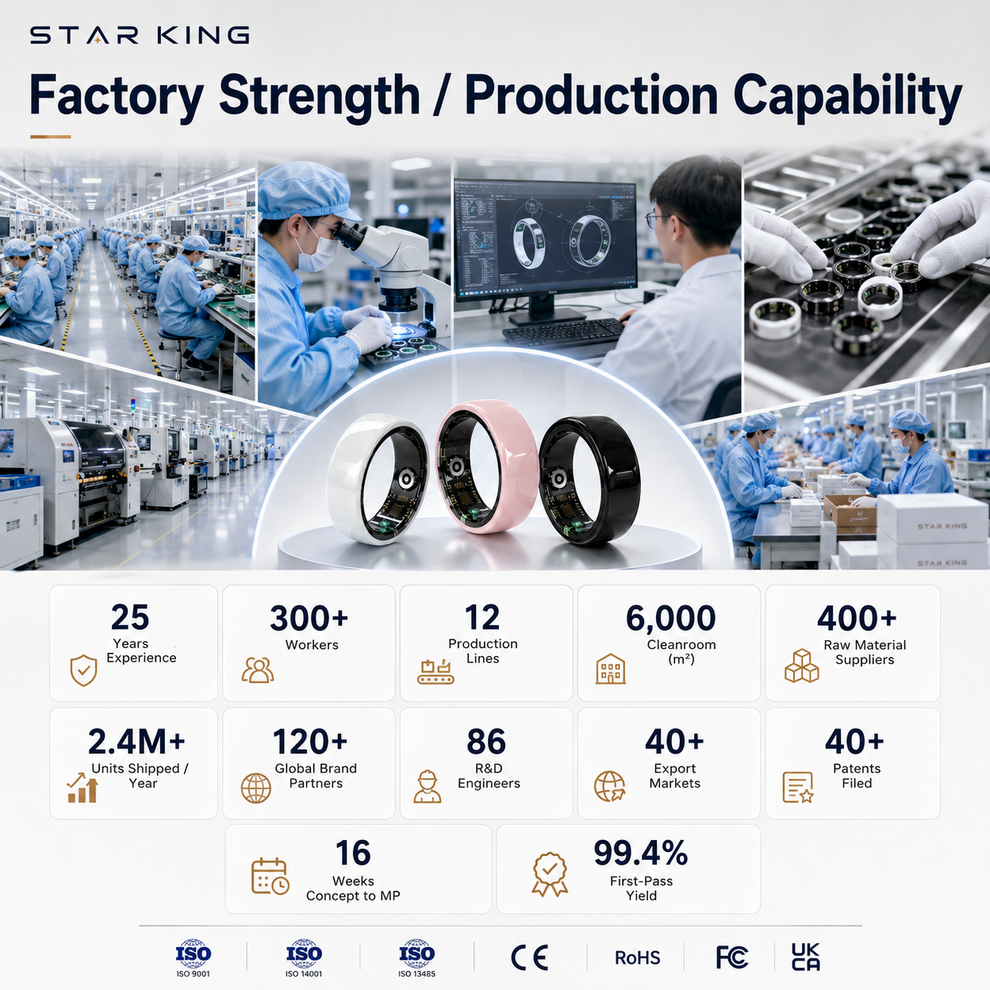
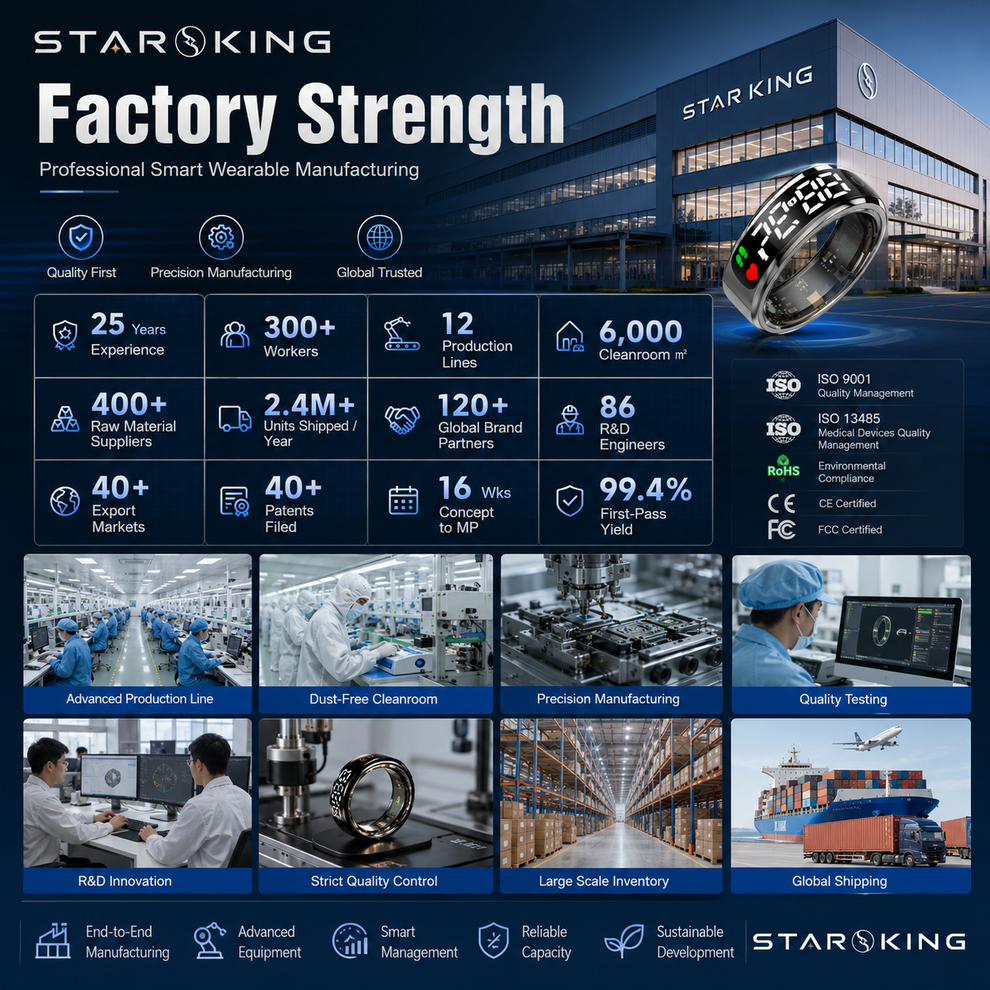
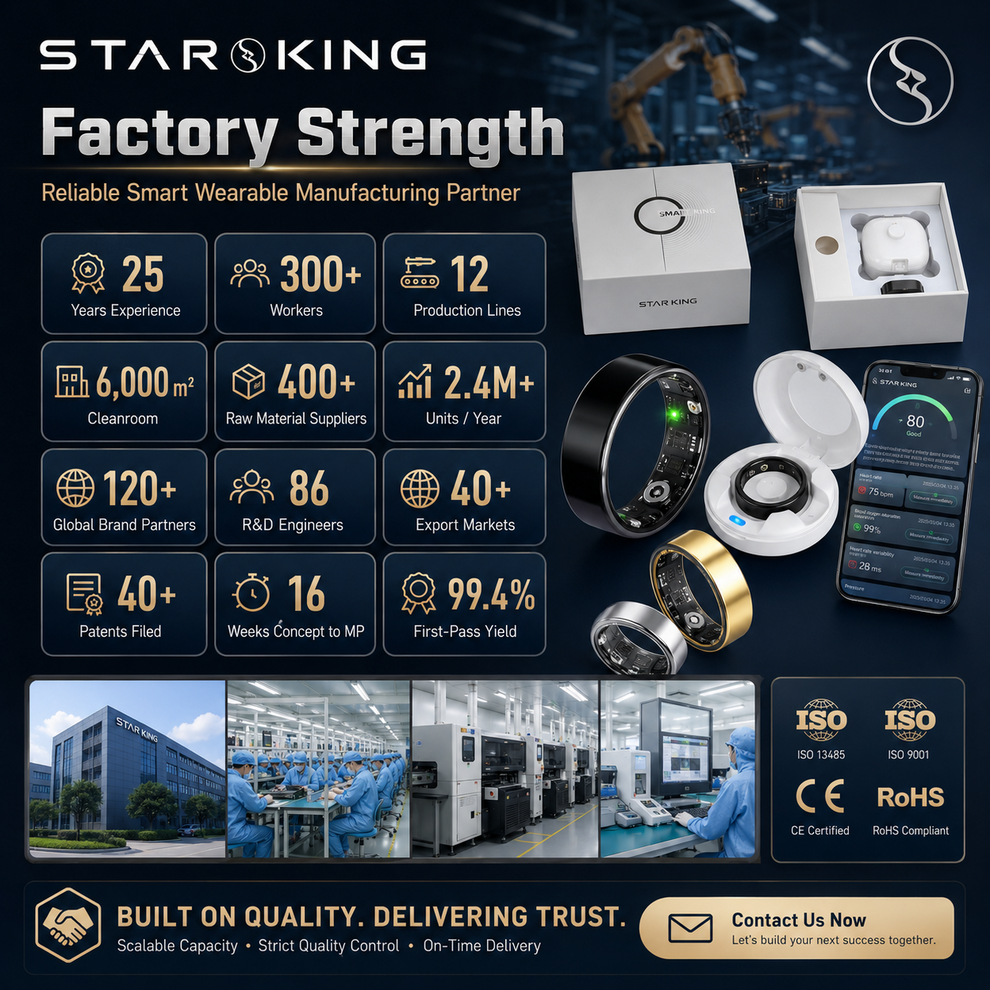
Quality systems indicate whether a supplier can produce consistent batches. Look for ISO 9001 certification or equivalent process controls, and ask for evidence of incoming material inspection, in-process checks, and final testing. For smart bands, key tests include battery aging, drop testing, waterproof testing, and charging cycle validation.
Request sample test reports and ask how the supplier handles non-conforming units. A supplier with a documented corrective action process is better positioned to protect your warranty costs. Distributors should also discuss pre-shipment inspection options and whether third-party inspection is permitted.
According to the ISO 9001 quality management standard, consistent processes are central to meeting customer requirements. While certification alone does not guarantee quality, it provides a baseline for evaluating a supplier’s system maturity.
Key Quality Questions
- What is the defect rate for the model you are considering?
- How are batteries tested before assembly?
- Can you provide aging and drop test reports?
- What is the warranty policy and how are claims handled?
3. MOQ, Pricing Structure, and Landed Cost
MOQ and pricing should be evaluated on a landed-cost basis. Unit price alone can be misleading if tooling, packaging, shipping, and duties are excluded. Ask for a quotation that specifies Incoterms, payment terms, tooling costs, and packaging fees. Clarify whether MOQ applies per model or per color and whether mixed orders are allowed.
For distributors, MOQ planning affects inventory risk. A supplier offering tiered MOQ can help you test the market before committing to larger volumes. However, lower MOQ may come with higher unit costs or limited customization. Compare total cost of ownership, including expected return rates and warranty costs.
When calculating landed cost, include freight, insurance, import duties, VAT, and any compliance testing you may need to repeat. Also consider currency and payment terms, which can affect working capital. A transparent smart band supplier will provide a detailed cost breakdown and not resist clarification questions.
Cost Factors to Compare
| Cost Element | Questions to Ask | Impact on Distribution |
|---|---|---|
| Unit price | Does it include standard packaging? | Base margin calculation |
| Tooling | Is there a one-time tooling fee? | Upfront investment for customization |
| Packaging | What is the cost for private-label packaging? | Brand positioning and retail readiness |
| Freight | Which Incoterms apply? | Landed cost and risk transfer |
| Duties & VAT | What is the HS code and duty rate? | Total import cost |
| Warranty | What is the reserve for returns? | After-sales cost |
4. Sample Testing and Validation Protocol
Samples are your primary evidence before committing to bulk. A structured sample validation protocol should cover hardware, software, and user experience. Test battery life under realistic conditions, check heart rate and step accuracy against a reference device, and evaluate Bluetooth connectivity stability. For EU distributors, also assess whether the app is localized and whether privacy documentation meets GDPR expectations.
Order samples from the actual production line, not engineering prototypes, and ask for the production date and firmware version. Test multiple units to identify batch consistency. Document issues and request corrective actions before placing a bulk order.
Include a wear test to assess comfort and skin sensitivity, especially if the product will be marketed for all-day wear. Check charging case or cable quality and confirm that accessories meet EU safety expectations.

5. App, Firmware, and Software Support
Software support is often the weakest link in smart band supply. The companion app affects user satisfaction, data privacy, and long-term product value. Ask the supplier about app update frequency, bug fix turnaround, and compatibility with iOS and Android versions used in your market. Clarify whether the app is owned by the supplier or a third party, and what happens if the supplier changes platforms.
For private-label distributors, app branding may be possible, but it typically depends on the supplier’s software architecture. Confirm whether the supplier offers an SDK or API for integration with your own systems. Also review the privacy policy and data storage locations, as GDPR compliance may require data processing agreements.
Firmware updates should be manageable without returning devices. Ask how firmware is distributed and whether you will receive release notes. A supplier that cannot explain its software roadmap may create future support challenges.
6. Private Label, Packaging, and Customization
Private-label capability helps distributors build brand equity in EU retail channels. Confirm what can be customized: logo on device, strap color, packaging design, user manual language, and app branding. Ask for minimum order quantities for each customization and lead time impact.
Packaging should comply with EU requirements, including language and recycling information where applicable. Request dielines and samples before mass production. For retail chains, packaging may need to meet specific shelf or security requirements.
Intellectual property ownership is another consideration. Clarify who owns the tooling and design files if you fund customization. A clear agreement prevents disputes if you later change suppliers. STAR KING provides private label OEM/ODM solutions and can discuss customization options based on project scope.
7. Logistics, Lithium Battery Shipping, and After-Sales
Smart bands contain lithium batteries, which are regulated for transport. Suppliers should provide UN38.3 test reports and MSDS documentation for the battery configuration. Shipping mode affects cost and transit time; air freight requires compliant packaging and documentation.
Confirm Incoterms and who handles customs clearance. For EU imports, the distributor is often the importer of record and bears responsibility for compliance. Ask the supplier how they support documentation requests from customs or market surveillance authorities.
After-sales terms should cover warranty period, spare parts availability, and repair or replacement procedures. Ask for a sample warranty policy and check whether it aligns with your obligations to your customers.
For battery transport requirements, refer to the IATA Dangerous Goods Regulations and the UN Model Regulations. These frameworks inform UN38.3 testing and shipping documentation.
Supplier Comparison Table
Use this table to compare shortlisted suppliers on the criteria that matter for EU distribution. Score each supplier based on evidence, not claims.
| Criterion | Supplier A | Supplier B | Supplier C |
|---|---|---|---|
| EU compliance documents per model | |||
| Quality system certification | |||
| MOQ flexibility | |||
| Sample performance | |||
| App update policy | |||
| Private-label options | |||
| Lithium battery documentation | |||
| Warranty and after-sales terms |
Common Mistakes and Buyer Red Flags
- Accepting generic certificates: Certificates must match the exact model and configuration.
- Ignoring software support: A low-cost device with no update path can generate high return rates.
- Comparing unit price only: Landed cost and warranty costs change the margin picture.
- Skipping sample validation: Prototypes may not represent production quality.
- Unclear IP ownership: Tooling and design ownership should be documented.
- No battery documentation: Missing UN38.3 or MSDS can delay shipping.
- Vague after-sales terms: Unclear warranty procedures create disputes.
Practical Buyer Checklist
- Request EU Declaration of Conformity and test reports per model.
- Verify quality system certification and test reports.
- Obtain a detailed quotation with Incoterms and tooling costs.
- Order production samples and test battery, accuracy, and connectivity.
- Review app update policy and data privacy documentation.
- Confirm private-label options, MOQ, and lead time impact.
- Collect UN38.3 and MSDS for battery shipping.
- Clarify warranty, spare parts, and repair procedures.
- Document IP ownership for tooling and design files.
- Agree on pre-shipment inspection terms.
Buyers can also review STAR KING Smart Bands OEM/ODM options to compare product positioning, customization scope, and sample planning.
FAQ
What certifications do smart bands need for the EU?
Smart bands typically require CE marking under the Radio Equipment Directive, RoHS compliance, and battery-related documentation. Depending on materials and features, REACH and WEEE obligations may apply. Requirements depend on product configuration and target market; buyers should verify with the supplier and a compliance specialist.
How many samples should a distributor test?
Test at least three to five production units to assess batch consistency. Include functional, battery, connectivity, and wear tests. Document results and compare against supplier specifications.
What is a reasonable MOQ for private-label smart bands?
MOQ varies by supplier and customization level. Simple logo and packaging changes may have lower MOQ than full app branding or custom tooling. Ask for tiered MOQ options and confirm whether mixed colors are allowed.
Can distributors get app branding for smart bands?
App branding availability depends on the supplier’s software architecture. Some suppliers offer white-label apps or SDKs, while others do not. Confirm update responsibility and data privacy terms before committing.
How do lithium battery rules affect smart band shipping to the EU?
Lithium batteries are regulated for transport. Suppliers should provide UN38.3 test reports and MSDS. Shipping mode and packaging must comply with carrier requirements. Distributors should confirm documentation before booking freight.
What warranty terms are typical for smart bands?
Warranty terms vary by supplier and product. Common periods range from 12 to 24 months, but coverage details matter. Ask for a written policy covering defects, battery degradation, and return procedures.
How can distributors verify a supplier’s quality claims?
Request test reports, inspect samples, and consider third-party pre-shipment inspection. Ask for references or case studies where available, and review the supplier’s corrective action process.
Conclusion
Evaluating smart band suppliers for the EU requires evidence, not assumptions. Compliance documentation, quality systems, transparent pricing, sample performance, software support, customization capability, and logistics planning are the seven checks that protect distributors from regulatory and commercial risk. By scoring suppliers against these criteria, distributors can select partners that support long-term growth in European channels.
STAR KING CTA
Ready to evaluate smart band suppliers for your EU distribution? Request product samples from STAR KING to assess build quality, app performance, and customization options. Our team can discuss compliance documentation and OEM/ODM requirements based on your target market and volume.
Discuss Your Smart Wearable OEM/ODM Project
Planning a smart ring, smart watch, smart band, AI glasses, AI translator, or AI voice mouse project? Contact STAR KING to discuss product positioning, sample testing, customization scope, certification requirements, lead time, and quotation details.

Team Star King

Scan WhatsApp QR code
Leave a Reply