
smart watch suppliers: Smart Watches for Education Technology Companies: 7 Evaluation Checks Before a US Pilot Rollout
October 20, 2026 · Team Star King

smart watch suppliers buyers need a supplier evaluation process that checks product fit, OEM/ODM capability, compliance documents, quality control, pricing, lead time, and after-sales support before placing a bulk order.
Table of Contents
Table of Contents
Smart Watches for Education Technology Companies: 7 Evaluation Checks Before a US Pilot Rollout
Smart watches for education technology companies are not a consumer impulse purchase — they are a hardware decision tied to lesson plans, IT integration, data governance, and school-district procurement cycles. The most defensible way to evaluate a supplier is to run seven checks covering firmware and app integration, sensor accuracy, MOQ and pricing structure, sample validation, FCC and battery compliance, US shipping and warranty logistics, and IP/tooling ownership. This guide explains what US edtech buyers should verify before committing to a pilot or a full rollout.
smart watch suppliers: Short Answer
For US education technology companies, the smart watches most likely to succeed are those with a documented app/API integration path, verifiable per-SKU FCC and UN38.3 documentation, agreed-upon data handling terms, and a supplier willing to support a small pilot batch before mass production. Treat marketing spec sheets as the starting point, not the proof. Require samples, testing records, and written terms on firmware changes, MOQ, and warranty before signing.

Table of Contents
- Why Smart Watches Fit Education Technology Programs
- Check 1 — Define the Learning or Safety Use Case First
- Check 2 — Firmware, App, and API Integration
- Check 3 — Sensor Accuracy and Realistic Performance Claims
- Check 4 — MOQ, Pricing, and Landed Cost Modeling
- Check 5 — Sample Validation and Pilot Batch Design
- Check 6 — Compliance: FCC, Battery, and Data Privacy
- Check 7 — Lead Time, Warranty, and After-Sales Support
- Comparison Table — Edtech Smart Watch Options
- Common Mistakes and Buyer Red Flags
- Practical Buyer Checklist
- FAQ
- Conclusion

Key Takeaways
- US edtech buyers should evaluate smart watches for education technology companies against a documented use case — not against consumer marketing copy.
- Firmware, app SDK access, and data handling terms are usually the highest-risk integration items, not the hardware itself.
- Per-SKU certification status (FCC, UN38.3, and where applicable RoHS) must be confirmed in writing — do not assume a generic certificate covers your exact SKU.
- Pilot batches of a few dozen to a few hundred units are the sensible way to de-risk classroom deployments before a full MOQ commitment.
- Ownership of tooling, firmware modifications, and app source code should be negotiated before the first PO.

Why Smart Watches Fit Education Technology Programs
Education technology companies evaluate smart watches for two main reasons: engagement hardware for learning platforms (notifications, timers, step counts, habit tracking) and campus safety or wellbeing monitoring (attendance pings, scheduled check-ins). Districts and schools increasingly expect hardware to connect to a platform the school already uses, which means the buyer’s real question is not “which watch is best?” but “which watch supplier can integrate cleanly with our product?”
That shift makes this a commercial investigation problem, not a consumer review problem. Your stakeholder group typically includes product, IT/security, procurement, and sometimes legal counsel. Each stakeholder will ask for different proof. The seven checks below are structured so you can gather evidence for all of them in one supplier evaluation cycle.
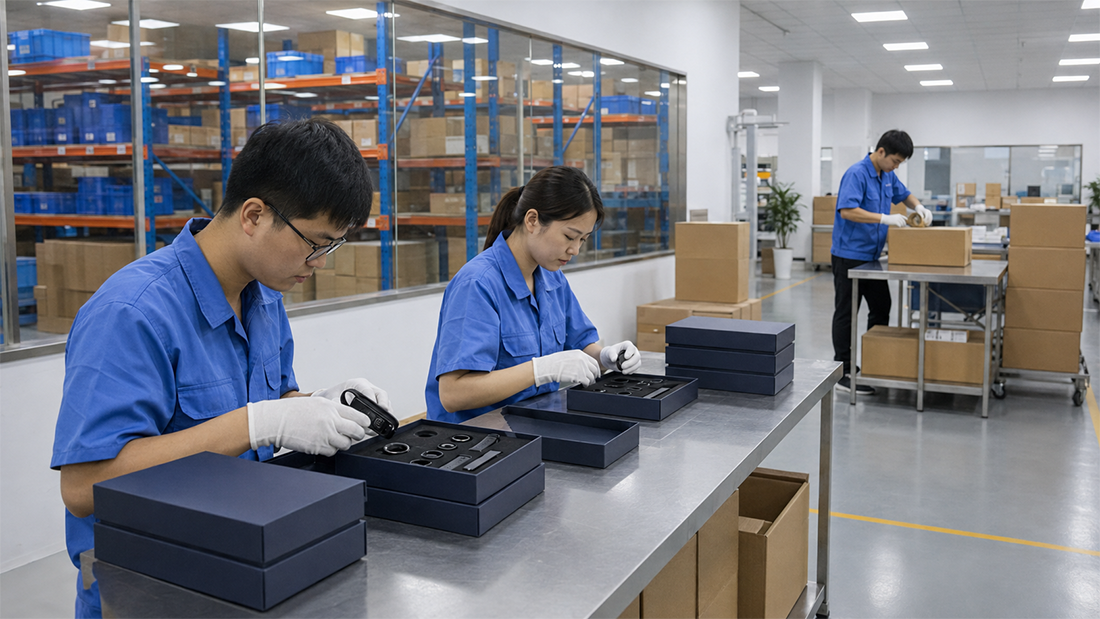
Check 1 — Define the Learning or Safety Use Case First
Before any supplier conversation, document the following internally:
- What the watch must do (notifications, timers, step count, simulated check-ins, NFC attendance — if supported).
- What data it must capture and where that data is stored (device, manufacturer cloud, or your platform).
- Who owns the data and how long it is retained.
- What age group is using the device, which affects COPPA and school-district policy review.
- Whether the watch is expected to be worn during PE/sports, which affects waterproofing and battery specifications.
Suppliers typically ask for this in a brief. If you arrive without a written use case, you will receive generic sample offers, and your pilot data will be too noisy to make a procurement decision.
How to evaluate this internally
Convert the use case into a one-page requirements matrix with must-have, nice-to-have, and out-of-scope columns. This matrix is what you send to [STAR KING TO CONFIRM] or any other candidate supplier. It also becomes your sample validation checklist in Check 5.
Check 2 — Firmware, App, and API Integration
For most education technology companies, the integration layer is where the deployment succeeds or fails. Ask the supplier three concrete questions:
- Is there a documented SDK or API, and which parameters can the buyer read (steps, heart rate, notifications, battery, device status) and write (alerts, custom timers, firmware updates)?
- Can the companion app be private-labeled or embedded into our platform, and does the vendor support app customization through a Private Label OEM/ODM program?
- What is the firmware update process, and who owns changes requested after mass production begins?
Integration risk is often underestimated. A smart watch that looks perfect in a sample box can still take weeks of engineering to connect to your platform. Ask for a technical call with the supplier’s firmware engineer, not only the sales contact, and request a sandbox SDK before signing.
Related STAR KING resources
The smart watches product line and the health and fitness wearables solution pages both describe the standard feature envelope that most edtech programs start from. If your platform connects to wellness dashboards, review the corporate wellness application page as a reference architecture you can adapt for student or staff engagement.
Check 3 — Sensor Accuracy and Realistic Performance Claims
Consumer smart watches marketed into education use common sensor families (accelerometer, optical heart rate, sometimes SpO2). Two practical rules apply:
- Treat heart rate or SpO2 readings as fitness or wellness indicators, never as medical diagnostic results.
- Ask for typical performance data with a description of how it was collected, not a single best-case number.
If your program involves student wellbeing features, describe the watch capability as “wellness guidance” in your product documentation. This reduces legal risk and aligns with US educational privacy norms. Use the same principle when specifying battery life — real-world battery life depends on screen-on time, notification frequency, and connectivity, so request a test summary at a defined usage profile.
Check 4 — MOQ, Pricing, and Landed Cost Modeling
MOQ and price are almost never a single number. For US education technology companies, plan a model with these layers:
- Pilot MOQ — the smallest batch the supplier will ship for classroom testing (often sample-level [STAR KING TO CONFIRM]).
- Production MOQ — the batch size required for private label packaging, logo, and app customization.
- Unit price tiers — confirm whether the price includes packaging, chargers, and manual localization.
- Tooling and setup fees — one-time costs for logo, packaging, and any firmware modification.
- Landed cost — unit price plus freight, import duties, and any platform fees required to sell your product to schools.
For a structured walkthrough of cost layers, read the STAR KING blog and sourcing resources. Cost planning in the smart watch category is usually dominated by MOQ, packaging, battery shipping classification, and testing documentation — not by raw component costs.
Soft CTA
If you already have a requirements matrix and want to compare fit at the pilot level, STAR KING can review your integration and MOQ needs and share the specification envelope for the smart watch line — no commitment required. Request specifications or samples when your use case is drafted.
Check 5 — Sample Validation and Pilot Batch Design
Samples are not just for looks. For a US edtech pilot, design the sample phase to answer three questions:
- Does the device work with our platform? Run an integration sprint of 1–3 weeks against the SDK or companion app.
- Does the hardware survive a classroom? Test drop resistance, water exposure, charging cycles, and battery life at real usage intensity.
- Is the UX acceptable to teachers and students? Run a 20–50 user pilot across classrooms before scaling.
Ask the supplier for a sample plan covering firmware version, included materials, and a clear process for recording defects. If sample-to-production consistency cannot be demonstrated, the pilot data will be weaker than you need for a procurement committee.
How buyers should evaluate sample consistency
Compare the sample batch against the documented production specification at three points: firmware version, sensor hardware revision, and packaging. Differences in any of these should be logged and reconciled before a PO is issued.
Check 6 — Compliance: FCC, Battery, and Data Privacy
In the United States, consumer smart watches that include Bluetooth or other radio technology typically require FCC authorization, and lithium-battery powered devices normally require UN38.3 test summaries and an MSDS for air freight. RoHS and REACH may also apply depending on your distribution channels and buyer policies.
Importantly, certifications are typically issued per SKU and configuration. A supplier’s generic “CE/FCC ready” statement is not enough — request the exact FCC ID, test report, UN38.3 summary, and MSDS for the SKU you will import. STAR KING can share the certification documentation available for the specific configuration you request; buyers should verify the specific SKU, frequency bands, and battery specification in the final PO.
- FCC — confirm which FCC rule parts apply to the exact radio configuration. Official information is available from the FCC equipment authorization program.
- UN38.3 / lithium batteries — reference the IATA Dangerous Goods Regulations for shipping classification guidance.
- RoHS / REACH — review the EU RoHS Directive overview if you distribute beyond the US.
- Children’s data — review COPPA guidance from the FTC if your product targets minors and collects personal data.
Data privacy reviews for US schools commonly require a written description of what data leaves the device, where it is stored, and who can access it. Ask for that in writing before a district pilot. The exact requirements typically depend on the district, state, and whether student data is collected — confirm with counsel.
Check 7 — Lead Time, Warranty, and After-Sales Support
Education procurement works on semester timelines. Confirm lead times in writing for three stages: sample shipment, pilot batch, and mass production. Ask about warranty terms, RMA process, and spare-parts availability. A watch deployed to a classroom needs a predictable replacement path, because a broken device that cannot be replaced quickly can interrupt a live pilot.
Recommended questions:
- What is the standard warranty period, and what is covered?
- Who bears freight on RMA devices, and what is the typical turnaround?
- Can replacement units be included in the production order at a preset ratio?
- Is the buyer expected to hold spare inventory, or does the supplier support replenishment?
Comparison Table — Edtech Smart Watch Options
The table below is a decision framework, not specific product claims. Use it to compare suppliers, not only products.
| Decision Area | Consumer ODM Watch | Private Label Edtech Watch (OEM) | Fully Custom Program |
|---|---|---|---|
| App / API access | Usually limited to standard app | SDK access subject to scope | Custom app and API |
| Firmware modification | Rarely offered | Available within defined scope | Available with NRE / tooling |
| MOQ | Often lower for stock SKUs | Moderate; set by logo and packaging | Highest; tied to tooling |
| Certification visibility | Standard SKU documents | Per-SKU documents, configurable | Program-specific testing |
| Time to first pilot | Fastest | Moderate | Longest |
| Best fit for | Initial user testing | Most US edtech launches | Differentiated long-term program |
Common Mistakes and Buyer Red Flags
Every one of these issues appears in real supplier evaluations. Watch for them early.
- Treating a generic certificate as SKU-specific proof. Ask for the FCC ID and test report that match the exact model and radio configuration you will import.
- Assuming API access is always included in the base price. SDK support, custom app work, and firmware changes are typically separate line items.
- Committing to full MOQ before running a pilot. A small pilot batch almost always produces information that changes your spec.
- Ignoring data handling agreements. A supplier statement that “we do not collect data” should be verified against the app’s actual telemetry; request a data flow description.
- Signing without tooling or firmware ownership terms. Clarify who owns any custom mold, firmware modification, and app code before the first payment.
- Dismissing UN38.3 because “it is just a watch.” Lithium batteries typically require UN38.3 documentation for air freight, and missing documents can stall a live classroom pilot.
Practical Buyer Checklist
Use this as a shared evaluation list for your procurement, IT, and legal stakeholders.
- Written use case and requirements matrix approved internally.
- Sandbox SDK or companion app access granted for testing.
- Sample batch received and tested against requirements matrix.
- Battery life test summary at a defined usage profile.
- Per-SKU FCC report and FCC ID provided or confirmed in writing.
- UN38.3 summary and MSDS for the exact battery configuration.
- Written data flow description and retention policy if student data is collected.
- MOQ, price tiers, and tooling fees quoted in writing.
- Lead time confirmed for sample, pilot, and mass production stages.
- Warranty, RMA freight, and spare-part terms agreed.
- Firmware and tooling ownership defined in writing.
- Pilot batch of 20–200 units planned before full production commitment.
FAQ
What should US edtech buyers check first on a smart watch sample?
Check firmware version, SDK access, and current battery performance before anything else. Integration and real-world battery life are the two variables most likely to change your rollout plan, and both are best tested with the sample in your own platform environment.
Do smart watches for education typically need FCC approval in the US?
If the watch includes Bluetooth, Wi-Fi, or any radio transmitter, FCC authorization typically applies. The requirement depends on the specific radio configuration, so request the FCC ID and test report matching the exact SKU and confirm the applicable rule parts with the supplier.
How large should an education smart watch pilot order be?
A pilot batch of roughly 20–200 units is usually sufficient to validate integration, drop resistance, and UX across a few classrooms. The exact pilot MOQ is set by the supplier; ask for it separately from production MOQ so you can de-risk before committing.
Can the watch app be private labeled or embedded into our platform?
This is typically possible through a private label OEM/ODM program, but the scope determines the cost. Ask specifically about app source access, the number of firmware changes included, and whether post-launch firmware updates are supported under the agreement.
How do we handle COPPA and student data with a wearable program?
Confirm whether the device collects personal data, where it is stored, and what the app transmits. Request a written data flow description. COPPA and state-level requirements vary, so buyers should verify obligations with legal counsel before a district pilot.
What is the typical lead time for a private label smart watch program?
Lead time depends on whether firmware modification, custom packaging, or tooling is involved. Ask the supplier to confirm each stage — sample, pilot batch, and mass production — as separate written milestones rather than one blended delivery date.
Conclusion
For US education technology companies, smart watches should be evaluated as a systems decision: use case, integration, sensor realism, MOQ economics, sample validation, compliance, and after-sales support. The seven checks in this guide are designed so procurement, IT, and legal teams can review the same evidence and reach a shared decision. When the seven checks are complete, the remaining choice is usually about pilot scale and which supplier’s integration process fits your platform best.
Discuss an OEM/ODM Smart Watch Project
If your education technology program needs a smart watch supplier who can support integration review, sample validation, and a pilot batch before production, start a conversation with the STAR KING team. Request product samples at STAR KING sample request and include your use case, target MOQ, and specific certification requirements so the correct specification envelope and documentation can be prepared.
Discuss Your Smart Wearable OEM/ODM Project
Planning a smart ring, smart watch, smart band, AI glasses, AI translator, or AI voice mouse project? Contact STAR KING to discuss product positioning, sample testing, customization scope, certification requirements, lead time, and quotation details.

Team Star King

Scan WhatsApp QR code
Leave a Reply