
AI translators RFQ: AI Translators for Southeast Asia Corporate Procurement: 7 Critical Checks Before You Issue an RFQ
October 19, 2026 · Team Star King
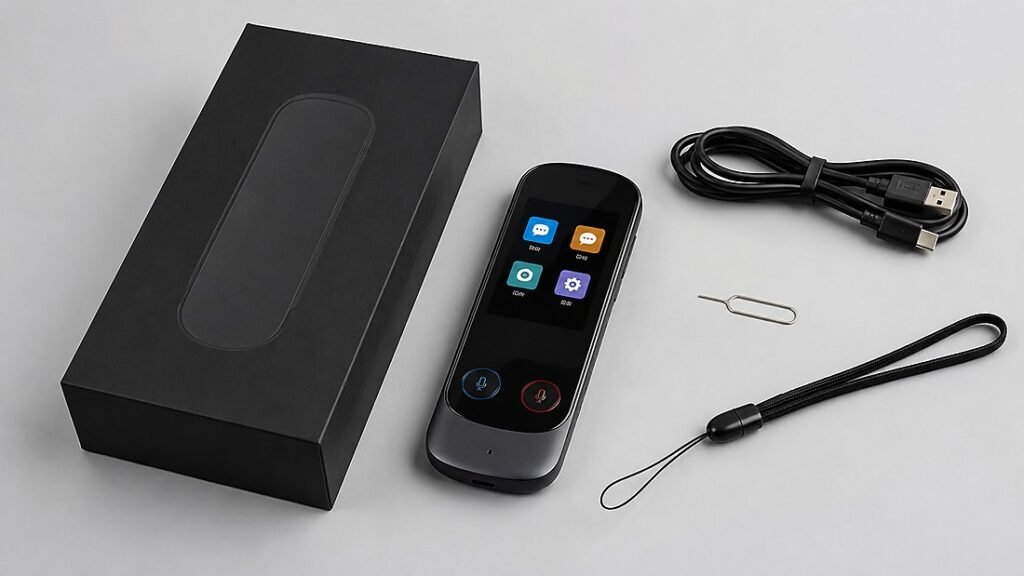
AI Translators for Southeast Asia Corporate Procurement: 7 Critical Checks Before You Issue an RFQ
When your organization in Southeast Asia is preparing an AI translators RFQ, the goal is to move from general interest to a comparable, risk-managed procurement decision. You need devices that handle the region’s multilingual reality—Bahasa Indonesia, Thai, Vietnamese, Filipino, Malay, and more—while meeting corporate standards for data security, battery safety, and after-sales support. This guide gives procurement teams a structured 7-point framework to evaluate suppliers, define specifications, and issue an RFQ that yields actionable, comparable quotes.
Table of Contents
Table of Contents
AI translators RFQ: Short Answer
To run an effective AI translators RFQ for Southeast Asia, specify your required language pairs, offline capability, battery life, and certification needs upfront. Request samples for hands-on testing, confirm MOQ and lead times, and verify supplier compliance with local import regulations. A well-structured RFQ reduces back-and-forth and ensures you compare apples to apples across vendors.

Table of Contents
- Key Takeaways
- Key Facts for Buyers
- 1. Define Language Coverage for Southeast Asia
- 2. Assess Offline vs. Cloud Translation
- 3. Evaluate Hardware and Battery Specifications
- 4. Confirm Certification and Import Compliance
- 5. Understand MOQ, Pricing, and Lead Time
- 6. Request Samples and Test Real-World Performance
- 7. Review After-Sales Support and Warranty
- Comparison Table: RFQ Evaluation Criteria
- Common Mistakes and Buyer Red Flags
- Practical Buyer Checklist
- FAQ
- Conclusion

Key Takeaways
- Language coverage for SEA markets must include both cloud and offline modes; verify accuracy with local dialects.
- Certification requirements depend on the target country; request test reports for CE, FCC, RoHS, and battery safety (UN38.3, MSDS) as applicable.
- MOQ and lead time vary by customization level; plan for 4–8 weeks for standard orders, longer for custom branding.
- Always test samples in real environments—noise, accents, and connectivity—before committing to volume.
- Clarify warranty terms, spare parts availability, and firmware update policies to protect your investment.

Key Facts for Buyers
| Factor | Typical Consideration for AI Translators |
|---|---|
| Supported Languages | Must include major SEA languages (Indonesian, Thai, Vietnamese, Filipino, Malay) plus business languages (English, Mandarin). |
| Offline Translation | Critical for areas with poor connectivity; check offline language packs and accuracy. |
| Battery Life | Expect 8–12 hours of active use; confirm with supplier test data. |
| Connectivity | Wi-Fi, Bluetooth, optional cellular; ensure compatibility with local networks. |
| Certification | CE, FCC, RoHS, UN38.3, MSDS are common; specific requirements depend on country and device configuration. |
| MOQ | Typically 500–1,000 units for standard models; custom branding may raise MOQ. |
| Lead Time | Standard: 4–6 weeks; custom: 8–12 weeks after sample approval. |
| Warranty | 12 months standard; negotiable for volume orders. |
1. Define Language Coverage for Southeast Asia
Southeast Asia is one of the most linguistically diverse regions globally. An AI translator that works well in English and Mandarin may struggle with Thai tonal nuances or Vietnamese regional dialects. Your RFQ should specify the exact language pairs required for your use case—whether for customer service, internal meetings, or field operations.
Ask suppliers to provide a detailed list of supported languages and dialects, and request accuracy benchmarks. For corporate procurement, prioritize languages used in your key markets: Bahasa Indonesia, Thai, Vietnamese, Filipino, and Malay. Also consider business languages like English and Mandarin if your teams collaborate cross-border.
When evaluating, request a demo or sample to test translation quality with local accents and industry-specific terminology. Generic claims of “100+ languages” are insufficient; what matters is performance in your target languages.
Offline Language Packs
In many SEA markets, internet connectivity can be unreliable in rural or industrial areas. Confirm whether the device supports offline translation and which languages are available offline. This is a critical risk factor for field-based teams.
2. Assess Offline vs. Cloud Translation
Cloud-based translation typically offers higher accuracy and frequent updates, but requires stable internet. Offline translation provides reliability but may have limited vocabulary and slower updates. For corporate procurement, the decision hinges on your deployment environment.
If your teams operate in offices with reliable Wi-Fi, cloud translation may suffice. For field workers, logistics teams, or remote sites, offline capability is essential. Some devices offer hybrid modes, switching automatically based on connectivity.
Ask suppliers about offline language pack size, update frequency, and how to manage updates across a fleet of devices. Also consider data privacy: cloud translation may send voice data to servers; ensure compliance with local data protection laws (e.g., Indonesia’s PDP Law, Thailand’s PDPA).
3. Evaluate Hardware and Battery Specifications
AI translators are used in varied environments, from meeting rooms to factory floors. Hardware durability, battery life, and ergonomics affect user adoption. Your RFQ should specify minimum requirements for battery capacity, charging time, and operating temperature.
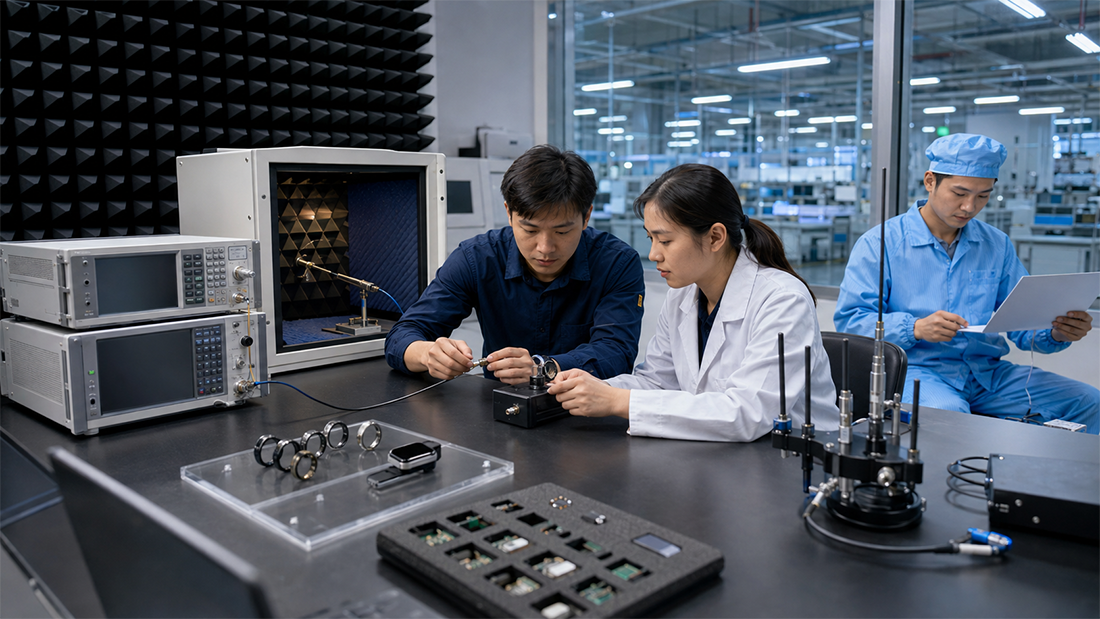
Request MTBF (mean time between failures) data and drop-test results if available. For battery safety, ask for UN38.3 and MSDS documentation. Battery life claims should be verified with third-party test reports or sample testing.
Consider the device’s audio quality—microphone array and speaker clarity—especially for noisy environments. Also check for screen size and readability if the device includes a display.
4. Confirm Certification and Import Compliance
Certification requirements vary by country and device configuration. Common certifications for AI translators include CE (Europe), FCC (US), RoHS (hazardous substances), and battery-specific certifications like UN38.3 and MSDS. For Southeast Asia, check local requirements: for example, Indonesia requires SDPPI certification for wireless devices; Thailand requires NBTC; Vietnam requires MIC.
Your RFQ should ask suppliers to declare which certifications are available for the specific model and provide copies of test reports. Note that certifications are model-specific and may not cover customized versions. Verify that the supplier can support the certification process for your target countries, or confirm if they have existing approvals.
For more on compliance, refer to official resources such as the FCC website and the IEC standards.
5. Understand MOQ, Pricing, and Lead Time
MOQ and pricing are often negotiable based on order volume and customization. For standard AI translators, MOQs typically range from 500 to 1,000 units. Custom branding (logo, packaging, firmware) may increase MOQ to 2,000 units or more.
Request a detailed quote breakdown: unit price, tooling costs (if custom), packaging, certification costs, and shipping. Be wary of unusually low prices that may indicate inferior components or lack of certification.
Lead time depends on order size and customization. Standard orders may ship in 4–6 weeks; custom orders can take 8–12 weeks after sample approval. Plan for buffer time for shipping and customs clearance.
Soft CTA: Need to compare AI translator models for your Southeast Asia rollout? Explore STAR KING’s AI translator solutions and request a specification sheet tailored to your RFQ.
6. Request Samples and Test Real-World Performance
Always validate supplier claims with physical samples. Test translation accuracy with local speakers, in typical noise conditions (e.g., open office, factory). Evaluate battery life under continuous use, and check charging convenience.
For corporate procurement, involve end-users from different departments in the sample evaluation. Provide a structured scorecard covering translation quality, ease of use, durability, and connectivity. This helps build consensus and reduces post-purchase regret.
Request at least 2–3 samples from shortlisted suppliers to compare side-by-side. Confirm sample cost and whether it is refundable against a bulk order.
7. Review After-Sales Support and Warranty
After-sales support is critical for maintaining a fleet of devices. Clarify warranty period (typically 12 months), what is covered, and how repairs are handled. Ask about local service centers or return procedures for Southeast Asia.
Confirm availability of spare parts (batteries, chargers) and firmware update policy. Some suppliers provide OTA (over-the-air) updates; others require manual updates. For corporate use, OTA is preferable for security and feature enhancements.
Also discuss data privacy and device management: can you remotely wipe devices? Is there an admin console?
Comparison Table: RFQ Evaluation Criteria
| Criteria | Weight | What to Ask in RFQ |
|---|---|---|
| Language Coverage | High | List of supported languages and dialects; offline availability. |
| Translation Accuracy | High | Benchmark results or sample testing with local accents. |
| Certification | High | CE, FCC, RoHS, UN38.3, MSDS; local approvals (SDPPI, NBTC, MIC). |
| MOQ & Pricing | Medium | Volume tiers, customization costs, payment terms. |
| Lead Time | Medium | Production schedule, shipping method, buffer. |
| After-Sales | Medium | Warranty, spare parts, firmware updates, local support. |
Common Mistakes and Buyer Red Flags
- Overlooking offline capability: Assuming Wi-Fi is always available can lead to frustration in field use.
- Ignoring local certification: Shipping devices without required approvals can result in customs seizure.
- Not testing samples: Relying solely on spec sheets may hide performance issues.
- Underestimating lead time: Custom orders often take longer than expected.
- Red flag: Supplier cannot provide certification documents or refuses sample testing.
- Red flag: Unusually low price with vague warranty terms.
Practical Buyer Checklist
- Define required language pairs and offline needs.
- Request certification list and test reports for target countries.
- Confirm MOQ, pricing tiers, and lead time.
- Order samples and test with local users.
- Clarify warranty, spare parts, and firmware update policy.
- Check data privacy and device management features.
- Review supplier references or case studies (if available).
FAQ
1. What languages should an AI translator support for Southeast Asia?
At minimum, include Bahasa Indonesia, Thai, Vietnamese, Filipino, and Malay, plus English and Mandarin for business. Confirm offline availability for critical languages.
2. How many units should we order for a corporate pilot?
A pilot typically involves 50–100 units to test across departments. Suppliers may have higher MOQs for standard orders, but some offer trial orders. Discuss with your procurement team.
3. What certifications are essential for importing AI translators into Southeast Asia?
CE and FCC are common for electronics, but local certifications like SDPPI (Indonesia), NBTC (Thailand), and MIC (Vietnam) may be required. Verify with your customs broker.
4. Can we customize the AI translator with our corporate logo and packaging?
Yes, many suppliers offer OEM/ODM services. Customization may increase MOQ and lead time. Request a quotation with customization details.
5. How long does it take to receive samples?
Sample lead time is typically 1–2 weeks, depending on supplier stock and customization. Some suppliers charge for samples, refundable against bulk orders.
6. What is the typical warranty for AI translators?
Standard warranty is 12 months. Negotiate extended warranty or local service support for large orders.
7. How do we ensure data security with AI translators?
Ask about data encryption, whether translation is processed on-device or cloud, and compliance with local data protection laws. Prefer devices with offline mode for sensitive conversations.
Conclusion
Issuing a well-structured AI translators RFQ for Southeast Asia requires careful consideration of language coverage, offline capabilities, certification, and after-sales support. By following these 7 checks, corporate procurement teams can compare suppliers effectively, mitigate risks, and select devices that truly meet their communication needs. Start with clear specifications, demand sample testing, and verify compliance to ensure a smooth deployment.
Primary CTA: Ready to move forward? Request a quotation for AI translators tailored to your Southeast Asia procurement requirements. Our team can provide specification sheets, certification details, and sample arrangements.
Discuss Your Smart Wearable OEM/ODM Project
Planning a smart ring, smart watch, smart band, AI glasses, AI translator, or AI voice mouse project? Contact STAR KING to discuss product positioning, sample testing, customization scope, certification requirements, lead time, and quotation details.

Team Star King

Scan WhatsApp QR code
Leave a Reply