
Smart Bands for EU Retail Chains: 7 Critical Steps to Evaluate Suppliers in 2026
October 19, 2026 · Team Star King
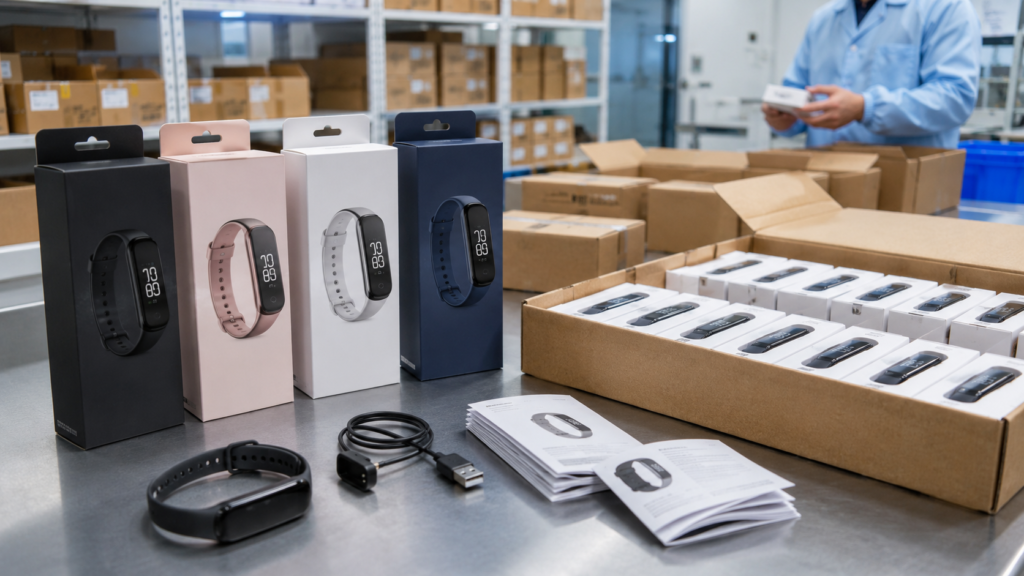
Smart Bands for EU Retail Chains: 7 Critical Steps to Evaluate Suppliers in 2026
Evaluating smart band suppliers for EU retail chains requires verifying compliance (CE, RoHS, REACH, WEEE, UN38.3), assessing quality systems, confirming MOQ and lead times, and validating after-sales support. In 2026, retail buyers should prioritize suppliers who provide transparent certification documentation, offer private label flexibility, and demonstrate robust quality control to meet EU market demands. This guide outlines seven steps to streamline your supplier evaluation and secure reliable smart bands for EU retail.
Table of Contents
Table of Contents
smart bands for EU retail: Table of Contents
- Short Answer
- Key Takeaways
- Key Facts for Buyers
- Step 1: Define Your Smart Band Requirements for the EU Market
- Step 2: Screen Suppliers for EU Compliance Readiness
- Step 3: Evaluate Quality Control and Testing Capabilities
- Step 4: Assess Private Label and Customization Options
- Step 5: Understand MOQ, Pricing, and Lead Times
- Step 6: Review Logistics and Battery Shipping Requirements
- Step 7: Validate After-Sales Support and Warranty
- Common Mistakes and Buyer Red Flags
- Practical Buyer Checklist
- FAQ
- Conclusion
Short Answer
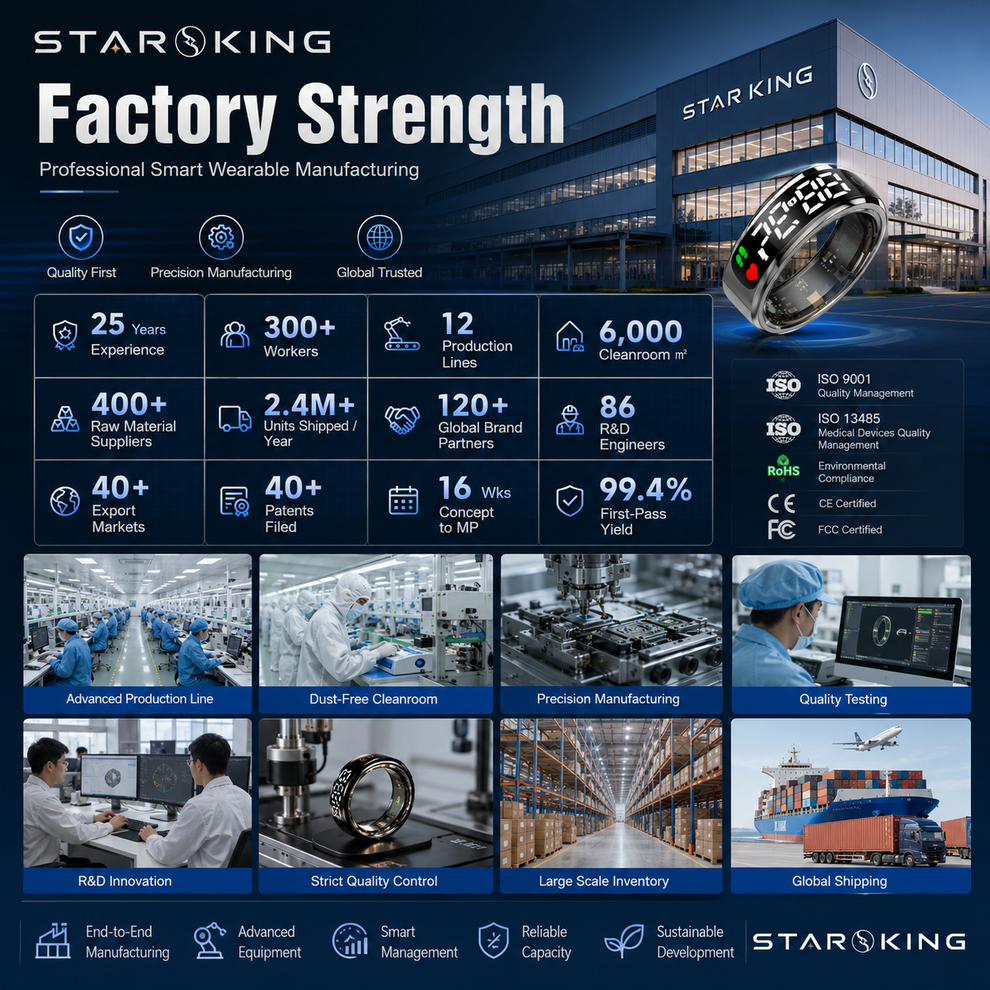
To evaluate smart band suppliers for EU retail chains in 2026, focus on compliance documentation (CE, RoHS, REACH, WEEE, UN38.3), quality management systems, private label capabilities, clear MOQ and lead time terms, and after-sales support. Request samples, audit supplier facilities, and verify certifications independently. STAR KING offers smart bands with OEM/ODM options tailored for EU retail.
Key Takeaways
- EU compliance is non-negotiable: ensure suppliers provide CE, RoHS, REACH, WEEE, and UN38.3 documentation.
- Quality control systems and pre-shipment inspections reduce defect risks and protect your brand.
- Private label and customization options differentiate your retail offering and build customer loyalty.
- Understand MOQ, pricing, and lead times to plan inventory and avoid stockouts.
- Battery shipping regulations (UN38.3, MSDS) must be handled by experienced suppliers.
- After-sales support and warranty terms are critical for long-term retail success.

Key Facts for Buyers
| Factor | Details |
|---|---|
| Compliance | CE marking, RoHS, REACH, WEEE, UN38.3 for battery-powered devices |
| Quality | ISO 9001-certified suppliers preferred; request test reports and inspection records |
| Private Label | Logo, packaging, app customization available; MOQ typically 500-1000 units |
| Lead Times | Sample: 7-15 days; mass production: 30-45 days after order confirmation |
| Shipping | Battery products require UN38.3 test summary and MSDS for air/sea freight |
| After-Sales | Warranty 12-24 months; spare parts availability; RMA process |

Step 1: Define Your Smart Band Requirements for the EU Market
Before contacting suppliers, clearly define your product specifications, target price point, and volume. Consider EU consumer preferences: features like heart rate monitoring, sleep tracking, and water resistance (IP67 or higher) are in demand. Determine whether you need basic fitness bands or advanced models with blood oxygen monitoring and app integration. Your requirements will guide supplier selection and negotiations.
For retail chains, packaging and branding are crucial. Decide on private label or white-label options, and whether you need custom firmware or app integration. STAR KING’s private label solutions allow you to customize smart bands to your brand.
Step 2: Screen Suppliers for EU Compliance Readiness
EU market access requires compliance with directives such as CE (Radio Equipment Directive, EMC, LVD), RoHS, REACH, and WEEE. For smart bands with lithium batteries, UN38.3 certification and MSDS are mandatory for shipping. Ask suppliers for copies of test reports and certificates. Verify they are issued by accredited labs and cover your specific product configuration.
Note that certification requirements depend on the final product features (e.g., Bluetooth, heart rate sensors) and target EU markets. A reputable supplier will provide clear documentation and may assist with registering your brand as the importer of record. STAR KING can share compliance documentation for its smart bands upon request. For reference, consult the European Commission’s CE marking guidelines and RoHS compliance information.
Step 3: Evaluate Quality Control and Testing Capabilities
Quality issues can damage your brand reputation and increase returns. Evaluate the supplier’s quality management system: are they ISO 9001 certified? Do they conduct in-house testing (e.g., drop, waterproof, aging)? Request pre-shipment inspection reports and sample testing data. A robust QC process includes incoming material checks, in-process inspections, and final random inspections (AQL).
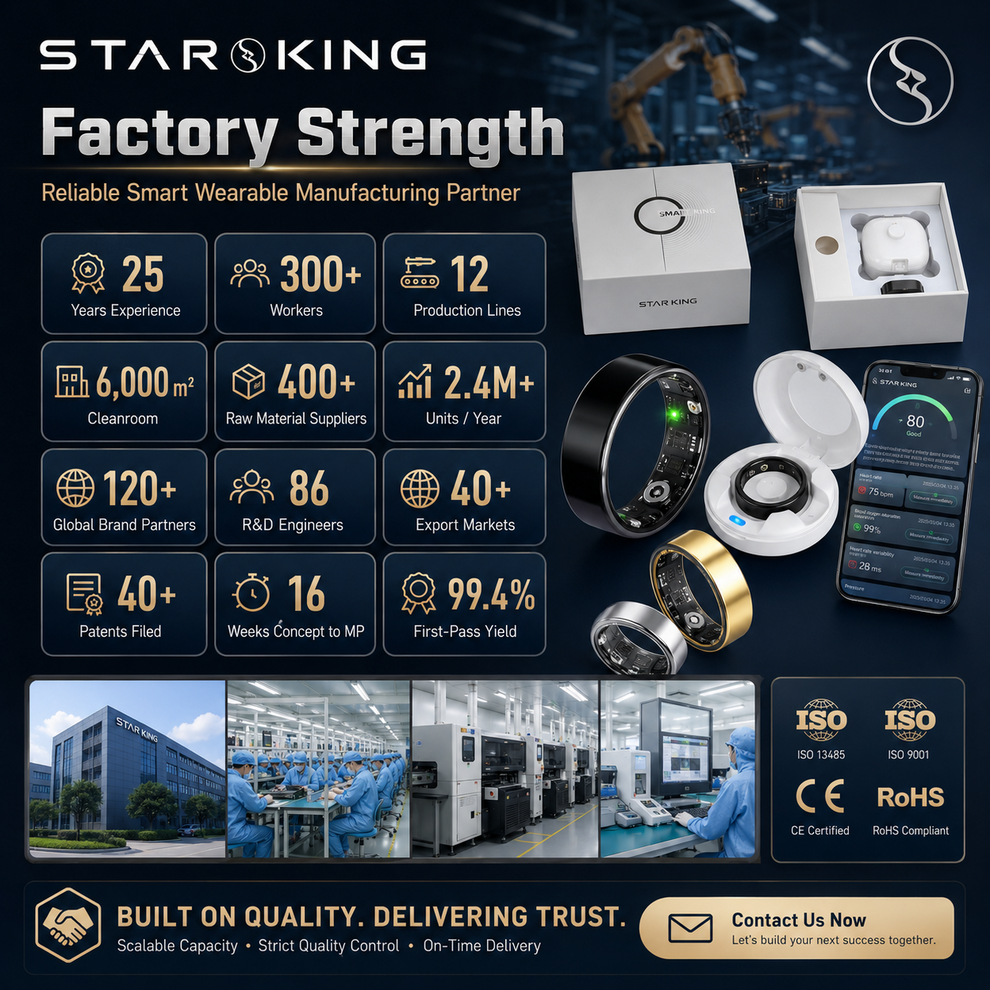
Ask about their experience with EU retailers and whether they have a dedicated QC team. For smart bands, battery safety and sensor accuracy are critical. STAR KING implements health and fitness wearable quality standards, including rigorous testing protocols.
Step 4: Assess Private Label and Customization Options
Private label smart bands allow retail chains to build brand recognition. Discuss customization options: logo printing, custom packaging, app branding, and firmware modifications. MOQ for private label is typically higher than for stock products—often 500 to 1,000 units. Clarify whether tooling costs apply and who owns the intellectual property.
STAR KING offers flexible OEM/ODM services for smart bands, including custom packaging and app development. Ensure the supplier can meet your timeline for design approval and production.
Step 5: Understand MOQ, Pricing, and Lead Times
MOQ and pricing vary based on specifications and customization. Request detailed quotations that break down costs: unit price, tooling, packaging, and shipping. For retail chains, volume discounts may apply. Lead times for samples are usually 7-15 days; mass production takes 30-45 days after deposit and design approval.
Plan your inventory accordingly and consider buffer stock for peak seasons. Discuss payment terms (e.g., T/T, L/C) and Incoterms to avoid surprises. STAR KING provides transparent sample and quotation requests for smart bands.
Step 6: Review Logistics and Battery Shipping Requirements
Smart bands contain lithium-ion batteries, which are regulated for transport. Suppliers must provide UN38.3 test summaries and MSDS for air and sea freight. Ensure they have experience with EU customs clearance and can provide necessary documentation (e.g., commercial invoice, packing list, certificate of origin).
For retail chains, reliable logistics partners are essential. Discuss shipping terms (FOB, CIF, DDP) and estimated transit times. STAR KING assists with logistics documentation for smart band shipments to the EU.
Step 7: Validate After-Sales Support and Warranty
After-sales support is often overlooked but critical for retail success. Clarify warranty terms (typically 12-24 months), RMA procedures, and availability of spare parts. A supplier with EU-based support or a local agent can expedite issue resolution.
Ask for references from other EU retail clients if possible. STAR KING offers comprehensive after-sales service for its smart bands, including technical support and warranty coverage.
Common Mistakes and Buyer Red Flags
- Ignoring compliance documentation: Accepting certificates without verifying their authenticity and applicability to your product.
- Choosing on price alone: Low prices may indicate compromised quality or missing certifications.
- Overlooking MOQ and lead times: Underestimating production timelines can lead to stockouts.
- Not requesting samples: Testing samples is essential to assess build quality and functionality.
- Failing to clarify IP ownership: Ensure you own custom designs and tooling to avoid future disputes.
- Neglecting battery shipping rules: Non-compliant shipments can be delayed or confiscated.
Practical Buyer Checklist
| Item | Questions to Ask |
|---|---|
| Compliance | Can you provide CE, RoHS, REACH, WEEE, UN38.3, and MSDS documentation for this exact model? |
| Quality | Are you ISO 9001 certified? Can I see your QC process and recent inspection reports? |
| Samples | What is the sample lead time and cost? Can samples be customized? |
| Private Label | What are the MOQ and tooling costs for custom logo and packaging? |
| Pricing | Please provide a detailed quotation including all costs and payment terms. |
| Lead Times | What is the production lead time for 1,000 units? What factors affect it? |
| Logistics | How do you handle battery shipping to the EU? What Incoterms do you offer? |
| After-Sales | What is the warranty period? How are repairs or replacements handled? |
FAQ
1. What certifications are required for smart bands in the EU?
Smart bands typically require CE marking (covering Radio Equipment Directive, EMC, and safety), RoHS, REACH, and WEEE compliance. For the battery, UN38.3 and MSDS are needed for transport. Requirements may vary based on features; verify with your supplier.
2. What is a typical MOQ for private label smart bands?
MOQ often ranges from 500 to 1,000 units for private label orders, depending on customization complexity. Some suppliers may accept lower MOQs for stock models.
3. How long does it take to receive samples?
Sample lead time is usually 7-15 days, depending on whether customization is required. Shipping time is additional.
4. Can smart bands be shipped by air from China to the EU?
Yes, but lithium batteries require UN38.3 test summary and MSDS. The supplier must use approved packaging and carriers for dangerous goods.
5. What quality control documents should I request?
Request ISO 9001 certificate, pre-shipment inspection reports, test reports for drop/waterproof/aging, and AQL inspection records.
6. How to ensure intellectual property protection for custom designs?
Sign an NDA and clarify IP ownership in the contract. Ensure tooling costs are agreed upon and ownership is transferred to you.
7. What after-sales support is typical for smart bands?
Warranty periods of 12-24 months are common. Suppliers should offer RMA procedures and spare parts availability. EU-based support is a plus.
Conclusion
Evaluating smart band suppliers for EU retail chains involves a structured approach: define requirements, verify compliance, assess quality, explore customization, clarify commercial terms, manage logistics, and validate after-sales support. By following these seven steps, retail buyers can mitigate risks and secure reliable smart bands for EU retail. STAR KING stands ready to support your procurement journey with compliant, high-quality smart bands and flexible OEM/ODM services.
STAR KING CTA
Ready to evaluate smart bands for your EU retail chain? Request samples or discuss your OEM/ODM requirements with STAR KING today. Our team can provide compliance documentation, samples, and a tailored quotation to support your evaluation.
Discuss Your Smart Wearable OEM/ODM Project
Planning a smart ring, smart watch, smart band, AI glasses, AI translator, or AI voice mouse project? Contact STAR KING to discuss product positioning, sample testing, customization scope, certification requirements, lead time, and quotation details.

Team Star King

Scan WhatsApp QR code
Leave a Reply