
AI translator supplier: 7 Steps to Choose a Reliable AI Translator Supplier in Southeast Asia
October 18, 2026 · Team Star King
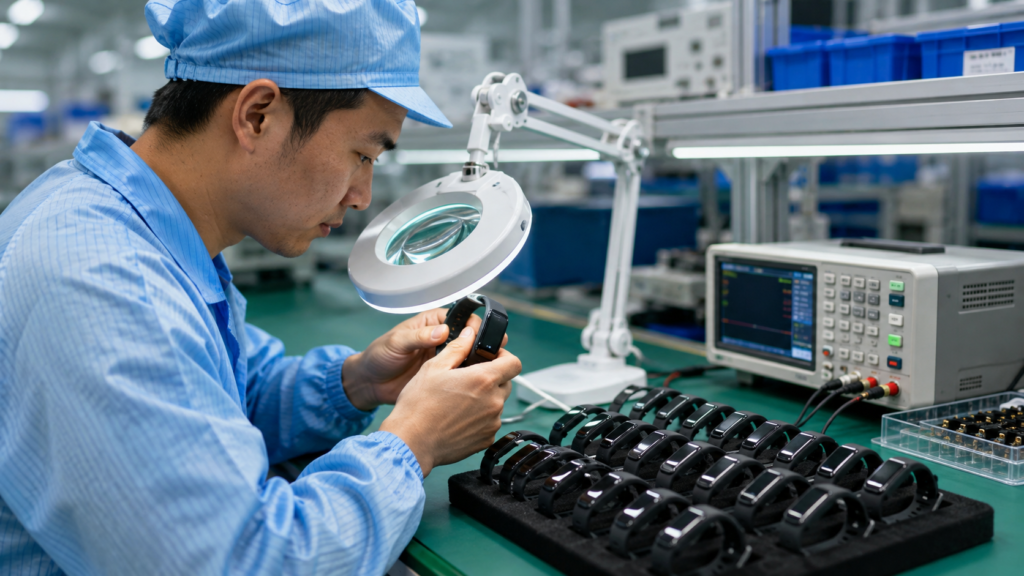
7 Steps to Choose a Reliable AI Translator Supplier in Southeast Asia
To choose a reliable AI translator supplier for Southeast Asia, importers should follow a structured vetting process: define offline language requirements, verify firmware and OTA update capability, validate MOQ and landed cost, request product samples for real-world testing, confirm target-market compliance, and lock down lead times and warranty terms. This guide gives you a 7-step supplier selection framework tailored to importers selling into Indonesia, Thailand, Vietnam, Malaysia, the Philippines and Singapore, where connectivity, language diversity and customs rules vary widely.
Table of Contents
Table of Contents
Direct Answer: What Defines a Good AI Translator Supplier?
A good AI translator supplier combines three capabilities: hardware reliability, software flexibility, and export know-how. For Southeast Asian importers, the supplier should offer offline or hybrid translation modes for areas with weak connectivity, support major regional languages, allow private-label firmware and packaging customization, and provide documentation aligned with local import and radio-frequency requirements. Supplier selection should therefore be treated as a technical and commercial audit, not a price comparison alone.
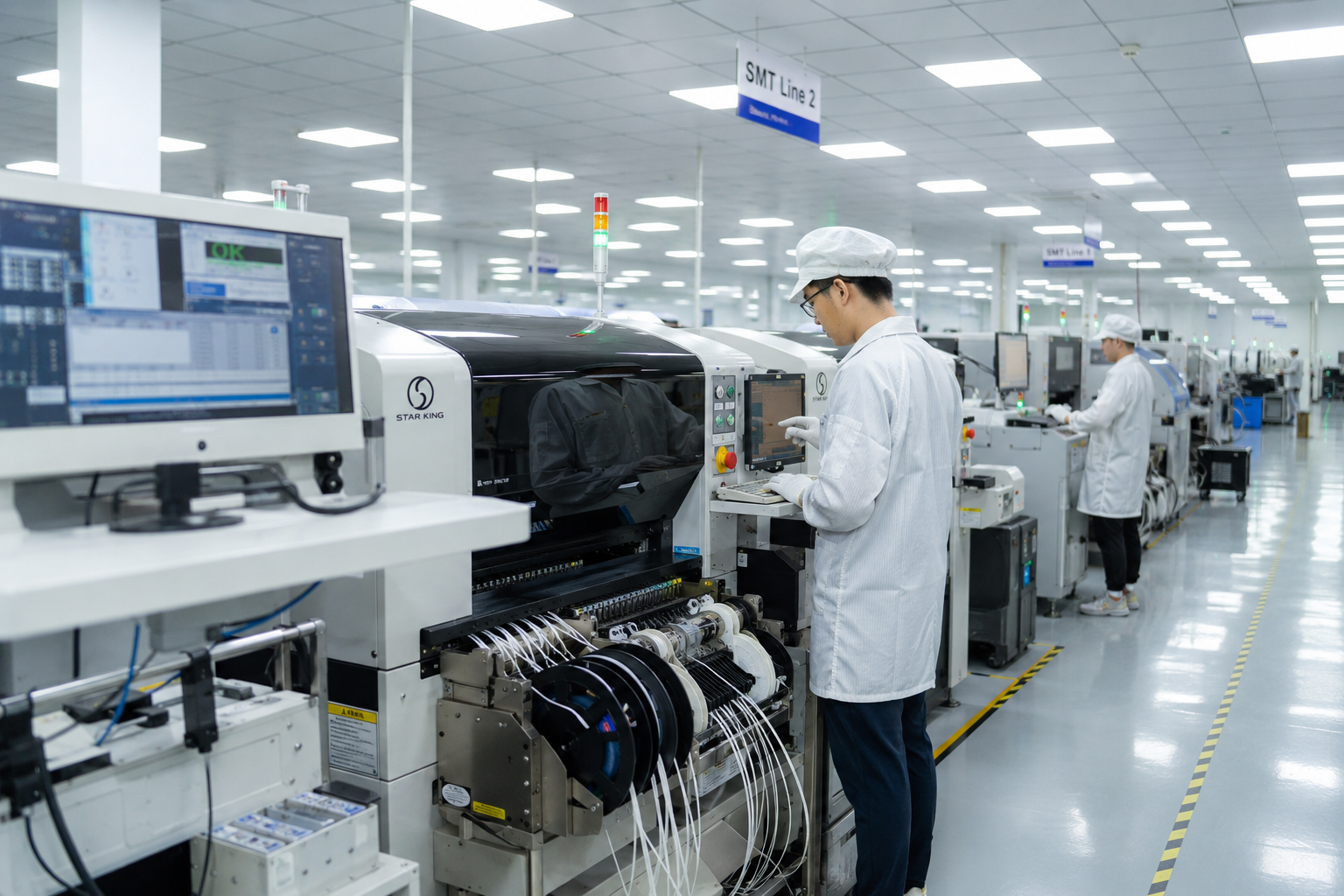
Table of Contents
- Step 1 – Map Your Language and Connectivity Requirements
- Step 2 – Screen Suppliers for AI Translator OEM Capability
- Step 3 – Compare Specs, MOQ and Landed Cost
- Step 4 – Test Samples in Real Southeast Asian Conditions
- Step 5 – Verify Compliance and Import Documentation
- Step 6 – Lock Lead Times, Packaging and After-Sales Terms
- Step 7 – Audit Common Red Flags Before Signing

Key Takeaways
- Define language pairs, offline capability and device form factor before contacting suppliers.
- Evaluate suppliers on firmware control, app integration and private-label options, not only unit price.
- Request samples that reflect real Southeast Asian conditions, including low-bandwidth areas.
- Confirm compliance is product- and market-specific; do not accept blanket certification claims.
- Calculate landed cost including duties, battery shipping and after-sales reserve.
- Use a written scorecard and Buyer Checklist to compare suppliers objectively.

Key Facts for Buyers
| Decision Area | What to Verify | Why It Matters in Southeast Asia |
|---|---|---|
| Language coverage | Offline/hybrid modes, regional language pairs | Connectivity varies; Bahasa, Thai, Vietnamese and Filipino support are common requirements |
| OEM/ODM scope | Firmware, app, logo, packaging | Private-label differentiation for local retail and e-commerce channels |
| MOQ | Tiered pricing, sample policy | Importers often pilot in small volumes before scaling |
| Compliance | CE, FCC, RoHS, battery documentation | Requirements depend on product configuration and destination country |
| Lead time | Production and shipping schedule | Sea vs air freight planning for lithium-battery devices |
| Warranty | Terms, spare parts, RMA process | After-sales support affects distributor reputation |
Step 1 – Map Your Language and Connectivity Requirements
Southeast Asia is not a single market. An importer selling in Jakarta may need strong Bahasa Indonesia support with offline translation for commutes and rural areas, while a distributor in Singapore may prioritize English–Mandarin accuracy and fast connectivity. Before evaluating any AI translator supplier, document your priority language pairs, expected usage environments and device form factor. Buyers should also decide whether they need handheld translators, earbud-style devices or multi-function AI translator devices.
Define Must-Have vs Nice-to-Have Features
Must-have features typically include offline translation for core languages, clear microphone arrays for noisy environments, and a display for two-way conversation. Nice-to-have features might include photo translation, AI voice assistant integration or multi-device pairing. Separating these early prevents suppliers from upselling features your channel does not need.
Procurement reason: Clear requirements reduce sampling cycles and make supplier quotes comparable.
Step 2 – Screen Suppliers for AI Translator OEM Capability
Not every trading company can support AI translator OEM projects. A capable supplier should control firmware development, app integration and hardware design, or work with a transparent manufacturing partner. Ask for organization details, development process and examples of customization. Importers should verify whether the supplier can modify the translation engine, UI language, logo, packaging and companion app.
Questions to Ask AI Translator Suppliers
- Which translation engines or cloud providers power the device, and can we choose or switch providers?
- Can firmware support offline models, and how large are the language packs?
- Does the companion app support your brand and local languages?
- Who owns the tooling and firmware for private-label projects?
- What is the process for OTA updates and bug fixes after shipment?
If you are also considering adjacent AI hardware, the AI office productivity solution page illustrates how voice and translation devices can fit into a broader portfolio.
Step 3 – Compare Specs, MOQ and Landed Cost
Price lists are only the starting point. Importers should compare specifications, MOQ tiers, testing costs, packaging and freight. A lower unit price can be offset by higher minimum order quantities, weaker battery life or costly after-sales returns.
| Cost Element | What It Includes | Buyer Action |
|---|---|---|
| Unit price | Ex-works or FOB price per tier | Request tiered quotes at pilot and volume levels |
| Tooling and setup | Logo, packaging, firmware customization | Clarify one-time vs recurring costs |
| Sample cost | Sample units and courier | Confirm whether sample cost is credited to bulk order |
| Freight and duties | Air/sea freight, import duties, taxes | Calculate landed cost per unit |
| After-sales reserve | Spare parts, RMA handling | Budget 1–3% of order value depending on channel |
Use a landed cost model before committing. For a broader view of sourcing economics, see our sourcing and market insights blog.
Soft CTA: If you are comparing AI translator suppliers for a Southeast Asian launch, you can request a specification and quotation discussion to align features with your target price.
Step 4 – Test Samples in Real Southeast Asian Conditions
Sample testing should go beyond a quiet meeting room. Test translation accuracy in noisy streets, low-signal areas, different accents and local dialects. Check battery life under continuous use, charging time, Bluetooth pairing stability and app usability.
Sample Validation Checklist
- Translation accuracy for your top five language pairs.
- Offline mode performance and language pack download time.
- Microphone pickup in noisy environments.
- Battery endurance and charging behavior.
- App pairing, account setup and OTA update process.
- Build quality, drop resistance and display readability.
Document results in a scoring sheet and compare against competing samples. For related product categories, you can review AI smart glasses if your channel requires wearable translation formats.
Step 5 – Verify Compliance and Import Documentation
Compliance requirements for AI translators vary by product configuration and destination country. Radio modules, batteries and chargers each trigger different rules. In Southeast Asia, importers should check national telecom and standards requirements; for example, Indonesia, Thailand, Malaysia and the Philippines each have their own radio-frequency and electrical safety regimes. Buyers should verify requirements with local authorities or qualified consultants.
At minimum, request documentation for CE, FCC, RoHS, UN38.3 and MSDS where applicable. Remember that certification scope must match the exact model, battery and radio configuration you intend to import. For official references, see the U.S. Federal Communications Commission website and the International Electrotechnical Commission for standards context.
If your product includes health or fitness sensors, review the health and fitness wearables solution for related compliance considerations.
Step 6 – Lock Lead Times, Packaging and After-Sales Terms
Production planning should be agreed in writing. Clarify sample lead time, mass production lead time, packaging approval steps and shipping method. Lithium-battery devices typically require special shipping documentation and may be restricted on some air routes. Importers should confirm whether the supplier can support sea freight consolidation or air freight with proper battery declarations.
After-Sales Terms to Negotiate
- Warranty period and what is covered.
- Spare parts availability and cost.
- RMA process and turnaround time.
- Firmware update support period.
- Packaging customization approval workflow.
Private-label packaging can strengthen retail positioning. Buyers can review private label OEM/ODM solutions for customization scope.
Step 7 – Audit Common Red Flags Before Signing
Common Mistakes and Buyer Red Flags
Supplier selection often fails because buyers skip verification steps. Watch for these red flags:
- Certificates that do not match the model or battery configuration you are ordering.
- Refusal to provide sample units or to allow third-party testing.
- Unclear ownership of tooling, firmware or app source code.
- Quotes that omit freight, duties or after-sales costs.
- Pressure to commit to high MOQ without pilot testing.
- No documented OTA or firmware support plan.
Use a written scorecard to compare suppliers on technical capability, commercial terms, compliance and communication.
Practical Buyer Checklist
| Area | Checklist Item | Status |
|---|---|---|
| Requirements | Language pairs, offline mode, form factor defined | ☐ |
| Supplier | OEM/ODM capability and references verified | ☐ |
| Commercial | MOQ, pricing tiers and landed cost calculated | ☐ |
| Samples | Real-world testing completed and scored | ☐ |
| Compliance | Certificates and battery documents reviewed | ☐ |
| Production | Lead times, packaging approval and shipping plan agreed | ☐ |
| After-sales | Warranty, spare parts and RMA terms documented | ☐ |
Frequently Asked Questions
What is the typical MOQ for AI translator OEM orders?
MOQ depends on customization level. Standard models may start at lower volumes, while custom firmware, logo and packaging typically require higher quantities. Ask suppliers for tiered MOQ and sample policies.
Do AI translators need certification for Southeast Asia?
Requirements vary by country and product configuration. Radio modules, batteries and chargers may trigger separate rules. Buyers should verify with local authorities or compliance consultants before import.
Can suppliers provide offline translation for regional languages?
Many AI translators support offline language packs, but coverage varies. Confirm which Southeast Asian languages work offline and test pack size and accuracy.
How long does shipping lithium-battery translators take?
Air freight is faster but requires battery declarations; sea freight is slower but often more economical for bulk orders. Lead times should be confirmed in writing.
What should be included in a supplier scorecard?
Include technical capability, customization options, compliance documentation, sample performance, pricing, lead time and after-sales support.
How do I verify a supplier’s OEM capability?
Request development process details, firmware and app customization examples, and references. A factory audit or third-party inspection can add confidence.
Conclusion
Choosing an AI translator supplier for Southeast Asia requires a structured approach: define language and connectivity needs, screen for OEM capability, compare landed costs, test samples, verify compliance, lock production terms and audit red flags. Importers who follow these seven steps reduce risk and build a more reliable product pipeline for regional distribution.
Next Step with STAR KING
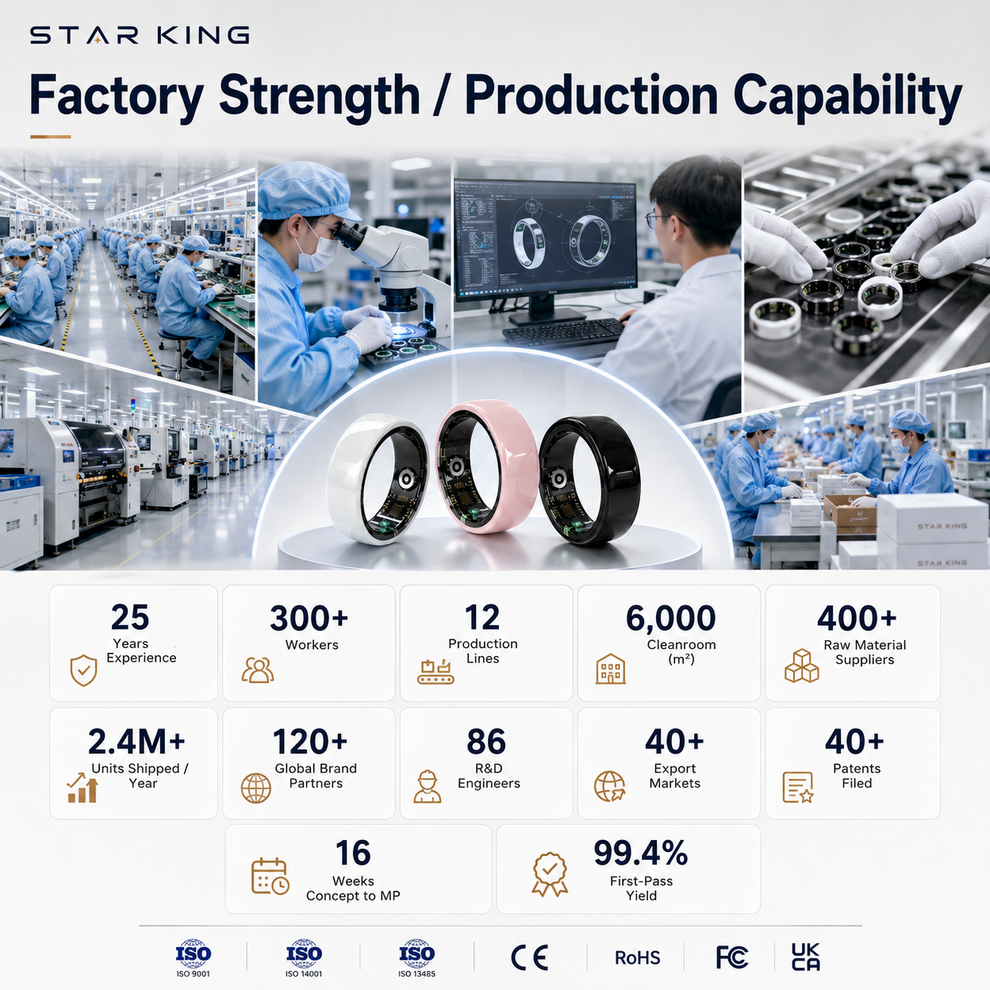
STAR KING supports importers with AI translator OEM/ODM projects, including firmware, app, logo and packaging customization. To discuss specifications, MOQ and sample requests for your Southeast Asian market, contact our sales team.
Discuss Your Smart Wearable OEM/ODM Project
Planning a smart ring, smart watch, smart band, AI glasses, AI translator, or AI voice mouse project? Contact STAR KING to discuss product positioning, sample testing, customization scope, certification requirements, lead time, and quotation details.

Team Star King

Scan WhatsApp QR code
Leave a Reply