
AI voice mouse Middle East: AI Voice Mouse for Healthcare Solution Providers: 7 Must-Checks Before You Import to the Middle East
October 11, 2026 · Team Star King
AI Voice Mouse for Healthcare Solution Providers: 7 Must-Checks Before You Import to the Middle East
An AI voice mouse can cut clinical documentation time for Arabic-speaking health teams, but importing one into the Middle East is a sourcing decision before it is a technology decision. This guide gives healthcare solution providers a seven-step buyer framework covering equipment classification, Arabic and Gulf-dialect voice accuracy, connectivity, device management, EV battery shipping, MOQ and lead-time planning, and warranty support — so you can evaluate an AI voice mouse Middle East program without discovering risks after your first container lands.
Table of Contents
Table of Contents
AI voice mouse Middle East: Table of Contents
- Short Answer
- Why an AI Voice Mouse Matters for Middle East Healthcare
- What Is an AI Voice Mouse?
- The 7 Must-Checks Before You Import
- Key Facts for Buyers
- Comparison and Planning Tables
- Common Mistakes and Buyer Red Flags
- Practical Buyer Checklist
- FAQ for Healthcare Buyers
- Evaluate an AI Voice Mouse for Your Middle East Program

Short Answer
An AI voice mouse combines a standard pointing device with a microphone, voice-control software, and often cloud or on-device AI for dictation and command execution. For Middle East healthcare deployments, buyers should verify Arabic and Gulf-dialect voice accuracy, data-processing and consent policies, device-management compatibility, battery shipping documentation, and importer-of-record responsibilities before committing to a purchase order. Most regional markets also require product-level certificates, labeling, and customs paperwork that depend on the final configuration and destination country.
Why an AI Voice Mouse Matters for Middle East Healthcare
Healthcare solution providers in the Gulf and wider Middle East face a specific documentation bottleneck. Clinicians, nurses, and medical transcription teams often work in Arabic, English, or a mix of both, and switching between keyboard, dictation app, and mouse slows every task. A voice-enabled AI mouse consolidates pointing, dictation, and shortcuts into one input device, which is why regional integrators are adding it to their catalog alongside traditional medical and office peripherals.
The opportunity is real, but the sourcing risk is concentrated in a few areas: Arabic language support quality, privacy expectations, connectivity restrictions, and import compliance for a battery-powered wireless device. Each of the seven checks below is designed to surface those risks early, when you still have leverage with a supplier.
What Is an AI Voice Mouse?
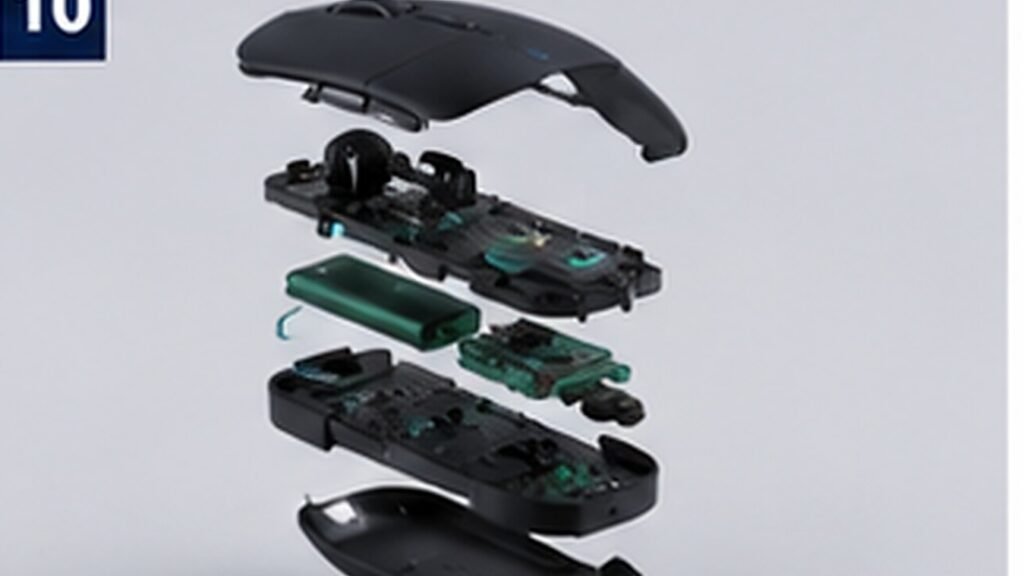
An AI voice mouse is a computer mouse that integrates a microphone array, a voice processing engine, and a software layer that converts speech into text, commands, or AI-generated actions. Unlike a basic wireless mouse, it typically requires companion software installed on a laptop or workstation, and it may route speech through a cloud AI service, process it on the device, or do both depending on the model.
For a healthcare buyer, the definition matters because the software layer determines everything downstream: language support, data residency, device management, update cadence, and how the mouse behaves on a locked-down clinical workstation. When evaluating an OEM partner such as STAR KING’s AI voice mouse platform, treat the hardware and the software as two separate procurement tracks that must both pass your review.
The 7 Must-Checks Before You Import
1. Confirm How the Device Is Classified and What That Means for Compliance
In many markets, whether a product is treated as a medical device or as general IT equipment determines the certification path, the importer-of-record obligations, and the documentation your freight forwarder will demand. A voice mouse marketed for transcription or workflow efficiency is usually positioned as an IT peripheral rather than diagnostic equipment — but the final classification depends on the claims on your packaging, your website, and your marketing materials.
Buyers should verify the classification with their own regulatory contact or a local compliance consultant, then align product claims to it. If you intend to describe measurements or clinical outputs, the compliance burden typically increases significantly. Keep early marketing language factual and workflow-focused.
2. Test Arabic and Gulf-Dialect Voice Accuracy Before You Commit
This is the check most buyers under-invest in. Generic English-first voice models can perform well in a demo and fail in a Riyadh clinic where staff speak Gulf Arabic, code-switch to English, and use medical terminology. Ask the supplier to demonstrate:
- Arabic dictation accuracy on real clinical sentences, not sample marketing phrases;
- Handling of code-switching between Arabic and English in the same sentence;
- Recognition of common medical terms in your specialty;
- Whether voice models run on-device, in the cloud, or hybrid;
- How language packs are updated and whether you can control the update cadence.
Practical verification: request a small sample order and run a timed dictation test with three to five native Arabic speakers from your target country. Compare accuracy against the workflow your end users actually perform. [STAR KING TO CONFIRM] the specific Arabic dialects and voice model versions supported.
3. Check Connectivity and Network Assumptions
Voice AI often depends on connectivity. In hospitals with segmented networks, restricted guest Wi-Fi, or virtual desktop infrastructure, a mouse that requires an always-on cloud connection may not work at the point of care. Confirm:
- Does the device require internet access, or does it work offline for core dictation?
- What happens during a network outage?
- Does the companion software install on locked-down clinical workstations?
- Are there IT administration options such as domain policies or central configuration?
If your customers run virtual desktops, verify USB passthrough and audio routing behavior with the supplier before deployment.
4. Evaluate Data Handling, Consent, and Privacy Alignment
Healthcare customers will ask where voice data is processed and stored. Even when a product is not a medical device, enterprise healthcare IT teams apply strict privacy expectations. Ask the supplier to document:
- Where speech data is processed and whether it is retained;
- Whether processing can be restricted to on-device or regional servers;
- What consent and disclosure language is recommended for end users;
- Whether audio can be disabled by policy for sensitive rooms.
Buyers should confirm any local data-residency or privacy requirements with their own legal counsel. Do not assume a single policy covers every Middle East market — rules vary by country and by customer type.
5. Verify Battery Shipping Documentation and Safety Standards
A wireless mouse contains a lithium battery, which triggers transport requirements. Rechargeable lithium batteries must generally be tested to the UN Manual of Tests and Criteria, Part III, subsection 38.3 (commonly called UN38.3) before air shipment, and shipments typically require a Safety Data Sheet and, where applicable, a test summary. Your freight forwarder and airline will ask for these documents. Confirm:
- UN38.3 test summary availability for the exact battery configuration;
- MSDS availability;
- Battery capacity, chemistry, and whether it can ship by air, sea, or both;
- Whether the battery is user-replaceable and how spare batteries are handled.
6. Plan MOQ, Tooling, and Lead Time Realistically
MOQ for an AI voice mouse depends on whether you buy a standard model, apply light customization (logo, packaging), or commission deeper ODM work such as firmware or app changes. Light customization usually carries a lower MOQ than full firmware development, which may involve engineering time and a development fee. Tooling changes, if any, add both cost and lead time.
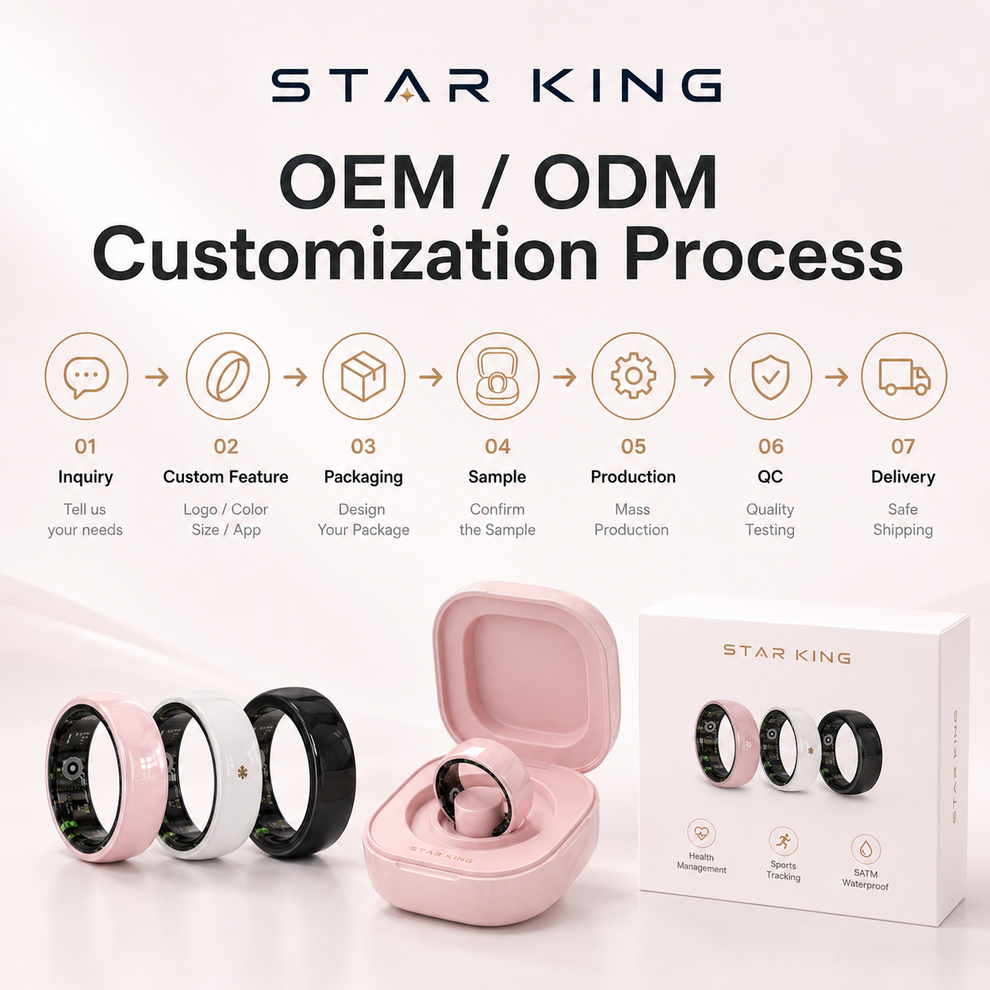
Build your plan around these variables: order quantity, customization depth, packaging complexity, battery supply, and testing schedule. For an Awareness-stage program, order samples first, then scale. If you are comparing customization models for healthcare deployments, STAR KING’s private label OEM/ODM solution outlines the typical stages. [STAR KING TO CONFIRM] MOQ per model and per customization level.
7. Confirm Certification Files, Warranty, and Spare Parts
Certification requirements depend on the product configuration, the destination country, and your importer-of-record status. Middle East markets commonly expect CE or FCC documentation as a baseline, plus RoHS and battery documentation, but specific mandatory certificates, labeling language, and customs rules vary by country. Do not assume documents from one SKU cover another — battery capacity, radio module, and charger changes can require re-testing.
Warranty and spare parts are equally important. Ask about warranty length, RMA process, spare battery and receiver availability, and whether the supplier stocks parts for your region. Healthcare customers cannot afford a device that becomes unsupported six months after delivery. Verify the Radio Equipment Directive where a CE claim is made via the European Commission RED page.
Key Facts for Buyers
| Buyer Question | What to Confirm | Why It Matters |
|---|---|---|
| Is it a medical device? | Classification and claims alignment | Determines compliance path and importer obligations |
| Does it support Arabic well? | Dialect coverage and accuracy test | English-first models often fail in Gulf clinical use |
| Does it need internet? | Offline vs cloud behavior | Restricted hospital networks may block cloud features |
| Where is voice data processed? | On-device vs regional servers | Healthcare privacy expectations are strict |
| Battery shipping? | UN38.3, MSDS, test summary | Required by airlines and forwarders |
| MOQ and lead time? | Customization depth, battery supply, testing | Sets realistic launch planning |
| Certification scope? | Per-SKU files and destination rules | Aggregate documents may not cover your SKU |
| Warranty and spares? | RMA process, parts stock | Long-term support protects your brand reputation |
Comparison and Planning Tables
Table A: Standard vs Customized AI Voice Mouse
| Decision Factor | Standard Model | Logo + Packaging Custom | Full ODM (Firmware/App) |
|---|---|---|---|
| Typical MOQ | Lowest | Moderate | Highest |
| Development Fee | None | Low | Possible |
| Lead Time | Shortest | Moderate | Longest |
| Arabic Voice Control | As provided | As provided | Customizable |
| Brand Control | Limited | Good | Full |
Table B: Middle East Import Risk Snapshot
| Risk Area | Simple Model | Typical Buyer Action |
|---|---|---|
| Equipment classification | Clear IT peripheral | Verify with local compliance contact |
| Language coverage | English + Arabic | Sample-test native speakers |
| Network dependency | Cloud-assisted | Plan for restricted networks |
| Battery transport | UN38.3 documented | Collect test summary + MSDS |
| Labeling | Standard packaging | Confirm per-country label rules |
| After-sales | Standard warranty | Confirm RMA and spare parts |
Common Mistakes and Buyer Red Flags
- Relying on an English-language demo. Voice accuracy must be tested in Arabic with your users, not shown in a scripted English video.
- Treating certifications as universal. A CE or FCC document for one SKU may not cover a different battery or radio configuration.
- Ignoring network constraints. Cloud-dependent features can be blocked in clinical environments.
- Underestimating battery paperwork. Missing UN38.3 documentation delays shipments at the airport, not at the factory.
- Skipping the sample order. Samples reveal keyboard layout, software install behavior, and battery life before mass volume.
- Assuming one policy fits all markets. Import, privacy, and labeling rules vary country by country.
Red flags: reluctance to provide a voice accuracy test, refusal to share battery documentation, promises that one certificate covers every Middle East country, and vague statements about software update support.
Practical Buyer Checklist
- Confirm equipment classification and align marketing claims.
- Run an Arabic and Gulf-dialect dictation test with native speakers.
- Verify offline vs cloud behavior and IT install requirements.
- Document data-processing location and consent language.
- Collect UN38.3 test summary and MSDS.
- Map MOQ, tooling, and lead time for your customization level.
- Confirm certification files per SKU and per destination country.
- Review warranty, RMA, and spare-part availability.
- Order samples before committing to a full purchase order.
FAQ for Healthcare Buyers
Is an AI voice mouse a medical device?
Usually it is positioned as an IT peripheral. Classification depends on product claims, marketing, and destination rules. Buyers should confirm with a local regulatory contact before importing.
How accurate is Arabic voice recognition on these devices?
It varies by model and engine. Request a sample and test with native Arabic speakers from your target country, including code-switched sentences.
What is the MOQ for a private-label AI voice mouse?
MOQ depends on customization depth. Light logo and packaging programs typically require less volume than full firmware or app development. [STAR KING TO CONFIRM] exact MOQ.
What battery documents are required for air shipment?
Typically a UN38.3 test summary and an MSDS. Your forwarder and airline may request additional paperwork, so confirm their checklist early.
Do certifications cover every Middle East country?
No. Certification and labeling rules vary by country and often by product configuration. Verify per destination and per SKU.
Can the device work without internet?
It depends on the model. Some offer on-device dictation for core functions; others rely on cloud AI. Confirm offline behavior before deployment.
What warranty and support should I negotiate?
Ask for warranty length, RMA process, and spare battery and receiver availability. Confirm how firmware updates are delivered. [STAR KING TO CONFIRM] warranty terms.
Conclusion
Sourcing an AI voice mouse for Middle East healthcare customers rewards buyers who verify before they commit. The seven checks in this guide — classification, Arabic voice accuracy, connectivity, data handling, battery shipping, MOQ and lead time, and certification and support — cover the decisions most likely to cause delays or returns if skipped.
A voice mouse is a workflow tool, not a clinical device. Treating it that way keeps compliance simple, keeps claims accurate, and keeps your roadmap focused on the productivity gains your healthcare customers actually value.
Evaluate an AI Voice Mouse for Your Middle East Program
Start with a sample so you can test Arabic voice accuracy against your real workflows before committing to volume. You can request product samples or discuss customization requirements with the STAR KING team.
Discuss Your Smart Wearable OEM/ODM Project
Planning a smart ring, smart watch, smart band, AI glasses, AI translator, or AI voice mouse project? Contact STAR KING to discuss product positioning, sample testing, customization scope, certification requirements, lead time, and quotation details.

Team Star King

Scan WhatsApp QR code
Leave a Reply