
AI smart glasses UK: 7 Critical Checks for Corporate Buyers Sourcing AI Smart Glasses in the UK (2026 Buyer’s Guide)
October 10, 2026 · Team Star King

7 Critical Checks for Corporate Buyers Sourcing AI Smart Glasses in the UK (2026 Buyer’s Guide)
Sourcing AI smart glasses UK for your corporate procurement project requires checking seven critical areas: UKCA/CE certification, data privacy compliance, battery UN38.3 safety, real-world camera and AI accuracy testing, MOQ and lead time, software integration, and after-sales support. UK regulations and GDPR make these non-negotiable. This guide walks you through each check with practical questions to ask your supplier before issuing an RFQ.
Table of Contents
Table of Contents
Enterprises in the UK are deploying AI smart glasses for remote assistance, warehouse operations, training, and field service. According to a [Deloitte TMT Predictions report](https://www2.deloitte.com/uk/en/insights/industry/technology/technology-media-and-telecom-predictions.html), enterprise adoption of AI-enabled wearables continues to grow, but procurement teams often overlook the hidden risks. This article provides a procurement-focused framework to ensure your purchase meets business, legal, and operational requirements.
AI smart glasses UK: Table of Contents
- Short Answer
- Key Takeaways
- Key Facts for Buyers
- 1. UKCA and CE Certification for UK Market
- 2. Data Privacy and GDPR Compliance
- 3. Battery Safety and UN38.3 Certification
- 4. Product Specifications and Real-World Testing
- 5. MOQ and Lead Time Planning
- 6. Software, App, and API Integration
- 7. After-Sales Support, Warranty, and Spare Parts
- Common Mistakes UK Buyers Make
- Practical Buyer Checklist
- FAQ
- Conclusion

Short Answer
To successfully procure AI smart glasses for UK corporate use, prioritize suppliers who provide verifiable UKCA or CE documentation, comply with UK GDPR, hold UN38.3 battery safety certificates, and offer transparent MOQ and lead time terms. Insist on sample testing and a clear software integration plan. These seven checks reduce legal, operational, and financial risks.
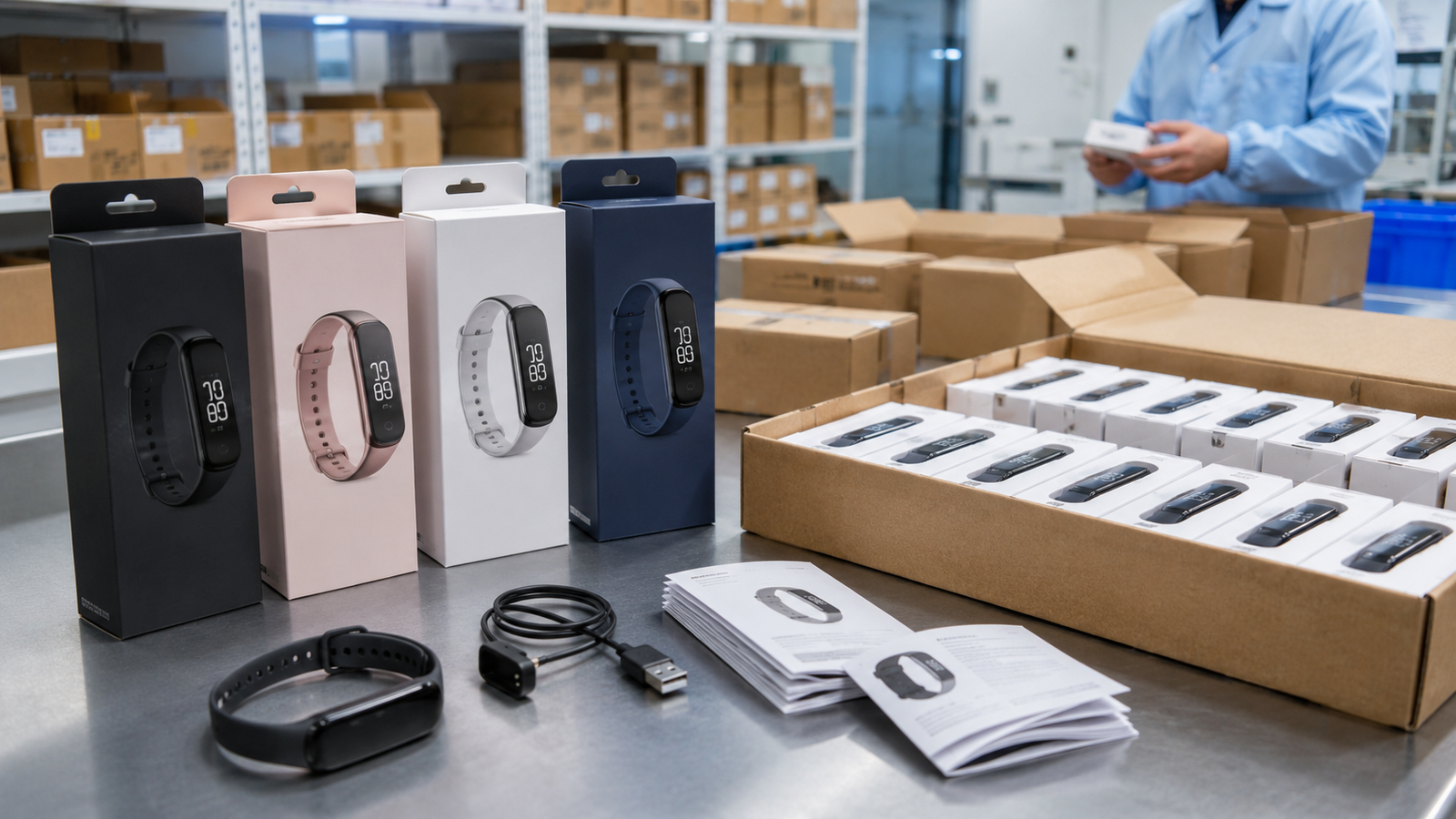
Key Takeaways
- UKCA certification (or CE for legacy stock) is legally required for AI smart glasses placed on the UK market; verify certificates independently.
- UK GDPR imposes strict obligations on data processing; ensure your supplier supports data minimization and secure storage.
- UN38.3 certification is mandatory for lithium battery transport; non-compliance can halt shipments.
- Real-world testing of camera, AI, and connectivity is essential before committing to volume orders.
- MOQ and lead time must align with your deployment schedule; account for tooling and firmware customization.
- Software integration—including APIs and MDM compatibility—directly impacts user adoption and IT overhead.
- After-sales support and spare parts availability protect your investment over the product lifecycle.

Key Facts for Buyers
| Check | Why It Matters | What to Verify |
|---|---|---|
| UKCA / CE | Legal requirement for UK market access | Certificate numbers, test reports, UK Responsible Person |
| GDPR | Protects user data; fines up to £17.5m or 4% turnover | Data processing agreement, encryption, data residency options |
| UN38.3 | Mandatory for lithium battery shipping | Test report from accredited lab, MSDS |
| Camera/AI Accuracy | Directly affects task success and user trust | Test in representative lighting and network conditions |
| MOQ & Lead Time | Impacts cash flow and deployment milestones | Written MOQ tiers, production schedule, buffer for customs |
| Software/API | Integration with existing IT systems | API documentation, SDK availability, MDM support |
| Support & Warranty | Reduces downtime and total cost of ownership | Warranty terms, spare parts availability, RMA process |
For a detailed breakdown of each check, continue reading below.
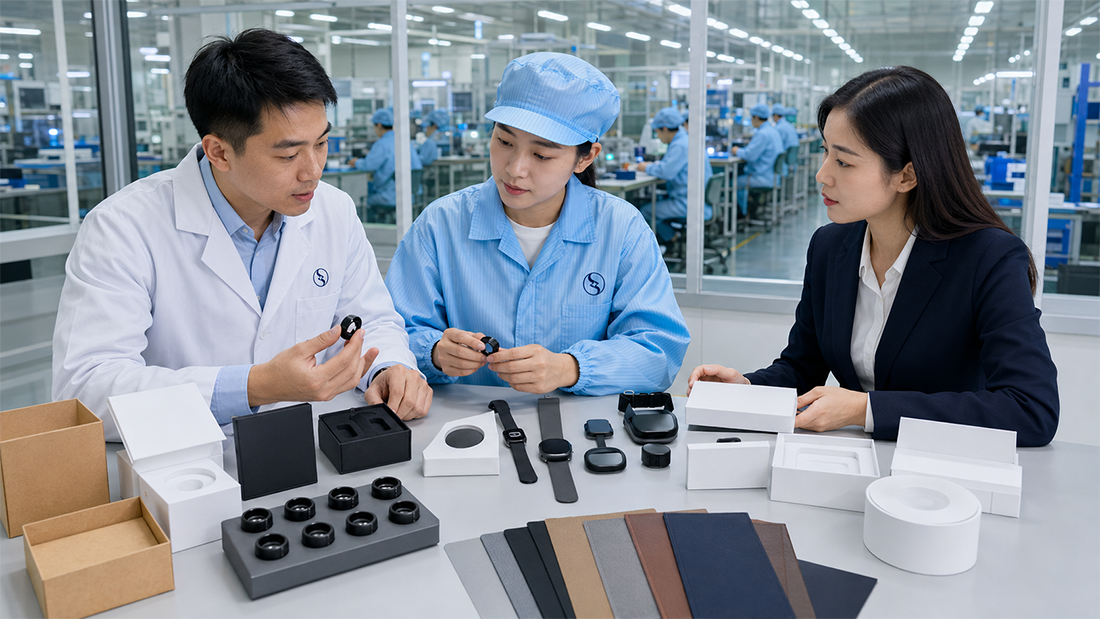
1. UKCA and CE Certification for UK Market
Since 1 January 2021, the UKCA mark has been the primary conformity marking for most goods placed on the Great Britain market. For AI smart glasses, which combine radio equipment, electrical safety, and potentially health-monitoring features, compliance typically depends on the specific product configuration and intended use.
Ask your supplier for:
- UKCA Declaration of Conformity, supported by test reports from an accredited laboratory.
- CE marking for Northern Ireland or EU distribution (if applicable).
- Details of the UK Responsible Person, if the supplier is based outside the UK.
Buyers should verify certificate authenticity directly with the issuing body. Note that STAR KING’s current certification status for AI smart glasses is [STAR KING TO CONFIRM].
2. Data Privacy and GDPR Compliance
AI smart glasses often capture images, video, and audio, making them subject to the UK GDPR and the Data Protection Act 2018. Corporate buyers must ensure that data processing is lawful, fair, and transparent. Key questions for your supplier:
- Where is data stored and processed? (Cloud region, on-device encryption)
- Does the device support data minimization and user consent mechanisms?
- Can video recording be disabled or restricted to comply with workplace policies?
- Will the supplier sign a Data Processing Agreement (DPA)?
Failure to address these points can expose your organization to regulatory action. The UK Information Commissioner’s Office (ICO) provides detailed guidance on [data protection by design](https://ico.org.uk/for-organisations/uk-gdpr-guidance-and-resources/).
3. Battery Safety and UN38.3 Certification
AI smart glasses contain lithium-ion batteries, which are classified as dangerous goods for transport. UN38.3 certification is mandatory for air, sea, and road shipment. Without it, carriers may refuse your cargo.
Request from your supplier:
- UN38.3 test report from a recognized testing laboratory.
- Material Safety Data Sheet (MSDS) for the battery.
- Confirmation that the battery meets IEC 62133-2 safety standards.
Additionally, verify that the charger complies with UK plug standards (BS 1363) if included.
4. Product Specifications and Real-World Testing
Specifications on a datasheet may not reflect actual performance. Corporate buyers should conduct hands-on testing or request sample units for evaluation.
Critical specifications to validate:
- Display: Brightness, resolution, and readability in varied lighting.
- Camera: Resolution, low-light performance, and field of view.
- AI features: Speech recognition accuracy, translation quality, and object recognition.
- Connectivity: Bluetooth and Wi-Fi range, stability.
- Battery life: Actual runtime under typical use.
- Weight and comfort: Suitability for all-day wear.
Consider the trade-offs: higher resolution cameras and brighter displays often reduce battery life. Choose a model that aligns with your primary use case—whether remote assistance, training, or data capture.
Evaluate AI smart glasses samples from STAR KING’s AI glasses collection to benchmark performance and integration capabilities.
5. MOQ and Lead Time Planning
Minimum Order Quantity (MOQ) and lead time are critical for budgeting and deployment. MOQs for AI smart glasses typically range from 500 to 2,000 units for OEM projects, but this depends on the level of customization and component availability.
Factors that influence MOQ and lead time:
- Standard model vs. custom design (tooling, firmware, packaging).
- Component lead times (chipsets, sensors, displays).
- Certification requirements (additional testing adds weeks).
- Production capacity and scheduling.
Plan for a buffer of 4–6 weeks for shipping, customs clearance, and quality inspection. Always request a written production schedule with milestones.
6. Software, App, and API Integration
For corporate deployment, AI smart glasses must integrate with your existing IT infrastructure. Ask your supplier:
- Do you provide an SDK or API for custom applications?
- Is the companion app compatible with iOS and Android?
- Does the device support Mobile Device Management (MDM) platforms?
- Can firmware be updated remotely?
Lack of integration options can lead to manual workflows and reduced ROI. Review the AI Office Productivity solution for examples of how these devices connect to enterprise systems.
7. After-Sales Support, Warranty, and Spare Parts
Even the most reliable hardware requires support. Clarify:
- Warranty period and what it covers (e.g., 12 months for manufacturing defects).
- Availability of spare parts (batteries, nose pads, temples).
- Return Merchandise Authorization (RMA) process and turnaround time.
- Technical support channels and response times.
A strong after-sales program minimizes downtime and extends the device lifecycle, protecting your investment.
Common Mistakes UK Buyers Make
- Assuming CE is sufficient for Great Britain. Since Brexit, UKCA is required for most goods; CE alone is not recognized indefinitely.
- Overlooking data privacy. Deploying devices without a DPA or clear data flow can breach UK GDPR.
- Skipping sample testing. Relying solely on datasheets leads to performance gaps in real-world use.
- Underestimating lead times. Certification and shipping can add 8–12 weeks; plan accordingly.
- Ignoring software integration. Poor API support can render devices unusable in enterprise environments.
Practical Buyer Checklist
| Checkpoint | Action |
|---|---|
| Certification | Request UKCA/CE certificates and verify with issuer. |
| Data Privacy | Review DPA template; confirm data residency options. |
| Battery Safety | Obtain UN38.3 report and MSDS. |
| Sample Testing | Order sample units; test in your environment. |
| MOQ & Lead Time | Get written quote with MOQ tiers and production timeline. |
| Software Integration | Check API/SDK availability and MDM support. |
| After-Sales | Confirm warranty, spare parts, and RMA procedure. |
FAQ
Do I need UKCA or CE for AI smart glasses in the UK?
For Great Britain (England, Scotland, Wales), UKCA marking is required for most electronic products. CE marking is accepted for Northern Ireland. Always confirm the current requirements with your supplier and a compliance specialist, as rules may evolve.
What is the typical MOQ for AI smart glasses?
MOQs vary by supplier and customization level. For standard models, MOQs may start at 500 units; custom designs often require 1,000–2,000 units. Request specific MOQ tiers from your supplier.
How long does production and shipping take?
Standard production lead time is 4–6 weeks after deposit and sample approval. Shipping and customs clearance can add 2–4 weeks. Custom firmware or tooling may extend timelines.
Can AI smart glasses be integrated with our existing IT systems?
Many enterprise-grade models offer APIs and SDKs for integration. Confirm with the supplier whether they support MDM, single sign-on, and remote firmware updates.
What about data privacy when using AI smart glasses?
Ensure the supplier signs a Data Processing Agreement and provides options for local data storage or encryption. UK GDPR applies to any processing of personal data.
Are STAR KING’s AI smart glasses certified for the UK?
Certification depends on the specific model and configuration. Contact STAR KING directly for current certification status and documentation. [STAR KING TO CONFIRM]
What is the warranty period?
Warranty terms vary; typical periods are 12 months from delivery. Confirm coverage, spare parts availability, and RMA process in your contract.
Conclusion
Procuring AI smart glasses for UK corporate use involves more than selecting a product—it requires a thorough evaluation of compliance, data privacy, battery safety, performance, and support. By following these seven checks, procurement teams can mitigate risks and ensure a successful deployment. Start with a clear specification, request samples, and insist on verifiable documentation. For a smooth RFQ process, partner with a manufacturer that understands UK requirements and provides transparent communication. Explore AI smart glasses and Private Label OEM/ODM solutions to align your procurement goals with a reliable supply chain.
STAR KING CTA
Ready to move forward with your AI smart glasses procurement? Request a quotation or discuss your OEM/ODM project with our team. We can help you compare specifications, confirm certification requirements, and plan your rollout.
Useful Official References for Buyers
- FCC equipment authorization guidance
- European Commission CE marking information
- Bluetooth SIG specifications
Discuss Your Smart Wearable OEM/ODM Project
Planning a smart ring, smart watch, smart band, AI glasses, AI translator, or AI voice mouse project? Contact STAR KING to discuss product positioning, sample testing, customization scope, certification requirements, lead time, and quotation details.

Team Star King

Scan WhatsApp QR code
Leave a Reply