
ai translator oem: 2026 AI Translator OEM Guide: 7 Steps for Southeast Asia Importers
October 8, 2026 · Team Star King
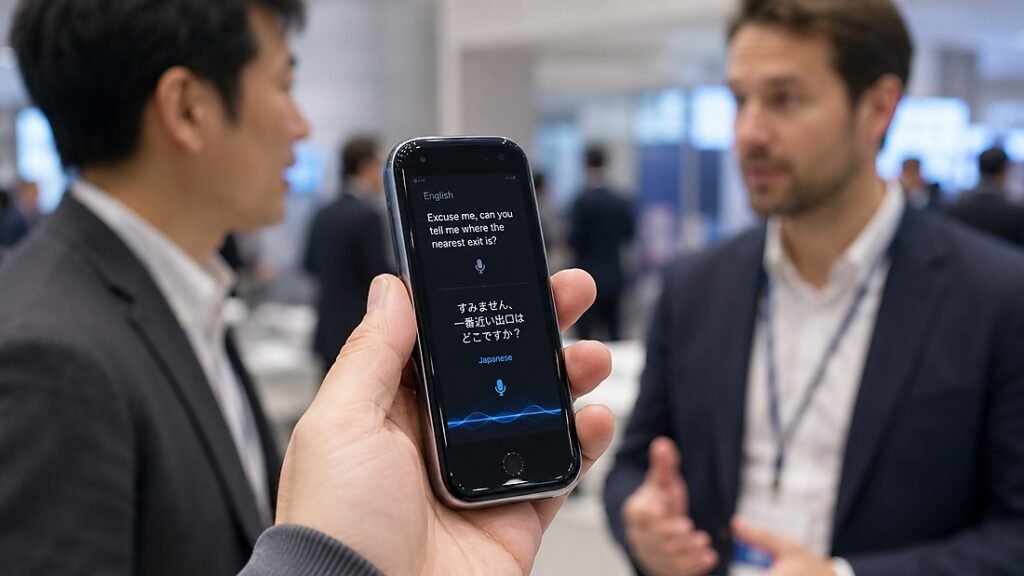
2026 AI Translator OEM Guide: 7 Steps for Southeast Asia Importers
Direct Answer
An AI translator OEM project typically follows seven steps: define target languages and use cases, select a qualified manufacturer, agree on an ODM or private-label model, validate specifications and app integration, test samples, confirm MOQ and lead time, and verify certifications for each destination country. For Southeast Asian importers, the main risk is not the translation engine itself but language accuracy, offline performance, and compliance with national telecom and electrical standards that vary by market.
Table of Contents
Table of Contents
If you import consumer electronics into Southeast Asia, AI translator devices are one of the fastest-moving categories in 2026. Regional travel, cross-border trade, and multilingual workforces create steady demand for handheld and wearable translation hardware. But sourcing is not a simple product pick. Importers evaluating an AI translator OEM program must decide on the business model, language coverage, connectivity, app ecosystem, battery design, and certification path before placing a production order.
This guide is written for importers and distributors in Southeast Asia who are comparing suppliers and preparing to commit to an OEM or private-label program. It focuses on the decisions that affect landed cost, market entry, and after-sales risk, not on consumer-style feature lists.
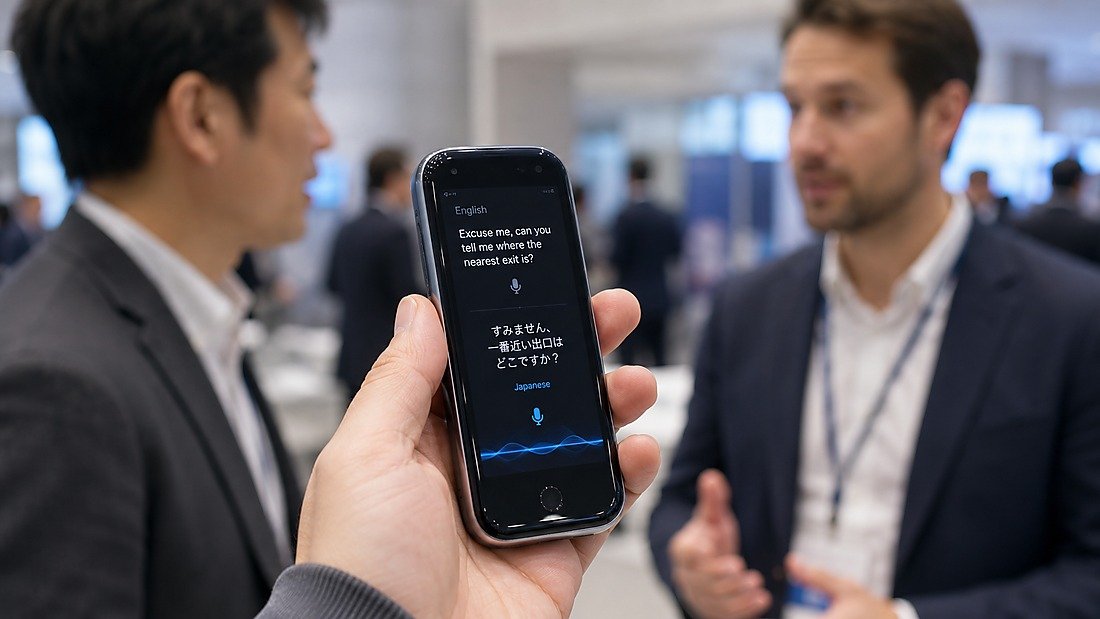
Table of Contents
- What Is an AI Translator OEM Program?
- Short Answer
- Key Takeaways
- Key Facts for Buyers
- Step 1: Define Your Market and Language Matrix
- Step 2: Choose the Right Manufacturing Model
- Step 3: Lock In Specifications and App Requirements
- Step 4: Evaluate the Manufacturer Before You Discuss Price
- Step 5: Test Samples Against Real Southeast Asian Languages
- Step 6: Plan MOQ, Lead Time, and Landed Cost
- Step 7: Confirm Certification and Import Compliance
- Common Mistakes and Buyer Red Flags
- Practical Buyer Checklist
- FAQ
- Conclusion
What Is an AI Translator OEM Program?
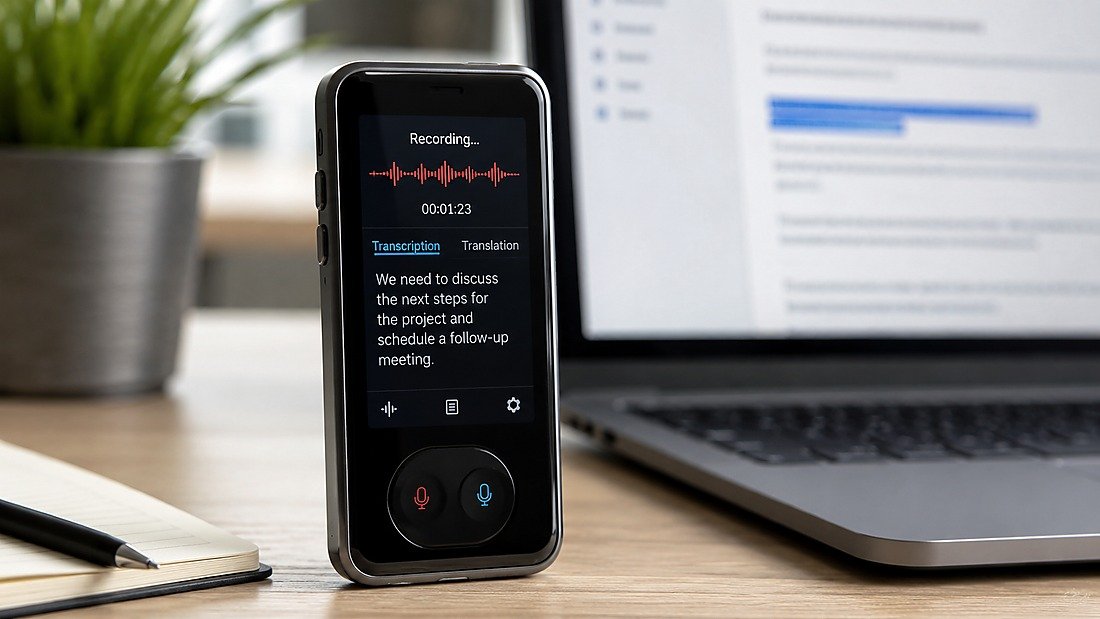
An AI translator OEM program is an arrangement where an importer or brand sources translation hardware from a manufacturer and applies its own brand identity, packaging, and sometimes firmware or app configuration. The device itself uses speech recognition and machine translation to convert spoken language from one language to another, either through cloud connectivity, on-device processing, or a hybrid of both.
In practice, buyers should evaluate two dimensions separately. The first is the hardware: microphone array, speaker, display, battery, chipset, and connectivity. The second is the software layer: translation engine accuracy, supported languages and dialects, update policy, and companion app behavior. A supplier may be strong in hardware assembly but rely on a third-party translation engine, which affects how you negotiate language updates and data privacy.
For Southeast Asian importers, the language matrix matters more than raw device count. Bahasa Indonesia, Vietnamese, Thai, Tagalog, and Malay are commonly requested, but accuracy varies significantly by engine and by whether the device processes speech online or offline. Buyers should verify performance claims with their own sample tests rather than relying on a supplier’s demo video.

Short Answer
The fastest path to a sellable AI translator line in Southeast Asia is to treat it as a sourcing and compliance project, not a gadget purchase. Start with a narrow language and use-case focus, request samples that include your priority languages, and confirm that certification files match each destination market. Most delays in this category come from untested language accuracy and incomplete import documentation, not from production capacity.

Key Takeaways
- Define your language matrix and primary use case before contacting suppliers; it directly affects chipset, memory, and price.
- Choose between OEM, ODM, and private-label models based on how much control you need over firmware, app, and enclosure.
- Test real Southeast Asian languages on sample units; advertised language counts are not the same as verified accuracy.
- MOQ and unit price are driven by tooling, language licensing, connectivity modules, and packaging customization.
- Certification requirements depend on the specific product configuration and destination country; verify rather than assume.
- Plan battery shipping documentation early, especially for air freight across ASEAN.
- Use a structured checklist to compare suppliers before negotiating price.
Key Facts for Buyers
| Decision Area | What to Confirm | Typical Impact |
|---|---|---|
| Translation mode | Online, offline, or hybrid | Affects chipset cost, battery life, and usability in low-connectivity areas |
| Language coverage | Actual tested languages and dialects | Determines which Southeast Asian markets you can serve |
| Manufacturing model | OEM, ODM, or private label | Controls branding, firmware access, and tooling ownership |
| MOQ | Per model and per SKU | Affects cash flow and warehouse planning |
| Certification | Per destination country | Gate for customs clearance and retail listing |
| Battery shipping | UN 38.3 test summary and MSDS | Required for most air freight and courier shipments |
| App and firmware | Update policy and data handling | Affects after-sales support and user retention |
Step 1: Define Your Market and Language Matrix
Before you request a quotation, write down the specific countries you will sell into and the languages your customers actually need. Southeast Asia is not one language market. A device optimized for English–Mandarin travel use may not serve a Vietnamese retail customer, and a device tuned for European languages may underperform on Thai or Bahasa Indonesia.
Questions to answer internally
- Will the device be sold to travelers, business users, frontline staff, or students?
- Is connectivity reliable in your target sales environment, or do you need offline capability?
- Do you need text translation, speech-to-speech, or both?
- Will you offer a companion app, or a standalone device?
Your answers shape the hardware specification. Offline capability, for example, usually requires more memory and a stronger processor, which changes unit cost and battery design. Buyers who skip this step often receive samples that work well in a demo but fail in their actual sales channel.
Step 2: Choose the Right Manufacturing Model
The three common models are OEM, ODM, and private label. Each has a different level of control, cost, and time to market.
| Model | What You Control | Best For | Trade-off |
|---|---|---|---|
| Private Label | Logo, packaging, basic app branding | Fast market entry, small initial volume | Least control over firmware and design |
| ODM | Branding plus selected spec changes | Importers wanting differentiation without full tooling | Limited enclosure and firmware customization |
| OEM | Design, firmware, app, tooling, packaging | Established brands and distributors | Higher MOQ, longer lead time, higher upfront cost |
For an evaluation-stage importer, private label or light ODM is often the lowest-risk starting point. You can validate demand in one or two Southeast Asian markets, then move to deeper OEM customization once volumes justify tooling investment. When evaluating suppliers for these models, review a partner that offers both wearable and AI hardware lines, such as the AI translator product platform, so you can compare model options under one supplier relationship.
Step 3: Lock In Specifications and App Requirements
Specification drift is a common source of disputes. Define the specification sheet before samples are built, and attach it to the purchase agreement. Key items to specify include:
- Supported languages and the priority order for accuracy testing
- Online versus offline translation behavior
- Microphone array and noise handling for noisy environments
- Display size, resolution, and touch behavior
- Battery capacity and expected usage time per charge
- Charging interface and any docking or carrying accessories
- Connectivity: Wi-Fi, Bluetooth, cellular, or eSIM options
- App operating system support and account structure
- Firmware update method and frequency
App and firmware customization is often underestimated. If your brand requires a custom app interface, login flow, or data dashboard, confirm whether the supplier can support it through private label and OEM/ODM services and whether that work is quoted separately. Data handling and privacy terms should be agreed in writing, since translation devices may process voice data.
Step 4: Evaluate the Manufacturer Before You Discuss Price
Price comparisons are only meaningful after you have verified that suppliers can actually deliver the specification you need. Evaluate manufacturers on capability, not marketing claims.
Verification points
- Ask for the manufacturing process for the specific model, not a generic company profile.
- Request documentation for any certifications the supplier claims; buyers should verify validity and scope.
- Confirm who owns the translation engine and how language updates are handled.
- Ask how firmware and app issues are escalated after shipment.
- Confirm whether tooling is owned by the buyer or the supplier in an OEM arrangement.
- Review the warranty and spare parts policy in writing.
A supplier that cannot clearly explain firmware ownership or update policy is a risk for any long-term AI translator program. For importers building a broader hardware catalog, it also helps to review the supplier’s related categories, such as AI office and productivity hardware, to judge whether the relationship can scale beyond a single product.
Step 5: Test Samples Against Real Southeast Asian Languages
Sample testing is the most important evaluation activity in this category. Do not rely on supplier demo videos. Order samples and run structured tests.
Sample test protocol
- Test each priority language with native or fluent speakers, not with text-to-speech samples.
- Test in three environments: quiet room, street noise, and a crowded public space.
- Test online and offline modes separately if the device supports both.
- Measure response delay, not just accuracy.
- Test continuous conversation, not single sentences.
- Check battery behavior during heavy translation use.
- Verify app pairing and firmware update on both Android and iOS.
Document results against your specification sheet. This gives you a defensible basis for supplier comparison and for negotiating any corrective work before mass production.
Step 6: Plan MOQ, Lead Time, and Landed Cost
MOQ is usually set per model, and it can shift depending on branding, packaging, and language licensing. Understand the cost drivers before you negotiate.
| Cost Driver | Why It Matters | Buyer Action |
|---|---|---|
| Tooling and enclosure changes | Raises MOQ and upfront cost | Use standard enclosures for first orders |
| Language licensing | May carry per-unit or annual fees | Clarify licensing terms in the contract |
| Packaging customization | Affects print runs and MOQ | Consider standardized packaging for pilot orders |
| Connectivity modules | Cellular or eSIM adds cost and compliance steps | Choose Wi-Fi/Bluetooth models for simpler import |
| Battery configuration | Affects shipping classification and documents | Request UN 38.3 summary and MSDS early |
| Freight and duties | Drives landed cost, not unit price | Model landed cost per destination country |
Lead time should be planned in stages: sample approval, tooling or artwork confirmation, mass production, testing, and freight. Build buffer time for certification review, because customs queries can delay clearance. For a wider view of how these factors apply to wearable and hardware categories, the broader sourcing and product resources library is a useful reference point.
Step 7: Confirm Certification and Import Compliance
Certification requirements for AI translators typically depend on the specific product configuration and the destination country. Common items include electrical safety, radio equipment compliance for wireless models, battery transport documentation, and electromagnetic compatibility. Requirements vary across Southeast Asia, and some markets may require local registration or type approval for radio-communicating devices.
Buyers should verify requirements with a qualified compliance partner or the relevant national authority. Reference points include the FCC equipment authorization guidance for US-bound products and the EU EMC Directive overview if you also sell into Europe. For battery transport, refer to the IATA Dangerous Goods Regulations and confirm UN 38.3 documentation with your supplier. Do not assume a supplier’s general certification list applies to your exact model; ask for documentation scoped to the product you are importing.
Common Mistakes and Buyer Red Flags
- Buying on language count alone. A device advertising many languages may perform poorly on your priority Southeast Asian languages.
- Ignoring the firmware owner. If you do not know who controls updates, you cannot plan long-term support.
- Accepting certification claims without documents. Always request scoped, valid documentation.
- Skipping battery documentation. Missing UN 38.3 or MSDS files can block air freight.
- Underestimating app work. Custom app interfaces often take longer than hardware customization.
- No written specification sheet. Verbal agreements lead to disputes during production.
- No spare parts or warranty terms. Returns and repairs become expensive without a clear policy.
Practical Buyer Checklist
- [ ] Language matrix defined for each target country
- [ ] Use case confirmed: travel, business, education, or frontline staff
- [ ] Manufacturing model selected: private label, ODM, or OEM
- [ ] Specification sheet written and attached to the agreement
- [ ] Translation engine ownership and update policy confirmed
- [ ] App and firmware customization scope agreed in writing
- [ ] Samples tested with native speakers across real languages
- [ ] MOQ, unit price, and lead time confirmed per SKU
- [ ] Landed cost modeled per destination country
- [ ] Certification documents scoped to the exact model reviewed
- [ ] Battery transport documents requested
- [ ] Warranty, spare parts, and after-sales terms agreed
- [ ] Tooling and intellectual property ownership clarified
FAQ
What is the typical MOQ for an AI translator OEM order?
MOQ varies by model and by the level of customization. Private-label orders with standard hardware usually require a smaller quantity than full OEM orders with new tooling. Ask for MOQ per SKU and per language configuration, and clarify whether packaging changes raise the minimum.
Can I get a private-label AI translator without tooling investment?
Usually yes. Many suppliers offer private-label programs where you apply your logo and packaging to an existing model. This reduces upfront cost and lead time but limits control over enclosure and firmware.
Which certifications are required to import AI translators into Southeast Asia?
It typically depends on the product configuration and the destination country. Wireless models may require radio equipment approval, and all electrical products may need safety and EMC documentation. Buyers should verify requirements with the relevant national authority or a compliance partner.
How long does sample development take?
For standard models with logo and packaging changes, samples may be available relatively quickly. Custom firmware or app work usually extends the timeline. Confirm the sample schedule in writing before committing to production.
Do AI translators need battery shipping documentation?
Most air shipments of lithium-battery devices require a UN 38.3 test summary and often an MSDS. Confirm the supplier can provide these documents and that they match the battery in your specific model.
Can the translation app be customized for my brand?
App customization is common in ODM and OEM programs but is usually quoted separately. Confirm the scope, update policy, and data handling terms before production.
How do I compare two AI translator suppliers fairly?
Compare them against the same specification sheet and the same sample test protocol. Evaluate language accuracy, firmware ownership, certification documentation, MOQ, lead time, and after-sales terms rather than unit price alone.
Conclusion
Sourcing AI translators for Southeast Asia rewards importers who treat the project as a structured procurement process. Define your language matrix, choose the right manufacturing model, lock specifications early, test samples with real languages, and verify certification for each destination market. Suppliers that can support firmware ownership, app customization, and clear documentation reduce your long-term risk far more than a marginally lower unit price.
STAR KING CTA
If you are evaluating an AI translator OEM or private-label program for Southeast Asian markets, STAR KING can support specification review, sample requests, and OEM/ODM discussions. Request product samples to test language performance against your own priorities before you commit to production.
Discuss Your Smart Wearable OEM/ODM Project
Planning a smart ring, smart watch, smart band, AI glasses, AI translator, or AI voice mouse project? Contact STAR KING to discuss product positioning, sample testing, customization scope, certification requirements, lead time, and quotation details.

Team Star King

Scan WhatsApp QR code
Leave a Reply