
source smart rings from China: Smart Ring Importers: 7 Steps to Source Smart Rings from China in 2026
October 4, 2026 · Team Star King
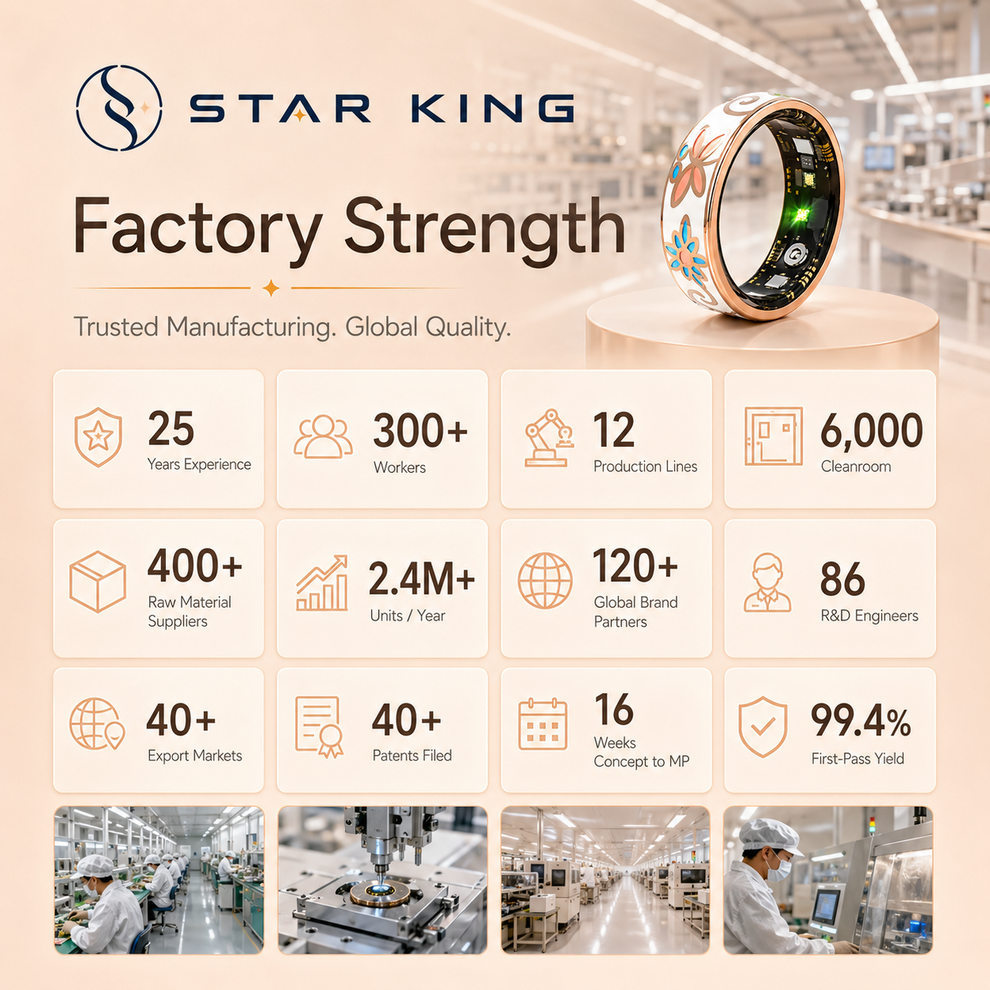
Smart Ring Importers: 7 Steps to Source Smart Rings from China in 2026
Direct answer: To source smart rings from China as an importer, you should define your target market and specs, screen and audit suppliers, request samples from 3–5 factories, verify testing and certification coverage, negotiate MOQ and tooling terms, plan lithium-battery shipping, and lock quality-control milestones before mass production. The fastest path is usually through an OEM/ODM partner that already builds smart rings and supports private-label customization.
Table of Contents
Table of Contents
Sourcing smart rings from China is different from buying generic accessories. Smart rings are miniature wearables with rechargeable lithium cells, biometric sensors, RF components, and companion apps — so your supplier must manage tooling, firmware, app integration, certification, and battery logistics at the same time. For importers targeting global markets in 2026, the winning strategy is not to chase the lowest quote but to build a supplier shortlist you can verify, sample, and scale.
This guide is written for importers, distributors, e-commerce sellers, and startup brands evaluating smart ring manufacturers. It covers the seven steps that most reliably separate import-ready suppliers from trading companies, plus buyer checklists, red flags, and FAQs you can reuse in your due-diligence process.

Short Answer
Sourcing smart rings from China is a procurement project, not a single purchase order. Importers should shortlist factories that build the ring, firmware, and app themselves; validate samples against written specifications; confirm which certifications apply to each SKU and destination; and agree on QC gates, tooling ownership, and battery-compliant shipping before paying a deposit.
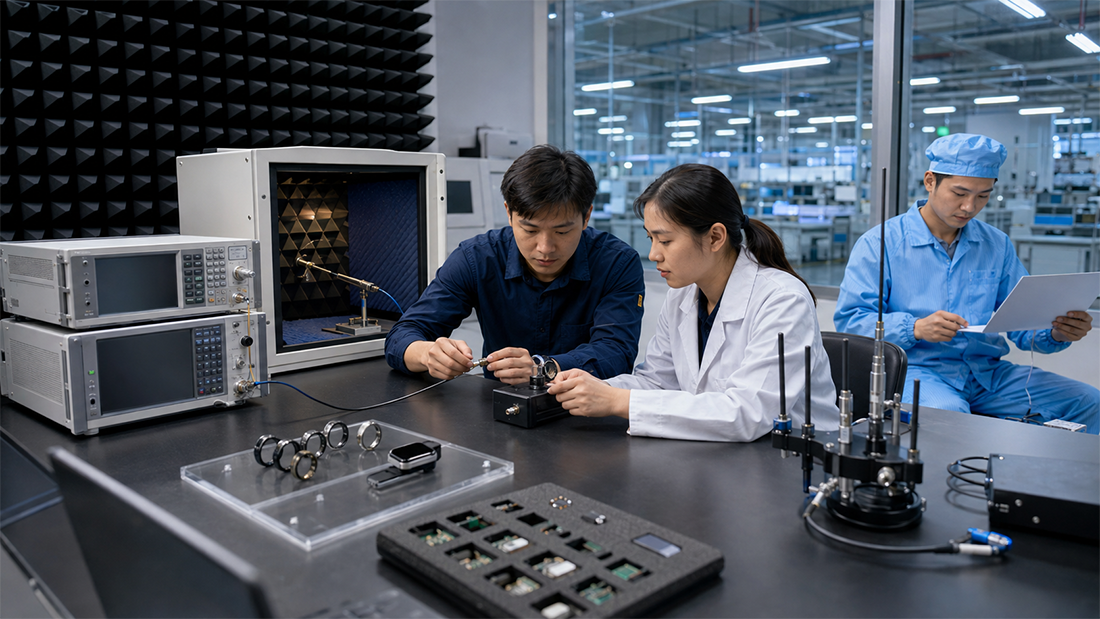
Key Takeaways
- Smart rings combine hardware, firmware, app, and lithium battery compliance — your supplier must cover all four.
- Request samples from at least three suppliers and test battery life, sensor consistency, fit, and app pairing.
- Clarify MOQ per SKU, tooling fees, and tooling ownership before committing to private label.
- Certification scope depends on configuration, radio modules, and destination market — ask for the certificate, not the claim.
- Plan lithium-battery shipping documents (UN38.3, MSDS, test summary) early to avoid customs delays.
- Agree on pre-shipment inspection, aging tests, and waterproof checks as contractual QC gates.
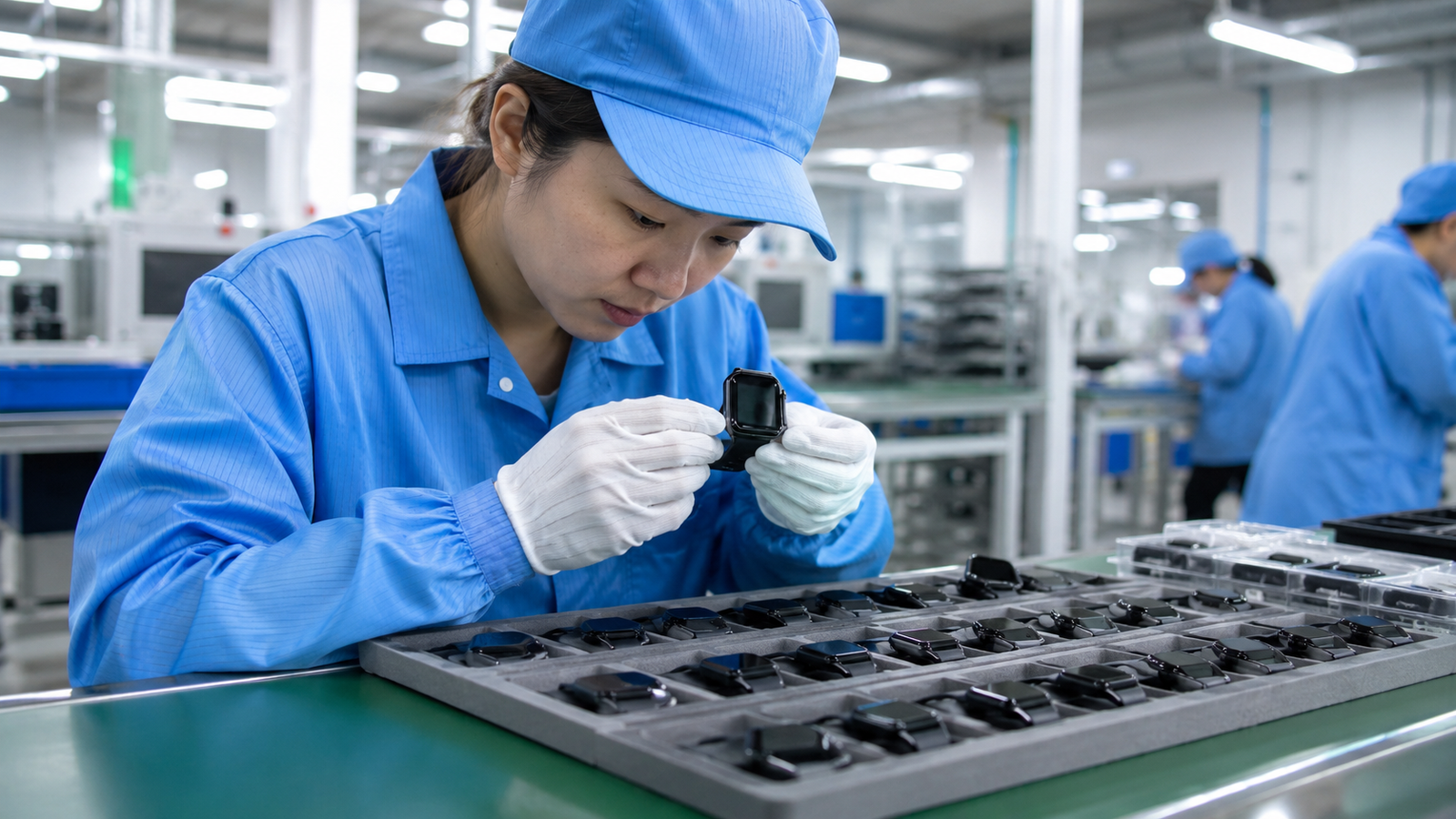
What Is a Smart Ring Supply Chain and Why It Matters to Importers
A smart ring supply chain covers the factory that develops the ring hardware, the firmware team that handles sensor algorithms and power management, the app development team, the certification and testing process, and the outbound logistics required to ship products containing lithium batteries.
For an importer, this matters because a single weak link — an unverified sensor algorithm, a missing certification file, or an untested battery — can create returns, marketplace suspensions, or customs holds. A supplier that only assembles housings and buys the rest from third parties usually cannot fix firmware bugs or app pairing issues, which slows your after-sales process.
Buyers should evaluate suppliers by asking who owns the tooling, who writes the firmware, who maintains the companion app, and who handles certification documentation. If the answers point to different companies, your project risk increases.

How Buyers Should Evaluate Smart Ring Suppliers Before Placing an Order
Supplier evaluation for smart rings should follow a fixed sequence: verify the legal entity, confirm manufacturing capability, review existing certifications, request samples, and then audit quality-control processes. Cutting a step usually shifts cost to the after-sales phase.
1. Verify the legal entity and manufacturing role
Check the business license, factory address, and whether the supplier is a manufacturer or a trading company. Trading companies are not automatically disqualifying, but they add a margin layer and may not control firmware or tooling.
2. Review factory capabilities
Ask for evidence of production equipment relevant to smart rings — small-form-factor assembly, sensor calibration, waterproof testing, and battery handling. If the supplier cannot describe these processes, treat it as a sourcing red flag.
3. Check certifications and test reports
Request certificates for the exact SKU you plan to import. Certifications are configuration-specific, so a certificate for one model does not automatically cover a customized variant.
4. Request samples and compare against a spec sheet
Test samples for battery life, sensor accuracy consistency, charging behavior, app pairing stability, and fit across ring sizes.
Key Facts for Buyers
| Factor | What to Check | Why It Matters |
|---|---|---|
| Manufacturing model | OEM vs ODM vs trading company | Defines customization depth and tooling ownership |
| MOQ | Per SKU and per ring size | Affects cash flow and inventory risk |
| Samples | Lead time and cost | Validates specs before mass production |
| Certifications | CE, FCC, RoHS, UN38.3 (as applicable) | Required for many destination markets |
| Battery shipping | UN38.3 test summary, MSDS | Required by many carriers and customs |
| QC gates | Incoming, in-process, pre-shipment | Reduces defect risk and returns |
| Tooling | Ownership and amortization | Protects your investment if you switch suppliers |
7 Steps to Source Smart Rings from China
Step 1 — Define your target market and product specification
Start with the destination market and sales channel. A smart ring sold on a US marketplace may need FCC-related documentation, while EU distribution typically involves CE marking and RoHS compliance. Your spec should list ring sizes, materials, battery target, sensor set, app requirements, and packaging language.
Importers should also define the sensor and feature set they actually need. Many smart ring configurations include heart rate and blood-oxygen style monitoring, but these are wellness features, not medical diagnostic tools. If your market requires medical claims, that changes your regulatory path and should be discussed with your supplier early.
Step 2 — Build a shortlist of smart ring manufacturers
Use trade shows, industry directories, and referral networks to build a shortlist of 8–12 suppliers. Filter for suppliers that specifically list smart rings rather than general consumer electronics.
For reference on wearable form factors and product categories, you can review STAR KING’s smart rings page and compare it with the broader smart watches category to understand how suppliers position adjacent wearable lines.
Step 3 — Request samples from 3–5 suppliers
Sampling is the most effective filter. Ask each supplier for one sample in your target size range and test it against a written checklist.
- Battery life versus claimed specification
- Sensor reading consistency across sessions
- App pairing stability on iOS and Android
- Fit, weight, and finish quality
- Charging behavior and case durability
Document results in a scoring sheet so decisions are based on data, not impressions.
Step 4 — Validate OEM/ODM and private-label options
Smart ring sourcing usually falls into OEM, ODM, or private-label models. OEM means you bring the design and the factory builds it; ODM means you adapt an existing design; private label means you apply your brand to a standard product.
Most importers start with ODM or private label because it reduces development time and tooling cost. If you plan custom branding, confirm logo methods (laser engraving, printing), packaging design support, and app branding options. STAR KING’s private label OEM/ODM solution is a useful reference for how customization scope is usually structured.
Step 5 — Negotiate MOQ, tooling, and pricing structure
MOQ for smart rings typically depends on whether you use an existing mold or require a new one, and whether the ring sizes are standard or custom. Tooling fees may be charged separately and can sometimes be amortized into unit price.
Ask for a cost breakdown covering materials, electronics, battery, packaging, tooling, testing, and shipping preparation. This makes it easier to compare quotes that look similar but include different scope.
Step 6 — Confirm certifications, testing, and battery shipping requirements
Certification requirements depend on product configuration and destination market. Common documents importers request include CE, FCC, RoHS, and UN38.3 for the battery.
UN38.3 is a UN test standard for lithium batteries; carriers and customs often request the test summary and an MSDS. For official reference, see the FCC RF exposure guidance and the IEC standards site for testing frameworks.
Step 7 — Lock QC gates, lead time, and payment terms
Before paying a deposit, agree on quality-control milestones: incoming material inspection, in-process checks, aging tests, waterproof testing, and pre-shipment inspection. Define acceptable defect levels and the remedy if a batch fails.
Align production lead time with your sales calendar, including Chinese New Year, and confirm shipping mode and Incoterms in writing.
MOQ, Cost, and Landed Price Drivers
Landed cost for smart rings is driven by unit price, tooling, packaging, testing, freight, duties, and the cost of returns. Importers who only compare unit price often underestimate the total.
| Cost Component | Typical Driver | Buyer Action |
|---|---|---|
| Unit price | Volume, sensor set, materials | Request tiered pricing |
| Tooling | New mold vs existing | Confirm ownership upfront |
| Packaging | Custom print, inserts | Request dielines and samples |
| Testing | Certification scope | Specify required reports |
| Freight | Battery-compliant shipping | Get carrier-approved docs |
| Duties | Destination tariff code | Verify HS code with broker |
| Returns | Defect rate | Set QC gates and warranty terms |
Certifications and Import Compliance for Smart Rings
Smart rings contain radio modules, sensors, and a lithium battery, so compliance usually spans several areas: radio/EMC, safety, battery transport, and materials. Which certificates you need depends on the destination market and the exact product configuration.
Importers should verify that certificates list the exact model or variant they are importing. Ask for the certificate file, the issuing lab, and the test date. If a supplier cannot provide documentation, treat it as a risk to your listing compliance.
Note: some markets may require additional documentation or registrations. Buyers should verify requirements with their customs broker and, where relevant, a regulatory consultant before importing.
Supplier Model Comparison: OEM vs ODM vs Private Label
| Model | Customization | Typical MOQ | Best For | Main Risk |
|---|---|---|---|---|
| OEM | High (design, tooling) | Higher | Brands with defined IP | Cost and lead time |
| ODM | Medium (adapt existing) | Moderate | Startups and distributors | Limited differentiation |
| Private Label | Low–medium (branding) | Lower | E-commerce sellers | Competitive pricing |
Common Mistakes and Buyer Red Flags
- Choosing a supplier on price alone without verifying capability.
- Accepting certification claims without seeing the certificate file and model coverage.
- Skipping sample testing before committing to mass production.
- Failing to define tooling ownership, which makes switching suppliers difficult.
- Ignoring battery shipping documentation until after production.
- Not specifying QC gates, leaving defect handling unclear.
- Assuming one certificate covers all ring sizes and variants.
Practical Buyer Checklist
- Written product specification with ring sizes and sensor set
- Supplier legal entity and factory address verified
- 3–5 samples tested with a scoring sheet
- Certification files reviewed for exact SKU
- MOQ, tooling, and ownership terms documented
- UN38.3 test summary and MSDS available
- QC gates and defect remedy defined
- Lead time and Incoterms confirmed in writing
- Packaging and branding artwork approved
- Warranty and spare parts policy agreed
Sample and OEM Support
If you are comparing smart ring suppliers, requesting a sample and a specification sheet from each shortlisted factory is the fastest way to see the difference. STAR KING supports OEM/ODM and private-label smart ring projects, including packaging and branding customization.
FAQ
What is a typical MOQ for smart rings?
MOQ depends on whether you use an existing design or require new tooling, and on ring size range. Existing ODM designs usually have the lowest MOQ; custom tooling raises it. Confirm MOQ per SKU and per size in writing.
Do smart rings require certification?
Because they contain radio and battery components, most markets require some combination of EMC, safety, and battery transport documentation. The exact list depends on configuration and destination; verify with your broker.
What documentation is needed to ship smart rings?
Carriers typically request a UN38.3 test summary and an MSDS for lithium-battery products. Some destinations may require additional documents.
Can I customize the app for my brand?
App customization options vary by supplier and are usually limited to branding, language, and certain UI elements rather than full rebuilds. Confirm scope before signing.
How long does production take?
Lead time depends on customization depth, component availability, and season. Plan around Chinese New Year and confirm milestones in the contract.
Are smart ring health features medical?
Consumer smart ring features are wellness indicators, not medical diagnostics. Do not market them as diagnostic tools unless your product meets the relevant medical regulatory pathway.
Can I own the tooling?
Tooling ownership is negotiable and should be documented. Clarify whether fees are amortized into unit price and who holds the mold.
Conclusion
Sourcing smart rings from China rewards importers who treat it as a structured procurement process. Define your market and specification, shortlist verified manufacturers, test samples, confirm MOQ and tooling terms, verify certification coverage, plan battery shipping, and lock QC gates before production. Doing this reduces returns, protects your marketplace listings, and gives you a supplier relationship you can scale.
Next Step
Ready to compare options? Request a quotation for your smart ring project, or ask about sample availability and private-label customization. You can also review our blog for related sourcing and compliance guides.
Discuss Your Smart Wearable OEM/ODM Project
Planning a smart ring, smart watch, smart band, AI glasses, AI translator, or AI voice mouse project? Contact STAR KING to discuss product positioning, sample testing, customization scope, certification requirements, lead time, and quotation details.

Team Star King

Scan WhatsApp QR code
Leave a Reply