
AI Voice Mouse OEM Sourcing Middle East: 7 Steps to a Winning Private Label Product in 2026
October 4, 2026 · Team Star King
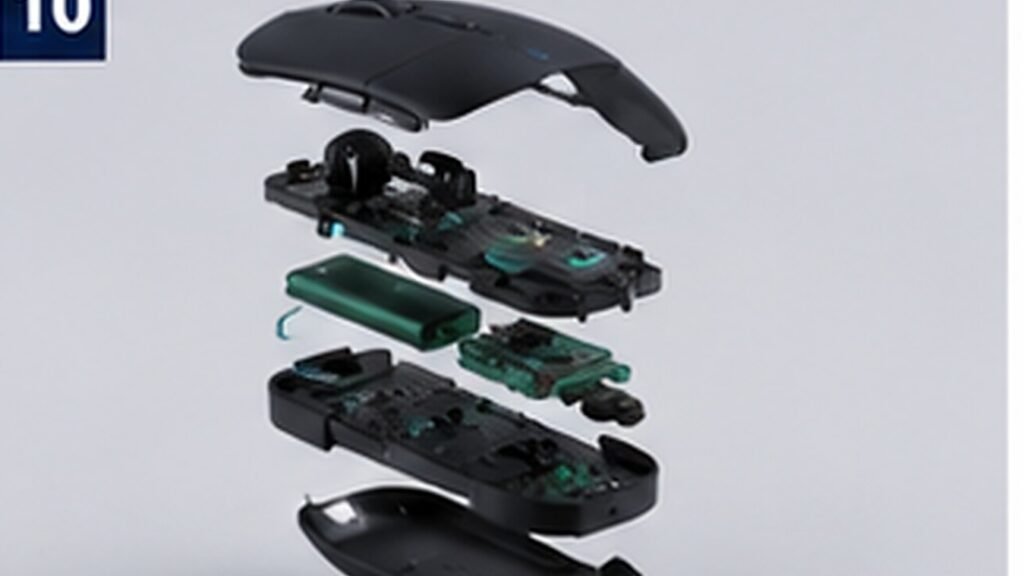
AI Voice Mouse OEM Sourcing in the Middle East: 7 Steps to a Winning Private Label Product in 2026
Launching a private-label AI voice mouse for the Middle East requires an OEM partner with strong hardware, multilingual firmware, and a clear grasp of local compliance. In this guide, we break down the AI voice mouse OEM process into seven actionable steps covering product specification, localization, MOQ, sampling, quality control, certification, and logistics — so you can move from RFQ to mass production with fewer surprises.
Table of Contents
Table of Contents
For private-label brands targeting markets like the UAE, Saudi Arabia, and Qatar, a voice mouse is more than a repackaged accessory. It is a productivity tool that must handle Arabic-English dictation, integrate with regional office software, and satisfy evolving import rules. This article gives you a procurement roadmap built for the RFQ stage, with checklists, tables, and questions to ask suppliers.
Table of Contents
- Short Answer: What Makes a Strong AI Voice Mouse OEM Partner?
- Key Takeaways
- Key Facts for Buyers
- Step 1: Define Your Product Specification and Use Cases
- Step 2: Choose the Right OEM vs ODM vs Private Label Model
- Step 3: Plan for Regional Language and Software Localization
- Step 4: Understand MOQ, Pricing, and Cost Drivers
- Step 5: Manage Sampling and Pre-Production Validation
- Step 6: Lock Down Quality Control and Compliance for the GCC
- Step 7: Plan Logistics, After-Sales, and Scale-Up
- Common Mistakes and Buyer Red Flags
- Practical Buyer Checklist
- FAQ
- Conclusion

Short Answer: What Makes a Strong AI Voice Mouse OEM Partner?
A strong AI voice mouse OEM partner combines proven hardware design, customizable firmware and companion apps, Arabic language support, and a documented quality and compliance process. For Middle East private-label brands, the right partner should also offer flexible MOQs, clear tooling and IP terms, and experience with regional certification and lithium-battery shipping requirements.

Key Takeaways
- AI voice mouse OEM is a multi-stage project: specification, localization, sampling, certification, and logistics must be planned together.
- Private-label brands should choose between OEM and ODM based on how much hardware customization they truly need.
- Arabic and multilingual voice support is a key differentiator for Middle East markets and must be validated during sampling.
- MOQ, firmware development, and certification requirements typically drive landed cost more than the base unit price.
- Quality control, battery safety, and import compliance should be confirmed before you issue a purchase order.
- A documented RFQ with clear specifications reduces back-and-forth and helps you compare suppliers on equal terms.
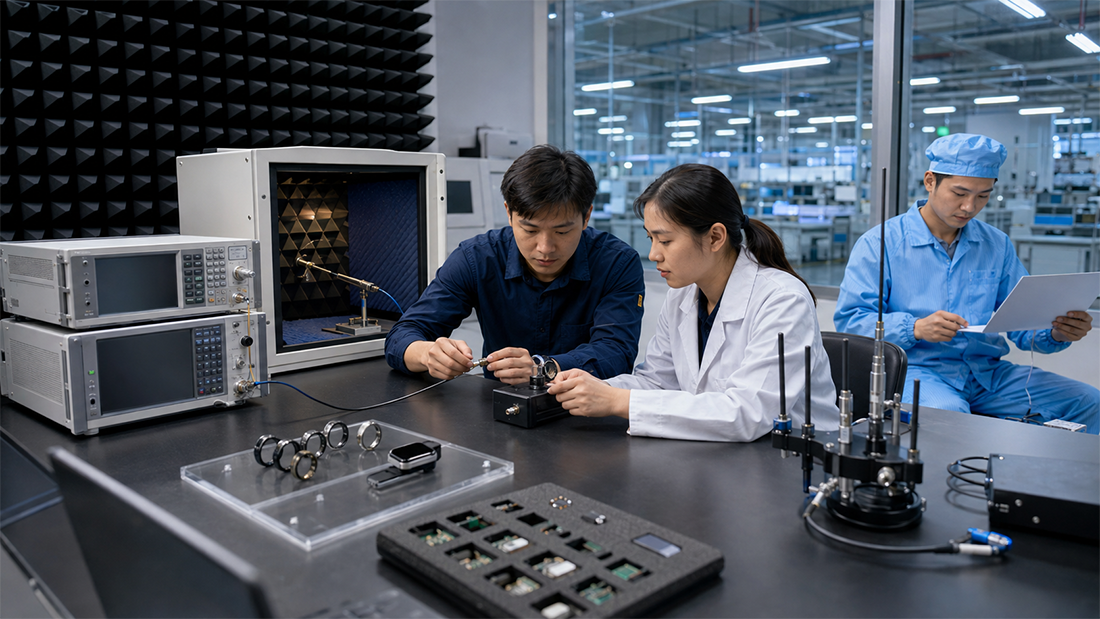
Key Facts for Buyers
| Factor | What Buyers Should Verify |
|---|---|
| Product type | AI voice mouse with Bluetooth, USB receiver, or dual-mode connectivity |
| Language support | Arabic (Modern Standard and regional dialects), English, and additional languages |
| Customization options | Logo, packaging, firmware voice commands, companion app branding |
| MOQ | Typically depends on customization level; neutral models may have lower MOQs than fully custom designs |
| Lead time | Sample: a few weeks; mass production: several weeks after sample approval |
| Certification | CE, FCC, RoHS, UN38.3, and local GCC requirements — confirm applicability per SKU and market |
| Battery | Lithium-ion or lithium-polymer; UN38.3 and MSDS documentation may be required for air freight |
| Quality control | Incoming material inspection, in-line checks, functional testing, and pre-shipment inspection |
Before you finalize your supplier shortlist, it helps to compare the full AI hardware portfolio and see how a voice mouse fits alongside other products. Explore our AI Voice Mouse page to review baseline features, then map them against your market requirements.
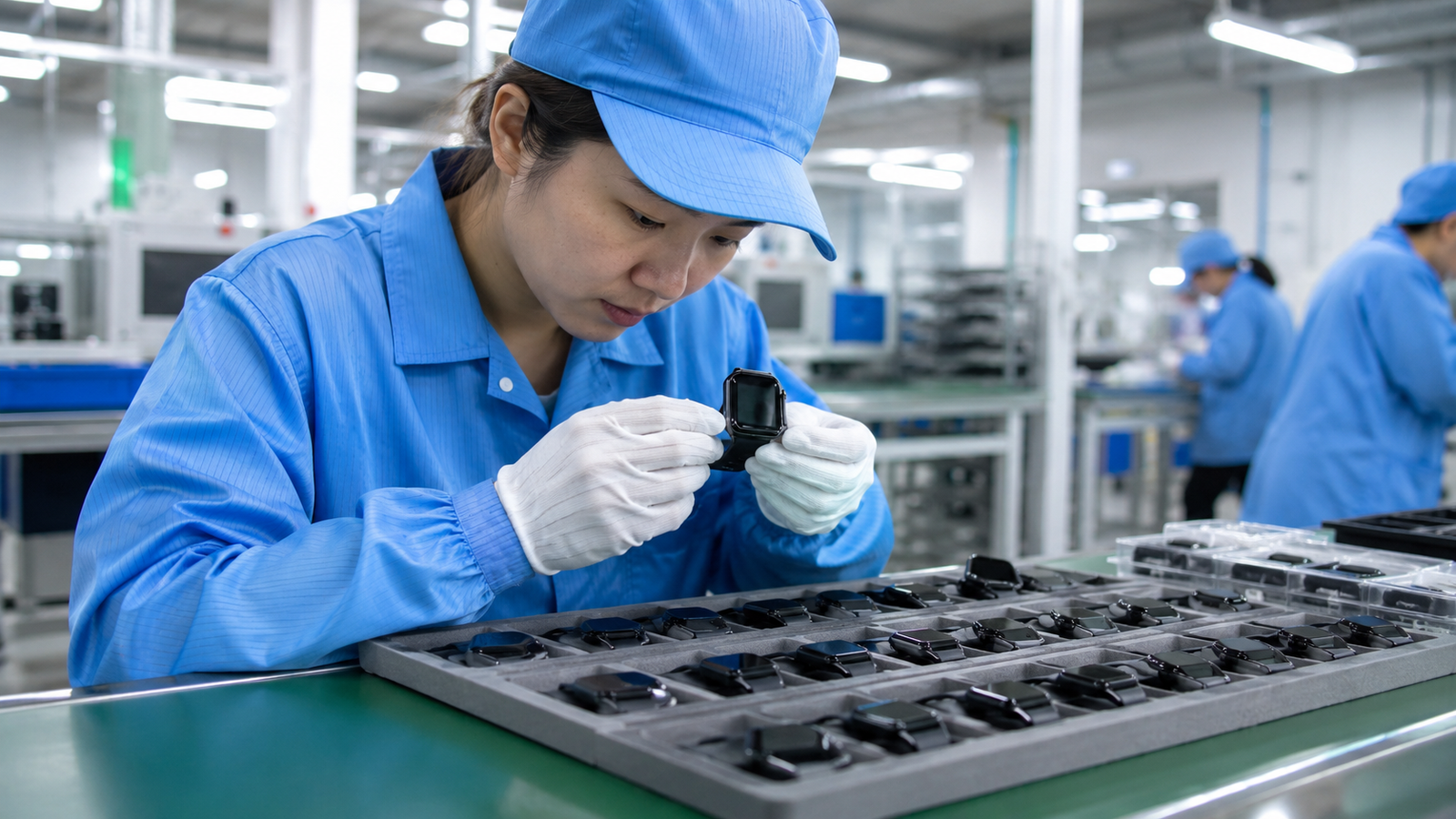
Step 1: Define Your Product Specification and Use Cases
Start with the buyer problem you are solving. In Middle East office and education environments, an AI voice mouse is often positioned as a productivity device for professionals, students, and government staff who switch between Arabic and English daily. Your specification should reflect those workflows.
Key specification questions
- Will the mouse support voice dictation, translation, or both?
- Which connectivity modes are required: Bluetooth, 2.4 GHz USB receiver, or both?
- What battery life and charging method will meet your customers’ expectations?
- Does the device need an on-device microphone with noise reduction?
- Will users need a companion desktop app or mobile app?
- What ergonomic and material requirements matter for your brand positioning?
Documenting these answers before contacting suppliers gives you a concrete RFQ that can be quoted consistently. Vague inquiries often lead to vague quotes, which makes supplier comparison difficult.
If your brand also plans to sell related AI office devices, consider reviewing our AI Office Productivity solutions to align your product roadmap and packaging strategy.
Step 2: Choose the Right OEM vs ODM vs Private Label Model
Buyers often use the terms OEM, ODM, and private label interchangeably, but they describe different levels of customization and risk. Choosing the right model early prevents costly changes later.
Model comparison
| Model | What It Means | Best For | Typical Considerations |
|---|---|---|---|
| ODM | Supplier’s existing design, rebranded with your logo and packaging | Brands that want a fast, lower-risk entry | Limited hardware changes; MOQ may be lower |
| OEM | Product built to your specifications, often based on a reference design | Brands needing specific features or form factors | Higher development effort; tooling and firmware costs |
| Private Label | ODM or OEM product sold under your brand | Retailers, distributors, and e-commerce sellers | Requires packaging and brand asset coordination |
For an RFQ, clarify whether your target supplier treats firmware voice commands, companion app branding, and packaging as part of the base quote or as add-ons. This affects both cost and timeline.
To understand how private-label engagements are structured end to end, review our Private Label OEM/ODM solutions.
Step 3: Plan for Regional Language and Software Localization
Language support is often the single most important differentiator for AI voice mouse products in the Middle East. A generic English-only device will struggle in markets where Arabic is the primary business language.
What to validate during localization
- Arabic dialect coverage: Confirm which dialects are supported and how accurately they are recognized. Modern Standard Arabic (MSA) is a baseline; Gulf dialects may require additional tuning. [STAR KING TO CONFIRM]
- English-Arabic and Arabic-English translation: Test bidirectional translation accuracy for common business phrases.
- Software integration: Verify compatibility with Windows, macOS, and common regional office suites.
- UI language: Ensure the companion app UI is available in Arabic and English.
- Voice command customization: Ask whether custom commands or hotwords can be added for your brand or vertical.
Localization is not just a translation task. It affects firmware, app development, user documentation, and even packaging. Treat it as a development workstream with its own milestones.
Understanding broader AI hardware trends can help you anticipate future localization needs. Our AI Translators page shows how multilingual features are implemented across device categories.
Step 4: Understand MOQ, Pricing, and Cost Drivers
MOQ and pricing are among the first questions private-label brands ask. The honest answer is that both depend on customization level, component choices, and order volume.
Typical cost drivers for AI voice mouse OEM
- Base hardware: Sensor, microcontroller, microphone array, Bluetooth module, and enclosure materials.
- Firmware and software: Voice recognition licensing, translation engine integration, and app development.
- Customization: Logo printing, custom colors, packaging design, and user manuals.
- Certification and testing: Compliance testing for target markets.
- Logistics: Battery shipping, customs documentation, and freight mode.
When comparing quotes, ask suppliers to break down unit price, tooling or NRE (non-recurring engineering) fees, packaging costs, and certification costs separately. This lets you see where the real cost is and whether a lower unit price is offset by higher setup fees.
For a more detailed discussion of MOQ planning, see our blog resources.
Step 5: Manage Sampling and Pre-Production Validation
Samples are your first real opportunity to validate a supplier’s capability before committing to mass production. For an AI voice mouse, sampling should cover hardware, firmware, app, and packaging.
Sample validation checklist
- Does the physical sample match the agreed specifications?
- Does voice recognition perform reliably in Arabic and English?
- Are translation accuracy and latency acceptable for your use case?
- Does the companion app install and function correctly on target operating systems?
- Is battery life consistent with the stated specification?
- Do packaging and branding match your design files?
Document every issue found during sampling and request a corrective action plan before approving production. This creates a record that helps both sides align expectations.
Planning an AI voice mouse OEM project for the Middle East? STAR KING supports private-label brands with customizable firmware, Arabic language support, and flexible MOQs. Request a quotation to start your RFQ.
Step 6: Lock Down Quality Control and Compliance for the GCC
Quality and compliance are non-negotiable for Middle East importers, especially when products include lithium batteries and wireless connectivity. Requirements vary by country and product configuration, so buyers should verify details with their supplier and local authorities.
Quality control stages to confirm
- Incoming material inspection (IQC)
- In-process quality control during assembly
- Functional testing of voice, translation, and connectivity features
- Aging testing for electronic stability
- Pre-shipment inspection (PSI) with sampling plan
Certification and compliance considerations
- CE and RoHS: Often required for European markets; may be requested by Middle East buyers as a quality benchmark.
- FCC: Relevant for products sold in the United States; not a substitute for local GCC approval.
- UN38.3 and MSDS: Typically required for shipping lithium batteries by air or sea. Confirm documentation before booking freight.
- Local GCC requirements: Countries such as the UAE and Saudi Arabia may require additional registration or conformity documentation. Buyers should verify with local customs or regulatory authorities.
For official reference, consult the FCC equipment authorization procedures and the UN Model Regulations for dangerous goods. These resources explain the framework behind many certification and shipping requirements.
If your product line also includes wearable devices, our Health & Fitness Wearables solutions illustrate how compliance planning is handled across categories.
Step 7: Plan Logistics, After-Sales, and Scale-Up
The final step is getting your product to market reliably and keeping it there. Logistics and after-sales planning should start before mass production, not after.
Logistics considerations
- Battery shipping restrictions by air and sea
- Customs documentation, including commercial invoice, packing list, and certificates of origin
- Freight consolidation options for mixed product orders
- Lead time buffer for customs clearance in GCC countries
After-sales and spare parts
- Warranty terms and defective rate policy
- Availability of spare parts such as dongles, cables, and replacement units
- Technical support escalation process
- Firmware update mechanism for deployed devices
Scaling from a pilot order to repeat production requires stable supply and consistent quality. Discuss with your supplier how they forecast component availability and how they handle engineering change notifications.
Common Mistakes and Buyer Red Flags
Even experienced buyers can encounter problems during AI voice mouse OEM projects. The following mistakes and red flags are common in the Middle East sourcing context.
Common mistakes
- Issuing an RFQ without a clear specification, leading to quotes that cannot be compared.
- Underestimating the effort required for Arabic language support and app localization.
- Choosing a supplier on unit price alone, without considering tooling, certification, and logistics costs.
- Skipping sample validation of firmware and app functionality.
- Assuming certification for one market automatically applies to another.
Buyer red flags
- Supplier cannot explain how voice recognition and translation are implemented.
- No documented quality control process or willingness to allow pre-shipment inspection.
- Vague answers about certification status or battery shipping documentation.
- Reluctance to discuss tooling ownership or IP terms.
- Unrealistic lead times that ignore component lead times or certification testing.
Practical Buyer Checklist
- Specification document completed and shared with suppliers.
- OEM, ODM, or private-label model selected and documented.
- Arabic and English language support validated in samples.
- Companion app tested on target operating systems.
- MOQ, unit price, tooling, and NRE fees quoted separately.
- Sample evaluation completed with a written corrective action plan.
- Quality control stages confirmed, including pre-shipment inspection.
- Certification and compliance requirements verified for target GCC markets.
- UN38.3 and MSDS documentation confirmed for battery shipping.
- Warranty, spare parts, and firmware update process agreed.
- Packaging and logo customization artwork approved.
FAQ
What is the typical MOQ for an AI voice mouse OEM project?
MOQ typically depends on the level of customization. Private-label orders with standard hardware and custom packaging may have lower MOQs, while fully custom firmware or tooling usually requires higher volumes. Buyers should request a written MOQ tier structure from each supplier.
Which Arabic dialects can an AI voice mouse support?
Support varies by model and firmware. Modern Standard Arabic is commonly supported, while Gulf dialects may require additional tuning. Buyers should ask for a demonstration and test specific phrases relevant to their market. [STAR KING TO CONFIRM]
What certifications are needed to import an AI voice mouse into the Middle East?
Requirements vary by country and product configuration. Common documentation includes CE, RoHS, UN38.3, and MSDS for battery shipping, plus any local conformity or registration requirements. Buyers should verify with local customs and regulatory authorities.
How long does sampling and mass production take?
Sampling usually takes a few weeks depending on customization, and mass production begins after sample approval. Total lead time depends on component availability, certification testing, and order volume. Suppliers should provide a timeline with milestones.
Can I customize the voice commands and companion app?
Many OEM suppliers offer firmware and app customization, including brand-specific voice commands and UI branding. The scope and cost of customization should be defined in the RFQ and confirmed during sampling.
How should I compare quotes from different AI voice mouse suppliers?
Request itemized quotes covering unit price, tooling or NRE fees, packaging, certification, and logistics. Compare suppliers on total landed cost and capability rather than unit price alone.
What are the key risks in AI voice mouse sourcing?
Common risks include inaccurate language support, inconsistent quality, unclear certification status, and battery shipping complications. Mitigate these with detailed specifications, sample validation, quality control agreements, and verified compliance documentation.
Conclusion
Sourcing an AI voice mouse for private-label sale in the Middle East is a structured process, not a single transaction. By defining your specification, choosing the right OEM or ODM model, planning for Arabic localization, understanding MOQ and cost drivers, validating samples, confirming quality and compliance, and planning logistics and after-sales, you reduce risk and improve your chances of a successful product launch.
As you move from RFQ to purchase order, keep your checklist close and require documented answers from every supplier. Clear communication and verifiable processes are the foundation of a reliable private-label partnership.
Ready to Start Your AI Voice Mouse OEM Project?
STAR KING works with private-label brands, distributors, and e-commerce sellers to develop AI voice mouse products tailored to Middle East markets. Whether you need Arabic language support, custom packaging, or OEM firmware development, our team can help you evaluate options and prepare a detailed quotation. Discuss your OEM/ODM project with us and request a quotation today.
Discuss Your Smart Wearable OEM/ODM Project
Planning a smart ring, smart watch, smart band, AI glasses, AI translator, or AI voice mouse project? Contact STAR KING to discuss product positioning, sample testing, customization scope, certification requirements, lead time, and quotation details.

Team Star King

Scan WhatsApp QR code
Leave a Reply