Smart Watches for Retail Chains: 5 Steps to Evaluate OEM Suppliers in 2026
Smart Watches for Retail Chains: 5 Steps to Evaluate OEM Suppliers in 2026
Smart watches for retail chains require a supplier who can deliver consistent quality, meet compliance standards, and manage production timelines across multiple SKUs. For US retail buyers, the right OEM partner reduces risk and protects brand reputation. This guide outlines five steps to evaluate smart watch manufacturers, covering product selection, MOQs, compliance, lead times, and quality control.
Table of Contents
Table of Contents
smart watches for retail chains: Short Answer
To evaluate smart watch OEM suppliers for US retail chains, prioritize verified compliance (FCC, RoHS), sample testing, MOQ flexibility, production capacity, and transparent supply chain communication. A structured evaluation reduces risk and ensures your private label program meets retail deadlines and quality standards.
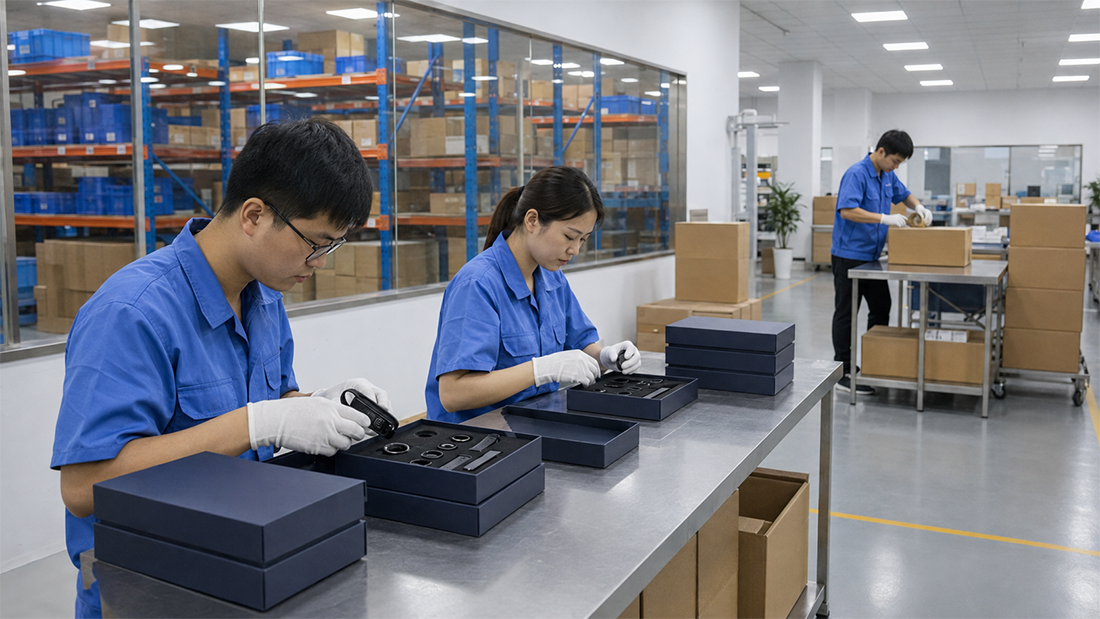
Key Takeaways
- US retail chains must partner with OEM suppliers that provide FCC, RoHS, and other required certifications for smart watches.
- MOQs for smart watches typically start at 1,000 units, but flexibility depends on customization and supplier policies.
- Sample testing and pre-shipment inspections are critical to avoid costly returns and brand damage.
- Lead times for custom smart watches range from 45 to 90 days; plan around Chinese New Year and peak seasons.
- Evaluate suppliers on communication, transparency, and ability to scale production without compromising quality.

Key Facts for Buyers
| Factor | Typical Range / Requirement | Buyer Action |
|---|---|---|
| MOQ | 500–3,000 units | Negotiate based on customization and long-term volume |
| Lead Time | 45–90 days after sample approval | Plan orders around Chinese New Year and Q4 peaks |
| Certifications | FCC (US), CE (EU), RoHS, UN38.3 for battery | Request certificates and verify with issuing bodies |
| Sample Cost | Free to $200 (refundable on bulk order) | Always test samples before committing |
| Payment Terms | 30% deposit, 70% before shipment | Negotiate for better terms with proven suppliers |

What Makes a Smart Watch OEM Supplier Retail-Ready?
US retail chains need suppliers who understand compliance, packaging, and brand consistency. A retail-ready smart watch OEM supplier offers more than just manufacturing—they provide end-to-end support from design to delivery. Key attributes include:
- Certified production: FCC, RoHS, and other testing for the US market.
- Customization: Logo, packaging, and firmware adjustments.
- Scalability: Ability to ramp up to meet seasonal demand.
- Communication: Responsive project managers and regular updates.
Before diving into the five steps, it’s important to recognize that not all manufacturers are equipped for retail. Many factories focus on low-cost, high-volume production without the quality systems that retail chains require. Your evaluation should filter out suppliers that lack proper certifications or have a history of quality issues.
Step 1: Define Your Product Specification and Target Price
Start with a clear specification: screen size, battery life, health sensors (heart rate, SpO2), connectivity (Bluetooth, GPS), water resistance, and compatible app platforms. Your target retail price will dictate material choices and features. For US retail, competitive price points range from $29 to $199, depending on features.
Create a product requirements document (PRD) that includes:
- Must-have features vs. nice-to-have
- Desired certifications (FCC, RoHS, etc.)
- Packaging and branding requirements
- Target cost and retail price
- Estimated first-year volume
A detailed PRD helps suppliers provide accurate quotes and reduces back-and-forth. It also signals that you are a serious buyer.
Step 2: Evaluate OEM/ODM Capabilities and Customization Options
Determine whether you need OEM (you provide design) or ODM (supplier provides design, you customize). For retail chains, ODM with private label is common: you select a proven model and customize logo, packaging, and app experience. If you need unique features, OEM may be necessary.
Ask potential suppliers:
- Can you customize the watch face, firmware, and companion app?
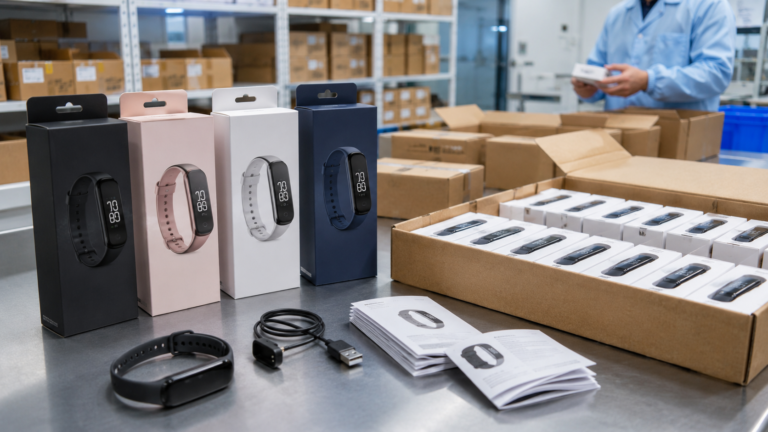
- What is your experience with retail packaging (e.g., blister packs, gift boxes)?
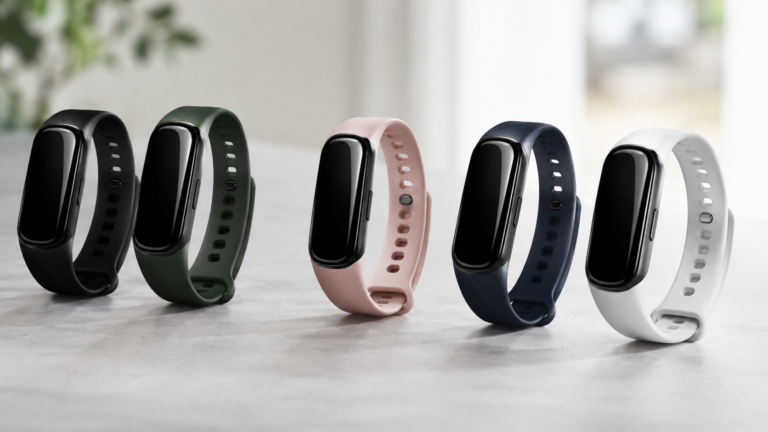
- Do you offer logo printing on the watch and strap?
- Can you provide development samples for testing?
STAR KING offers private label OEM/ODM solutions for smart watches, including logo, packaging, and app customization. This flexibility enables retail chains to build a unique brand presence without extensive R&D investment.
Step 3: Understand MOQs and Negotiate Effectively
Minimum order quantities for smart watches vary widely. Standard ODM models may have MOQs as low as 500 units, while custom OEM projects often require 2,000–3,000 units. MOQ is influenced by:
- Tooling and mold costs (if custom design)
- Component minimums (e.g., custom displays, sensors)
- Packaging customization
- Supplier’s production scheduling
Negotiation tips:
- Start with a smaller trial order to test quality and market response.
- Offer a longer-term commitment in exchange for lower MOQ.
- Ask about mixed-model orders to reach MOQ across multiple SKUs.
Be wary of suppliers who accept extremely low MOQs without price adjustments—they may cut corners on quality.
Step 4: Verify Quality Control and Compliance
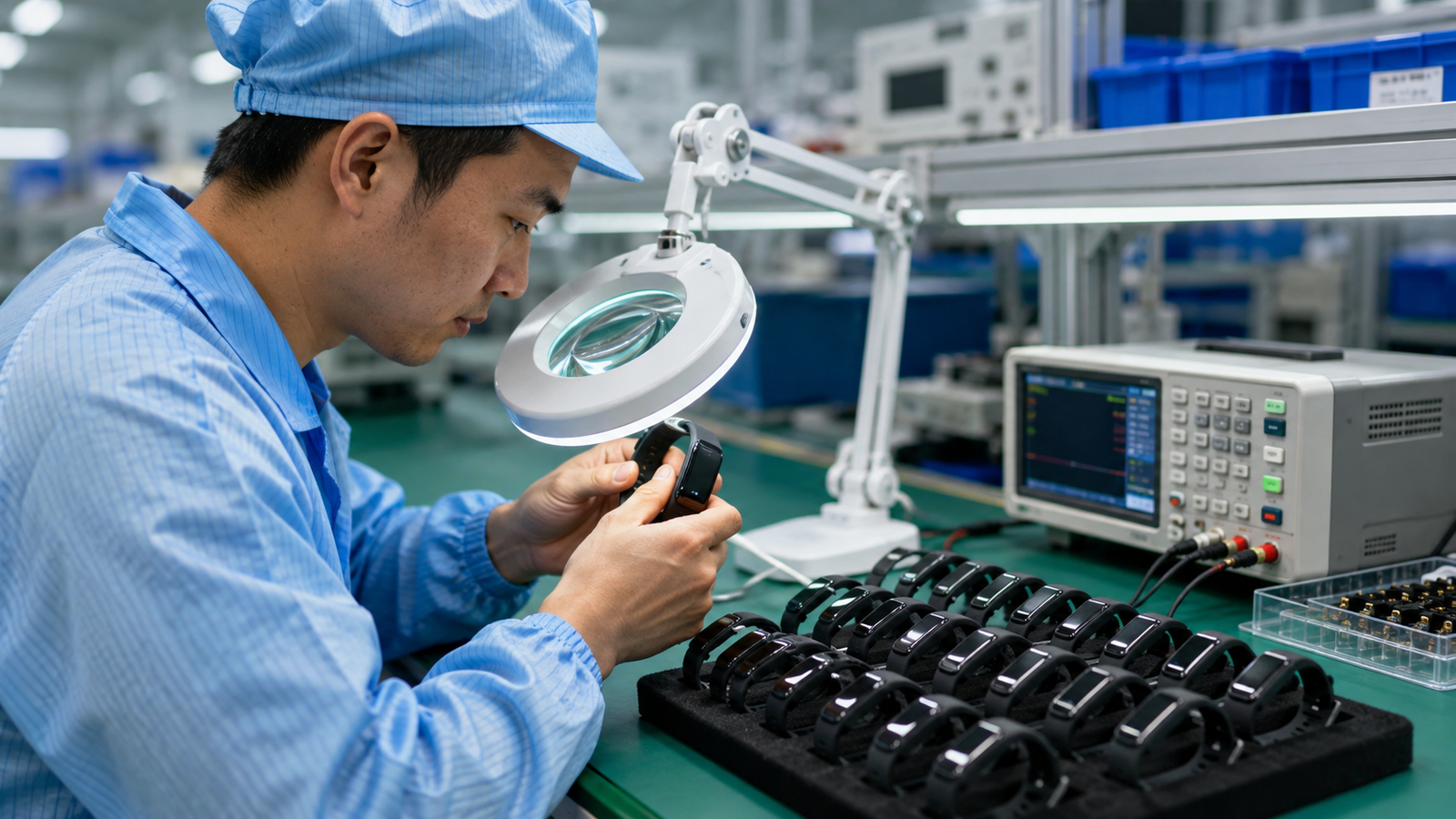
Quality control is non-negotiable for retail chains. A single batch of defective smart watches can lead to returns, chargebacks, and lost consumer trust. Implement a multi-stage QC process:
- Sample evaluation: Test functionality, battery life, sensor accuracy, and durability.
- Pre-production inspection: Check components and assembly before mass production.
- During production: Request regular updates and random inspections.
- Pre-shipment inspection: Use a third-party inspector or your own team to verify AQL standards.
Compliance is equally critical. Smart watches with Bluetooth and rechargeable batteries require FCC certification for the US, and may also need RoHS and UN38.3 for battery transport. STAR KING can provide relevant certificates for its smart watch models; buyers should verify that certifications cover the exact configuration and market. FCC regulations require testing for intentional and unintentional radiators, so ensure your supplier has the necessary test reports.
For more on compliance, see our guide to wearable compliance.
Step 5: Plan Lead Times and Logistics
Lead times for smart watches typically range from 45 to 90 days after sample approval, depending on customization and order volume. Factors that affect lead time include:
- Component availability (chips, displays)
- Customization complexity (tooling, firmware)
- Production scheduling and capacity
- Shipping method (sea vs. air)
For US retail chains, plan for potential delays due to Chinese New Year (January/February) and peak season (Q3/Q4). Always add a buffer of 2–3 weeks to your launch schedule. Discuss logistics with your supplier: FOB, CIF, or DDP terms? Who handles customs clearance? These details impact your landed cost.
Consider a soft CTA here: If you’re evaluating suppliers, STAR KING can provide sample smart watches for your testing.
Comparison Table: ODM vs. OEM vs. Private Label
| Model | Description | MOQ | Customization | Best For |
|---|---|---|---|---|
| ODM | Supplier designs, you brand | 500–1,000 | Logo, packaging | Retail chains wanting quick market entry |
| OEM | You design, supplier manufactures | 2,000–5,000 | Full customization | Brands with unique designs |
| Private Label | ODM with your brand | 500–1,000 | Logo, packaging, app | Retail chains building brand identity |
Buyer Red Flags and Common Mistakes
Even experienced buyers can fall into traps. Watch for these red flags:
- No verifiable certifications: Supplier claims FCC but cannot provide test reports.
- Extremely low MOQs without price increase: Suggests poor quality or bait-and-switch.
- Vague lead times: Inability to commit to a schedule indicates poor planning.
- Poor communication: Slow responses during evaluation often worsen after deposit.
- No third-party inspection allowed: Transparency is essential for quality assurance.
Common mistakes include skipping sample testing, not budgeting for import duties, and failing to verify compliance for the US market. Always request a pre-shipment inspection and hold back final payment until issues are resolved.
Practical Buyer Checklist
Use this checklist when evaluating smart watch OEM suppliers for your retail chain:
- ☐ Supplier provides FCC, RoHS, and UN38.3 certificates for the exact model.
- ☐ MOQ aligns with your initial order and scale-up plans.
- ☐ Samples are tested for functionality, battery life, and durability.
- ☐ Customization options include logo, packaging, and app branding.
- ☐ Lead time is clearly defined with buffer for holidays.
- ☐ Payment terms are reasonable (e.g., 30% deposit).
- ☐ Supplier agrees to third-party pre-shipment inspection.
- ☐ After-sales support and warranty terms are documented.
Buyers can also review STAR KING Smart Watches OEM/ODM options to compare product positioning, customization scope, and sample planning.
FAQ
What certifications do smart watches need for US retail?
At minimum, smart watches with Bluetooth require FCC certification. Lithium-ion batteries require UN38.3 for transport, and RoHS compliance is often expected by retailers. Verify with your supplier and check that certificates cover your specific model and market.
What is a typical MOQ for private label smart watches?
MOQs typically range from 500 to 1,000 units for standard ODM models, and 2,000+ for full OEM customization. Some suppliers offer lower MOQs for trial orders, but expect higher unit costs.
How long does production take for OEM smart watches?
Production lead time is usually 45–90 days after sample approval, depending on complexity. Add 2–3 weeks for shipping and customs clearance to the US. Plan around Chinese New Year when factories close for 2–4 weeks.
Can I customize the app for my retail chain’s smart watches?
Many ODM suppliers offer app customization, including logo, color scheme, and feature toggles. Full app development may incur additional costs and longer lead times. Discuss your requirements during supplier evaluation.
What quality control steps should I implement?
Implement sample evaluation, pre-production inspection, during-production checks, and pre-shipment inspection. Use a third-party inspection service for final verification. Define AQL standards in your contract.
How do I verify a supplier’s certifications?
Request copies of certificates and test reports. For FCC, check the FCC ID on the FCC ID database. For RoHS and UN38.3, review the test reports from accredited labs.
Conclusion
Evaluating smart watch OEM suppliers for US retail chains requires a structured approach. By defining your specification, assessing customization capabilities, understanding MOQs, verifying compliance, and planning lead times, you can select a partner that delivers quality and reliability. STAR KING supports retail chains with private label smart watches, from sample to mass production. To discuss your requirements, request samples or contact our team for a consultation.
Discuss Your Smart Wearable OEM/ODM Project
Planning a smart ring, smart watch, smart band, AI glasses, AI translator, or AI voice mouse project? Contact STAR KING to discuss product positioning, sample testing, customization scope, certification requirements, lead time, and quotation details.

Team Star King

Scan WhatsApp QR code