smart watch suppliers: 7 Contract Checks Before You Source Smart Watches for Amazon Private Label in 2026
smart watch suppliers buyers need a supplier evaluation process that checks product fit, OEM/ODM capability, compliance documents, quality control, pricing, lead time, and after-sales support before placing a bulk order.
Table of Contents
Table of Contents
7 Contract Checks Before You Source Smart Watches for Amazon Private Label in 2026
To source smart watches for Amazon private label safely, you need a written quotation and a draft agreement that confirm seven items before you sign: product platform and Bill of Materials (BOM), minimum order quantity (MOQ) per SKU, test reports and certification ownership, packaging and app-level customisation, tooling and IP ownership, lead time with a shipping plan, and Amazon-specific documents such as an FCC ID and a UN38.3 test summary. Approving samples without verifying these details is the most common cause of late launches, blocked listings, and margin loss for Amazon FBA sellers.
smart watch suppliers: Table of Contents
- Direct Answer: What Does a Complete RFQ Package Look Like?
- Key Takeaways
- Key Facts for Buyers
- 1. Confirm the Product Platform and BOM Version
- 2. Lock MOQ, Price Breaks, and Payment Terms
- 3. Test Reports, FCC ID, and Certification Ownership
- 4. Packaging, Logo, App, and Firmware Customisation
- 5. Tooling, IP, and Exclusivity Position
- 6. Lead Time, Production Schedule, and Freight
- 7. Amazon-Specific Documents and Listing Support
- Common Mistakes and Buyer Red Flags
- Practical Buyer Checklist
- FAQ
- Conclusion and Next Step
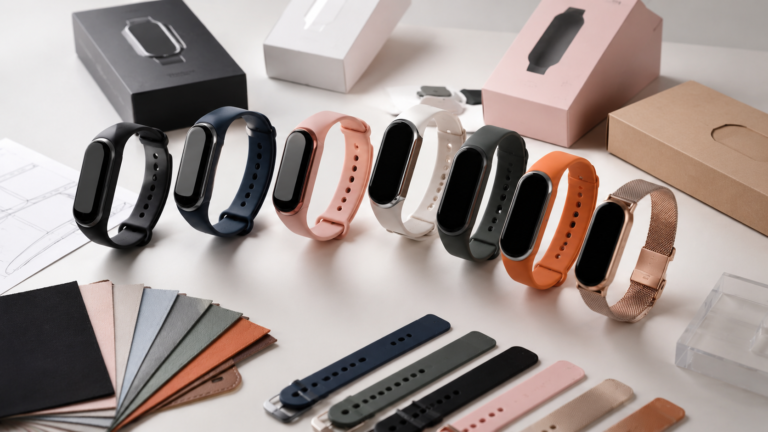
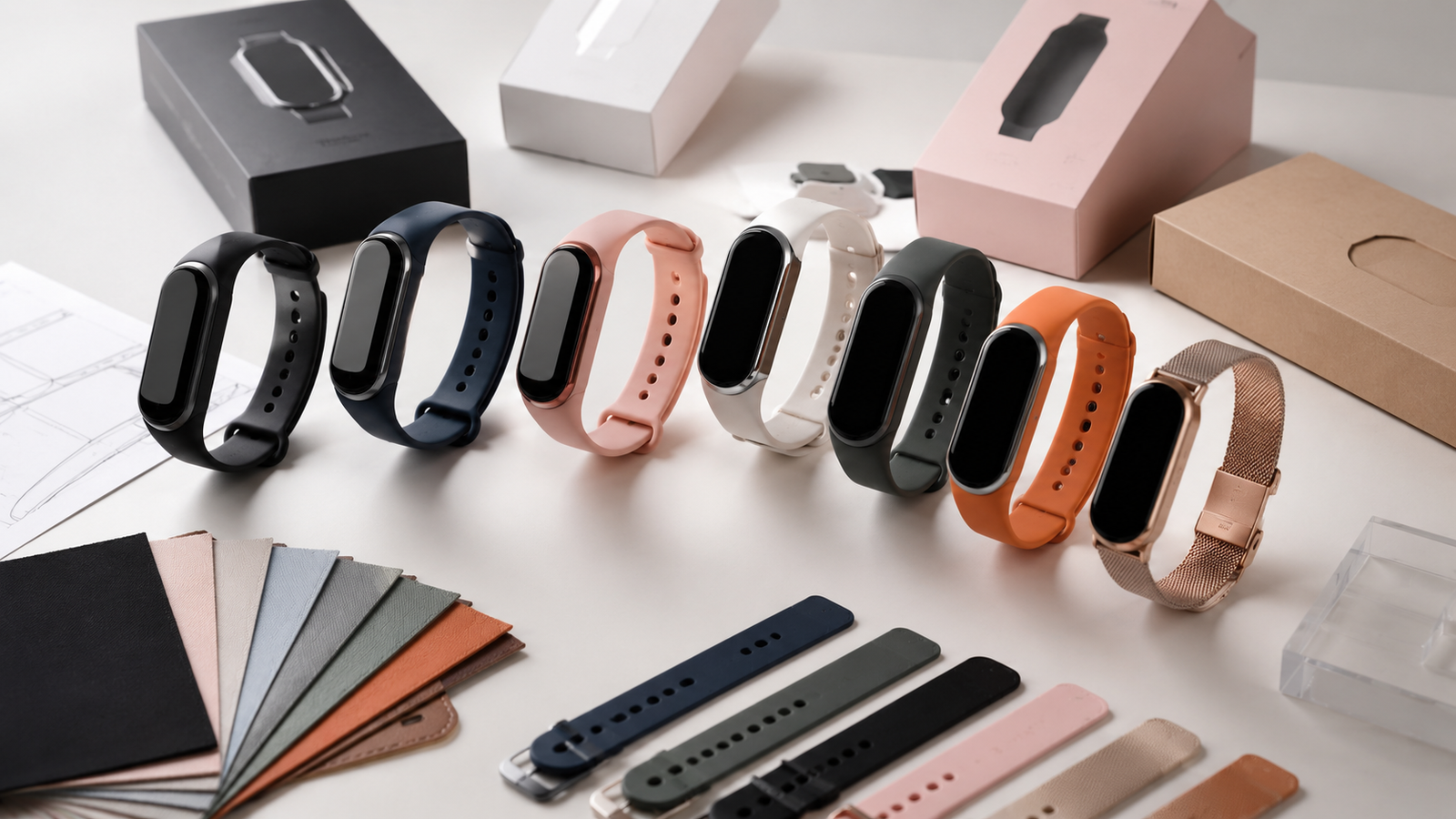
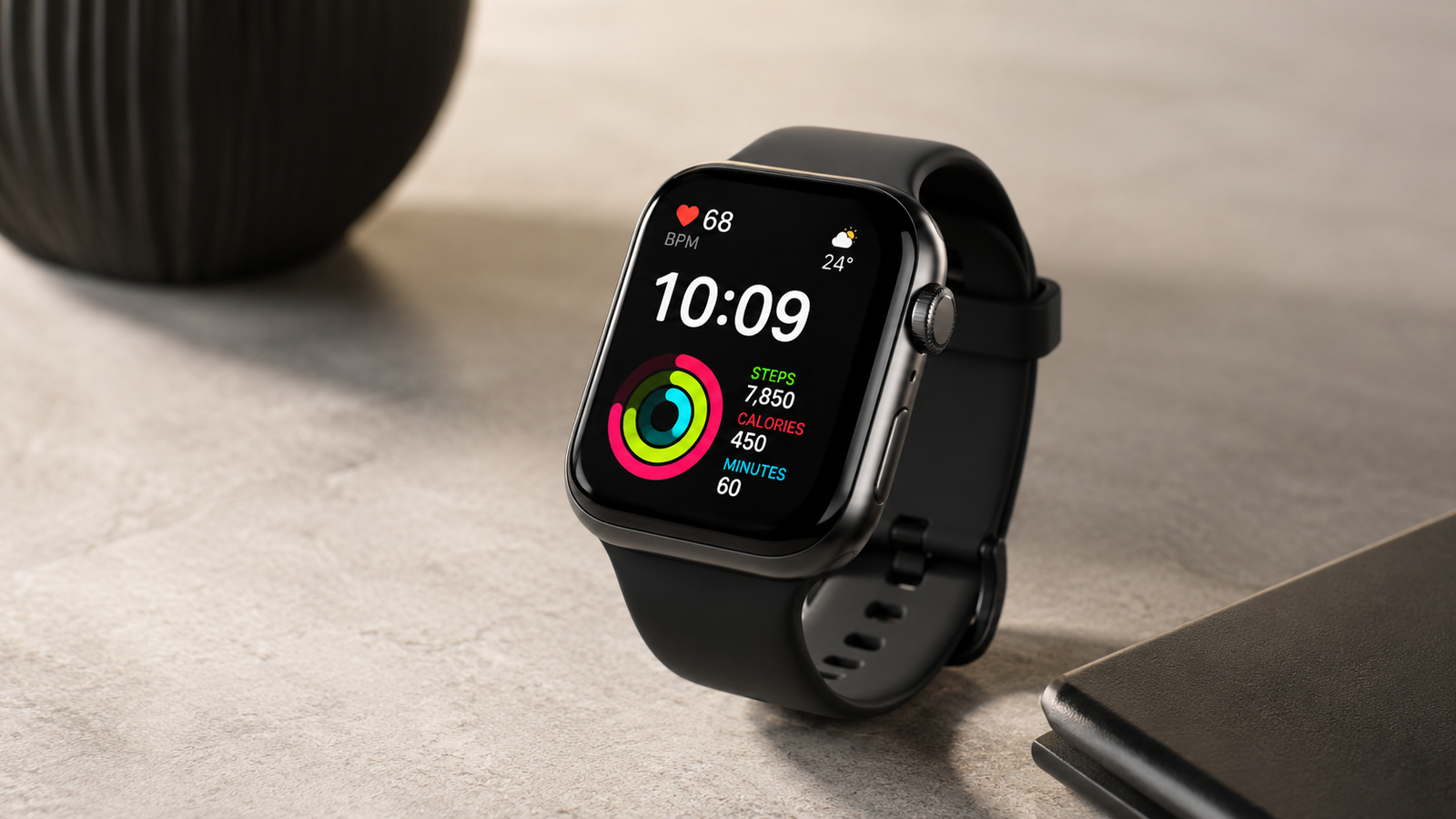
Image suggestion 1: A buyer reviewing a smart watch quotation and sample on a desk. Alt text: smart watches for Amazon private label quotation review with sample smart watch.
Direct Answer: What Does a Complete RFQ Package Look Like?
A complete RFQ package for private label smart watches includes a versioned BOM, a unit price grid by quantity, the MOQ per SKU and per colour, written test and certification scope, customisation options for packaging and app, tooling and IP terms, an agreed production and shipping lead time, and Amazon-ready documents such as an FCC ID and a UN38.3 test summary. If any of these is missing, you are negotiating on assumptions rather than on a defined deliverable.

Key Takeaways
- Smart watches for Amazon private label succeed or fail on documentation, not on the sample’s first impression.
- MOQ is usually set per model and per SKU; a single low-MOQ hero SKU plus delayed variants is a common working compromise.
- Ask who owns the FCC ID, test reports, tooling, and app build. Ownership determines your exit options later.
- Battery-powered wearables typically require UN38.3 documentation for air freight and may require MSDS depending on the carrier.
- Build time for the first private label run is typically longer than replenishment; plan launch dates around the first run, not the catalogue photo.
- Agree on a signed golden sample with photos and firmware version before mass production.

Key Facts for Buyers
| RFQ Item | What to Confirm in Writing | Why It Matters for Amazon Sellers |
|---|---|---|
| Product platform | Model name, chipset family, BOM revision, supported Bluetooth version | Prevents silent substitutions between sample and bulk |
| MOQ | Per SKU, per colour, per packaging style | Controls cash tied up in slow-moving variants |
| Certification | FCC ID ownership, test report scope, report dates | Listing and marketplace compliance reviews |
| Battery documents | UN38.3 test summary, MSDS availability | Air freight acceptance, carrier checks |
| Customisation | Logo, packaging, app name, firmware defaults | Differentiation and brand defensibility |
| Lead time | Sample, tooling, first run, replenishment | Launch planning and inventory forecasting |
| Warranty | Return window, DOA policy, spare parts | Reduces refund pressure and review damage |

1. Confirm the Product Platform and BOM Version
Two smart watches can look identical and behave differently under load. The platform and BOM determine sensor set, battery runtime, screen quality, and app compatibility. Before you approve a quotation, ask for a versioned BOM that lists the main components, and require that any substitution be notified in writing.
What to verify in the BOM
- Display type and resolution, and whether it is the same panel as the sample.
- Battery capacity and cell supplier category.
- Sensor set: which health measurements are supported, and which are firmware-limited.
- Wireless specification and supported Bluetooth version, so your app integration and marketplace claims stay accurate.
- Case material and waterproof rating, since IP ratings affect return rates and review sentiment.
Useful reference: the Bluetooth SIG specification library helps you confirm what a stated Bluetooth version actually covers.
Consumer health features vs medical claims
Wearable health features such as heart rate or blood oxygen tracking are consumer wellness functions unless the product is cleared as a medical device in the destination market. Do not write diagnostic language in your Amazon listing. The FDA medical device overview and the FTC health products compliance guidance are worth reviewing before you approve listing copy.
2. Lock MOQ, Price Breaks, and Payment Terms
MOQ is rarely a single number. Suppliers typically set it per model, per colour, and sometimes per packaging format. Your goal in the RFQ stage is to trade scope for volume, not to demand a low MOQ across the entire range.
A practical MOQ structure
| Approach | Typical Trade-off | Best Fit |
|---|---|---|
| Single hero SKU at low MOQ | Higher unit price, limited colours | New Amazon listings and unproven demand |
| Two to three SKUs at moderate MOQ | Better unit price, more working capital | Established listings with steady rank |
| Full range at high MOQ | Lowest unit price, highest inventory risk | Sellers with predictable sell-through |
Price breaks should be quoted at defined quantities and tied to a quotation validity window, because component costs move. Payment terms are equally negotiable: deposit plus balance against documents is common, while some suppliers offer staged payments for first orders.
Image suggestion 2: Quantity-based quotation sheet with MOQ tiers. Alt text: smart watches for Amazon private label MOQ and price break quotation sheet.
If you are comparing several quotes at once, it helps to run them against a standardized brief. STAR KING’s private label OEM/ODM program publishes the customisation scope you can use as a baseline when you draft that brief.
3. Test Reports, FCC ID, and Certification Ownership
Certification is where many RFQs quietly fail. Two questions decide your risk: what is certified, and who holds the certificate.
What to request
- FCC ID for the exact model shipping to you. Radio-frequency devices sold in the United States generally require authorization, and the FCC ID search database lets you verify that the ID belongs to your supplier’s product.
- RoHS and REACH documentation where applicable to the versions you order.
- UN38.3 test summary for the lithium battery, plus an MSDS if your carrier requests it.
- Test report dates and the lab name, so you know how current the evidence is.
Who owns the certificate matters
If the FCC ID is registered to the supplier, you depend on them to keep it valid. If it is registered to your brand, you control the listing evidence but also the renewal work. Neither is automatically better; the decision should be explicit in the contract. Whether a specific configuration requires additional certification depends on the battery, radio, and accessory bundle, so buyers should verify requirements with a qualified compliance partner for the exact SKU.
Tag any unverified certification claim in your RFQ as “to confirm” rather than assuming coverage. For STAR KING’s specific report set per model, the RFQ response should list documents by model number. [STAR KING TO CONFIRM]
If battery safety or pre-shipment inspection is central to your risk model, the quality process in STAR KING’s smart watch product line is a useful reference point when you draft your inspection clause.
4. Packaging, Logo, App, and Firmware Customisation
Customisation is where private label value is created, and also where lead times quietly extend. Define each layer separately so you can price it and schedule it.
Four customisation layers
- Logo: dial print, caseback engraving, strap marking, and packaging logo are separate processes with separate setup costs.
- Packaging: retail box artwork, inserts, cable type, manual language versions, and barcode placement.
- App and firmware: app name and icon, default watch faces, onboarding language, and unit defaults such as 12/24-hour display and unit system.
- Bundles: extra straps, chargers, or gift packaging, which change carton weight and therefore freight.
Ask whether firmware customisation requires a new firmware branch, since that affects future update responsibility. For sellers planning a broader wearable line, STAR KING’s health and fitness wearable solutions show how app-level configuration is handled across product families.
5. Tooling, IP, and Exclusivity Position
If you pay for tooling or industrial design, the contract should state who owns it and what happens if you change suppliers. Ambiguity here is expensive, especially for custom enclosures or private moulds.
Clauses to negotiate
- Tooling ownership: your brand, the supplier, or shared.
- Tooling maintenance and storage responsibility if you pause ordering.
- Design and artwork IP ownership, including your logo files and packaging design.
- Exclusivity: whether the supplier may sell the same configuration to other buyers, and for how long.
- Return or transfer of tooling if the relationship ends.
Exclusivity is often negotiated as a function of volume or a paid development fee. Decide in advance which you prefer, because it shapes your opening offer in the RFQ.
6. Lead Time, Production Schedule, and Freight
Lead time has four parts, and buyers who quote only one of them usually miss their launch date.
The four lead times
- Sample lead time, from brief to approved sample, including revision cycles.
- Pre-production time, including artwork approval and component readiness.
- Mass production time, counted from deposit and approved sample.
- Freight time, including booking, customs clearance, and last-mile to FBA or 3PL.
For lithium-battery products, air freight documentation is a gating factor. IATA’s Dangerous Goods Regulations program is the reference framework carriers and forwarders apply when they assess whether your shipment is accepted.
Ask for a dated schedule with milestones, not a single “days” figure. Replenishment orders are typically faster than the first run because artwork, tooling, and approvals already exist.
7. Amazon-Specific Documents and Listing Support
Beyond the product itself, Amazon sellers need documents that support listing approval, compliance reviews, and customer service.
Documents to request
- FCC ID or authorization reference for the exact ASIN model.
- UN38.3 test summary and MSDS for battery logistics.
- Product images and, where relevant, rendering files for A+ content.
- User manual in US English with warranty terms.
- Warranty and DOA policy statement you can publish.
- Spare parts availability: straps, chargers, and screen protectors.
Also confirm the supplier’s policy on co-branding or reseller documentation, since some brands prefer to keep the manufacturer unlisted. Decide early which approach fits your listings.
Common Mistakes and Buyer Red Flags
| Red Flag | Why It Is a Risk | How to Verify |
|---|---|---|
| Supplier refuses to name the FCC ID | Suggests the product is not authorized as described | Search the FCC ID database independently |
| MOQ quoted as one number only | Hides per-colour and per-packaging minimums | Request a per-SKU MOQ table |
| No date on test reports | Evidence may not reflect the current build | Ask for report dates and lab names |
| Verbal promises on customisation | Scope creep and disputes later | Move everything into the quotation document |
| No golden sample process | Bulk units may drift from the approved sample | Sign and photograph a golden sample |
| Unclear tooling ownership | Blocks supplier changes | Add an ownership and transfer clause |
Another common mistake is treating the first quotation as final. RFQs improve when you return with a specific counter-brief: fewer colours, one packaging style, and a firm first-run quantity.
Practical Buyer Checklist
- BOM version and platform confirmed in writing.
- MOQ stated per SKU, per colour, and per packaging style.
- Price breaks quoted at defined quantities with a validity window.
- Payment terms agreed, including deposit and balance conditions.
- FCC ID and report scope confirmed for the exact model.
- RoHS and battery documentation collected for the shipped configuration.
- UN38.3 summary and MSDS available before booking freight.
- Logo, packaging, app, and firmware scope itemised with setup costs.
- Tooling and IP ownership clause included in the agreement.
- Golden sample signed, photographed, and referenced in the contract.
- Dated production schedule with milestone dates.
- Warranty, DOA, and spare parts policy documented.
Image suggestion 3: Golden sample smart watch with signed approval label beside a compliance document set. Alt text: smart watches for Amazon private label golden sample approval and compliance documents.
FAQ
What is a realistic MOQ for smart watches for Amazon private label?
MOQ is usually set per model and per SKU, with colours and packaging adding separate minimums. Sellers entering a new category often negotiate a lower MOQ on one hero SKU and higher volumes on the variants they expect to scale. The exact number depends on the platform and customisation level, so treat it as a negotiation item rather than a fixed industry figure.
Do I need an FCC ID to sell a smart watch on Amazon US?
Radio-frequency devices placed on the US market generally require equipment authorization, and Amazon may request documentation during compliance reviews. Confirm the authorization type, the FCC ID, and the responsible party for the exact model you intend to list, and verify the ID in the FCC database rather than relying on a screenshot.
How long does the first private label production run take?
First runs include sampling, revisions, artwork approval, and component lead time, so they take longer than replenishment orders. Ask for a dated schedule broken into sample, pre-production, production, and freight phases. Replenishment typically shortens once tooling and artwork are approved.
Can the supplier customise the companion app for my brand?
App-level customisation usually covers the app name, icon, onboarding language, and default settings. Deeper firmware changes may require a dedicated branch, which affects maintenance and update responsibility. Document exactly which layer is customised, and confirm who maintains it after launch.
Who should own the tooling and industrial design?
If you fund tooling or design, the agreement should state that you own it, along with storage, maintenance, and transfer conditions. Shared or supplier-owned tooling can limit your ability to change manufacturers later, so clarify this before paying any development fee.
What documents do I need for shipping lithium-battery smart watches?
Air shipments of lithium-battery products generally require UN38.3 test documentation, and carriers may also request an MSDS. Requirements vary by carrier and route, so confirm the accepted document set with your forwarder before you book, and keep the documents matched to the exact battery configuration in the shipment.
How should I compare two suppliers quoting similar prices?
Compare on total delivered cost and risk, not on unit price alone. Factor in MOQ, certification ownership, customisation scope, lead time milestones, warranty terms, and spare parts support. A slightly higher unit price with clearer documentation often produces a lower landed cost and fewer listing problems.
Conclusion
Sourcing smart watches for Amazon private label is a documentation exercise as much as a product exercise. The seven contract checks above – platform and BOM, MOQ and price breaks, certification ownership, customisation scope, tooling and IP, lead time, and Amazon-specific documents – convert a vague quotation into a defined deliverable you can schedule and defend. Sellers who verify these items before signing usually launch closer to plan, spend less on rework, and protect their listing history.
Next Step
If you are preparing an RFQ for a private label smart watch line, send STAR KING your target features, packaging direction, and first-run quantity. We will return a quotation structured around the seven checks in this article, including MOQ tiers, customisation scope, and the document list for the models you are considering.
Request a private label smart watch quotation and confirm certification requirements for your target SKUs.
Discuss Your Smart Wearable OEM/ODM Project
Planning a smart ring, smart watch, smart band, AI glasses, AI translator, or AI voice mouse project? Contact STAR KING to discuss product positioning, sample testing, customization scope, certification requirements, lead time, and quotation details.

Team Star King
Scan WhatsApp QR code