AI translator suppliers: How to Source AI Translators for Southeast Asia in 2026: 7 Essential Steps for Importers
AI translator suppliers buyers need a supplier evaluation process that checks product fit, OEM/ODM capability, compliance documents, quality control, pricing, lead time, and after-sales support before placing a bulk order.
Table of Contents
Table of Contents
How to Source AI Translators for Southeast Asia in 2026: 7 Essential Steps for Importers
To source AI translators for Southeast Asia successfully, importers should follow a structured process that includes market research, supplier evaluation, understanding OEM/ODM options, compliance verification, and logistics planning. This guide outlines 7 essential steps for importers in 2026, covering key considerations such as language support, certifications, and cost factors. By following these steps, you can minimize risks and ensure a smooth procurement process.
AI translator suppliers: Table of Contents
- Short Answer
- Key Takeaways
- Step 1: Understand Your Target Market in Southeast Asia
- Step 2: Evaluate Supplier Capabilities and OEM/ODM Options
- Step 3: Navigate MOQ, Pricing, and Cost Factors
- Step 4: Request Samples for Testing and Validation
- Step 5: Verify Certifications and Compliance for Southeast Asia
- Step 6: Plan for Manufacturing Lead Times and Logistics
- Step 7: Protect Your Brand with Customization and IP
- Comparison Table: AI Translator Features for Southeast Asia
- Common Mistakes and Buyer Red Flags
- Practical Buyer Checklist
- Frequently Asked Questions
- Conclusion
- Source AI Translators from STAR KING
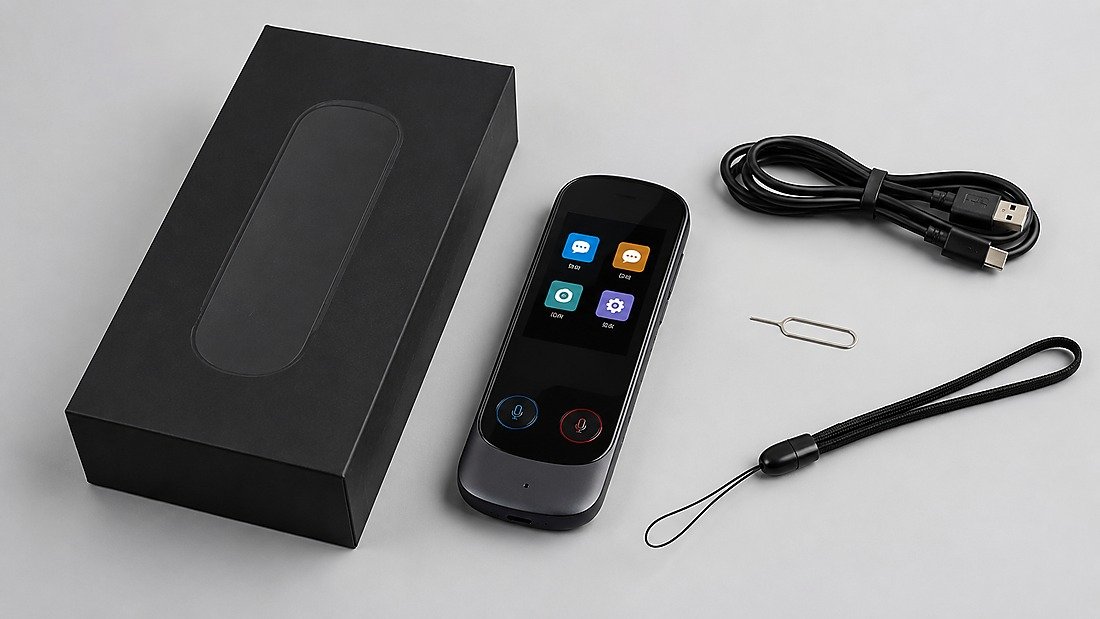
Short Answer
To source AI translators for Southeast Asia, importers should follow a 7-step process: 1) understand market language needs, 2) evaluate suppliers and OEM/ODM options, 3) negotiate MOQ and pricing, 4) test samples, 5) ensure compliance with local certifications, 6) plan logistics and lead times, and 7) customize for brand differentiation. Partnering with an experienced manufacturer like STAR KING can streamline this process and reduce risks.
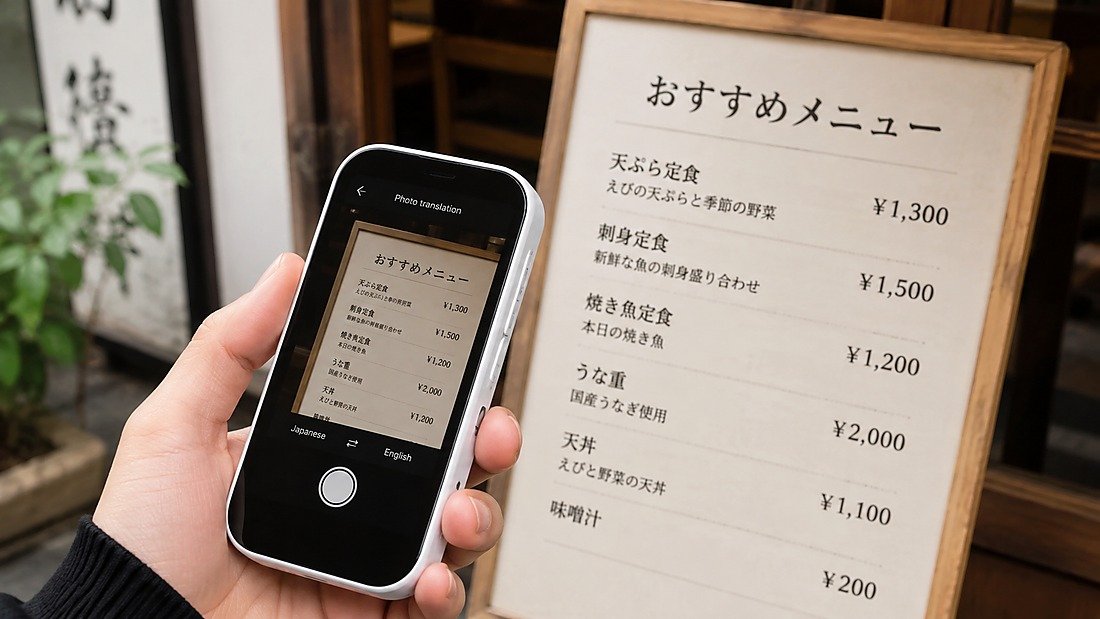
Key Takeaways
- Southeast Asia’s linguistic diversity demands AI translators with support for multiple local languages, including offline functionality.
- Working with an OEM/ODM partner allows importers to customize hardware, software, and packaging for their market.
- MOQ, unit price, and lead times are influenced by customization level and order volume; early negotiation is crucial.
- Certification requirements (e.g., CE, FCC, RoHS, UN38.3) depend on the target country and product configuration; always verify with suppliers.
- Sample testing and pre-shipment inspections are critical to ensure quality and functionality.
- Logistics, including battery shipping regulations, must be planned to avoid delays.
- Clear agreements on IP, tooling ownership, and after-sales support protect your investment.
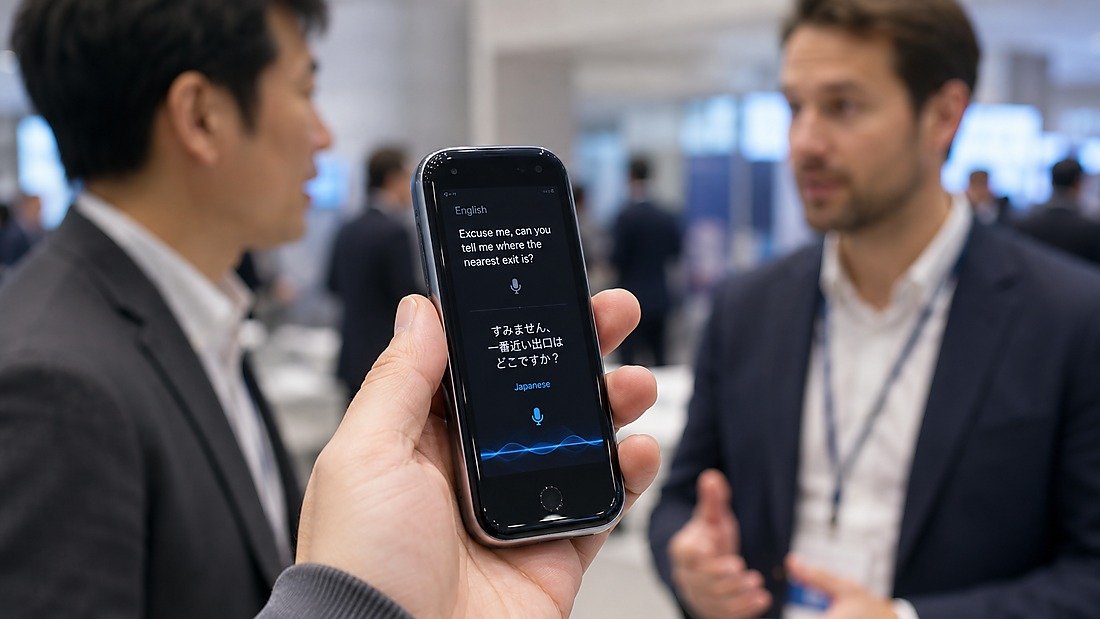
Introduction
Southeast Asia is one of the most linguistically diverse regions in the world, with over 1,000 languages spoken across Indonesia, Thailand, Vietnam, the Philippines, and Malaysia. For importers looking to tap into this growing market, AI translators offer a significant opportunity. These devices facilitate real-time communication, breaking down language barriers in business, tourism, and education. However, sourcing the right AI translators requires careful planning. This guide provides a 7-step framework for importers to source AI translators for Southeast Asia in 2026, covering everything from market research to post-sale support.
Why Southeast Asia?
Southeast Asia’s digital economy is booming, with a young, tech-savvy population and increasing cross-border trade. According to a 2024 report by Google, Temasek, and Bain, the region’s internet economy is projected to reach $1 trillion by 2030. This growth drives demand for communication tools, including AI translators. Moreover, the region’s tourism and business travel sectors are recovering, further boosting the need for portable translation devices.
If you’re considering adding AI translators to your product portfolio, STAR KING offers flexible OEM/ODM solutions tailored to Southeast Asian markets. Request samples to evaluate quality and language support.
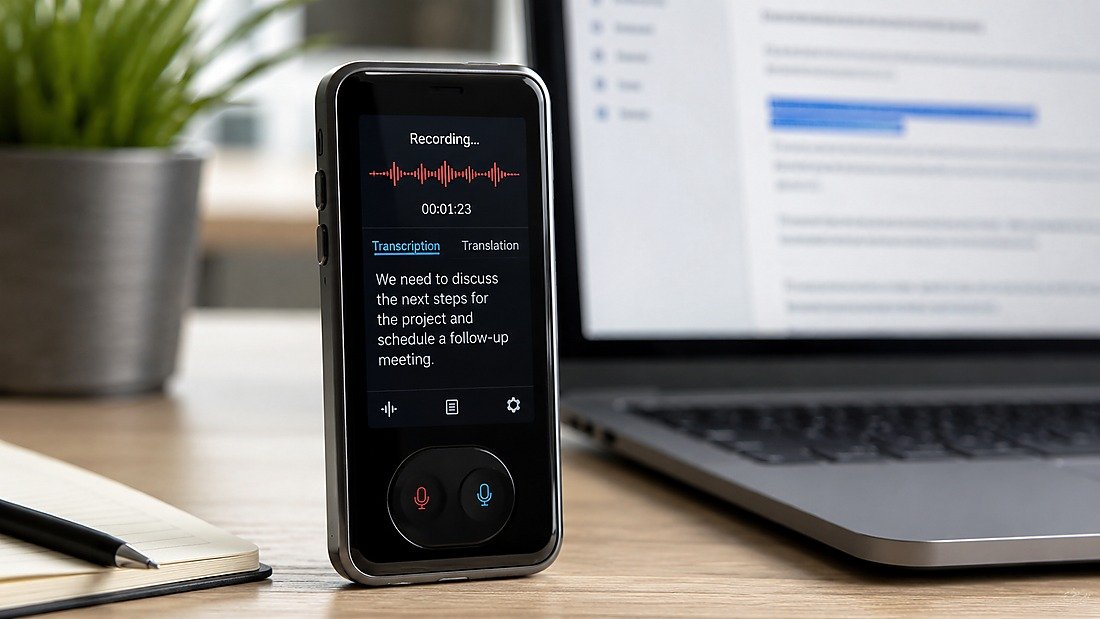
Step 1: Understand Your Target Market in Southeast Asia
Before sourcing, you must define your target market within Southeast Asia. Each country has unique language requirements, regulatory environments, and consumer preferences. For example, Indonesia requires Bahasa Indonesia, while Thailand needs Thai. Vietnam’s primary language is Vietnamese, and the Philippines uses Filipino and English. Additionally, business users may require support for major trading partner languages like Mandarin, Japanese, and Korean.
Conduct market research to identify which languages are most critical. Consider whether offline translation is necessary, as internet connectivity can be inconsistent in rural areas. Also, assess the competitive landscape: who are the existing suppliers, and what features do they offer? This will help you define your product specifications.
Language Support
AI translators typically support a range of languages. Ensure the device you source includes the languages your target users need. Some devices offer 100+ languages, but accuracy may vary. Request a language list and test sample devices with native speakers to verify performance.
Use Cases
Identify primary use cases: business meetings, travel, education, or healthcare. Each may have different requirements. For instance, business users may prioritize accuracy and speed, while travelers may value portability and battery life.
Step 2: Evaluate Supplier Capabilities and OEM/ODM Options
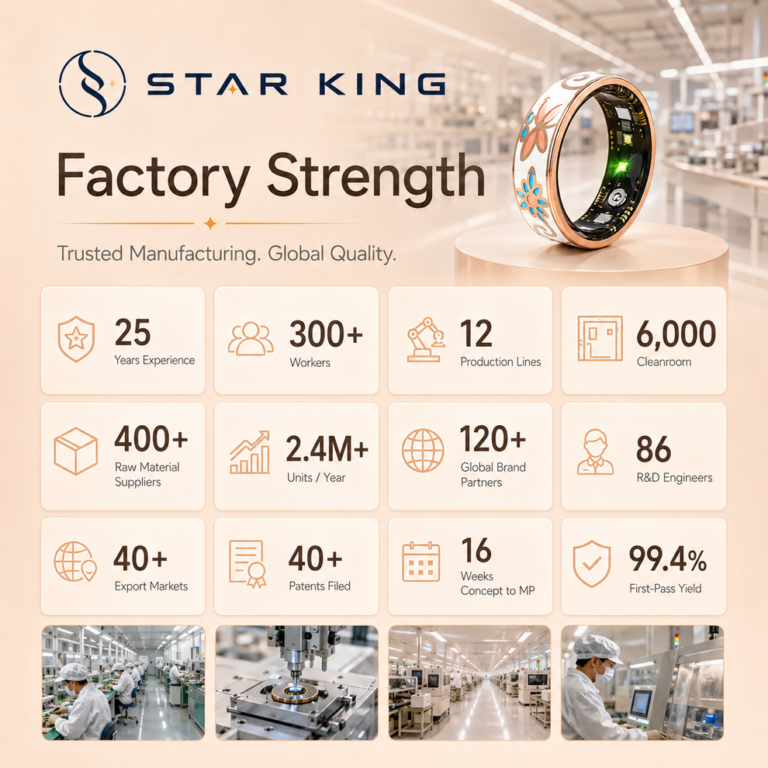
When evaluating suppliers, look beyond price. Assess their experience, manufacturing capabilities, and customization options. STAR KING, for example, offers both OEM and ODM services for AI translators. OEM allows you to manufacture a product based on your design, while ODM lets you customize an existing product with your branding and software modifications.
Request a supplier profile: how long have they been in business? Do they have a dedicated R&D team? Can they provide references? A reliable supplier will be transparent about their capabilities and limitations.
OEM vs. ODM
OEM (Original Equipment Manufacturer): You provide the design and specifications; the supplier manufactures. ODM (Original Design Manufacturer): The supplier has an existing design that you can customize. For importers new to AI translators, ODM is often faster and less risky. However, if you have unique IP, OEM may be better for differentiation.
Customization Options
Customization can include logo printing, packaging design, firmware modifications, app integration, and language pack additions. Discuss these with your supplier early to understand feasibility and cost.
For more details on OEM/ODM processes, visit our Private Label OEM/ODM solutions page.
Step 3: Navigate MOQ, Pricing, and Cost Factors
MOQ (Minimum Order Quantity) is a critical factor for importers, especially those testing a new market. MOQs for AI translators can range from 500 to 3,000 units, depending on the supplier and customization level. Lower MOQs are often available for standard products, while custom designs may require higher volumes.
Pricing is influenced by hardware specifications (e.g., processor, memory, battery), software features (e.g., number of languages, offline capability), and customization. Always request a detailed quotation that includes unit price, tooling costs (if applicable), packaging, and shipping.
Cost Breakdown
Typical cost components: unit price, mold/tooling fee (for custom designs), certification costs, packaging, and logistics. Be wary of quotes that seem too low; they may indicate lower quality or hidden costs.
Negotiation Tips
Negotiate MOQ based on your projected sales. Some suppliers offer tiered pricing: higher volumes yield lower unit costs. Also, consider ordering samples first to validate quality before committing to mass production.
Step 4: Request Samples for Testing and Validation
Always test samples before mass production. Samples allow you to evaluate translation accuracy, build quality, battery life, and user interface. Request samples that match your target specifications. STAR KING provides samples for evaluation; you can request samples here.
During testing, involve native speakers to assess translation accuracy for key languages. Check for latency, offline performance, and ease of use. Also, review the accompanying app (if any) for functionality and language support.
What to Test
- Translation accuracy for target languages
- Offline translation capability
- Battery life under normal usage
- Build quality and durability
- App usability and features
- Connectivity (Wi-Fi, Bluetooth, cellular)
Step 5: Verify Certifications and Compliance for Southeast Asia
Compliance is non-negotiable. Southeast Asian countries have specific certification requirements for electronic devices. Common certifications include CE (for EU, but often accepted), FCC (US), RoHS (hazardous substances), and UN38.3 (battery transport). Additionally, some countries require local certifications: Indonesia has SDPPI for wireless devices, Thailand has NBTC, Vietnam has MIC, and the Philippines has NTC.
Certification requirements depend on the product’s wireless capabilities (e.g., Bluetooth, Wi-Fi) and battery. Always verify with your supplier which certifications are available and whether they cover your target markets. STAR KING can provide relevant certifications for its AI translators; however, buyers should confirm specific requirements for each country.
Key Certifications
- CE: European conformity, often a baseline for quality.
- FCC: US Federal Communications Commission, for wireless devices.
- RoHS: Restriction of hazardous substances.
- UN38.3: UN manual of tests for lithium batteries.
- SDPPI: Indonesian Directorate General of Resources and Equipment for Post and Information Technology.
- NBTC: Thailand’s National Broadcasting and Telecommunications Commission.
- MIC: Vietnam’s Ministry of Information and Communications.
- NTC: Philippines’ National Telecommunications Commission.
For more information on compliance, refer to official sources such as the FCC website or the IEC for standards.
Step 6: Plan for Manufacturing Lead Times and Logistics
Lead times for AI translators vary based on order volume and customization. Standard products may take 30-45 days, while custom orders can take 60-90 days. Plan your inventory accordingly, considering Chinese New Year and other holidays that may affect production.
Logistics: AI translators contain lithium-ion batteries, which are classified as dangerous goods for shipping. They must comply with IATA regulations for air transport. Work with a freight forwarder experienced in battery shipping. Also, consider sea freight for larger orders to reduce costs.
Shipping Documentation
Ensure you have the necessary documents: commercial invoice, packing list, MSDS (Material Safety Data Sheet), UN38.3 test report, and certificate of origin. These are often required by customs.
Step 7: Protect Your Brand with Customization and IP
Customization helps differentiate your product. This can include logo printing, custom packaging, unique colors, and software modifications (e.g., pre-installed apps, branded UI). Discuss IP ownership: if you invest in custom tooling or software, clarify who owns the rights. Typically, the buyer owns custom tooling, but this must be stipulated in the contract.
Also, consider trademark registration in your target markets to protect your brand. Work with a legal advisor to ensure compliance with local IP laws.
Comparison Table: AI Translator Features for Southeast Asia
Use this table to compare features when evaluating suppliers.
| Feature | Basic Model | Mid-Range | Premium |
|---|---|---|---|
| Languages Supported | 50+ | 80+ | 100+ |
| Offline Translation | Limited | Yes (major languages) | Yes (extensive) |
| Battery Life | 8 hours | 12 hours | 16+ hours |
| Connectivity | Wi-Fi, Bluetooth | Wi-Fi, Bluetooth, 4G | Wi-Fi, Bluetooth, 4G, 5G |
| App Integration | Basic | Advanced | Advanced + API |
| Customization | Logo only | Logo, packaging | Full OEM/ODM |
| Certifications | CE, FCC, RoHS | CE, FCC, RoHS, UN38.3 | All + local |
| MOQ | 1000 | 500 | 300 |
Common Mistakes and Buyer Red Flags
- Ignoring local language nuances: A device that supports “Indonesian” may not support regional dialects. Test with native speakers.
- Overlooking certification requirements: Selling non-compliant devices can lead to customs seizures and fines. Always verify.
- Choosing suppliers based solely on price: Low prices may indicate poor quality or lack of support. Evaluate total cost of ownership.
- Not securing IP rights: Without a clear contract, you may lose rights to custom designs.
- Underestimating logistics: Battery shipping regulations can cause delays. Plan ahead.
- Red flags: Suppliers who cannot provide samples, refuse to share certification documents, or demand full payment upfront.
Practical Buyer Checklist
- Define target languages and offline requirements.
- Research suppliers: experience, capabilities, references.
- Request samples and test with native speakers.
- Clarify MOQ, pricing, and customization costs.
- Verify certifications for each target country.
- Confirm lead times and shipping terms.
- Negotiate IP ownership and after-sales support.
- Arrange pre-shipment inspection.
- Plan logistics and customs clearance.
- Review warranty and spare parts availability.
Frequently Asked Questions
1. What is the typical MOQ for AI translators?
MOQs vary by supplier and customization. For standard models, MOQ can be as low as 500 units; custom designs may require 1,000-3,000 units. Negotiate based on your volume.
2. How long does it take to receive samples?
Sample lead time is typically 7-14 days after order confirmation, depending on availability and customization.
3. Which certifications are required for Southeast Asia?
Requirements vary by country. Common ones include CE, FCC, RoHS, and UN38.3. Some countries require local certifications like SDPPI (Indonesia), NBTC (Thailand), MIC (Vietnam), and NTC (Philippines). Verify with your supplier.
4. Can I customize the software and language packs?
Yes, many manufacturers offer firmware and app customization. Discuss your needs with the supplier. STAR KING provides firmware customization for AI translators.
5. What is the lead time for mass production?
Standard lead time is 30-45 days; custom orders may take 60-90 days. Plan for holidays and shipping time.
6. How do I handle shipping of lithium batteries?
Lithium batteries are classified as dangerous goods. They must be shipped according to IATA regulations, with proper documentation including MSDS and UN38.3 test reports. Use a freight forwarder experienced in battery shipping.
7. What after-sales support should I expect?
Reputable suppliers offer a warranty (typically 12 months) and spare parts availability. Clarify the terms before ordering.
Conclusion
Sourcing AI translators for Southeast Asia requires a strategic approach that balances market needs, supplier capabilities, compliance, and logistics. By following the 7 steps outlined in this guide, importers can navigate the complexities and secure a competitive product. Remember to test samples, verify certifications, and plan for logistics early. With the right partner, you can capture the growing demand for AI translators in Southeast Asia.
Source AI Translators from STAR KING
STAR KING is a leading manufacturer of AI translators, offering OEM/ODM services for importers worldwide. We support customization, provide samples for evaluation, and ensure compliance with international standards. To discuss your project or request a quotation, please contact us today. Our team will guide you through the sourcing process and help you succeed in Southeast Asia.
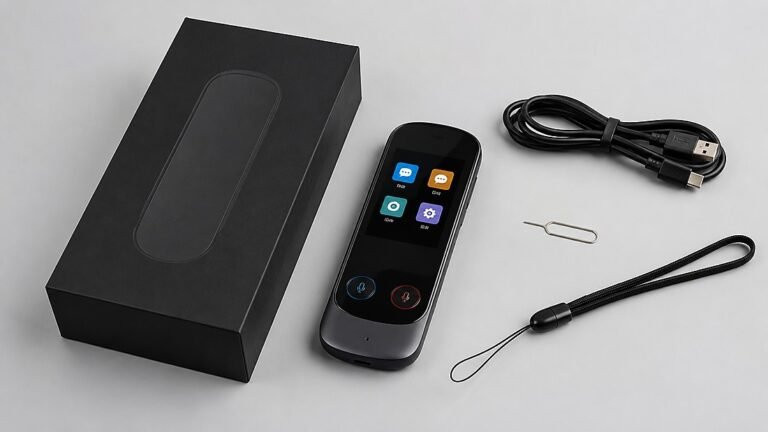
Image 1: A businessman using an AI translator device in a meeting in Southeast Asia. Alt text: “Sourcing AI translators for Southeast Asia – business use”
Image 2: Close-up of AI translator packaging customization. Alt text: “Sourcing AI translators for Southeast Asia – custom packaging”
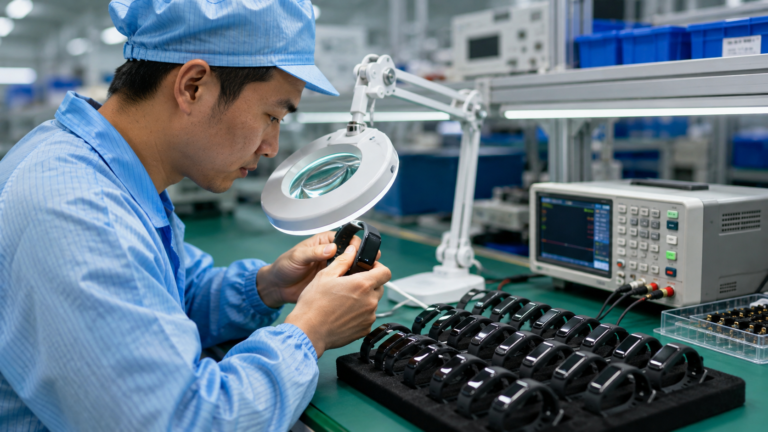
Image 3: A factory worker testing AI translators on the production line. Alt text: “Sourcing AI translators for Southeast Asia – quality control”
Image 4: Shipping containers with lithium battery labels. Alt text: “Sourcing AI translators for Southeast Asia – logistics and compliance”
Buyers can also review STAR KING AI Translators OEM/ODM options to compare product positioning, customization scope, and sample planning.
Discuss Your Smart Wearable OEM/ODM Project
Planning a smart ring, smart watch, smart band, AI glasses, AI translator, or AI voice mouse project? Contact STAR KING to discuss product positioning, sample testing, customization scope, certification requirements, lead time, and quotation details.

Team Star King

Scan WhatsApp QR code