AI Voice Mouse OEM: How to Source AI Voice Mouse for Middle East Startups: 7 Essential OEM Checks for 2026
How to Source AI Voice Mouse for Middle East Startups: 7 Essential OEM Checks for 2026
To source an AI Voice Mouse OEM for Middle East startups, first verify Arabic language support, Bluetooth SIG certification for the wireless module, UN38.3 for the lithium battery, and MOQ flexibility for pilot batches. Startups should prioritize suppliers offering firmware customization, Arabic voice model integration, and clear lead times under 35 days. This guide covers seven checks that help you issue an accurate RFQ and avoid costly delays.
Table of Contents
Table of Contents
Table of Contents
- Short Answer: What Should Middle East Startups Check First?
- Key Takeaways
- Key Facts for Buyers
- What Is an AI Voice Mouse and Why the Middle East Market Is Different
- 1. Language Support: Arabic, English, and Code-Switching
- 2. Certification and Compliance for GCC and Levant
- 3. OEM vs. ODM vs. Private Label: Which Model Fits Your Startup?
- 4. MOQ and Pricing Factors for Pilot Batches
- 5. Sample Testing and Verification Process
- 6. Software, App, and Firmware Customization
- 7. Lead Time, Shipping, and Battery Logistics
- Comparison Table: OEM, ODM, and Private Label for AI Voice Mouse
- Common Mistakes and Buyer Red Flags
- Practical Buyer Checklist for AI Voice Mouse OEM
- FAQ
- Conclusion
- Request a Quote or Samples
Short Answer: What Should Middle East Startups Check First?
Before sending an RFQ for an AI Voice Mouse OEM project, confirm four things: (1) the supplier’s firmware can handle Arabic voice input and right-to-left UI; (2) the wireless module holds Bluetooth SIG listing and the battery has UN38.3 test reports; (3) the supplier offers MOQ flexibility for a 500–1,000 unit pilot; and (4) lead times are documented for mass production after sample approval. These four points determine whether your product can legally enter GCC markets and reach customers on schedule.
Key Takeaways
- Arabic language support is the single most important differentiator for AI Voice Mouse OEM in the Middle East; verify it with real test scripts, not marketing claims.
- Compliance for the GCC typically includes CE (for re-export), RoHS, UN38.3 for the battery, and country-specific customs documentation; requirements depend on the exact product configuration and destination.
- Startups should request a pilot MOQ (often 500–1,000 units) and a paid sample before committing to tooling.
- Firmware and app customization affect both unit cost and lead time; lock the feature set before signing the PO.
- Battery shipping for lithium-containing devices requires UN38.3 test summaries and MSDS; air freight may be restricted depending on carrier and destination.
- Always clarify who owns the tooling and firmware IP if you fund custom development.
Key Facts for Buyers
| Item | Typical Requirement / Consideration | Why It Matters for Middle East Startups |
|---|---|---|
| Voice languages | Arabic (MSA + dialects), English, code-switching | Users often mix Arabic and English in business contexts. |
| Wireless module | Bluetooth SIG listing recommended | Supports regulatory acceptance and interoperability. |
| Battery | UN38.3 test summary + MSDS | Required by most air carriers for lithium batteries. |
| Certifications | CE, RoHS, FCC (as applicable), GCC conformity | Depends on target country and product configuration. |
| MOQ | Often 500–1,000 units for OEM pilot | Reduces inventory risk for first-time importers. |
| Lead time | ~25–35 days after sample approval (typical) | Affects launch timing and cash flow. |
| Warranty | 12 months typical; spare parts availability | Impacts after-sales cost and brand reputation. |
What Is an AI Voice Mouse and Why the Middle East Market Is Different
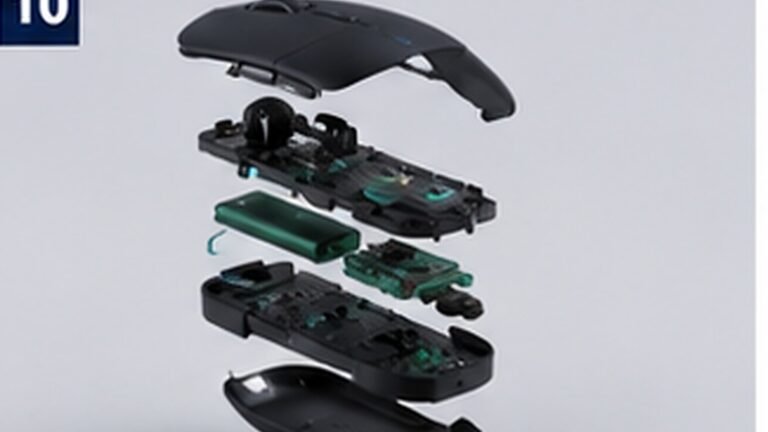
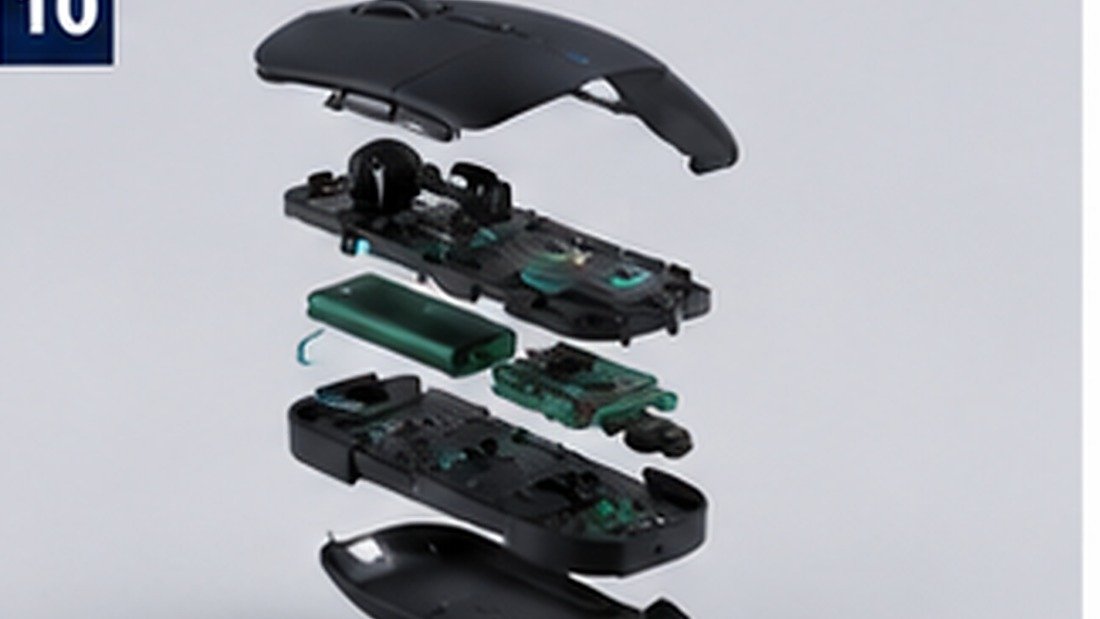
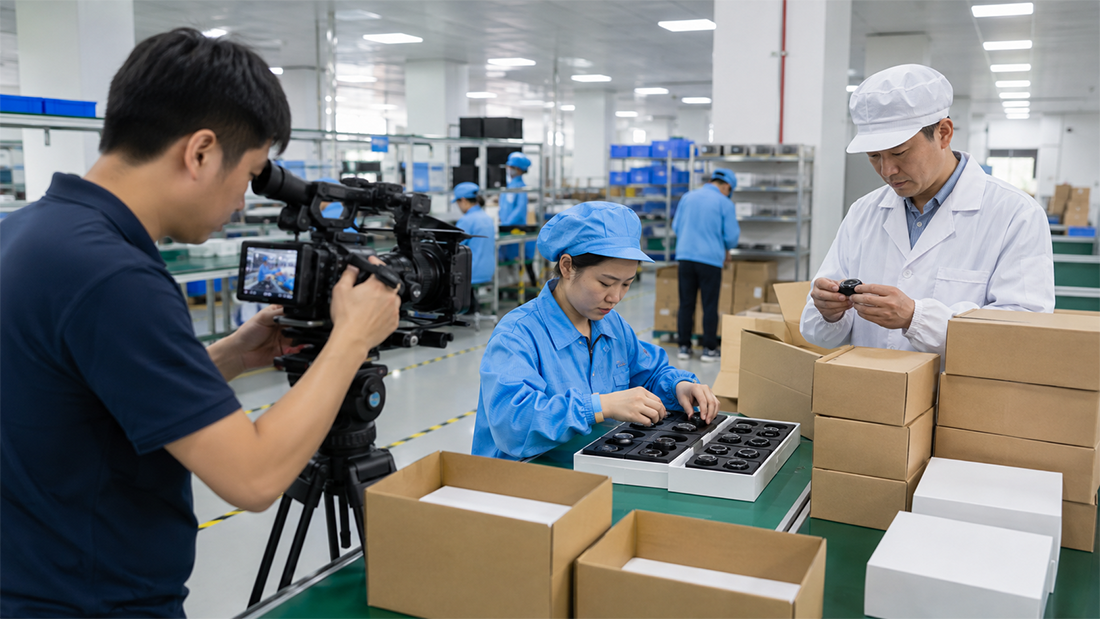
An AI Voice Mouse is a computer mouse that integrates a microphone, voice recognition firmware, and often a cloud or on-device AI engine to convert speech into text, commands, or translations. Unlike a standard mouse, it acts as an input device for dictation, voice search, and multilingual workflows.
For Middle East startups, the market context differs from North America or Europe in three ways. First, Arabic is a right-to-left language with significant dialect variation; voice recognition accuracy depends heavily on the training data behind the AI engine. Second, many business users operate in bilingual environments, switching between Arabic and English mid-sentence. Third, import compliance and customs procedures vary across GCC countries, and lithium battery shipping rules are strictly enforced by regional carriers.
If you are evaluating a supplier for a broader AI hardware portfolio, the same due-diligence principles apply to AI office productivity hardware. The difference is that a voice mouse has a lower unit cost, which makes pilot batches more accessible for startups.
1. Language Support: Arabic, English, and Code-Switching
Ask the supplier for a live demo or a recorded test using your own Arabic script sample. Do not accept a generic “supports 50 languages” claim. Instead, request:
- Word error rate (WER) benchmarks for Arabic MSA and at least one Gulf dialect (e.g., Gulf Arabic).
- Demonstration of code-switching, such as “schedule a meeting al-Usbu’ al-qadim” (next week).
- Right-to-left text rendering in the companion app and on-screen dictation.
Some suppliers use off-the-shelf voice engines (e.g., Google, Microsoft, or open-source models) and may not expose tuning options. Others offer custom firmware with on-device processing for privacy. For a startup targeting enterprise customers in the UAE or Saudi Arabia, on-device processing can be a selling point because it reduces data residency concerns.
[STAR KING TO CONFIRM: number of Arabic dialects supported and whether firmware can be customized for specific Arabic NLP models.]
2. Certification and Compliance for GCC and Levant
Certification is not a single checkbox. For an AI Voice Mouse OEM project destined for the Middle East, relevant requirements may include:
- CE marking if the product will also be sold or transshipped through the EU.
- RoHS for restricted substances.
- UN38.3 for the lithium-ion or lithium-polymer battery, plus an MSDS.
- FCC if you plan to sell in the US as well; not required for GCC but often requested by e-commerce platforms.
- GCC conformity (e.g., G-Mark) may apply depending on the country and product category; buyers should verify with a local customs broker or certification body.
Always ask for the actual test reports and certificate numbers, not just a logo on a spec sheet. Verify the certificate holder name matches the factory or your brand, depending on the arrangement.
For official reference, see the FCC equipment authorization database and the ISO 9001 quality management standard (if the supplier claims ISO certification).
3. OEM vs. ODM vs. Private Label: Which Model Fits Your Startup?
The three models differ in cost, speed, and differentiation:
- OEM: You provide the design or specifications; the factory manufactures to your requirements. Higher upfront cost and longer lead time, but stronger brand differentiation.
- ODM: You select an existing design and customize branding, packaging, and sometimes firmware. Lower cost, faster to market, but less unique.
- Private Label: You apply your brand to a finished product with minimal changes. Fastest and cheapest, but virtually no technical differentiation.
For a startup with limited capital, an ODM or private label approach is often the pragmatic first step. Once you validate demand, you can invest in OEM customization. If you are exploring broader private label options, review private label OEM/ODM solutions to understand what can be customized.
4. MOQ and Pricing Factors for Pilot Batches
MOQ is negotiable but bounded by component costs and tooling. For an AI Voice Mouse OEM project, typical MOQ for a first order may range from 500 to 1,000 units, depending on whether you use an existing enclosure or require new tooling. Factors that affect unit price include:
- Voice engine licensing (cloud API vs. on-device).
- Microphone quality and noise cancellation.
- Battery capacity and charging method.
- Packaging complexity (custom inserts, multilingual manuals).
- Order quantity and payment terms.
Ask for a cost breakdown: unit price, tooling, certification, packaging, and shipping. A low unit price with high tooling or certification fees can distort the true landed cost.
5. Sample Testing and Verification Process
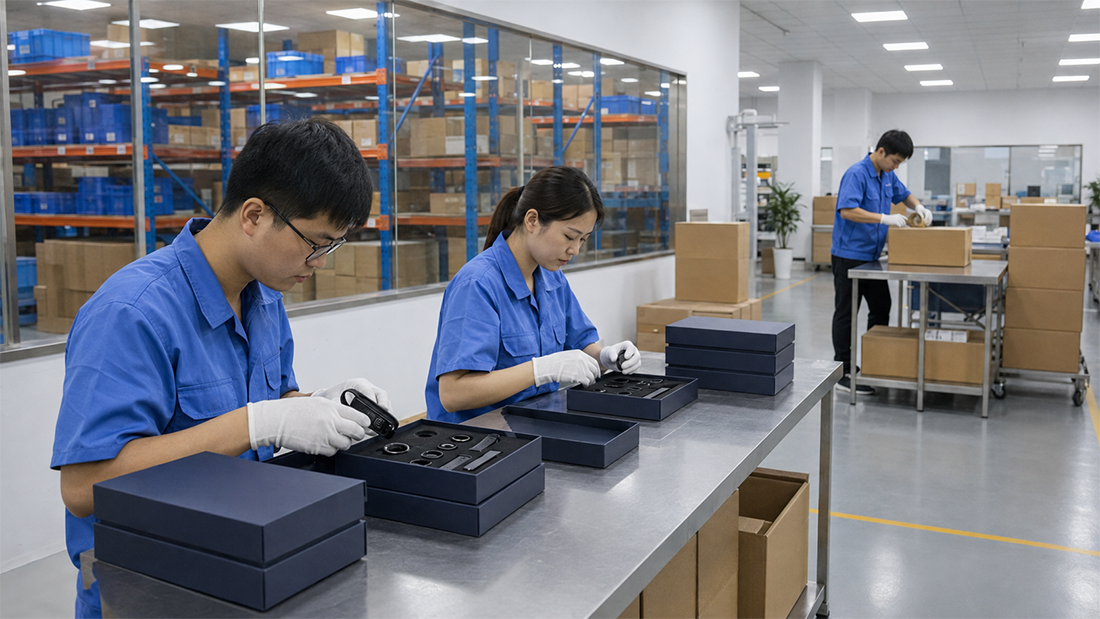
Always request a paid sample before committing to mass production. A structured sample test should include:
- Voice recognition accuracy in a quiet room and a noisy office.
- Battery life under continuous dictation.
- Bluetooth pairing stability with Windows, macOS, and Android.
- App installation and Arabic UI rendering.
- Build quality: button feel, scroll wheel, and USB-C port durability.
Document your test results and share them with the supplier. If the supplier resists a paid sample or cannot provide a tracking number, treat it as a red flag.
6. Software, App, and Firmware Customization
Firmware and app customization often determine whether your product feels local. Key questions:
- Can the supplier change the default language and keyboard layout?
- Can they integrate your brand logo and color scheme in the app?
- Is there an API or SDK for integrating with your own software?
- How are firmware updates delivered (OTA vs. manual)?
- Who owns the customized firmware IP?
If you plan to integrate the mouse with a broader AI hardware ecosystem, consider how it will interact with AI voice mouse devices from the same supplier. Consistency in app design and account systems reduces support burden.
7. Lead Time, Shipping, and Battery Logistics
Lead time for mass production typically starts after sample approval and deposit. For an AI Voice Mouse OEM order, expect roughly 25–35 days for production, plus 5–10 days for quality inspection and packaging. Shipping to the Middle East by air may take 3–7 days, but lithium batteries are classified as dangerous goods; carriers require UN38.3 test summaries and may impose quantity limits.
Confirm Incoterms (FOB, CIF, DDP) and who handles customs clearance. For startup brands, DDP can simplify entry but often costs more. Also clarify warranty terms and spare parts availability; a 12-month warranty is common, but return shipping costs can erode margins.
Comparison Table: OEM, ODM, and Private Label for AI Voice Mouse
| Factor | OEM | ODM | Private Label |
|---|---|---|---|
| Customization level | High (design, firmware, tooling) | Medium (branding, packaging, some firmware) | Low (logo, packaging) |
| Upfront cost | High | Medium | Low |
| Lead time | Long (45–60+ days) | Medium (30–45 days) | Short (15–30 days) |
| MOQ | Higher (1,000+) | Medium (500–1,000) | Lower (100–500) |
| Differentiation | Strong | Moderate | Weak |
| Best for | Funded startups with unique IP | Startups testing market fit | First-time importers |
Soft CTA: If you are preparing an RFQ for an AI Voice Mouse OEM project in the Middle East, our team can help you compare configurations and certification requirements. Request a quote or ask for a sample to test Arabic voice performance directly.
Common Mistakes and Buyer Red Flags
Startups often encounter these pitfalls when sourcing AI Voice Mouse products:
- Accepting “Arabic support” without testing. Many suppliers claim multilingual support but deliver poor accuracy.
- Ignoring battery shipping rules. Lithium batteries require UN38.3 and MSDS; missing documents can delay shipments.
- Assuming certifications transfer. A CE certificate for one configuration may not cover a different battery or wireless module.
- Not clarifying IP ownership. If you fund tooling or firmware development, get it in writing.
- Paying full deposit without a sample. Always approve a sample before mass production.
Red flags include reluctance to provide test reports, vague lead times, and pressure to pay via unsecured methods.
Practical Buyer Checklist for AI Voice Mouse OEM
- ☐ Request a live demo of Arabic voice dictation with your script.
- ☐ Obtain UN38.3 test summary and MSDS for the battery.
- ☐ Verify Bluetooth SIG listing for the wireless module (if applicable).
- ☐ Confirm MOQ for pilot batch and cost breakdown.
- ☐ Order a paid sample and test for at least one week.
- ☐ Clarify firmware/app customization scope and IP ownership.
- ☐ Confirm lead time, Incoterms, and warranty terms.
- ☐ Check certification requirements with a local customs broker.
FAQ
What certifications does an AI Voice Mouse need for the Middle East?
Requirements depend on the destination country and product configuration. Common documents include CE (if re-exporting to Europe), RoHS, UN38.3 for the battery, and MSDS. Some GCC countries may require additional conformity marks; verify with a local certification body or customs broker.
Can I get an AI Voice Mouse with Arabic voice recognition?
Yes, but verify accuracy with your own test script. Ask the supplier which Arabic dialects are supported and whether the firmware can be customized. Not all suppliers have optimized their voice engine for Gulf dialects.
What is the typical MOQ for OEM AI Voice Mouse orders?
MOQ varies by supplier and customization level. For a pilot batch with existing tooling, MOQ may be 500–1,000 units. Fully custom tooling often requires 1,000+ units. Negotiate based on your forecast and payment terms.
How long does production take after sample approval?
Typical lead time is 25–35 days for mass production, plus time for quality inspection and packaging. Add shipping time, which may be longer for lithium battery shipments due to carrier restrictions.
Who owns the firmware and app IP if I customize?
Ownership depends on the contract. If you fund development, negotiate for IP ownership or a perpetual license. Clarify this before paying any tooling or development fees.
Can I ship AI Voice Mouse with lithium battery by air?
Yes, but carriers require UN38.3 test summaries and MSDS. Some carriers limit quantity per package. Confirm with your freight forwarder and ensure the supplier provides the necessary documents.
What warranty is typical for AI Voice Mouse OEM products?
A 12-month warranty is common, covering manufacturing defects. Clarify what is excluded (e.g., water damage, normal wear) and whether spare parts are available. Return shipping costs should be agreed in advance.
Conclusion
Sourcing an AI Voice Mouse OEM for Middle East startups requires more than comparing unit prices. Arabic language accuracy, certification compliance, pilot-friendly MOQs, and firmware customization are the factors that determine whether your product succeeds in the region. By following the seven checks in this guide, you can issue a precise RFQ, validate samples properly, and avoid the common pitfalls that delay launches.
Start with a clear specification, request samples, and verify all compliance documents before committing to mass production. The right supplier will welcome your diligence.
STAR KING CTA
Ready to move forward with your AI Voice Mouse OEM project for the Middle East? STAR KING supports startups with flexible MOQs, Arabic language customization, and full certification documentation. Request a quote or ask to compare specifications and sample options. Our team will help you confirm certification requirements for your target market and plan a pilot batch that fits your budget.
Discuss Your Smart Wearable OEM/ODM Project
Planning a smart ring, smart watch, smart band, AI glasses, AI translator, or AI voice mouse project? Contact STAR KING to discuss product positioning, sample testing, customization scope, certification requirements, lead time, and quotation details.

Team Star King
Scan WhatsApp QR code