AI voice mouse suppliers: How to Source AI Voice Mice for Middle East EdTech: 2026 OEM Guide
How to Source AI Voice Mice for Middle East EdTech: 2026 OEM Guide
When you search for a reliable AI voice mouse for Middle East EdTech, the real question is not just “does it recognize Arabic?” The critical question is whether the supplier can support Arabic (and bilingual English/Arabic) voice input, integrate with classroom platforms, pass local import requirements, and scale with OEM branding. This guide gives EdTech buyers a 7-step sourcing framework to evaluate AI voice mouse suppliers for Middle East deployments, covering voice-language support, MOQs, pricing, certification and customization.
Table of Contents
Table of Contents
AI voice mouse suppliers: Short Answer
For Middle East EdTech deployments, choose an AI voice mouse supplier that demonstrates Arabic and English voice support, platform compatibility (Windows/macOS/Chrome OS), classroom management integration, and clear OEM/ODM options. Start with a small paid sample order, validate voice accuracy locally, confirm MOQ and landed cost, then scale.

Key Takeaways
- AI voice mice are input devices that convert spoken commands into keyboard/mouse actions — not medical or diagnostic products.
- Arabic voice recognition and bilingual education workflows are the No. 1 local requirement for Middle East EdTech buyers.
- Sample testing in your target environment (classroom noise, accents, device OS) is non-negotiable before bulk orders.
- Focus keyword in your procurement RFQ helps suppliers respond precisely to AI voice mouse OEM requirements.
- Certification scope depends on the final product configuration and destination country — verify per model.
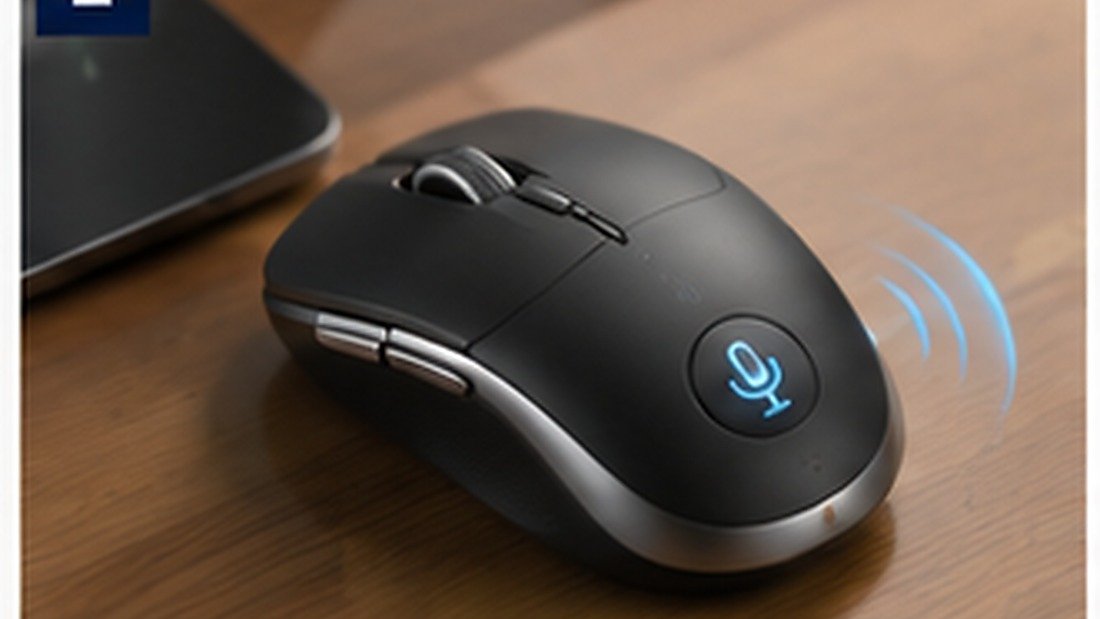
Table of Contents
- What Is an AI Voice Mouse and Why It Matters for EdTech
- Step 1: Define the Classroom Use Case
- Step 2: Confirm Arabic and Multilingual Voice Support
- Step 3: Evaluate Platform and Software Integration
- Step 4: Compare OEM, ODM and Private Label Options
- Step 5: Understand MOQ, Pricing and Lead Time
- Step 6: Plan Sample Testing and Quality Control
- Step 7: Verify Certifications and Import Compliance
- Key Facts for Buyers
- Comparison Table: Voice Mouse Options
- Common Mistakes and Buyer Red Flags
- Practical Buyer Checklist
- FAQ
- Conclusion
What Is an AI Voice Mouse and Why It Matters for EdTech?
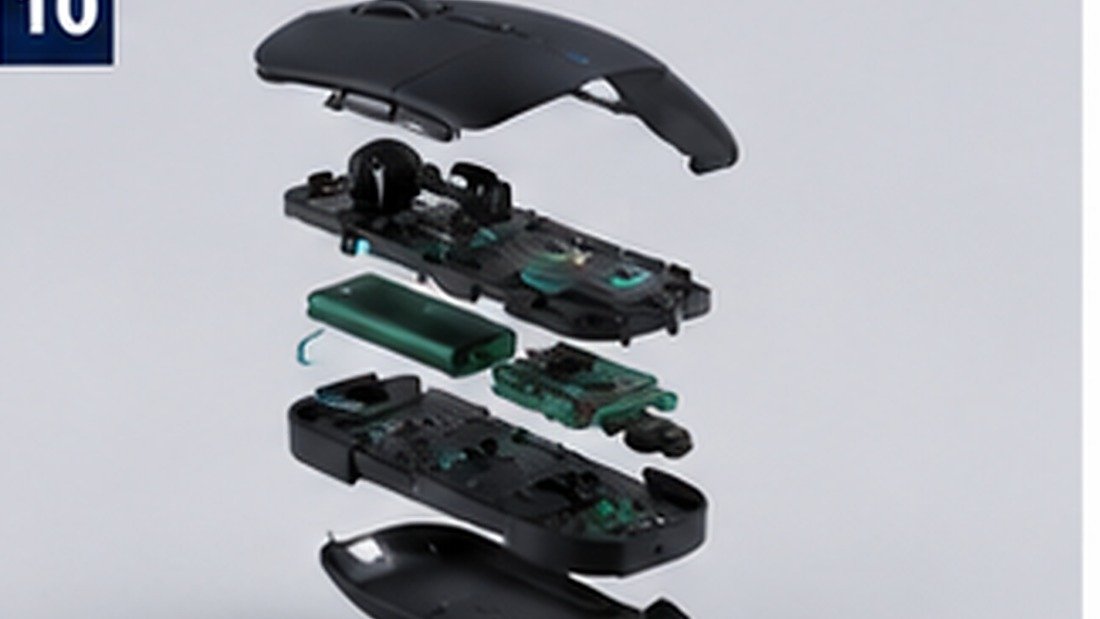
An AI voice mouse is a hybrid input device that combines a standard optical mouse with a microphone and AI voice engine. It captures speech and converts it into text or commands through speech-to-text (STT) and, in some models, text-to-speech (TTS). For education technology companies, this matters because it can reduce input friction in classrooms, accessibility programs and language-learning labs.
In Middle East EdTech deployments, the device typically sits at the intersection of three buyer priorities: bilingual Arabic/English support, integration with learning management systems (LMS), and compatibility with existing PC or Chromebook fleets. Buyers should treat the AI voice mouse as a productivity and accessibility input device, not a diagnostic or medical tool.
Why Middle East EdTech Buyers Are Evaluating Voice Input Now
Government digitization programs, smart-classroom initiatives and bilingual curriculum reforms across the Gulf Cooperation Council (GCC) are pushing schools to adopt interactive input devices. Education technology companies that distribute into the region are being asked for hardware that supports Arabic and English simultaneously, works with common operating systems, and can be white-labeled for tender submissions.
Soft CTA: If you are mapping out AI voice mouse requirements for a Middle East rollout, it can help to review classroom-ready hardware solutions side by side before you shortlist suppliers.
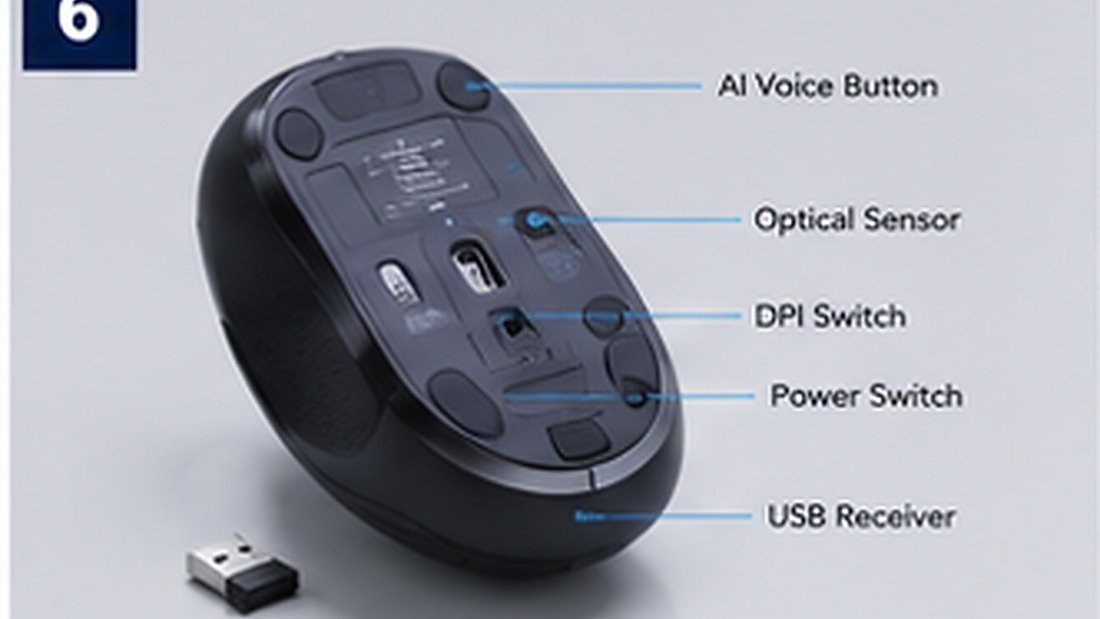
Step 1: Define the Classroom Use Case Before You Talk to Suppliers
Before requesting quotes, write a one-page use-case brief. Suppliers will respond far more accurately when you specify:
- Primary users: students, teachers, or administrators.
- Language mix: Arabic only, English only, or bilingual.
- Deployment model: teacher desk, student lab, take-home program, corporate training.
- Device fleet: Windows, macOS, Chrome OS, or mixed.
- Connectivity: USB-A, USB-C, Bluetooth, or 2.4GHz dongle.
- Noise environment: quiet lab, open classroom, lecture hall.
This brief becomes the backbone of your RFQ and your supplier scorecard. Use-case clarity also affects MOQ because customized molds and branded packaging are priced against forecast volumes.
Step 2: Confirm Arabic and Multilingual Voice Support
Arabic voice recognition is the single largest technical risk in a Middle East EdTech project. Modern Standard Arabic (MSA) behaves differently from regional dialects such as Gulf, Levantine and Egyptian Arabic. A supplier’s product may support MSA but degrade sharply with dialectal speech.
Buyers should ask suppliers:
- Which STT/TTS engines power the device?
- Is Arabic fully on-device, cloud-based, or hybrid?
- Does the device support code-switching between Arabic and English mid-sentence?
- What is the documented accuracy rate in classroom noise?
Ask for test recordings in the same accent profile as your end users. A supplier that cannot provide targeted voice samples is a red flag.
Step 3: Evaluate Platform and Software Integration
Education buyers need the AI voice mouse to behave predictably across their existing software. Verify support for:
- Windows 10/11 and macOS (minimum), Chrome OS (preferred for school fleets).
- Driver-free plug-and-play versus driver-required installation.
- Accessibility features: dictation, screen reader compatibility, captioning.
- LMS plug-ins or API availability for attendance, quizzes and language drills.
- Teacher dashboards or enterprise management tools if required by IT departments.
If your deployment involves thousands of devices, ask whether the supplier can provide firmware customization or an SDK. Not every factory supports this, and it can significantly affect lead time.
Step 4: Compare OEM, ODM and Private Label Options
There are three common engagement models with an AI voice mouse supplier:
- OEM — you bring the design/software spec, the factory manufactures it.
- ODM — you select from the factory’s existing hardware and customize branding, firmware, packaging, or apps.
- Private label — you take a catalog product with your logo, packaging and documentation.
For Middle East EdTech buyers, ODM with app and firmware customization is often the most practical first step: it reduces tooling cost, shortens time-to-market, and still allows you to differentiate packaging for tender or retail channels. If you plan to own a custom mold long-term, confirm tooling ownership in writing.
For broader context on customization models, see Private Label OEM/ODM solutions.
Step 5: Understand MOQ, Pricing and Lead Time
AI voice mouse MOQ typically depends on three variables: whether the housing is standard or custom, whether firmware/software is customized, and whether packaging is stock or branded. Standard-housing, logo-only orders usually have the lowest MOQ. Custom molds, custom firmware and regional compliance testing push MOQ up.
Cost Drivers You Should Model
- Unit hardware cost (chipset, microphone array, sensor, battery).
- Software licensing if a third-party STT/TTS engine is used.
- Custom firmware or API integration.
- Branded packaging, manuals and local-language inserts.
- Certification testing fees (varies by destination and product config).
- Freight, insurance and duties (landed cost, not just FOB).
Lead Time Planning
Expect shorter lead times for private-label catalog products and longer lead times for custom molds and firmware. Ask for a milestone schedule: sample approval, tooling, first article, mass production, pre-shipment inspection, and shipment booking. Build buffer for regional holidays and shipping congestion.
Step 6: Plan Sample Testing and Quality Control
Sampling is where most EdTech procurement succeeds or fails. A robust sample plan includes:
- Voice accuracy test in your target language(s) and accent(s).
- Classroom noise simulation (multiple speakers, HVAC noise, distance from mic).
- Compatibility test on your full device fleet and OS versions.
- Battery life under typical teaching sessions.
- Drop, port durability and cable strain tests (physical longevity in student use).
- Packaging and documentation review for local language and tender compliance.
For production, agree on a quality control plan: incoming material inspection, in-line checks, aging test, functional test, and pre-shipment inspection (PSI). Ask for the factory’s QC documentation format before you place the order, not after.
Step 7: Verify Certifications and Import Compliance
Certification requirements for AI voice mice typically depend on the final product configuration, wireless features, battery type and destination country. For Middle East markets, buyers should verify:
- CE and RoHS for EU-linked tenders or re-export routes.
- FCC if the product is also sold into the U.S.
- Battery transport documentation, such as UN38.3 and MSDS, if the product ships with a lithium battery.
- Local country requirements for radio equipment, customs and labeling — verify with a local importer or regulatory consultant.
Buyers should request certificates of the exact model and configuration they plan to import. A certificate for a similar product is not the same as a certificate for your SKU. FCC equipment authorization and EU CE marking pages are useful starting points for verifying what documentation looks like.
Key Facts for Buyers
| Item | What to Confirm | Why It Matters |
|---|---|---|
| Voice languages | Arabic (MSA and dialects), English, bilingual switching | Directly affects usability in Middle East classrooms |
| Platform support | Windows, macOS, Chrome OS | Must match school device fleet |
| Connectivity | USB-A, USB-C, Bluetooth, 2.4GHz | IT compatibility and deployment speed |
| Software/API | SDK, LMS plug-in, firmware customization | Integration and differentiation |
| MOQ | Standard vs custom housing, firmware, packaging | Budget and pilot scale |
| Certification | CE, FCC, RoHS, UN38.3, MSDS (as applicable) | Import and tender eligibility |
| Lead time | Sample, tooling, MP, PSI, shipping | Rollout and school-year timing |
Comparison Table: Sourcing Options for AI Voice Mice
| Option | Best For | Typical Trade-off | Customization Level |
|---|---|---|---|
| Pure OEM (your design) | Large brands with existing IP and software | Higher tooling cost and longer lead time | High |
| ODM with customization | EdTech companies entering new markets | Some design limits on standard housing | Medium–High |
| Private label | Pilot programs, tenders, fast launch | Limited hardware differentiation | Medium |
| Spot buy / trading company | Small urgent orders | Less control over QC and certification | Low |
Common Mistakes and Buyer Red Flags
Common Mistakes
- Testing voice accuracy only in English and assuming Arabic will perform the same.
- Treating MOQ as a single number instead of a function of customization.
- Accepting a generic certificate instead of the exact-model certificate.
- Ignoring battery shipping documents until the container is booked.
- Skipping the pre-shipment inspection to save 1–2% of order value.
Buyer Red Flags
- Supplier cannot produce an Arabic voice sample on request.
- No documentation of firmware, SDK, or API capability.
- Pressure to pay a large deposit before sample approval.
- Vague answers on certification scope for your specific SKU.
- No written tooling ownership clause when you pay for a custom mold.
Practical Buyer Checklist
- ☐ Use-case brief completed (users, languages, fleet, environment).
- ☐ Arabic and bilingual voice samples reviewed in your accent profile.
- ☐ Platform and device compatibility confirmed on your fleet.
- ☐ OEM/ODM/private label model chosen and tooling ownership documented.
- ☐ MOQ, unit price, packaging cost and landed cost modeled.
- ☐ Lead time plan aligned with school-year or tender deadlines.
- ☐ Certification scope confirmed for your exact model and markets.
- ☐ QC plan and pre-shipment inspection terms agreed in writing.
- ☐ Warranty, spare parts and RMA process documented.
- ☐ Payment terms and shipping Incoterms finalized.
FAQ
1. What is an AI voice mouse, and is it a medical device?
It is an input device that converts speech into text or commands. It is not a medical or diagnostic device, and education buyers should not market it as one.
2. Does an AI voice mouse support Arabic?
Support for Arabic and regional dialects varies by model and firmware. Buyers should require voice samples in the exact accents used by their end users before committing to a bulk order.
3. What MOQ should I expect for an AI voice mouse OEM project?
MOQ typically depends on whether the housing is standard or custom, whether firmware or software is customized, and whether packaging is branded. Standard housing with logo-only customization usually has the lowest MOQ.
4. Which certifications do I need for Middle East market entry?
Certification requirements typically depend on the destination country, wireless configuration and battery type. Common documents include CE, RoHS, FCC, UN38.3 and MSDS. Buyers should verify with a local importer or regulatory consultant.
5. Can the supplier customize firmware, apps or packaging?
Yes — many factories offer ODM customization for firmware, apps, logos and packaging. Scope, cost and lead time depend on the supplier’s capabilities and agreement.
6. How long does production take after sample approval?
Lead time varies based on tooling, components, and order size. Buyers should require a milestone schedule covering sample approval, tooling, first article, mass production, inspection and shipping.
7. How do I protect my design and tooling investment?
Confirm tooling ownership in the supply agreement, request NDAs where appropriate, and clarify IP terms for firmware, app code and industrial design before you pay for a custom mold.
Conclusion
Sourcing an AI voice mouse for Middle East EdTech is a procurement decision, not a spec-sheet comparison. Buyers who define the use case, validate Arabic voice performance, confirm platform compatibility, model MOQ and landed cost, plan QC, and verify certification for the exact model will reduce risk and speed up rollout. Treat the first order as a controlled pilot, and document every requirement in writing before you scale.
STAR KING CTA
If you are evaluating AI voice mouse options for a Middle East education deployment, the next step is a sample. Request product samples from STAR KING to test voice performance, compatibility and packaging in your own environment: Request product samples here.
For related AI hardware solutions, you can also review our AI Voice Mouse product page and the AI Office Productivity solution.
Discuss Your Smart Wearable OEM/ODM Project
Planning a smart ring, smart watch, smart band, AI glasses, AI translator, or AI voice mouse project? Contact STAR KING to discuss product positioning, sample testing, customization scope, certification requirements, lead time, and quotation details.

Team Star King
Scan WhatsApp QR code