Smart Watches for Private Label in 2026: A 7-Step Awareness Guide for US Brands
Smart Watches for Private Label in 2026: A 7-Step Awareness Guide for US Brands
Smart watches for private label are customizable wearable devices manufactured under your brand name, typically sourced through OEM or ODM partners and tailored with your logo, packaging, firmware, and companion app. For a US private-label brand, the first step is understanding what you need to decide before contacting a supplier — target use case, feature set, budget, MOQ, and compliance pathway — rather than collecting competing quotes for a product you haven’t defined. This 2026 awareness guide walks you through the seven decisions that shape a private-label smartwatch program.
Table of Contents
Table of Contents
Table of Contents
- Direct Answer
- Key Takeaways
- Key Facts for Buyers
- Why Smart Watches Remain the Most Flexible Private-Label Wearable in 2026
- OEM vs ODM vs Private Label: What US Brands Need to Know
- The 7-Step Decision Framework for Smart Watches for Private Label
- US Compliance, Battery Shipping, and Certification Realities
- Common Mistakes and Buyer Red Flags
- Practical Buyer Checklist
- Frequently Asked Questions
- Conclusion
Direct Answer
Smart watches for private label let a US brand sell a differentiated wearable without owning a factory. Your starting decisions are the use case (fitness, sleep, health monitoring, or general lifestyle), the feature set (display, sensors, GPS, battery, app), the business model (OEM, ODM, or pure white-label), and the compliance pathway. Buyers should typically expect to define these before receiving accurate quotes, MOQs, and lead times.
Key Takeaways
- Private label, OEM, and ODM are three different sourcing models with different cost, customization, and IP implications.
- The feature set you choose determines sensor accuracy expectations, battery life, app requirements, and certification testing.
- MOQ and unit cost are driven by tooling, display, sensor selection, and packaging — not by a single universal price.
- US market access typically requires FCC-related testing for radio devices, and battery-containing wearables usually need UN38.3 test reports and MSDS documentation for shipping.
- Sample evaluation, app testing, and pre-shipment inspection are the cheapest risk-reduction steps you can take.

Key Facts for Buyers
| Buyer Decision | Typical Range / Reality | Why It Matters |
|---|---|---|
| Customization level | Logo only → full ODM SKU → custom firmware/app | Determines cost, MOQ, and IP ownership |
| MOQ | Depends on model; often lower for existing ODM SKUs, higher for custom tooling | Affects cash flow and inventory risk |
| Lead time | Samples: weeks; mass production: depends on model and packaging complexity | Impacts launch planning and pre-orders |
| US compliance | FCC-related testing for radio devices; battery documentation required for shipping | Gatekeeper for legal US sale and logistics |
| App dependency | Some devices require a companion app; some offer SDKs or rebrandable apps | Affects user experience and brand control |
| Sensor accuracy | Consumer-grade heart rate and SpO2 trend data, not medical diagnosis | Avoid medical claims; set correct user expectations |
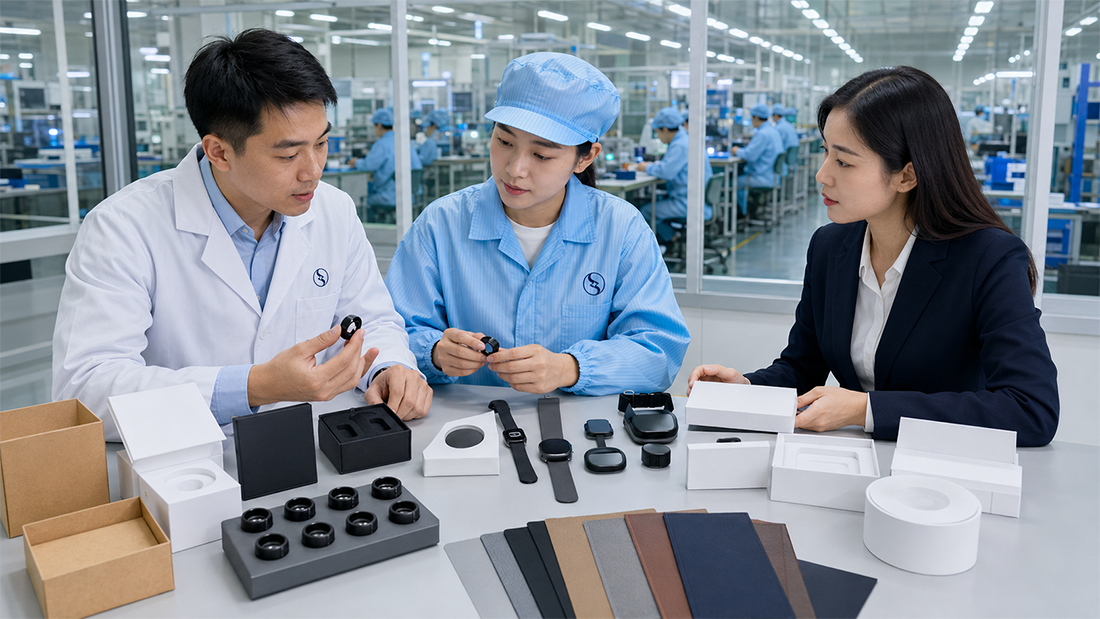
Why Smart Watches Remain the Most Flexible Private-Label Wearable in 2026
Smart watches occupy a useful middle ground for private-label brands. They offer more visual real estate for branding than a smart band, more consumer familiarity than a smart ring, and a wider feature range than most single-purpose wearables. For a US private-label brand launching under a new name, a smartwatch can serve fitness, lifestyle, sleep, and general wellness positioning without forcing you into a narrow product category.
Three reasons buyers keep returning to smart watches
- Broad use-case coverage. A single platform can support fitness tracking, heart rate monitoring, and sleep tracking narratives, giving a brand flexibility across marketing channels.
- Established supply base. Compared to more novel form factors, smart watch modules, displays, and firmware platforms are widely available, which simplifies sampling and iteration.
- Branding surface. Bezel, strap, packaging, and app can all carry your identity, which is central to a private-label proposition.
If you are still comparing form factors, the STAR KING overview of smart watches is a useful starting point, and the broader private label OEM/ODM solutions page explains how branding and customization typically work.
OEM vs ODM vs Private Label: What US Brands Need to Know
These three terms are often used interchangeably in sourcing conversations, but they describe different levels of involvement and risk.
| Model | What It Means | Best For | Trade-off |
|---|---|---|---|
| Private Label (white-label) | You buy an existing device and apply your logo, packaging, and sometimes app skin | Fast launch, low upfront cost, first wearable product | Less product differentiation |
| OEM | Manufacturer builds to your specification, often with your industrial design | Brands with defined product vision and budget for tooling | Higher MOQ, longer lead time, tooling investment |
| ODM | Manufacturer offers a developed platform you can customize (firmware, app, branding) | Brands wanting differentiation without full custom tooling | Shared platform with other brands |
Most first-time US private-label brands start with a white-label or ODM SKU, then graduate to OEM once demand is validated. This staged approach reduces financial exposure while you learn which features matter to your customers.
The 7-Step Decision Framework for Smart Watches for Private Label
Step 1: Define the primary use case
Before selecting a supplier, decide whether your product leads with fitness tracking, sleep insights, general wellness, or lifestyle notifications. This decision cascades into sensor requirements, battery targets, app complexity, and even marketing language. A sleep-focused product, for example, may prioritize comfort, battery life, and overnight heart rate monitoring; a fitness product may prioritize GPS and waterproof testing.
Step 2: Choose your sourcing model
Use the table above to decide between private label, ODM, and OEM. Document which elements you need to control — logo, packaging, firmware, app, or full industrial design — because this defines your MOQ and lead time more than any other single factor.
Step 3: Specify the feature set with cost in mind
Every added feature carries cost and compliance implications. Display type and size, sensor package, GPS, battery capacity, and waterproof rating are the usual cost drivers. Buyers should request a feature-to-cost breakdown rather than a single unit price, so trade-offs are visible.

Image suggestion: OEM smart watch assembly line. Alt text includes focus keyword.
Step 4: Request samples and test in your actual use case
Samples are your cheapest risk-reduction tool. Test the device against your target user: battery life over several days, app pairing stability, sensor trends during sleep and exercise, and strap comfort. Note that consumer wearables typically provide trend data rather than medical measurements, so marketing claims should stay within consumer-wellness language.
Step 5: Understand MOQ, price drivers, and lead time
MOQ is shaped by whether you are customizing tooling, display, sensor, or just branding. Lead time depends on model availability, packaging customization, and destination shipping. Ask suppliers to separate sample lead time, production lead time, and shipping time — buyers often conflate these and underestimate total time-to-market.
Step 6: Plan branding, packaging, and app customization
Private-label value lives here. Logo printing or engraving, custom packaging, multilingual manuals, and app theming are common options. If your product requires a companion app, confirm early whether the supplier offers app customization, an SDK, or a rebranding framework, since this can affect both cost and launch schedule.
Step 7: Align compliance, shipping, and after-sales before mass production
Before committing to mass production, confirm which certifications apply to your configuration and destination, how lithium batteries will be shipped, and what warranty and spare-parts support you can expect. Certification requirements typically depend on the specific product configuration and target market, so buyers should verify with the supplier and, where needed, a compliance specialist.
US Compliance, Battery Shipping, and Certification Realities
For the US market, radio-frequency devices generally require testing aligned with Federal Communications Commission rules; the FCC Office of Engineering and Technology provides the official framework for RF device authorization. Wearables with cellular, Wi-Fi, or Bluetooth modules fall into this scope, and Bluetooth implementations typically follow specifications published by the Bluetooth SIG.
Battery-containing wearables also raise logistics questions. Lithium cells and batteries are regulated for transport, and buyers should expect to request UN38.3 test reports and MSDS documentation from the supplier. These documents are typically required by carriers and customs, but exact requirements can vary by shipping method and destination. Star King recommends that buyers confirm battery documentation and shipping classification directly with the supplier before booking freight. Adjacent certifications such as CE, RoHS, and others may apply depending on where else you plan to sell; these typically depend on the specific product configuration and target market.
Health-related marketing claims in the US deserve caution. Consumer heart rate and blood oxygen features are generally positioned as wellness and trend tools, not diagnostic devices. If your brand plans claims that could be interpreted as medical, you should verify applicable requirements with a regulatory professional rather than relying on supplier marketing materials.
Soft CTA: If you are at the awareness stage and want to understand what a private-label smart watch program can look like for your brand, reviewing the private label OEM/ODM solutions page can help you frame the right questions before you contact suppliers.
Common Mistakes and Buyer Red Flags
Common mistakes
- Requesting quotes before defining the use case and feature set.
- Comparing unit prices without normalizing features, packaging, and warranty terms.
- Treating consumer sensor data as medical-grade output in marketing copy.
- Underestimating the time needed for app testing, compliance documentation, and freight booking.
- Assuming a single certification covers all target markets.
Buyer red flags
- A supplier who quotes a firm price and MOQ before understanding your configuration.
- Unwillingness to provide sample units or documented test reports.
- Vague or evasive answers about battery shipping documentation.
- Promises of medical diagnostic claims for consumer wearables.
- No clarity on who owns tooling, molds, or app assets after the project ends.
These red flags are less about a specific supplier and more about process discipline: a credible partner will slow down and ask questions rather than promise everything at once.

Image suggestion: quality control and battery safety testing station. Alt text includes focus keyword.
Practical Buyer Checklist
Use this checklist before you request quotations for smart watches for private label.
- Primary use case defined and documented (fitness, sleep, wellness, lifestyle).
- Sourcing model chosen: private label, ODM, or OEM.
- Feature list with priorities and trade-offs (must-have vs nice-to-have).
- Target retail price and acceptable landed cost range.
- Branding elements required: logo, packaging, app, manual languages.
- Compliance pathway drafted for the US market, with questions for the supplier.
- Battery shipping documentation requirements identified.
- Warranty, spare parts, and after-sales expectations stated.
- IP and tooling ownership questions prepared.
- Sample evaluation criteria and timeline agreed internally.
If you are exploring adjacent form factors for the same brand, the smart rings range can complement a watch-led lineup, and the fitness tracking application page shows how feature positioning can be framed for end users.
Frequently Asked Questions
1. What is the difference between private label and OEM smart watches?
Private label typically means you buy an existing device and apply your branding and packaging. OEM means the device is built to your specification, often with your industrial design. Private label is usually faster and cheaper to launch; OEM offers more differentiation but generally requires higher MOQ and tooling investment.
2. What MOQ should a US private-label brand expect?
MOQ depends on the sourcing model and how much you customize. Branding-only orders on an existing model tend to allow lower quantities than custom tooling or custom firmware projects. Buyers should ask for MOQ at each customization level rather than a single number.
3. Are smart watches for private label certified for the US market?
Certification is configuration- and destination-specific. Radio devices generally require testing aligned with FCC rules, and battery-powered wearables usually need UN38.3 test reports and MSDS documents for shipping. Buyers should verify applicable requirements for their exact product and market before mass production.
4. Can I customize the companion app?
Many suppliers offer app customization, app rebranding, or SDK access, but availability varies by platform. Confirm early whether app customization is included, priced separately, or limited, because app capability often affects both launch schedule and user experience.
5. How long does a private-label smart watch project take?
Timelines vary. Buyers should expect distinct phases: sample evaluation, brand customization, compliance documentation, production, and shipping. Requesting a phase-by-phase schedule from the supplier produces more realistic planning than a single total lead time figure.
6. Are the health features on these watches medical-grade?
Consumer wearables generally provide heart rate and blood oxygen trend information for wellness purposes, not medical diagnosis. Brands should keep marketing language within consumer-wellness framing and avoid diagnostic claims unless the product is specifically developed and cleared for such use.
7. Who owns the tooling and molds in an OEM project?
Ownership terms vary by agreement. Buyers investing in tooling should clarify mold and tooling ownership, transfer conditions, and asset retention in writing before production begins. This is one of the most common points of post-project dispute.
Conclusion
Smart watches for private label give US brands a practical entry point into wearables without owning manufacturing. The work that determines success happens before the first quote: defining the use case, choosing the sourcing model, specifying features with cost awareness, testing samples, and mapping compliance and shipping. Buyers who follow the seven steps above enter supplier conversations with clear requirements, which usually leads to more accurate pricing, realistic lead times, and fewer surprises at launch. As your brand grows, the same framework scales from a first private-label SKU to a differentiated ODM or OEM product line.
Next Step
Ready to move from awareness to evaluation? Request samples of smart watches for private label so you can test sensor behavior, battery life, app stability, and build quality against your own use case before committing to mass production.
Request Smart Watch Samples for Your Private-Label Program →

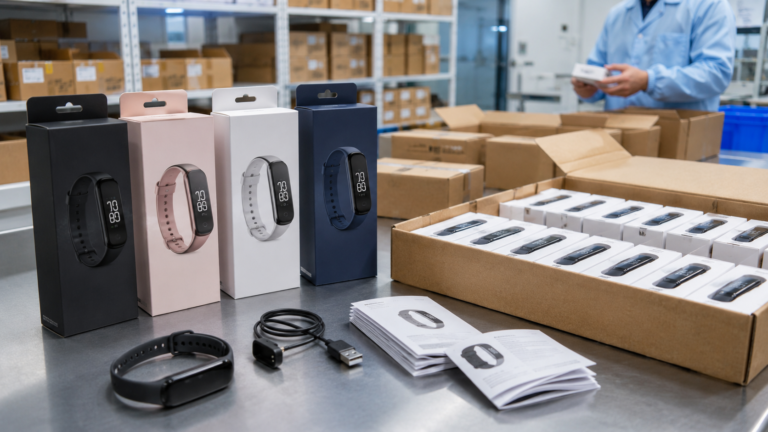
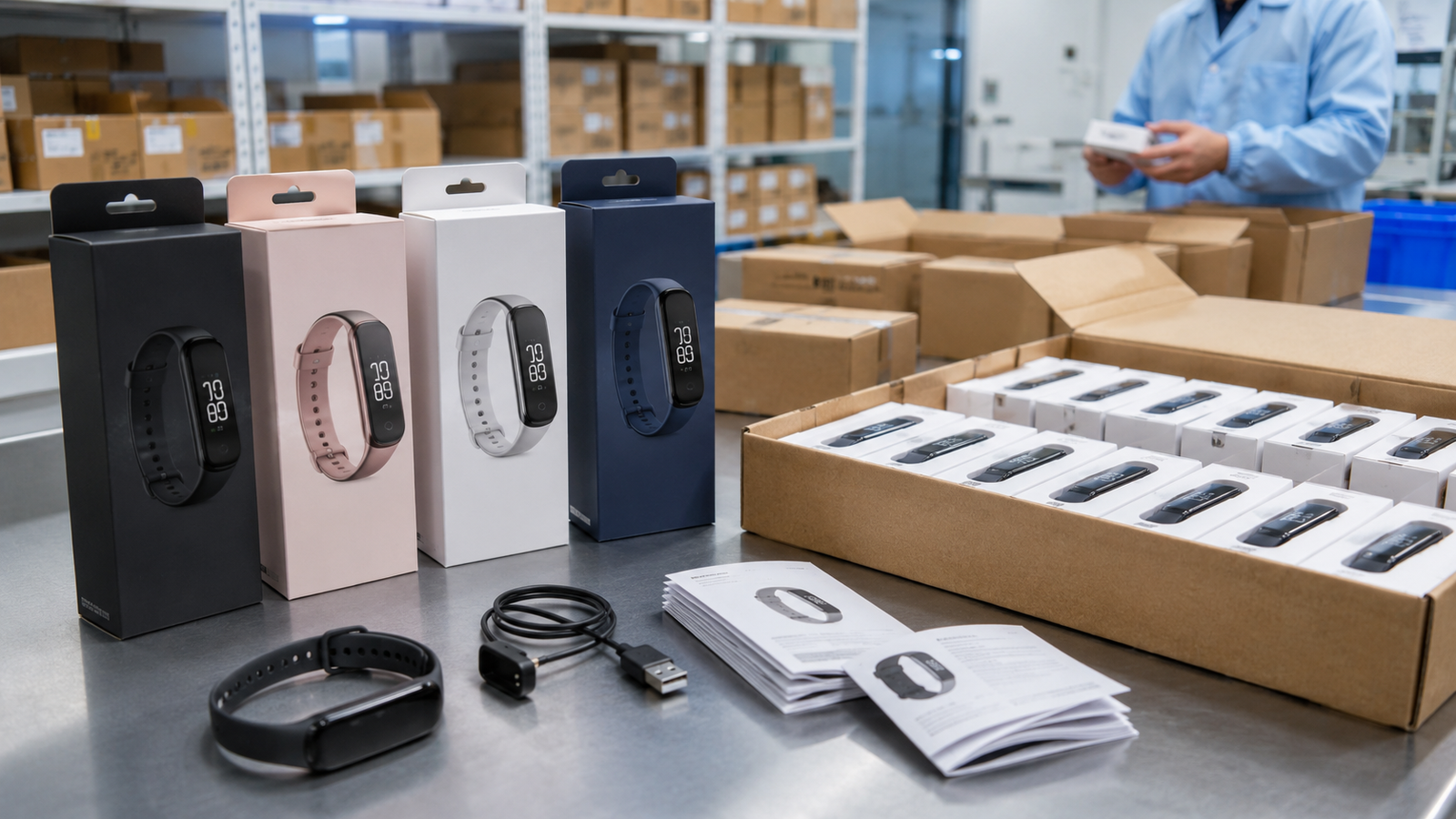
Image suggestion: custom packaging and branding mockup. Alt text includes focus keyword.
Discuss Your Smart Wearable OEM/ODM Project
Planning a smart ring, smart watch, smart band, AI glasses, AI translator, or AI voice mouse project? Contact STAR KING to discuss product positioning, sample testing, customization scope, certification requirements, lead time, and quotation details.

Team Star King

Scan WhatsApp QR code