Smart Watches for EdTech: 7 RFQ Checks Before You Buy in 2026
Smart Watches for EdTech: 7 RFQ Checks Before You Buy in 2026
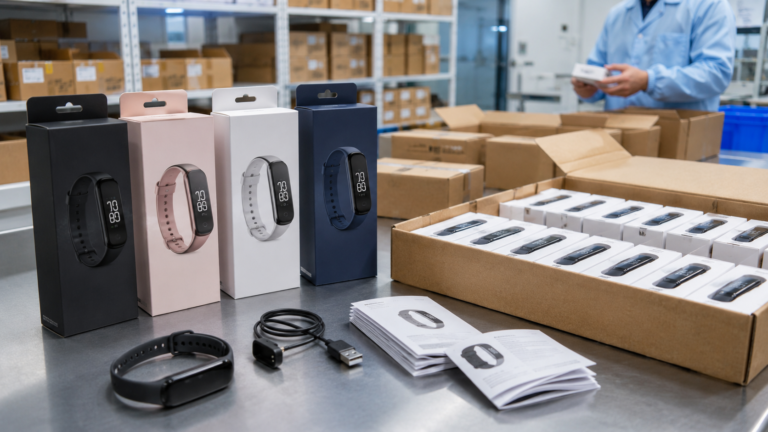
Smart watches for EdTech buyers are wearable hardware purchased by education technology companies to support classroom engagement, student wellness monitoring, and campus communication programs in US schools and districts. Before you issue an RFQ, run seven checks in order: clear hardware specifications, the right OEM/ODM/private label model, MOQ and tooling terms, sample and pilot validation, FCC and battery compliance, production lead time, and landed cost with warranty and spare parts. This guide explains each check from the perspective of an EdTech procurement team preparing a US deployment.
Table of Contents
Table of Contents
smart watches for EdTech: Short Answer
What should EdTech buyers check before sending an RFQ for smart watches? Confirm written specifications, choose between OEM, ODM, and private label, agree MOQ and tooling ownership, validate samples in a pilot, verify FCC and battery documentation for the US, lock a production schedule, and calculate landed cost including warranty coverage. Skipping any of these steps usually shifts cost and risk to the buyer after the purchase order is signed.
Table of Contents
- Why EdTech Buyers Approach Smart Watches Differently
- Check 1: Writing Specifications That Survive a Pilot
- Check 2: OEM, ODM, or Private Label
- Check 3: MOQ, Tooling, and Platform Control
- Check 4: Sample and Pilot Validation
- Check 5: FCC, Battery, and School Policy Compliance
- Check 6: Lead Time and Production Planning
- Check 7: Landed Cost, Warranty, and Spare Parts
- Key Facts for Buyers
- Table: Decision Comparison for EdTech Buyers
- Common Mistakes and Buyer Red Flags
- Practical RFQ Buyer Checklist
- FAQ
- Conclusion
Key Takeaways
- Smart watch purchases for EdTech are program purchases, not retail purchases. Specifications must survive a pilot and a multi-year deployment.
- OEM, ODM, and private label carry different cost, speed, and control profiles. Most EdTech buyers start with ODM plus private label packaging, then move toward deeper customization.
- FCC authorization and lithium battery documentation are gating items for US imports. Buyers should verify rather than assume.
- MOQ is a function of tooling, firmware, and packaging choices, not a single fixed number.
- Landed cost includes freight, duties, duty drawback potential, warranty reserve, and spare parts. Unit price alone underestimates total program cost.
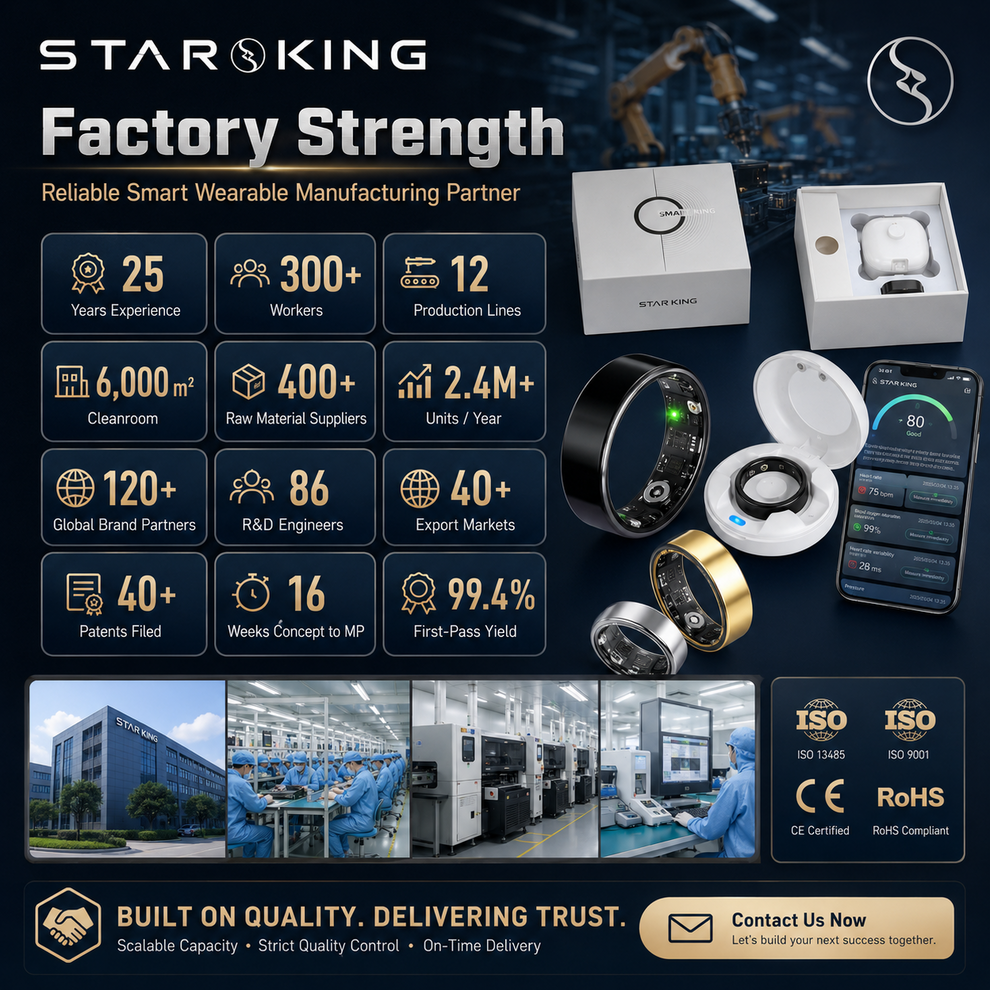
Why EdTech Buyers Approach Smart Watches Differently
An education technology company selling to schools or districts typically buys smart watches in one of three patterns: as a bundled device in a learning platform, as a wellness and attendance accessory, or as part of a safety and communication program. In all three patterns the buyer is accountable to the school, not to a retail shopper.
That changes the RFQ. A retail buyer can accept a small cosmetic variance between production runs. An EdTech buyer usually cannot, because a mixed batch creates support tickets, warranty confusion, and mismatched app behavior across a classroom. Reliability, documentation, and consistency matter more than the lowest unit price.
US public school procurement often includes additional layers: vendor registration, insurance certificates, and references. Those are commercial requirements, but they translate back into hardware requirements: your supplier needs to be able to support documentation requests and consistent reorders across a multi-year contract.
For buyers evaluating the wider wearable category, the same procurement logic applies to smart rings for wellness and campus health programs, though the device format changes the specification and privacy conversation.
Check 1: Writing Specifications That Survive a Pilot
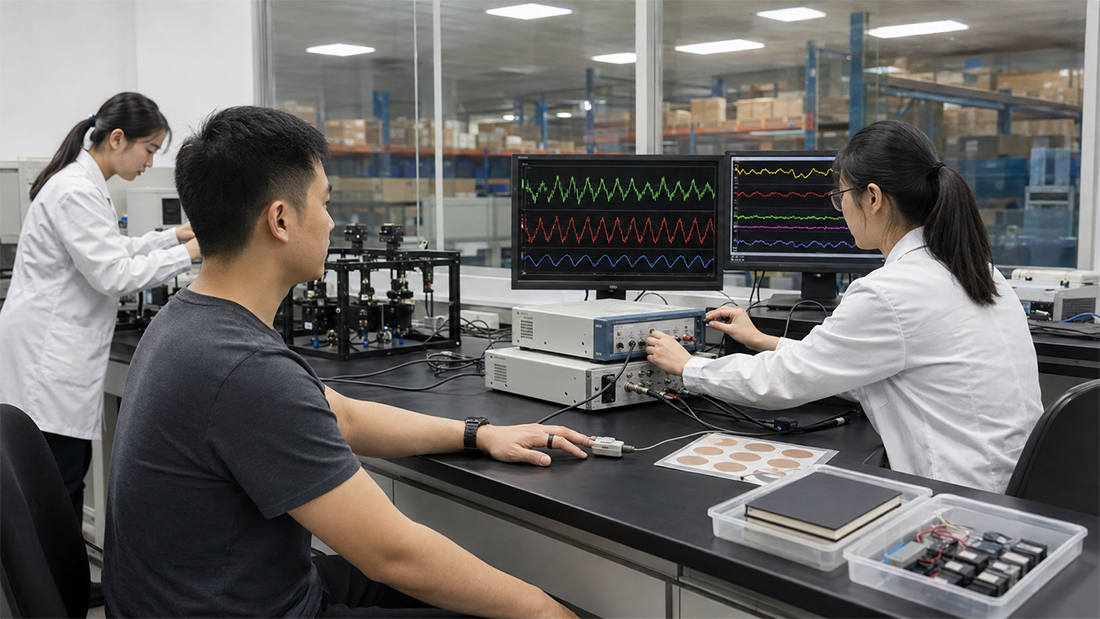
The first RFQ check is a written specification that a supplier can quote against without interpretation. Ambiguous specifications produce quotes that look comparable but are not, which is the most common reason EdTech RFQs produce misleading comparisons.
Core specification categories
- Display and enclosure: screen size, resolution, brightness for classroom lighting, case material, and strap material.
- Connectivity: Bluetooth version and stack, companion app support, and whether the device operates without a phone.
- Battery: capacity, typical usage hours, charging method, and whether the cell is rechargeable lithium.
- Sensors: heart rate, blood oxygen, accelerometer, and any sensor you plan to use in reporting. Specify which readings are consumer wellness estimates, not medical measurements.
- Water and dust resistance: an IP or equivalent rating consistent with expected student use.
- Software: firmware behavior, app platform support, data export format, and update mechanism.
Each line should carry a testable value. “Long battery life” cannot be quoted or tested; “7 days typical use with heart rate tracking enabled” can.
Check 2: OEM, ODM, or Private Label
The second check is choosing the manufacturing model that matches your timeline, budget, and level of differentiation.
Definitions buyers should use consistently
OEM manufacturing means the buyer provides or co-develops the design, and the factory builds to that design. ODM manufacturing means the factory owns a base design that the buyer configures. Private label typically means an existing ODM platform is branded with the buyer’s logo, packaging, and app identity.
In practice, most EdTech buyers at RFQ stage start with ODM plus private label packaging because it reaches a pilot fastest. Deeper OEM work is more common in year two, once the program has validated demand and the buyer knows which features students and teachers actually use.
If you want to compare how a private label program is structured end to end, review the private label OEM/ODM solution overview before finalizing your RFQ package.
Check 3: MOQ, Tooling, and Platform Control
The third check is commercial structure. MOQ for smart watches for EdTech buyers is not a single number. It is the output of several decisions:
What drives MOQ
- Enclosure tooling: a standard housing avoids tooling cost; a custom housing adds tooling development and a higher minimum.
- Firmware and app changes: standard firmware keeps MOQ low; custom features may require a development commitment.
- Packaging: printed retail packaging has its own minimum print run, separate from the device MOQ.
- Color and configuration mix: multiple SKUs in one order can reduce per-SKU volume and complicate planning.
Ask your supplier to quote MOQ at several volume tiers, for example 100, 500, 1,000, and 3,000 units, rather than quoting one number. Tiered quotes reveal where tooling and setup costs stop dominating unit price. Typical MOQ thresholds for platform-based smart watches are [STAR KING TO CONFIRM].
Tooling ownership deserves explicit language. If you pay for a mold or a custom enclosure, your RFQ should state who owns the tool, where it is stored, and what happens to it if the relationship ends. This is standard practice in hardware development and prevents disputes later.
Check 4: Sample and Pilot Validation
The fourth check is verification before commitment. A sample is not a formality; it is the cheapest risk reduction available to an EdTech buyer.
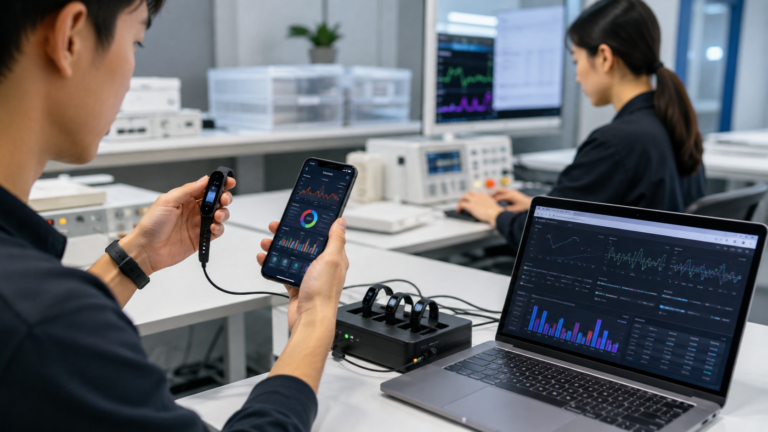
What to test on samples
- Battery behavior over several days, not a single charge cycle.
- App pairing and data sync on the phone platforms your users have.
- Display legibility in bright classrooms and outdoors.
- Strap durability and comfort under repeated daily use.
- Pairing stability when many devices are active in one room.
For an EdTech deployment, the multi-device test matters more than the single-device test. A classroom with 30 wearables is a different radio environment than a single user at home. Run a small pilot with representative density before scaling.
For categories where you also evaluate fitness-focused devices, the validation approach in smart bands for fitness tracking programs follows the same logic: pilot first, scale second.
Check 5: FCC, Battery, and School Policy Compliance
The fifth check is compliance for the US market. For an EdTech audience that includes schools, compliance documentation is often requested by the district before a purchase order is issued.
FCC authorization
Devices with intentional or unintentional radio frequency emitters, including Bluetooth smart watches, are typically subject to FCC equipment authorization rules before US marketing and sale. Buyers should ask for the FCC ID and verify the grant in the FCC equipment authorization database rather than relying on a logo on a specification sheet. Review the official FCC equipment authorization database to confirm a specific grant.
Battery and shipping documentation
Lithium batteries are regulated for transport. Air shipments commonly require a UN 38.3 test summary and, depending on configuration and carrier, a safety data sheet. The US Department of Transportation provides guidance on lithium battery shipping requirements that buyers can use to brief their freight forwarder.
Other market requirements
Depending on configuration and channel, additional requirements may apply, such as material restrictions under RoHS for certain markets, toy or child-safety rules if a product is marketed to young children, and state-level student data privacy obligations. These typically depend on the specific product, the age of the intended user, and how data is collected and stored. Buyers should verify the current requirements with their compliance counsel, and suppliers should provide the documentation they actually hold rather than promising certification that does not exist.
For a structured view of testing and documentation, see the health and fitness wearable solutions page.
Check 6: Lead Time and Production Planning
The sixth check is schedule. EdTech deployments are tied to academic calendars, which are less forgiving than retail seasons. A device that arrives two weeks late can miss an entire semester.
Lead time components to separate
- Sample lead time: from specification freeze to sample in hand.
- Sample revision time: if the pilot surfaces changes.
- Production lead time: from deposit and specification approval to goods ready.
- Quality inspection time: pre-shipment inspection before goods leave.
- Freight time: transit to the US, including customs clearance.
Ask for each component separately so you can identify the real bottleneck. Typical timelines for platform-based smart watches are [STAR KING TO CONFIRM], and they vary with order volume, customization depth, and factory load at the time of order.
Check 7: Landed Cost, Warranty, and Spare Parts
The seventh check is total program cost. EdTech buyers who compare only unit price usually discover the gap after deployment, when warranty claims and replacement units begin to arrive.
Landed cost components
- Unit price at your committed volume tier
- Tooling and development amortization, if applicable
- Packaging and printing
- Freight, insurance, and duties
- Customs brokerage and any applicable regulatory fees
- Warranty reserve based on expected failure rate
- Spare parts and replacement units for the deployment period
Warranty terms should be defined in the RFQ, including the covered period, what is excluded, whether the supplier replaces or repairs, and who pays return freight. For multi-year school programs, order a defined percentage of spare units at the same time as the main order so replacements match the deployed batch.
Key Facts for Buyers
| RFQ Item | What to Ask | Why It Matters |
|---|---|---|
| Specification | Testable values for battery, display, sensors, water resistance | Enables comparable quotes |
| Manufacturing model | OEM, ODM, or private label | Drives cost, speed, and differentiation |
| MOQ | Tiered quotes at 100 / 500 / 1,000 / 3,000 units | Reveals setup cost impact |
| Tooling | Ownership, storage, transfer terms | Prevents disputes |
| Samples | Lead time, cost, pilot support | Cheapest risk reduction |
| Compliance | FCC ID, UN 38.3 summary, MSDS if applicable | Required for US import and school review |
| Lead time | Sample, production, inspection, freight separated | Protects academic calendar |
| Warranty | Period, exclusions, replacement terms, spare units | Controls total program cost |
Table: Decision Comparison for EdTech Buyers
| Decision | Lowest Cost Option | Balanced Option | Highest Control Option |
|---|---|---|---|
| Manufacturing model | Private label on stock ODM | ODM with firmware and app configuration | Full OEM with custom enclosure |
| MOQ | Highest | Medium | Usually highest |
| Time to pilot | Fastest | Moderate | Slowest |
| Differentiation | Low | Medium | High |
| Best fit | First-year pilot | Scaling program | Differentiated platform hardware |
Common Mistakes and Buyer Red Flags
Common mistakes
- Quoting without a frozen specification. Quotes that look comparable rarely are.
- Assuming certification is included. Confirm the FCC ID and battery documents for the exact model you are buying.
- Ordering samples for one user. Test multi-device density before scaling.
- Ignoring spare parts. A deployment without replacement units creates long support cycles.
- Treating MOQ as fixed. Tiered quotes often reveal a better volume point.
Red flags in supplier responses
- Certification promised verbally but no certificate number or FCC ID provided.
- MOQ quoted without stating whether tooling is included.
- No mention of pre-shipment inspection or test reports.
- Lead time given as a single number with no breakdown.
- Warranty described only as “standard” with no written terms.
Practical RFQ Buyer Checklist
- [ ] Written specification with testable values for every core feature
- [ ] Manufacturing model selected and documented (OEM / ODM / private label)
- [ ] Tiered MOQ quotes requested and compared
- [ ] Tooling ownership and transfer terms stated in writing
- [ ] Sample order placed, including at least one multi-device pilot round
- [ ] FCC ID provided and verified in the FCC database
- [ ] UN 38.3 test summary and MSDS requested where applicable
- [ ] Production lead time broken into sample, production, inspection, and freight stages
- [ ] Warranty terms, exclusions, and replacement process in writing
- [ ] Spare parts percentage defined for the deployment period
- [ ] Landed cost model built, including duties, freight, and warranty reserve
Buyers can also review STAR KING Smart Watches OEM/ODM options to compare product positioning, customization scope, and sample planning.
FAQ
What is the typical MOQ for smart watches for EdTech buyers?
MOQ depends on tooling, firmware, and packaging choices rather than a fixed industry number. Request tiered quotes so you can see where unit cost stabilizes. Platform-based models generally allow lower starting volumes than fully custom designs.
Does every smart watch need FCC authorization for US sales?
Devices that emit radio frequency energy, including Bluetooth smart watches, are typically subject to FCC equipment authorization before US marketing. Ask for the FCC ID for the specific model and verify the grant in the FCC database, since authorization applies model by model.
How long does an EdTech smart watch order usually take?
Timelines vary with customization depth and order volume. Break the schedule into sample, production, inspection, and freight stages so you can identify the real constraint. For platform-based orders, sample and production timelines are [STAR KING TO CONFIRM].
Can we get private label packaging and a custom app logo?
Private label packaging and app branding are common in ODM-based programs. Confirm the minimum print run for packaging separately from the device MOQ, since the two minimums are independent. Typical minimum order volumes for private label programs are [STAR KING TO CONFIRM].
Who owns the tooling if we pay for a custom enclosure?
Ownership depends on the contract. State clearly in the RFQ who owns the tool, where it is stored, and how it transfers if the relationship ends. Suppliers that resist written tooling terms create avoidable risk for the buyer.
What documents should we request before placing a bulk order?
At minimum: FCC ID and verification, UN 38.3 test summary, MSDS if applicable, a sample test report, and written warranty terms. For school-facing deployments, some districts may also request insurance certificates and vendor registration, so confirm their document list early.
Are smart watch health features medical devices?
Consumer smart watch health features, such as heart rate and blood oxygen estimates, are wellness features, not medical diagnostics. If a program requires clinical measurement, the device and claims must be evaluated against applicable medical device rules, which is a different compliance path.
Conclusion
Smart watches for EdTech buyers are procured as a program, not as a product. The seven RFQ checks in this guide, specification clarity, manufacturing model, MOQ and tooling, sample validation, FCC and battery compliance, lead time planning, and landed cost with warranty, cover the decisions that determine whether a deployment succeeds or creates support problems. Buyers who freeze specifications early, verify documentation rather than trusting summaries, and plan spare parts at the same time as the main order generally avoid the most expensive surprises. If you are preparing a US school or district deployment, use the checklist in this article as your RFQ template and confirm each item in writing with your supplier before issuing a purchase order.
Ready to Build Your EdTech Wearable Program?
STAR KING supports OEM, ODM, and private label smart watch programs for education technology companies, including specification review, sample development, packaging customization, and compliance documentation support. Request a quotation or an OEM/ODM discussion for your next US deployment.
Request a Smart Watch Quote for Your EdTech Program
Discuss Your Smart Wearable OEM/ODM Project
Planning a smart ring, smart watch, smart band, AI glasses, AI translator, or AI voice mouse project? Contact STAR KING to discuss product positioning, sample testing, customization scope, certification requirements, lead time, and quotation details.

Team Star King
Scan WhatsApp QR code