OEM smart glasses: 7 Critical Checks for OEM Smart Glasses in the UK: A 2026 RFQ Blueprint
OEM Smart Glasses Sourcing: 7 Critical Checks for UK Private-Label Brands (2026 Guide)
For a UK private-label brand, sourcing OEM smart glasses is not just about picking a frame and a logo. The real risks sit in compliance (CE, UKCA, RoHS, UK battery rules), firmware and app control, tooling ownership, MOQ realism, and long-term supply. This guide gives you a 7-point RFQ checklist built for the UK market. You will learn what to verify before you commit, what data suppliers must provide, and how to structure a quotation request that protects your brand and margin.
Table of Contents
Table of Contents
Table of Contents
- Short Answer
- Key Takeaways
- Key Facts for Buyers
- What Are OEM Smart Glasses?
- 1. Product Scope and Use Case Fit
- 2. UK Compliance: CE, UKCA, RoHS and Battery Rules
- 3. Firmware, App and Data Control
- 4. MOQ, Pricing Logic and Cost Structure
- 5. Tooling Ownership, IP and Customization Rights
- 6. Quality Control, Testing and Pre-Shipment Inspection
- 7. Lead Time, Packaging and After-Sales
- Comparison Table: OEM vs ODM vs Private Label
- Common Mistakes and UK Buyer Red Flags
- Practical Buyer Checklist (RFQ-Ready)
- FAQ
- Conclusion
Short Answer
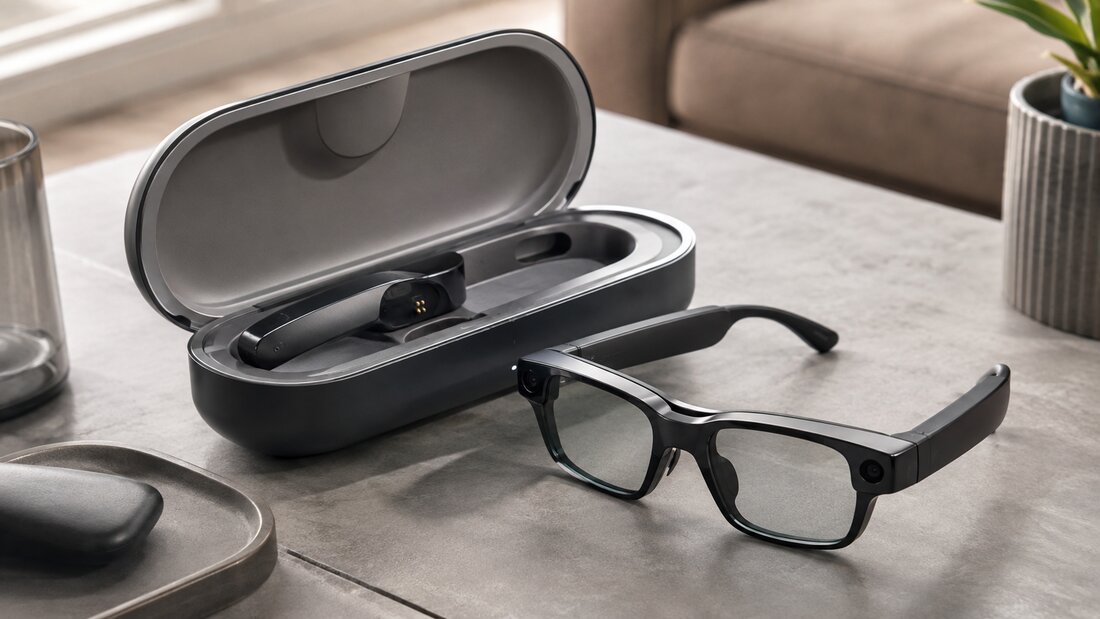
OEM smart glasses for the UK market require a supplier that can support CE and UKCA marking, RoHS compliance, lithium battery testing (UN 38.3 and MSDS), firmware and app customization, and packaging localized for UK retailers. Before sending an RFQ, confirm MOQ, tooling ownership, QC process, and lead time in writing. Treat compliance documentation and sample validation as deal-breakers, not afterthoughts.

Key Takeaways
- UK buyers need both CE and UKCA documentation for most electronic products; confirm which applies to your exact configuration.
- Firmware and app control determine whether you can build a defensible private-label product or just resell a generic device.
- MOQ is negotiable only when tooling and components are already in production; custom tooling typically raises MOQ.
- Lithium battery shipping requires UN 38.3 test summaries and MSDS; air freight rules differ from sea freight.
- Pre-shipment inspection and a documented AQL plan reduce batch risk more than any price negotiation.
- Tooling ownership and IP clauses should be agreed before any deposit is paid.
Key Facts for Buyers
| Factor | Typical UK Requirement | What to Ask the Supplier |
|---|---|---|
| Product marking | CE and/or UKCA depending on product and placement | Which markings do you apply, and can you provide a Declaration of Conformity? |
| Substances | RoHS compliance expected by UK retailers | Do you hold current RoHS test reports for this BOM? |
| Battery | UN 38.3 test summary, MSDS, and safe packaging | Can you provide a UN 38.3 summary and MSDS before shipment? |
| Wireless | Radio equipment rules may apply | Which radio modules are used, and are they pre-certified? |
| MOQ | Varies by customization level | What is the MOQ for stock model vs custom logo vs custom tooling? |
| Lead time | Typically depends on components and tooling | What is the sample lead time and mass production lead time? |
| QC | Inspection before shipment | Can we book a third-party pre-shipment inspection? |

What Are OEM Smart Glasses and Why the UK Market Differs
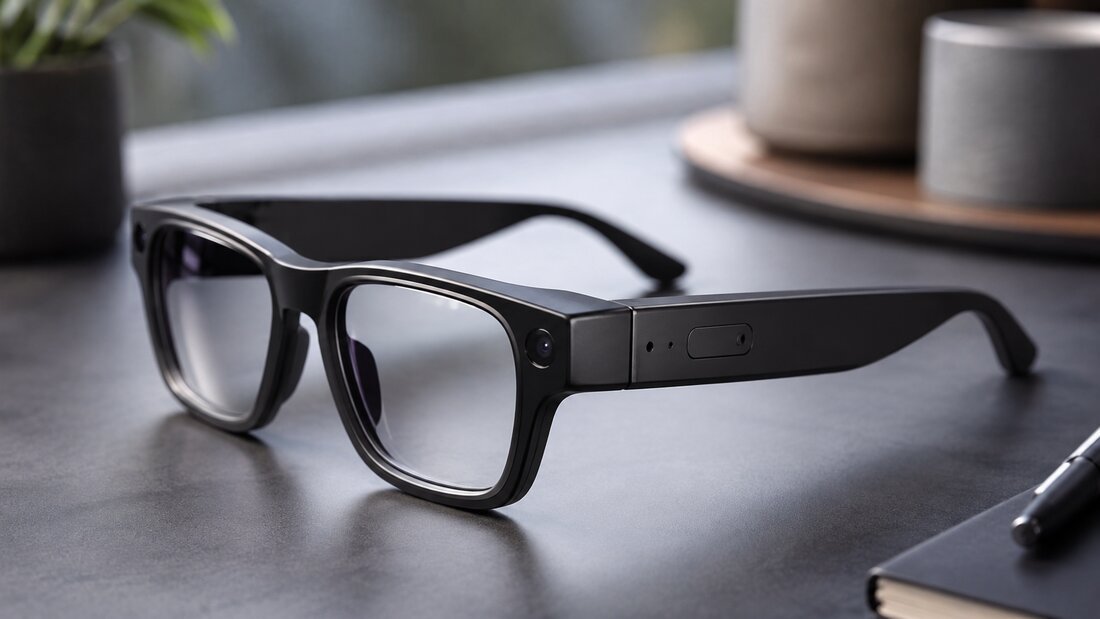
OEM smart glasses are eyewear devices built by a manufacturer to a buyer’s specification, then branded and sold under the buyer’s label. The manufacturer may supply the core hardware and firmware, while the buyer controls branding, packaging, app experience, and go-to-market. In an ODM model, the buyer typically selects from a manufacturer’s existing designs with limited changes. OEM usually means deeper customization across hardware, firmware, app, and packaging.
For UK private-label brands, three market realities shape sourcing decisions. First, the UK has its own conformity marking framework alongside EU CE marking, so documentation requirements can differ from EU-only sellers. Second, UK retailers and marketplaces increasingly request compliance files before listing. Third, lithium battery shipping rules affect both cost and delivery time, especially for air freight. Buyers should verify current requirements with the relevant UK authority or a qualified compliance consultant, because rules and product scope can change.
If you are evaluating AI-enabled eyewear, the AI smart glasses product page gives a useful view of typical feature sets to compare against your own specification.
1. Product Scope and Use-Case Fit
Start with the use case, not the frame. AI smart glasses can be positioned for audio, translation, voice assistant, camera, or heads-up information. Each adds different components, power draw, and compliance scope. A private-label brand selling into the UK should define:
- Primary function (audio, AI voice, translation, camera, display).
- Target user (commuters, field workers, corporate wellness, education, retail staff).
- Connectivity (Bluetooth only vs Bluetooth plus Wi-Fi or cellular).
- Battery expectation (hours of mixed use, standby).
- App dependency (does the device work without an app?).
Ask the supplier for a feature matrix with power consumption estimates. A device with always-on AI features and a camera will demand a larger battery and may create additional compliance and privacy considerations. If your positioning leans toward workplace productivity, review the AI office productivity solutions page to align features with buyer expectations.
2. UK Compliance: CE, UKCA, RoHS and Battery Rules
Compliance is the most common reason UK launches stall. The exact requirements depend on the product configuration, radio modules, and how it is placed on the market. Buyers should verify with the UK government and relevant authorities.
Key documents to request
- Declaration of Conformity for the applicable marking.
- RoHS test reports covering the bill of materials.
- Radio equipment documentation if wireless modules are used.
- UN 38.3 test summary and MSDS for the lithium battery.
- Safety test reports relevant to the product category.
The UK government publishes guidance on UKCA marking. For battery transport requirements, refer to IATA lithium battery guidance. If your product includes medical or health claims, that changes the regulatory path; do not assume consumer wellness features qualify as medical devices. Buyers should confirm with the MHRA or a qualified regulatory consultant.
3. Firmware, App and Data Control
Private-label differentiation often lives in firmware and app experience. Ask whether the supplier can:
- Change device name, boot animation, and voice prompts.
- Provide a white-label app or app customization.
- Support your own cloud account or API integration.
- Offer firmware updates (OTA) and a documented update policy.
Data handling matters for UK buyers under UK GDPR. Clarify where data is stored, who controls the cloud, and whether the app requires an account. If the supplier controls the app backend, your brand may have limited control over user data and future features. App and firmware customization can also affect MOQ and lead time, so lock the scope before quoting. For broader customization considerations, see the private label OEM/ODM solutions page.
4. MOQ, Pricing Logic and Cost Structure
MOQ is a function of tooling, components, and packaging, not a random number. Typical cost drivers include:
- Tooling (new mold or existing mold reuse).
- Components (chipsets, sensors, batteries, lenses).
- Custom logo and printing.
- Custom packaging and retail-ready inserts.
- App or firmware development.
Request a line-item quotation that separates unit price, tooling, sample fees, packaging, and shipping. Ask what happens to unit price at higher volumes and whether MOQ can be reduced by accepting an existing color or standard packaging. Keep a landed-cost view that includes freight, duty, and any compliance testing you fund directly.
5. Tooling Ownership, IP and Customization Rights
Before you pay a tooling deposit, agree in writing on:
- Who owns the mold or tooling.
- Whether tooling can be transferred to another manufacturer.
- Who owns custom firmware and app code.
- Exclusivity terms for your design or market.
- What happens if the relationship ends.
Without clear terms, a private-label brand can fund a mold and later find it cannot move production. This is one of the most expensive sourcing mistakes. Use a simple written agreement rather than relying on email assumptions. If the supplier resists documenting tooling ownership, treat that as a red flag.
6. Quality Control, Testing and Pre-Shipment Inspection
Quality control should be defined before mass production, not after. Ask for:
- Incoming component checks.
- In-line assembly checks.
- Functional testing (pairing, audio, charging, buttons).
- Battery charging and aging checks.
- Drop and waterproof tests if the product claims these.
- Final QC before packing.
Book a third-party pre-shipment inspection for your first order. It costs far less than a failed retail launch. Ask for the AQL plan and sample size, and request photos or video of the inspection. If a supplier claims CE, RoHS, or other certifications, ask for the actual test reports and confirm they match your product configuration and model number.
7. Lead Time, Packaging and After-Sales
Lead time depends on component availability, tooling status, and order quantity. Get a written schedule covering sample lead time, mass production lead time, and shipping time. Packaging is part of the product for UK retail: confirm box dimensions, retail barcodes, UK address requirements, and language. Ask about warranty terms, spare parts availability, and how returns or DOA units are handled. A supplier that cannot describe its after-sales process clearly is a supply risk.
If your product roadmap includes companion devices or accessories, the smart hardware product portfolio can help you plan a coordinated private-label range.
Comparison Table: OEM vs ODM vs Private Label
| Model | Customization Level | Typical MOQ | Best For |
|---|---|---|---|
| Private Label (light) | Logo, packaging, app name | Lower | Fast market entry, testing demand |
| ODM | Choose existing design, limited changes | Moderate | Brands wanting proven hardware |
| OEM | Hardware, firmware, app, packaging | Higher | Differentiated, defensible product |
Common Mistakes and UK Buyer Red Flags
- Accepting certification claims without seeing test reports.
- Paying tooling deposits before documenting ownership.
- Assuming EU CE documentation automatically covers UK requirements.
- Skipping sample validation and relying on spec sheets.
- Ignoring lithium battery shipping rules until after the order is placed.
- Choosing the lowest unit price without checking QC and after-sales.
- Letting the supplier control the app backend with no data terms.
Practical Buyer Checklist (RFQ-Ready)
- Define use case, features, and battery target.
- Confirm applicable UK and EU conformity documentation.
- Request RoHS, UN 38.3, and MSDS documents.
- Clarify firmware, app, and data control terms.
- Get a line-item quotation with tooling and packaging separated.
- Document tooling and IP ownership before deposit.
- Approve QC plan and book pre-shipment inspection.
- Confirm lead time, warranty, and spare parts.
FAQ
What is the typical MOQ for OEM smart glasses?
MOQ typically depends on customization. Logo and packaging changes usually require lower volumes than new tooling or fully custom firmware. Ask for MOQ at each customization level before comparing quotes.
Do UK buyers need UKCA as well as CE?
Requirements depend on the product and how it is placed on the market, and rules can change. Verify with the relevant UK authority and your compliance advisor before printing packaging.
Can I get a white-label app for smart glasses?
Many suppliers offer app customization or a white-label app. Confirm who hosts the backend, how data is handled, and what OTA update support is included.
What battery documents should I request?
Request a UN 38.3 test summary and an MSDS for the battery. Air and sea freight have different requirements, so confirm shipping method early.
How long does OEM smart glasses production take?
Lead time depends on tooling, components, and quantity. Ask for separate sample and mass production timelines in writing.
How do I verify a supplier’s certification claims?
Ask for the test reports and Declaration of Conformity, then check that the model number and configuration match your order.
Can I own the tooling and move production later?
Only if ownership and transfer rights are documented in writing before you pay. Make this a contract term, not a verbal promise.
Conclusion
Sourcing OEM smart glasses for the UK is a compliance, customization, and supply-chain exercise as much as a product decision. The buyers who succeed verify documentation, lock down IP and tooling, validate samples, and control QC before committing to mass production. Use the 7 checks in this guide as your RFQ framework, and treat every certification or capability claim as something to verify with evidence.
Ready to move from research to RFQ? Request a quotation and share your target features, volumes, and UK market requirements. Our team can outline customization options, sample timelines, and the compliance documents available for your configuration.
Request a Quote for OEM Smart Glasses
Discuss Your Smart Wearable OEM/ODM Project
Planning a smart ring, smart watch, smart band, AI glasses, AI translator, or AI voice mouse project? Contact STAR KING to discuss product positioning, sample testing, customization scope, certification requirements, lead time, and quotation details.

Team Star King
Scan WhatsApp QR code