
smart ring integration: System Integrators’ 7-Step Guide to White-Label Smart Ring Integration for Health Platforms
System Integrators’ 7-Step Guide to White-Label Smart Ring Integration for Health Platforms
Direct Answer: Smart ring integration means adding a wearable device’s hardware, firmware, and data pipeline into your existing healthcare platform or application. For system integrators, the practical path is a white-label smart ring program with a documented SDK/API, defined data flows, and clear compliance responsibilities. This 7-step guide covers supplier evaluation, hardware selection, data architecture, certification, and pilot deployment so you can move from awareness to a working pilot.
Table of Contents
Table of Contents
You already build platforms: EHR connectors, telehealth systems, corporate wellness dashboards, remote patient monitoring tools. Your clients now ask for a wearable that feeds clean data into those systems without creating a new compliance burden. Smart ring integration is the process of embedding a ring’s sensors, firmware, mobile app, and cloud API into your platform so that end-user health metrics arrive in a form your software can use. This article is written for technical and procurement teams evaluating white-label smart rings. It avoids consumer-style product reviews and focuses on the decisions that determine project success: supplier capabilities, data ownership, SDK quality, certification, and pilot planning.
smart ring integration: Table of Contents
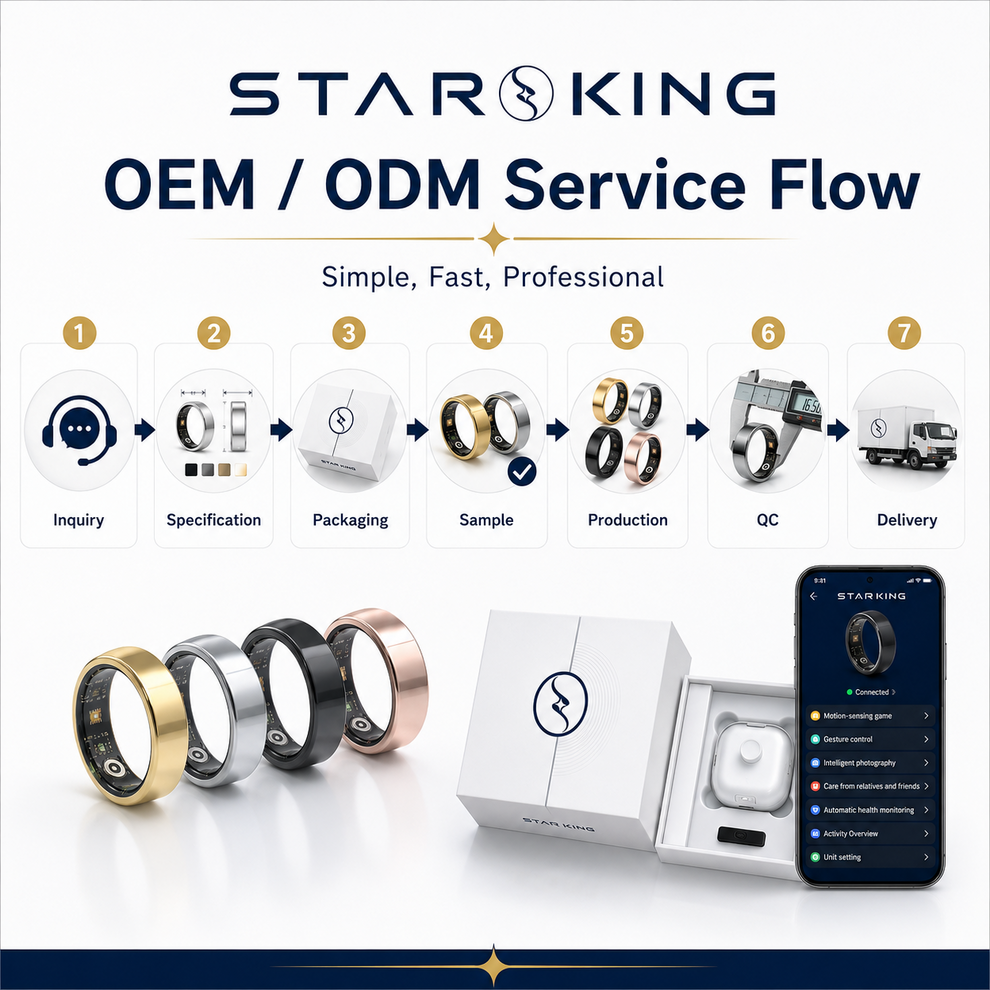
- Step 1: Define the Integration Scope and Use Case
- Step 2: Evaluate Smart Ring Suppliers and Manufacturer Verification
- Step 3: Assess Firmware, SDK, and API Architecture
- Step 4: Plan Data Ownership, Privacy, and Security
- Step 5: Confirm Compliance and Certification Paths
- Step 6: Agree on MOQ, Lead Times, and Commercial Terms
- Step 7: Run a Pilot Before Mass Deployment
- FAQ
Key Takeaways
- Smart ring integration is a multi-layer project: hardware, firmware, mobile app, cloud API, and your platform.
- A white-label ring program should include a documented SDK/API, data export formats, and clear data ownership terms.
- Sensor data from consumer rings is for wellness and informational use; it is not a medical diagnosis unless the product is cleared or approved for that purpose.
- Certification requirements depend on the specific product configuration, radio modules, and target market; buyers should verify with the supplier and a compliance specialist.
- Plan a limited pilot before mass deployment to test data quality, battery life, app integration, and user support processes.
Key Facts for Buyers
| Decision Area | What to Verify | Why It Matters |
|---|---|---|
| Supplier capability | OEM/ODM experience, in-house firmware/app teams, documentation | Determines integration speed and customization depth |
| SDK/API | Data fields, sampling rate, export formats, authentication | Defines how data enters your platform |
| Compliance | CE, FCC, RoHS, UN38.3, MSDS availability per SKU | Required for import and market access |
| Data ownership | Contract terms on raw data, derived data, and user consent | Affects privacy compliance and product liability |
| Commercial | MOQ, lead time, tooling, sample cost | Determines pilot feasibility and scale-up |
Step 1: Define the Integration Scope and Use Case
Start with the clinical or business workflow, not the ring. Ask: what metric does the platform need, how often, and what decision does it support? A corporate wellness dashboard may only need daily step and sleep summaries. A remote monitoring platform may need heart rate, blood oxygen, and temperature trends at higher frequency. These requirements change the hardware tier, battery trade-offs, and data pipeline design.
Write a short integration requirements document covering:
- Required metrics and acceptable update frequency
- Where data must land (your cloud, the supplier’s cloud, or both)
- User onboarding and consent flow
- Device management (who issues, replaces, and supports rings)
- Reporting and alerting rules inside your platform
This document becomes the basis for supplier questions and later for acceptance testing.
Step 2: Evaluate Smart Ring Suppliers and Manufacturer Verification
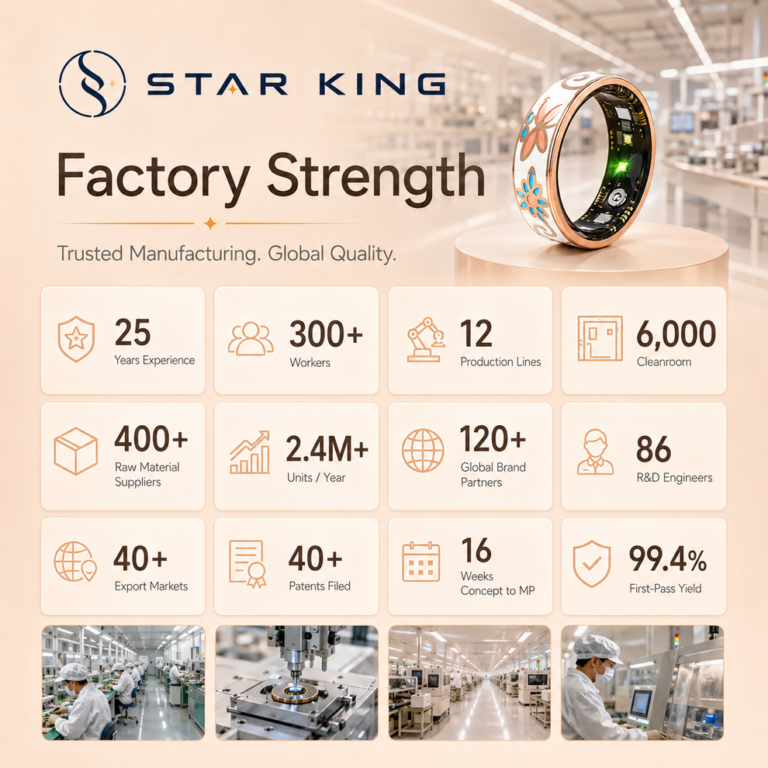
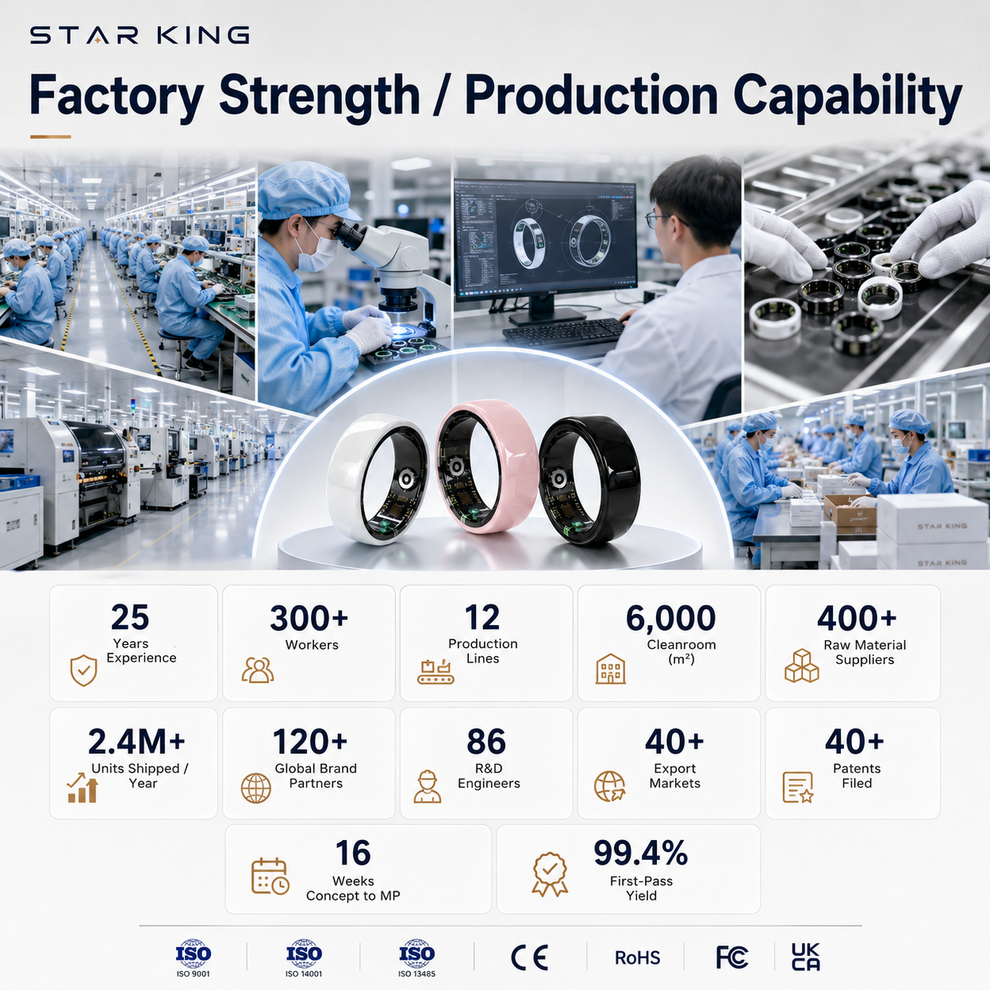
Smart ring integration begins with supplier selection. Many suppliers can assemble a ring; fewer can support a platform integration with firmware customization, app white-labeling, and a stable API. Evaluate suppliers against the following:
- OEM/ODM experience: Ask for examples of private-label projects and the level of customization offered (logo, packaging, app name, firmware behavior).
- Engineering team: Confirm whether firmware and app development are in-house or outsourced. In-house teams typically respond faster to integration requests.
- Documentation: Request SDK/API documentation, data dictionaries, and sample code before committing.
- Manufacturer verification: Use business verification services, request factory audit reports, and confirm the legal entity matches the quotation.
- References: Ask for contacts of existing integration partners [STAR KING TO CONFIRM].
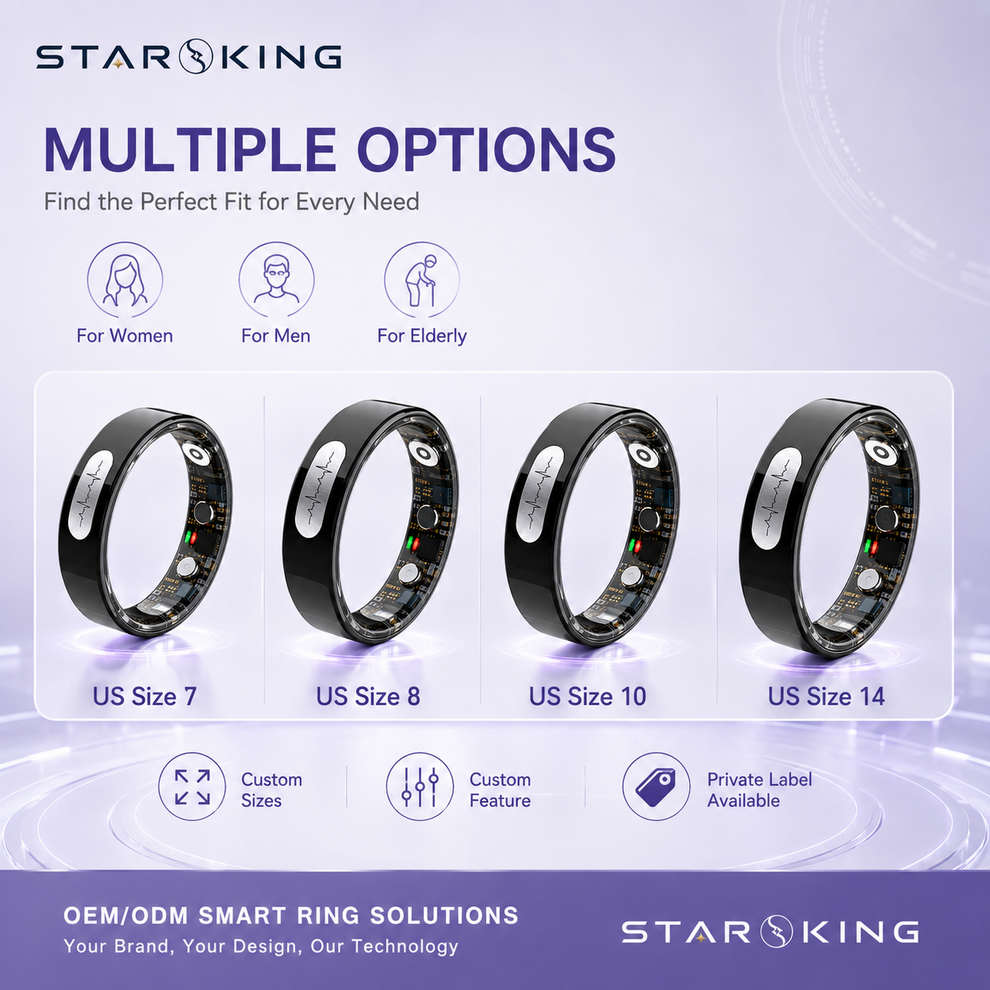
You can explore available form factors on the smart rings product page and compare them against your requirements.
Mid-article soft CTA: If you are still mapping requirements, STAR KING can share sample data formats and integration documentation so your team can assess fit before a formal project starts.
Step 3: Assess Firmware, SDK, and API Architecture
This step determines whether smart ring integration is straightforward or painful. Ask the supplier to describe the data path from sensor to your platform:
- Sensor layer: Which sensors are included (PPG for heart rate and blood oxygen, accelerometer, temperature)? What sampling rates are available?
- Firmware layer: What processing happens on-device (filtering, feature extraction, sleep staging)? Can algorithms be adjusted?
- Mobile app layer: Is there a white-label app? Can it be rebranded? Does it support background sync?
- Cloud/API layer: REST or MQTT? Push or pull? Authentication method? Data retention and export options?
Request a test environment and a sample data set. Validate that timestamps, units, and identifiers match your platform’s model. Poorly documented APIs are a common cause of integration delays.
Step 4: Plan Data Ownership, Privacy, and Security
Health data carries legal weight. Before signing, clarify:
- Who owns raw and derived data?
- Where is data stored, and can it be hosted in your required region?
- How is user consent captured and recorded?
- What happens to data if the contract ends?
Regulations such as GDPR in the EU and HIPAA in the US may apply depending on your customers and use case. HIPAA generally applies to covered entities and their business associates; a wellness app may fall outside it. Buyers should verify their obligations with legal counsel. For general privacy principles, see the OECD Privacy Guidelines as a reference framework.
Step 5: Confirm Compliance and Certification Paths
Certification is product- and market-specific. A ring sold in the EU typically requires CE marking, which may involve the Radio Equipment Directive and EMC requirements. In the US, the FCC regulates radio frequency devices. Lithium batteries in wearables commonly require UN38.3 test reports for transport and an MSDS. RoHS compliance may be required for electronics sold in the EU.
Ask the supplier which certificates are already held for the exact SKU you plan to buy, and which are the buyer’s responsibility. Do not assume that certificates for one model cover another. For official references, see the FCC website and the European Commission CE marking page.
| Market | Typical Requirements | Who Usually Handles It |
|---|---|---|
| EU | CE marking, RoHS, WEEE, battery directives | Often shared; verify per project |
| US | FCC for radio, battery transport rules | Supplier may hold FCC ID; confirm |
| Global transport | UN38.3, MSDS | Supplier provides documents |
Step 6: Agree on MOQ, Lead Times, and Commercial Terms
MOQ, sample cost, and lead time affect pilot design. Typical questions:
- What is the MOQ for a white-label ring with custom branding?
- Is there a separate MOQ for custom packaging or app branding?
- What is the sample lead time versus mass production lead time?
- Are tooling or setup fees required, and who owns the tooling?
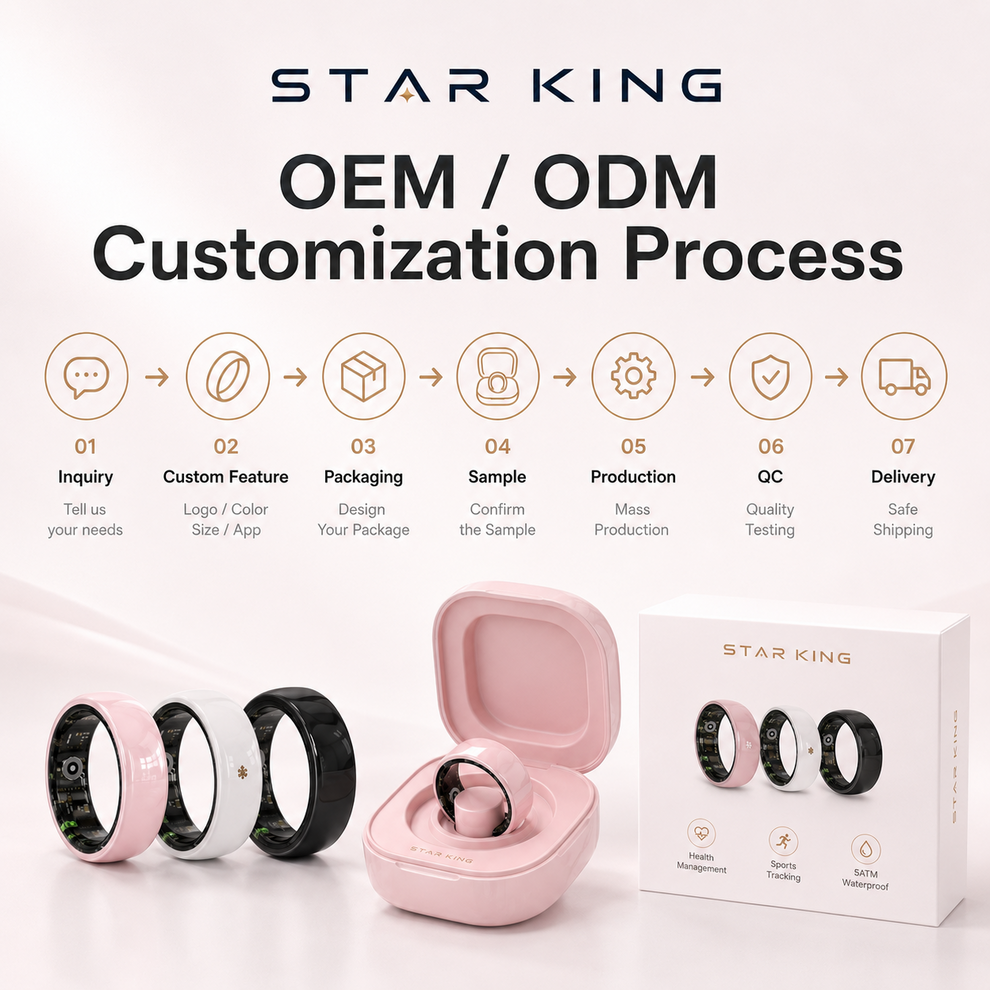
Lead times depend on component availability and customization level. Plan a buffer for certification review and shipping. For planning guidance, see our Private Label OEM/ODM solutions page.
Step 7: Run a Pilot Before Mass Deployment
A pilot answers the questions that documents cannot. Recruit a small user group, deploy rings, and measure:
- Data completeness and sync reliability
- Battery life against your use case
- App integration stability
- User onboarding friction
- Support ticket volume
Define success criteria before the pilot starts. If the pilot reveals gaps, address them with the supplier before committing to a full rollout.
Common Mistakes and Buyer Red Flags
- No SDK documentation: A supplier that cannot provide API docs before purchase is a risk.
- Vague certification answers: “CE available” without specifying the model and test report is a red flag.
- Unclear data ownership: If the contract is silent on data, assume ambiguity will cause problems later.
- Unrealistic lead times: Custom firmware and app changes take time.
- Skipping the pilot: Deploying without a pilot increases support costs and user churn.
Practical Buyer Checklist
- Integration requirements document written
- Supplier OEM/ODM experience verified
- SDK/API documentation received and reviewed
- Data ownership and privacy terms agreed
- Certification status confirmed per SKU and market
- MOQ, sample cost, and lead times documented
- Pilot plan with success criteria defined
FAQ
What does smart ring integration involve?
It involves connecting the ring’s hardware, firmware, mobile app, and cloud API to your platform so health metrics flow into your systems.
Can any smart ring be white-labeled?
Not all. White-label support depends on the supplier’s firmware and app customization options. Confirm before purchase.
Are smart ring health metrics medical-grade?
Consumer smart rings are typically for wellness and informational use. Medical use requires specific regulatory clearance, which buyers should verify.
What certifications are needed?
It depends on the target market and product configuration. Common requirements include CE, FCC, RoHS, UN38.3, and MSDS.
What is a typical MOQ?
MOQ varies by supplier and customization level. Request a quotation for your specific configuration.
How long does integration take?
Timelines depend on API readiness, customization, and certification. A pilot can take weeks; full deployment depends on scale.
Conclusion
Smart ring integration is a structured project, not a single purchase. By defining requirements, verifying suppliers, assessing API architecture, planning data governance, confirming compliance, agreeing on commercial terms, and running a pilot, system integrators can reduce risk and deliver a reliable wearable layer to their platforms.
STAR KING CTA
Ready to evaluate a white-label smart ring for your platform? Request samples and API documentation to start your integration assessment.
Discuss Your Smart Wearable OEM/ODM Project
Planning a smart ring, smart watch, smart band, AI glasses, AI translator, or AI voice mouse project? Contact STAR KING to discuss product positioning, sample testing, customization scope, certification requirements, lead time, and quotation details.

Team Star King

Scan WhatsApp QR code