AI translator OEM: 7 Steps to Source AI Translators for Southeast Asia Startups: The 2026 OEM Guide
AI translator OEM buyers need a supplier evaluation process that checks product fit, OEM/ODM capability, compliance documents, quality control, pricing, lead time, and after-sales support before placing a bulk order.
Table of Contents
Table of Contents
7 Steps to Source AI Translators for Southeast Asia Startups: The 2026 OEM Guide
For a Southeast Asian startup preparing an RFQ, the fastest route to a sellable AI translator is a China-based OEM/ODM partner that supplies the complete hardware platform—processor, microphone array, firmware, companion app, and enclosure—so you can launch a private label product without funding a full R&D cycle. This guide answers the question “how do I source AI translators for my SEA startup?” in seven concrete steps: define your use case, choose an OEM/ODM manufacturing model, negotiate MOQ, test a sample, lock compliance, plan lead time, and protect IP. It is written for founders and procurement leads who are ready to request quotes and need a repeatable process, not a product brochure.
AI translator OEM: Table of Contents
- Short Answer
- Key Takeaways
- Key Facts for Buyers
- What Is an AI Translator Device, and Why SE Asia Leads Demand
- Step 1 — Define the Use Case Before You Contact Suppliers
- Step 2 — Choose Your Manufacturing Model: OEM vs ODM vs Private Label
- Step 3 — Understand MOQ and What Drives Unit Price
- Step 4 — Request Samples and Run a Real Translation Test
- Step 5 — Lock Certification for Your Target Markets
- Step 6 — Plan Lead Time, Tooling, and Shipping
- Step 7 — Protect IP, App Rights, and Brand Assets
- OEM/ODM Decision Table for SEA Startups
- Common Mistakes and Buyer Red Flags
- Practical Buyer Checklist
- FAQ
- Conclusion
Short Answer
Sourcing AI translators as a Southeast Asian startup means choosing a China-based AI translator OEM or ODM partner, confirming a private label route, and validating four things before you place a purchase order: translation accuracy in your SEA languages, MOQ and tooling cost, certification coverage for each destination country, and realistic lead time. Expect a professional RFQ process to take 6–10 weeks from first contact to production-ready sample, with certification and shipping timelines layered on top.
Key Takeaways
- A private label AI translator is usually the fastest, lowest-risk entry for a startup; full ODM is only worth it once you have predictable demand.
- Focus your spec on the languages and scenarios you actually sell into—offline packs, noise handling, and latency matter more than packed feature lists.
- MOQ on AI translators typically depends on whether the enclosure is off-the-shelf or custom-tooled; tooling is a one-time cost, not a per-unit cost.
- CE, FCC, and RoHS are market-dependent; your supplier should provide the test reports for the exact SKU and configuration you import.
- Lithium batteries trigger UN38.3 and MSDS requirements for international freight—plan air vs. sea shipping around these documents.
- Sample testing should include your actual destination languages and a retail-style noise environment, not a quiet office demo.
- Confirm in writing who owns tooling, molds, firmware configuration, and app branding before mass production starts.
Key Facts for Buyers
| Item | Typical Range / Note |
|---|---|
| Focus keyword | AI translator OEM |
| Common manufacturing models | Private label (off-the-shelf hardware + your brand), ODM (modified features/app), OEM (custom design and tooling) |
| Typical MOQ (private label) | Often lower than fully custom builds; exact MOQ to confirm with supplier [STAR KING TO CONFIRM] |
| Typical MOQ (custom tooling) | Higher due to tooling investment; depends on enclosure and finish |
| Certification relevance | CE (EU), FCC (US via Bluetooth/Wi-Fi module approval), RoHS, plus country-specific telecom/battery rules |
| Battery shipping | UN38.3 test summary and MSDS typically required for air/sea freight |
| Sample lead time | Weeks, depending on customization level |
| Production lead time | Varies by order size and component availability |
| Documents to request | Spec sheet, test reports, battery documents, warranty terms, IP/tooling agreement |
What Is an AI Translator Device, and Why SE Asia Leads Demand
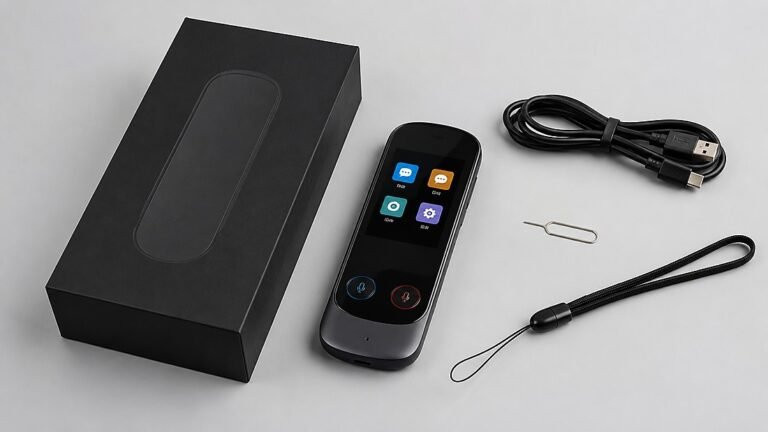
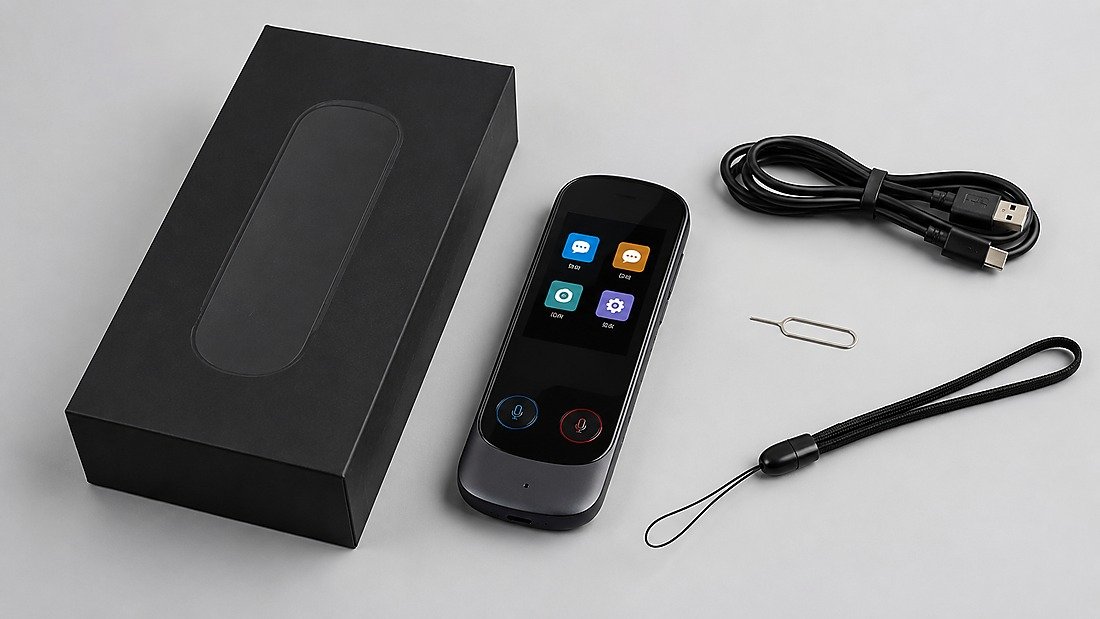
An AI translator device is a handheld or wearable hardware unit that captures spoken audio, runs speech-to-text and machine translation (on-device, cloud, or hybrid), and plays back or displays the translated result—often in near real time. Unlike a phone app, dedicated hardware can offer a simpler interface, offline language packs, better microphone pickup in noisy environments, and a form factor suited to travel, retail counters, corporate reception, and field work.
Southeast Asia is a structurally attractive market for these devices. The region is linguistically dense—Indonesia alone has hundreds of local languages—and cross-border tourism, trade, and labor mobility keep translation demand high. For startup brands, that means a focused product (for example, two-way translation for Vietnamese–English or Thai–Mandarin) can find a real niche without competing against global consumer brands on breadth.
If your roadmap also includes adjacent categories, it helps to understand how suppliers organize product families. STAR KING’s AI translator product line sits alongside AI glasses and voice peripherals, which matters for buyers who want one partner across several SKUs.
[IMAGE PLACEMENT 1 — suggested: close-up of a handheld AI translator in use at a market stall, Southeast Asia setting]Step 1 — Define the Use Case Before You Contact Suppliers
Suppliers quote what you ask for. Vague briefs produce vague quotes, and vague quotes hide cost and risk. Before your first supplier email, write a one-page use case that answers:
- Who uses it? Tourists, retail staff, corporate reception, logistics crews, or healthcare front desks.
- What languages? List destination languages and whether offline operation is required.
- What environment? Quiet meeting room vs. street market vs. vehicle cabin—this drives microphone and noise-handling requirements.
- What form factor? Handheld, earbud-style, wearable, or desk unit.
- What price band? Your realistic retail price tells the supplier which hardware tier fits.
Why this matters at the RFQ stage: the same “AI translator” label can describe hardware with very different processors, microphone arrays, and cloud dependencies. A supplier who understands your use case can recommend a platform that fits your price band instead of quoting a flagship unit you cannot sell profitably.
Define your must-have vs. nice-to-have spec
Split your spec into two lists. Must-haves are the features that make or break the product for your market—for example, support for Bahasa Indonesia and Vietnamese, sub-second perceived latency, and offline packs for the top three languages. Nice-to-haves are features that add cost but not conversion—extra app themes, premium finishes, or secondary sensors. This split is the single most effective way to control your bill of materials during negotiation.
Step 2 — Choose Your Manufacturing Model: OEM vs ODM vs Private Label
There are three common routes, and startups frequently over-invest in the wrong one. Here is how they compare in practice.
| Model | What You Get | Best For | Main Trade-off |
|---|---|---|---|
| Private label | Existing hardware, your logo, packaging, and app skin | Startups validating demand | Limited hardware differentiation |
| ODM | Supplier’s platform plus feature, firmware, or app modifications | Brands with a clear niche spec | Higher MOQ and development time |
| OEM | Custom design, tooling, and full brand ownership | Established brands with forecast volume | Tooling cost and long lead time |
For most Southeast Asian startup brands, private label is the correct first step: it lets you test pricing, channels, and messaging with real customers before committing to tooling. Once you have repeatable sales, ODM customization—custom wake phrases, branded app, region-specific language packs—becomes the natural upgrade. Full OEM custom design is usually justified only when your differentiation depends on industrial design or a proprietary feature, and when you can absorb tooling cost and longer timelines.
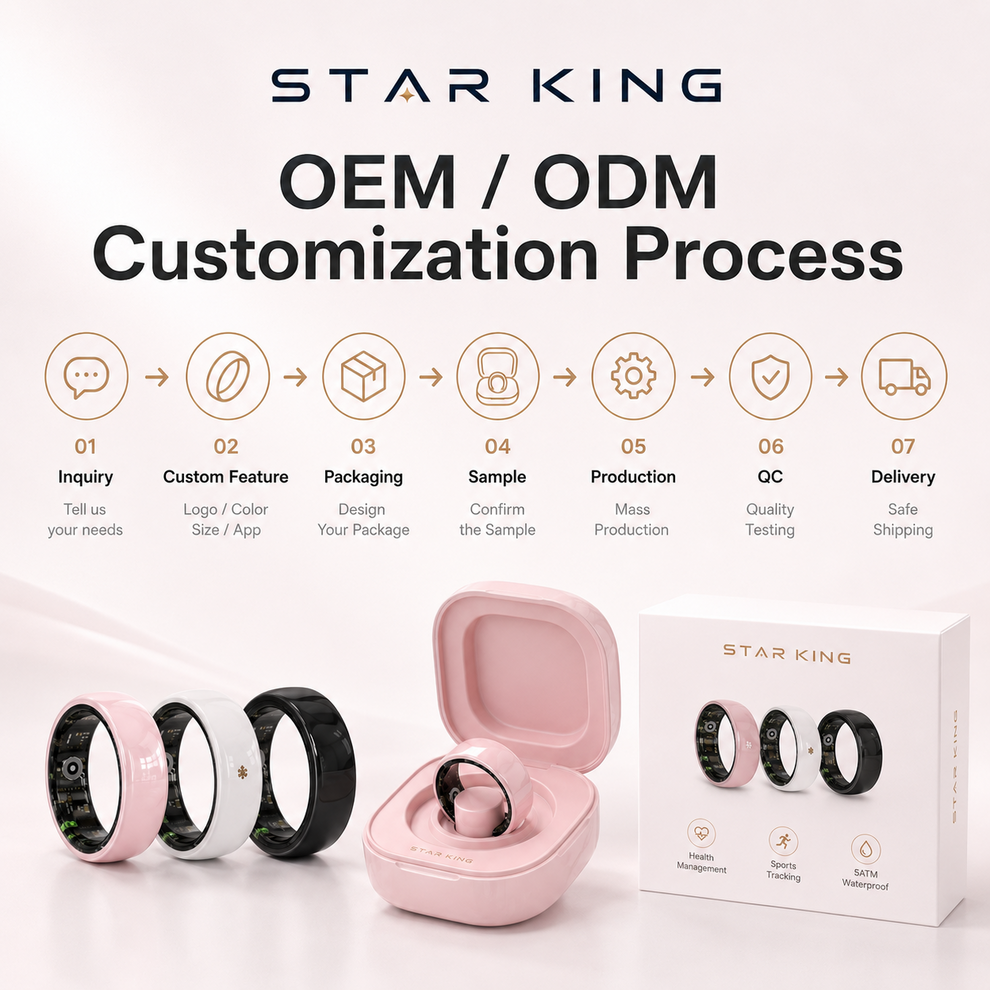
If you are still mapping this decision, STAR KING’s overview of private label OEM/ODM solutions is a practical reference for what each model includes and where customization boundaries usually sit.
How customization layers stack
Customization is not binary. Typical layers, from lightest to heaviest: logo printing, packaging design, app splash screen and branding, firmware wake word and default languages, enclosure color and finish, and finally mechanical tooling for a new shape. Each layer moves you further from “private label” toward “OEM” and adds cost, MOQ, and lead time. Decide deliberately which layers you need in your first order.
Step 3 — Understand MOQ and What Drives Unit Price
MOQ questions dominate RFQ conversations, and the honest answer is that MOQ follows the customization layer. A private label unit with your logo and packaging typically has a lower minimum than a build with custom tooling, because tooling is amortized across the order.
Unit price on AI translators is driven by several factors buyers should isolate during negotiation:
- Processor and memory tier — offline translation support usually requires more capable hardware than cloud-dependent units.
- Microphone array and audio processing — noise handling in real environments is a hardware and firmware cost, not a software afterthought.
- Connectivity — Wi-Fi, Bluetooth, eSIM or SIM variants change module cost and certification scope.
- Enclosure and finish — custom tooling and premium finishes add both one-time and per-unit cost.
- Packaging — custom retail packaging has its own MOQ, often separate from the device MOQ.
- Language pack breadth — extensive offline language coverage can affect licensing and storage requirements.
Ask your supplier to quote a base configuration and then list each optional layer as a separate line item. This “layered quote” is far more useful than a single blended price, because it lets you decide where to spend and where to cut.
If you are comparing multiple platforms, request a structured quote that separates hardware, branding, certification support, and packaging—STAR KING can prepare a quote aligned to your target configuration.
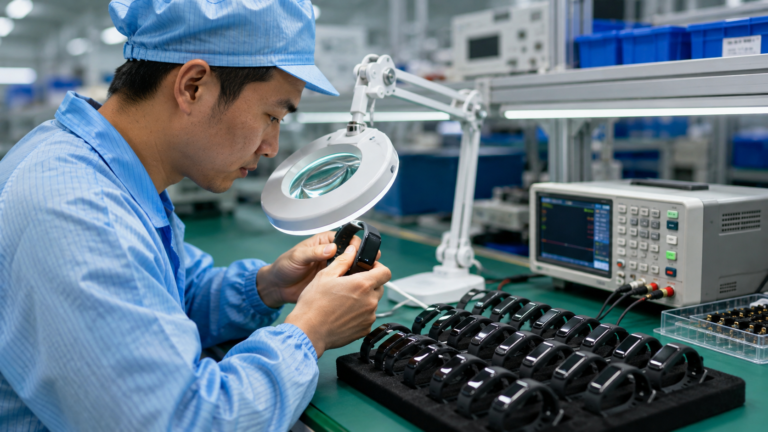
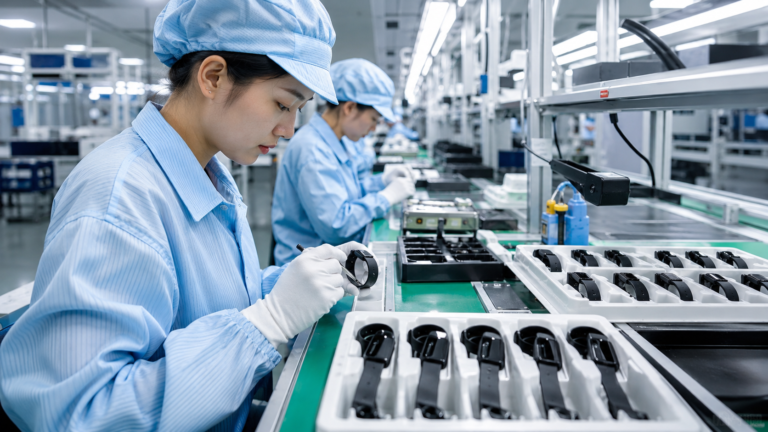
[IMAGE PLACEHOLDER 2 — suggested: production line or QC bench with translator devices being tested]Step 4 — Request Samples and Run a Real Translation Test
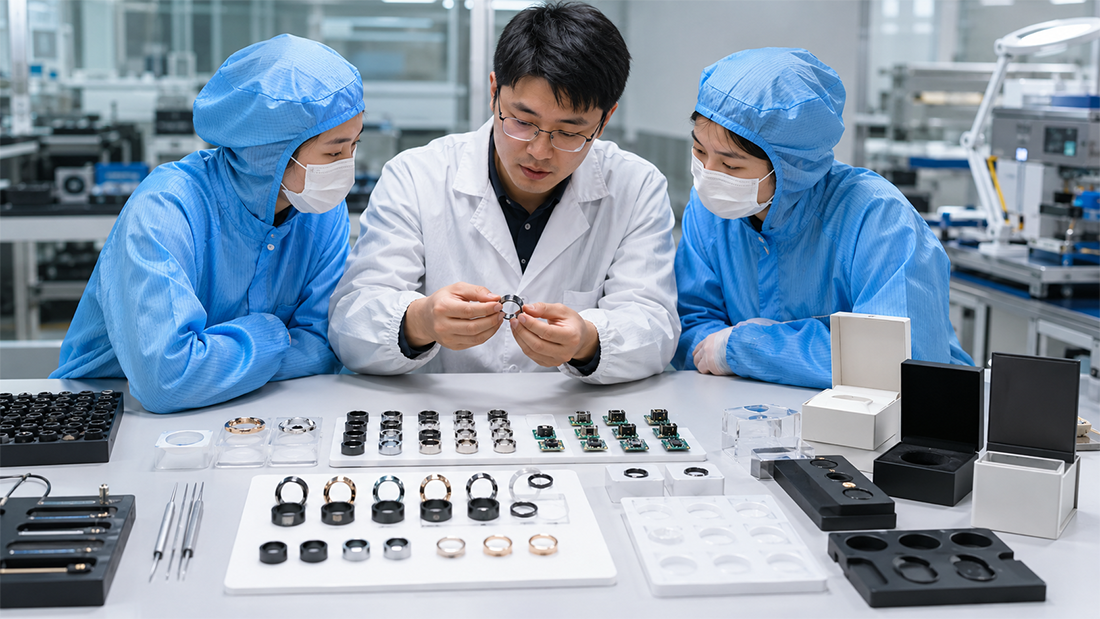
A sample is your only reliable proof of translation quality. Demo videos are edited; a unit in your hand is not. Build a short, repeatable test protocol so different supplier samples are compared fairly.
A practical sample test protocol
- Language accuracy: Test your actual destination language pairs, including at least one regional dialect or accent. Use scripted sentences with numbers, addresses, and proper nouns.
- Latency: Measure perceived delay between end of speech and start of playback. Latency above roughly two seconds feels broken in a live conversation.
- Noise handling: Test in a café, market, or on a street—not a quiet office. Note how often you must repeat yourself.
- Offline behavior: Turn off Wi-Fi and confirm whether your required languages still work.
- Battery: Run continuous translation until shutdown and record real-world runtime against the spec.
- App and pairing: Confirm pairing stability, account setup, and firmware update flow.
- Build quality: Check buttons, ports, speaker clarity, and enclosure fit.
Document results in a table and share findings with the supplier. Suppliers who respond with firmware fixes or configuration changes are usually the ones you want to scale with. If the sample cannot meet your core language requirements, no price advantage compensates for it.
Step 5 — Lock Certification for Your Target Markets
Certification is where Southeast Asian startups most often underestimate cost and time. Requirements depend on the destination country, the product’s wireless features, and its battery. Statements like “CE/FCC approved” must always be read as “for a specific SKU and configuration”—a change in radio module, battery, or charging circuit can invalidate prior approvals.
At minimum, clarify with your supplier:
- CE for European markets, where the device falls under relevant EU directives.
- FCC for the United States, particularly where radios and Bluetooth are involved.
- RoHS for hazardous-substance restrictions in electronics.
- UN38.3 and MSDS for lithium battery transport, which is typically required for air and sea freight.
- Country-specific approvals in your SEA target markets—telecom or standards bodies may require local registration or type approval.
Buyers should verify which reports exist for the exact configuration they intend to import, and request the documents before production. For official reference, the FCC equipment authorization database and the EU’s CE marking guidance describe how these frameworks apply. Note that this article is not legal advice; certification obligations typically depend on your product configuration and destination market, and buyers should verify with a qualified compliance consultant or the relevant authority. Practical battery and radio approvals also reference standards published by organizations such as the Bluetooth SIG.
For a broader checklist on testing and documentation, see STAR KING’s resources on quality and compliance at the blog.
Step 6 — Plan Lead Time, Tooling, and Shipping
Lead time is a sum of several clocks, not one number. Ask your supplier to break it down: sample or tooling time, component lead time, production run time, QC and aging, packaging, and freight. For SEA destinations, freight mode matters—air is faster but constrained by lithium battery documentation; sea is cheaper but adds transit time.
| Timeline Element | What Drives It | How to Reduce Risk |
|---|---|---|
| Sample lead time | Customization level | Start with private label sample first |
| Tooling | Whether a new enclosure is required | Avoid tooling in first order if possible |
| Component availability | Processor, radio, and battery supply | Confirm allocations before PO |
| Production | Order size and line scheduling | Book capacity early for peak seasons |
| QC / aging | Test protocol depth | Agree on inspection criteria in advance |
| Freight | Air vs. sea, battery documents | Prepare UN38.3/MSDS early |
Build your launch plan around the longest clock, not the shortest. If certification or freight documents are on the critical path, start them while samples are still being reviewed.
Step 7 — Protect IP, App Rights, and Brand Assets
Startups often focus on the device and forget the software and brand layer. Clarify in writing:
- App ownership and branding: Is your app a white-label build of the supplier’s app, or a standalone app with your own store listing?
- Data handling: Where does translation data flow, what is stored, and what privacy obligations apply in your market?
- Tooling and mold ownership: Who owns custom molds if you later change suppliers?
- Firmware configuration rights: Can you control default languages, wake words, and update cadence?
- Exclusivity: If you invest in tooling or a niche language pack, confirm whether the supplier can sell the same configuration to competitors.
Put these points in the purchase agreement, not just email threads. A written IP clause is cheap insurance against a future dispute.
OEM/ODM Decision Table for SEA Startups
| Your Situation | Recommended Model | Why |
|---|---|---|
| Pre-launch, testing market fit | Private label | Lowest cost and fastest validation |
| One proven language pair, growing sales | ODM customization | Differentiation without full tooling |
| Multi-country roll-out, forecast volume | OEM with tooling | Brand and design ownership |
| Corporate or education tender | ODM + compliance package | Documentation and customization requirements |
| Retail chain with private label program | Private label or ODM | Packaging and brand consistency at scale |
Common Mistakes and Buyer Red Flags
Common mistakes
- Requesting quotes without a defined use case, which makes every quote incomparable.
- Assuming “AI translator” quality is uniform across suppliers—latency and noise handling vary widely.
- Choosing the lowest quote without checking whether certification documents cover your SKU and market.
- Over-customizing the first order with tooling before validating demand.
- Ignoring the battery shipping documents until the container is booked.
- Leaving app branding, data handling, and tooling ownership undefined.
Buyer red flags
- Supplier cannot name the certification reports available for the exact configuration.
- No written MOQ or lead-time commitment, only verbal estimates.
- Translation claims that cannot be verified with a sample in your destination language.
- Unwillingness to discuss tooling ownership or IP terms before you pay a deposit.
- Pressure to pay a large deposit before you have tested a sample.
Practical Buyer Checklist
- Use case documented, with must-have and nice-to-have specs separated.
- Manufacturing model chosen (private label, ODM, or OEM) with matching MOQ confirmed.
- Layered quote received: hardware, branding, packaging, certification support.
- Sample tested across your real destination languages, in a noisy environment.
- Latency, battery runtime, and offline behavior measured and recorded.
- Certification documents identified for the exact SKU and target markets; local SEA approvals checked.
- UN38.3 and MSDS documents requested for battery freight.
- Lead time broken down by stage; freight mode and documents planned.
- IP, tooling ownership, app branding, and data handling agreed in writing.
- Warranty, spare parts, and after-sales process confirmed.
STAR KING works with startup brands across Southeast Asia on AI translator sourcing and private label programs. If you are preparing an RFQ, our team can review your configuration and provide a tailored quotation including customization options and certification support.
FAQ
What MOQ should a Southeast Asian startup expect for AI translators?
MOQ depends on the customization level. Private label units with your logo and packaging generally carry a lower minimum than builds requiring custom tooling, because tooling cost is amortized across the order. Ask for the MOQ for each configuration rather than a single number.
Can I get a private label AI translator with my own app?
Many suppliers offer a white-label or branded app build of their companion app. Confirm whether you receive your own store listing, how firmware updates are handled, and where translation data is stored before signing.
Which certifications do I need for Southeast Asian markets?
It varies by country and by the product’s wireless and battery features. CE and FCC are commonly referenced for EU and US sales, while your SEA destination markets may require local telecom or standards registration. Buyers should verify requirements for the exact configuration with a compliance specialist.
How long does shipping a battery-powered translator take?
Lithium battery products typically require UN38.3 test documentation and an MSDS for air or sea freight. Air is faster but more document-sensitive; sea is cheaper with longer transit. Plan document preparation early to avoid delays.
How do I compare quotes from different AI translator suppliers?
Request layered quotes that separate hardware, branding, packaging, and certification support, then test a sample against the same language and noise conditions. Comparable quotes are built from identical specs, not identical prices.
Should I invest in custom tooling on my first order?
Usually not. Validate demand with a private label or light ODM configuration first, then invest in tooling when you have repeatable sales and a clear design requirement.
Conclusion
Sourcing AI translators for a Southeast Asian startup is a process, not a single negotiation. Define your use case, pick the right manufacturing model, understand what drives MOQ and unit cost, test a real sample in your destination languages, lock certification, plan lead time and battery shipping, and protect your IP. Handled in that order, your RFQ becomes a controlled, comparable exercise instead of a scramble across incompatible quotes.
Ready to Build Your AI Translator Line?
If you are at the RFQ stage and want a quote built around your target languages, price band, and launch market, speak with STAR KING. We can compare configurations, outline customization options, and confirm certification requirements for your destination markets. Request a quotation and share your spec—our team will respond with a structured proposal for your Southeast Asia launch.
Discuss Your Smart Wearable OEM/ODM Project
Planning a smart ring, smart watch, smart band, AI glasses, AI translator, or AI voice mouse project? Contact STAR KING to discuss product positioning, sample testing, customization scope, certification requirements, lead time, and quotation details.

Team Star King

Scan WhatsApp QR code