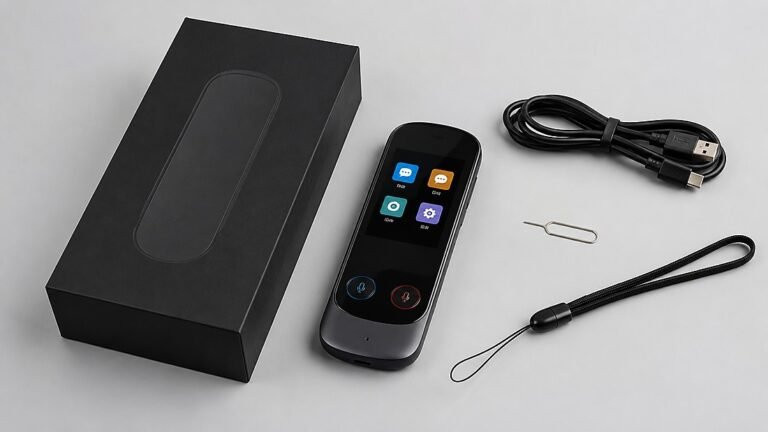
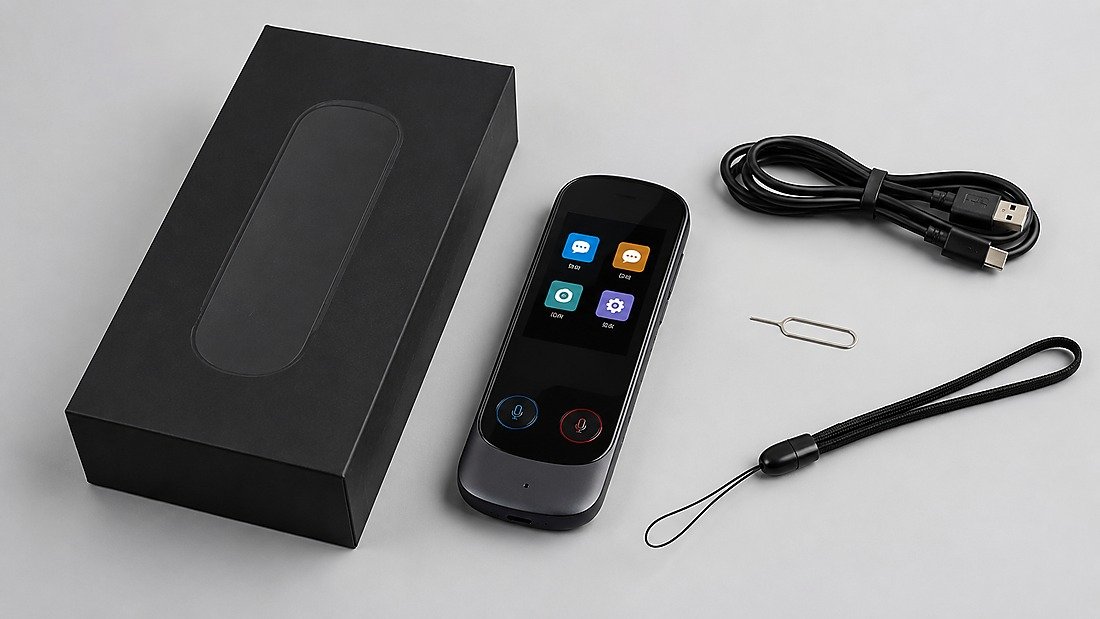
AI Translator OEM Guide: 7 Checks for Private-Label Brands Entering Southeast Asia
AI Translator OEM Guide: 7 Checks for Private-Label Brands Entering Southeast Asia
Direct answer: Choosing an AI translator OEM partner for Southeast Asia means auditing seven areas before you sign: language coverage and offline capability, hardware and chipset specification, firmware and app customization rights, MOQ and landed cost, sample validation, certification and battery shipping compliance, and post-sale support. Private-label brands should confirm each in writing rather than rely on a supplier’s summary sheet, because translation quality, regulatory needs, and duty treatment vary by country and by device configuration.
Table of Contents
Table of Contents
Southeast Asia is one of the fastest-moving regions for multilingual communication devices. A private-label brand selling into Indonesia, Vietnam, Thailand, the Philippines, Malaysia or Singapore usually competes on language coverage, local retail price points, and after-sales credibility — not on brand heritage. That makes supplier selection the single most consequential decision in your product launch. This guide is written for founders, category managers and sourcing teams comparing AI translators from Chinese OEM/ODM factories, and it focuses on what you should verify rather than what you should believe.
One framing point before the checklist: an AI translator is a hybrid of consumer electronics, cloud software, and — in some models — a cellular device. That combination means your supplier selection must cover hardware, firmware, app, connectivity, certification and battery logistics at the same time. A partner strong in one area but weak in another creates downstream risk that is expensive to fix after tooling and packaging are locked.
Table of Contents
- Short Answer
- Key Takeaways
- Key Facts for Buyers
- What Private-Label Brands Should Look For in an AI Translator OEM Partner
- 1. Language Coverage and Offline Translation Capability
- 2. Hardware, Chipset and Acoustic Specification
- 3. Firmware, App and Branding Customization Rights
- 4. MOQ, Unit Cost and Landed Cost in Southeast Asia
- 5. Sample Development and Validation Before Mass Production
- 6. Certification, Battery Safety and Import Compliance
- 7. Lead Time, Warranty and After-Sales Support
- Comparison Table: Supplier Types for AI Translator OEM
- Common Mistakes and Buyer Red Flags
- Practical Buyer Checklist
- FAQ
- Conclusion
Short Answer
For a private-label launch in Southeast Asia, prioritize a supplier that can demonstrate (a) confirmed offline language packs for the languages your customers actually speak, (b) a chipset and microphone array strong enough for noisy real-world use, (c) documented rights to customize firmware, app and packaging, (d) transparent MOQ and landed cost math, and (e) verifiable certification and battery shipping documentation for each target country. Ask for sample units and paperwork before committing to tooling or mass production.
Key Takeaways
- Translation devices are sold on trust; buyers return products that mistranslate in real conditions, so validation should happen before mass production, not after.
- “Offline translation” can mean anything from a small phrasebook to full neural translation. Ask for the specific language list and test it yourself.
- MOQ, unit cost and landed cost are three different numbers. Southeast Asian import duties, VAT and last-mile costs change the retail price ceiling significantly.
- Firmware and app rights are the difference between a private-label product and a rebadged generic device.
- Certification requirements depend on product configuration, radio modules and target country; buyers should verify current rules rather than assume a single global certificate covers everything.
- Battery-containing devices typically require UN38.3 test documentation and, in many markets, MSDS documentation for shipment.
- The strongest supplier conversations are structured — a written checklist gets clearer answers than a general inquiry email.
Key Facts for Buyers
| Decision Area | What to Verify | Typical Risk if Skipped |
|---|---|---|
| Language coverage | Exact offline and online language list; test phrases in target accents | High return rate; poor reviews in local marketplaces |
| Hardware spec | Chipset, mic array, speaker, display, battery capacity | Slow response, poor accuracy in noisy environments |
| Customization | Firmware, app, logo, packaging rights in writing | Product indistinguishable from generic competitors |
| MOQ & cost | MOQ, unit price, tooling, packaging, freight, duty, VAT | Retail price cannot compete; margin erosion |
| Samples | Golden sample sign-off, pre-production sample, batch consistency | Mass production differs from approved sample |
| Certification | CE/FCC/RoHS/UN38.3 and country-specific requirements | Customs delays, marketplace takedowns |
| Lead time & support | Production schedule, warranty terms, spare parts policy | Stockouts and unresolved field failures |

What Private-Label Brands Should Look For in an AI Translator OEM Partner
An AI translator OEM partner is not just a hardware factory. The right partner combines three capabilities: consumer-electronics manufacturing, firmware and app development, and connectivity or cloud integration for translation services. When you evaluate suppliers, separate these capabilities and confirm which ones they own, which ones they outsource, and which ones they resell from a third party. The answer affects your ability to customize, your unit cost, your upgrade path, and your exposure if a third-party translation engine changes its terms.
For private-label brands, the practical test is simple: can this supplier give you a product that looks, behaves and is supported as your own brand — and can they show evidence of doing it before? General hardware capability claims are easy to make; documentation, sample history and structured answers to your checklist are harder to fake.
If you are also evaluating adjacent categories such as AI smart glasses or voice input peripherals, the same evaluation framework applies, because firmware and app support requirements are structurally similar.
1. Language Coverage and Offline Translation Capability
“Multilingual” is a marketing word, not a specification. Ask for the complete list of supported languages, and ask separately which of those work offline. In Southeast Asia, a device that only translates well online is a liability in areas with inconsistent mobile data, and a device that only handles a handful of offline phrases will disappoint buyers who compare it against phone apps.
What to ask
- Which languages are supported online, and which are supported offline?
- What is the claimed accuracy tier, and how was it measured?
- Can the supplier provide test phrases in Indonesian, Vietnamese, Thai, Tagalog, Malay and regional English accents?
- How are translation engines updated, and can engine updates be pushed without a full firmware release?
- What happens to translation quality or availability if a third-party cloud engine changes its service terms?
Do not accept a feature slide as proof. Request a sample unit and test it in a noisy room, on a call, and with two non-native speakers. Buyers who skip this step often discover the real-world accuracy gap after mass production, when remediation is far more expensive.
2. Hardware, Chipset and Acoustic Specification
Translation devices live and die on responsiveness and audio quality. The chipset determines processing speed and whether on-device translation is feasible; the microphone array and noise handling determine what the engine actually receives; the speaker and display determine whether the user experience feels premium or cheap.
Specification checks
- Chipset model and whether it supports on-device (offline) inference, not just cloud calls.
- Microphone count and beamforming or noise-reduction capability.
- Speaker output quality for two-way conversation scenarios.
- Display type, touch responsiveness and sunlight readability if applicable.
- Battery capacity against realistic usage — continuous translation drains batteries faster than standby.
- Connectivity options: Wi-Fi, Bluetooth, and whether cellular or eSIM variants exist. Cellular variants introduce country-specific carrier and certification questions.
Where possible, ask the supplier to explain trade-offs rather than just list specs. A partner who can articulate why a given chipset was chosen — battery life versus speed versus offline capability — is usually easier to work with during customization than one who only quotes a bill of materials.
3. Firmware, App and Branding Customization Rights
Private-label value comes from differentiation. If your AI translator uses the same app, same boot logo, same packaging and same user interface as every other buyer’s device, you are competing on price alone. Confirm in writing what the supplier will customize and what remains shared.
Customization areas to clarify
- Boot logo, splash screen and device-level branding.
- App name, app icon, and whether the app can be published under your developer account.
- Whether the app is white-label or shared, and whether data is separated by brand.
- Firmware customization scope, and whether custom firmware affects warranty or certification.
- Availability of SDK or API access for integrating translation into your own ecosystem.
- Data processing and storage locations, which matter for enterprise and education buyers in some markets.
- Packaging, manual, insert and label customization.
Ownership of custom tooling and molds should also be discussed early. If the supplier funds tooling, ownership may default to them; if you fund it, you should document your rights to the tooling and to continued supply. These terms belong in the contract, not in a verbal understanding.
For brands building a broader portfolio, app and firmware customization patterns are similar across categories. Reviewing how a partner approaches AI office productivity integration can reveal whether their software team is genuinely capable or simply reselling a partner’s app.
4. MOQ, Unit Cost and Landed Cost in Southeast Asia
Three numbers matter, and they are not the same number.
- Unit cost (FOB): the price per device at the factory gate.
- Landed cost: unit cost plus freight, insurance, import duty, VAT or sales tax, customs clearance, and last-mile distribution.
- Retail ceiling: what local buyers will realistically pay, which varies widely between Singapore, Indonesia, Vietnam, Thailand, the Philippines and Malaysia.
MOQ negotiation points
- Standard MOQ for a private-label run versus a premium for smaller pilot batches.
- Whether MOQ applies per model, per color, or per packaging variant.
- Whether tooling, packaging plates or logo setup add one-time fees.
- Whether the supplier offers a trial order for first-time buyers, and at what premium.
Duty rates and tax treatment depend on the specific product classification and destination country, and they change. Buyers should verify current rates with a customs broker or the relevant national customs authority rather than rely on a supplier estimate. As a general rule, plan your pricing model around a landed-cost buffer, because freight and duty assumptions are the most common source of margin surprises in Southeast Asian launches.
If you are also planning wearable products, combining shipments across categories can reduce freight cost per unit. It is worth asking your supplier whether they support mixed-category orders — see private label OEM/ODM solutions for how consolidated programs typically work.
5. Sample Development and Validation Before Mass Production
Sample development is where trust is built. A disciplined process looks like this:
- Specification agreement: a written spec sheet both sides sign.
- Initial sample: a unit matching the spec, used to identify gaps.
- Golden sample: the reference unit that mass production must match.
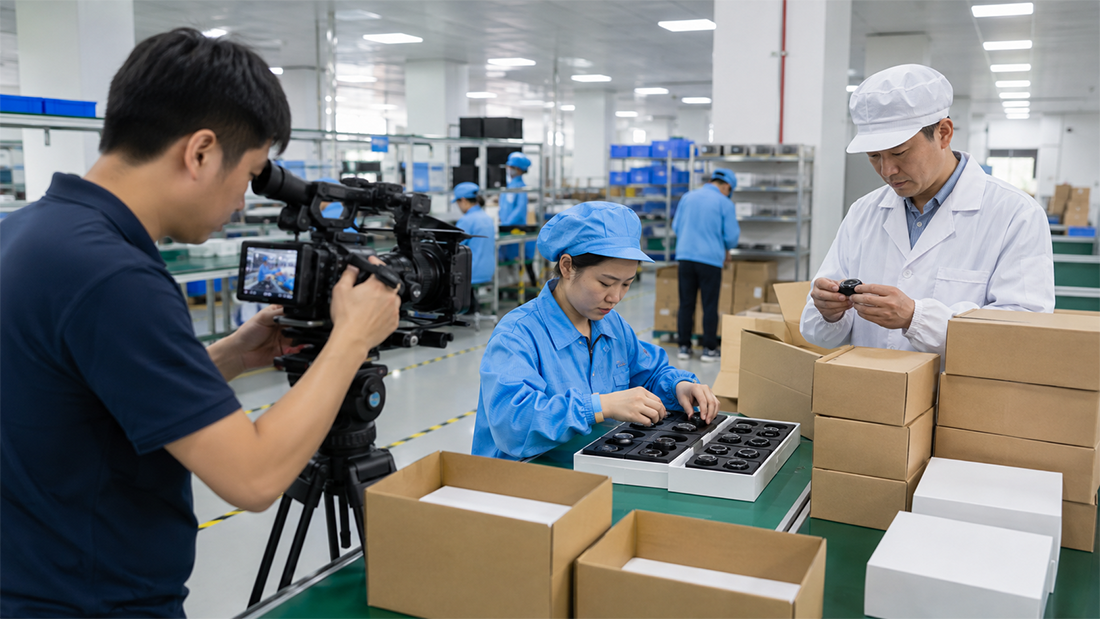
- Pre-production sample: a unit from the actual production line, with final firmware and packaging.
- Batch consistency check: verify that later production runs match the golden sample.
Test the golden sample against the scenarios your customers will use: conversation in a market, classroom, hospital or vehicle; two-way dialogue with non-native accents; battery behavior over a realistic day; Bluetooth pairing with common phones; and app onboarding for a first-time user. Document every failure — these are your change requests, and they are much cheaper to resolve before tooling and packaging are finalized.
Ask how the supplier handles firmware versions across a production run. If a firmware update ships mid-run, you need to know whether earlier units can be updated by the user or must be returned.
6. Certification, Battery Safety and Import Compliance
Certification requirements for AI translators depend on the product configuration, the radio modules used, and the target market. A single global certificate rarely covers everything, and buyers should verify the current requirements for each country rather than assume a supplier’s general statement applies to their exact model.
Areas to confirm
- CE marking requirements for the EU, if you plan to ship there in addition to Southeast Asia.
- FCC requirements for the United States, relevant if you plan parallel launches.
- RoHS compliance for restricted substances, which is broadly expected in consumer electronics supply chains.
- UN38.3 test documentation for lithium batteries, which is commonly required for air shipment.
- MSDS documentation for battery-containing shipments.
- Country-specific radio or telecom approvals where devices transmit wirelessly.
Ask which certifications are held by the supplier, for which specific model, and whether your customized configuration requires re-testing. Customization that changes the radio module, battery or enclosure can invalidate an existing certificate. Confirm documentation is available for the exact SKU you intend to import.
For official reference, buyers can consult the FCC Equipment Authorization database for US radio-frequency device authorization information, and the IATA Dangerous Goods Regulations framework for lithium battery shipping requirements. National customs and standards bodies in each Southeast Asian market govern local import rules, and those should be verified directly.
Do not treat any certification as universal. A supplier’s CE report for one model does not automatically apply to your customized version, and a US authorization does not imply compliance in any Southeast Asian country.
7. Lead Time, Warranty and After-Sales Support
Translation devices have software components, which means after-sales support is more complex than for a simple accessory. Confirm the support model before you commit.
- Production lead time: distinguish sample lead time from mass production lead time, and ask about lead time during peak manufacturing periods.
- Warranty terms: duration, what is covered, and who pays return freight.
- Firmware support window: how long the supplier will issue updates, and whether updates are mandatory or optional.
- Spare parts policy: availability of batteries, screens, chargers and accessories for repair or replacement.
- Defect handling: defect rate thresholds, replacement policy, and how claims are documented.
- Technical escalation path: who your team contacts when a field issue requires firmware-level investigation.
Support quality is hard to assess from a catalog. A practical test is to ask a detailed technical question during the sourcing process and observe how quickly and how specifically the supplier responds. That response is a preview of your after-sales experience.
Comparison Table: Supplier Types for AI Translator OEM
| Supplier Type | Strengths | Limitations | Best Fit |
|---|---|---|---|
| Trading company | Fast quotes, wide catalog, low entry effort | Limited customization, limited firmware control, unclear manufacturing origin | Small test orders, generic resale |
| Hardware OEM only | Strong manufacturing, competitive unit cost | App and firmware often outsourced; limited software flexibility | Brands with in-house software teams |
| Software-led supplier | Strong app and translation integration | May depend on third-party hardware partners; manufacturing visibility limited | App-first brands |
| Integrated OEM/ODM partner | Hardware, firmware, app, packaging and compliance under one roof | Higher MOQ and slower initial onboarding | Private-label brands building a durable product line |
| Brand-owned factory | Deep vertical control | Rarely accepts external private-label work | Not typically available to private labels |
Most private-label brands in Southeast Asia land on the integrated OEM/ODM option because it reduces coordination risk — one partner, one schedule, one point of accountability for hardware, software and packaging. The trade-off is that onboarding takes longer and the first order is usually larger.
Common Mistakes and Buyer Red Flags
Common mistakes
- Accepting a language list without testing offline performance.
- Comparing FOB prices without building a landed-cost model for each target country.
- Assuming a supplier’s existing certificate applies to a customized model.
- Skipping the golden sample, then discovering spec drift in mass production.
- Using a shared app and shared boot logo, then wondering why the product feels generic.
- Not documenting tooling ownership, then losing leverage at renewal.
- Failing to confirm battery shipping documentation before booking freight.
Red flags
- Unwillingness to provide a sample unit or a written specification.
- Vague answers about which certifications apply to which model.
- No clear answer on who owns custom firmware, app skins or tooling.
- Pressure to commit to a large order before sample validation.
- Inability to explain what happens if a third-party translation engine changes its service.
- Slow or generic responses to specific technical questions.
Practical Buyer Checklist
| # | Item to Confirm | Evidence Required |
|---|---|---|
| 1 | Offline and online language list | Written spec + sample test results |
| 2 | Chipset, mic array, battery, connectivity | Spec sheet for the exact SKU |
| 3 | Firmware, app, logo and packaging customization | Contract language defining scope and ownership |
| 4 | MOQ, unit price, tooling and packaging fees | Written quotation with line items |
| 5 | Landed cost per target country | Freight quote + verified duty and tax rates |
| 6 | Golden sample and pre-production sample | Signed sample approval record |
| 7 | Certification and battery shipping documents | Certificates and test reports for the exact model |
| 8 | Lead time, warranty and spare parts policy | Written terms, including escalation path |
| 9 | Software update policy and support window | Defined update commitment or best-effort statement |
| 10 | Tooling and mold ownership | Documented ownership clause |
If your roadmap extends beyond a single translator SKU, compare how the same supplier handles adjacent products such as AI voice input devices or wearable categories. A partner able to support multiple categories consolidates your sourcing effort and often improves your commercial leverage.
FAQ
What MOQ should a private-label brand expect for an AI translator?
MOQ depends on whether the device uses standard tooling and packaging or custom design. Standard models with logo and packaging customization typically have lower MOQ than fully custom enclosures. Buyers should ask for MOQ per model, per color and per packaging variant, plus any one-time setup fees. [STAR KING TO CONFIRM]
How do I verify offline language support before ordering?
Request a sample unit and test the specific phrases and accents your customers use, in an environment with no data connection. Written language lists are a starting point, but only a live test shows real-world accuracy. Ask whether offline quality differs from online quality, because it often does.
Does an existing CE or FCC certificate cover my customized version?
Not necessarily. Changes to the radio module, battery, enclosure or power system can require re-testing, and certification requirements differ by market. Buyers should confirm which certificates apply to the exact SKU and configuration they plan to import, and should verify current requirements for each destination country rather than assume a global certificate is sufficient.
What documents are typically needed to ship AI translators by air?
Lithium battery shipments commonly require UN38.3 test documentation and, in many cases, MSDS documentation. Requirements depend on battery type, capacity and carrier policy. Confirm documentation is available for your specific model before booking freight, and verify current rules with the carrier and the relevant authority.
Can I publish the translator app under my own brand account?
This should be confirmed contractually. Some suppliers offer white-label apps that can be published under the buyer’s developer account; others use a shared app where brand separation is limited. The answer affects user data handling, update control and your ability to differentiate. [STAR KING TO CONFIRM]
What is a realistic lead time for a first private-label production run?
Lead time depends on customization depth, tooling status and component availability. A first run with custom packaging and firmware typically takes longer than a repeat order. Buyers should request a schedule that separates sample lead time, pre-production approval and mass production, and should plan a buffer for regulatory or shipping delays.
How should I compare two suppliers with similar specs and prices?
Compare customization depth, firmware and app control, certification documentation for your exact SKU, warranty terms, spare parts policy and responsiveness to technical questions. If specs and prices are close, the deciding factor is usually software control and support quality, not hardware.
Conclusion
Selecting an AI translator OEM partner for Southeast Asia is a structured exercise, not a relationship built on brochures. The seven checks in this guide — language coverage, hardware spec, customization rights, MOQ and landed cost, sample validation, certification and battery compliance, and after-sales support — cover the decisions that most often determine whether a private-label launch succeeds or stalls. Each one should be confirmed in writing, tested where possible, and reviewed against the specific rules of each destination market, because requirements vary by country and by product configuration.
If you are still comparing candidates, start with the checklist above and score each supplier against it. A supplier that answers every item clearly, provides evidence for the items that need it, and is comfortable putting commitments in writing is a stronger partner than one that wins on unit price alone. For a market as diverse as Southeast Asia, the ability to support multiple languages, multiple countries and multiple sales channels without breaking is worth more than a marginal cost advantage.
Next Step: Compare Specifications and Request Samples
If you are evaluating AI translator OEM options for a Southeast Asian launch, STAR KING can share product specifications, customization scope and sample arrangements for your review. To move forward, contact our sales team with your target countries, expected order volume and required languages, and we will confirm the details that apply to your configuration.
Discuss Your Smart Wearable OEM/ODM Project
Planning a smart ring, smart watch, smart band, AI glasses, AI translator, or AI voice mouse project? Contact STAR KING to discuss product positioning, sample testing, customization scope, certification requirements, lead time, and quotation details.

Team Star King

Scan WhatsApp QR code