
AI smart glasses suppliers: UK Startup Guide 2026: 7 Steps to Source AI Smart Glasses for the UK Market
AI smart glasses suppliers buyers need a supplier evaluation process that checks product fit, OEM/ODM capability, compliance documents, quality control, pricing, lead time, and after-sales support before placing a bulk order.
Table of Contents
Table of Contents
UK Startup Guide 2026: 7 Steps to Source AI Smart Glasses for the UK Market
Short Answer: To source AI smart glasses for the UK market, startup brands should define use cases, verify suppliers, confirm UK-specific compliance (UKCA, UK GDPR, battery rules), select OEM or ODM, validate samples, plan MOQ and lead times, and lock in quality control. Expect 8–16 weeks from brief to first shipment. Always verify certification per product configuration, as requirements depend on features such as camera, microphone, and connectivity.
AI smart glasses suppliers: Introduction
You are a UK startup founder with an AI smart glasses idea. You need a supplier who can deliver prototypes, meet UK regulations, and scale without draining your runway. This guide walks you through seven practical steps to source AI smart glasses for the UK market, covering supplier evaluation, OEM/ODM models, MOQ, testing, compliance, and lead time. It is written for commercial decision-makers, not consumers. By the end, you will know exactly what to ask suppliers and how to avoid costly mistakes.

Table of Contents
- Key Takeaways
- Key Facts for Buyers
- Step 1: Define Your Use Case and Target Features
- Step 2: Study UK Market Entry Requirements and Compliance
- Step 3: Evaluate Suppliers and Verify Manufacturing Capability
- Step 4: Choose OEM, ODM, or Private Label
- Step 5: Understand MOQ, Tooling, and Cost Drivers
- Step 6: Test Samples and Validate Performance
- Step 7: Plan Quality Control, Lead Times, and Logistics
- Common Mistakes and Buyer Red Flags
- Practical Buyer Checklist
- FAQ
- Conclusion
- STAR KING CTA

Key Takeaways
- UK compliance for AI smart glasses typically involves UKCA marking, UK GDPR, and battery transport rules; requirements depend on product configuration.
- Startups can choose OEM (custom design), ODM (ready design with branding), or private label; each has different MOQ and lead times.
- MOQ is driven by tooling, components, and packaging; expect 500–2,000 units for custom designs, lower for ODM.
- Sample validation is critical: test audio, translation accuracy, battery life, and fit before mass production.
- Quality control should include pre-shipment inspection and drop, waterproof, and aging tests.
- Plan for 8–16 weeks from design freeze to delivery, plus shipping and customs.
Key Facts for Buyers
| Factor | Typical Range / Detail | Notes for UK Startups |
|---|---|---|
| MOQ (ODM) | 300–1,000 units | Lower for standard models with logo printing |
| MOQ (OEM) | 1,000–3,000 units | Tooling and custom PCB increase MOQ |
| Sample Lead Time | 7–15 days | Depends on customization level |
| Mass Production | 25–45 days | After sample approval and deposit |
| UK Compliance | UKCA, UK GDPR, UN38.3 | Verify with supplier; may require local representative |
| Battery Shipping | UN38.3 test report, MSDS | Air freight needs proper documentation |
| Tooling Cost | $8,000–$25,000 | Amortized or upfront; ownership negotiable |
Step 1: Define Your Use Case and Target Features
Before contacting suppliers, clarify what problem your AI smart glasses solve. Are they for real-time translation, audio AR, or hands-free productivity? UK buyers in sectors like logistics and healthcare often prioritize translation accuracy and comfort. List must-have features: display type, camera resolution, microphone array, battery life, and connectivity (Bluetooth, Wi-Fi). This specification becomes your RFQ foundation.

Step 2: Study UK Market Entry Requirements and Compliance
Placing AI smart glasses on the UK market requires compliance with UK regulations. Key areas include:
- UKCA Marking: Replaces CE for most goods in Great Britain. Northern Ireland may still accept CE. Verify with your supplier which marking applies.
- UK GDPR: If your glasses capture audio or video, data protection rules apply. You may need a UK representative and clear privacy policies.
- Battery Safety: Lithium batteries must comply with UN38.3 for transport. MSDS documentation is often required by carriers.
- Radio Equipment Regulations: Bluetooth and Wi-Fi modules must meet UK radio standards.
Buyers should verify certification for the exact configuration, as adding a camera or cellular module can change requirements. For authoritative guidance, consult the UK Government UKCA guidance and the ICO GDPR guide.
Step 3: Evaluate Suppliers and Verify Manufacturing Capability
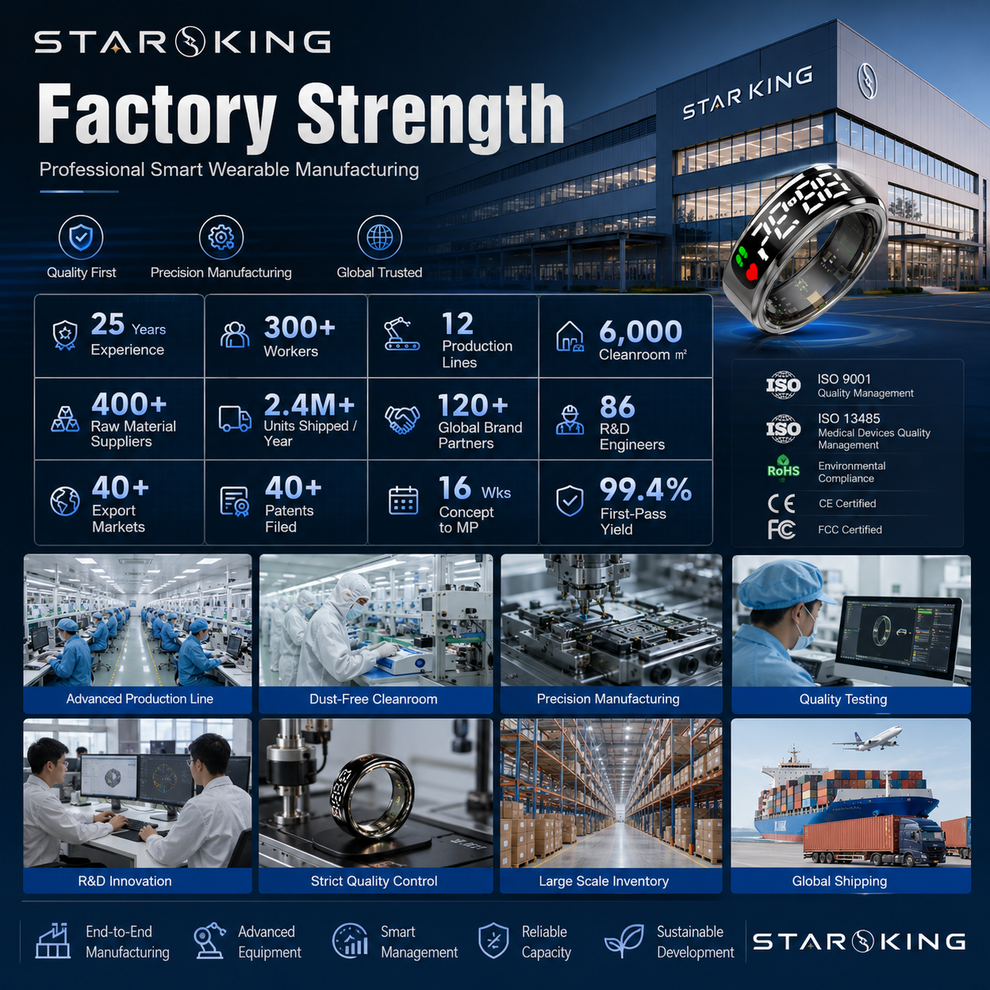
Not all AI smart glasses suppliers are equal. Look for manufacturers with experience in wearables, audio, and AI integration. Request:
- Company registration and factory audit reports.
- Existing product lines and reference projects (if available).
- In-house R&D and firmware teams.
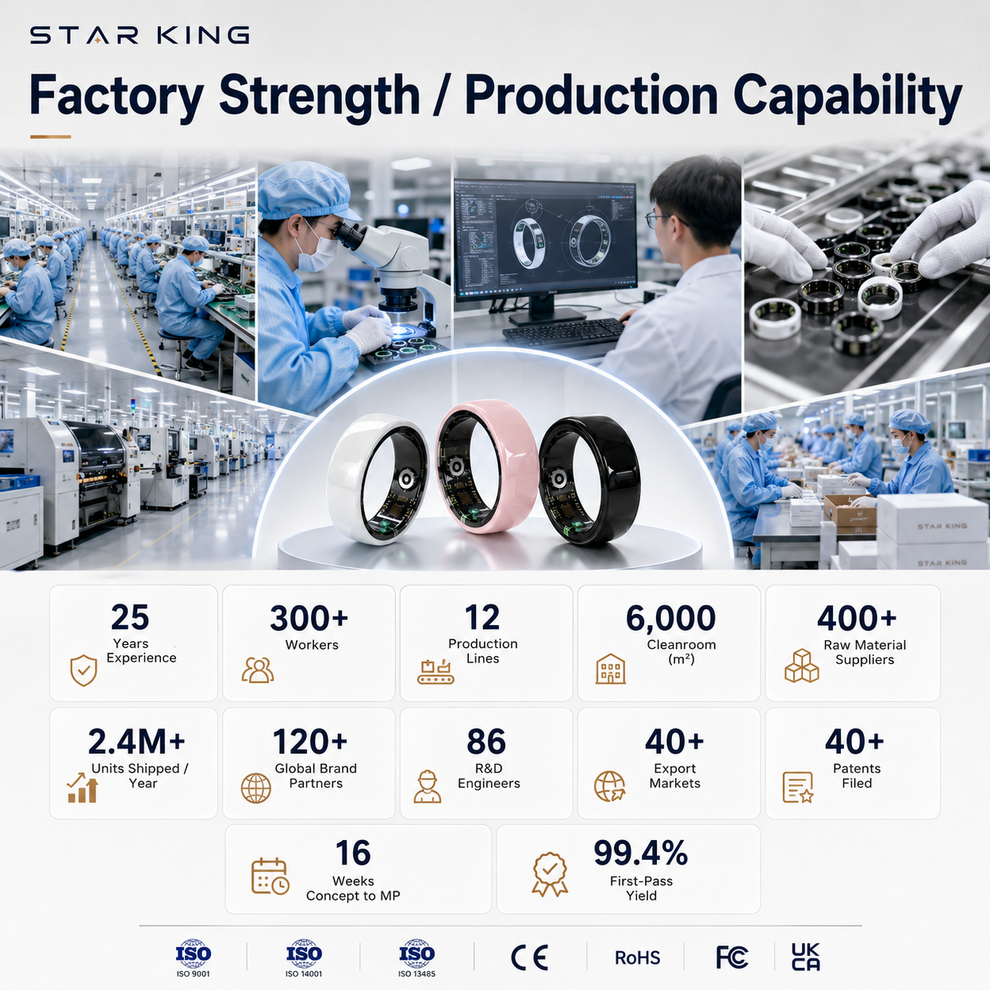
- Quality management certifications (ISO 9001).
For startups, a supplier that offers both ODM and OEM flexibility is ideal. STAR KING provides AI smart glasses with customizable options. Always ask for a live video tour or third-party inspection before committing.
Step 4: Choose OEM, ODM, or Private Label
Your business model determines the right production approach:
| Model | Description | MOQ | Best For |
|---|---|---|---|
| OEM | You provide design specs; manufacturer builds to order | 1,000–3,000 | Startups with unique IP and funding |
| ODM | Manufacturer’s design; you customize branding and software | 300–1,000 | Fast market entry with differentiation |
| Private Label | Standard product with your logo and packaging | 100–500 | Testing market demand |
Learn more about private label OEM/ODM solutions to compare options.
Step 5: Understand MOQ, Tooling, and Cost Drivers
MOQ is influenced by tooling, components, and packaging. For AI smart glasses, the display module and custom PCB are major cost drivers. Tooling for a custom frame can cost $8,000–$25,000. Negotiate whether tooling is amortized into unit price or paid upfront—and clarify ownership. Packaging customization also affects MOQ; digital printing allows lower volumes than injection-molded cases.

Step 6: Test Samples and Validate Performance
Never skip sample validation. Order pre-production samples and test:
- Real-time translation accuracy in noisy environments.
- Battery life under continuous use.
- Comfort and fit for diverse head sizes.
- App pairing and firmware stability.
- Audio quality for calls and voice commands.
Ask for test reports on drop, waterproof (IP rating), and aging. If your supplier cannot provide, plan for third-party testing.
Step 7: Plan Quality Control, Lead Times, and Logistics
Implement quality control at three stages: incoming components, in-process assembly, and pre-shipment inspection. Request AQL 2.5 or similar. Lead times: sample 7–15 days, mass production 25–45 days, plus shipping. For UK, air freight takes 5–10 days; sea freight 30–40 days. Include UN38.3 and MSDS for battery shipping. Work with a freight forwarder experienced in electronics.
STAR KING supports AI office productivity applications and can advise on logistics.
Common Mistakes and Buyer Red Flags
- Choosing a supplier based solely on price—leads to quality issues.
- Assuming CE covers UK; UKCA is often required.
- Ignoring battery shipping regulations; shipments get delayed.
- Not clarifying tooling ownership; you may pay twice.
- Underestimating MOQ and cash flow impact.
- Red flags: supplier avoids factory tour, no certification documents, unrealistic lead times, no clear warranty.
Practical Buyer Checklist
- Define product specs and use case.
- Verify UKCA and UK GDPR compliance needs.
- Request supplier audit reports and references.
- Compare OEM vs ODM vs private label.
- Confirm MOQ, tooling cost, and payment terms.
- Order and test samples thoroughly.
- Agree on QC process, lead times, and shipping terms.
- Clarify warranty, spare parts, and after-sales support.
FAQ
What is the typical MOQ for AI smart glasses from China?
For ODM models, MOQ often ranges from 300 to 1,000 units. OEM with custom tooling typically requires 1,000–3,000 units. Some suppliers offer lower MOQ for private label with standard designs.
Do AI smart glasses need UKCA marking?
Most electronic products placed on the Great Britain market require UKCA marking. However, requirements depend on product configuration and whether CE is still accepted in specific cases. Verify with your supplier and a compliance consultant.
How long does it take to get samples?
Sample lead time is usually 7–15 days after design confirmation, depending on customization. Shipping to UK adds 3–7 days via express.
Can I customize the software and app?
Yes, many manufacturers offer firmware and app customization for OEM/ODM projects. This may affect MOQ, development cost, and timeline.
What about battery shipping regulations?
Lithium batteries must comply with UN38.3 and often require MSDS. Air carriers may have additional restrictions. Ensure your supplier provides test reports.
How do I ensure quality before mass production?
Approve pre-production samples, request pre-shipment inspection, and define AQL standards. Consider third-party inspection for large orders.
Conclusion
Sourcing AI smart glasses for the UK market as a startup is achievable with careful planning. Focus on compliance, supplier verification, and sample testing. Start with ODM or private label to reduce risk, then scale to OEM as you grow. Always verify certifications and logistics details before committing.
STAR KING CTA
Ready to discuss your AI smart glasses project? Request samples or a quotation from STAR KING. Our team can help you navigate OEM/ODM options, compliance, and lead times for the UK market.
Discuss Your Smart Wearable OEM/ODM Project
Planning a smart ring, smart watch, smart band, AI glasses, AI translator, or AI voice mouse project? Contact STAR KING to discuss product positioning, sample testing, customization scope, certification requirements, lead time, and quotation details.

Team Star King
Scan WhatsApp QR code