AI translator: How Corporate Procurement Teams in Southeast Asia Evaluate AI Translators: 7-Step 2026 Buyer’s Guide
How Corporate Procurement Teams in Southeast Asia Evaluate AI Translators: 7-Step 2026 Buyer’s Guide
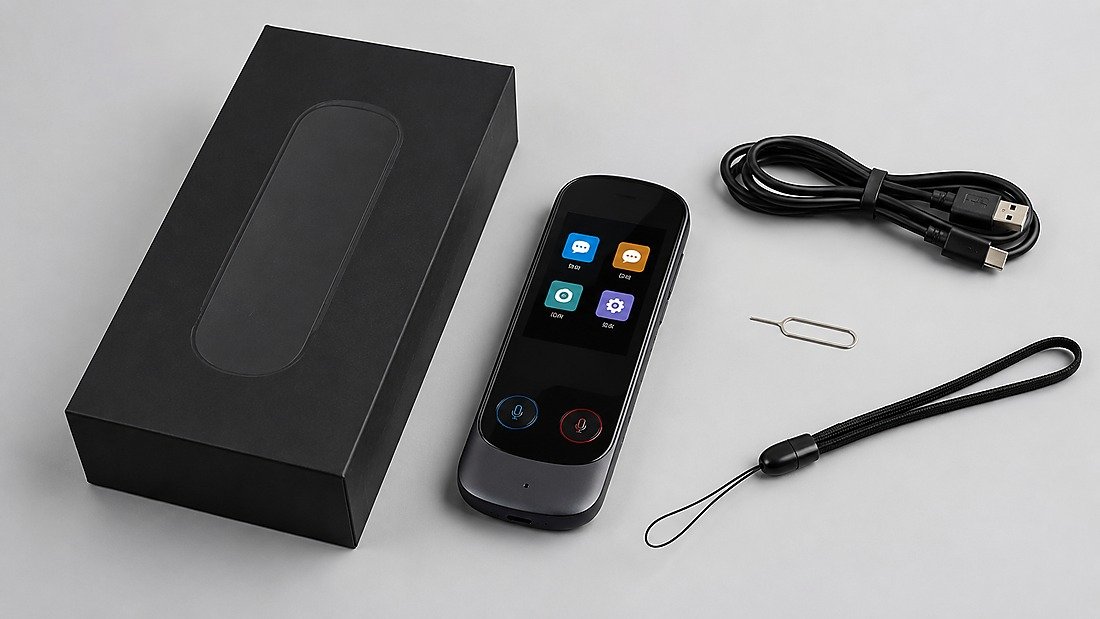
Short Answer: An AI translator is a dedicated hardware device that captures speech or text, converts it between languages in near real time, and is increasingly procured by Southeast Asian enterprises for cross-border meetings, frontline customer service, and training. For corporate buyers, the evaluation is less about the consumer feature list and more about five things: language coverage, offline/online dependency, OEM/ODM and software (App/API) options, compliance and battery logistics, and sample validation before scale. This guide gives procurement teams a repeatable seven-step method to compare an AI translator, manage vendor risk, and justify the purchase internally.
Table of Contents
Table of Contents
Buying an AI translator is a hybrid decision: part IT hardware, part SaaS dependency, part supply-chain project. It touches procurement, IT security, legal (data handling), and the business unit that will actually use the device. That makes the evaluation stage the most important part of the cycle, because mistakes made in the shortlist phase are expensive to reverse once a rollout begins.
Table of Contents
- What Is an AI Translator, and Why Southeast Asian Enterprises Are Buying Them
- Key Facts for Buyers
- Step 1: Define the Translation Use Case Before the Device
- Step 2: Audit Language Coverage and Accuracy Approach
- Step 3: Check Connectivity, Offline Mode, and Data Handling
- Step 4: Choose OEM, ODM, or Private Label
- Step 5: Model MOQ, Lead Time, and Landed Cost
- Step 6: Verify Compliance, Battery Shipping, and Support
- Step 7: Run a Structured Sample and Pilot Validation
- AI Translator Comparison Checklist
- Common Mistakes and Buyer Red Flags
- Practical Buyer Checklist
- FAQ
- Conclusion

Key Facts for Buyers
| Factor | What to Confirm | Why It Matters in Procurement |
|---|---|---|
| Use case | Meeting translation, frontline service, training, or field work | Determines whether you need a handheld AI translator, a wearable format, or a conference-style device |
| Language coverage | Supported language pairs and whether key Southeast Asian languages are included | Shortfall here creates user complaints and warranty pressure |
| Connectivity | Wi-Fi, cellular, offline mode | Offline capability affects factories, warehouses, and travel |
| Sourcing model | OEM, ODM, or private label | Determines branding, software control, and long-term IP position |
| MOQ and lead time | Sample, tooling, and mass production timelines | Affects budgeting and rollout scheduling |
| Compliance | CE, FCC, RoHS, UN38.3, MSDS depending on configuration and market | Required for customs clearance and enterprise deployment |
| Software / API | App, firmware updates, API integration | Determines data flow into your existing systems |
| After-sales | Warranty terms and spare parts | Drives total cost of ownership |
What Is an AI Translator, and Why Southeast Asian Enterprises Are Buying Them
An AI translator is a purpose-built hardware device that uses speech recognition, neural machine translation, and text-to-speech or on-screen output to convert language in near real time. Unlike a mobile app, it is a controlled, standardized, enterprise-manageable endpoint. That distinction matters to procurement: a fleet of dedicated devices is easier to provision, secure, and replace than a set of personal phones running unmanaged apps.
Southeast Asia is one of the most linguistically diverse commercial regions in the world. A single supply chain can cross Bahasa Indonesia, Malay, Thai, Vietnamese, Filipino, and English in a week of meetings. Multilingual devices for enterprises are therefore not a novelty — they are a practical tool for reducing miscommunication in manufacturing, logistics, hospitality, healthcare administration, and cross-border services. If your organization is building a broader workplace productivity rollout, pairing translation hardware with an AI office productivity solution is a common next step.
[Image suggestion: procurement team comparing handheld AI translator devices on a conference table]
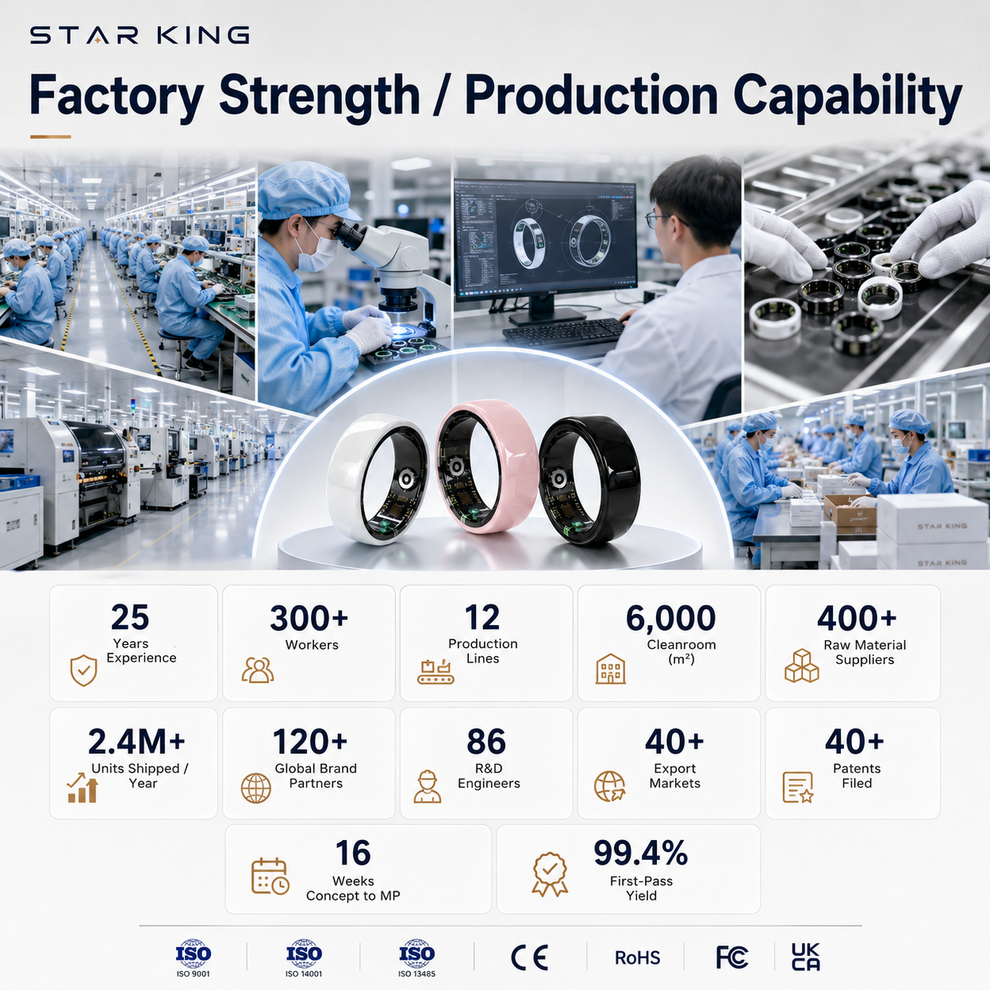
Soft CTA: If you are shortlisting devices for a pilot, STAR KING can supply sample AI translator units so your team validates real usage before committing to volume — see the AI translator product range.
Step 1: Define the Translation Use Case Before the Device
Procurement teams that start with a device get a worse outcome than teams that start with a scenario. Write down the scenario first: a structured one-to-one meeting, a noisy factory floor, a retail counter, a training room, or field service with intermittent signal. Each scenario stresses a different part of the product.
Scenario-to-requirement mapping
- Cross-border meetings: prioritize two-way speech translation, low latency, and clear output for a small group.
- Frontline customer service: prioritize fast turn-on, one-hand operation, and noise handling.
- Training and education: prioritize long sessions, battery endurance, and recording or export functions (subject to your data policy).
- Field and industrial use: prioritize offline mode, durability, and battery safety documentation.
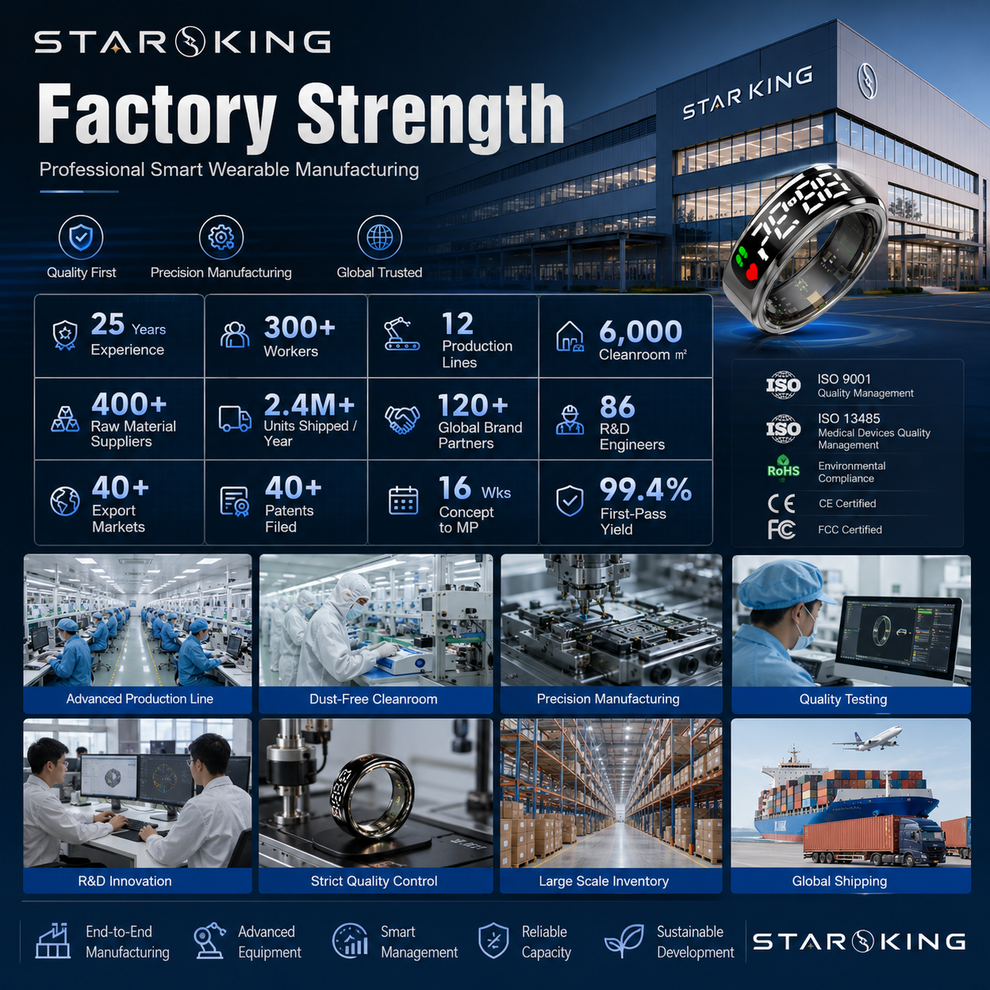
This step also determines quantity. A pilot of 10–20 units to validate usability is different from a departmental rollout of several hundred. Quantities and sampling expectations are typically negotiated directly with the manufacturer — STAR KING’s team can confirm private label and OEM/ODM options against your scenario.
Step 2: Audit Language Coverage and Accuracy Approach
Do not accept a headline language count as a specification. Ask which language pairs are supported, at what quality tier, and for which direction. A device that lists 100+ languages may still perform poorly on a specific Southeast Asian language pair that matters to your operation.
Questions to put in writing
- Which Southeast Asian languages are supported for both speech input and speech output?
- Which pairs run on-device versus in the cloud?
- How is accuracy measured, and on what type of content?
- How frequently is the translation model updated?
Where a vendor cannot document model update frequency, treat that as an open risk rather than a rejection — but require it in the contract. For language technology background, the ISO 18587 standard for post-editing of machine translation output is a useful reference when your legal or QA team asks how translation quality is governed.
Step 3: Check Connectivity, Offline Mode, and Data Handling
Connectivity is the single most underestimated procurement issue. Cloud-based translation delivers better quality on average, but it fails in factories, warehouses, mines, ships, and rural clinics. Ask for a clear statement of what works offline and how much of the core function survives without a network.
Data handling and IT review
Your IT and legal teams will ask three things: where is audio processed, is it stored, and for how long. If the device or companion app routes audio to a third-party cloud, that is a data-processing relationship you need on paper. App and firmware customization can sometimes address this — STAR KING offers app customization and firmware customization under OEM/ODM projects, but the specific data-flow architecture must be confirmed per configuration [STAR KING TO CONFIRM].
Step 4: Choose OEM, ODM, or Private Label
This is the decision that most affects your long-term position. The three models differ in who controls design, software, and brand.
How the models differ
| Model | What You Control | Typical Fit | Main Trade-off |
|---|---|---|---|
| OEM | Branding, packaging, some feature configuration on an existing platform | Fast rollout under your own brand | Less control over core design |
| ODM | Stronger input on design, firmware, and app features | Differentiated product for a specific market | Longer development and higher upfront cost |
| Private label | Brand, packaging, and documentation | Brand owners who want a ready product quickly | Minimal technical differentiation |
For an AI translator, the ODM route usually centers on firmware and app behavior — offline language packs, custom glossary, or integration with your internal systems. Ask explicitly who owns tooling and molds when custom enclosures are involved, and get that in writing. If you are also planning a wider AI hardware line, the AI office productivity solution page shows how translation devices sit alongside other workplace hardware.
Step 5: Model MOQ, Lead Time, and Landed Cost
Unit price is the least useful number in this category. Build a landed-cost model that includes tooling or customization fees, sample cost, freight, duties, and expected failure rates.
What drives AI translator cost
- Language engine and licensing: cloud versus on-device processing changes both cost and quality.
- Hardware tier: processor, microphone array, display, and battery capacity.
- Customization depth: logo only is cheap; custom app or enclosure is not.
- Volume: MOQ tiers typically reduce unit cost but raise inventory risk.
For a Southeast Asian rollout, also plan for multiple-country shipping and local warranty handling. A practical reference on customs valuation and duties is your local customs authority; the World Customs Organization publishes classification guidance that helps you sanity-check HS codes before quoting internally.
Step 6: Verify Compliance, Battery Shipping, and Support
Any AI translator with a lithium battery is a regulated shipment. Buyers should verify, per configuration and per destination market, which certifications apply. These commonly include CE for the EU, FCC for the United States, RoHS for hazardous substances, and UN38.3 plus MSDS for lithium battery transport. STAR KING’s general approach is to confirm certification requirements project by project rather than assume a blanket approval — buyers should verify the exact documents for their model and market.
Compliance documents to request
- Test reports relevant to the destination market.
- UN38.3 test summary and MSDS for battery transport.
- Declaration of conformity where applicable.
- Packaging and labeling review for local language requirements.
For markets under the ASEAN regulatory framework, requirements vary by country and product classification, so confirm with your importer of record before finalizing the purchase order.
[Image suggestion: close-up of an AI translator device label showing compliance markings and battery information]
Step 7: Run a Structured Sample and Pilot Validation
Samples are not a formality. They are the cheapest risk-reduction step available. Run a small, structured pilot and score the device against criteria you defined in Step 1.
Sample validation scorecard
- Translation quality on your actual content, not scripted demos.
- Activation and pairing time for a non-technical user.
- Battery endurance across a full working day.
- Behavior in noisy or low-signal environments.
- App stability and update mechanism.
- Packaging condition on arrival.
Only after the pilot should you move to volume. If your organization also evaluates health and wellness hardware for staff programs, the same pilot discipline applies to corporate wellness deployments.
AI Translator Comparison Checklist
| Criterion | Minimum Standard | Preferred | Evidence Required |
|---|---|---|---|
| Language coverage | Your core pairs supported | Full Southeast Asia set with updates | Written specification |
| Offline mode | Basic phrases | Core pairs fully offline | Demo or test report |
| Data handling | Documented policy | Configurable data retention | Signed data terms |
| Customization | Logo and packaging | Firmware and app customization | Development plan |
| Compliance | Required documents available | Full set per market | Test reports |
| Support | Email support | Regional support and spares | Written SLA |
Common Mistakes and Buyer Red Flags
Common mistakes
- Buying on language count instead of validated language pairs.
- Assuming offline mode works for every language.
- Neglecting battery shipping documentation until freight forwarders ask.
- Skipping the pilot because the unit price looked attractive.
- Leaving tooling and mold ownership undefined.
Red flags in vendor conversations
- Blanket certification claims without model-specific documents.
- Unwillingness to provide a sample unit for evaluation.
- Vague answers on cloud infrastructure and data retention.
- No clear statement of who owns custom tooling.
Practical Buyer Checklist
- Use case and quantity defined in writing.
- Required Southeast Asian language pairs confirmed.
- Connectivity and offline behavior tested.
- Data handling reviewed by IT and legal.
- Sourcing model (OEM/ODM/private label) chosen.
- MOQ, lead time, and landed cost modeled.
- Compliance and battery documents requested.
- Sample pilot scheduled and scored.
- Warranty, spares, and support terms agreed.
FAQ
What is an AI translator used for in a corporate setting?
It is used for real-time spoken or text translation in meetings, frontline customer service, training, and field operations. Enterprises choose dedicated hardware over phone apps for manageability, consistency, and control.
How do we compare AI translator vendors objectively?
Score vendors against the same written criteria — language pairs, offline capability, data handling, customization depth, compliance documents, and support terms — then validate with a structured sample pilot.
Does an AI translator need CE, FCC, or other certification for Southeast Asia?
Requirements depend on the product configuration and the destination country. CE and FCC are common for their respective markets, while ASEAN countries have their own regimes. Buyers should verify applicable requirements with their importer of record before ordering.
What affects AI translator MOQ and lead time?
MOQ and lead time typically depend on whether you choose OEM, ODM, or private label, the depth of customization, the availability of tooling, and component lead times. Confirm these figures for your specific configuration.
Can we get our brand and app on the device?
Yes, logo, packaging, and app customization are commonly available under OEM or ODM projects. Scope and cost depend on how deep the software changes go, so these should be defined in a development plan.
How should we handle lithium battery shipping?
Request UN38.3 documentation and MSDS for the exact model and share them with your freight forwarder early. Battery transport rules differ by carrier and route, so confirm before scheduling production finish dates.
What is a reasonable pilot size?
Most procurement teams start with a small pilot sufficient to cover each use case and user type, then scale after scoring the results. The right size depends on your rollout plan and internal approval process.
Conclusion
Evaluating an AI translator for a Southeast Asian enterprise is a structured procurement exercise, not a gadget purchase. Define the use case, audit language coverage, test connectivity and offline behavior, choose your sourcing model deliberately, model the true landed cost, verify compliance and battery documentation, and validate everything with a sample pilot. Teams that follow these seven steps reduce rollout risk and build a defensible internal business case.
STAR KING CTA
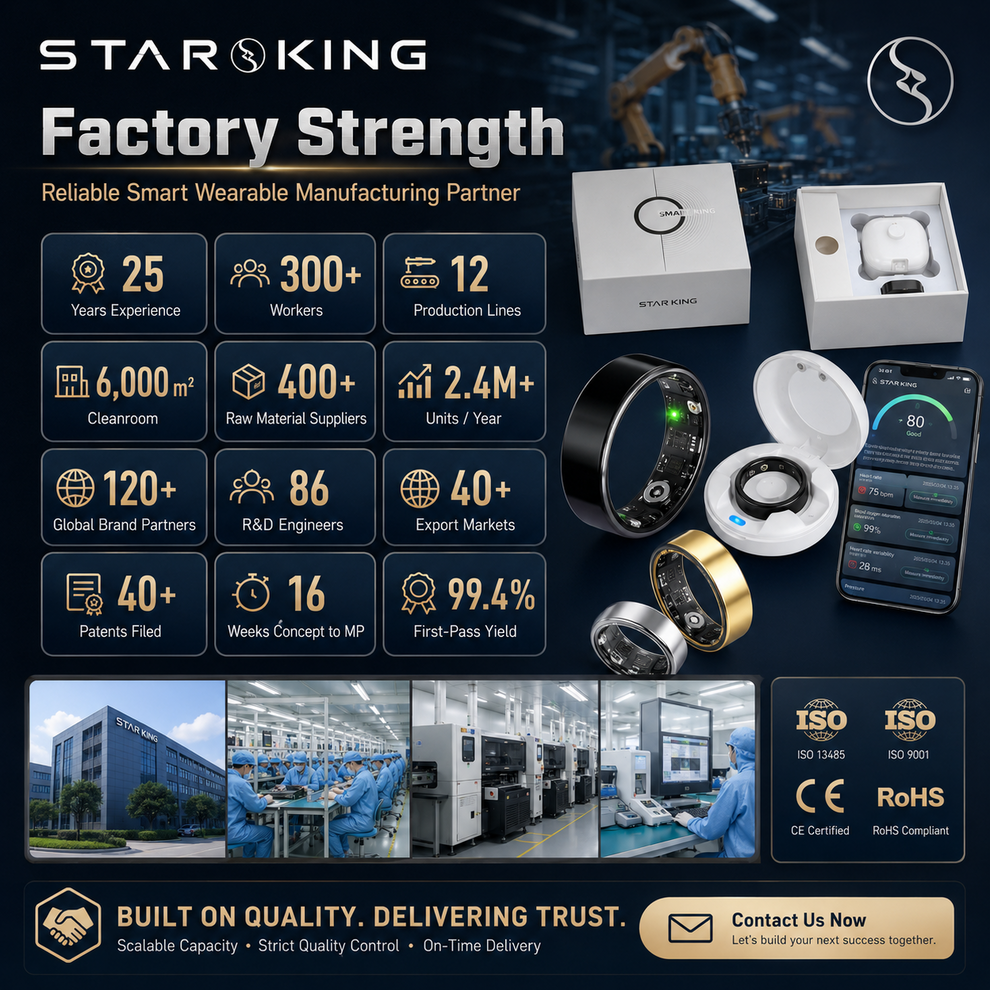
STAR KING supports corporate procurement teams with AI translator samples, OEM/ODM and private label options, and documentation support for your target markets. To move from shortlist to pilot, request product samples and confirm the specifications, customization scope, and certification requirements for your Southeast Asian rollout.
Request AI translator samples and an OEM/ODM quotation
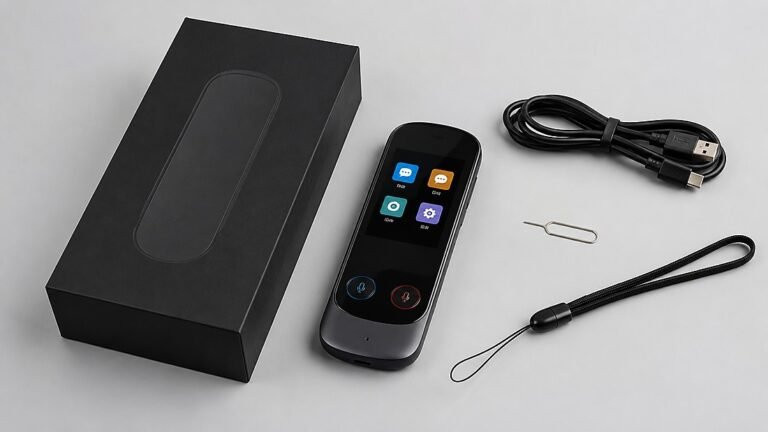
[Image suggestion: STAR KING AI translator sample kit with packaging and documentation for corporate evaluation]
Discuss Your Smart Wearable OEM/ODM Project
Planning a smart ring, smart watch, smart band, AI glasses, AI translator, or AI voice mouse project? Contact STAR KING to discuss product positioning, sample testing, customization scope, certification requirements, lead time, and quotation details.

Team Star King

Scan WhatsApp QR code