
smart watches OEM: Smart Watches for Startup Brands: 7 Critical Steps to Choose a US-Ready OEM Supplier
November 23, 2026 · Team Star King
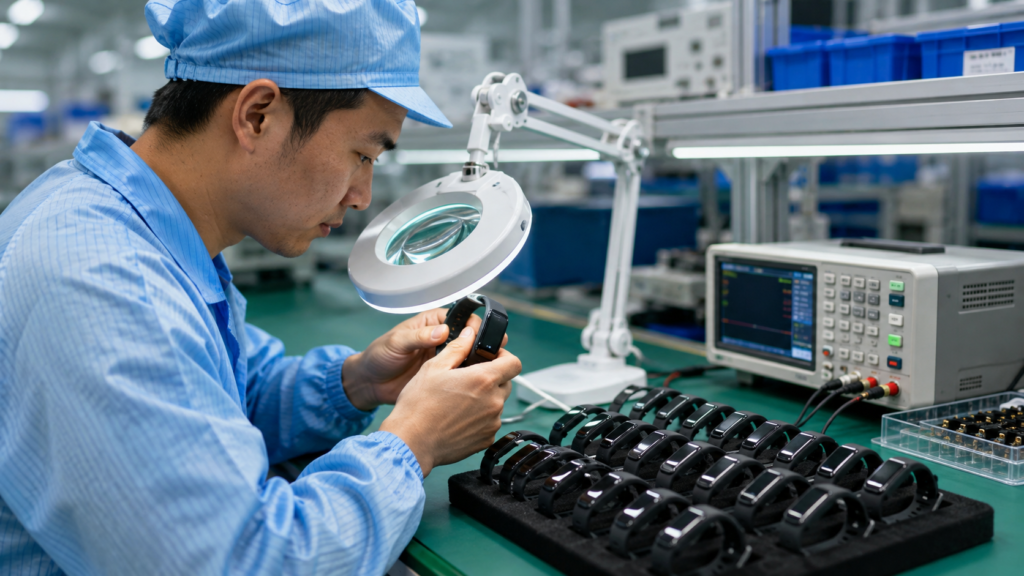
Smart Watches for Startup Brands: 7 Critical Steps to Choose a US-Ready OEM Supplier
For a startup brand entering the US wearable market, selecting the right smart watches OEM supplier is the single most important procurement decision. It affects product quality, certification readiness, time-to-market, and ultimately your brand’s reputation. This guide provides a structured 7-step framework to evaluate OEM suppliers, verify their capabilities, and avoid common pitfalls. Whether you are sourcing private label smartwatches or developing a custom model, these steps will help you make an informed decision and build a reliable supply chain.
Table of Contents
Table of Contents
smart watches OEM: Table of Contents
- Step 1: Define Your Product Requirements and Target Market
- Step 2: Screen Suppliers for Core Capabilities
- Step 3: Evaluate Certification and Compliance Readiness
- Step 4: Request Samples and Conduct Thorough Testing
- Step 5: Assess Quality Control and Manufacturing Standards
- Step 6: Understand MOQ, Pricing, and Lead Times
- Step 7: Verify Communication and After-Sales Support
- Common Mistakes and Buyer Red Flags
- Practical Buyer Checklist
- FAQ

Short Answer
Choosing a smart watches OEM supplier for the US market requires a systematic evaluation of their product development, certification, quality control, and communication processes. Start by defining your specifications and target price, then screen suppliers against a checklist that includes FCC certification, sample testing, and MOQ flexibility. Request samples, audit quality processes, and confirm lead times before committing to a contract.

Key Takeaways
- Define clear product requirements and US market compliance needs before contacting suppliers.
- Verify supplier experience with FCC, CE, and RoHS certifications—do not assume they are included.
- Always test samples for functionality, battery life, and build quality.
- Understand MOQ, pricing structure, and lead times to avoid hidden costs.
- Evaluate communication responsiveness and after-sales support as key selection criteria.
Key Facts for Buyers
| Consideration | Typical Requirement for US Market | Why It Matters |
|---|---|---|
| Certifications | FCC, CE (for EU), RoHS, UN38.3 for battery | Legal compliance and market access |
| MOQ | 500–1,000 units (varies by supplier and customization) | Cash flow and inventory risk |
| Sample Lead Time | 7–15 days | Evaluation speed and product refinement |
| Production Lead Time | 25–45 days after order confirmation | Time-to-market and stock planning |
| Quality Standards | ISO 9001, internal QC processes, pre-shipment inspection | Consistent product quality |
Step 1: Define Your Product Requirements and Target Market
Before approaching any supplier, clearly outline your smartwatch specifications. Consider the features that matter to your US customers: health monitoring accuracy, battery life, app compatibility, and design. Determine whether you need a basic fitness tracker or a full-featured smartwatch with GPS, heart rate monitoring, and sleep tracking. Also, define your target price point and expected sales volume. This preparation will help you communicate effectively with suppliers and compare their offerings objectively.
For startup brands, it’s often practical to start with a proven reference design and customize it through private label OEM/ODM services. This reduces development time and cost while allowing you to build your brand identity.
Step 2: Screen Suppliers for Core Capabilities
Not all smartwatch manufacturers are created equal. Look for suppliers with demonstrated experience in wearable technology, in-house R&D, and a portfolio that includes products similar to your requirements. Check their website, request a company profile, and ask for references. A capable OEM supplier should offer:
- Hardware and firmware customization
- App development or integration support
- Packaging and logo customization
- Certification assistance
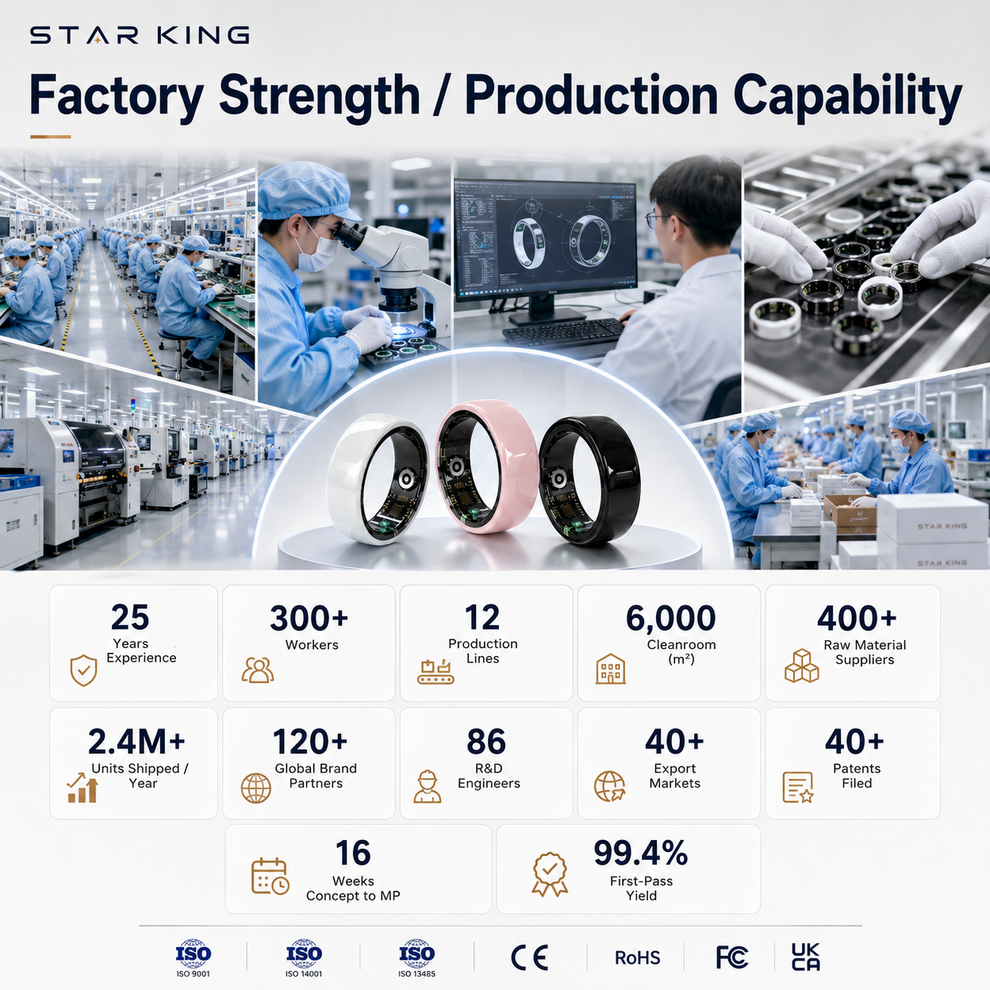
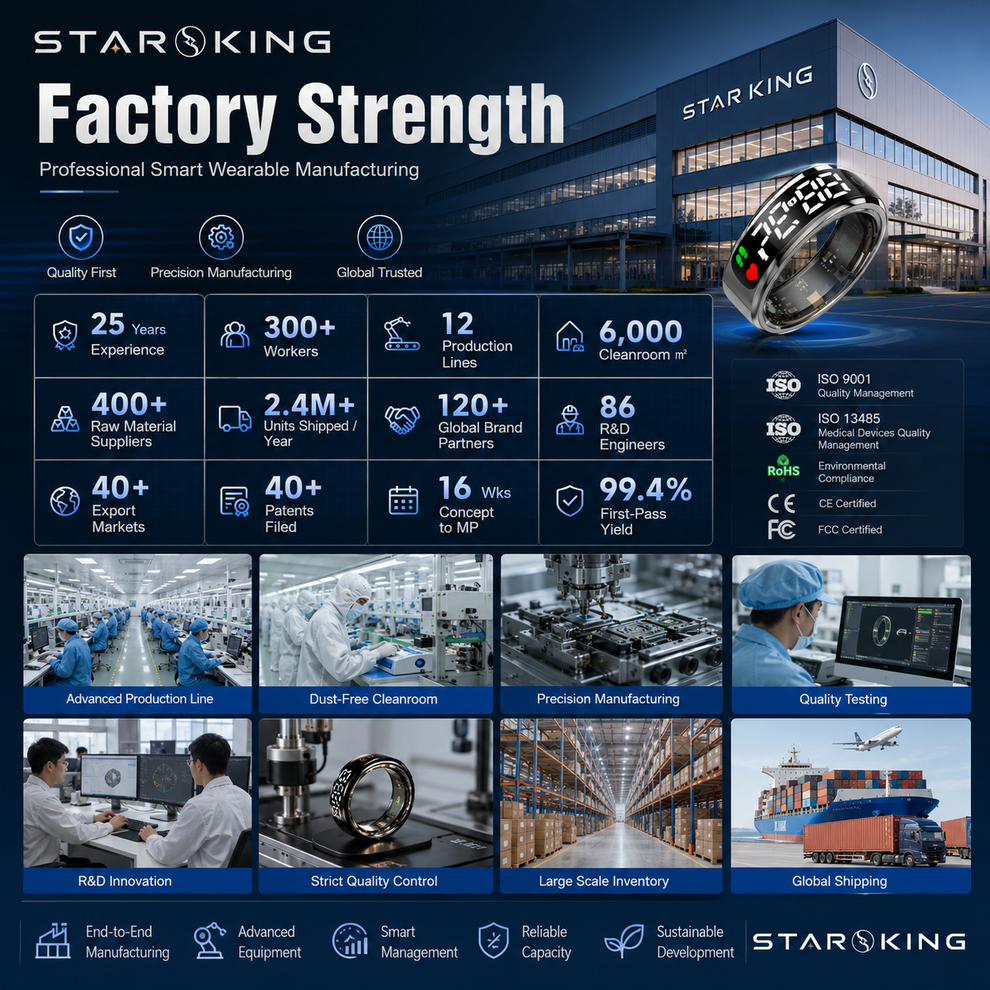
For example, STAR KING provides comprehensive smart watches OEM solutions, from design to mass production. Evaluate whether the supplier’s capabilities align with your long-term product roadmap.
Step 3: Evaluate Certification and Compliance Readiness
For the US market, smartwatches must comply with FCC regulations for electronic devices and may require additional certifications depending on features (e.g., Bluetooth SIG, FDA if making health claims). Ask suppliers about their experience with certification processes and whether they can provide the necessary test reports. Be cautious: some suppliers may claim certifications without proper documentation. Always request copies of certificates and verify their authenticity. Remember that certification requirements depend on the specific product configuration and target market—what is sufficient for one product may not be for another. Buyers should verify compliance requirements with a qualified testing lab.
For battery-powered devices, UN38.3 certification for safe transport is crucial. Ensure the supplier can provide UN38.3 test reports and MSDS documentation for the battery.
Step 4: Request Samples and Conduct Thorough Testing
Never commit to a large order without testing samples. Request samples that match your specifications and evaluate them thoroughly. Test battery life under realistic usage, check heart rate and SpO2 accuracy against a reference device (note that consumer wearables are not medical devices), assess app stability, and inspect build quality. Also, test the user interface and any companion app for bugs and usability. If possible, have a small group of testers use the samples for a week and provide feedback. This step often reveals issues that spec sheets do not show.
For a deeper dive into testing protocols, refer to our guide on wearable quality control.
Step 5: Assess Quality Control and Manufacturing Standards
Ask about the supplier’s quality management system. Do they have ISO 9001 certification? What are their incoming material inspection, in-process quality checks, and final pre-shipment inspection procedures? A reputable supplier will welcome a factory audit or provide a recent third-party inspection report. Look for evidence of reliability testing, such as drop tests, waterproof tests, and aging tests. These are critical for reducing defect rates and returns, which can be costly for a startup brand.
Step 6: Understand MOQ, Pricing, and Lead Times
MOQ and pricing are often top concerns for startup brands. Many suppliers have MOQs of 500–1,000 units for standard models, but this can vary. Discuss your volume projections openly and negotiate if possible. Understand the pricing structure: what is included (e.g., packaging, certifications, shipping) and what are the extra costs. Also, clarify lead times for samples, mass production, and delivery. Get a written schedule and build in buffer time for potential delays. For a detailed cost breakdown, see our sourcing guide.
Step 7: Verify Communication and After-Sales Support
Responsive communication is a strong indicator of a reliable supplier. Pay attention to how quickly and clearly they answer your questions during the evaluation phase. Ask about their warranty policy, spare parts availability, and process for handling defective units. A supplier that is transparent and supportive before the sale is likely to be more reliable after. Consider scheduling a video call or visiting the factory if feasible.
Common Mistakes and Buyer Red Flags
- Assuming certifications are included: Always confirm which certifications are covered and request certificates.
- Skipping sample testing: Relying solely on spec sheets can lead to unpleasant surprises.
- Ignoring MOQ constraints: Ordering too much inventory can strain cash flow.
- Not verifying supplier credentials: Check business licenses, factory audits, and references.
- Overlooking after-sales support: Poor support can harm your brand reputation.
Practical Buyer Checklist
| Area | Checklist Item | Completed |
|---|---|---|
| Product | Clear specifications and feature list | ☐ |
| Supplier | Verified experience and references | ☐ |
| Certification | FCC, CE, RoHS, UN38.3 certificates available | ☐ |
| Samples | Tested for functionality and quality | ☐ |
| Quality | QC process and inspection reports reviewed | ☐ |
| Commercial | MOQ, pricing, and lead times agreed | ☐ |
| Support | Warranty and after-sales terms documented | ☐ |
FAQ
1. What certifications do smartwatches need for the US market?
Smartwatches typically require FCC certification for electromagnetic compliance. If they include Bluetooth, Bluetooth SIG certification is also needed. For battery-powered devices, UN38.3 is required for transport. CE is for the EU, but not mandatory for the US. Always confirm with a testing lab.
2. What is a typical MOQ for private label smartwatches?
MOQs often range from 500 to 1,000 units for standard models, but can be higher for fully customized designs. Some suppliers offer lower MOQs for startup brands—be sure to discuss your needs.
3. How long does it take to get samples?
Sample lead time is usually 7 to 15 days, depending on the complexity of customization. Allow extra time for shipping.
4. Can I customize the packaging and logo?
Yes, most OEM suppliers offer packaging and logo customization. Confirm the minimum order quantity for custom packaging, as it may be higher.
5. What is the typical production lead time?
Production lead time is typically 25 to 45 days after order confirmation and sample approval. Plan for potential delays.
6. How do I verify a supplier’s quality control?
Request a factory audit report, ask about their QC processes, and conduct a pre-shipment inspection using a third-party service.
Conclusion
Selecting the right smart watches OEM supplier is a critical step for startup brands entering the US market. By following these seven steps, you can systematically evaluate suppliers, mitigate risks, and build a strong foundation for your wearable brand. Remember to prioritize certification compliance, sample testing, and clear communication. A well-chosen supplier will be a valuable partner in your growth.
STAR KING CTA
Ready to start your smartwatch brand? STAR KING offers flexible OEM/ODM solutions tailored for startups. Contact our sales team to discuss your project, request samples, or get a quotation. Let us help you navigate the journey from concept to market.
Useful Official References for Buyers
- FCC equipment authorization guidance
- European Commission CE marking information
- Bluetooth SIG specifications
Discuss Your Smart Wearable OEM/ODM Project
Planning a smart ring, smart watch, smart band, AI glasses, AI translator, or AI voice mouse project? Contact STAR KING to discuss product positioning, sample testing, customization scope, certification requirements, lead time, and quotation details.

Team Star King

Scan WhatsApp QR code
Leave a Reply