
AI Voice Mouse OEM Sourcing: 9 Critical Checks for Middle East E-commerce Sellers
November 21, 2026 · Team Star King
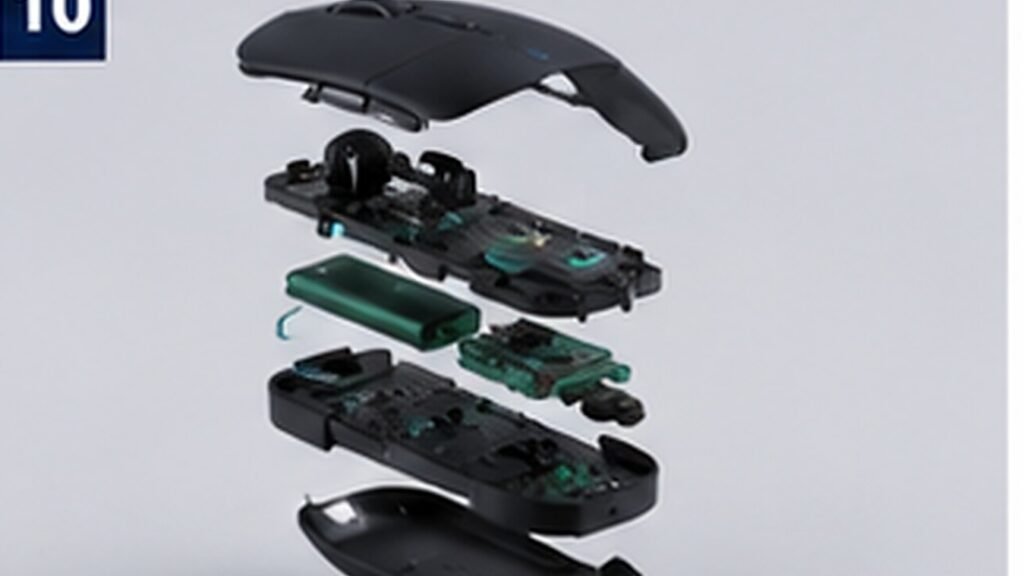
AI Voice Mouse OEM Sourcing: 9 Critical Checks for Middle East E-commerce Sellers
AI voice mouse OEM sourcing means selecting a manufacturer that can supply voice-controlled computer mice with reliable speech recognition, Arabic language support, private-label branding, and export-ready compliance for Middle East markets. For e-commerce sellers preparing an RFQ, the nine checks below cover Arabic voice performance, MOQ, firmware and app customization, certification, testing, packaging, lead time, landed cost, and after-sales support. Each check includes a verification method so buyers can move from inquiry to purchase order with documented evidence rather than sample-only impressions.
Table of Contents
Table of Contents
Table of Contents
- Direct Answer: What Should Middle East E-commerce Sellers Check First?
- Key Takeaways
- Key Facts for Buyers
- What Is an AI Voice Mouse and Why It Matters for Middle East E-commerce
- Check 1: Arabic Voice Recognition and Multilingual Accuracy
- Check 2: Hardware Platform and Microphone Quality
- Check 3: Firmware, App, and Software Customization
- Check 4: MOQ, Price Tiers, and Tooling Ownership
- Check 5: Certification and Import Compliance for GCC Markets
- Check 6: Sample Testing and Validation Protocol
- Check 7: Packaging, Labeling, and Private-Label Branding
- Check 8: Lead Time, Production Planning, and Shipping
- Check 9: After-Sales, Warranty, and Spare Parts
- Comparison Table: Sourcing Options for AI Voice Mouse OEM
- Common Mistakes and Buyer Red Flags
- Practical Buyer Checklist
- FAQ
- Conclusion
Direct Answer: What Should Middle East E-commerce Sellers Check First?
Before sending an RFQ for an AI voice mouse OEM project, Middle East e-commerce sellers should verify three things first: (1) the manufacturer can demonstrate Arabic voice recognition accuracy on real hardware, not just English demos; (2) the supplier can provide certification documents or a clear compliance roadmap for the target GCC country; and (3) MOQ, tooling ownership, and lead times are confirmed in writing. Sellers who validate these three items early avoid the most common cause of failed launches: a product that works in a demo but cannot be imported, branded, or supported at scale.
Key Takeaways
- Arabic and multilingual voice accuracy is the top differentiator for Middle East AI voice mouse OEM projects; test it on sample units before signing an PO.
- MOQ and tooling terms vary by model and customization level; request a written quotation that separates unit price, tooling, packaging, and certification costs.
- Certification requirements for the GCC depend on the specific product configuration and destination country; buyers should verify with the supplier and local authority.
- A structured sample validation protocol reduces launch risk more than a single demo call.
- Private-label packaging, app branding, and firmware customization are typically available but affect MOQ and lead time.
- Landed cost, not FOB price, should drive sourcing decisions for e-commerce sellers.
Key Facts for Buyers
| Item | Typical B2B Consideration | What to Verify |
|---|---|---|
| Product type | AI voice mouse with speech-to-text, translation, and voice command functions | Supported languages and dialects, offline vs. cloud processing |
| Target market | UAE, Saudi Arabia, Qatar, Kuwait, Oman, Bahrain | Local labeling, voltage, wireless compliance, import documentation |
| MOQ | Depends on model and customization; [STAR KING TO CONFIRM] | Written quotation with MOQ per SKU and per customization |
| Certification | Typically depends on product configuration and destination | CE, FCC, RoHS, and local GCC requirements as applicable |
| Lead time | Samples vs. mass production differ; [STAR KING TO CONFIRM] | Production schedule, shipping method, buffer stock plan |
| Customization | Logo, packaging, app branding, firmware options | Scope, cost, and MOQ impact per option |
| Warranty | Terms vary by supplier; [STAR KING TO CONFIRM] | Warranty period, RMA process, spare parts availability |
What Is an AI Voice Mouse and Why It Matters for Middle East E-commerce
An AI voice mouse is a computer mouse that integrates a microphone and voice-processing software to convert speech into text, translate languages, and execute voice commands. Unlike a standard mouse, it combines input hardware with AI software, so buyers are not only sourcing a peripheral but also evaluating firmware, app integration, and language support.
For Middle East e-commerce sellers, the category is relevant for several reasons. First, multilingual households and workplaces create demand for devices that handle Arabic and English in the same session. Second, remote work and online education increased reliance on dictation and translation tools. Third, marketplaces such as Amazon.ae, Noon, and regional DTC stores reward sellers who can differentiate with private-label AI hardware rather than commodity accessories. The sourcing decision therefore sits at the intersection of product selection, compliance, and brand building.
Check 1: Arabic Voice Recognition and Multilingual Accuracy
Voice accuracy is the first check because it determines whether the product is usable in the target market. Arabic has multiple dialects and right-to-left script, and recognition quality can vary between cloud-based and on-device processing. A supplier that only demonstrates English dictation has not demonstrated readiness for the Middle East.
How to verify
- Request a live or recorded demo using Modern Standard Arabic and at least one Gulf dialect.
- Ask which speech engine or AI model is used and whether processing is cloud-based, offline, or hybrid.
- Confirm supported languages and how additional languages are added or updated.
- Test dictation, translation, and voice command functions separately.
Buyers should also clarify data handling: where audio is processed, whether recordings are stored, and how privacy is addressed. These answers matter for corporate and education buyers who may resell the product to institutions. For related AI office use cases, see the AI office productivity solution.
Check 2: Hardware Platform and Microphone Quality
Voice performance depends on hardware as much as software. Microphone sensitivity, noise cancellation, and chipset capability affect recognition in real environments such as open offices and homes. A sourcing team should compare microphone specifications, wireless connectivity, battery type, and sensor quality across candidate models.
Ask for the hardware block diagram and key component list where available. Confirm wireless standards and whether the device uses Bluetooth or a proprietary dongle, since connectivity affects compatibility with laptops, tablets, and regional device preferences. The product page for the AI voice mouse provides a starting point for specification comparison.
Check 3: Firmware, App, and Software Customization
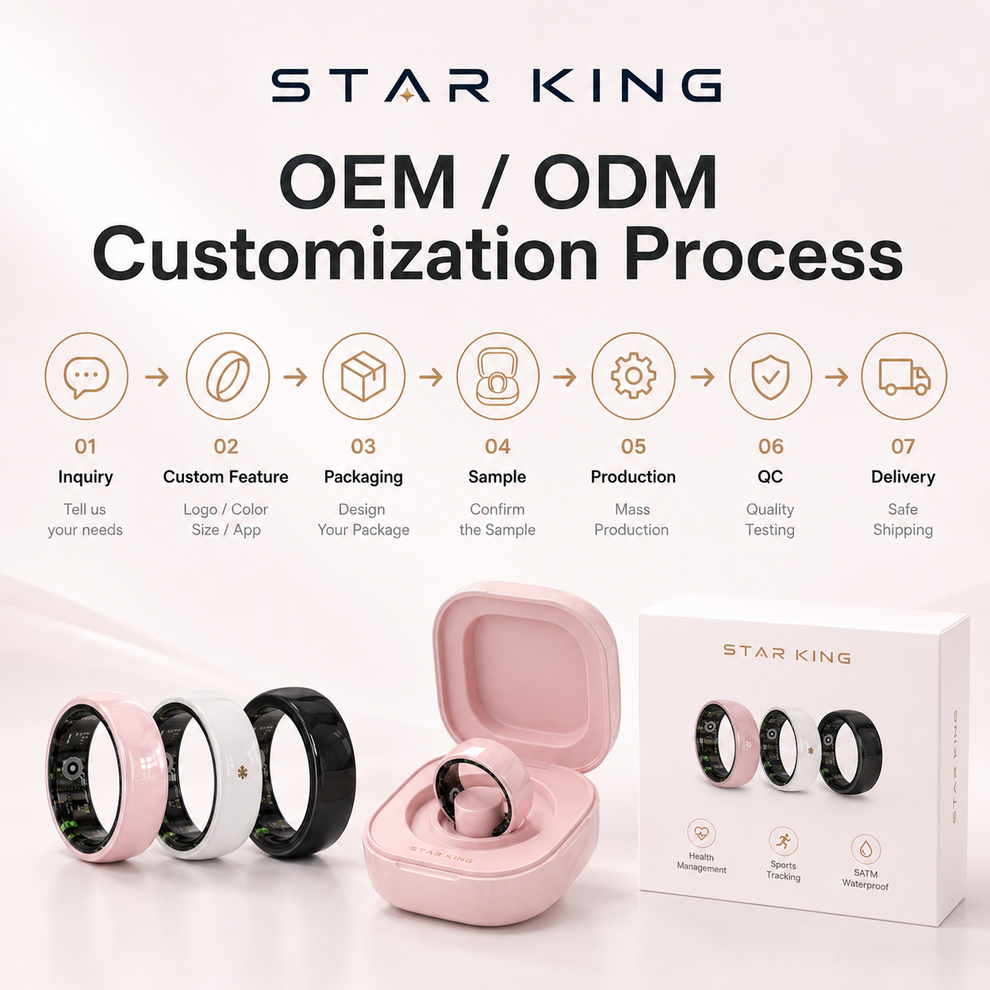
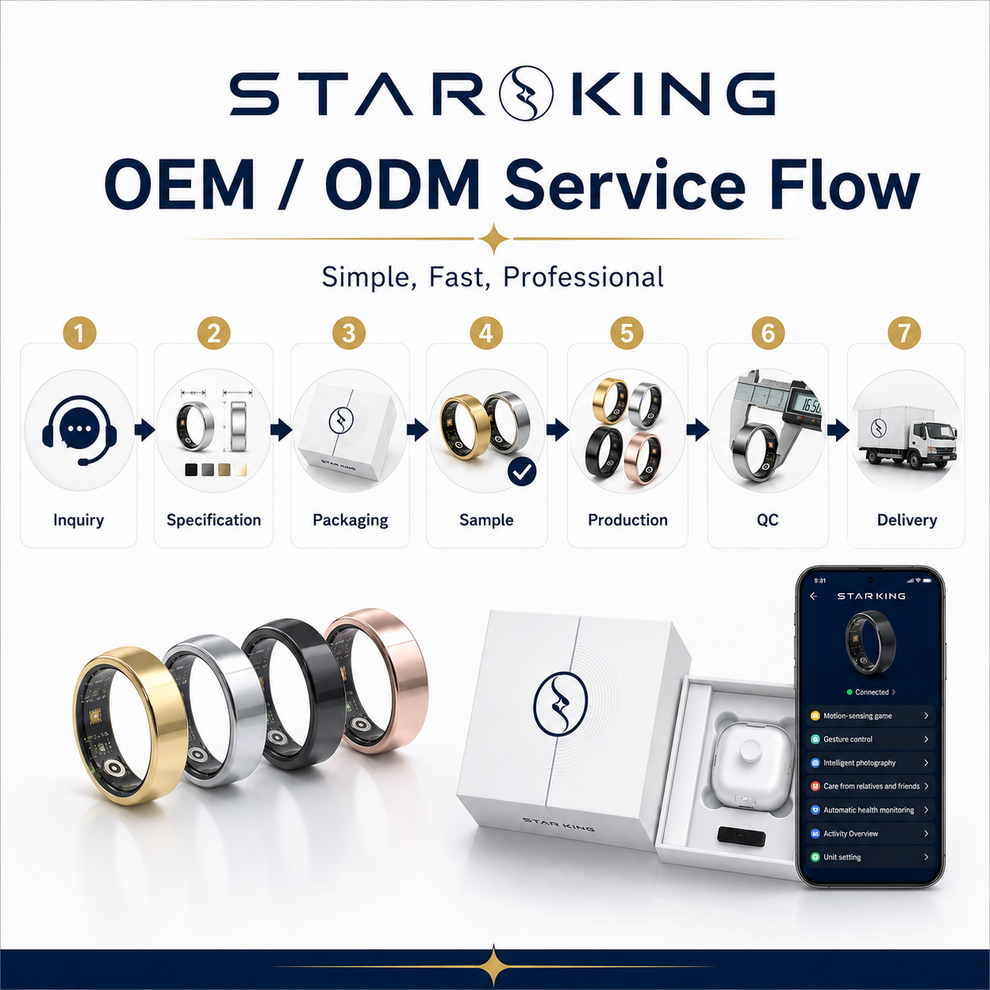
For private-label sellers, software is where differentiation is created. Buyers should ask whether the supplier can customize firmware, app branding, onboarding screens, default language settings, and update mechanisms. This is a common OEM/ODM discussion point and should be scoped before pricing is finalized.
Clarify ownership and licensing of the software, the update policy, and whether the seller can publish the app under its own brand. If the supplier offers private label OEM/ODM solutions, request a written scope that separates standard firmware from custom development. Custom firmware work typically affects MOQ and lead time, so it should be quoted separately.
Check 4: MOQ, Price Tiers, and Tooling Ownership
MOQ is one of the most common friction points in an RFQ. For AI voice mouse OEM projects, MOQ usually depends on the model, the level of customization, and whether new tooling is required. A logo print on a standard model may have a lower MOQ than a fully custom enclosure or app.
Request a quotation that separates unit price, tooling or setup cost, packaging cost, certification cost, and shipping terms. Ask explicitly who owns the tooling and whether it can be transferred if the relationship ends. Buyers should also request price tiers at multiple quantities so they can model margin before committing.
| Customization Level | Typical MOQ Impact | Price Impact | Lead Time Impact |
|---|---|---|---|
| Standard model, no branding | Lowest | Base | Shortest |
| Logo and retail packaging | Moderate | Moderate | Moderate |
| App branding and onboarding | Higher | Higher | Longer |
| Custom firmware or enclosure | Highest; [STAR KING TO CONFIRM] | Highest | Longest |
Check 5: Certification and Import Compliance for GCC Markets
Certification requirements for the Middle East depend on the specific product configuration and the destination country. A wireless mouse may require radio compliance, safety documentation, and battery-related transport documents if it contains a lithium battery. Buyers should not assume that a CE or FCC mark alone satisfies GCC import rules.
Ask the supplier for a compliance matrix by SKU and destination, and verify requirements with the local authority or a customs broker. Reference points include the FCC Equipment Authorization database for U.S. radio compliance and the EU CE marking framework for European requirements. For battery transport, the IATA Dangerous Goods Regulations are relevant when shipping lithium batteries by air. Buyers should confirm which documents the supplier can provide and which must be arranged locally.
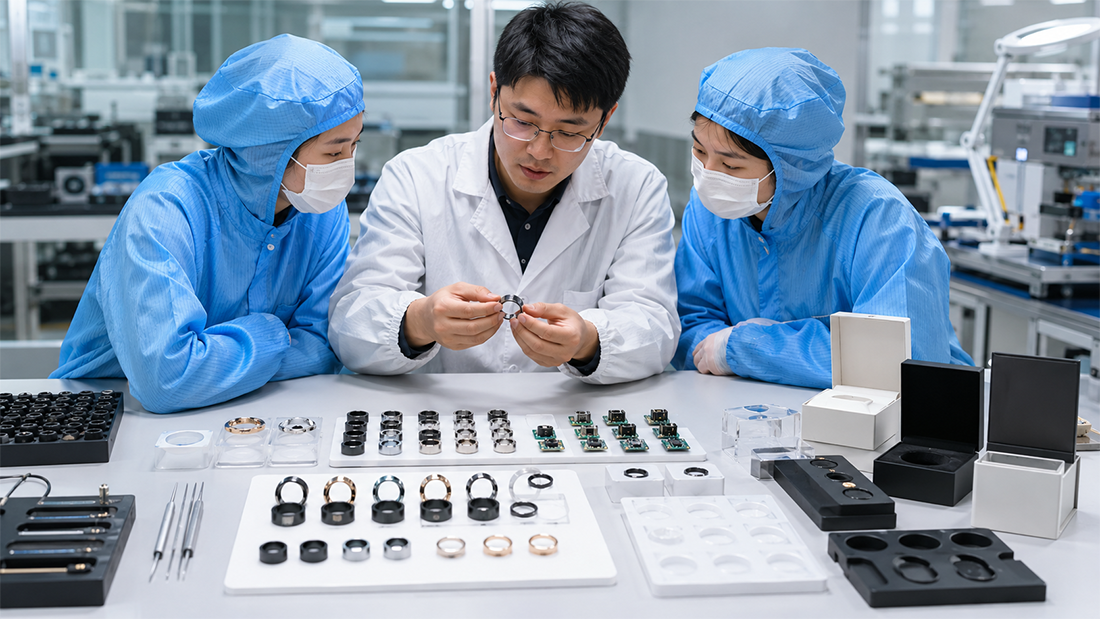
Check 6: Sample Testing and Validation Protocol
A single demo call is not a validation. Buyers should define a sample testing protocol before placing a bulk order. A practical protocol includes:
- Dictation accuracy test in Arabic and English across multiple speakers.
- Translation quality test for common business phrases.
- Voice command response test in a noisy environment.
- Battery life test under continuous use.
- Connectivity test across common operating systems.
- Drop and durability checks appropriate to the retail channel.
Buyers should request that samples come from the same production batch as the intended mass order. Where relevant, ask about pre-shipment inspection and quality control processes; see the STAR KING resources blog for related quality and sourcing guides.
Check 7: Packaging, Labeling, and Private-Label Branding
Packaging is part of the product in e-commerce. Middle East marketplaces often require specific labeling, including language, importer details, and barcodes. Buyers should confirm whether the supplier can produce retail-ready packaging with Arabic and English text, and whether labeling compliance is included in the quotation.
Ask for packaging samples and dielines, and confirm the MOQ for custom packaging. For sellers building a brand, smart retail and e-commerce solutions can provide context on how packaging and product presentation affect marketplace performance.
Check 8: Lead Time, Production Planning, and Shipping
Lead time is a planning variable, not a fixed promise. Buyers should ask for the production schedule broken down by sample approval, mass production, quality inspection, and shipping. For Middle East destinations, sea freight, air freight, and courier options have different cost and timing profiles, and lithium battery products may face additional transport requirements.
Request a written lead time with assumptions stated, and plan buffer stock for the first order. If the product will be sold on marketplaces with restock deadlines, align the production schedule with those dates before signing the purchase order.
Check 9: After-Sales, Warranty, and Spare Parts
After-sales support protects marketplace ratings. Buyers should ask about warranty period, RMA process, defect rate policy, and availability of spare parts or replacement units. For e-commerce sellers, a clear RMA process is often more valuable than a longer warranty on paper.
Confirm how software updates are delivered after launch and who provides customer support for app-related issues. These terms should be included in the supply agreement, not left to informal understanding.
Comparison Table: Sourcing Options for AI Voice Mouse OEM
| Option | Best For | Advantages | Trade-offs |
|---|---|---|---|
| Trading company | Small initial orders | Flexible communication, lower entry barriers | Less control over firmware and quality |
| OEM manufacturer | Private-label brands | Customization, documentation, scale | Higher MOQ and longer setup |
| ODM with existing model | Fast market entry | Shorter lead time, proven design | Less product differentiation |
| Full custom development | Established brands | Strong differentiation | Highest cost and longest timeline |
For most e-commerce sellers entering the Middle East, an ODM model with private-label branding offers a practical balance between speed and differentiation. Sellers with an established brand and volume may consider deeper customization.
Common Mistakes and Buyer Red Flags
- Approving a supplier based on an English-only demo without testing Arabic.
- Accepting a verbal MOQ or price without a written quotation.
- Assuming CE or FCC certification covers GCC import requirements.
- Ignoring lithium battery transport documentation.
- Skipping packaging and labeling review before mass production.
- Failing to confirm software update responsibility after launch.
- Ordering without a written quality inspection plan.
Red flags include vague answers about certification, refusal to provide sample test reports, unclear tooling ownership, and suppliers who cannot explain how firmware updates are delivered.
Practical Buyer Checklist
- Arabic and English voice accuracy demonstrated on production-intent samples.
- Written quotation separating unit price, tooling, packaging, certification, and shipping.
- MOQ confirmed per SKU and per customization option.
- Compliance matrix by destination country and SKU.
- Sample testing protocol completed and documented.
- Packaging and labeling reviewed with Arabic and English text.
- Lead time and production schedule confirmed in writing.
- Warranty, RMA process, and spare parts policy agreed.
- Software update and support responsibilities defined.
- Landed cost model reviewed before purchase order.
FAQ
What is the typical MOQ for an AI voice mouse OEM order?
MOQ depends on the model and customization level. Standard models with logo and packaging changes usually have lower MOQs than custom firmware or enclosure projects. Request a written quotation with MOQ per SKU; STAR KING can confirm current MOQs for specific models [STAR KING TO CONFIRM].
Can the supplier support Arabic voice recognition?
Arabic support depends on the speech engine and firmware configuration. Buyers should request a demo in Modern Standard Arabic and at least one Gulf dialect, and confirm whether processing is cloud-based or offline before committing.
Which certifications are needed to import an AI voice mouse into the UAE or Saudi Arabia?
Requirements typically depend on the product configuration and destination country. Radio compliance, safety documentation, and battery transport documents may be required. Buyers should verify with the local authority or a customs broker and request a compliance matrix from the supplier.
How long does production take after sample approval?
Lead time varies by model and customization. A written production schedule covering mass production, inspection, and shipping should be requested. STAR KING can confirm lead times for specific configurations [STAR KING TO CONFIRM].
Can we customize the app and packaging under our own brand?
Private-label packaging and app branding are typically available in OEM/ODM projects, but scope and MOQ impact should be confirmed in writing. Custom firmware work usually requires a separate quotation.
What should be included in a sample testing protocol?
A practical protocol covers dictation accuracy in Arabic and English, translation quality, voice command response in noisy environments, battery life, connectivity across operating systems, and durability checks relevant to the retail channel.
How should buyers evaluate landed cost?
Landed cost includes unit price, tooling, packaging, certification, freight, duties, and marketplace fees. Request a cost breakdown and model margins at multiple order quantities before placing a purchase order.
Conclusion
AI voice mouse OEM sourcing for Middle East e-commerce sellers is a structured procurement process, not a single product decision. The nine checks in this guide—Arabic voice accuracy, hardware quality, software customization, MOQ and tooling, certification, sample testing, packaging, lead time, and after-sales—give buyers a repeatable framework for evaluating suppliers and reducing launch risk. Sellers who document each check in writing are better positioned to negotiate terms, plan inventory, and protect marketplace ratings.
Next Step: Request a Quotation
If you are preparing an RFQ for a Middle East launch, the next step is to share your target specifications, order quantity, and destination market so the supplier can respond with a written quotation, MOQ, certification scope, and lead time. Request a quotation for your AI voice mouse OEM project and confirm the customization options that fit your brand and channel.
Discuss Your Smart Wearable OEM/ODM Project
Planning a smart ring, smart watch, smart band, AI glasses, AI translator, or AI voice mouse project? Contact STAR KING to discuss product positioning, sample testing, customization scope, certification requirements, lead time, and quotation details.

Team Star King

Scan WhatsApp QR code
Leave a Reply