
AI smart glasses supplier: How to Vet AI Smart Glasses Suppliers for UK Education: 7 Essential Checks
November 17, 2026 · Team Star King

How to Vet AI Smart Glasses Suppliers for UK Education: 7 Essential Checks
Choosing an AI smart glasses supplier for the UK education market requires verifying regulatory compliance (UKCA/CE, UK GDPR, BS EN 62368-1), education-specific software integration (MDM, safeguarding), and OEM flexibility. This guide gives edtech procurement teams 7 practical supplier checks—from certification evidence to MOQ and lead time—so you can shortlist manufacturers that meet UK school requirements and reduce deployment risk.
Table of Contents
Table of Contents
AI smart glasses supplier: Table of Contents
- Short Answer
- Key Takeaways
- Key Facts for Buyers
- 1. Certification and UK Market Compliance
- 2. Education-Specific Software and Safeguarding Features
- 3. Product Specifications and Hardware Trade-offs
- 4. OEM/ODM and Private Label Capability
- 5. Quality Control and Testing Protocols
- 6. MOQ, Pricing, and Lead Time Transparency
- 7. After-Sales, Warranty, and Spare Parts
- Supplier Comparison Table
- Common Mistakes and Buyer Red Flags
- Practical Buyer Checklist
- FAQ
- Conclusion
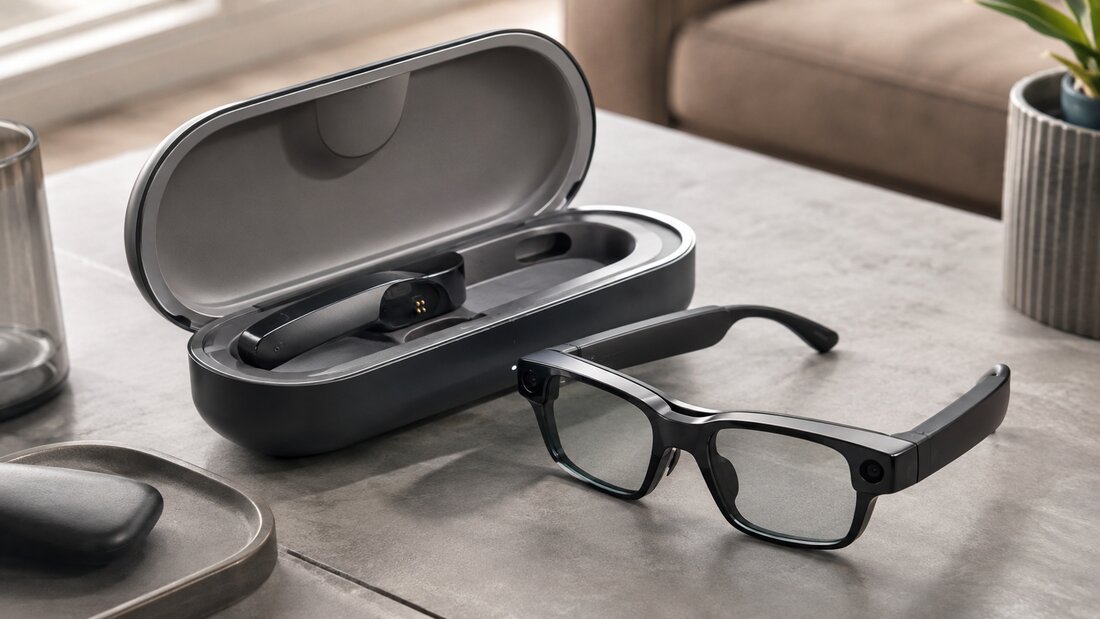
Short Answer
To vet an AI smart glasses supplier for UK education, request written evidence of UKCA or CE marking, confirm data protection features aligned with UK GDPR, test a sample for classroom durability, and verify OEM/ODM capability, MOQ, and lead times. Prioritize suppliers that provide transparent certification reports, education-specific firmware options, and a clear after-sales process.

Key Takeaways
- UK education buyers should require UKCA marking (or CE for transitional recognition) and demand test reports for electrical safety, EMC, and RoHS.
- AI smart glasses for classrooms must support MDM, content filtering, and data minimization; ask for a Data Protection Impact Assessment (DPIA) template.
- Sample testing should include drop, waterproof, and battery safety checks; verify UN38.3 for lithium batteries.
- OEM/ODM flexibility—custom firmware, logo, packaging, and app integration—affects total cost and brand fit.
- MOQ and lead time vary by customization level; request a written production schedule and buffer plan.
- After-sales support and spare parts availability are critical for multi-year school deployments.
Key Facts for Buyers
| Factor | What UK Education Buyers Should Verify | Typical Evidence |
|---|---|---|
| Certification | UKCA or CE marking; test reports for BS EN 62368-1, EMC, RoHS | Certificate of conformity, test lab reports |
| Data protection | UK GDPR alignment; data processing agreement; local storage options | DPIA template, privacy policy, firmware documentation |
| Software integration | MDM compatibility, API availability, content filtering | SDK/API docs, MDM partner list |
| Battery safety | UN38.3 test summary, MSDS | UN38.3 report, MSDS sheet |
| Durability | Drop test, IP rating, aging test | Test reports, sample evaluation |
| MOQ | Minimum order quantity for standard vs. custom | Quotation sheet, MOQ policy |
| Lead time | Sample lead time, mass production lead time | Production schedule, capacity statement |
[Suggested image insertion: AI smart glasses used in a classroom setting—see image SEO suggestions]

1. Certification and UK Market Compliance
For UK education buyers, certification is non-negotiable. AI smart glasses are electrical devices that typically require UKCA marking (or CE marking, which the UK continues to recognize in some contexts during transitional periods). Key standards include BS EN 62368-1 for electrical safety, EMC compliance, and RoHS for hazardous substances. Ask suppliers for test reports from recognized labs and verify the certificate scope covers the exact model you plan to purchase.
Battery-powered devices also require UN38.3 test summaries for transport and MSDS documentation. For UK-specific import, confirm whether the supplier can support UK responsible person arrangements. Note that certification requirements may vary based on final product configuration and intended use; buyers should verify with their compliance team.
Why this matters: Schools and procurement frameworks often require proof of conformity before purchase. Missing certification can delay deployment or cause legal issues.
Documentation Checklist
- UKCA/CE declaration of conformity
- Safety test report (BS EN 62368-1 or equivalent)
- EMC test report
- RoHS compliance statement
- UN38.3 test summary for lithium battery
- MSDS for battery
[Soft CTA] If you are shortlisting AI smart glasses suppliers for a UK education project, you can request a sample and compliance documentation to support your evaluation.
2. Education-Specific Software and Safeguarding Features
AI smart glasses for education must go beyond consumer features. UK schools require safeguarding controls: content filtering, user access management, and data minimization. Ask suppliers about firmware customization options, support for Mobile Device Management (MDM) platforms, and whether data can be processed locally or within the UK/EEA. A supplier that understands UK GDPR obligations is better positioned to support your DPIA.
Also check for API availability, companion app customization, and integration with learning management systems (LMS). Some suppliers offer private label OEM/ODM solutions that include app customization and firmware modifications.
Verification method: Request a technical documentation package including API specs, data flow diagrams, and a sample DPIA template.
3. Product Specifications and Hardware Trade-offs
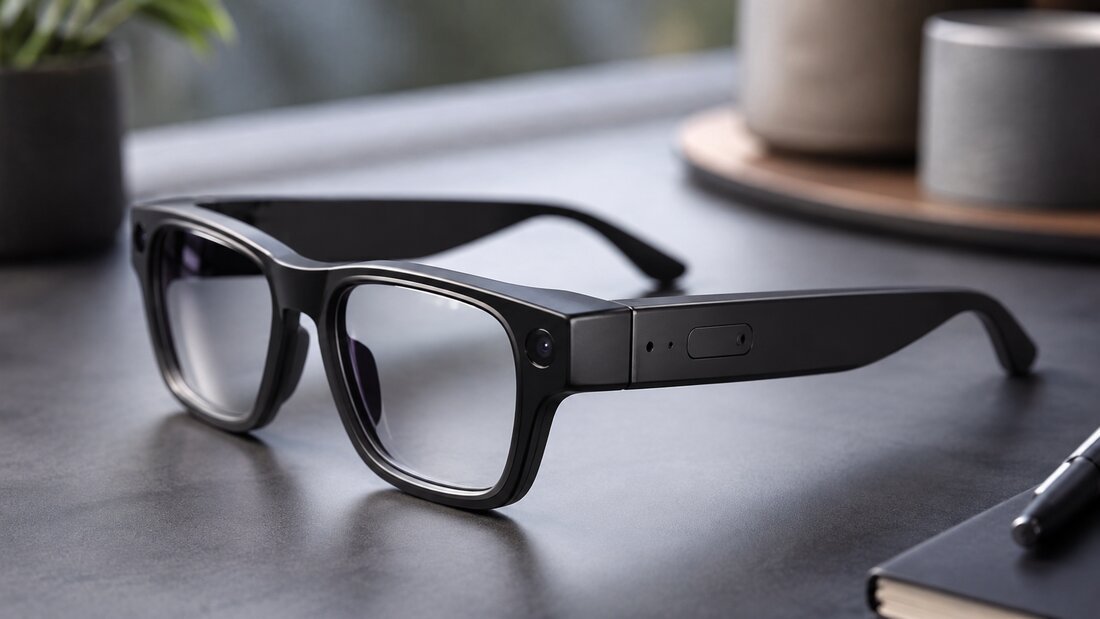
AI smart glasses vary widely in display technology, camera resolution, battery life, and weight. For classroom use, prioritize comfort (weight under 80g), battery life covering a full school day (at least 6-8 hours), and durability (IP rating). Trade-offs exist: higher resolution displays often reduce battery life; built-in cameras raise privacy concerns unless disabled via firmware.
Request a detailed specification sheet and sample units to test in real classroom conditions. Compare offerings from different suppliers using a structured AI smart glasses product page as a reference.
Why this matters: Over-specifying can increase cost without improving learning outcomes; under-specifying leads to poor user adoption.
4. OEM/ODM and Private Label Capability
Education technology companies often need branded devices with customized packaging and software. Assess whether the supplier offers true OEM/ODM services: custom logo, packaging, firmware, and app development. Ask about tooling ownership and IP protection—critical if you plan to scale. For a deeper look at private label options, see private label wearable solutions.
Confirm whether the supplier has in-house design and engineering teams or outsources. A supplier with in-house capabilities typically offers better control over quality and timelines.
5. Quality Control and Testing Protocols
Reliable suppliers follow structured QC processes: incoming material inspection, in-process checks, and pre-shipment inspection (PSI). Ask for their QC flow chart and sample test reports. For education use, durability is key—request drop test reports (e.g., 1.2m drop onto concrete), waterproof test (IPX4 or higher), and aging test data for hinges and batteries.
Battery safety is paramount: require UN38.3 test summary and MSDS, and confirm the supplier follows IATA lithium battery shipping regulations.
Verification method: Request a sample from current production and have it independently tested if necessary.
[Suggested image insertion: Quality control inspection of AI smart glasses—see image SEO suggestions]
6. MOQ, Pricing, and Lead Time Transparency
MOQ and pricing depend on customization level. Standard models may have lower MOQs (e.g., 500 units), while full OEM projects often require higher volumes. Request a detailed quotation that breaks down unit price, tooling costs (if applicable), packaging, and certification fees. Clarify lead times: sample lead time (typically 7-15 days) and mass production lead time (30-45 days after sample approval). Suppliers should provide a written production schedule with buffer for testing.
For UK buyers, factor in shipping time and potential customs clearance. A transparent supplier will share a smart retail and e-commerce solution overview if you plan to distribute through retail channels.
7. After-Sales, Warranty, and Spare Parts
Schools expect multi-year device lifecycles. Confirm warranty terms (typically 12 months), spare parts availability (e.g., nose pads, chargers), and repair/replacement process. Ask about firmware update commitments and end-of-life support. A supplier with a clear after-sales policy reduces long-term ownership costs.
Supplier Comparison Table
| Criteria | Supplier A (Example) | Supplier B (Example) | What to Look For |
|---|---|---|---|
| UKCA/CE documentation | Available for base model | Available for all variants | Full model coverage |
| Education software features | Basic MDM support | Full SDK + DPIA template | UK GDPR alignment |
| OEM/ODM capability | Logo and packaging only | Firmware + app customization | In-house engineering |
| MOQ | 1,000 units | 500 units | Flexibility for pilot |
| Lead time | 45-60 days | 30-45 days | Written schedule |
| Warranty | 12 months | 12 months + spare parts kit | Spare parts availability |
Common Mistakes and Buyer Red Flags
- Accepting verbal assurance: Always request written certification and test reports.
- Ignoring data protection: Failing to assess UK GDPR compliance can expose schools to legal risk.
- Overlooking battery shipping rules: Lithium batteries require UN38.3 and proper labeling; non-compliant shipments may be refused.
- Choosing lowest price without QC: Cheap units often cut corners on durability and safety.
- No sample testing: Deploying without classroom trials risks poor adoption.
- Unclear IP ownership: Ensure tooling and design IP ownership is documented if you plan to scale.
[Suggested image insertion: Classroom testing of AI smart glasses—see image SEO suggestions]
Practical Buyer Checklist
- ☐ Request UKCA/CE declaration of conformity and test reports for safety, EMC, RoHS.
- ☐ Confirm UN38.3 test summary and MSDS for battery.
- ☐ Obtain a DPIA template and data processing agreement aligned with UK GDPR.
- ☐ Test a sample for comfort, battery life, and durability.
- ☐ Verify MDM/API compatibility and firmware customization options.
- ☐ Clarify MOQ, pricing breakdown, and lead times in writing.
- ☐ Review warranty terms and spare parts availability.
- ☐ Check supplier references from education sector if available.
FAQ
What certifications do AI smart glasses need for UK schools?
UKCA marking (or CE during transitional recognition) is typically required, along with test reports for electrical safety (BS EN 62368-1), EMC, and RoHS. Battery-powered devices also need UN38.3 and MSDS. Requirements may vary by product configuration; verify with your compliance advisor.
How can I ensure student data is protected?
Ask suppliers for documentation on data flow, local storage options, and UK GDPR alignment. Request a DPIA template and confirm whether data is processed in the UK/EEA. A data processing agreement should be in place.
What is a realistic MOQ for AI smart glasses?
MOQ depends on customization. Standard models may start at 500 units; full OEM projects often require 1,000 units or more. Discuss pilot orders with suppliers—some may offer smaller batches for trials.
How long does shipping to the UK take?
Production lead time is typically 30-45 days after sample approval, plus shipping (air freight 5-10 days, sea freight 30-40 days). Lithium batteries require special handling; confirm the supplier follows IATA regulations.
Can we customize the glasses with our brand?
Yes, many suppliers offer OEM/ODM services including logo, packaging, and firmware customization. Verify IP ownership and tooling costs upfront.
What warranty is standard?
12 months is common. Ask about extended warranty options and spare parts availability for multi-year deployments.
Conclusion
Vetting an AI smart glasses supplier for UK education requires a structured approach: verify compliance, test samples, assess software integration, and clarify commercial terms. By following the 7 checks in this guide, education technology companies can select suppliers that meet regulatory requirements and support successful classroom deployments.
Ready to Evaluate a Supplier?
STAR KING supports education technology companies with OEM/ODM AI smart glasses development. We provide sample units, compliance documentation, and customization options to help you meet UK market requirements. Contact our team to discuss your project and request a quotation.
Discuss Your Smart Wearable OEM/ODM Project
Planning a smart ring, smart watch, smart band, AI glasses, AI translator, or AI voice mouse project? Contact STAR KING to discuss product positioning, sample testing, customization scope, certification requirements, lead time, and quotation details.

Team Star King

Scan WhatsApp QR code
Leave a Reply