
AI voice mouse for healthcare: 7 Checks Before You Source AI Voice Mice for Healthcare in the Middle East: A 2026 RFQ Guide
November 11, 2026 · Team Star King
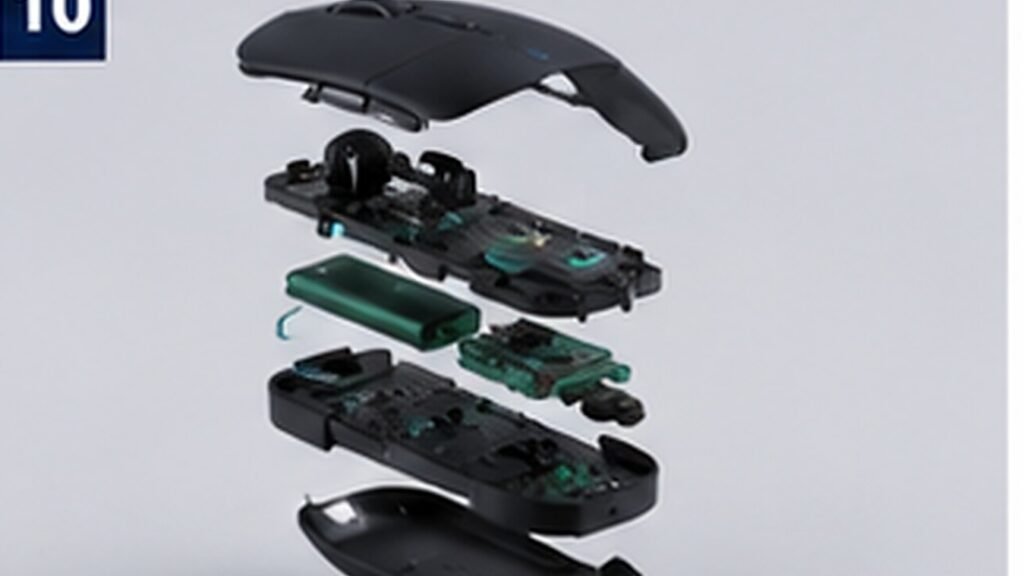
7 Checks Before You Source AI Voice Mouse for Healthcare in the Middle East: A 2026 RFQ Guide
If you are evaluating an AI voice mouse for healthcare procurement in the Middle East, the RFQ should test more than brand and price. A unit becomes a viable clinical-workflow device only when four things hold together: Arabic-English voice accuracy, low-friction integration with existing clinical software, qualified electrical and wireless compliance for your destination market, and a documented quality process that survives audit. This guide gives healthcare solution providers seven procurement checks to run before issuing a purchase order in 2026.
Table of Contents
Table of Contents
AI voice mouse for healthcare: Table of Contents
- Direct Answer: What Should an AI Voice Mouse RFQ Cover?
- Key Takeaways
- Key Facts for Buyers
- Check 1 — Multilingual Dictation Performance (Arabic + English)
- Check 2 — Clinical Software and OS Integration
- Check 3 — Certifications and Middle East Import Compliance
- Check 4 — Security, Data Handling and Meeting-Room Privacy
- Check 5 — OEM/ODM and Private Label Fit
- Check 6 — MOQ, Cost Drivers and Landed Cost
- Check 7 — Quality Control, Sampling and Lead Time
- Comparison Table: Entry-Level vs. Healthcare-Grade AI Voice Mouse
- Common Mistakes and Buyer Red Flags
- Practical Buyer Checklist
- FAQ
- Conclusion
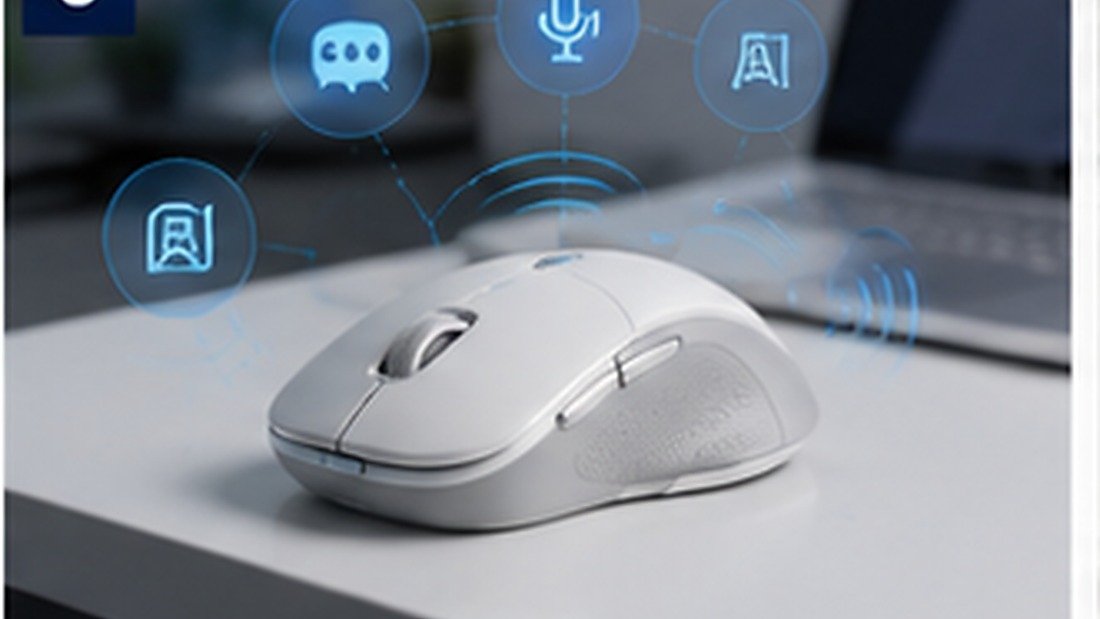
Direct Answer: What Should an AI Voice Mouse RFQ Cover?
A healthcare-focused AI voice mouse RFQ in the Middle East should validate four areas before price is negotiated: (1) measured Arabic and English dictation accuracy in realistic clinic noise, (2) compatibility with the clinical, ERP and EMR software your end users already run, (3) certifications appropriate to the destination country — typically CE and RoHS at minimum, plus radio approvals where a wireless dongle is included — and (4) a documented quality and inspection process. MOQ, lead time and private-label terms are then negotiated against those verified specs.
Key Takeaways
- Voice accuracy must be tested with real clinicians, not only spec sheets; Arabic dialect coverage is the single most common RFQ failure point.
- OS and software compatibility should be confirmed against the buyer’s actual EMR/clinical stack, not only generic Windows support.
- Certification scope depends on product configuration and destination market — buyers should verify and request test reports rather than accept verbal claims.
- MOQ and price are driven by firmware localization, branding, packaging and tooling, not just unit hardware.
- Pair a voice mouse pilot with [related solution pages] before committing to a multi-site rollout.

Key Facts for Buyers
| RFQ Item | What to Ask | Typical Evaluation Method | Why It Matters in Healthcare |
|---|---|---|---|
| Voice accuracy | Measured accuracy in Arabic and English under clinic-noise conditions | Live dictation test with 3–5 clinicians | Mistakes in notes create downstream clinical and audit risk |
| Language coverage | Supported languages and dialects; offline vs. cloud dictation | Sample on-site trial | Middle East deployments span Gulf, Levant and North African dialects |
| OS and software | Windows/macOS support; driver-free operation; EMR compatibility | Install on sample devices | Reduces IT support burden at rollout |
| Certification | CE, RoHS, radio approvals; test reports by configuration | Request reports and certificates | Import and tender compliance |
| Security | Data handling, encryption, local vs. cloud processing | Vendor questionnaire and audit | Protects patient and staff data |
| OEM/ODM scope | Logo, packaging, firmware, app or driver customization | Review capability and sample plan | Brand differentiation and tender fit |
| MOQ & price drivers | MOQ per SKU, cost drivers for localization and packaging | Written RFQ response | Budget and landed-cost planning |
| Quality & lead time | QC process, pre-shipment inspection, sample and mass-production lead time | Factory audit and sample review | Deliverable tender commitments |
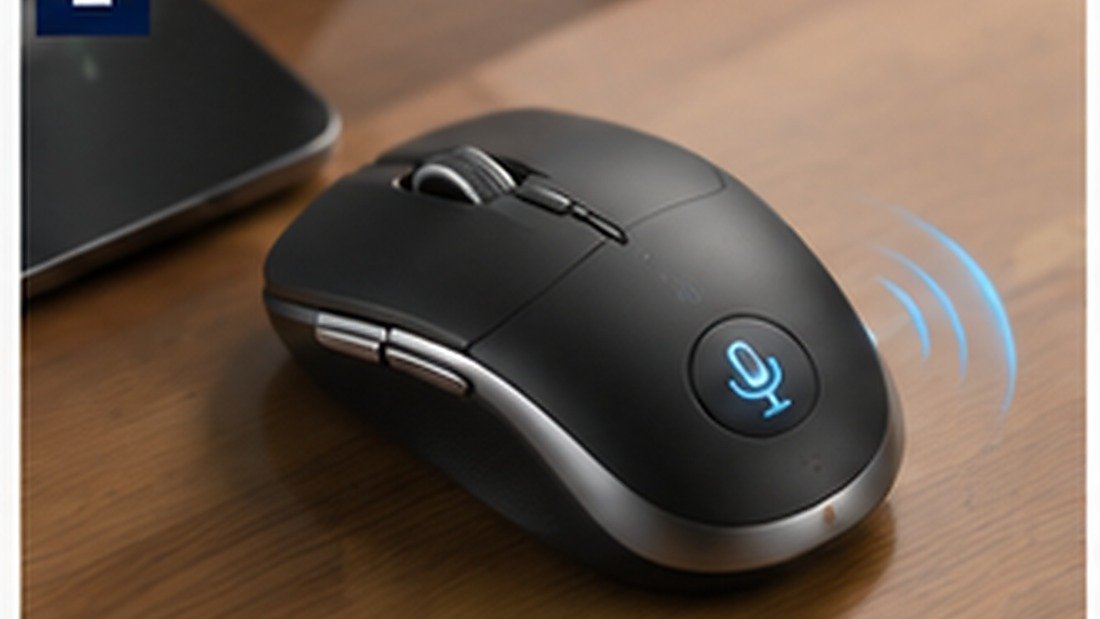
Check 1 — Multilingual Dictation Performance (Arabic + English)
Most failed voice-mouse pilots in the Gulf come from language handling, not hardware. A mouse that transcribes English accurately can still struggle with Arabic, especially mixed Arabic-English clinical phrases, regional dialects and named entities such as drug names, lab values and ICD-style code references. In healthcare, the output is not a chat message — it becomes part of the medical record or operational log, so accuracy has to be evaluated in the buyer’s real workflow.
How to evaluate multilingual accuracy
- Run a scripted dictation test in English, Modern Standard Arabic and at least one local dialect spoken by target users.
- Include realistic clinical and operational vocabulary (specialties, medications, appointment types, device names).
- Test with typical background noise — clinic reception, pharmacy counters, ward corridors and conference rooms — rather than a quiet office.
- Confirm whether dictation runs on-device, in the cloud, or both. Each model has different implications for latency, security and data residency.
Language support, offline-mode behavior and dialect coverage are configuration-dependent; confirm them with the manufacturer before issuing an RFQ: [STAR KING TO CONFIRM].
[IMAGE PLACEHOLDER 1 — See image_seo_suggestions]
Check 2 — Clinical Software and OS Integration
Healthcare IT environments are conservative. End users may still be on older Windows builds alongside newer macOS devices, and critical applications are often legacy clinical, ERP or practice-management systems. A voice mouse for healthcare is only usable if it types into the applications clinicians and administrators already use — without requiring a new driver stack or a customized SDK.
Integration questions to put in writing
- Is the device driver-free, or does it require an installed utility?
- Does dictation output as standard keyboard input so it works inside EMR, LIS, ERP and office applications?
- Are there shortcut, macro or voice-command features that can be disabled to reduce misclicks in clinical settings?
- Does the manufacturer provide a stable driver/app release schedule, and how are firmware updates delivered?
- Can a corporate buyer mass-manage settings, or is configuration left to individual users?
If the end deployment needs deeper software customization — such as embedded workflow templates, corporate configuration or an administrative dashboard — discuss that scope with the manufacturer early. STAR KING’s AI office productivity solutions cover hardware-and-software customization, and the wider resources blog has additional procurement guides.
Check 3 — Certifications and Middle East Import Compliance
Certification is the check buyers most often oversimplify. Compliance scope typically depends on the precise product configuration — wired vs. wireless, battery inclusion, radio frequency use, and the destination country. Buyers should verify every claim against actual test reports and certificates rather than accepting a list on a quotation.
Certifications typically requested for a wireless AI voice mouse
- CE — commonly expected for European-adjacent tenders and many regional healthcare projects.
- FCC — relevant when the same SKU is also sold into the US.
- RoHS — restricted-substance compliance; often a baseline tender requirement.
- Radio approvals — where a 2.4 GHz dongle or Bluetooth module is included; the exact requirement depends on the destination country’s telecom regulator.
- Battery-related documents — if the product includes a rechargeable battery, transport and safety documentation such as UN38.3 or MSDS may apply.
In the Middle East, conformity requirements differ by country and by project type (public hospital, private clinic group, distributor or government tender). Buyers should confirm country-specific requirements with a local regulatory advisor or freight forwarder. Authoritative background is available from the International Electrotechnical Commission (IEC) and the U.S. Federal Communications Commission (FCC); the relevant national telecom or standards authority in your destination country should be the final reference. Do not assume every configuration of a platform carries the same approvals — confirm by SKU: [STAR KING TO CONFIRM].
Check 4 — Security, Data Handling and Meeting-Room Privacy
Voice input touches both patient data and business-confidential conversations. For a healthcare solution provider, the procurement question is not only whether dictation is accurate, but where audio and transcript data go, who can access them and how long they are retained.
Security questions for the manufacturer
- Does dictation run fully on-device, fully in the cloud, or in a hybrid model — and can the buyer choose?
- What encryption is applied in transit and at rest? [STAR KING TO CONFIRM]
- Is audio stored by the vendor or the cloud provider, and can it be disabled for regulated deployments?
- Are privacy and data-processing agreements available?
- Can the buyer disable microphone activation or hot-words in sensitive environments?
Where local data-residency rules or hospital IT policies apply, buyers should verify against the destination country’s data-protection framework and their own information-security policy before rollout.
Check 5 — OEM/ODM and Private Label Fit
For healthcare solution providers selling into the Middle East, the voice mouse is rarely a standalone product — it is bundled into a clinic package, a corporate-wellness offering or a tender submission. That makes private-label and OEM flexibility a procurement decision, not a marketing extra.
What customization typically includes
- Logo and enclosure branding — printed or laser logo, color options.
- Packaging customization — retail or tender-ready packaging, multilingual inserts, barcodes.
- Firmware and driver customization — default language settings, disabled features, corporate default configuration.
- App or utility customization — where a companion utility is used, custom splash, settings and update channel.
- Documentation — user manuals in Arabic and English, quick-start cards, warranty terms.
Scope and minimum order per customization vary by project. STAR KING’s private label OEM/ODM program and AI voice mouse product page are the right starting points for a customization discussion. If your deployment also includes wearables — for example a wellness or remote-monitoring component — see corporate wellness applications as a related reference.
Check 6 — MOQ, Cost Drivers and Landed Cost
At RFQ stage, buyers need a defensible cost model, not just a unit price. AI voice mouse cost is driven by several factors that are easy to underestimate.
Main cost drivers
- Unit hardware and sensor/ microphone quality.
- Firmware localization (language packs, dialect handling, default configuration).
- Branding, packaging and documentation customization.
- Tooling development if an enclosure change is required.
- Certification scope for the chosen configuration.
- Freight, duties and regional import charges (landed cost).
MOQ typically depends on SKU, customization level and the production schedule; a standard color with logo printing generally carries a different MOQ than a new enclosure with custom firmware. Confirm MOQ and sample lead time against your project plan: [STAR KING TO CONFIRM]. For a structured view of how MOQ interacts with cost, see STAR KING’s broader smart retail and e-commerce solution context when the same device is sold through retail channels.
Check 7 — Quality Control, Sampling and Lead Time
Tender timelines are unforgiving. Quality control and lead time therefore belong in the RFQ, not the post-award discussion.
What to request from the manufacturer
- Sample units for hands-on testing before PO.
- Documented QC process, including incoming inspection, in-line testing and pre-shipment inspection.
- Functional testing criteria: microphone pickup, button life, drop and transport testing where relevant, aging and burn-in where offered.
- Packaging and documentation checks against the buyer’s brand and language requirements.
- Production lead time after sample approval and PO confirmation, plus buffer for inspection and freight.
STAR KING’s quality and testing scope by product and configuration should be confirmed in writing at RFQ stage: [STAR KING TO CONFIRM]. For buyers new to sourcing from China, a general sourcing and market resources section provides background reading before a factory audit.
[IMAGE PLACEHOLDER 2 — See image_seo_suggestions]
Comparison Table: Entry-Level vs. Healthcare-Grade AI Voice Mouse
| Dimension | Entry-Level Consumer Unit | Healthcare-Grade Procurement Unit |
|---|---|---|
| Language support | English-first, cloud dictation | Arabic + English, optional offline, dialect tested |
| Integration | Generic driver, basic utility | Driver-free keyboard output, EMR/ERP tested |
| Security | Limited documentation | Data-handling documentation, configurable privacy features |
| Certification | Basic compliance | Configuration-specific test reports, radio approvals |
| Customization | Logo only | Logo, packaging, firmware, documentation, app |
| Quality | Standard batch QC | Documented QC + pre-shipment inspection |
| Commercial terms | Low MOQ, higher unit price | Project MOQ, planned lead time, warranty |
If you are comparing voice input options as part of a wider clinic or wellness deployment, STAR KING’s health and fitness wearables solutions show how peripherals and wearables can be bundled for a single procurement package.
Common Mistakes and Buyer Red Flags
Common mistakes
- Approving a voice mouse from an English-only demo, then discovering Arabic performance gaps after rollout.
- Assuming a certification on the product page applies to every configuration and every destination country.
- Ignoring data-handling questions until after a hospital IT review.
- Underestimating landed cost by omitting duties, regional freight and documentation localization.
- Leaving firmware and driver update ownership undefined.
Red flags in a supplier response
- Certification claims stated verbally without test reports.
- Vague answers on offline vs. cloud dictation and data residency.
- No defined sample or pre-shipment inspection process.
- MOQ and lead time quoted without reference to customization scope.
- No clarity on who owns firmware updates and warranty support after shipment.
Practical Buyer Checklist
| Stage | Action | Deliverable |
|---|---|---|
| 1. Needs definition | Map clinical and administrative use cases | Use-case document |
| 2. Language test | Test Arabic/English dictation with real users | Accuracy notes and issues list |
| 3. Integration check | Install on sample devices in your IT environment | Compatibility confirmation |
| 4. Compliance | Request certificates and test reports by SKU | Verified documentation |
| 5. Security | Complete vendor security questionnaire | Signed data-handling terms |
| 6. Commercials | Confirm MOQ, customization, landed cost, lead time | Written quotation |
| 7. Quality | Agree QC and inspection criteria | Inspection plan |
| 8. Pilot | Deploy to a single site before multi-site rollout | Pilot report |
For procurement teams preparing a tender, pairing a voice mouse pilot with a remote-health deployment plan can shorten the evaluation cycle and align device choices with the wider care model.
[IMAGE PLACEHOLDER 3 — See image_seo_suggestions]
FAQ
1. What is an AI voice mouse for healthcare?
An AI voice mouse combines a standard pointing device with voice-input capability, converting speech into text for clinicians and administrative staff. In healthcare settings, the evaluation focuses on multilingual dictation (Arabic and English), integration with clinical software, and data-handling and compliance documentation.
2. Which certifications should I request for the Middle East?
Request CE, RoHS and radio-related approvals where a wireless dongle is included, alongside test reports for the specific configuration. Country-specific requirements vary and should be confirmed with a local regulatory advisor or your freight forwarder before the tender is submitted.
3. Can the AI voice mouse be private-labeled?
Yes, private-label and OEM customization can typically cover logo, packaging, documentation and firmware defaults, with app utility customization where applicable. Scope and MOQ depend on the project; confirm with the manufacturer during RFQ.
4. Does the device work offline?
Offline versus cloud dictation is a configuration and firmware decision. Buyers should state their requirement in the RFQ, because offline capability affects both language performance and data-handling compliance. Confirm availability by SKU: [STAR KING TO CONFIRM].
5. How long does sampling and production take?
Sample lead time and mass-production lead time depend on customization scope, certification work and production schedule. Plan a buffer for pre-shipment inspection and freight; confirm timelines against your tender milestones: [STAR KING TO CONFIRM].
6. What is a realistic MOQ?
MOQ is set by SKU and customization level. A standard unit with logo printing generally carries a lower MOQ than a new enclosure with custom firmware and localized packaging. Request MOQ per configuration, not as a single figure.
7. How should I evaluate voice accuracy before ordering?
Run a scripted test with target clinicians in realistic clinic noise, in English, Modern Standard Arabic and at least one local dialect, using your own clinical vocabulary. Score by error rate and by the effort required to correct dictated text.
Conclusion
An AI voice mouse for healthcare procurement is decided by verification, not by feature lists. The seven checks in this guide — multilingual accuracy, software integration, configuration-specific certification, security and data handling, OEM/private-label fit, cost and MOQ drivers, and quality/lead-time planning — give healthcare solution providers in the Middle East a defensible RFQ structure. Run the pilot on a single site, confirm documentation in writing, then scale.
Request an OEM/ODM Quotation for AI Voice Mice
To move from evaluation to RFQ, send STAR KING your target use case, destination country and expected volume. We can review customization options and sample requirements and respond with a written quotation against your compliance scope. Request a quotation or discuss an OEM/ODM project with our team.
Discuss Your Smart Wearable OEM/ODM Project
Planning a smart ring, smart watch, smart band, AI glasses, AI translator, or AI voice mouse project? Contact STAR KING to discuss product positioning, sample testing, customization scope, certification requirements, lead time, and quotation details.

Team Star King

Scan WhatsApp QR code
Leave a Reply