
AI Translators for System Integrators in Southeast Asia: 7 Proven Vendor Selection Criteria
November 11, 2026 · Team Star King
AI Translators for System Integrators in Southeast Asia: 7 Proven Vendor Selection Criteria
When selecting AI translators for system integrators in Southeast Asia, the most reliable approach is to evaluate suppliers on seven integration criteria: firmware/API openness, language and dialect coverage, hardware reliability and battery safety, app and cloud flexibility, compliance for cross-border deployment, MOQ and lead-time planning, and post-sales technical support. These criteria help system integrators reduce project risk, meet client SLAs, and avoid costly rework during deployment.
Table of Contents
Table of Contents
AI translators for system integrators: Short Answer
For system integrators deploying AI translators in Southeast Asia, choose a supplier that provides documented firmware integration options, verified language packs for local dialects, UN38.3 and relevant radio compliance documentation, clear MOQ and lead-time commitments, and responsive technical support. Request samples and a written integration checklist before signing a supply agreement.
Table of Contents
- Key Takeaways
- Key Facts for Buyers
- What Are AI Translators and Why System Integrators Need Them
- 1. Firmware and API Integration Openness
- 2. Language and Dialect Coverage for Southeast Asia
- 3. Hardware Reliability and Battery Safety
- 4. App, Cloud, and Data Handling Flexibility
- 5. Compliance and Certification for Cross-Border Deployment
- 6. MOQ, Lead Time, and Supply Chain Planning
- 7. Post-Sales Technical Support and Warranty
- Comparison Table: Supplier Evaluation Matrix
- Common Mistakes and Buyer Red Flags
- Practical Buyer Checklist
- FAQ
- Conclusion
Key Takeaways
- System integrators should prioritize suppliers that provide documented firmware integration options and SDK access, not just off-the-shelf devices.
- Language coverage must include Southeast Asian languages and dialects, with clear update and customization policies.
- Battery safety documentation such as UN38.3 and MSDS is essential for air freight and cross-border deployment.
- MOQ and lead time should be confirmed in writing, with sample validation before mass production.
- Compliance requirements vary by country; buyers should verify certifications for each target market.
- A structured evaluation matrix reduces integration risk and supports long-term supplier relationships.
Key Facts for Buyers
| Consideration | Typical Requirement | What to Verify |
|---|---|---|
| Firmware/API access | SDK or documented API for custom integration | Request API documentation and test environment |
| Language coverage | Southeast Asian languages and dialects | Confirm language pack list and update frequency |
| Battery safety | UN38.3 test summary, MSDS | Request documents for the exact battery configuration |
| Radio compliance | CE, FCC, or local equivalents | Verify certifications for target countries |
| MOQ | Typically 500–1,000 units for OEM | Confirm MOQ per model and customization level |
| Lead time | 30–60 days after sample approval | Get written schedule with milestones |
| Warranty | 12 months standard | Clarify spare parts and RMA process |
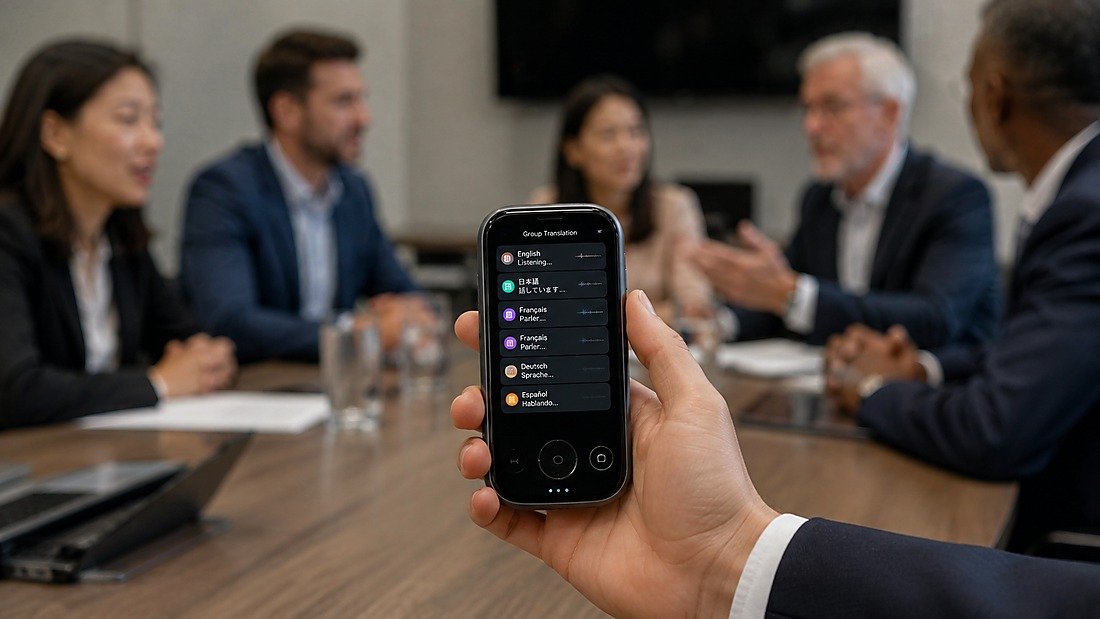
What Are AI Translators and Why System Integrators Need Them
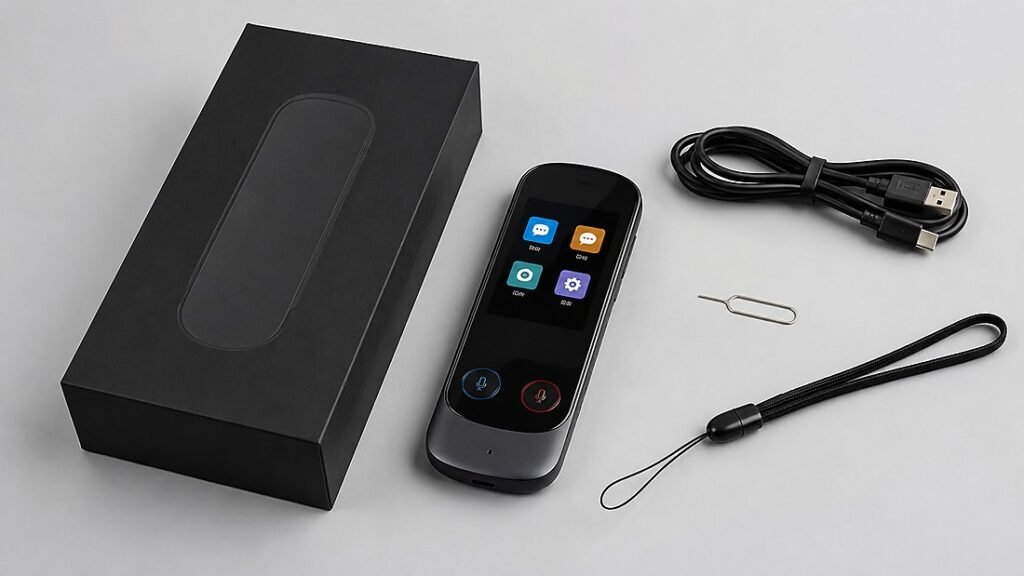
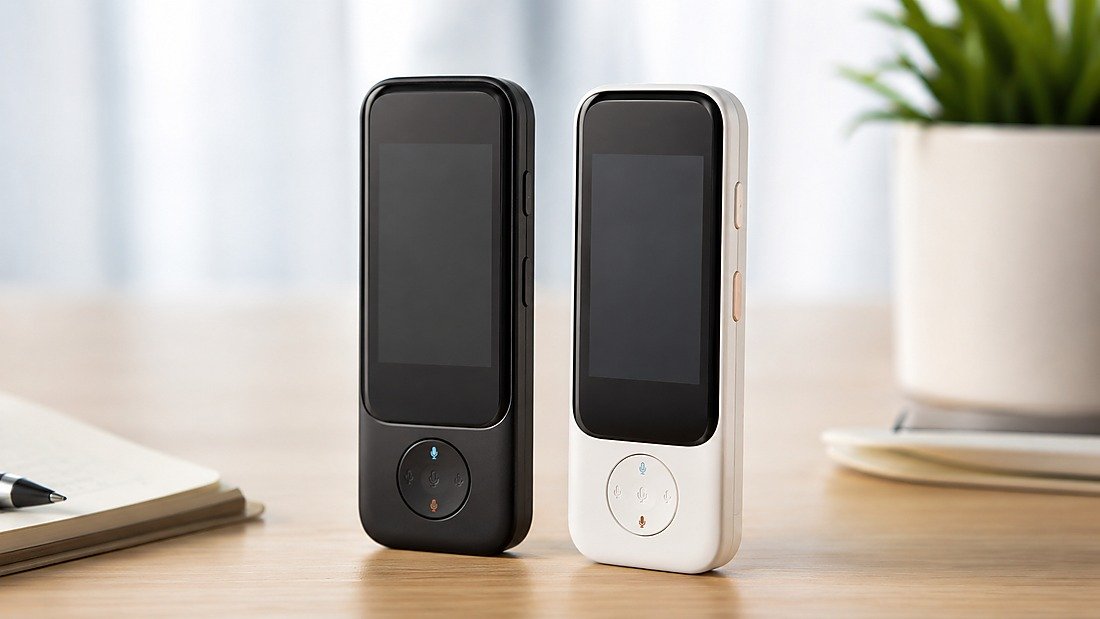
AI translators are portable or handheld devices that use speech recognition, machine translation, and text-to-speech to enable real-time communication across languages. For system integrators in Southeast Asia, these devices are increasingly integrated into hospitality, healthcare, logistics, and public service projects where multilingual communication is essential.
Unlike consumer-focused translation apps, AI translators for system integrators must be evaluated as components of a larger solution. Integrators need to consider how the device connects to back-end systems, how language models are updated, and how the hardware performs in varied environments. This guide focuses on the supplier selection stage, where technical due diligence and commercial terms are equally important.
1. Firmware and API Integration Openness
The first criterion is whether the supplier offers firmware customization and API access. System integrators often need to embed translation functions into their own applications or connect devices to client management systems. A supplier that only provides a closed consumer app limits integration possibilities.
What to ask
- Is there a documented SDK or REST API for device management and data exchange?
- Can firmware be customized for specific workflows, such as push-to-talk or kiosk mode?
- Are over-the-air (OTA) updates supported, and who controls the update schedule?
- What data formats are supported for exporting translation logs?
Request a technical documentation package and, if possible, a development kit for testing. STAR KING’s AI translators product page outlines available customization options; confirm specifics with the supplier.
2. Language and Dialect Coverage for Southeast Asia
Southeast Asia is linguistically diverse. Beyond national languages such as Bahasa Indonesia, Thai, Vietnamese, and Filipino, regional dialects and code-switching are common. The supplier’s language pack coverage and update policy directly affect deployment success.
Evaluation points
- List of supported languages, including Southeast Asian languages.
- Accuracy benchmarks for noisy environments, if available.
- Process for adding or customizing language packs.
- Frequency of model updates and whether updates are free or paid.
Test samples with real phrases from the target market. For projects in business and education settings, refer to STAR KING’s Business & Education solutions for integration context.
3. Hardware Reliability and Battery Safety
Devices deployed in the field must withstand daily use. Battery safety is a critical concern for air transport and regulatory compliance. Suppliers should provide UN38.3 test summaries and MSDS for the battery configuration used in the device.
What to verify
- Battery capacity and expected operating time.
- Charging method and connector durability.
- Drop test and environmental test reports.
- Water and dust resistance rating, if relevant.
Battery safety documentation is typically required by logistics providers. Confirm that documents match the exact model and battery specification.
4. App, Cloud, and Data Handling Flexibility
System integrators may need to manage device fleets, update configurations, or integrate with customer relationship management (CRM) systems. The supplier’s app and cloud architecture should support these needs without locking integrators into a proprietary platform.
Questions for the supplier
- Is there a device management portal for bulk configuration?
- Can translation data be stored on-premises or in a specified cloud region?
- What are the data privacy and retention policies?
- Are there options for private label app branding?
For private label considerations, see Private Label OEM/ODM solutions.
5. Compliance and Certification for Cross-Border Deployment
Compliance requirements for AI translators vary by country and include radio frequency, electrical safety, and battery regulations. Common certifications include CE (Europe), FCC (United States), and equivalents in Southeast Asian markets. Buyers should verify that the supplier can provide documentation for the target countries.
For reference, the U.S. Federal Communications Commission (FCC) and the European Commission CE marking pages provide official guidance. In Southeast Asia, requirements may differ; buyers should consult local regulatory authorities. STAR KING can provide compliance documentation for specific product configurations upon request; [STAR KING TO CONFIRM] which certifications are available for each model.
6. MOQ, Lead Time, and Supply Chain Planning
System integrators often need to balance project timelines with inventory investment. MOQ and lead time should be confirmed in writing, along with payment terms and Incoterms.
Negotiation points
- MOQ per model and per customization level.
- Sample lead time and mass production lead time.
- Capacity constraints and surge planning.
- Shipping terms and logistics partners for Southeast Asia.
For a broader view of sourcing considerations, the STAR KING blog includes related guides.
7. Post-Sales Technical Support and Warranty
Reliable post-sales support is essential for system integrators managing client deployments. The supplier should offer clear warranty terms, spare parts availability, and technical support channels.
Support checklist
- Warranty period and coverage details.
- RMA process and turnaround time.
- Availability of spare parts and accessories.
- Technical support languages and response times.
Comparison Table: Supplier Evaluation Matrix
Use this matrix to compare potential suppliers on the seven criteria. Score each criterion from 1 (poor) to 5 (excellent) and total the scores.
| Criterion | Supplier A | Supplier B | Supplier C |
|---|---|---|---|
| 1. Firmware/API integration | |||
| 2. Language and dialect coverage | |||
| 3. Hardware reliability and battery safety | |||
| 4. App and cloud flexibility | |||
| 5. Compliance and certification | |||
| 6. MOQ and lead time | |||
| 7. Post-sales support | |||
| Total |
Common Mistakes and Buyer Red Flags
- Ignoring firmware access: Choosing a closed system that cannot integrate with client software.
- Underestimating language complexity: Assuming national language support is sufficient without testing local dialects.
- Skipping battery documentation: Failing to verify UN38.3 and MSDS can delay shipments.
- Accepting verbal MOQ commitments: Always get MOQ and lead times in writing.
- Overlooking compliance: Assuming one certification covers all Southeast Asian countries; verify per market.
- No sample validation: Deploying without testing real-use scenarios.
Practical Buyer Checklist
- Request SDK/API documentation and test environment.
- Obtain a list of supported languages and dialects, with update policy.
- Verify UN38.3 and MSDS for the exact battery configuration.
- Confirm compliance certificates for each target country.
- Negotiate MOQ and lead time with written milestones.
- Order samples and conduct field tests in target environments.
- Clarify warranty, RMA, and spare parts terms.
- Assess technical support responsiveness during the evaluation phase.
FAQ
What is the typical MOQ for AI translators from Chinese suppliers?
MOQ varies by supplier and customization level. For standard models with logo customization, MOQ may start around 500 units; full ODM projects may require 1,000 units or more. Confirm with each supplier.
How can I verify language accuracy for Southeast Asian languages?
Request sample devices and test with native speakers in real scenarios. Ask for accuracy benchmarks if available, and confirm the process for adding or updating language packs.
Which certifications are required for AI translators in Southeast Asia?
Requirements differ by country. Common needs include radio equipment certification, electrical safety, and battery transport documents (UN38.3, MSDS). Buyers should verify with local authorities and request certificates for each market.
Can AI translators be integrated with existing apps?
Some suppliers offer SDKs or APIs for integration. Ask for technical documentation and test the integration during the sample phase. Open firmware and API access are key selection criteria.
What is the typical lead time for OEM orders?
Lead time depends on customization complexity and order volume. A common range is 30–60 days after sample approval. Get a written schedule with production milestones.
How should I handle after-sales support for deployed devices?
Clarify warranty terms, RMA process, and spare parts availability before ordering. Establish a technical support contact and agree on response times.
Conclusion
Selecting the right AI translator supplier is a strategic decision for system integrators in Southeast Asia. By evaluating firmware integration, language coverage, hardware reliability, compliance, MOQ, and support, integrators can reduce deployment risk and deliver reliable multilingual solutions. Use the evaluation matrix and checklist in this guide to structure your supplier conversations and make informed comparisons.
Next Step
Ready to evaluate AI translators for your next integration project? Contact STAR KING sales to discuss your requirements, request product samples, or review customization options for your Southeast Asia deployment.
Discuss Your Smart Wearable OEM/ODM Project
Planning a smart ring, smart watch, smart band, AI glasses, AI translator, or AI voice mouse project? Contact STAR KING to discuss product positioning, sample testing, customization scope, certification requirements, lead time, and quotation details.

Team Star King

Scan WhatsApp QR code
Leave a Reply