
smart bands supplier selection: Smart Bands for Education Technology in the EU: 9 Supplier Selection Checks for 2026
November 8, 2026 · Team Star King

Smart Bands for Education Technology in the EU: 9 Supplier Selection Checks for 2026
Smart bands supplier selection for EU education technology buyers means matching a wearable manufacturer to your pilot scope, data protection obligations, CE and battery documentation, MOQ plan, and classroom deployment timeline. Education technology companies should shortlist suppliers only after they have verified device configuration, sample performance, compliance evidence by SKU, and post-sale support in writing. A smart band that fits a sports program may not meet the access, durability, or privacy requirements of a school or university rollout.
Table of Contents
Table of Contents
smart bands supplier selection: Table of Contents
- Short Answer
- Key Takeaways
- Key Facts for Buyers
- Why Education Technology Buyers Need a Different Supplier Screen
- Step 1: Define the Education Use Case Before You Compare Suppliers
- Step 2: Verify Factory Capability in Person or by Live Video
- Step 3: Confirm Compliance by SKU, Not by Company Claim
- Step 4: Ask How the Supplier Handles App, Firmware, and Data
- Step 5: Test Samples Against a Written Education Protocol
- Step 6: Model MOQ, Lead Time, and Landed Cost Together
- Step 7: Review Quality Control and Pre-Shipment Inspection
- Step 8: Clarify Packaging, Branding, and Tooling Ownership
- Step 9: Check Warranty, Spare Parts, and EU Support
- Supplier Comparison Table
- Common Mistakes and Buyer Red Flags
- Practical Buyer Checklist
- FAQ
- Conclusion

Short Answer
For EU education technology projects, smart bands supplier selection should start with the use case, not the price list. Collect a written compliance file per model, test samples with students or staff in realistic conditions, and confirm MOQ, lead time, App or firmware customization, and warranty support before signing. A supplier that cannot provide SKU-level documents, sample validation, and a clear change-control process is a procurement risk for any school or university rollout.
Key Takeaways
- Education buyers need wearables that are durable, easy to deploy, and documented for EU market access.
- Smart bands supplier selection should be based on written evidence, not demo videos or general brand claims.
- CE marking, RED, RoHS, battery documentation, and packaging rules apply by product configuration and target market.
- Sample testing should mirror classroom or campus use, including strap comfort, charging routine, and App onboarding.
- MOQ, tooling, lead time, and landed cost should be modeled together before your pilot budget is approved.
Key Facts for Buyers
| Decision Area | What to Confirm | Why It Matters for EU Education Tech |
|---|---|---|
| Product scope | Band model, sensors, display, battery, strap material | Defines training plan, durability needs, and documentation file |
| Compliance | CE, RED, RoHS, battery documents, packaging and labeling | Market access and school procurement review |
| Software | App ownership, firmware control, data handling, update path | Privacy and IT approval in schools or universities |
| Sourcing terms | MOQ, sample fees, tooling, lead time, Incoterms | Budget approval and pilot timing |
| Quality | Testing plan, inspection, AQL, warranty | Reduces returns and classroom downtime |
| Customization | Logo, packaging, App skin, firmware options | Brand fit and program identity |
Why Education Technology Buyers Need a Different Supplier Screen
Education technology companies often buy wearables for research programs, student wellness initiatives, physical education, campus safety pilots, or corporate wellness resale. These use cases differ from consumer retail because the buying committee usually includes IT, procurement, legal, and program owners. A supplier that sells only finished consumer products may struggle to provide the documentation, customization, and support those stakeholders expect.
A good smart bands supplier selection process therefore looks at four layers: the device, the software, the compliance file, and the commercial terms. If any layer is missing, the project can stall at contract review or fail during the first semester. EU buyers also need to consider how data from minors or students is handled, who controls the App account, and whether the supplier can support firmware updates after deployment.
Step 1: Define the Education Use Case Before You Compare Suppliers
Write a one-page use case before you request quotes. Specify whether the band is for PE classes, sleep and recovery research, campus wellness challenges, or staff corporate wellness. Then list the must-have features: heart rate, blood oxygen, step and activity tracking, sleep staging, water resistance, battery life, display type, and App platform support.
For EU education buyers, add data protection requirements to the use case. Determine whether the band will pair with a school-managed phone, a shared tablet, or a personal device. If minors are involved, your legal team will likely ask about consent flow, data retention, and whether the supplier’s App collects only the data required for the program. Document these answers before supplier calls so you can compare responses consistently.
Use the corporate wellness application page as a reference for how program scope affects feature choices; the same logic applies to student wellness and staff wellbeing pilots.
Step 2: Verify Factory Capability in Person or by Live Video
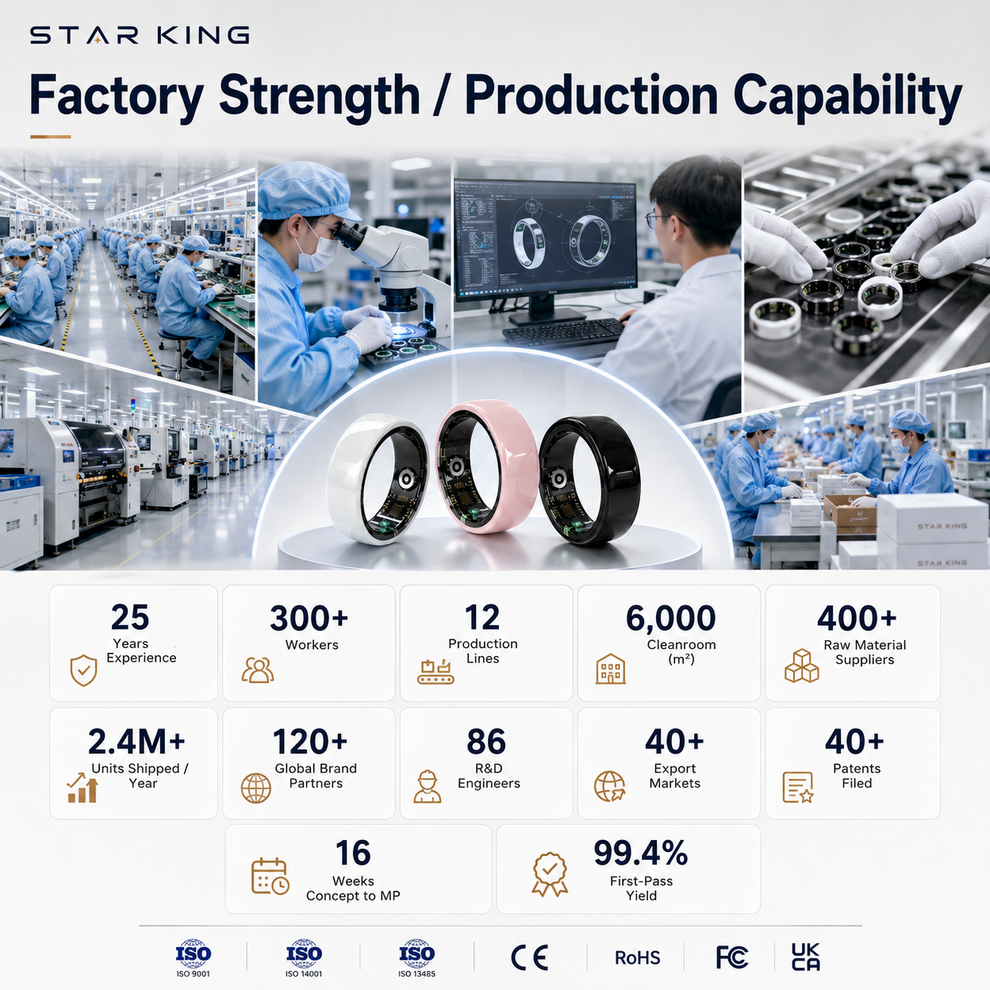
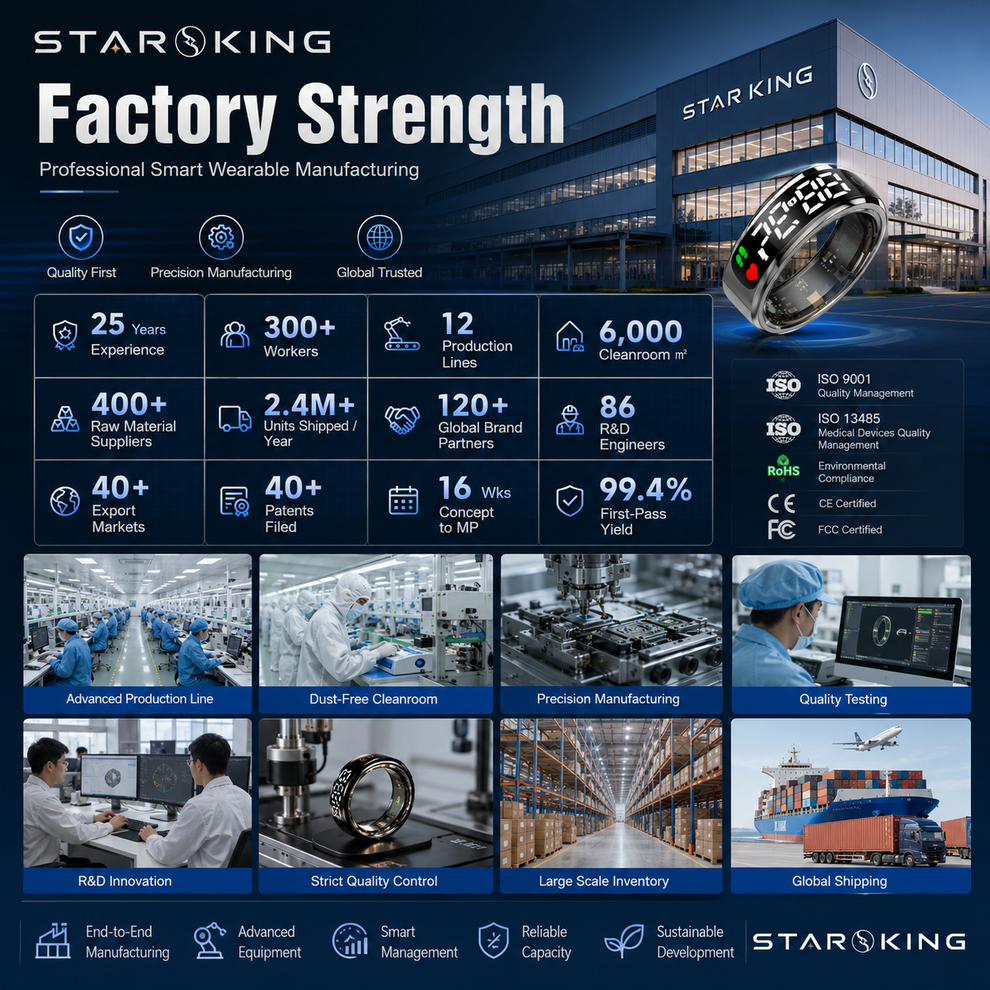
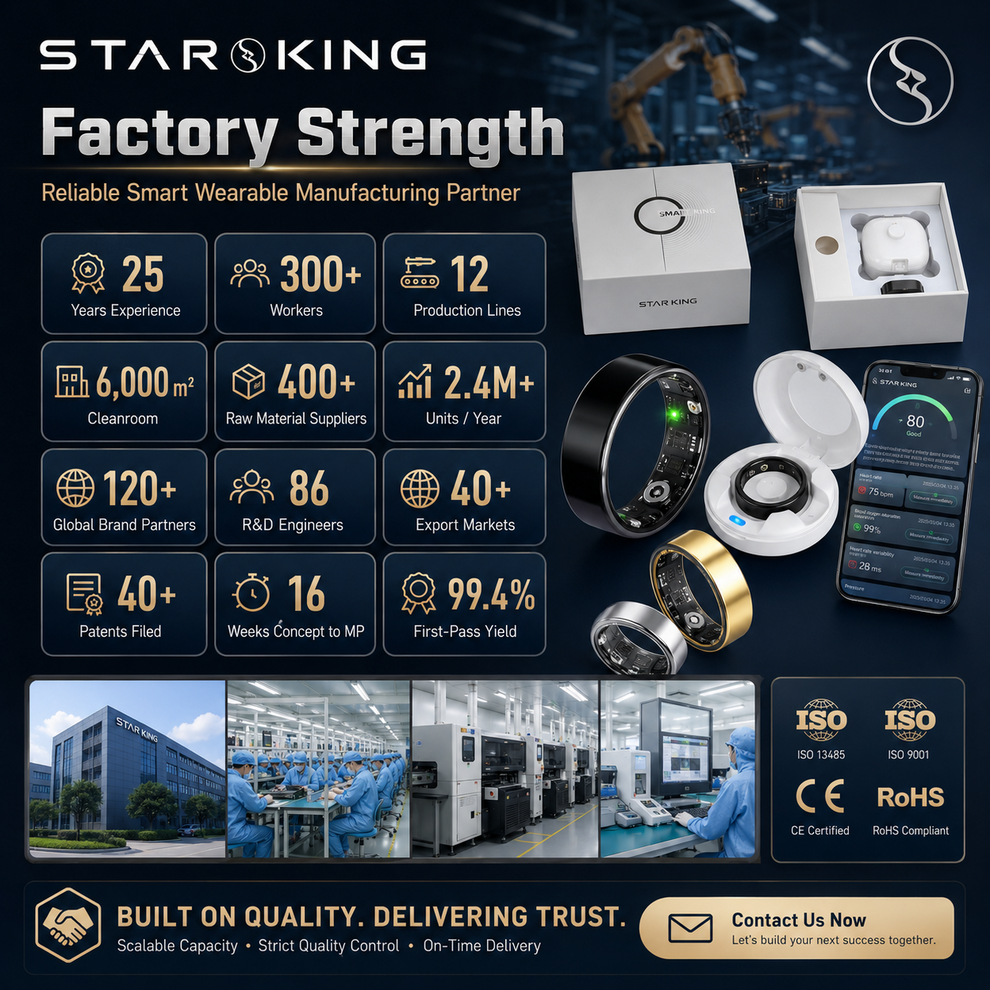
Supplier evaluation should include a live or recorded factory walkthrough, not only a product catalog. Ask to see the assembly line for smart bands, the testing stations, the packaging area, and the finished goods warehouse. If an on-site visit is not possible, request a live video call with a fixed camera path and a date-stamped recording.
Check whether the supplier is a trading company, an OEM/ODM manufacturer, or a hybrid. Trading companies can be useful for small orders, but education buyers usually need engineering support, change control, and after-sales accountability. Ask who owns the firmware, who writes the App, and who handles warranty returns. If the supplier outsources core work, ask for the name of the partner and the quality agreement between them.
For buyers comparing wearable categories, the smart bands product page gives a starting point for form factor and feature conversations with the factory.
Step 3: Confirm Compliance by SKU, Not by Company Claim
EU market access for smart bands typically depends on the product configuration. A CE mark on a website is not enough; buyers should request the declaration of conformity, test reports, and battery transport documents for the exact model and SKU they plan to import. Radio equipment sold in the EU generally falls under the Radio Equipment Directive, and electrical products are subject to RoHS restrictions. Batteries and packaging may also require separate documentation depending on the shipment.
Use official references when reviewing supplier documents. The European Commission CE marking page explains the manufacturer’s obligations, and the Bluetooth SIG qualification listing helps verify whether a Bluetooth-enabled model has been properly qualified. For battery transport, UN 38.3 test summaries and MSDS documents should be available before shipping.
Ask the supplier to state which certificates apply to the SKU, which laboratory issued them, and whether the report covers the exact radio, battery, and charger configuration. If a supplier says “all products are CE certified,” ask for the SKU list and the date of the latest test report. Certification scope can change when components, firmware, or packaging change, so confirm the change-control process as well.
Step 4: Ask How the Supplier Handles App, Firmware, and Data
Software is often the weakest part of a wearable supplier evaluation. Education buyers should ask whether the band uses the supplier’s standard App, a white-label App, or a custom App built for the program. Clarify who owns the App account, where data is stored, how users delete data, and whether the supplier can provide a data processing agreement.
Firmware customization may include changing boot screens, limiting features, adjusting measurement intervals, or locking the device to a specific deployment mode. Ask for a written firmware roadmap and a rollback plan. If the supplier cannot support firmware updates after mass production, the program may be stuck with the initial feature set for the life of the device.
For deeper customization, review the private label OEM/ODM solution to see which layers can be branded and which remain platform-controlled.
Step 5: Test Samples Against a Written Education Protocol
Sample development should be structured. Order samples from two or three shortlisted suppliers and test them with the same protocol. Include at least five days of wear by representative users, a charging routine test, a Bluetooth pairing test on the school’s device fleet, and a data export check. Record battery drain, comfort, strap durability, and App onboarding time.
Ask each supplier for the sample’s firmware version and hardware revision so you can compare like with like. If the sample performs well but the mass production unit uses a different sensor or battery, the pilot results may not hold. Request a golden sample signed by both parties and keep it as the reference for pre-shipment inspection.
An image suggestion for this section: a photo of education staff testing smart bands on a desk with a checklist. Alt text should include the focus keyword, for example “smart bands supplier selection sample testing checklist for education buyers.”
Step 6: Model MOQ, Lead Time, and Landed Cost Together
MOQ and lead time are linked. A low MOQ may come with a longer production slot, a higher unit price, or limited customization. For education pilots, buyers often start with 100 to 500 units and scale after the first semester. Ask the supplier to quote three tiers: pilot, rollout, and annual volume. Include tooling, sample fees, packaging setup, freight, duties, and VAT in the landed cost model.
Lead time should be broken into sample lead time, mass production lead time, and shipping time. EU buyers importing from China should also plan for customs clearance and possible battery transport documentation checks. If the program starts in September, work backward from the delivery date and add a buffer for compliance review and school IT approval.
Step 7: Review Quality Control and Pre-Shipment Inspection
Quality control for smart bands should cover incoming components, assembly, functional testing, aging testing, waterproof testing where applicable, and drop testing for education environments. Ask for the AQL level used for pre-shipment inspection and the definition of a major versus minor defect. Education buyers should also ask how the supplier handles firmware flashing errors and screen or strap cosmetic issues.
Request a pre-shipment inspection report with photos of the carton labels, device serial numbers, and accessory count. If the supplier uses a third-party inspection company, confirm who pays for it and whether the report is shared before shipment. For pilot orders, a 100% functional test may be more appropriate than sampling.
Step 8: Clarify Packaging, Branding, and Tooling Ownership
Private label smart bands usually allow logo printing on the strap, device, and retail box. Confirm whether the supplier can support multilingual packaging for EU markets, including safety warnings, importer information, and language requirements. Packaging customization should be quoted separately from tooling because education buyers often change box content between pilot and rollout.
Tooling ownership matters if you invest in a custom housing, charger, or packaging mold. Ask for a written statement that the tooling belongs to the buyer, or clarify the buy-out terms. If the supplier retains the tooling, you may be locked in for future orders. Also confirm who owns product photography, App assets, and user manuals created for the project.
Step 9: Check Warranty, Spare Parts, and EU Support
Warranty terms for education deployments should cover dead-on-arrival units, battery degradation, charging failures, and strap breakage. Ask for the warranty period, the return process, and the spare parts ratio included in the order. A pilot program with no spare bands can be disrupted by a few failures.
EU support is another differentiator. Ask whether the supplier has an EU-based contact, an English-speaking support team, and a documented RMA process. For larger rollouts, clarify whether the supplier can provide remote troubleshooting guides for school IT staff. A supplier that only responds during Chinese business hours may slow down a campus deployment.
Supplier Comparison Table
| Evaluation Criterion | Weak Signal | Strong Signal |
|---|---|---|
| Factory verification | Catalog only, no video or visit | Live video walkthrough and named production contact |
| Compliance file | Generic CE claim | SKU-level declaration, test reports, battery documents |
| Software support | No App owner identified | Written App and firmware responsibility matrix |
| Sample process | Free sample with no documentation | Paid sample with firmware version and golden sample |
| Quality control | No AQL or inspection report | Pre-shipment inspection with photo evidence |
| Commercial terms | Verbal MOQ and lead time | Written quote with tiers, Incoterms, and validity |
| After-sales | No RMA process | Warranty terms, spare parts ratio, EU contact |
Common Mistakes and Buyer Red Flags
Common Mistakes
- Choosing the lowest unit price before defining the education use case and compliance file.
- Accepting a company-level CE claim without a SKU-level declaration of conformity.
- Skipping the school IT review of the App and data flow until after the pilot order.
- Ordering a pilot MOQ without spare bands or a warranty process.
- Assuming the sample will match mass production without a golden sample agreement.
Buyer Red Flags
- The supplier cannot name the firmware owner or the App developer.
- Certification documents are undated, blurred, or cover a different model.
- MOQ and lead time are only given verbally and change after the sample order.
- No pre-shipment inspection option and no AQL definition.
- No EU importer information or multilingual packaging support.
Practical Buyer Checklist
- Use case document with feature list and data protection questions approved internally.
- Factory verification call completed with production and engineering contacts named.
- SKU-level compliance file received and reviewed by your regulatory or legal team.
- App and firmware responsibility matrix signed off by IT and procurement.
- Sample testing protocol completed and scored for at least two suppliers.
- Golden sample signed and stored for pre-shipment reference.
- Written quote with tiered MOQ, lead time, Incoterms, and landed cost estimate.
- Pre-shipment inspection plan and AQL level agreed.
- Packaging and tooling ownership confirmed in writing.
- Warranty, spare parts, and RMA process documented.
FAQ
What does smart bands supplier selection mean for an EU education technology buyer?
It means evaluating a wearable manufacturer against education-specific criteria: SKU-level EU compliance documents, sample performance in classroom conditions, App and data handling clarity, MOQ and lead time fit for pilots, and warranty support. Price is only one part of the decision.
Which certifications should I request for smart bands sold in the EU?
Ask for the declaration of conformity, radio equipment test reports where applicable, RoHS documentation, battery UN 38.3 test summaries, MSDS, and packaging or labeling information. The exact file depends on the product configuration and target market, so buyers should verify with their regulatory advisor.
Can education technology companies order a low MOQ pilot?
Many suppliers offer pilot MOQs, but the unit price, customization scope, and lead time may differ from mass production. Request a written quote for pilot, rollout, and annual volume tiers so your procurement team can compare the total cost.
How long should sample testing take before a school pilot?
A practical sample test usually takes one to two weeks, including at least five days of wear, charging cycles, Bluetooth pairing on school devices, and data export checks. Allow extra time for internal IT and legal review before the pilot order.
What should I check in the supplier’s factory video?
Look for the smart band assembly line, functional testing stations, aging or waterproof testing areas where applicable, packaging line, and finished goods storage. Ask for a live call with the production manager and confirm the factory address against business documents.
Who owns the App and firmware in a private label project?
Ownership depends on the contract. Some suppliers provide a white-label App under their platform, while others develop custom firmware for the buyer. Clarify ownership, update rights, data processing terms, and exit provisions before signing.
How do I estimate landed cost for an EU shipment?
Combine unit price, tooling and sample fees, freight, insurance, duties, VAT, and any compliance testing costs. Use the agreed Incoterm to define who pays each cost, and ask the supplier for the HS code and battery documentation needed for customs clearance.
Conclusion
Smart bands supplier selection for EU education technology projects is a documentation and validation exercise as much as a commercial negotiation. Buyers who define the use case, verify the factory, collect SKU-level compliance files, test samples against a written protocol, and model MOQ and landed cost together will reduce deployment risk and avoid mid-semester disruptions.
If your team is preparing a pilot or a campus rollout, start with the questions in this guide and ask each shortlisted supplier to respond in writing. For buyers who want to compare form factors and customization options, review the smart watches range alongside smart bands, or check the STAR KING blog for more sourcing guidance.
STAR KING CTA
Ready to move from supplier shortlist to sample evaluation? Contact STAR KING sales to discuss your smart bands OEM/ODM project, request product samples, or confirm the certification documents required for your EU education deployment. Share your use case, target quantity, and timeline, and our team will respond with the next steps. [STAR KING TO CONFIRM] specific model availability, MOQ, and certification scope for your program.
Discuss Your Smart Wearable OEM/ODM Project
Planning a smart ring, smart watch, smart band, AI glasses, AI translator, or AI voice mouse project? Contact STAR KING to discuss product positioning, sample testing, customization scope, certification requirements, lead time, and quotation details.

Team Star King

Scan WhatsApp QR code
Leave a Reply