
smart ring procurement: 7-Step Smart Ring Procurement Guide for Corporate Wellness Buyers in 2026
November 6, 2026 · Team Star King

7-Step Smart Ring Procurement Guide for Corporate Wellness Buyers in 2026
Smart ring procurement is the process corporate buyers use to source wearable health devices for employee wellness programs, selecting an OEM/ODM supplier, verifying product specifications and certifications, negotiating MOQs, and planning total landed cost. For a 2026 corporate wellness rollout, buyers should prioritize sensor accuracy validation, app and data privacy compliance, battery safety documentation, and scalable supply terms rather than unit price alone.
Table of Contents
Table of Contents
Short Answer
To procure smart rings for corporate wellness, define program goals and data requirements first, then shortlist OEM/ODM suppliers that can document sensor performance, battery safety (UN38.3, MSDS), and regional certifications (CE, FCC, RoHS as applicable). Validate with samples and pilot groups, confirm MOQ and lead time in writing, and model landed cost including duties, app development, and replacement logistics before issuing an RFQ.
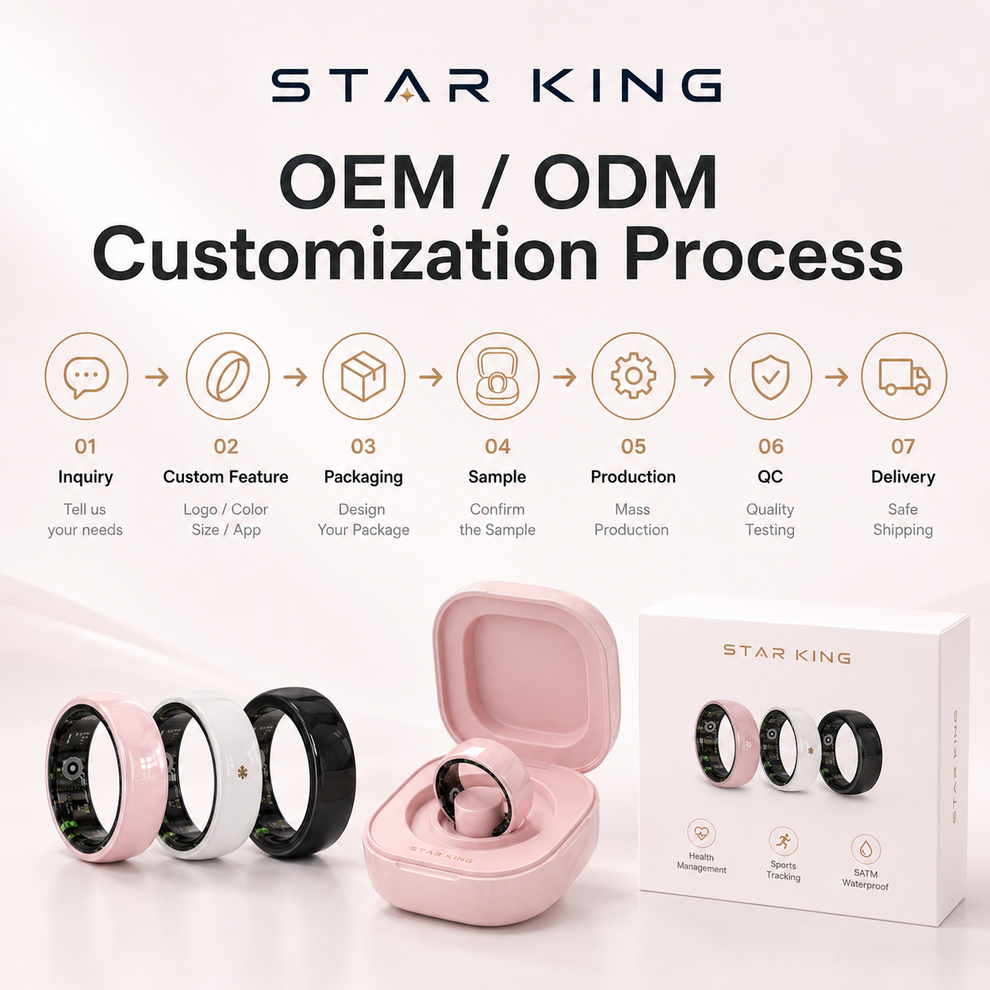
Table of Contents
- 1. Why Smart Rings Are Entering Corporate Wellness Budgets
- 2. Step 1: Define Program Objectives and Data Governance
- 3. Step 2: Build a Supplier Shortlist and Verify Manufacturer Capability
- 4. Step 3: Confirm Product Specifications and Sensor Claims
- 5. Step 4: Map Certifications and Import Compliance by Market
- 6. Step 5: Plan MOQ, Pricing, and Total Landed Cost
- 7. Step 6: Run Sample and Pilot Validation
- 8. Step 7: Lock Lead Times, Packaging, and After-Sales Terms
- 9. Smart Ring Procurement Comparison Table
- 10. Common Mistakes and Buyer Red Flags
- 11. Practical Buyer Checklist
- 12. FAQ
- 13. Conclusion
Key Takeaways
- Smart ring procurement for corporate wellness requires balancing sensor usefulness, data privacy, certification coverage, and supply scalability.
- Consumer-grade rings support wellness and lifestyle insights; they are not medical diagnostic devices unless specifically cleared or approved for such claims.
- Certification scope varies by SKU and destination market, so buyers must request documentation for the exact configuration ordered.
- MOQ and lead time should be confirmed in the RFQ response, not assumed from catalog pages.
- A structured pilot with a sample group reduces rollout risk before mass production commitments.
Key Facts for Buyers
| Procurement Factor | What Corporate Buyers Should Verify | Typical Decision Point |
|---|---|---|
| Sensor capabilities | Heart rate, SpO2, sleep, temperature trends as documented per SKU | Requires sample validation and spec sheet review |
| Battery safety | UN38.3 test summary, MSDS for lithium cells | Required for air shipment and many customs entries |
| Regional compliance | CE (EU), FCC (US), RoHS, UKCA, and local requirements | Depends on destination market and product configuration |
| App and data | Data residency, account management, API/export options | Alignment with corporate IT and privacy policy |
| MOQ and pricing | Volume tiers, tooling or setup fees, packaging minimums | Negotiated at RFQ stage |
| Lead time | Sample lead time, production lead time, shipping mode | Confirmed in purchase order terms |
| After-sales | Warranty period, replacement policy, spare parts availability | Included in supplier agreement |
1. Why Smart Rings Are Entering Corporate Wellness Budgets
Corporate wellness programs increasingly look for low-friction devices that employees will wear consistently. Smart rings appeal to procurement teams because they are compact, screenless, and often positioned as lifestyle and wellness trackers rather than distraction-prone smartwatches. For buyers, the category sits at the intersection of wearable health technology and workplace productivity.
However, the procurement challenge is not selecting the most attractive ring. It is building a repeatable sourcing process that protects the organization from compliance exposure, data privacy gaps, and supply interruptions. This guide outlines seven steps that corporate procurement teams can follow when preparing an RFQ for smart rings.
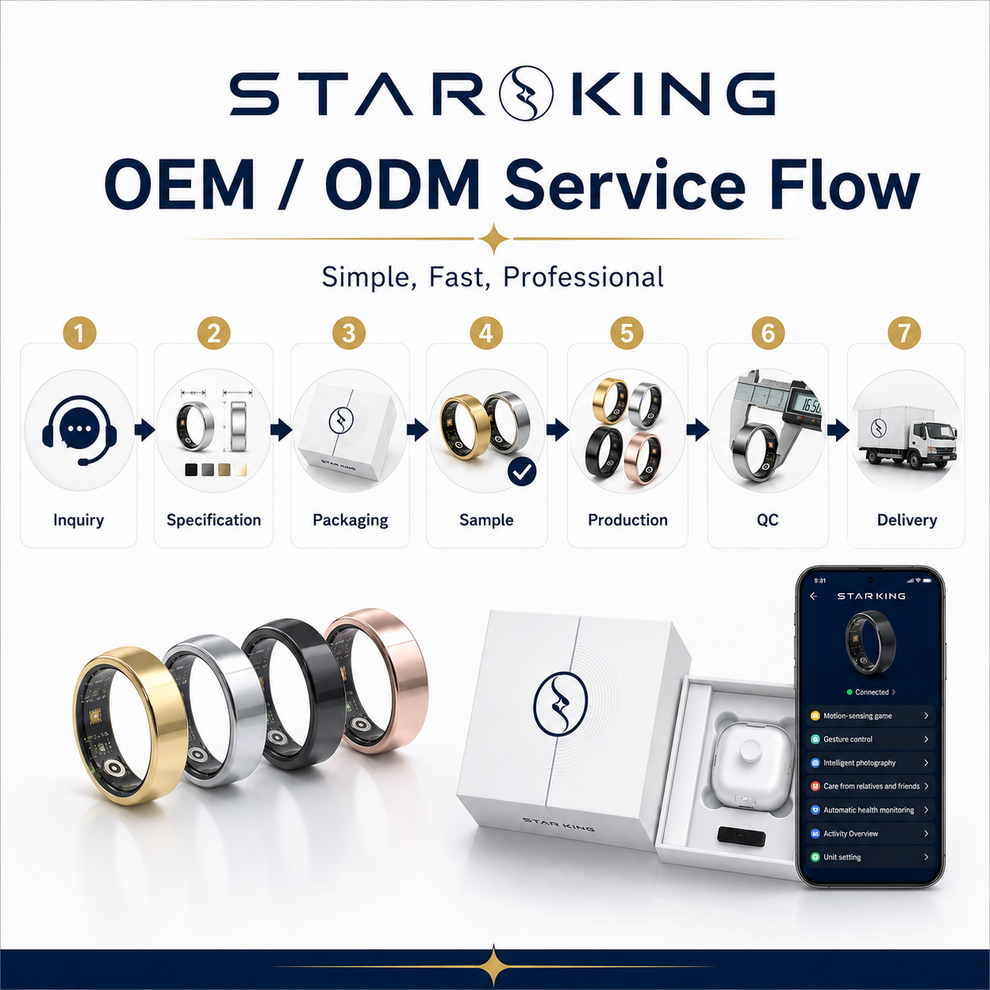
STAR KING supplies smart rings and other wearable devices with OEM/ODM and private-label options. This article is written for buyers who need to evaluate suppliers objectively and prepare a clear RFQ.
2. Step 1: Define Program Objectives and Data Governance
Before contacting suppliers, define what the wellness program must achieve. Common objectives include sleep awareness, activity encouragement, stress management, and team challenges. Each objective implies different sensor requirements and data handling rules.
Program scoping questions
- Will employees use the ring for personal wellness only, or will aggregated data feed a corporate dashboard?
- Does the organization require data residency in specific regions?
- Will the program integrate with existing HR or wellness platforms?
- What is the expected device lifespan and replacement cycle?
Data governance should be decided early because it shapes supplier selection. A supplier that offers a consumer app may not provide the account management, export, or API access that corporate IT requires. Buyers should ask for the app architecture, data flow, and privacy documentation before shortlisting.
For background on wearable health categories, see the Health & Fitness Wearables solution page.
3. Step 2: Build a Supplier Shortlist and Verify Manufacturer Capability
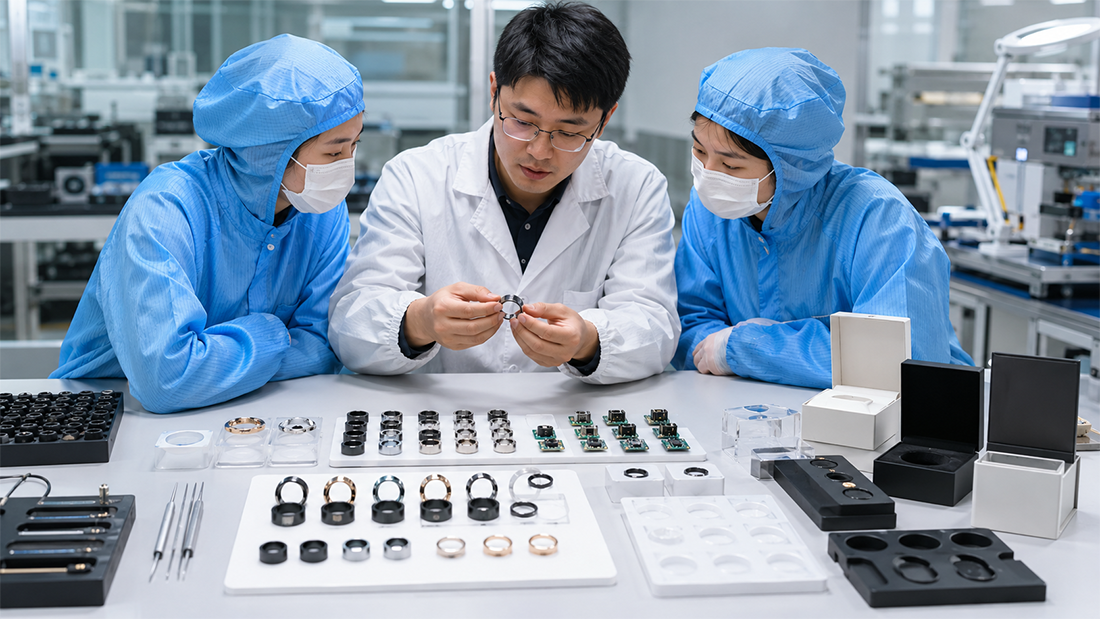
Smart ring manufacturing combines miniature electronics, sensor modules, battery integration, and often custom firmware. Buyers should verify whether a supplier is a manufacturer, a trading company, or a hybrid, and request evidence of production capability.
Verification checks
- Business license and factory address matching the quotation entity.
- Production process description for ring assembly, sealing, and testing.
- Quality management documentation, such as ISO 9001 if claimed.
- References or case studies that the supplier is permitted to share.
Ask for a sample evaluation agreement and clarify intellectual property terms, especially if your organization contributes industrial design or branding. Tooling ownership and mold transfer terms should be documented if custom enclosures are developed.
For a broader view of private-label engagement models, review the Private Label OEM/ODM solution.
4. Step 3: Confirm Product Specifications and Sensor Claims
Smart ring specifications should be documented in writing. Buyers should request a datasheet that lists sensor types, measurement methods, battery capacity, charging method, water resistance rating, and compatible app platforms.
Specification items to confirm
- Heart rate and blood oxygen monitoring method and stated operating conditions.
- Sleep tracking approach and data granularity.
- Battery life under defined use conditions.
- Water resistance claim and test basis.
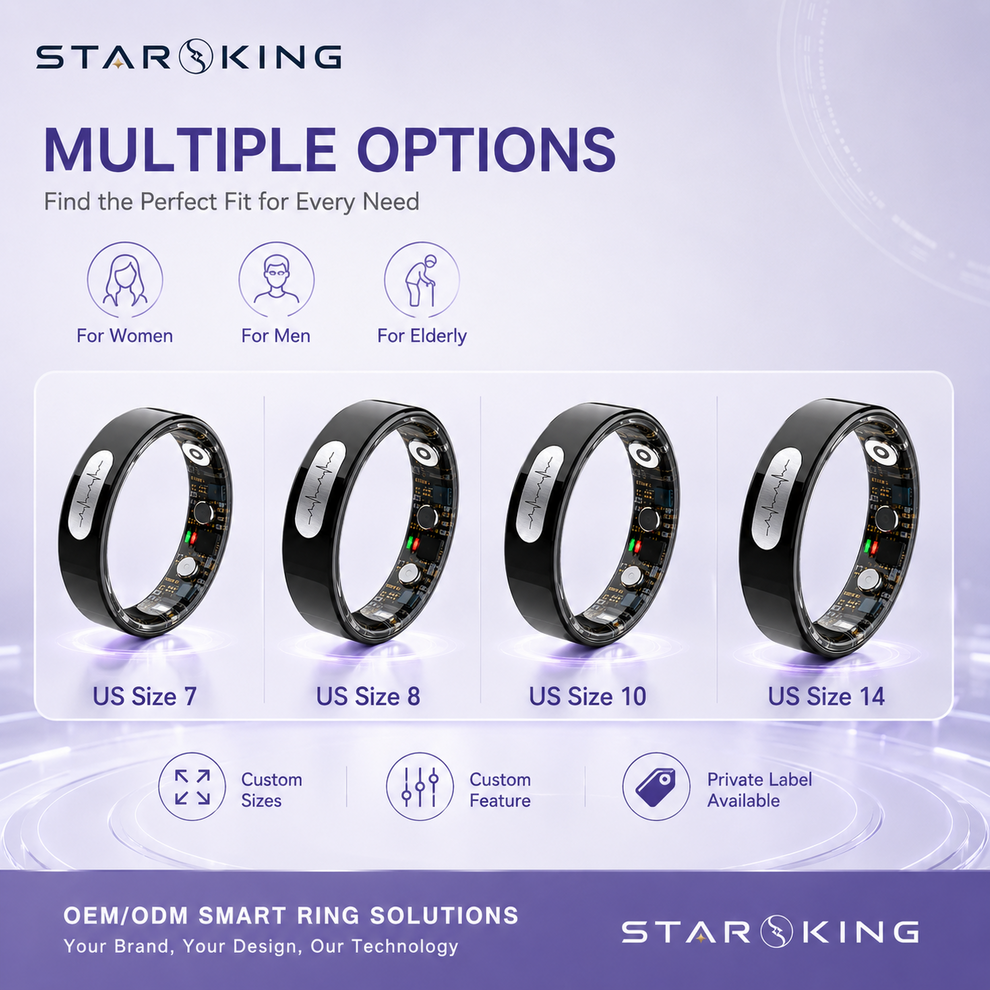
- Ring sizing options and sizing kit availability for employee fitting.
Consumer smart rings are generally wellness devices. Buyers should avoid suppliers that present unverified medical claims. Where health-related claims are made, they should be supported by appropriate regulatory clearance for the target market. Buyers should verify claims independently and consult regulatory counsel when needed.
For privacy and data handling reference, corporate buyers can review general guidance from regulators such as the U.S. Federal Trade Commission on privacy and security practices.
5. Step 4: Map Certifications and Import Compliance by Market
Certification requirements depend on the product configuration and destination market. A corporate buyer deploying rings across multiple countries should build a compliance matrix before placing orders.
Typical compliance documents to request
- CE marking documentation for EU markets, where applicable.
- FCC documentation for U.S. radio-frequency devices, where applicable.
- RoHS compliance statements for restricted substances.
- UN38.3 test summary and MSDS for lithium batteries.
- Local requirements such as UKCA for the United Kingdom or other national schemes.
Buyers should confirm that certificates reference the exact model and configuration being purchased. Certificates for a different SKU do not automatically cover a private-label variant. For battery transport requirements, refer to the IATA Dangerous Goods Regulations framework used by air carriers.
STAR KING product certification coverage is configuration-specific: [STAR KING TO CONFIRM]. Buyers should request the certificate package for the intended SKU during the RFQ stage.
6. Step 5: Plan MOQ, Pricing, and Total Landed Cost
Smart ring MOQ and pricing are influenced by ring sizing assortment, packaging, branding, and firmware customization. A corporate order often needs multiple sizes, which can affect minimum order quantities compared with single-SKU consumer orders.
Cost components to model
- Unit price by volume tier and ring size mix.
- Tooling or setup fees for custom packaging or logo.
- Sample and pilot unit costs.
- Freight, insurance, duties, and taxes.
- App customization or integration costs.
- Replacement and warranty reserve.
Landed cost analysis should include duties and taxes for each destination country, which vary by tariff classification and trade program. Buyers should confirm HS classification with a customs broker. For tariff schedule reference, see the U.S. Harmonized Tariff Schedule.
If your organization is comparing wearable formats, the smart watches product page provides an alternative reference point for feature trade-offs.
Preparing an RFQ? STAR KING can share smart ring specification sheets and sample options for corporate wellness evaluations. Request a quotation to start the comparison.
7. Step 6: Run Sample and Pilot Validation
Samples allow buyers to test fit, app usability, charging, and data accuracy before committing to volume. A structured pilot with a representative employee group produces more reliable feedback than a single evaluator.
Pilot design suggestions
- Recruit participants across sizes, activity levels, and skin types.
- Run the pilot for at least two to four weeks to observe battery and comfort trends.
- Collect structured feedback on app onboarding, sync reliability, and reporting.
- Compare sensor readings with a reference device where feasible.
Document pilot results and share them with the supplier. This creates a shared basis for any firmware or app adjustments before mass production.
8. Step 7: Lock Lead Times, Packaging, and After-Sales Terms
The final procurement step is converting specifications into contractual terms. Lead times should be broken into sample lead time, production lead time, and transit time. Packaging requirements should specify retail or bulk packaging, branding, manuals, and language requirements.
Terms to confirm
- Production lead time after sample approval and deposit.
- Inspection terms, such as pre-shipment inspection scope.
- Warranty period and replacement process.
- Spare parts and sizing kit availability.
- Software update and support commitments.
For additional context on application scenarios, see Corporate Wellness applications.
9. Smart Ring Procurement Comparison Table
| Procurement Approach | Best For | Key Considerations |
|---|---|---|
| Catalog product with logo customization | Fast pilots and smaller programs | Limited app customization; confirm MOQ per size mix |
| Private label with packaging and app branding | Established wellness brands | Higher setup effort; confirm firmware and app ownership terms |
| Full ODM development | Organizations needing differentiated design | Longer timeline; tooling and IP terms are critical |
10. Common Mistakes and Buyer Red Flags
- Assuming certifications cover all SKUs. Certificates are model-specific; request documentation for the ordered configuration.
- Ignoring size assortment in MOQ planning. Corporate programs need multiple sizes, which can change minimum order quantities.
- Treating wellness data as low risk. Employee health data may be sensitive under privacy laws; confirm data flow and retention.
- Accepting verbal lead times. Lead time should be written into the purchase order.
- Overlooking battery documentation. Lithium battery shipments typically require UN38.3 and MSDS documentation.
- Red flag: exaggerated medical claims. Suppliers claiming diagnostic capabilities without regulatory support present compliance risk.
- Red flag: no clear warranty or spare parts policy. Corporate deployments need replacement pathways.
11. Practical Buyer Checklist
- Program objectives and data governance defined.
- Supplier identity and manufacturing capability verified.
- Specification sheet received and reviewed.
- Certification and battery documents requested for the exact SKU.
- MOQ, pricing tiers, and size mix confirmed.
- Landed cost model including duties and app costs completed.
- Sample and pilot plan approved.
- Lead time, inspection, warranty, and spare parts terms documented.
- Contract includes IP and tooling ownership clauses where applicable.
12. FAQ
What is a typical MOQ for smart ring procurement?
MOQ varies by supplier, customization level, and size assortment. Corporate orders with multiple sizes may have a higher total minimum than single-size orders. Buyers should confirm MOQ per size and per customization tier in the RFQ response.
Are smart rings medical devices?
Most consumer smart rings are wellness and lifestyle devices, not medical diagnostic devices. Buyers should verify any health claims and confirm whether the product has the appropriate regulatory status for the intended market before making medical or safety claims.
Which certifications should corporate buyers request?
At minimum, buyers should request documentation relevant to the destination market, such as CE for the EU and FCC for the U.S. where applicable, plus RoHS and battery safety documents such as UN38.3 and MSDS. Requirements depend on product configuration.
How long does a smart ring OEM project take?
Timelines depend on customization scope. Logo and packaging customization generally take less time than firmware or app development. Buyers should request a written schedule covering sampling, approval, production, and shipping.
Can smart ring data integrate with corporate wellness platforms?
Integration depends on the supplier’s app architecture and API availability. Buyers should ask for technical documentation and confirm data export, account management, and privacy terms before committing to a platform.
What should a pilot program include?
A pilot should include a representative participant group, a defined duration, structured feedback collection, and a comparison of device data with a reference where feasible. Results should be documented and shared with the supplier.
13. Conclusion
Smart ring procurement for corporate wellness is a structured sourcing process, not a single purchase decision. By defining objectives, verifying suppliers, confirming specifications and certifications, modeling landed cost, and running a pilot, procurement teams can reduce risk and build a defensible device program. The most reliable outcomes come from written specifications and documented compliance rather than catalog promises.
Next Step: Prepare Your Smart Ring RFQ
STAR KING works with corporate buyers on smart ring sourcing, private label, and OEM/ODM projects. To move from evaluation to quotation, share your target quantity, size mix, customization requirements, and destination markets. Request a quotation and we will respond with specification and sampling options for your review.
Discuss Your Smart Wearable OEM/ODM Project
Planning a smart ring, smart watch, smart band, AI glasses, AI translator, or AI voice mouse project? Contact STAR KING to discuss product positioning, sample testing, customization scope, certification requirements, lead time, and quotation details.

Team Star King

Scan WhatsApp QR code
Leave a Reply