
Smart Ring OEM for Startups: 7 Critical Steps to Validate Your First Production Run
November 5, 2026 · Team Star King

Smart Ring OEM for Startups: 7 Critical Steps to Validate Your First Production Run
Choosing a smart ring OEM partner as a startup brand is not about finding the lowest quotation. It is about validating whether a supplier can deliver a wearable that fits your brand, passes your target market requirements, and scales without breaking your cash flow. A smart ring OEM project typically involves industrial design, firmware and app integration, battery safety, water-resistance testing, and packaging customization. This guide gives startup brands 7 practical validation steps before committing to a first production run.
Table of Contents
Table of Contents
smart ring OEM: Short Answer
Startup brands should evaluate a smart ring OEM partner in 7 steps: define the product spec and use case, verify the manufacturer, confirm MOQ and pricing structure, test samples under real conditions, lock down app and firmware ownership, confirm certification for each target market, and plan lead time, packaging, and after-sales support. Each step should be documented before placing a bulk order.

Table of Contents
- Key Takeaways
- Key Facts for Buyers
- Step 1: Define the Product Spec and Use Case
- Step 2: Verify the Manufacturer Before You Discuss Price
- Step 3: Confirm MOQ, Tooling, and Pricing Structure
- Step 4: Test Samples Under Real Conditions
- Step 5: Lock Down App, Firmware, and Data Ownership
- Step 6: Confirm Certification for Each Target Market
- Step 7: Plan Lead Time, Packaging, and After-Sales
- Comparison Table: OEM vs ODM vs Private Label
- Common Mistakes and Buyer Red Flags
- Practical Buyer Checklist
- FAQ
- Conclusion
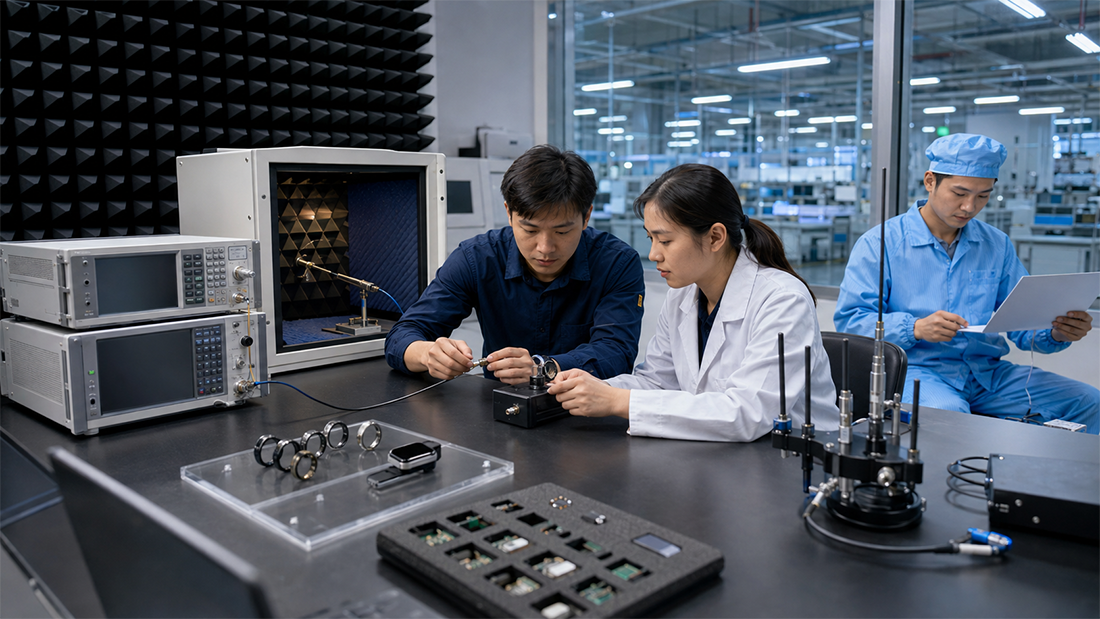
Key Takeaways
- A smart ring OEM project should start with a written product spec, not a price request.
- Manufacturer verification includes business license, factory audit, and referenceable product experience.
- MOQ, tooling cost, and unit price are linked; startup brands should model total landed cost, not unit price alone.
- Sample testing must cover battery life, sensor accuracy trends, water resistance, app stability, and drop performance.
- App and firmware ownership, data handling, and update responsibility must be defined in the contract.
- Certification requirements depend on product configuration and target market; buyers should verify per SKU.
- Lead time planning should include sample rounds, certification testing, mass production, and shipping.
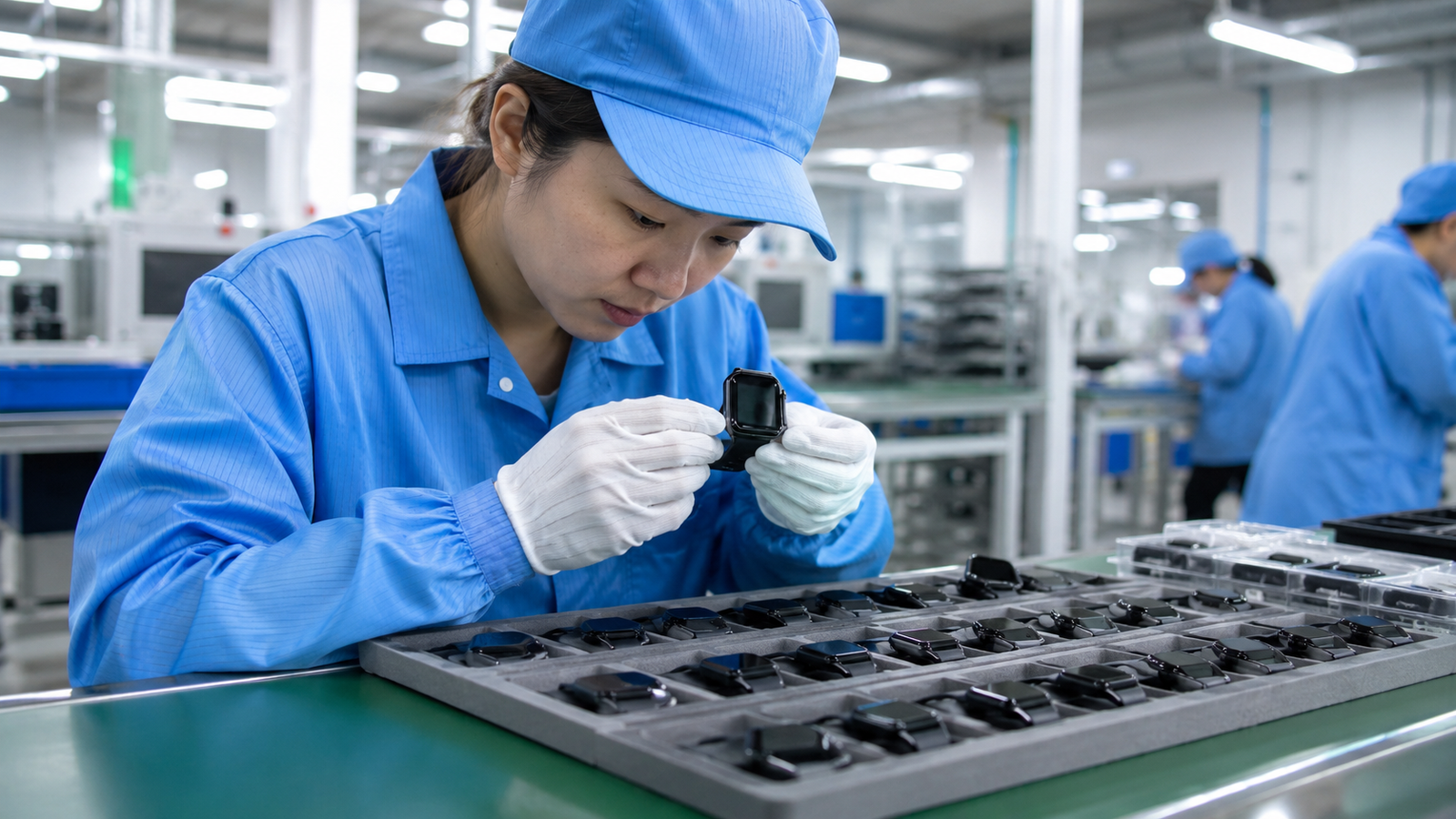
Key Facts for Buyers
| Decision Area | What Startup Brands Should Confirm | Typical Validation Method |
|---|---|---|
| Supplier identity | Legal entity, factory location, product focus | Business license, video audit, sample history |
| MOQ | Minimum order quantity per SKU and per color | Written quotation and sample agreement |
| Sample lead time | Standard sample vs customized sample timeline | Sample order with milestone dates |
| App integration | White-label app options, SDK/API access, data ownership | Demo account, technical documentation |
| Certification | CE, FCC, RoHS, UN38.3, MSDS availability per SKU | Certificate copies with model numbers |
| Battery safety | Battery specification, UN38.3 test summary, MSDS | Third-party test report review |
| Lead time | Mass production and shipping schedule | Production plan with buffer |

Step 1: Define the Product Spec and Use Case
Before contacting a smart ring OEM supplier, write a concise product spec. Startup brands often lose negotiating leverage when they send a generic request for quotation without defining the use case. The spec should state the target user, the primary features, the ring sizes, the expected battery life, the app platform, and the packaging format.
A clear spec helps the supplier recommend the right hardware platform instead of pushing an existing stock model. It also makes quotations comparable. If two suppliers quote very different prices, the difference is often in the spec interpretation, not in the manufacturing cost.
What to Include in a Smart Ring Spec
- Target market and sales channel (DTC, Amazon, retail chain, corporate wellness).
- Core features: sleep tracking, heart rate monitoring, blood oxygen monitoring, activity tracking.
- Ring sizes and materials, including finish and color options.
- Battery life target and charging method.
- Water resistance target and test standard.
- App platform (iOS, Android) and required integrations.
- Packaging format and branding requirements.
If you are still comparing product categories, review the smart rings product range to understand common feature sets before writing your spec.

Step 2: Verify the Manufacturer Before You Discuss Price
Manufacturer verification is the first risk control step in any smart ring OEM project. A supplier that cannot provide a legal business license, a factory address, and product-specific experience is a red flag. Startup brands should request a short video audit of the production and testing areas, not just a catalog.
Ask for the supplier’s product focus. A factory that makes many unrelated electronics may not have deep experience with ring-form-factor wearables, where antenna design, battery placement, and sensor contact are critical. Verify whether the supplier has in-house testing for waterproof testing, aging testing, and drop testing, or whether these are outsourced.
Verification Documents to Request
- Business license and legal entity name.
- Factory address and production capacity statement.
- Product test reports for similar ring models.
- Certificate copies with model numbers for CE, FCC, RoHS, UN38.3, and MSDS where applicable.
- Referenceable buyer types, without disclosing confidential client names.
If the supplier cannot confirm certification status per SKU, treat the claim as unverified. Certification requirements typically depend on the product configuration, wireless modules, battery, and destination market. Buyers should verify certificate scope with the issuing lab or certificate database.
Step 3: Confirm MOQ, Tooling, and Pricing Structure
MOQ and pricing are linked. A startup brand that asks for a very low MOQ may receive a higher unit price or a stock model with limited customization. Ask the supplier to break down the quotation into unit price, tooling or setup cost, sample cost, packaging cost, and certification cost if applicable.
Tooling development may apply to custom ring shells, charging cases, or packaging. Buyers should clarify who owns the tooling and molds, and whether the tooling cost is refundable or amortized across production. For a startup brand, tooling ownership is an intellectual property issue, not only a cost issue.
Pricing Factors to Compare
| Cost Factor | Why It Matters | What to Ask |
|---|---|---|
| Unit price | Changes with MOQ and configuration | Price at 500, 1,000, and 3,000 units |
| Tooling/setup | Custom shell or packaging | One-time or amortized? Who owns the mold? |
| Sample cost | Refundable or not | Sample fee, courier cost, refund policy |
| Packaging | Brand customization | MOQ per packaging version |
| Certification | Market access | Who pays for testing? Per SKU or per family? |
| Logistics | Landed cost | Battery shipping terms and Incoterms |
STAR KING smart ring MOQ and tooling terms are [STAR KING TO CONFIRM] and should be confirmed in writing for each project.
Step 4: Test Samples Under Real Conditions
Sample testing is where many startup smart ring projects fail. A sample that works on a desk may fail after two weeks of daily wear. Buyers should design a sample test plan before the samples arrive. The plan should cover battery life, sensor trends, app stability, water resistance, drop performance, and charging reliability.
For health-related features, test the trend rather than a single reading. Consumer smart rings are not medical diagnostic devices unless they carry specific medical claims and approvals. Buyers should avoid marketing language that implies diagnosis or treatment.
Sample Testing Checklist
- Wear the ring for 7-14 days and record battery life.
- Compare heart rate and blood oxygen trends with a reference device, noting that consumer sensors may vary.
- Test app pairing, reconnection, and data sync on iOS and Android.
- Run water resistance tests according to the supplier’s stated rating.
- Perform drop testing from typical hand height.
- Test charging cycles and charging case durability if applicable.
- Document defects with photos and dates for supplier feedback.
If you are evaluating health features for a specific application, the sleep and recovery application page shows how buyers position smart ring data for consumer wellness use cases.

Step 5: Lock Down App, Firmware, and Data Ownership
The app is part of the product. Startup brands should confirm whether the supplier offers a white-label app, an SDK or API, or a fully custom app development service. Firmware customization may be needed for sensor settings, data filtering, or user interface changes.
Data ownership and privacy should be defined in the contract. Ask where user data is stored, who can access it, and how updates are delivered. If the supplier controls the app account, the brand may lose control over its customer relationship.
App and Firmware Questions for the Supplier
- Is the app white-label, or does it show the supplier’s brand?
- Can the app name, icon, and onboarding flow be customized?
- Is an SDK or API available for integration with an existing app?
- Who owns the firmware and app source code?
- How are bug fixes and OS updates handled after launch?
- What is the data storage location and privacy policy?
STAR KING app customization scope and firmware ownership terms are [STAR KING TO CONFIRM] and should be reviewed with the technical team.
Step 6: Confirm Certification for Each Target Market
Certification is market-specific. A smart ring that is sold in the EU may require CE marking, RoHS compliance, and battery-related documentation. A smart ring sold in the United States may require FCC certification for the wireless module, and battery shipping may require UN38.3 test summaries and MSDS documentation.
Buyers should not assume that a supplier’s existing certificate covers a new model or a customized version. Certificate scope is usually tied to the model number, wireless module, and battery configuration. Ask for certificate copies with the exact model number and check the issuing lab.
Certification and Compliance Documents to Verify
- CE certificate and declaration of conformity where applicable.
- FCC certification for wireless modules sold in the U.S.
- RoHS compliance report.
- UN38.3 test summary for lithium battery shipping.
- MSDS for battery transport.
- Water resistance and drop test reports if claimed.
Official references include the FCC equipment authorization process and the EU CE marking rules. Buyers should verify requirements with the relevant authority or a qualified compliance consultant for each market.

Step 7: Plan Lead Time, Packaging, and After-Sales
Lead time planning should include sample rounds, certification testing, mass production, packaging production, and shipping. Startup brands often underestimate the time required for app review, packaging proofing, and battery shipping documentation.
Packaging customization is a brand-building step, but it also adds MOQ and lead time. Ask for packaging proofs and a physical pre-production sample before mass production. After-sales terms should cover warranty period, spare parts, defect handling, and return procedures.
Lead Time Planning Table
| Phase | Typical Activities | Buyer Action |
|---|---|---|
| Spec and quotation | Spec review, supplier questions, quotation | Compare total landed cost |
| Sample round | Sample production, shipping, testing | Run test checklist and document defects |
| Customization | Logo, packaging, app skin, firmware settings | Approve proofs in writing |
| Certification | Testing and certificate issuance if needed | Confirm certificate scope per SKU |
| Mass production | Production, pre-shipment inspection | Review inspection report |
| Shipping | Battery documentation, freight booking | Confirm Incoterms and documents |
STAR KING standard sample lead time, mass production lead time, and warranty terms are [STAR KING TO CONFIRM].
Comparison Table: OEM vs ODM vs Private Label
Startup brands often use the terms OEM, ODM, and private label interchangeably. They describe different levels of customization and risk. The table below helps buyers choose the right model for their stage.
| Model | Customization Level | Typical Use Case | Buyer Responsibility |
|---|---|---|---|
| Private label | Logo, packaging, app name | Fast launch with existing hardware | Brand and marketing; verify certification scope |
| ODM | Hardware and app customization from supplier platform | Differentiated product with moderate investment | Spec approval, sample testing, certification per market |
| OEM | Custom design, tooling, firmware, app | Long-term brand product line | Industrial design, tooling ownership, compliance planning |
For a deeper comparison of private label options, see the private label OEM/ODM solutions page.
Common Mistakes and Buyer Red Flags
- Requesting price before spec. Without a spec, quotations are not comparable and suppliers may quote stock models.
- Accepting certification claims without model numbers. Certificates must match the exact product configuration.
- Ignoring app ownership. If the supplier controls the app account, the brand may not own customer data or updates.
- Testing one sample only. Sample variation is common; test multiple units and multiple sizes.
- Underestimating battery shipping documentation. Lithium battery products typically require UN38.3 and MSDS documentation for transport.
- Not defining tooling ownership. Custom molds and tooling should be owned by the brand where applicable.
- No pre-shipment inspection plan. A pre-shipment inspection helps catch defects before goods leave the factory.
Practical Buyer Checklist
- Written product spec with use case, sizes, features, and packaging.
- Supplier business license and factory audit notes.
- Quotation breakdown: unit price, tooling, sample, packaging, certification.
- MOQ confirmed per SKU and per color.
- Sample test plan and documented results.
- App demo account and technical documentation reviewed.
- Firmware and app ownership terms in the contract.
- Certification documents checked by model number and target market.
- UN38.3 and MSDS available for battery shipping.
- Pre-shipment inspection agreed before mass production.
- Warranty, spare parts, and after-sales process confirmed.
- Lead time plan with buffer for certification and shipping.
FAQ
What is the typical MOQ for a smart ring OEM order?
MOQ varies by supplier and customization level. Private label orders may have lower MOQs than fully custom OEM designs. Startup brands should request MOQ at 500, 1,000, and 3,000 units to compare unit pricing. STAR KING smart ring MOQ is [STAR KING TO CONFIRM].
How long does a smart ring sample take?
Sample lead time depends on whether the sample is stock, private label, or custom. Custom samples with tooling or firmware changes usually take longer. Plan for sample testing time after delivery. STAR KING sample lead time is [STAR KING TO CONFIRM].
Can startup brands customize the app for a smart ring?
Many suppliers offer white-label app options, while others provide SDK or API access. Custom app development is usually a separate service. Buyers should confirm app name, icon, onboarding flow, data storage, and update responsibility before signing.
What certifications does a smart ring need?
Certification depends on the target market and product configuration. Common documents include CE, FCC, RoHS, UN38.3, and MSDS where applicable. Buyers should verify certificate scope with the issuing lab and confirm requirements with a qualified compliance consultant.
How do buyers verify a smart ring manufacturer?
Request the business license, factory address, product-specific test reports, and certificate copies with model numbers. A video audit of production and testing areas helps confirm the supplier’s actual capabilities.
Who owns the tooling for a custom smart ring?
Tooling ownership should be defined in the contract. In many OEM projects, the brand pays for tooling and owns the mold, while the supplier stores and maintains it. Terms vary, so buyers should confirm in writing.
How should startup brands plan shipping for smart rings?
Smart rings contain lithium batteries, so shipping typically requires UN38.3 test summaries and MSDS documentation. Buyers should confirm Incoterms, battery shipping terms, and carrier requirements before production.
Conclusion
A smart ring OEM project can be a strong product line for a startup brand, but only when the supplier evaluation is structured. The 7 steps in this guide cover spec definition, manufacturer verification, MOQ and pricing, sample testing, app and firmware ownership, certification, and lead time planning. Each step produces a document that reduces risk before mass production.
If you are comparing suppliers, start with a written spec and a sample test plan. Review the STAR KING resources blog for more sourcing guides, and compare product configurations on the smart rings product page.
STAR KING CTA
Ready to evaluate a smart ring OEM project? Request product samples from STAR KING to review hardware, app demo, and packaging options. Share your target market and spec, and the team can confirm MOQ, lead time, and certification requirements for your configuration.
Discuss Your Smart Wearable OEM/ODM Project
Planning a smart ring, smart watch, smart band, AI glasses, AI translator, or AI voice mouse project? Contact STAR KING to discuss product positioning, sample testing, customization scope, certification requirements, lead time, and quotation details.

Team Star King

Scan WhatsApp QR code
Leave a Reply