
AI voice mouse sourcing: 7 Critical Checks for Sourcing AI Voice Mice for Middle East Retail Chains (2026 Buyer Guide)
November 5, 2026 · Team Star King
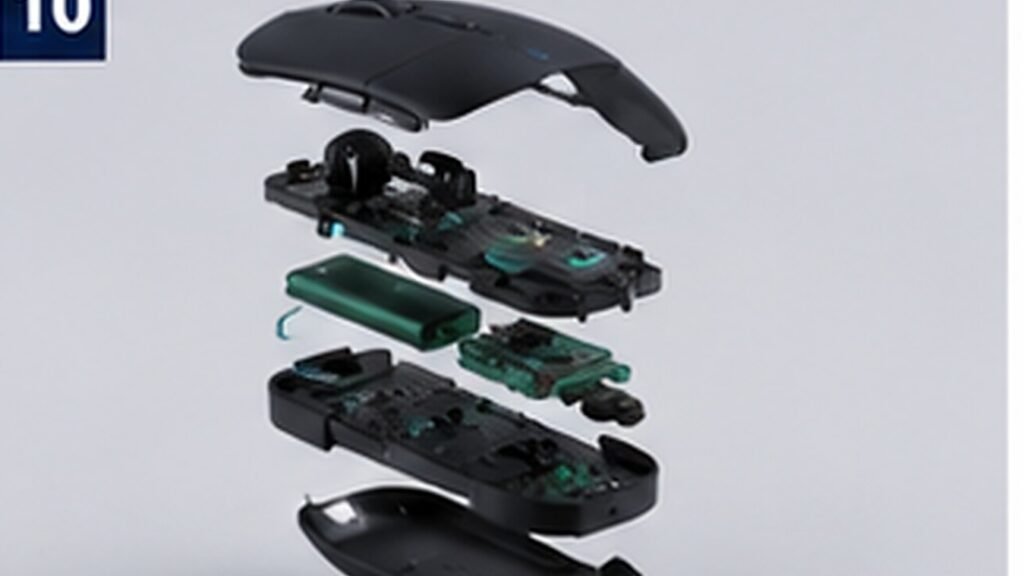
7 Critical Checks for Sourcing AI Voice Mice for Middle East Retail Chains (2026 Buyer Guide)
AI voice mouse sourcing comes down to seven checks that matter more than a spec sheet: Arabic voice accuracy, working offline behavior, platform compatibility, certifications and import compliance, MOQ and landed cost, quality testing, and packaging and after-sales support. For retail chains in the Middle East, these checks decide whether an AI voice mouse becomes a sellable shelf item or a slow-moving return risk. This guide walks procurement and category teams through each decision point so you can brief suppliers with confidence.
Table of Contents
Table of Contents
AI voice mouse sourcing: Short Answer
Retail chains in the Middle East should shortlist AI voice mouse suppliers that can demonstrate Arabic voice recognition quality (not just English), document their compliance posture for each SKU and destination market, and match MOQ, lead time, and packaging to your replenishment model. Treat voice accuracy, data handling, and certification as the deciding factors, and price as the outcome of a verified supply chain.

Table of Contents
- What Is an AI Voice Mouse and Why Retail Chains Are Watching It
- Key Facts for Buyers
- Key Takeaways
- Check 1: Arabic and Multilingual Voice Accuracy
- Check 2: Offline vs. Cloud-Dependent Processing
- Check 3: Platform and App Compatibility
- Check 4: Certifications and Middle East Import Compliance
- Check 5: MOQ, Landed Cost, and Pricing Drivers
- Check 6: Quality Control and Sample Testing
- Check 7: Packaging, Private Label, and After-Sales
- Supplier Comparison Table
- Common Mistakes and Buyer Red Flags
- Practical Buyer Checklist
- FAQ
- Conclusion

Key Facts for Buyers
| Decision Area | What to Verify | Why It Matters for Middle East Retail |
|---|---|---|
| Voice accuracy | Arabic (MSA and dialect) test results, not English-only samples | Return rates and review scores depend on recognition quality in-store and at home |
| Processing model | On-device vs. cloud processing, data routing | Affects usability, privacy questions, and store environments with weak connectivity |
| Compliance | CE/FCC/RoHS where applicable, battery transport docs (UN38.3, MSDS) | Customs clearance and retail listing requirements vary by country |
| MOQ & lead time | Tiered MOQ, tooling lead time, production windows | Drives working capital and shelf replenishment planning |
| Testing | Pre-shipment inspection, aging, drop testing | Reduces defective units reaching stores |
| Packaging | Arabic/English bilingual packaging, private label options | Customer comprehension and brand trust on shelf |

Key Takeaways
- Arabic voice accuracy is the single highest-risk variable in AI voice mouse sourcing for Middle East retail.
- Confirm whether voice processing runs on-device or via cloud, because this affects usability, privacy, and connectivity requirements.
- Certification and import documentation are SKU- and market-specific; buyers should verify per configuration rather than assume.
- MOQ, lead time, and packaging customization should be confirmed against your replenishment cycles and store rollout plan.
- Request verifiable test data and sample units before committing to a purchase order.

What Is an AI Voice Mouse and Why Retail Chains Are Watching It
An AI voice mouse is a computer mouse that combines standard pointer control with a built-in microphone and voice processing, allowing users to dictate text, issue commands, or trigger translation and productivity functions through speech. Some models process speech on-device; others rely on a connected app or cloud service. For retail chains, the category is interesting because it sits at the intersection of workplace productivity, accessibility, and multilingual communication — three themes with strong demand in the Middle East, where Arabic and English are both widely used in offices, schools, and government-adjacent environments.
From a procurement perspective, the AI voice mouse is not a single product but a family of configurations. Voice language support, processing model, connectivity (Bluetooth or 2.4 GHz dongle), battery type, and bundled software all vary between suppliers. That variation means retail chains should evaluate suppliers on their ability to document and control configuration differences, not just on a headline price. You can review the product family on the AI voice mouse product page to see how configurations are typically structured.
Check 1: Arabic and Multilingual Voice Accuracy
The first and most important check is voice accuracy in the languages your customers actually speak. Many AI voice mouse samples perform well in English and degrade sharply in Arabic, particularly with dialectal speech or mixed Arabic-English sentences common in Gulf offices and schools.
How to test Arabic accuracy before ordering
- Request a sample unit configured with the Arabic language package you intend to sell.
- Test Modern Standard Arabic dictation, then test common Gulf dialect phrases.
- Test mixed-language sentences (Arabic with English technical terms).
- Measure accuracy in a quiet room and in a noisier retail or office environment.
- Ask the supplier which speech engine or ASR provider is used, and whether language packs can be updated.
If a supplier cannot confirm Arabic support or provide a test unit, treat that as a serious warning sign. Voice recognition quality is the product’s core value; it should be verifiable, not asserted. [STAR KING TO CONFIRM: supported Arabic dialects and language packs per SKU]
Check 2: Offline vs. Cloud-Dependent Processing
Ask directly whether voice processing happens on-device, through a companion app, or via cloud services. Each model has trade-offs that matter for retail:
- On-device: works without connectivity, raises privacy comfort, but limits language model size.
- Cloud-dependent: can offer stronger recognition and more languages, but requires reliable internet and raises data-handling questions.
- Hybrid: common in practice; buyers should map which features work offline.
For store environments with weak Wi-Fi, or for customers in education and government contexts with data sensitivity, this distinction affects both usability and the questions your support team will face. Ask the supplier to document data flow and whether audio is stored, transmitted, or processed locally.
Check 3: Platform and App Compatibility
Retail customers expect devices to work across Windows, macOS, and increasingly mobile or tablet workflows. Confirm which operating systems are supported, whether a driver or app is required, and whether firmware or app updates are delivered automatically or manually.
If the AI voice mouse integrates with productivity software or translation tools, ask how that integration is maintained. Suppliers that offer firmware and app customization — for example, custom language packs or branded onboarding — give retail chains more room to differentiate. STAR KING’s AI office productivity solutions page outlines how these customization layers are typically scoped.
Check 4: Certifications and Middle East Import Compliance
Certification requirements for an AI voice mouse depend on the specific SKU, its radio modules, battery, and the destination country. Common frameworks buyers ask about include CE and FCC marking for radio and safety, RoHS for restricted substances, and, where a lithium battery is included, UN38.3 and MSDS transport documentation. Additional national requirements may apply in Middle East markets, and these can change.
Buyers should verify per destination rather than assume a blanket certification covers all SKUs. Reference points include the FCC radio frequency device certification guidance and the RoHS compliance overview for background. For battery transport, the IATA Dangerous Goods Regulations are the relevant industry reference. Always request the actual test reports and certificates for the SKU you plan to import. [STAR KING TO CONFIRM: certification portfolio per AI voice mouse configuration]
Check 5: MOQ, Landed Cost, and Pricing Drivers
Pricing for an AI voice mouse is driven by more than unit cost. The main contributors include:
- Voice engine licensing and language pack coverage
- Battery type and capacity
- Connectivity configuration
- Packaging and private label customization
- Order volume and MOQ tier
- Freight, duties, and destination-market compliance costs
Retail chains should model landed cost, not just FOB price. Ask for tiered MOQ pricing, and clarify what changes at each tier. [STAR KING TO CONFIRM: MOQ tiers and price breaks]. For a broader view of how landed cost is calculated across smart hardware SKUs, see the STAR KING resources blog.
Check 6: Quality Control and Sample Testing
Before committing to volume, request sample units and ask about the supplier’s quality control process. Key questions:
- What pre-shipment inspection steps are performed, and by whom?
- Are aging tests, drop tests, and functional tests performed on each batch?
- What is the defective rate expectation, and what is the remedy?
- Can you request a third-party inspection before shipment?
Testing should cover the voice function specifically, including microphone sensitivity, recognition in noise, and firmware stability over extended use. Sample testing is also the moment to check packaging durability for Middle East freight conditions.
Check 7: Packaging, Private Label, and After-Sales
Retail chains need packaging that customers can understand at a glance. For the Middle East, bilingual Arabic-English packaging, clear setup instructions, and transparent privacy information are practical essentials. Private label and logo customization let you build a house-brand identity, and packaging customization allows you to add market-specific information.
After-sales matters equally. Clarify warranty terms, spare parts availability, and whether firmware updates continue after launch. STAR KING’s private label OEM/ODM solutions page describes the customization options typically available for AI hardware projects.
Soft CTA: If you are evaluating AI voice mouse configurations for a retail rollout, comparing specifications side by side before requesting samples often saves weeks in the evaluation cycle.
Supplier Comparison Table
| Evaluation Criterion | What a Strong Supplier Provides | What to Be Cautious About |
|---|---|---|
| Arabic voice support | Demonstrated test unit with Arabic packs | English-only samples; vague language claims |
| Processing model | Clear documentation of on-device vs. cloud | Undocumented data routing |
| Certifications | SKU-specific reports and certificates | Generic claims; expired test reports |
| MOQ & lead time | Tiered MOQ with defined production windows | Quotes without lead time detail |
| Quality control | Documented inspection and testing process | No inspection policy |
| Customization | Logo, packaging, firmware scoping | Customization offered without tooling cost clarity |
| After-sales | Written warranty and spare parts plan | Verbal assurances only |
Common Mistakes and Buyer Red Flags
- Assuming Arabic support: English performance is not proof of Arabic accuracy.
- Treating certification as a checkbox: a generic certificate may not match your SKU or market.
- Overlooking battery documentation: lithium battery shipments typically require UN38.3 and MSDS.
- Skipping sample testing: production units can differ from catalog spec.
- Ignoring after-sales: warranty and spare parts gaps become customer complaints.
- Red flag: suppliers that cannot explain their voice engine or data handling.
- Red flag: quotes that omit MOQ tier and lead time assumptions.
Practical Buyer Checklist
- [ ] Request an Arabic-configured sample unit
- [ ] Confirm on-device vs. cloud processing and data handling
- [ ] Verify SKU-specific certifications and battery transport documents
- [ ] Request tiered MOQ pricing and lead time estimates
- [ ] Review quality control and inspection processes
- [ ] Confirm private label and packaging customization scope
- [ ] Agree warranty terms and spare parts plan
- [ ] Plan testing and approval timelines before purchase order
FAQ
Does an AI voice mouse support Arabic out of the box?
It depends on the SKU and the language packages configured. Buyers should confirm Arabic support with a live sample unit rather than assuming it from an English demo.
What certifications should I expect?
Typically CE, FCC, and RoHS where applicable, plus UN38.3 and MSDS for lithium batteries. Requirements vary by SKU and destination country, so verify per configuration.
What is a realistic MOQ for a first order?
MOQ depends on configuration and customization scope. Ask for tiered pricing and clarify what changes at each tier before committing.
Can I add my own brand and packaging?
Yes, private label and packaging customization are commonly available. Confirm tooling and artwork costs, and bilingual Arabic-English packaging requirements.
How long does sampling take?
Sample timelines depend on configuration and whether customization is required. Request a written timeline before beginning evaluation.
Conclusion
Sourcing an AI voice mouse for Middle East retail chains is a verification exercise. The suppliers who win long-term volume are the ones who can prove Arabic accuracy, document their compliance posture SKU by SKU, and align MOQ and lead time with your replenishment model. Start with a sample, test the voice function in the languages your customers use, and confirm documentation before scaling to a purchase order.
STAR KING CTA
Ready to move from evaluation to sampling? Request AI voice mouse samples configured for your target market and discuss private label and packaging options with the STAR KING team. Request product samples to begin your evaluation.
Discuss Your Smart Wearable OEM/ODM Project
Planning a smart ring, smart watch, smart band, AI glasses, AI translator, or AI voice mouse project? Contact STAR KING to discuss product positioning, sample testing, customization scope, certification requirements, lead time, and quotation details.

Team Star King

Scan WhatsApp QR code
Leave a Reply