
AI voice mouse private label: How to Source a Private-Label AI Voice Mouse for the Middle East: 9 Checks Before You Commit in 2026
October 25, 2026 · Team Star King
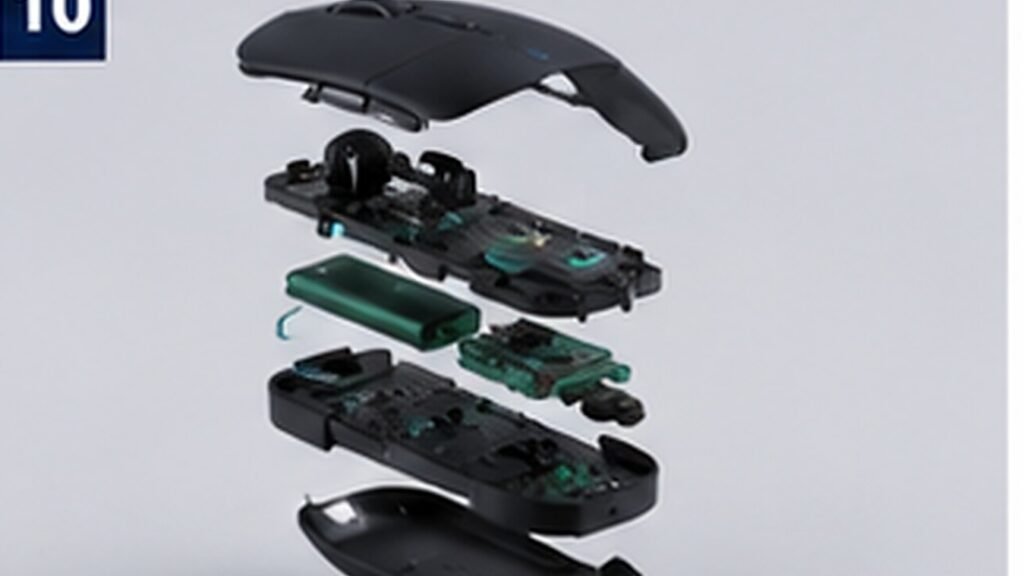
How to Source a Private-Label AI Voice Mouse for the Middle East: 9 Checks Before You Commit in 2026
Sourcing an AI voice mouse for a Middle East private-label program comes down to one question: does the device reliably convert spoken Arabic (and English) into accurate text in the buyer’s real working environment? Answering that requires checking Arabic language and dialect support, microphone quality in noisy offices, on-device versus cloud processing, app and OS compatibility, MOQ and price drivers, testing protocols, battery shipping rules, and market-specific certification. This 2026 sourcing guide walks private-label brands through nine practical checks so procurement teams can qualify an AI voice mouse supplier before committing to tooling, packaging, or a first bulk order.
Table of Contents
Table of Contents
AI voice mouse private label: Short Answer
An AI voice mouse private label program is viable for Middle East buyers when the supplier can document Arabic and multilingual voice accuracy, offer app/firmware customization, disclose MOQ and BOM-driven price tiers, and provide per-configuration testing and battery shipping documentation. Buyers should request working samples in Gulf-relevant languages, verify compliance needs for each destination country, and confirm who owns tooling and packaging artwork before paying deposits.

Key Takeaways
- Language quality, not hardware shape, is the biggest differentiator in an AI voice mouse for Middle East markets.
- Confirm whether voice processing is on-device or cloud-based, because this affects privacy, latency, and connectivity requirements.
- MOQ, price, and lead time usually depend on enclosure, microphone array, firmware, app, and packaging scope — not just unit count.
- Battery shipping documentation (UN38.3, MSDS) and destination-market compliance must be clarified per configuration.
- Tooling ownership, software update policy, and warranty terms belong in the contract, not in a chat thread.
- Qualify suppliers with sample testing that mirrors your target users: Arabic dictation, English mixed input, noisy environments, and long session stability.
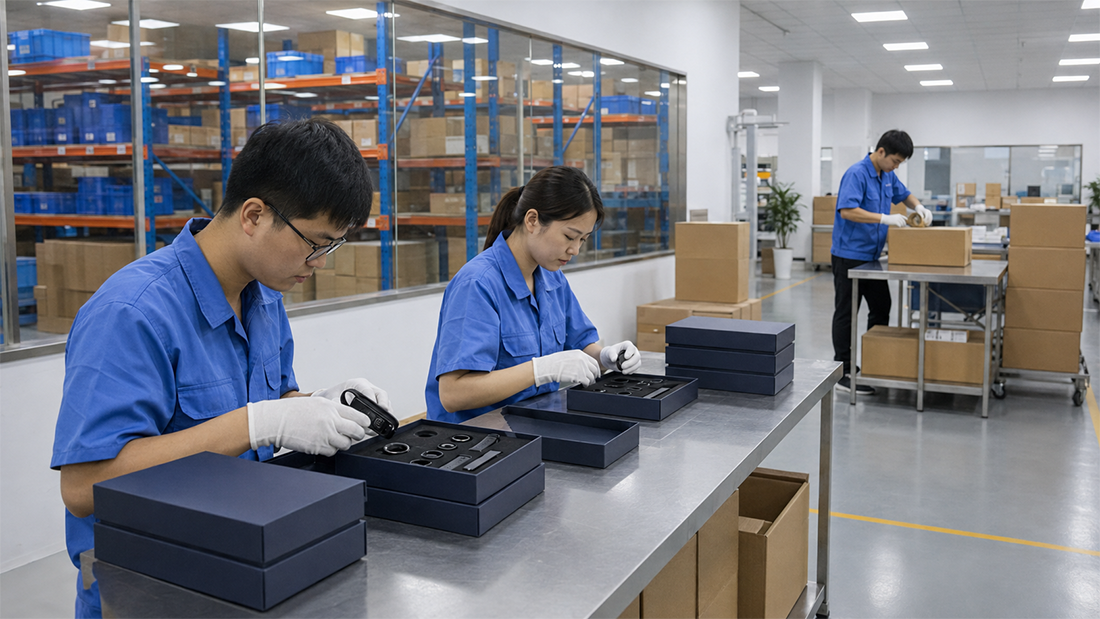
Table of Contents
- What Is an AI Voice Mouse and Why It Matters for Middle East Offices
- Key Facts for Buyers
- Check 1: Arabic and Multilingual Voice Accuracy
- Check 2: On-Device vs Cloud Voice Processing
- Check 3: App, Firmware, and OS Compatibility
- Check 4: Private Label Scope and Customization
- Check 5: MOQ, Pricing, and Cost Drivers
- Check 6: Sample Testing and Validation
- Check 7: Quality Control and Pre-Shipment Inspection
- Check 8: Battery Safety, Certification, and Import Compliance
- Check 9: Lead Time, Tooling, and After-Sales
- Comparison Table: AI Voice Mouse vs Standard Mouse vs AI Translator
- Common Mistakes and Buyer Red Flags
- Practical Buyer Checklist
- FAQ
- Conclusion

What Is an AI Voice Mouse and Why It Matters for Middle East Offices
An AI voice mouse is a computer mouse that combines standard cursor control with a microphone and voice-processing software, allowing users to dictate text, issue commands, or trigger translation and productivity functions directly from the device. For private-label brands targeting the Middle East, this category sits at the intersection of office hardware and AI productivity tools: it appeals to corporate procurement teams, education technology buyers, government-adjacent offices, and distributors serving bilingual workforces.
Arabic and English coexist in many Gulf workplaces, which makes voice input accuracy a core purchase criterion rather than a nice-to-have. Buyers evaluating this category should think in terms of use cases and validation methods, not just specifications. For context on how STAR KING positions AI office hardware, see the AI office productivity solution page.
[Image Insertion 1: Product hero shot of the AI voice mouse on a desk, showing the voice button and microphone area. Insert after the paragraph above.]

Key Facts for Buyers
| Factor | What Buyers Should Expect | How to Verify |
|---|---|---|
| Core function | Cursor control plus voice dictation, commands, or translation features | Request a live sample demo covering Arabic and English |
| Language support | Varies by SKU and firmware; Arabic dialect coverage varies by vendor [STAR KING TO CONFIRM] | Test with your own scripts in Gulf and MSA Arabic |
| Voice processing | On-device, cloud-based, or hybrid; each has privacy and connectivity implications | Ask for the data flow and app dependency in writing |
| Private label scope | Logo, packaging, app name, and firmware branding can often be customized | Confirm which items change price or MOQ |
| MOQ | Typically depends on customization scope; standard SKUs are usually lower | Request an MOQ tier table before comparing quotes |
| Battery shipping | Rechargeable devices may require UN38.3 and MSDS documentation | Ask for documents matching your exact battery configuration |
| Compliance | Requirements differ by destination country and product configuration | Verify with your importer or local regulator |
| Lead time | Sample, tooling, mass production, and shipping stages each consume time | Request a written schedule with milestones |
For broader context on the range of devices that can share a private-label supply base, review the AI voice mouse product page alongside related AI hardware categories.
Check 1: Arabic and Multilingual Voice Accuracy
This is where most sourcing decisions are won or lost. Voice recognition performance depends on the speech engine, microphone hardware, noise handling, and the language packs enabled in the firmware. A supplier may claim “Arabic support” while offering limited dialect coverage, weak mixed-language handling, or slow cloud transcription.
What to test
- Gulf Arabic (for example, Saudi and Emirati usage) versus Modern Standard Arabic dictation of typical business text.
- Mixed Arabic-English sentences, common in emails and reports.
- Names of local entities, street addresses, and industry terms.
- Accuracy in a realistic office environment, not a silent showroom.
Ask the supplier which speech engines and language packs are in scope for your SKU, and whether language additions require firmware updates or app-side changes. If dialects matter to your customers, confirm coverage per dialect [STAR KING TO CONFIRM]. Document expected accuracy with your own test scripts and keep the recordings as a baseline for the mass-production inspection.
Check 2: On-Device vs Cloud Voice Processing
Voice processing architecture determines how the device behaves in the field. On-device processing can reduce latency and may reduce network dependency, but it can limit the AI functions available. Cloud processing can enable richer features but depends on connectivity, adds privacy and data-residency questions, and may require an app or account.
For Middle East corporate and education buyers, ask these questions before quoting:
- Does the device require an account, subscription, or cloud service to function?
- Where is voice data processed or stored, and is any data retained?
- What happens when connectivity is unavailable?
- Which operating systems are supported, and are driver or app updates required?
These questions matter for tender specifications and for procurement teams that need to describe data flows to IT departments. Buyers should verify privacy claims with the supplier’s written documentation rather than verbal summaries.
Check 3: App, Firmware, and OS Compatibility
The software layer is often the biggest hidden variable in an AI voice mouse private label project. You are not only buying a mouse; you are buying an app and firmware stack that must work with the operating systems your customers use, and that must remain maintainable after launch.
Ask for a compatibility matrix covering Windows, macOS, and major desktop Linux environments, and note which functions are OS-dependent. Confirm whether the app can be rebranded, whether firmware updates can be delivered without your involvement, and how bug fixes are handled after the warranty period. If you plan to sell through distributors who support end users, ask for a support escalation process and documentation language options.
Where an app is part of the product experience, review the supplier’s approach to private-label OEM/ODM customization so that app branding, packaging, and firmware identity are scoped together.
Check 4: Private Label Scope and Customization
Private-label AI hardware typically breaks into four customization layers: industrial and logo, packaging, software identity, and documentation. Buyers should define which layers matter before requesting quotes, because each layer changes MOQ, cost, and lead time.
| Customization Layer | Typical Options | Buyer Impact |
|---|---|---|
| Logo | Laser marking, printing, or pad printing on enclosure | Usually low MOQ impact; may require artwork approval |
| Packaging | Retail box, insert, manual, multilingual labels | Often drives MOQ; artwork and translations add lead time |
| Software identity | App name, icons, splash screens, onboarding language | Requires firmware/app work; confirm update responsibility |
| Documentation | User manual, warranty text, regulatory labels | Must align with destination-market requirements |
Request a written customization scope list with a clear boundary between included items and paid changes. This prevents late-stage disputes when artwork moves to production.
Check 5: MOQ, Pricing, and Cost Drivers
Quotes rarely compare cleanly unless the MOQ tier and customization scope are identical. Ask for a price ladder tied to order quantity and a short explanation of cost drivers: enclosure tooling and finish, microphone array and chipset, battery cell, firmware development, app customization, and packaging complexity.
For Middle East buyers, factor in landed cost, not just unit price. Shipping heavy retail packaging, inclusion of manuals in multiple languages, and air versus sea freight can shift the true cost per unit. Where shipping and import duties are uncertain, buyers should verify rates with their freight forwarder and customs broker rather than relying on supplier estimates. See the resources blog for related procurement planning notes.
If you are evaluating multiple AI hardware categories at once, cost planning becomes easier when the supply base is shared. The AI office and productivity category overlaps with translators and voice devices, so ask whether your supplier supports a combined program.
Check 6: Sample Testing and Validation
Sample testing should mirror your customers, not a demo script. Build a test protocol that covers:
- Dictation accuracy for Arabic and English scripts, scored against a fixed benchmark.
- Command recognition and translation functions, if applicable.
- Cursor precision and ergonomics across a typical workday.
- Battery endurance under realistic use, plus charging behavior.
- Pairing and app stability after repeated connect/disconnect cycles.
- Noise resilience in an open office or classroom.
Keep signed sample records and retain the tested samples as reference units for pre-shipment inspection. If the supplier cannot provide a controlled test protocol, treat that as a warning sign — the same gap tends to appear during mass production.
Check 7: Quality Control and Pre-Shipment Inspection
Define quality control as a process with checkpoints, not a promise. A reasonable expectation for AI hardware includes incoming component checks, in-process assembly checks, functional testing of voice functions on finished units, aging or burn-in where appropriate, and pre-shipment inspection against an agreed AQL level.
Ask who performs the inspection and whether third-party inspection is acceptable at your cost. For private-label brands, the packaging and labeling check is part of quality: wrong language on a manual or a missing local importer label can block retail placement. Request photos and records from the inspection, and confirm the process for handling non-conforming units before they leave the factory.
Check 8: Battery Safety, Certification, and Import Compliance
AI voice mice are typically rechargeable and contain lithium batteries, so shipping documentation is a practical concern. For lithium batteries, buyers should ask for documentation such as UN38.3 test summaries and an MSDS where applicable, matching the exact battery configuration being shipped. These documents support air and sea freight booking and customs handling, and requirements can vary by carrier and route.
Product compliance depends on the destination market and configuration. Middle East markets may require specific conformity marks or registration depending on the country and product category; buyers should verify requirements with an importer of record, customs broker, or local regulator. Do not assume that a certificate for one SKU or market covers another. Ask for the exact certificate number, issuing body, and product description, and compare them with your purchase order.
For external reference, see the IATA Dangerous Goods Regulations for lithium battery shipping context and the IEC standards pages for electrical safety references relevant to your configuration. Buyers should verify current edition and applicability with their lab or compliance consultant.
[Image Insertion 2: Close-up of the AI voice mouse packaging and compliance labels on the retail box. Insert after the compliance paragraph above.]
Check 9: Lead Time, Tooling, and After-Sales
Lead time is a schedule made of stages: sample approval, artwork and packaging proofing, tooling (if a custom enclosure is required), mass production, inspection, and shipping. Request a milestone schedule in writing and tie payment terms to milestones rather than calendar dates alone.
Confirm tooling ownership, maintenance, and transfer rules if a mold is created for your program. For software, confirm the update policy and spare-part availability for the warranty period. A practical warranty plan includes a defect rate assumption, a replacement or credit mechanism, and a named contact for escalations.
Comparison Table: AI Voice Mouse vs Standard Mouse vs AI Translator
Private-label brands in the Middle East often compare several AI office categories. The table below summarizes practical differences relevant to sourcing decisions.
| Factor | AI Voice Mouse | Standard Office Mouse | AI Translator Device |
|---|---|---|---|
| Primary value | Voice input and commands alongside cursor control | Basic pointing and clicking | Dedicated translation and interpretation |
| Language scope | Depends on firmware and app; Arabic support varies by SKU | Not applicable | Often broad multilingual support |
| Software dependency | Moderate to high (app/firmware) | Low | Moderate to high |
| Best-fit channels | Corporate procurement, education, office distributors | Broad retail and B2B | Travel, hospitality, field service |
| Sourcing risk | Voice accuracy and software stability | Low | Engine quality and connectivity |
If your channel mix includes travel or hospitality, compare the AI translator product line before choosing a single SKU for the region.
[Image Insertion 3: In-use photo of a professional dictating in Arabic at a desk. Insert near the comparison section.]
Common Mistakes and Buyer Red Flags
- Testing only in English. Arabic accuracy with local business vocabulary is the deciding factor for Middle East adoption.
- Comparing quotes with different scopes. Packaging, app branding, and language packs must match before prices are comparable.
- Assuming one certificate covers every SKU. Certificates usually map to a specific product configuration and market.
- Not asking who owns the tooling. Clarify ownership and transfer before paying tooling deposits.
- Overlooking software maintenance. A device without an update path can fail in year two.
- Relying on verbal compliance promises. Request documents and verify them independently.
Practical Buyer Checklist
| Step | Action | Evidence to Collect |
|---|---|---|
| 1 | Define target users and use cases | Written requirement summary |
| 2 | Confirm Arabic/dialect support per SKU | Firmware notes and test scripts |
| 3 | Clarify on-device vs cloud processing | Data flow documentation |
| 4 | Verify OS and app compatibility | Compatibility matrix |
| 5 | Scope customization and packaging | Quotation with line items |
| 6 | Request MOQ tiers and lead-time schedule | MOQ table and milestone plan |
| 7 | Run sample tests | Scored test results and retained samples |
| 8 | Confirm inspection process | AQL agreement and inspection records |
| 9 | Verify battery and compliance documents | UN38.3, MSDS, certificate copies |
| 10 | Finalize warranty and tooling terms | Signed contract and annexes |
[Image Insertion 4: Photo of a QA technician testing a batch of AI voice mice on a bench. Insert after the buyer checklist.]
FAQ
Does the AI voice mouse support Arabic dialects?
Support varies by firmware and SKU. Ask the supplier to confirm which Arabic dialects and language packs are enabled, and test samples with realistic Gulf business scripts before ordering. Dialect coverage can differ between product versions [STAR KING TO CONFIRM].
What MOQ should I expect for a private-label AI voice mouse?
MOQ usually depends on customization scope. Standard SKUs with logo printing typically carry lower MOQ than programs that include custom packaging, app branding, or new tooling. Request a written MOQ tier table so you can compare quotes fairly.
Is cloud connectivity required to use the AI voice functions?
It depends on the device architecture. Some functions may run on-device while others rely on cloud services. Ask for a written description of data flow, account requirements, and behavior when connectivity is unavailable.
What shipping documents are needed for the device battery?
Rechargeable devices typically require lithium battery documentation such as a UN38.3 test summary and an MSDS where applicable, matching the exact battery configuration. Carriers and routes can require additional paperwork, so confirm with your freight forwarder.
Which certifications apply for Middle East markets?
Requirements depend on the destination country, product configuration, and sales channel. Buyers should verify applicable conformity marks and registration obligations with an importer of record, customs broker, or local regulator before shipping.
Can the app and packaging be fully branded to my company?
Private-label programs often allow logo, packaging, manual, and app identity customization, but each element affects MOQ, cost, and lead time. Confirm the scope in a written quotation with included and excluded items clearly listed.
Conclusion
Sourcing an AI voice mouse for Middle East private-label programs rewards buyers who prioritize voice accuracy, software stability, and documented compliance over unit price alone. Validate Arabic and multilingual performance with samples, request an MOQ and lead-time schedule in writing, verify battery and certification documents for each configuration, and lock tooling and warranty terms into the contract. Done in that order, the category can support credible retail and corporate channels without the surprises that surface after the first bulk shipment.
Start Your AI Voice Mouse Program
If you are preparing a private-label AI voice mouse program for Middle East distribution, e-commerce, or corporate procurement, STAR KING can support sample requests, customization scoping, and MOQ planning for your target market. Share your language, packaging, and compliance requirements so our team can map the right configuration and next step.
Request samples and discuss your AI voice mouse private label project
Discuss Your Smart Wearable OEM/ODM Project
Planning a smart ring, smart watch, smart band, AI glasses, AI translator, or AI voice mouse project? Contact STAR KING to discuss product positioning, sample testing, customization scope, certification requirements, lead time, and quotation details.

Team Star King

Scan WhatsApp QR code
Leave a Reply