
AI translators for education: 7 Essential Checks Before Sourcing AI Translators for Education in Southeast Asia in 2026
October 25, 2026 · Team Star King
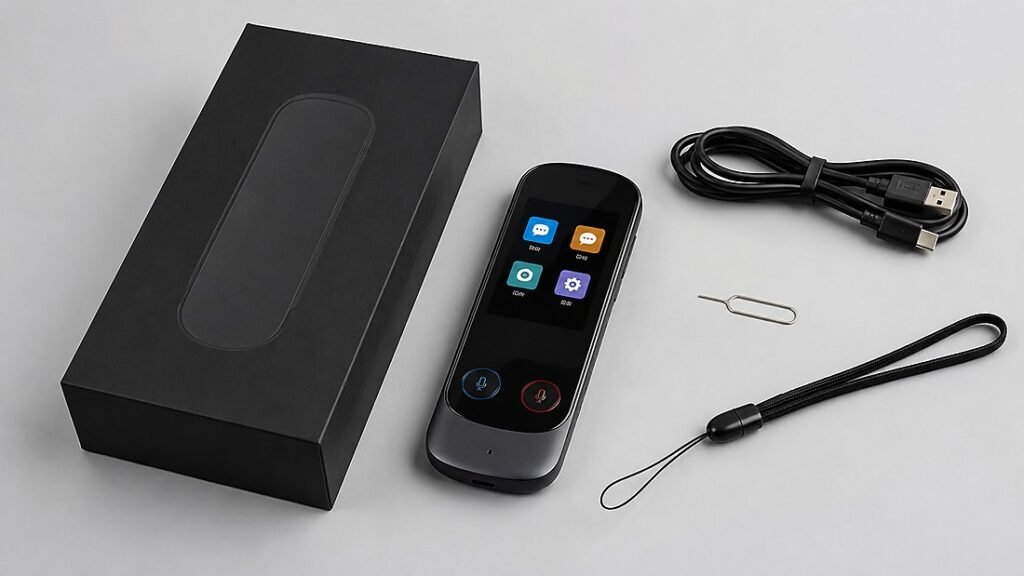
7 Essential Checks Before Sourcing AI Translators for Education in Southeast Asia in 2026
When sourcing AI translators for education in Southeast Asia, buyers should verify seven areas before placing a purchase order: translation accuracy and supported language pairs, offline versus online operation, device durability and battery safety, app and firmware localization, OEM/ODM customization terms, certification for each target country, and MOQ with lead-time planning. Each check should be validated with a sample, a written specification sheet, and documented test results — not a brochure claim. This guide explains what to test, what to ask, and how to compare suppliers so an edtech deployment is not derailed by hardware or compliance surprises.
Table of Contents
Table of Contents
Table of Contents
- Direct Answer: What Should Buyers Check First?
- Key Takeaways
- Key Facts for Buyers
- What Are AI Translators for Education?
- Check 1: Translation Accuracy and Language Coverage
- Check 2: Offline vs Online Operation and Connectivity
- Check 3: Hardware Durability and Battery Safety
- Check 4: App, Firmware, and Language Localization
- Check 5: OEM/ODM and Private Label Terms
- Check 6: Certification for Each Southeast Asian Market
- Check 7: MOQ, Pricing, and Lead-Time Planning
- Comparison Table: Sourcing Options
- Common Mistakes and Buyer Red Flags
- Practical Buyer Checklist
- FAQ
- Conclusion
Direct Answer: What Should Buyers Check First?
Buyers should start with translation accuracy and language-pair coverage, because no amount of branding or pricing compensates for a device that translates poorly in a classroom. Next, confirm whether the device works offline and how connectivity is managed. Then verify battery safety documentation, app localization, OEM/ODM terms, country-specific certification, and MOQ with production timing. A structured sample test covering all seven areas is the fastest way to separate a viable supplier from one that only has a polished catalog.

Key Takeaways
- Translation quality should be tested with real classroom phrases, not generic sentences, and in both directions for each language pair.
- Offline operation matters in schools with weak Wi-Fi; confirm which languages work offline and how updates are delivered.
- Battery cells and charging systems need documented safety testing; certification requirements depend on the target country and product configuration.
- App and firmware localization often determines whether a device is usable by teachers and students in local languages.
- OEM/ODM terms should cover logo, packaging, app branding, firmware controls, tooling ownership, and spare parts.
- MOQ, sample lead time, and mass-production lead time should be written into the quotation, not left verbal.
- Certification is market- and SKU-specific; buyers should request certificates for the exact model and destination.
Key Facts for Buyers
| Decision Area | What to Verify | Why It Matters for Edtech |
|---|---|---|
| Translation engine | Language pairs, offline support, update method | Classroom use requires accuracy across local languages and reliable operation without stable Wi-Fi |
| Hardware | Processor, RAM, microphone array, speaker, battery capacity | Affects response speed, noise handling in classrooms, and daily runtime |
| Battery safety | UN38.3, MSDS, charging protection | Required for air shipping and may be requested by school procurement teams |
| Customization | Logo, packaging, app skin, firmware settings | Determines brand consistency and control over student-facing experience |
| Certification | CE, FCC, RoHS, local telecom/radio requirements | Requirements vary by country; unverified claims create customs and tender risk |
| Commercials | MOQ, sample cost, tooling fee, lead time | Sets project budget and roll-out schedule for school terms |
What Are AI Translators for Education?
AI translators for education are handheld or wearable devices that convert spoken or written language in near real time using speech recognition and machine translation. In an education context, they are used for language learning, parent–teacher communication, international student support, and multilingual classroom assistance. Unlike consumer travel translators, education buyers typically need device management, localized app interfaces, durable hardware, and documentation that satisfies school procurement and customs requirements.
Buyers should evaluate these devices as a system: the translation engine, the hardware, the companion app, and the supply chain behind them. A strong engine on weak hardware produces poor classroom results; strong hardware without local-language app support creates friction for teachers. This is why the seven checks below are structured around both product performance and procurement risk.
[Image insertion suggestion 1: AI translators for education devices lined up for classroom use — see image_seo_suggestions]
Check 1: Translation Accuracy and Language Coverage
Translation accuracy is the first filter because it is difficult and expensive to fix after mass production. Ask the supplier for a written list of supported language pairs, including Southeast Asian languages relevant to your market such as Bahasa Indonesia, Malay, Thai, Vietnamese, Filipino, and Khmer, plus major trade languages. Confirm whether each pair works in both directions.
How to test accuracy
- Prepare 30–50 phrases drawn from real classroom scenarios: instructions, parent meetings, subject-specific vocabulary, and common idioms.
- Test in both directions and record error types: dropped words, wrong tone, latency, and repeated phrases.
- Test in a noisy room to see how the microphone array and noise handling affect recognition.
- Repeat the test on at least two units to rule out sample-to-sample variation.
Accuracy claims should be treated as starting points, not conclusions. A supplier that cannot provide a language list or refuses a structured sample test is a red flag for a purchase-stage project.
Check 2: Offline vs Online Operation and Connectivity
Many schools in Southeast Asia operate with inconsistent Wi-Fi or rely on mobile data. Buyers should confirm which languages are available offline, how large the offline language packs are, and how updates are delivered. If the device requires a constant connection, ask what happens during a network outage and whether a hotspot or SIM option exists.
Connectivity also affects total cost of ownership. Devices that require a paid cloud subscription per user may change the budget for a multi-year school deployment. Ask for the pricing model for the translation service, the update policy, and whether the app can operate on a school-managed network. The Bluetooth SIG publishes specifications relevant to wireless device interoperability that buyers can reference when reviewing connectivity claims. Bluetooth SIG specifications are a useful baseline for understanding wireless capability statements.
Check 3: Hardware Durability and Battery Safety
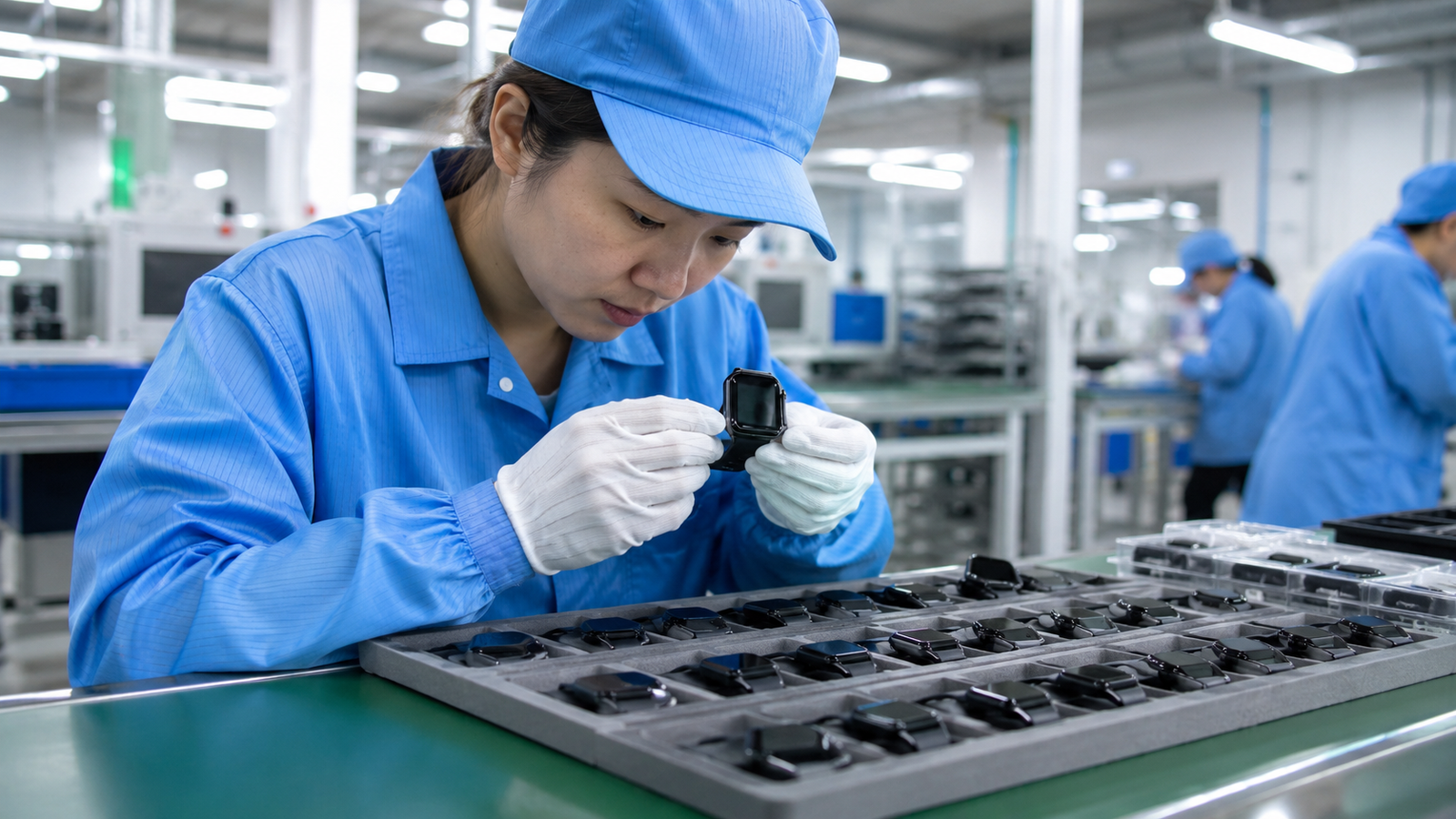
Education devices are handled by students and teachers daily, so durability and battery safety deserve explicit attention. Ask for drop-test reports, waterproof or splash-resistance ratings where claimed, and aging-test summaries. Battery safety documentation is especially important for air freight. UN38.3 test summaries and MSDS documents are commonly requested for lithium-battery products, and buyers should verify that the documents match the exact model and cell configuration.
Certification and testing requirements typically depend on the product configuration, battery type, and destination market. Buyers should verify documents rather than accept a general statement that a factory “has certificates.” For battery transport requirements, the IATA Dangerous Goods Regulations provide the industry baseline that freight forwarders will reference.
[Image insertion suggestion 2: Close-up of an AI translator device showing microphone and display — see image_seo_suggestions]
Check 4: App, Firmware, and Language Localization
The companion app is where teachers and administrators manage devices, update languages, and review usage. Buyers should confirm which app languages are available and whether the supplier can add a local-language interface. Ask whether the app is branded to the supplier or can be private-labeled, and whether firmware settings such as default language, restricted modes, and update channels can be controlled.
Questions to ask about software
- Can the app interface be localized into the languages used by teachers in the target market?
- Is there a device management option for schools, such as bulk pairing or firmware updates?
- Who owns the app account and data, and what is the data-retention policy?
- Can translation history or usage data be disabled or restricted for student privacy?
Software terms should be written into the OEM/ODM agreement, especially for education buyers who may face data-protection questions from school districts. Requirements vary by country, and buyers should verify local data-protection obligations with legal counsel.
Check 5: OEM/ODM and Private Label Terms
Most education technology companies want a device that carries their brand and fits their deployment model. OEM/ODM terms should therefore cover logo placement, packaging design, app branding, firmware customization, and tooling ownership. Buyers should also clarify whether the supplier offers private label solutions with documented approval steps, and whether custom packaging affects MOQ.
For buyers comparing customization scope, STAR KING’s private label OEM/ODM solutions outline the typical customization path from logo and packaging to app and firmware options. Buyers should still request a written customization matrix for the specific AI translator model, because capabilities can differ by platform and order volume.
Items to document in the agreement
- Logo files, placement, and approval timeline
- Packaging artwork, language versions, and regulatory labels
- App skin and localized interface scope
- Firmware settings that the buyer controls versus the supplier
- Tooling ownership and what happens if the relationship ends
- Spare parts, warranty terms, and repair or replacement process
Check 6: Certification for Each Southeast Asian Market
Certification is market-specific. A device sold in Indonesia, Thailand, Vietnam, Malaysia, the Philippines, or Singapore may face different radio, electrical-safety, and import requirements. Buyers should ask for certificates for the exact model and target country, and should verify them with the issuing body or an accredited test lab where possible. General claims such as “CE certified” are not sufficient when the destination market has its own requirements.
For products with wireless functions, radio equipment requirements may apply in addition to electrical safety and EMC requirements. In the European Union, for example, the Radio Equipment Directive sets out essential requirements that manufacturers reference; buyers can review the EU Radio Equipment Directive page for context. In the United States, the FCC provides equipment authorization information. For Southeast Asian markets, buyers should confirm local requirements with a compliance consultant or the relevant national authority.
STAR KING certification status for specific AI translator models: [STAR KING TO CONFIRM]. Buyers should request a certificate checklist per SKU and per destination before finalizing a purchase order.
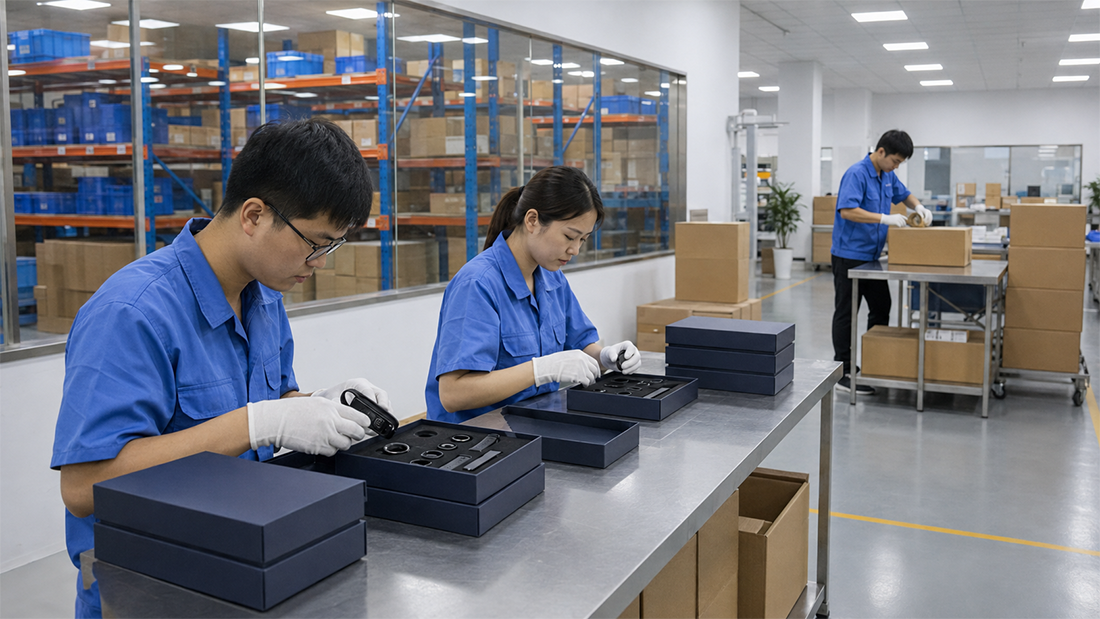
[Image insertion suggestion 3: AI translator packaging and certification labels prepared for export — see image_seo_suggestions]
Check 7: MOQ, Pricing, and Lead-Time Planning
Price per unit is only one part of the landed cost. Buyers should request a quotation that separates unit price, tooling or setup fees, sample cost, packaging cost, and freight. MOQ may vary by model, by customization level, and by packaging choice. Education buyers planning a term-based roll-out should map sample lead time, production lead time, and shipping time against the school calendar.
A practical approach is to request three quotes: a standard model, a private-label version with custom packaging, and a version with app customization. Comparing these quotes reveals how customization affects MOQ and lead time. Buyers should also ask about production capacity during peak seasons and the process for change orders.
Comparison Table: Sourcing Options
| Option | Customization Level | Typical MOQ Impact | Best For | Key Risk |
|---|---|---|---|---|
| Ready-to-sell model | Logo only or none | Lowest | Pilot programs and quick market tests | Limited brand differentiation |
| Private label | Logo, packaging, app skin | Moderate | Edtech brands building a product line | Artwork and approval delays |
| OEM/ODM customization | Firmware, app features, packaging, language set | Higher | Buyers with specific classroom workflows | Longer development and testing cycle |
| Full custom development | Industrial design and new tooling | Highest | Large deployments with unique requirements | Tooling cost and IP ownership complexity |
Common Mistakes and Buyer Red Flags
Common mistakes
- Testing translation with generic sentences instead of real classroom phrases.
- Assuming all languages work offline without checking language packs.
- Accepting a general “CE/FCC available” statement without model-specific certificates.
- Ignoring app localization until after the purchase order is placed.
- Comparing unit price without accounting for tooling, packaging, freight, and subscription costs.
- Planning a school-term launch without buffer time for samples and certification review.
Buyer red flags
- The supplier cannot provide a written language-pair list or refuses a structured sample test.
- Certification documents do not match the model number or destination market.
- MOQ and lead time are given verbally but not in the quotation.
- The supplier cannot explain firmware update or app data policies.
- Tooling ownership and spare parts terms are unclear.
Practical Buyer Checklist
- Request a specification sheet with processor, memory, microphone, speaker, battery, and connectivity details.
- Confirm the full language-pair list and offline availability.
- Run a structured sample test in a noisy room with real classroom phrases.
- Request drop-test, battery-safety, and aging-test documentation for the exact model.
- Confirm app localization and data-handling options.
- Request a written customization matrix for logo, packaging, app, and firmware.
- Ask for certificates per SKU and per target country; verify where possible.
- Obtain a quotation separating unit price, tooling, samples, packaging, and freight.
- Map sample, production, and shipping lead times against the school calendar.
- Document tooling ownership, warranty, and spare-parts terms in the agreement.
For buyers who want to compare device categories alongside translators, STAR KING’s AI translator product range and AI voice mouse options provide reference points for classroom and office use cases. Buyers evaluating a broader edtech hardware plan may also review business and education display solutions to align devices with existing classroom infrastructure.
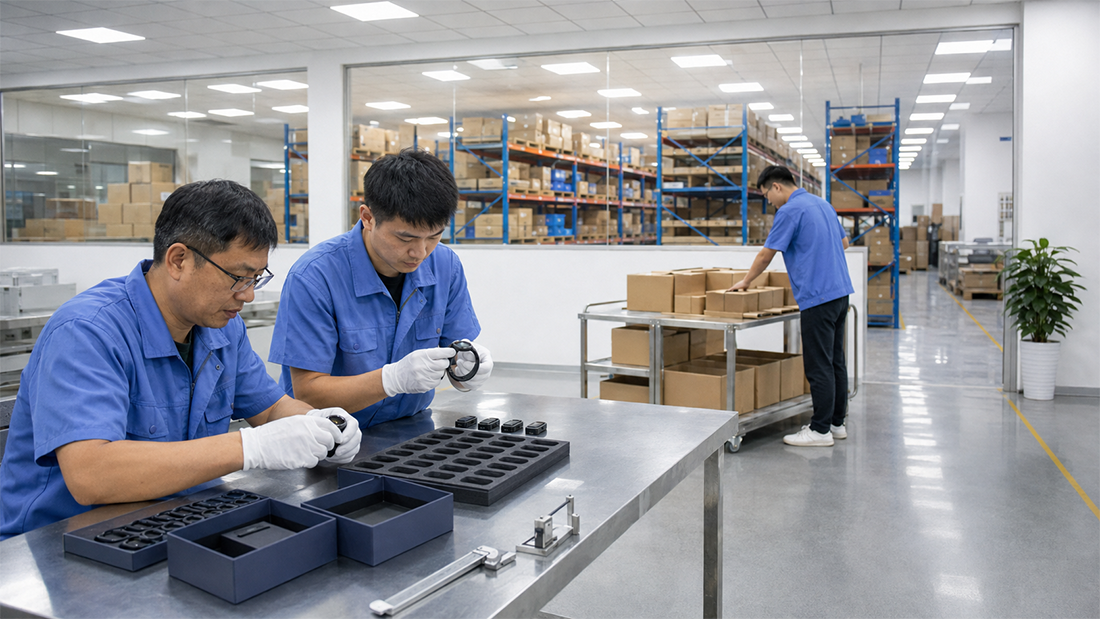
[Image insertion suggestion 4: Education technology buyer reviewing AI translator samples with a supplier — see image_seo_suggestions]
FAQ
What is the first thing to test when buying AI translators for education?
Test translation accuracy with real classroom phrases in both directions, in a noisy room, across at least two units. Accuracy and language-pair coverage are the hardest issues to fix after production.
Do AI translators for education need to work offline?
Offline operation is often important in schools with weak or inconsistent connectivity. Ask which languages work offline and how updates are delivered; requirements depend on the deployment environment.
What certifications should I request for Southeast Asian markets?
Requirements vary by country and product configuration. Request certificates for the exact model and destination, and verify them with the issuing body or an accredited test lab where possible.
Can I private-label an AI translator with my education brand?
Many suppliers offer logo, packaging, app, and firmware customization under private label or OEM/ODM terms. Confirm the customization matrix and MOQ impact in writing before placing a purchase order.
How does MOQ change with customization?
MOQ typically rises with packaging, app, and firmware customization. Request separate quotes for standard, private-label, and customized versions to compare MOQ and lead time.
What battery documents are needed for air shipping?
Lithium-battery products commonly require UN38.3 test summaries and MSDS documents for air freight. Buyers should verify the documents match the exact model and cell configuration.
How far in advance should an edtech buyer plan a school-term launch?
Plan for sample testing, certification review, production, and freight before the term start. Lead times vary by customization level, so request a written schedule with the quotation.
Conclusion
Sourcing AI translators for education in Southeast Asia is a procurement decision, not a catalog purchase. The seven checks in this guide — translation accuracy, offline operation, hardware durability and battery safety, app localization, OEM/ODM terms, certification, and MOQ with lead time — give buyers a structured way to compare suppliers and reduce risk before committing to volume. Each check should be validated with a sample, a written specification, and documented test results. Buyers who follow this process are better positioned to launch on schedule and meet school procurement requirements.
STAR KING CTA
Ready to evaluate AI translators for your education deployment? STAR KING supports international B2B buyers with product specification review, sample requests, private label and OEM/ODM customization discussions, and certification documentation per model. Request a quotation or ask to review customization options for your target market.
Discuss Your Smart Wearable OEM/ODM Project
Planning a smart ring, smart watch, smart band, AI glasses, AI translator, or AI voice mouse project? Contact STAR KING to discuss product positioning, sample testing, customization scope, certification requirements, lead time, and quotation details.

Team Star King

Scan WhatsApp QR code
Leave a Reply