
AI smart glasses RFQ: AI Smart Glasses for UK Healthcare Providers: 7 Critical Checks Before You Issue an RFQ
October 25, 2026 · Team Star King
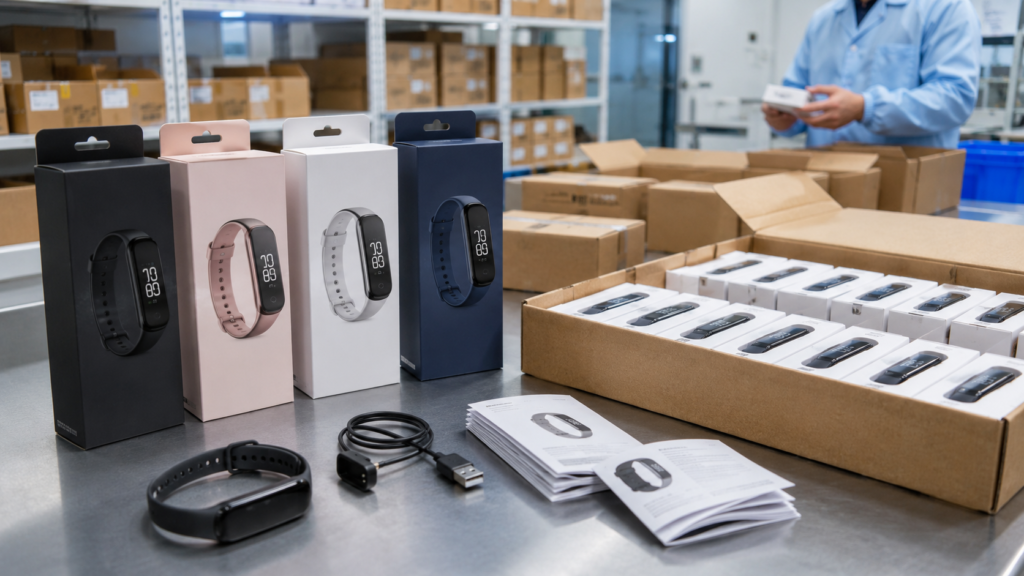
AI Smart Glasses for UK Healthcare Providers: 7 Critical Checks Before You Issue an RFQ
Before you issue an AI smart glasses RFQ, confirm seven things: intended medical vs. consumer use, UK regulatory status (UKCA/CE and MHRA if applicable), data protection design, battery and shipping compliance, OEM/private-label terms, MOQ and lead time, and after-sales support. Building these checks into your RFQ protects budgets, timelines and patient trust. This guide is written for UK healthcare solution providers preparing a formal request for quotation.
Table of Contents
Table of Contents
AI smart glasses RFQ: Short Answer
An AI smart glasses RFQ for UK healthcare should specify the intended use, required certifications (including UKCA where applicable), data privacy requirements, battery transport documentation, OEM customization scope, MOQ, lead time and warranty terms. Buyers should verify supplier evidence rather than accept claims, and should treat medical-device classification as a decision that typically depends on intended use and requires regulatory advice.

Table of Contents
- 1. Define intended use and medical vs. consumer positioning
- 2. Confirm UK regulatory and certification status
- 3. Assess data protection and privacy design
- 4. Verify battery safety and shipping compliance
- 5. Clarify OEM and private-label terms
- 6. Plan MOQ, samples and lead time
- 7. Review after-sales support and spare parts
- Comparison table: healthcare vs. consumer AI glasses
- Common mistakes and buyer red flags
- Practical buyer checklist
- FAQ
- Conclusion

Key Takeaways
- UK healthcare procurement of AI smart glasses requires clarity on intended use and regulatory classification before an RFQ is issued.
- Certification evidence and battery transport documentation should be requested as part of the RFQ, not after supplier selection.
- Data protection design is a procurement criterion for healthcare deployments, not an IT afterthought.
- OEM and private-label terms, MOQ and lead time should be agreed in writing before samples are approved.

Key Facts for Buyers
| Item | What UK healthcare buyers should confirm |
|---|---|
| Intended use | Consumer wellness vs. medical purpose; this affects regulatory route |
| Certifications | UKCA and/or CE marking where applicable; evidence available on request |
| Data protection | Data flows, storage location, encryption, retention and UK GDPR alignment |
| Battery transport | UN38.3 test summary and MSDS for lithium cells |
| OEM scope | Logo, packaging, firmware and app customization options |
| MOQ and lead time | Written MOQ bands and production lead times; prototype and sample timelines |
| Warranty | Warranty period, RMA process and spare parts availability |

1. Define Intended Use and Medical vs. Consumer Positioning
The first item in any AI smart glasses RFQ is intended use. Will the glasses support remote clinical consultations, senior health monitoring, or corporate wellness programs? The intended use determines whether the product may be treated as a medical device or as a consumer electronics product with wellness features.
In the UK, medical device classification typically depends on the manufacturer’s intended purpose and claims. If your organization intends to make diagnostic or treatment claims, you should take regulatory advice and may need to follow UK medical device requirements. Consumer-grade AI glasses that provide general wellness information are not automatically medical devices, but marketing claims can change that position.
Why it matters in procurement: The classification decision affects documentation, labeling, post-market obligations and potential liability. It should be settled before an RFQ is issued so that suppliers can quote against the right specification.
How to verify: Ask the supplier for the product’s intended-use statement and any existing regulatory documentation. Do not accept verbal assurances; request written confirmation of claims the supplier is prepared to support.
2. Confirm UK Regulatory and Certification Status
AI smart glasses combine radio equipment, batteries, software and, in healthcare contexts, potential data processing. Certification requirements depend on the specific configuration and target market. For the UK, buyers should discuss UKCA marking where applicable; for the EU, CE marking. Radio equipment requirements in the UK are administered under a framework that buyers should verify with the relevant authority.
At RFQ stage, request a certification matrix that maps each product variant to the markets in which it is intended to be sold. Ask which tests are complete, which are planned, and which certificates are held by the supplier versus a third party. For radio-spectrum and electromagnetic compatibility questions, the UK communications regulator Ofcom provides official guidance that buyers can review. For medical device questions, the MHRA publishes official information on UK medical device regulation.
Procurement reason: Product certification is a gate item for healthcare deployments; missing or unclear evidence can delay rollout and create contractual risk.
3. Assess Data Protection and Privacy Design
AI smart glasses used in healthcare settings may capture images, audio, location data and biometric or wellness data. UK healthcare buyers should treat data protection as a core sourcing criterion and should map data flows before selecting a supplier.
Questions for the RFQ should include: Where is data stored and processed? Is data encrypted in transit and at rest? What is the retention policy? Does the device or companion app send data to third-party services? Can the buyer configure the deployment to meet their own data protection obligations?
Suppliers should be able to describe their security architecture and data handling practices in writing. Where suppliers are uncertain, treat the answer as incomplete. The Information Commissioner’s Office (ICO) provides official UK guidance on data protection that buyers can use to frame requirements.
Verification method: Include a data protection questionnaire in the RFQ and require written responses before commercial negotiation begins.
4. Verify Battery Safety and Shipping Compliance
AI smart glasses contain lithium batteries. International transport of lithium batteries typically requires documentation such as UN38.3 test summaries and material safety data sheets (MSDS). Buyers should request these documents at RFQ stage and confirm that they cover the exact battery configuration being quoted.
Ask how the supplier tests battery safety and whether the product design has been reviewed for charging safety, thermal behavior and drop resistance. For shipments to the UK, confirm the logistics provider’s requirements and check the relevant IATA Dangerous Goods Regulations for lithium battery transport by air.
Procurement reason: Incomplete battery documentation can delay customs clearance and increase landed cost, especially for healthcare deployments with tight timelines.
5. Clarify OEM and Private-Label Terms
Many UK healthcare solution providers require custom branding, packaging, firmware settings and app integration. The RFQ should define the scope of OEM and private-label work: logo placement, packaging artwork, user manual localization, app branding and any firmware configuration.
Clarify ownership of tooling, molds and custom software. Ask whether the supplier retains intellectual property in customized firmware or whether ownership can be assigned. Request a written statement on software customization limits and support obligations.
STAR KING provides private label OEM/ODM solutions for AI smart glasses and other wearables. Buyers should request a customization options document, confirm whether requested changes are feasible, and understand the impact on certification and lead time. The UK Intellectual Property Office provides general guidance on IP that buyers can review.
Practical note: Customization can change the certification basis of a product. Confirm with the supplier how certification evidence will be updated if hardware or firmware changes are made.
6. Plan MOQ, Samples and Lead Time
MOQ and lead time should be confirmed in writing at RFQ stage. Ask for MOQ bands by configuration and by customization level. Request sample lead time separately from mass-production lead time. Plan for a sample evaluation period that includes functional testing, battery testing and app testing.
Buyers should also confirm whether sample units are production-representative or hand-built prototypes. Prototype samples can differ from production units in materials, fit and firmware behavior. If the product is intended for healthcare use, sample testing should include a review of data accuracy claims and any user-facing information.
STAR KING’s AI smart glasses product page lists product capabilities; buyers should confirm current specifications and availability directly. [STAR KING TO CONFIRM] MOQ, sample lead time and production lead time should be confirmed for the specific configuration.
7. Review After-Sales Support and Spare Parts
Healthcare deployments require predictable support. The RFQ should ask for warranty terms, RMA process, spare parts availability and repair or replacement timelines. Ask whether the supplier can support firmware updates and security patches after shipment.
Buyers should also discuss how device failures will be handled in the field and whether temporary replacement units are available. For UK deployments, confirm whether spare parts must be held locally.
Procurement reason: After-sales terms affect total cost of ownership and patient or staff experience, especially when devices are used in clinical or remote care workflows.
Comparison Table: Healthcare vs. Consumer AI Smart Glasses
| Consideration | Healthcare deployment | Consumer deployment |
|---|---|---|
| Intended use | Often defined by clinical or care workflow | General wellness and productivity |
| Regulatory classification | May require medical device review depending on claims | Typically consumer electronics requirements |
| Data protection | Higher scrutiny for personal and health data | Consumer privacy terms |
| Certification evidence | Required at RFQ stage for procurement approval | Often requested closer to purchase |
| Warranty and support | Documented RMA and spare parts planning recommended | Standard consumer warranty |
Common Mistakes and Buyer Red Flags
- Accepting verbal certification claims. Request written evidence and verify that certificates cover the specific product configuration.
- Leaving data protection to IT after signing. Include data protection questions in the RFQ and require written responses.
- Assuming samples equal production. Ask whether samples are production-representative and what differs.
- Ignoring customization effects on certification. Confirm that hardware or firmware changes will be reflected in updated certification evidence.
- Overlooking after-sales costs. Request RMA and spare parts terms before comparing price.
- Treating MOQ as a single number. Ask for MOQ by configuration and customization level.
Practical Buyer Checklist
- Intended-use statement and claims review completed
- Certification matrix requested and reviewed for UK/EU markets
- Data protection questionnaire issued
- UN38.3 and MSDS documents requested for quoted battery configuration
- OEM/private-label scope documented, including IP ownership
- MOQ bands and lead times confirmed in writing
- Sample evaluation plan includes app and firmware testing
- Warranty, RMA and spare parts terms discussed
FAQ
Do AI smart glasses for healthcare require medical device registration in the UK?
It depends on intended use and the claims made for the product. Buyers should take regulatory advice and verify requirements with the MHRA where applicable.
What certifications should I ask for in an AI smart glasses RFQ?
Request a certification matrix for the specific configuration and target markets, including UKCA and/or CE where applicable, and confirm which tests are complete.
How do I evaluate data protection in AI glasses?
Ask where data is stored and processed, how it is encrypted, and whether third parties receive data. Require written responses and review them before selecting a supplier.
What is a typical MOQ for private-label AI smart glasses?
MOQ varies by configuration and customization. Request written MOQ bands from each supplier and compare on a like-for-like basis. [STAR KING TO CONFIRM]
Can AI smart glasses be shipped to the UK by air?
Lithium battery products can typically be shipped by air when the necessary documentation is in place, but requirements depend on the battery configuration and logistics provider. Verify before ordering.
What after-sales terms should I ask for?
Request warranty period, RMA process, spare parts availability and firmware update commitments in writing.
Conclusion
A well-structured AI smart glasses RFQ protects UK healthcare providers from certification surprises, data protection gaps and after-sales shortfalls. By confirming intended use, regulatory status, data protection design, battery documentation, OEM terms, MOQ and support, procurement teams can compare suppliers on the criteria that matter for healthcare deployments. For buyers who want to compare a healthcare-ready configuration, STAR KING’s AI smart glasses platform is a useful starting point for discussion.
Ready to move from evaluation to quotation? Request a quotation or discuss your OEM/ODM project with STAR KING. Share your intended use, target markets and customization requirements so the right specification and documentation can be scoped.
Discuss Your Smart Wearable OEM/ODM Project
Planning a smart ring, smart watch, smart band, AI glasses, AI translator, or AI voice mouse project? Contact STAR KING to discuss product positioning, sample testing, customization scope, certification requirements, lead time, and quotation details.

Team Star King

Scan WhatsApp QR code
Leave a Reply