
AI smart glasses OEM supplier: 7 Critical Checks for Selecting an AI Smart Glasses OEM Supplier for Your UK Startup Brand
October 19, 2026 · Team Star King
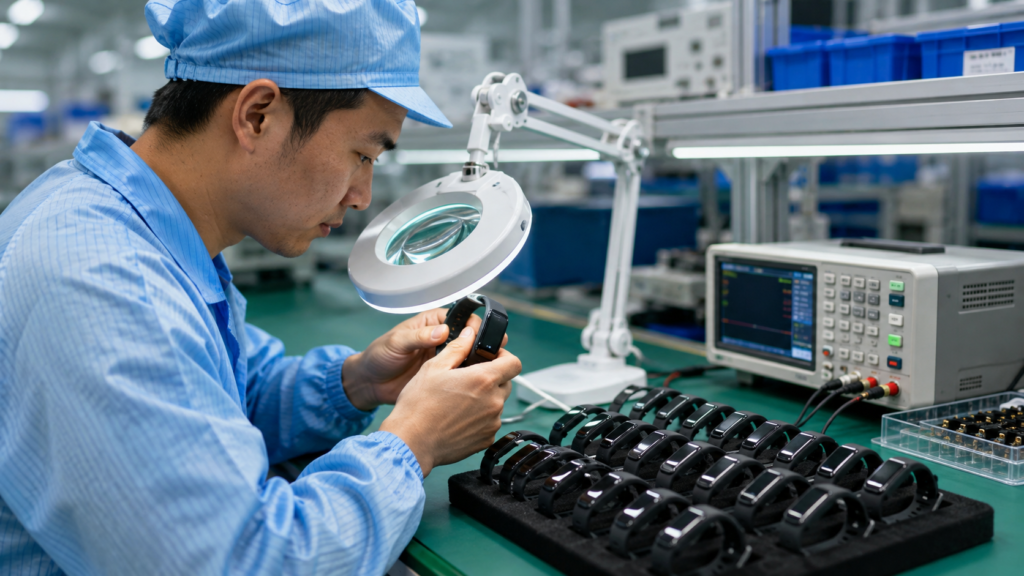
7 Critical Checks for Selecting an AI Smart Glasses OEM Supplier for Your UK Startup Brand
Choosing the right AI smart glasses OEM supplier is the single decision that most affects your launch cost, product quality and ability to scale in the United Kingdom. For a UK startup brand, the right supplier typically offers transparent MOQ, documented UKCA and CE pathways, clear tooling ownership, a working companion app SDK, and realistic sample and mass-production lead times. This guide gives you seven practical checks to evaluate suppliers before you commit budget or sign a tooling agreement.
Table of Contents
Table of Contents
Short Answer
Evaluate an AI smart glasses OEM supplier on seven points: real factory capability, MOQ and cost structure, tooling and IP ownership, firmware and app integration, quality control and testing, UK market compliance (UKCA, CE, RoHS, battery rules), and lead time plus after-sales support. Request samples and documented evidence for each before paying tooling fees or placing a bulk order.
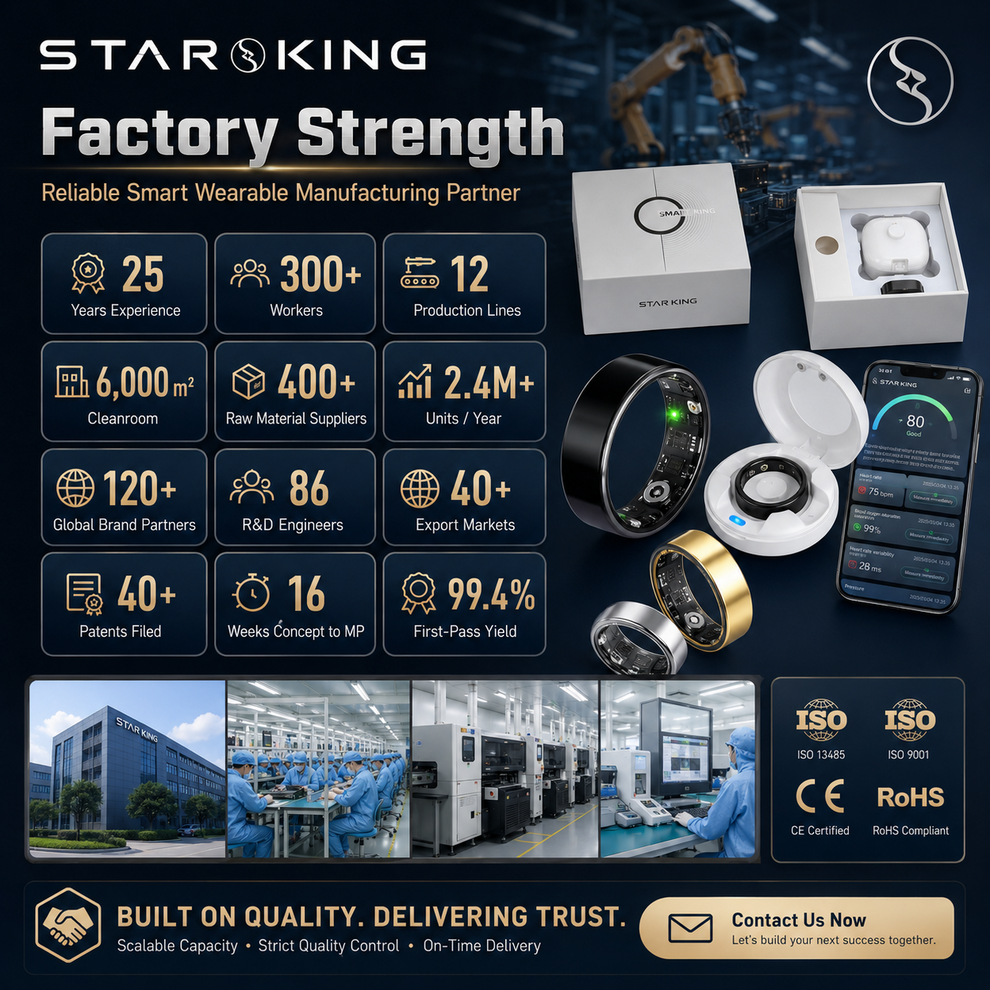
Table of Contents
- 1. Verify Real Manufacturing Capability
- 2. Understand MOQ and Cost Drivers
- 3. Confirm Tooling and IP Ownership
- 4. Test Firmware and App Integration
- 5. Review Quality Control and Testing
- 6. Confirm UK Market Compliance
- 7. Lock Down Lead Time and After-Sales
- Common Mistakes and Buyer Red Flags
- Practical Buyer Checklist
- FAQ
- Conclusion

Key Takeaways
- A capable AI smart glasses OEM supplier should be able to show evidence of in-house or tightly managed assembly, testing and firmware support.
- MOQ, tooling fees and unit price are linked; ask for a cost breakdown rather than a single quote.
- Clarify who owns moulds, firmware source and app code before you invest in branding.
- Request a working sample app and SDK documentation, not just a hardware demo.
- UK compliance depends on product configuration; confirm UKCA, CE, RoHS and battery transport documentation per SKU.
- Plan lead time around Chinese New Year and testing slots, not only quoted production days.

Key Facts for Buyers
| Check | What to Ask | Evidence to Request |
|---|---|---|
| Factory capability | Who assembles, tests and packs? | Audit report, video walkthrough, line photos |
| MOQ and cost | MOQ per SKU and cost breakdown | Quotation with tooling, BOM and packaging lines |
| Tooling and IP | Who owns moulds, firmware, app code? | Tooling ownership clause in contract |
| App and SDK | iOS/Android support, API access | Test build, SDK docs, firmware update policy |
| Quality control | Aging, drop, waterproof tests | QC flow chart, sample test reports |
| UK compliance | UKCA/CE, RoHS, battery documents | Test reports, UN38.3, MSDS per configuration |
| Lead time | Sample, mass production, shipping | Production schedule with milestones |

What Is an AI Smart Glasses OEM Supplier?
An AI smart glasses OEM supplier manufactures hardware to your specification and brand, while you retain control of product definition, branding and often the software experience. Under a strict OEM model, the supplier builds to your design or an agreed design; under ODM, the supplier offers an existing platform you customise. Many real suppliers operate a hybrid model: ODM platform hardware, with OEM-level customisation on logo, packaging, firmware settings and app skin.
Startups should know which model they are buying, because it changes cost, speed and IP. ODM typically reduces development time and tooling cost but may limit exclusivity and deep hardware changes. OEM gives more control but requires more engineering input and budget. Ask a prospective AI smart glasses OEM supplier to state clearly which parts of the product they own, which you own, and which are licensed.
1. Verify Real Manufacturing Capability
Supplier selection starts with verification. A trading company may present as a factory, which affects responsiveness, quality control and accountability. Ask where final assembly, testing and packing take place, and who manages sub-suppliers for optics, PCBAs and batteries.
What to check
- Is there a documented quality management system? A current ISO 9001 certificate is a useful starting signal, though it does not guarantee product quality.
- Can they share a factory walkthrough video or a recent third-party audit summary?
- Do they support the AI functions you plan to sell, such as camera, voice assistant, live translation or heads-up display, or only basic Bluetooth audio?
- Do they have references from comparable markets or product categories? Treat unnamed claims cautiously.
For a UK startup brand, responsiveness matters as much as scale. A mid-sized supplier with dedicated account and engineering support may serve a first launch better than a large factory that treats small programs as low priority. STAR KING’s private label OEM/ODM solution page outlines how customisation and program support are typically structured.
2. Understand MOQ and Cost Drivers
MOQ is rarely a single number. It usually varies by SKU, colour, packaging and customisation level. Ask for MOQ per configuration and a cost breakdown covering tooling, BOM, assembly, testing, packaging and certification support.
Typical cost drivers for AI smart glasses include:
- Optical module and display type
- Processor, memory and AI feature set
- Battery capacity and safety components
- Frame material and tooling complexity
- Custom logo, colour and packaging
- App or firmware customisation scope
| Cost Item | Why It Matters | Question to Ask |
|---|---|---|
| Tooling | Upfront cost, tied to frame design | Is tooling included or amortised per unit? |
| BOM | Drives unit cost and margin | Can you share a category-level BOM? |
| Packaging | Brand experience and freight weight | What is MOQ for custom packaging? |
| Certification support | Required for UK import | Who arranges testing and pays for it? |
If a quote is significantly below others, ask what is excluded. Low quotes often omit testing, certification support or packaging. A transparent supplier will separate one-time and per-unit costs so you can model landed cost accurately.
Soft CTA: If you are comparing supplier quotes, you can discuss your AI smart glasses program and request a cost breakdown structured for startup volumes.
3. Confirm Tooling and IP Ownership
For a startup brand, moulds, firmware and app code may be your most valuable assets. Clarify ownership before tooling begins. In many OEM arrangements, the brand pays for tooling and should own or have exclusive rights to it. Ask for this in writing, including what happens if you change supplier.
Key questions
- Who owns the moulds and where are they stored?
- Can tooling be transferred to another supplier, and at what cost?
- Who owns firmware and app source code, or what licence governs it?
- Does the supplier reuse your design or tooling for other clients?
For ODM platforms, exclusivity is usually limited. If exclusivity matters for your UK launch, negotiate it explicitly and expect higher MOQ or a development fee. See the AI smart glasses product range to understand which components are typically customisable.
4. Test Firmware and App Integration
AI smart glasses depend on software as much as hardware. A polished demo can hide weak app stability, limited language support or unclear update policy. Ask for a test build of the companion app on iOS and Android, and confirm SDK or API access if you plan custom features.
Integration questions
- Which AI features are on-device and which require cloud services?
- Which languages and accents are supported for voice and translation?
- How are firmware updates delivered, and for how long after purchase?
- Does the supplier support app branding, single sign-on or data hosting options?
- What data is collected, and how is it handled under UK GDPR?
UK startups should confirm data flows early, because privacy terms affect marketing claims and app store review. Get the data processing arrangement in writing, and verify whether AI processing happens on the device, the supplier’s cloud or your own backend.
5. Review Quality Control and Testing
Quality control separates reliable suppliers from assemblers. Ask for the QC flow from incoming components to pre-shipment inspection, and request sample test reports for aging, drop, waterproof and battery safety where applicable.
- Aging testing: catches early failures in electronics and batteries.
- Drop and durability testing: relevant for wearable frames and hinges.
- Waterproof testing: confirm the IP rating claimed and how it is verified.
- Pre-shipment inspection: agree AQL levels and who performs inspection.
Quality expectations should be written into the purchase order, including defect definitions and remedy process. For related wearable testing practices, see the STAR KING resources blog.
6. Confirm UK Market Compliance
Compliance requirements depend on the exact product configuration and how it is marketed. For the UK, electrical and electronic products are generally subject to UKCA marking rules, alongside CE where relevant for other markets. AI smart glasses with radio modules typically also require radio equipment conformity, and lithium batteries require transport documentation.
Buyers should verify with the supplier and, where needed, a UK conformity assessment body:
- UKCA / CE: which directives apply to your configuration?
- RoHS: restricted substances documentation for the finished product.
- Radio equipment: Bluetooth and Wi-Fi module conformity.
- Battery transport: UN38.3 test summary and MSDS for lithium cells.
- WEEE and packaging: UK producer responsibility obligations may apply.
Do not accept generic certificate copies as proof for your SKU. Ask for reports that match model numbers, and confirm who is the responsible person for UK market placement. For official reference, see UK government UKCA guidance, European Commission CE marking and IATA dangerous goods rules for lithium batteries. Also confirm Bluetooth qualification requirements via the Bluetooth SIG qualification process.
7. Lock Down Lead Time and After-Sales
Lead time has three parts: sample, mass production and shipping. Ask for a schedule with milestones rather than a single number. Account for Chinese New Year, component shortages and testing slots.
| Stage | Typical Questions | What to Agree |
|---|---|---|
| Sampling | How many rounds included? | Sample fee, revision limits, approval criteria |
| Tooling | How long for moulds and trials? | Trial run dates, approval sign-off |
| Mass production | Daily capacity for your SKU? | Delivery schedule with penalties |
| Shipping | Air or sea, battery documentation? | Incoterms, insurance, customs support |
After-sales terms matter for startup brands building reputation. Confirm warranty period, spare parts availability, repair process and firmware support duration. If your UK customers return products, a clear RMA process reduces friction and cost.
Common Mistakes and Buyer Red Flags
- Paying tooling before sample approval. Approve a working sample and freeze specifications first.
- Accepting a single unit price. Insist on a cost breakdown and landed-cost estimate.
- Assuming certificates cover your SKU. Match reports to model numbers and configuration.
- Ignoring app and data terms. Software problems can delay launch more than hardware.
- No written IP clause. Tooling and firmware ownership should be explicit.
- Unrealistic lead times. Build buffer around holidays and testing.
Red flags include reluctance to share test reports, vague answers on firmware ownership, quotes that omit certification support, and pressure to pay large deposits before any sample is approved.
Practical Buyer Checklist
- Supplier capability and references verified
- MOQ per SKU and cost breakdown received
- Tooling and IP ownership clause agreed
- Test app and SDK reviewed on iOS and Android
- QC process and test reports reviewed
- UKCA, CE, RoHS, radio and battery documents confirmed for your SKU
- Lead time schedule with milestones agreed
- Warranty, RMA and firmware support terms in writing
- Payment terms and deposit protected
FAQ
What MOQ should a UK startup expect for AI smart glasses?
MOQ varies by model, customisation and packaging. Expect higher MOQ for full custom tooling and lower MOQ for ODM platforms with logo and packaging changes. Ask for MOQ per configuration and confirm whether trial orders are possible.
Does an AI smart glasses OEM supplier handle UKCA certification?
Requirements depend on product configuration. Suppliers may arrange testing and provide reports, but the UK importer or brand is usually responsible for market placement and the UK responsible person. Verify who arranges and pays for testing before ordering.
How long does sampling take for custom AI smart glasses?
Sampling time depends on customisation depth, component availability and tooling. Simple logo and packaging changes are faster than new frame tooling or custom firmware. Request a sample schedule with revision limits and approval criteria.
Who owns the tooling if I change suppliers?
Ownership is contractual. If you pay for tooling, negotiate ownership or exclusive rights and a transfer process. Confirm storage location, transfer cost and whether the supplier may reuse the design for others.
Can I white-label the companion app?
Many suppliers support app branding and configuration, but source-code ownership and custom feature work vary. Ask for app branding scope, SDK access, update policy and data hosting terms in writing.
What documents are needed to ship lithium battery smart glasses to the UK?
Lithium batteries typically require UN38.3 test summaries and MSDS, and shipping must follow dangerous goods rules. Confirm documents match the battery configuration and discuss air versus sea freight with your supplier and freight forwarder.
Conclusion
Selecting an AI smart glasses OEM supplier for a UK startup brand is a structured process, not a single quote comparison. Verify capability, understand MOQ and cost drivers, secure IP, test software, review quality control, confirm UK compliance and lock down lead time and after-sales. Doing these seven checks before paying tooling fees reduces launch risk and protects your brand as you scale.
Next Step
Ready to shortlist suppliers? Request a quotation for your AI smart glasses project or discuss OEM/ODM customisation options with STAR KING.
Discuss Your Smart Wearable OEM/ODM Project
Planning a smart ring, smart watch, smart band, AI glasses, AI translator, or AI voice mouse project? Contact STAR KING to discuss product positioning, sample testing, customization scope, certification requirements, lead time, and quotation details.

Team Star King

Scan WhatsApp QR code
Leave a Reply